
| Weight | 0.095 kg |
|---|---|
| Product Type | Book |
| Publisher | Darussalam |
| ISBN | 9960732096 |
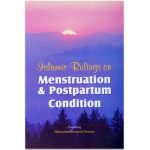
Islamic Rulings on Menstruation and Postpartum Condition
RM11.00
The birth of human being is a most amazing phenomenon. The physical cycles that the body of woman must endure in order to maintain this act of creation should be respected to the highest degree. Allah mentions that our mothers have born us with difficulty and struggle and because of this are due the highest respect. one among many of the difficulties that women must brave, are the doubts that these conditions present to the correct obervance of her religion. How is her fassting affected, how are her prayers affected, how is her ability to pursue her studies, and how are her conjugal relations affected by her ever changing physical condition in relation to her as the sole vessel of the birth of man. A really valuable publication by Darussalam for all Muslim woman to study
Be the first to review “Islamic Rulings on Menstruation and Postpartum Condition” Cancel reply
You must be logged in to post a review.
Related Products

The Concise Presentation of the Fiqh of the Sunnah and the Noble Book
Written by Dr. Abdul-Azeem Badawi and translated by Jamal al-Din M. Zarabozo, The Concise Presentation of the Fiqh of the Sunnah and the Noble Book covers the fiqh of diverse topics like purity, prayer, fasting, zakah, pilgrimage, marriage, business transactions, foods, inheritance, criminal offenses, and jihad. Dr. Badawi relies only on the Quran and the Sunnah, making it an authentic Islamic book on fiqh and a collection of sound hadiths.
Shatibi’s Philosophy of Islamic Law (P/B)
Abu Ishaq al-Shatibi, who died in 1888, had sought an answer to the challenge posed by modernisation and change to Islamic law, by introducing maslahah, which forms the basis of his philosophy of Islamic law. In a fascinating way, the author leads us step by step to what he considers the true import of Shatibi’s views concerning jurisprudence.
Ibn Ashur Treatise on Maqasid al-Shariah (P/B)
Ibn Khaldun, the fourteenth century Arab historiographer and historian, is viewed as a founder of modern historiography, sociology and economics. He lived during a turbulent part of history, and out of his experiences, he ?conceived and created a philosophy of history that was undoubtedly the greatest work ever created by a man of intelligence…?. This work tells of the period of unrest in Ibn Khaldun?s life marked by political rivalries. It is during this turbulent period which provided him with the opportunity to write the Muqaddimah (or Prolegomena), earning him an immortal place among historians, sociologists and philosophe
Remembrance & Prayer: The way of Prophet Muhammad s.a.w
Remembrance and Prayer: The Way of Prophet Muhammad, was one of the first works of Shaykh al Ghazali’s to be translated into English. The book describes in vivid prose how the Prophet, upon him be peace, used to remember Allah and pray to Him. Not only are the exquisitely beautiful, deeply moving and penetrating words of the Prophet given in the English translation, but in the original Arabic as well, thus allowing those desirous of memorizing Arabic access to the original texts. The intimate relationship with Allah, which was the hallmark of the Prophet’s life, becomes clear and vivid. The book’s contents are immensely relevant. to the life and concerns of modern man, whose life has been made barren by the present secularist machinery.
Worship In Islam: An In-depth Study of Ibadah, Salah and Sawm (P/B)
Worship in Islam is in-depth study of the nature and significance of Islamic spirituality by Abul A‘la Mawdudi (1903–79), one of the leading Muslim intellectuals of the twentieth century, with special reference to the concepts of God’s Oneness (tawhid), the finality of Prophethood (risalah) and the Islamic system of worship (‘ibadah) with a focus upon prayer (salah) and fasting (sawm) and their role in the development of the Islamic personality and Islam’s social order. The distinguishing feature of Mawdudi’s approach is his elaboration of the social dimension of worship, which extends the traditional approach found in Islamic jurisprudence, with its focus upon ritual and self-purification, to consider worship’s transformative role in social life. Presenting a holistic view of the Islamic system, Mawdudi highlights Islam’s social, economic and political dimensions, which he argues has the capacity to resolve emergent issues and problems that humankind faces.
This historic text should be of wider interest to both students and specialists in contemporary Islamic thought, and includes an introduction by Professor Anis Ahmad.
Edited and translated into accessible English by Ahmad Imam Shafaq Hashemi, this book is an authoritative compilation by a leading Islamic twentieth-century revivalist on the central matter of worship’s role in Islam.
The Ultimate Guide to Umrah by Darussalam
Hajj & Umrah And Visitors (H/B)
Rites and Selected Etiquettes for those intending to Perfom Hajj & Umrah and Visitors In this book the author calls attention to the most important things that those who intend to perform Hajj, Umrah or Visiting the Prophets Mosque in Medinah must have as provisions. The author has made his work brief and arranged its topics according to their priorities. the author mentions a considerable number of sayings of the people of knowledge and calling the attention of the reader to some important matters.
Islamic Fatawa Regarding Women (H/B)
Women face a lot of special problems regarding their menses, postpartum bleeding, istihada, hijab, mixing with men, rights & duties with respect to their husband, husband’s household, children, inheritance, marriage, divorce, etc
More than 350 of such problems & issues have been answered in this book by Grand Mufti of Saudi Arabia Sheikh Ibn Baz, and the eminent scholars like Sheikh Ibn Uthaimin, Sheikh Ibn Jibreen and others.
.
Common Mistakes Regarding Prayer – IIPH
Formal prayer (salat) is the second pillar of Islam, and the most important of a Muslim’s acts of worship. Prophet Muhammad (PBUH) said: “The first of one’s actions for which a slave of Allah will be held accountable on the Day of Judgment will be one’s prayers. If they are correct and accounted for, then he (or she) will have succeeded (gained paradise); and if they are lacking, then he (or she) will have failed (lost paradise). If there is something defective in his (or her) obligatory prayers, the Lord will say: ‘See if my slave has any supererogatory prayers with which that which was defective in his (or her) obligatory prayers may be completed. Then the rest of his (or her) deeds will be judged in like manner.” (At-Tirmidhi and others) Shaykh Mashhur Hasan Salman has compiled a list of the most common errors that we make when we pray, discussing and explaining each one. This book is a valuable aid to Muslims hoping to perfect their prayers, so that their prayers may be free of defects and acceptable to Allah. This new and revised edition of the English translation of his work presents the text in a fluent, highly readable style.
Funeral Rites In Islam (H/B)
The purpose of this book is to provide English speaking Muslims a concise and authentic compilation of the instructions regarding funeral rites in Islam.
Fiqh According To The Quran & Sunnah (2 vol)
The complete set, ‘Al-Lubab Fee Fiqh As-Sunnah Wal-Kitab,’ contains all of the books of Islamic Fiqh and its chapters, accompanied by evidence and is presented in a clear and simple manner, in order that they may be understood by the young and the old, without blindly following any of the schools of Jurisprudence, but rather being subject to authentic proofs and following the most authoritative opinions, without fanatical adherence to any particular group. Rather the author agrees with each group when the truth is with them and contradicts them when they veer from that which is correct.
Fiqh is to achieve access to knowledge of that which is unclear through knowledge of that which is proven, so it is more specific than mere knowledge or learning. And fiqh is knowledge of the juristic law. It is said Faquha -A man has acquired understanding and so he has become a Faqeeh (A scholar of Islamic Jurisprudence); and it is said Faqiha – He has understood it, i.e he has attained understanding of it, and it is said Tafaqqaha – he has devoted himself to the acquisition of (Islamic) Knowledge and specialized in it. Fiqh has been a subject of contention among the scholars as well as layman throughout the history of Islam.
Preservation of Health in Islamic Law (P/B)
Preservation of health (hifz al-sihhah) is the most important branch of Islamic medicine since it is primarily concerned with the prevention of illness rather than cure. This book represents one of the few attempts to introduce the role of Islamic medicine, although Chapter One provides information about a historical background of the preservation of helath in Islam, its aim is to provide fresh ant timely overview of the major aspects of legal, ritual and spiritual structures of teh Islamic law (shariah). These include the laws related to Ibadah, Islamic family laws, foods and drinks as well as environmental laws, for maintaning and preserving human health. Findings indicated that prevention of any diseases from Islamic medical law presentive cannot attain any real success unless it emanates from an Islamic fundamental teaching, namely: the pillars of Islam. Iman and observance of the Islamic rituals such as Salah, zakah, Sawm and Hajj, have played an important role in shaping the attitude, behavior and model personality of the Muslim, in boosting the spiritual motivation or attitude change, and in disseminating the message of prevention. This indicates that bodily and spiritual health goes hand in hand and that pyscho-spritual balance and health is a primary consideration whereas physical health is a secondary one.
Recently Viewed
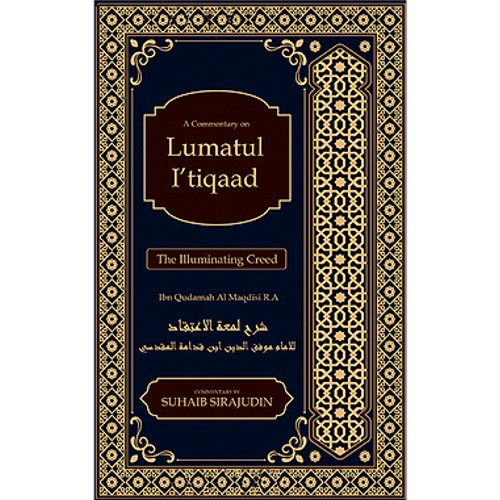
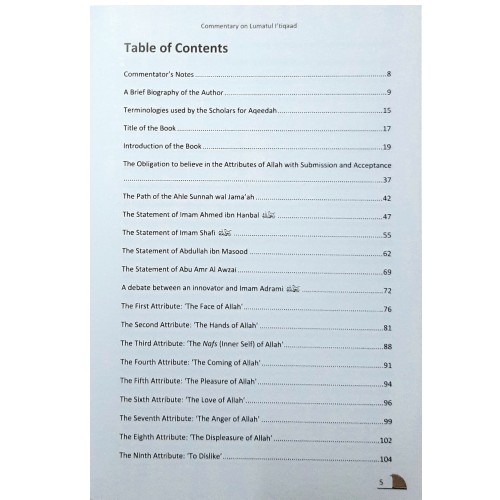
A Commentary On Lumatul I’tiqaad (The Illuminating Creed)
This is a commentary of the classic treatise Lumatul I’tiqaad (The Illuminating Creed) of the great Imam, Abu Muhammad Muwaffaq-ud-Deen Ibn Qudamah AI Maqdisi, may Allah have mercy on him.
In this book, Ibn Qudamah presents the Creed of the Salaf as is the custom of the scholars of Ahlus-Sunnah wal-Jamaa’ah in every century — to preserve the authentic Creed by way of writing it down in books and spreading it. So this Creed became well known amongst the scholars and studied in the gatherings of knowledge. In fact the treatise continues to be studied and reviewed by students of knowledge throughout the world.
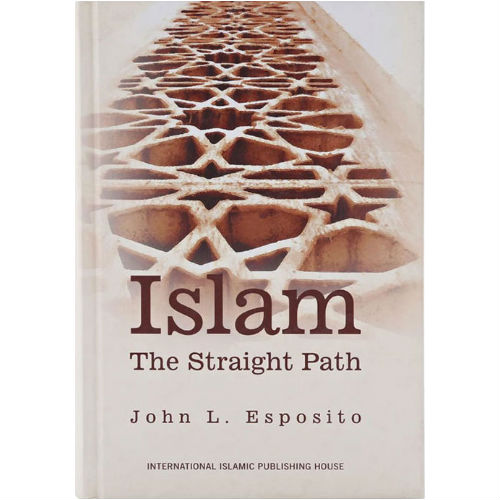
Islam The Straight Path
This updated version of Islam: The Straight Path includes a new Epilogue by John Esposito in which he addresses the impact 9/11 and its aftermath have had on both the Muslim and non-Muslim world, discussing Islam’s relationship to democracy and modernity and focusing more sharply on the origins and growth of extremism and terrorism in the name of Islam. This exceptionally successful survey text introduces the faith, belief, and practice of Islam from its earliest origins up to its contemporary resurgence. Esposito, an internationally renowned expert on Islam, traces the development of this dynamic faith and its impact on world history and politics, discussing the formation of Islamic belief and practice and chronicling the struggle of Muslims to define and adhere to their Islamic way of life. Lucidly written and expansive in scope, Islam: The Straight Path provides keen insight into one of the world’s least understood religions and is ideally suited for use in courses on Islam, comparative religions, and Middle Eastern history and culture.
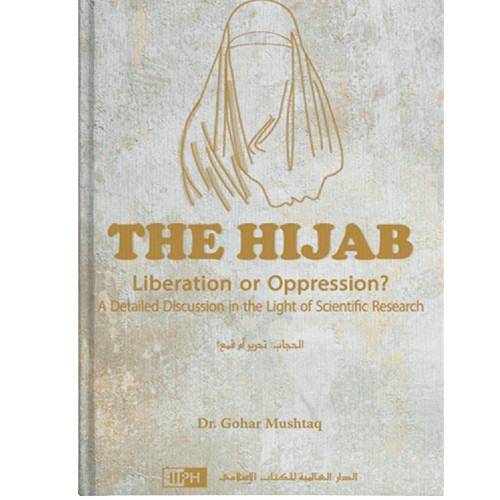
The Hijab – Liberation or Oppression?
In this authentic Islamic resource book, Dr. Gohar Mushtaq comprehensively explains the benefits of wearing the hijab, citing evidence from both Islamic sources and scientific research. He also expertly cites and analyzes fascinating research to highlight the little-known wisdom behind the institution of the hijab. Furthermore, he tackles some of the topics that are generally misunderstood in Islam, such as the segregation of men and women in gatherings.
This is a much needed book at a time and age when eyes are dazzled by modernity, where modesty has lost its value and many Muslims have embraced the apologetic edition of the religion of Islam. Maryam Jameelah
Let Us Remember Allah And Praise Him
Remembrance, praise and supplication – dhikr and du‘â’ – are the core of worship of the Divine. The Noble Qur’an and the last Prophet (blessings and peace of Allah be upon him) have stressed this point and taught us how to attain Allah’s pleasure through calling on Him and remembering Him in words of praise and thankfulness. This small book is a valuable collection of daily supplications from the Qur’an and the authentic hadiths. It contains the Arabic text, full transliteration and clear translation of the meaning of dozens of phrases of remembrance (dhikr) and supplication (du‘â’). This new and revised edition of Let Us Remember Allah and Praise Him is designed to be easy to use: its full-sized page format ensures that the print is large enough to read effortlessly, and yet its ultra-slim volume makes it no trouble to slip into a handbag
or backpack. It is truly a practical handbook for every Muslim desiring to seek peace in this earthly life and salvation in the hereafter.
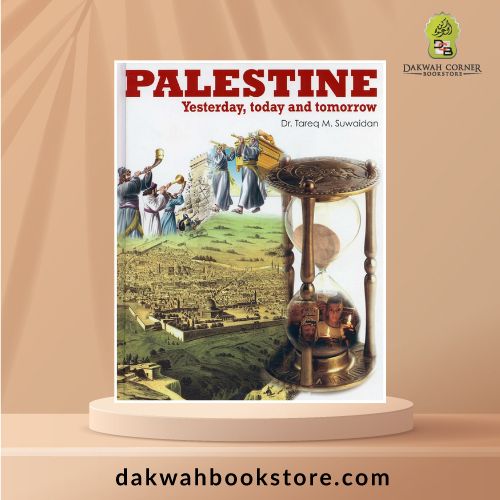
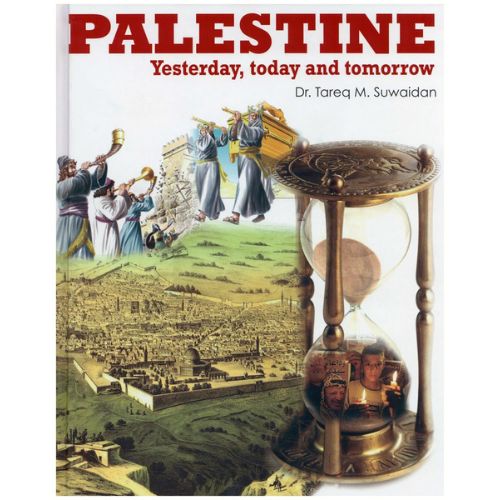
Palestine : Yesterday, Today and Tomorrow
Since the dawn of history, the Palestinian issue has been the focal point of national and international conflicts in the Middle East.
[AUF] Bughyat al-Mushtāq / بغية المشتاق
علم الفقه هو من العلوم الشرعية، وهو علم يمكن من خلاله معرفة الأحكام الشرعية العلية المستنبطة من الأدلة التفصيلية، وهو شعر الإسلام، والذي نبني عليه قوام دين المسلم كله بعد تصحيح عقائده، والاطمئنان على إيمانه، فهو ضالة متشردة لجميع المسلمين في مشارق الأرض ومغاربها، ولذلك كان من أشرف العلوم وأحلّها. وكان لابد لهذا العلم من صياغة لنظريات عامة له، يُستطاع بها التعرف على مبادئه الكلية، وأسسه العامة ليتمكن من النفاذ إلى أغوار الأحكام الفقهية، والتفصيلات المتشعبة.
من هنا، فإن علم أصول الفقه هو الذي أخذ على عاتقه هذا الأمر؛ فهو علم عظيم شأنه، عميم نفعه، يحتاج إليه الفقيه والمتفقه، والمحدث والمفسر، وهو الدستور القويم للاجتهاد، الذي تكتمل به لدى الفقيه ملكة استنباط الأحكام من أدلتها التفصيلية، وبالجملة؛ فهو المنهج الأساسي للعلوم الدينية، ودائرة المعارف المصغرة له.
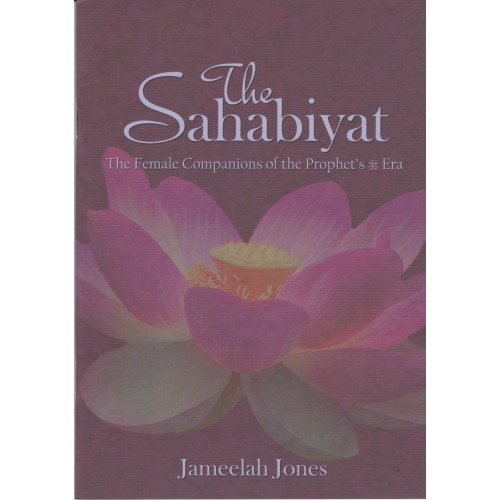
The Sahabiyat (P/B)
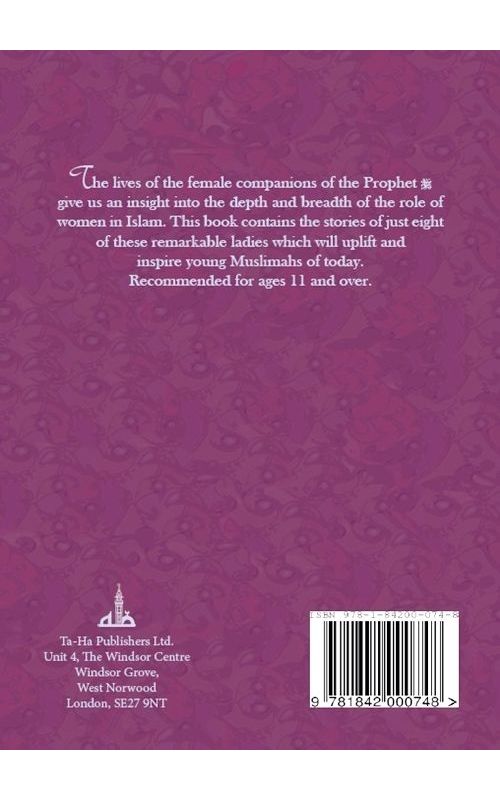
The lives of the female companions of the Prophets SAW give us an insight inti depth and breadth of the role of women in Islam. This book contains the stories of just eight of these remarkable ladies which will uplift and inspire young Muslimahs of today.
Recommended for ages 11 and over.
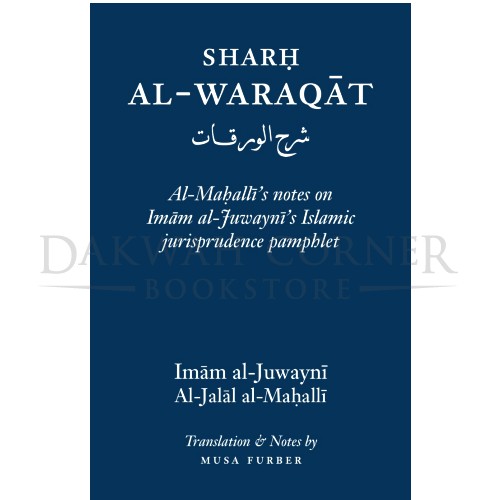
Sharh Al-Waraqat
Sharḥ Al-Waraqāt: Al-Maḥalli’s notes on Imām al-Juwaynī’s Islamic jurisprudence pamphlet
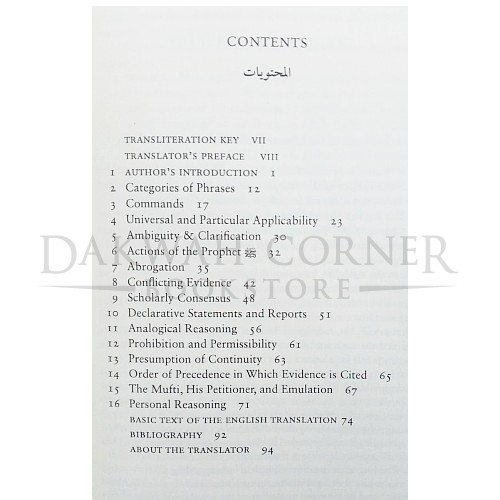
Islamic jurisprudence concerns the knowledge and skills required of Muslim jurists and the etiquette they are expected to observe. These requirements and etiquette set standards for an answer being sound and acceptable to follow, and minimize the potential for errors. Just as rules of grammar protect those who follow them from mistakes in expressions, rules of logic protect those who follow them from mistakes in arguments; jurisprudence sets standards for interpreting legal texts and making legal arguments which, when followed correctly, protect from making mistakes in arriving at legal rulings. Students of jurisprudence read through a series of texts with their instructors. One of the first books of jurisprudence taught to students is the Waraqat of Imam al-Juwayni, often with a short commentary by Jalal al-Din al-Mahalli. This translation introduces these two texts to English-speaking audiences and should serve readers as an introduction to the basic topics of jurisprudence, preparing them to study more advanced material.
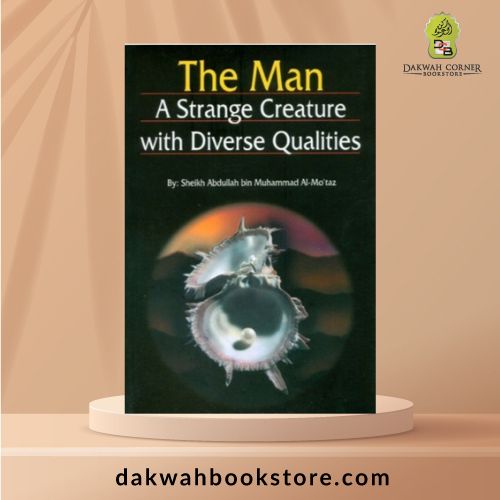
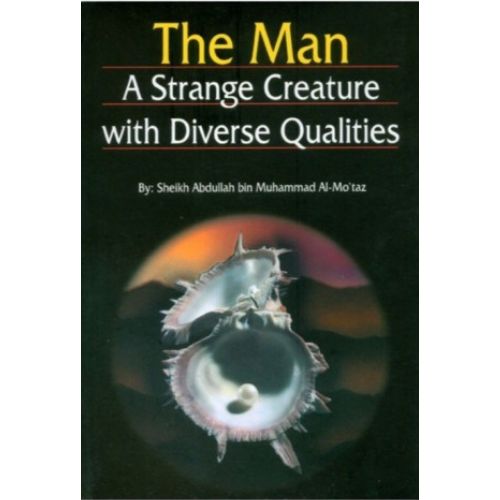
The Man A Strange Creature with Diverse Qualities
The Holy Qur’aan, the word of Allaah (T’aala) dealt with every aspect of the human being. Qur’aan is a comprehensive revelation for mankind and it suits every place and time. Allaah honoured mankind and gave them the ability to travel on land and sea. He also graced upon mankind a great many bounties and ordered the angels to prostrate before Adam (AS).
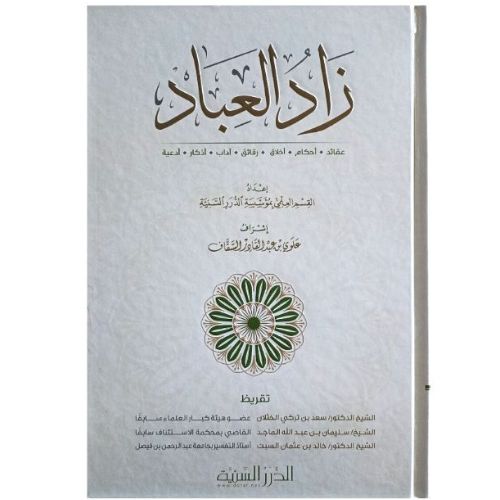
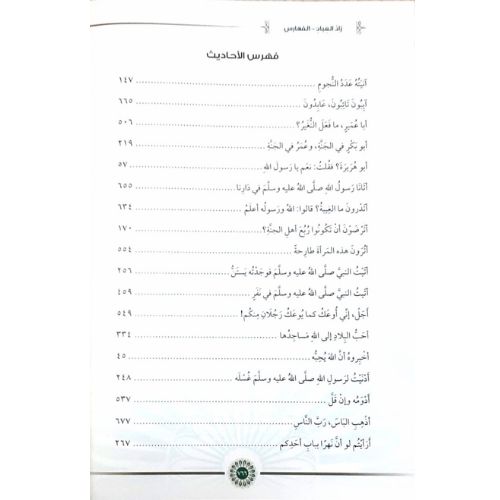
[SJ] Zad Al Abad (زاد العباد)
صدر حديثًا كتاب “زاد العباد”، إعداد: “القسم العلمي بمؤسسة الدرر السنية”، إشراف: الشيخ “علوي بن عبد القادر السقاف”، نشر “الدرر السنية”.


There are no reviews yet.