






| Weight | 0.26 kg |
|---|---|
| Author | |
| Binding | Hardcover, Paperback |
| Pages | 109 |
| ISBN | 9786035011204 |
| Publisher | IIPH |
Weakness of Faith (IIPH)
5 ★
5 ★
1 Rating
5 ★
1
4 ★
0
3 ★
0
2 ★
0
1 ★
0
RM13.00 – RM30.00Price range: RM13.00 through RM30.00
In Stock

Highlights:
somdn_product_page
Compare
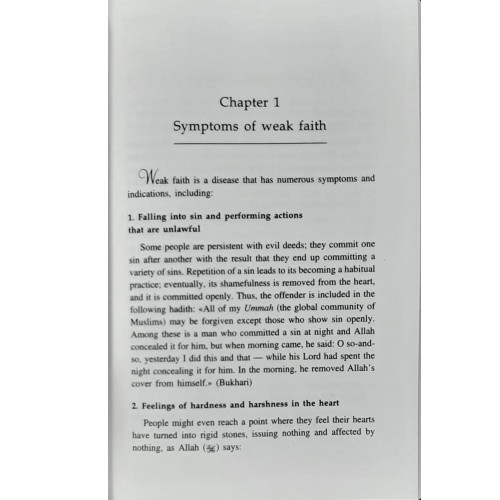
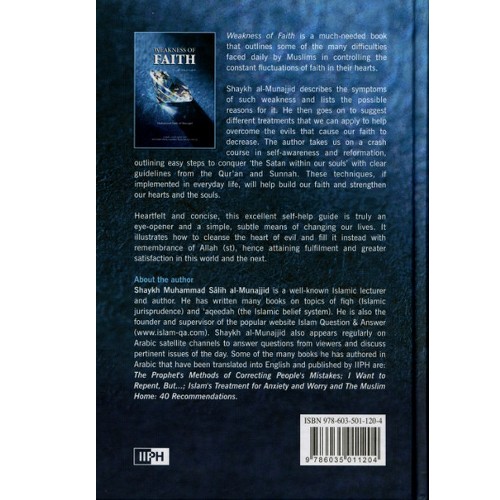
The phenomenon of weak faith has become very widespread among Muslims, and many people complain about the hardness of their hearts. So often we hear the words, “I feel hardness in my heart,” “I do not find any joy in worship,” “I feel that my faith has hit rock bottom,” “Reading Qur’aan does not move me,” “I fall into sin so easily.” The effects of this affliction can be seen in many people, and this problem is the cause of every disaster and adversity.
One of the most important principles which must be understood in order to treat the problem of weak faith is that faith increases and decreases, or waxes and wanes. This is one of the basic principles of the ‘aqeedah of Ahl al-Sunnah wa’l-Jamaa’ah, who say that faith is something to be spoken in words, to be believed in in the heart, and to be put into action. Faith increases with obedience and decreases with disobedience.
‘… that they may grow more in Faith along with their (present) Faith…’ [al-Fath 48:4]
‘… Which of you has had his faith increased by it? …'[al-Tawbah 9:124]. aari, Fath, 1/51).
Frequently Bought Together

Weakness of Faith (IIPH)
5 ★
5 ★
1 Rating
5 ★
1
4 ★
0
3 ★
0
2 ★
0
1 ★
0
1 Item
RM13.00
2 Add-Ons
RM101.00
Total
RM114.00
Additional information
Reviews (1)
5 ★
1 Rating
5 ★
1
4 ★
0
3 ★
0
2 ★
0
1 ★
0
Add a review Cancel reply
You must be logged in to post a review.
You may also like…
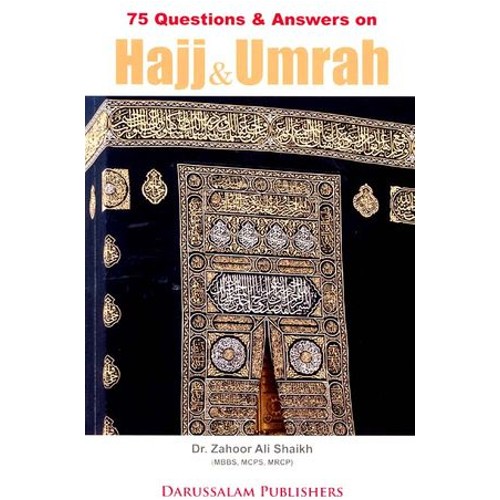
75 Questions & Answers on Hajj & Umrah by Darussalam
Highlights:
Key Features:
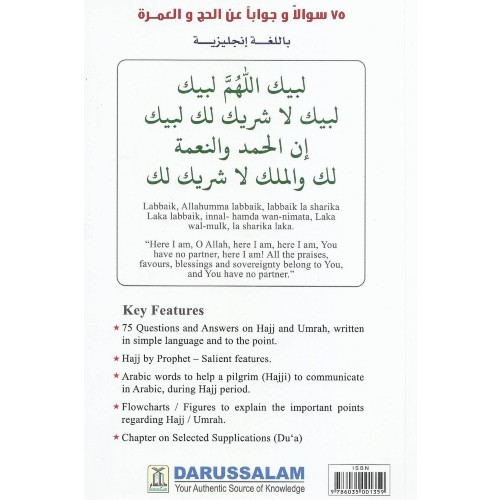
– 75 questions and answers on Hajj and Umrah, written in simple language and to the point- Hajj by the Prophets – Salient Features- Arabic words to help a pilgrim (hajji to communicate in Arabic during Hajj period- Flowcharts / figures to explain the important points regarding Hajj . Umrah- Chapter on selected supplications (Dua)
RM35.00

A Guide to Male-Female Interaction
Highlights:
Are Muslim men allowed to interact with female students, and vice versa, in a virtual classroom? Can a Muslim woman pursue a professional career that necessitates her interaction with men? Is it appropriate for a woman to serve her husband’s guests? Do mixed wedding ceremonies comply with the Sharia? Read this bilingual book to find the answers and more!
RM56.00


Fiqh According To The Quran & Sunnah (2 vol)
Highlights:
The complete set, ‘Al-Lubab Fee Fiqh As-Sunnah Wal-Kitab,’ contains all of the books of Islamic Fiqh and its chapters, accompanied by evidence and is presented in a clear and simple manner, in order that they may be understood by the young and the old, without blindly following any of the schools of Jurisprudence, but rather being subject to authentic proofs and following the most authoritative opinions, without fanatical adherence to any particular group. Rather the author agrees with each group when the truth is with them and contradicts them when they veer from that which is correct.
Fiqh is to achieve access to knowledge of that which is unclear through knowledge of that which is proven, so it is more specific than mere knowledge or learning. And fiqh is knowledge of the juristic law. It is said Faquha -A man has acquired understanding and so he has become a Faqeeh (A scholar of Islamic Jurisprudence); and it is said Faqiha – He has understood it, i.e he has attained understanding of it, and it is said Tafaqqaha – he has devoted himself to the acquisition of (Islamic) Knowledge and specialized in it. Fiqh has been a subject of contention among the scholars as well as layman throughout the history of Islam.
RM180.00
The Music Made Me Do It (H/B)
Highlights:
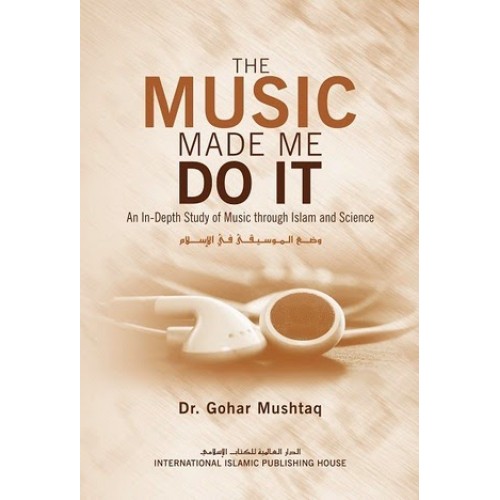
By Dr. Gohar Mushtaq
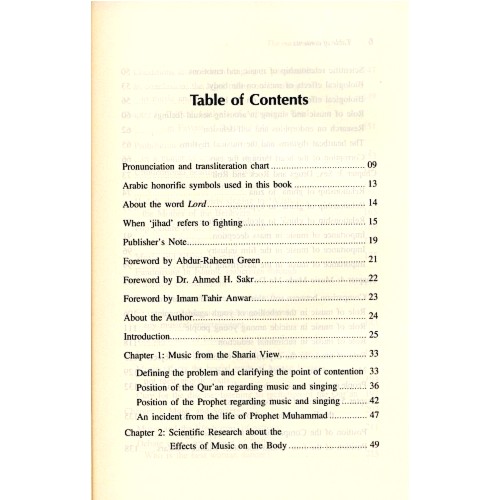
Is the issue of music a controversial one in Islam? With the prevalence of computers and various electronic devices today, music and singing seem to be everywhere, and contemporary Muslims may be confused about their status in Islamic teachings. The Music Made Me Do It: An In-Depth Study of Music through Islam and Science examines this topic in light of authentic Islamic sources, in order to clarify the prohibitions and allowances regarding music and singing. In addition, the author describes the social, psychological and physical effects of music on individuals, citing well-documented contemporary research in the fields of medical and behavioural sciences.
The interweaving of the two perspectives makes this book a valuable asset for anyone interested in exploring this pertinent Islamic issue.
RM50.00


Having Fun The Halal Way Entertainment In Islam
5 ★
5 ★
1 Rating
5 ★
1
4 ★
0
3 ★
0
2 ★
0
1 ★
0
Highlights:
With the advent of technology, the entertainment industry has flourished and become immensely popular. Combine this with the exponential advances in technology, and the result is an increasing number of ways to amuse ourselves. As a result of such advances, Muslim react in a variety of manners towards entertainment. Some label entertainment as completely forbidden. This sometimes includes parents who say no to almost everything that their young ones deem to be ‘fun’, without providing them with suitable alternatives. Others, who do not want to take this extreme approach, fall into the trap of excessive use of – and even addiction to – various sources of entertainment, without any limits.
In Having Fun the Halal Way, Ismail Kamdar explores the teachings of Islam regarding entertainment. Drawing upon the Quran, the Sunnah and the understanding of the righteous scholars of Islam, he provides a detailed and balanced analysis of the topic. He not only explains the detriments of the current entertainment industry, but also suggests alternative means to have a good time with friends and family members.
RM18.00
Related Products

When Wings Expand (P/B)
Highlights:
Writing on the pages of her journal, Nur, a teenage girl in Canada, charts the onset and advance of her mother’s cancer. Nur watches her mother’s body begin to shrink and her mood begin to darken. And when family and friends begin to encroach, Nur must face the prospect of her mother’s looming death.
RM40.00

Guarding The Tongue (P/B)
Highlights:
How many people have earned the wrath of Allah as a result of misuse of their tongues? How many injuries that may never heal have been inflicted throughtt the careless slips of the tongue? The Messenger of Allah said:
“Indeed, the servant will speak words that are pleasing to Allah, due to which he will he given a condition in which Allah will raise him many levels. And indeed, the servant will speak words that are displeasing to Allah, due to which he will not he given a good condition, but (instead) be thrown into the Hellfire.”(Bukhari)
This book highlights those sins that seem so light on the tongue yet so grave on the scale and offers practical advice on how to keep the tongue in check.
RM21.00


From Monogamy to Polygamy : A Way Through (H/B)
Highlights:
From Monogamy to Polygyny: A Way Through addresses the deep and complex issues and concerns the Muslim women worldwide have with polygyny. The insight offered by this book is new, unique, and encouraging. Practical advice is brought forth to aid in moving past the negative feelings that are commonly associated with polygyny, ultimately helping the Muslim woman progress to a higher level of Iman, In sha Allah. Rich with understanding, comfort, advice, motivation, clarity, examples, experiences, and answers; a way through is paved for the Muslim woman, making polygyny easier, or at the very least more endurable. Although this book is geared mainly towards women, its vast content can give men insight into the emotional affects of polygyny on women, which they can use to make sound and wise decisions. Overall, this is a valuable resource for both Muslim men and Muslim women considering, dealing with, questioning, and pondering polygyny.
RM50.00

Dreams of the Prophets and the Righteous
Highlights:
Originally written in Arabic by Abdul Mun’im al Hashmi. It is like an encyclopedia of dreams. It tells us how we should behave on seeing a dream and how they may be interpreted. There are dreams of the Prophets and the Righteous men, and the dreams of the Prophet and his Sahabah. Some dreams of non-Muslims also find place in this book. The author also informs as to what various things like animals, birds and certain chapters of the Qur’an would mean if seen in a dream.
RM35.00


Islam A Total Beginners Guide – Part Two (P/B)
Highlights:
In present era we are facing lot of questions:
• What is status of women in Islam?
• Who is superior – man or women?
• What does Islam say about inter-religious marriages, man’s treatment towards his wife and privacy in homes?
• What does Islam say about dress, veil, clothing and ornaments, perfumes and the wisdom of banning gold and silk for men?
This beginner’s guide to Islam answers all such questions.
RM35.00
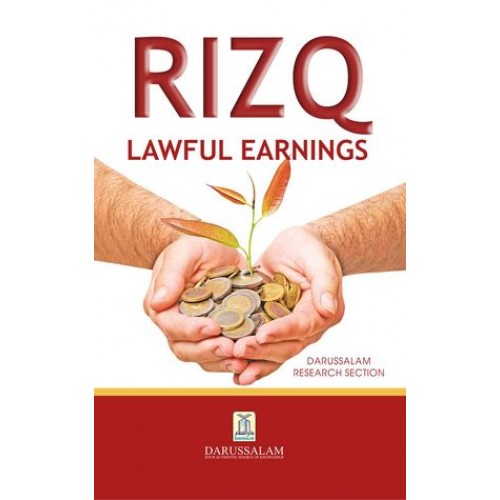
Rizq Lawful Earnings (P/B)
Highlights:
Narrated by Umar Ibn al-Khattaab (May Allah be pleased with him), the Prophet (Peace be upon him) said:
“If you put your faith completely in Allah, He will arrange for your sustenance in the same way as he provides for the bird. They go out in the morning with their stomachs empty and return filled in the evening.” (Tirmidhee)
This book discusses the place of pride Islam gives to making lawful earnings and rizq through hard work and striving. It also looks at the contempt Islam places on begging and indolence. Then it looks at which earnings are lawful, which are not and the many ways by which wealth can increase while seeking the pleasure of Allah (Glorified and Exalted is He).
RM30.00


A Treatise on Hijab and Compilation of Questions Pertaining to Family Matters (H/B)
Highlights:
No one denies that the modesty which is commanded by Islamic Law and by convention includes the decency and decorousness demanded of a woman, and the kind of behavior that will ensure that she is kept far away from situations of temptation and suspicion. Further more, there is no doubt that the greatest act of modesty that she can perform is to wear the hijab, which covers her face. It is the best thing with which she can adorn herself, because it protects her and keeps her far removed from temptation.
RM50.00

Lawful Wives or Unlawful Girlfriends
Highlights:
In the Name of Allah, the Most Beneficent, the Most Merciful
Allah (SWT) says: (If you fear that you will not be able to deal justly with the orphans, marry women of your choice, two or three or four; but if you fear that you shall not be able to deal justly (with them), then only one or (the captives or the slaves) that your right hands possess. That will be more suitable to prevent you from doing injustice) (An-Nisa’: 3).
Praise be to Allah (SWT) who has prescribed for His Servants a religion (Islam) that is beneficial to them in this world and the Hereafter, and Peace and Blessing be upon His Messengers and Prophets who were guided by His Guidance and conveyed His Religion. The last and seal of His Messengers was Muhammad Ibn Abdillah (SAW). He (SAW) was the best to advise his Ummah and convey the True Message, by words, deeds and his character. He (SAW) was the best model and example for the believers.
RM42.00

Dream Interpretation According to the Qur’an and Sunnah (P/B)
Highlights:
Separates the authentic Islamic teachings on dream interpretation from the myths, superstitions and fabrications being circulated on the subject. It also provides a guide for dream interpretation according to references found in the Quran and authentic hadeeths.
Since the English publication of Muhammad Al-Akili’s 508 page work entitled, Ibn Seerin’s Dictionary of Dreams: According to Islamic Inner Traditions in 1992, followed shortly thereafter by Dreams and Interpretations by Ibn Seereen, there has been an explosion of dream interpretation and interpreters among English-speaking Muslim communities in the West. On the other hand, dream interpretation has been a long established tradition in the Muslim East. However, it has become so mixed up with superstition, myths and fortunetelling, that most educated Muslims shun this area. The fact of the matter is that dream interpretation is mentioned in the Quran and was regularly practised by the Prophet (pbuh), himself. Consequently, there is a real need to understand this subject, especially, considering that humans spend about a third of their lives sleeping.
RM16.50

Ibn Taymeeyah’s Essay on the Jinn (P/B) ASN
Highlights:
Dr. Abu Ameenah Bilal Philips has rendered Ibn Taymiyah’s treatise, Eedaah-ud-Dalaalah fee ‘Umoom-ir-Risaalah, from volume 19 of Majmoo‘-ul-Fataawa into very readable English. This abridged and annotated translation is significant in that it is perhaps the first book available in English exclusively on the topic of spirit-possession and exorcism in Islam.
Ahmad ibn ‘Abdul-Haleem ibn Taymeeyah was bron in the town of Harran [near Edessa, in what was once Northern Iraq, but is now called Orfa and is a part of Turkey.], in the year 1263 CE. His father was a leading scholar of the Hanbalite school of Islamic law and so was his grandfather, who authored Muntaqaa al-Akhbaar, the text of ash-Shawkaanee’s Hadeeth classic Nayl al-Awtaar.
Ibn Taymeeyah mastered the various disciplines of Islamic study at an early age and read extensively the books of the various sects and religions in existence at that time. Much of his time and effort was spend defending the orthodox Islamic position against a tidal wave of deviation which had swept over the Muslim nation. Consequently, he faced many difficulties from both the prominent sectarian scholars of his time and from the authorities who supported them. His clashes with them led to his imprisonment on numerous occasions. Ibn Taymeeyah also fought, not only against internal enemies of Islaam, but also against its external enemies by both his Fatwaas (Islamic legal rulings) and his physical participation in battles. His ruling allowing the taking up arms against groups which recognized the Shahaadataan (declaration of faith) but refused to uphold some aspects of the fundamental principles of Islaam, greatly affected the resistance movement against the Tartars who had declared their acceptance of Islaam but did not rule according to divine law.
During these struggles he wrote countless books and treatises demonstrating his extensive reading and knowledge, not only of the positions of the early scholars, but also those of the legal and theological schools which had subsequently evolved. Ibn Taymeeyah also had a major effect on the open-minded schoars of his day, most of whom were from the Shaafi’ite school of law. Among the most famous of his students were IBN KATHEER, ADH-DHAHABEE and IBN AL-QAYYIM. The author died in 1328 while in prison in Damascus for his Fatwaa against undertaking journeys to visit the graves of saints [Ibn Taymeeyah’s ruling was based on the authentic statement reported by Abu Hurayrah wherein the Prophet Muhammad (sallallaahu alayhi wasallam) said, “Do not undertake a journey except to three masjids; this masjid of mine, Masjid al-Haraam (Makkah) and Masjid al-Aqsaa (Bayt al-Maqdis).” Collected by Al-Bukhaaree and Muslim]. His Fatwaa had been distorted by his enemies to say that he forbade visiting the Prophet Muhammad’s (sallallaahu alayhi wasallam) grave.
RM33.00

Fundamentals of Islam (P/B)
Highlights:
Fundamentals of Islam is a revised English edition of the critically acclaimed Khutubah (original written in Urdu). It consist of Friday congregational addresses, in them he expounds familiar themes; like Iman, Islam, the Prayer, Fasting, Alms-giving, Pilgrimage and Jihad.
RM38.00


Provisions of the Afterlife Which Lie Within Prophetic Guidance (H/B – DKI
Highlights:
Written originally by Ibn Qayyim Al-Jauziyyah is one of the important resources of knowledge for those who seek to know the Seerah of their Prophet (P.B.U.H) as well as the Fiqh learned from it. This is a book that is unique in that it explains the Sunnah through the Seerah and the Seerah through the Sunnah. It is a profound classic work containing thousands of pages written by Imam ibn al-Qayyam while on the Hajj journey, Pilgrimage, from Damascus to Makkah. Despite its being written from memory, the several thousand incidents, Hadiths, Ayat (verses of the Quran), Fiqh benefits, as well as names of the companions associated with them, were remarkably close to the truth with marginal errors.
However, those who know the status, level of knowledge ad Ta’hqiq that Imam ibn al-Qayyim had will not be surprised to know this fact. Still, it is amazing how Ibn Al-Qayyim was able to write this vast volume while traveling to Hajj (Pilgrimage), especially since he was away from the resources of knowledge and was enduring the hardships of travel. It is a blessing from Allah (S.A.T) that it was possible for him to do so. Note: As with Many English Translations this work appears to be slightly abridged but it seems to cover most of the subjects Note : With the Lack of English works covering Hanbali Fiqh , This Books would be the nearest alternative. Although not a Specifically Fiqh Book, Ibn Qayyim’s views which are based on Hanbali Fiqh are quoted throughout.
RM130.00
Recently Viewed
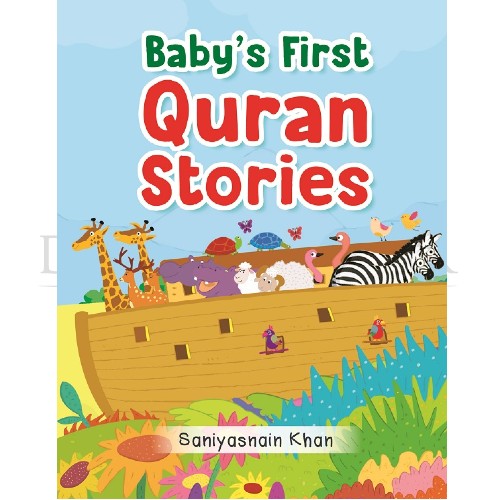
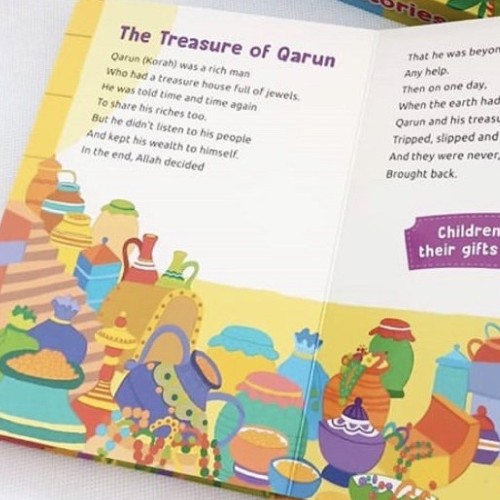
Baby’s First Quran Stories (H/B)
Highlights:
Baby’s First Quran Stories, is a wonderful way to introduce little ones to some of the Quran’s best loved stories. Each of these 20 easy-to-read stories has a moral lesson and all are accompanied by bright and colourful illustrations that will help children in a way that is meaningful and charming to remember and thank Allah. One way read the book by oneself or aloud with the whole family. As a gift, it is perfect!
RM60.00
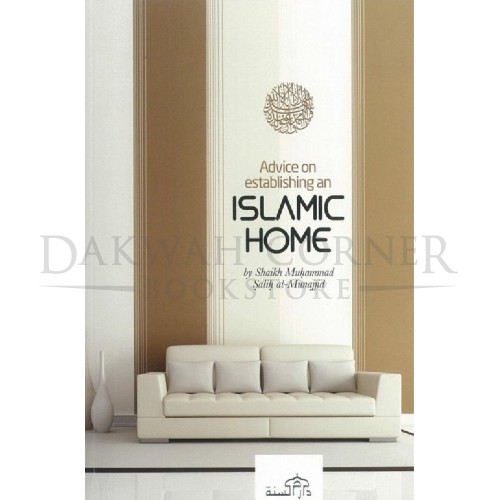
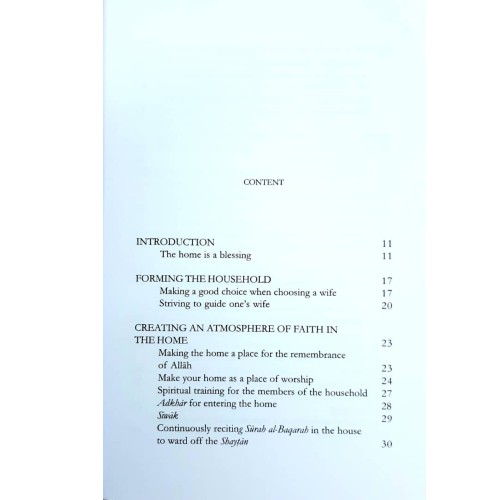
Advice on Establishing an Islamic Home
Highlights:
An excellent book discussing the foundation of an Islämic household. The author addresses issues that are relevant to the majority of Muslim households, such as the importance of choosing a righteous spouse, making your home a place for the remembrance of Alläh, spreading kindness in the home, teaching good manners, discussing some of the evils present in the home, learning the Islämic rulings with regard to how a Muslim home should be, creating an atmosphere of faith, resisting bad manners, choosing a good location and design, how to discipline children which may be more effective than physical punishment and the books that one should read and much more.
RM49.00
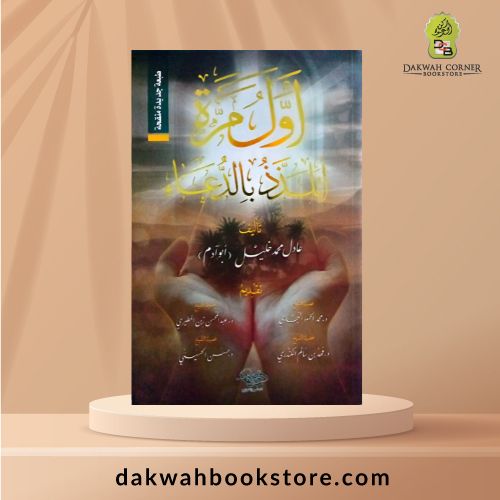
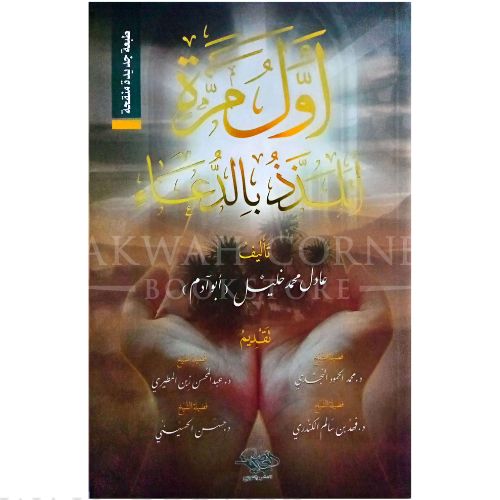
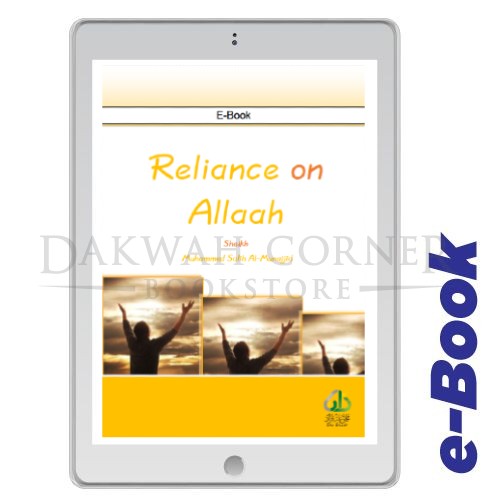
( FREE-eBook) Reliance on Allah
Highlights:
Dialogue is the girdle of the intelligent and the habit of the wise. Dialogue has the greatest influence on humans during interactions and is the loftiest method of enlightenment and preaching. Dialogue is like engraving; it engraves on the souls and leaves lasting impressions on the character of the audience.
After the advent of prophethood, our beloved Prophet Muhammad (Sallalahu Alayhe Wassalam)stayed in Makkah for thirteen years without engaging in physical combat with the non-believers, he did not raise a spear nor unsheathe a sword. He was persistently dialoguing with the people of Makkah for thirteen years !
Dialogue was a well established signpost, clearly seen at every stage of the life of the Prophet (Sallalahu Alayhe Wassalam) and at the different points of his call. The most beloved speech to the people and endearing to their hearts, the most easily accepted by them is that which comes in the form of a conversation in which the listener, the addressee, contributes in speech with his tongue and reasoning while employing his intellect.
Secrets Of Dialogue and Persuasion : The Loftiest Dialogues and Most Powerful Methods Of Persuasion From The Life Of The Best Men صلى الله عليه وسلم is a study of the dialogues of our beloved Prophet Muhammad (Sallalahu Alayhe Wassalam) while inviting to the path of Allah SWT.
- How did he communicate his message to the World’s superpowers at the time, considering the and community in which he lived ?
- What responses did he receive and what lines of action did he follow?
- How did he persuade the youths and adolescents to accept his message ?
- How did he converse with his household, including the women and children ?
- What were the major elements of his dialogues that yielded the best results ?
RM0.00


Backbiting and Its Adverse Effects
4 ★
4 ★
1 Rating
5 ★
0
4 ★
1
3 ★
0
2 ★
0
1 ★
0
Highlights:
This is a revised and updated edition of Backbiting (formerly entitled Gossip and its Adverse Effects). The translator, Huda Khattab, explains: The Qur’an states: {…nor speak ill of each other behind their backs. Would any of you like to eat the flesh of his dead brother? No, you would abhor it…} (Qur’an 49: 12) We cannot escape the fact that backbiting affects us all. We have all been victims and, we must be honest, we have all been guilty of this sin. But it is not a matter to be taken lightly; backbiting can wreck lives and shatter communities. Islam is a practical faith that recognizes the human condition and offers achievable remedies to the problems that beset us. Every human society faces the problem of backbiting, and Islam shows us how to tackle it in a sensible and humane manner. Husayn al-Awayishah has researched this topic in depth, and has presented a concise guide to the evils of backbiting and what can be done about it. This book may make for uncomfortable reading, but the topic is one that every one of us has to face up to.
RM11.00

The Middle Path of Moderration in Islam (H/B)
Highlights:
In The Middle Path of Moderation in Islam, leading Islamic law expert Mohammad Hashim Kamali examines the concept of wasatiyyah, or moderation, arguing that scholars, religious communities, and policy circles alike must have access to this governing principle that drives the silent majority of Muslims, rather than focusing on the extremist fringe. Kamari explores wasatiyyah in both historical/conceptual terms and in contemporary/practical terms. Tracing the definition and scope of the concept from the foundational sources of Islam, the Qu’ran and Hadith, he demonstrates that wasatiyyah has a long and well-developed history in Islamic law and applies the concept to contemporary issues of global policy, such as justice, women’s rights, environmental and financial balance, and globalization.
Framing his work as an open dialogue against a now-decades long formulation of the arguably destructive Huntingtonian “clash of civilizations” thesis as well as the public rhetoric of fear of Muslim extremism since the attacks of September 11, 2001, Kamali connects historical conceptions of wasatiyyah to the themes of state and international law, governance, and cultural maladies in the Muslim world and beyond. Both a descriptive and prescriptive meditation on a key but often neglected principle of Islam, The Middle Path of Moderation in Islam provides insight into an idea that is in the strategic interest of the West both to show and practice for themselves and to recognize in Muslim countries.
RM189.00

[ALA] Kayfa Tutkinun al-Imla’ / كيف تتقن الإملاء
Highlights:
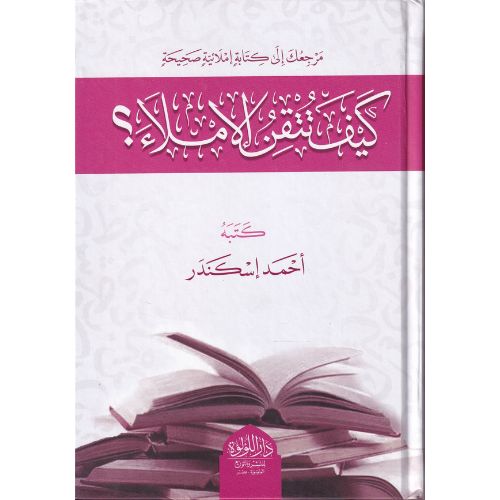
يبدأ الكتاب بعلامات النحو والأساليب النحوية ويستمر حتى يصل إلى أهم وأعمق فروع القواعد في هذا المقال سيوضح موقع “مطبات” كل التفاصيل التي ترغبون في معرفتها.
RM70.00
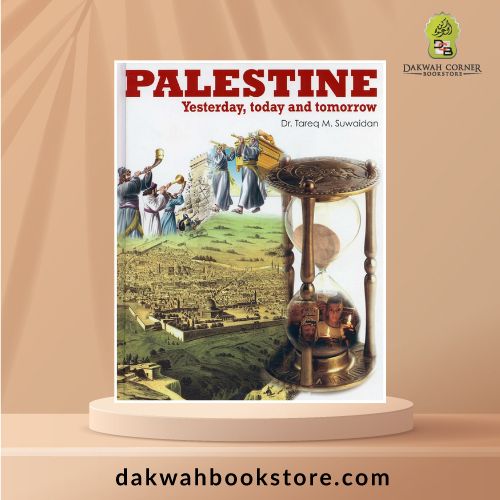
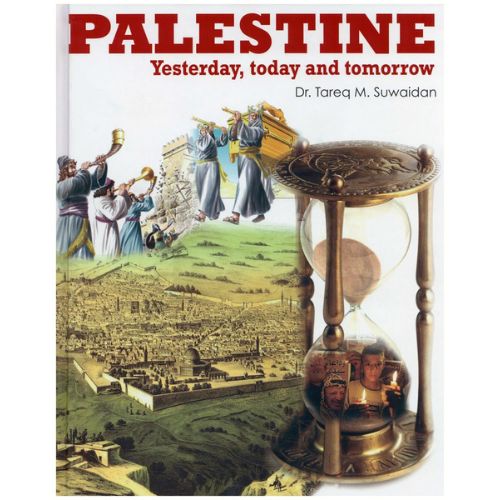
Palestine : Yesterday, Today and Tomorrow
Highlights:
Since the dawn of history, the Palestinian issue has been the focal point of national and international conflicts in the Middle East.
RM125.00
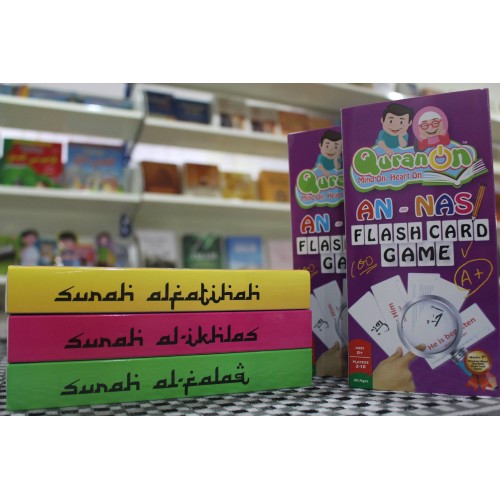
An-Nas Quran On Flash Card Game
Highlights:
Introducing our NEW QuranOn Flash Card Game that will enhance our understanding on the Arabic words, translations, makhraj, tajweed, grammar, meaningful contents and many more.
✔ Recite the verse in the surah clearly from one word to another.
✔ Combination of Arabic alphabets from word by word in the surah to the beginners.
✔ Translation for the each word.
RM40.00

mhakimhanafi (verified owner) –
Abdullah ibn Amr reported: The Messenger of Allah, peace and blessings be upon him, said, “Verily, the faith of one of you will wear out within him, just as a shirt becomes worn out, so ask Allah to renew faith in your hearts.” ~ al-Mu’jam al-Ṭabarānī & al-Mustadrak al-Hakim ~
Faith, or Iman, relates to the worship of the heart. The heart is constantly in motion, which in Arabic, is called qalb, derives from the word taqallub, which means to constantly change or turn.
This book explains the symptoms of weak faith, along with its causes and its treatment. It is an important knowledge for Muslims to have to reflect on ourselves so we may keep our hearts steadfast in our religion. We ask Allah to soften our hearts and keep us guided on the straight path.