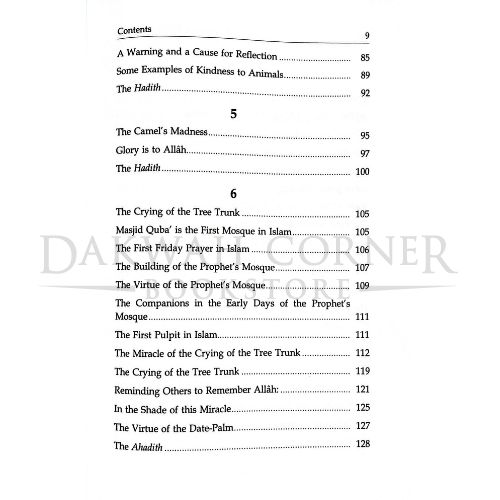
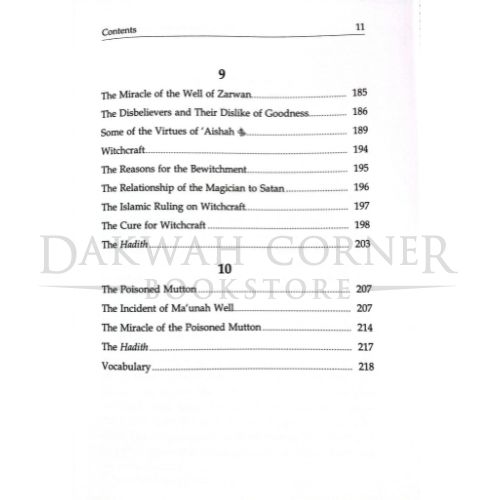
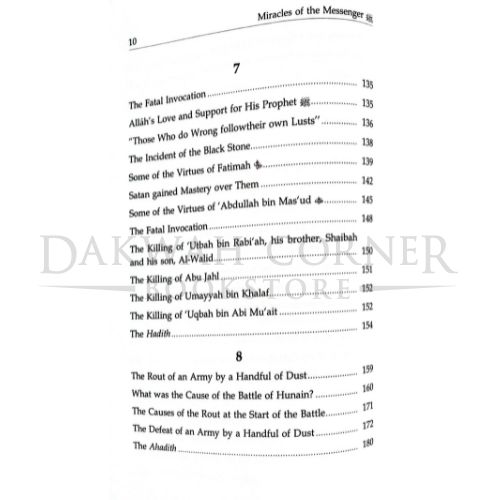
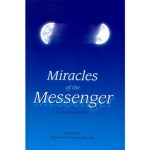
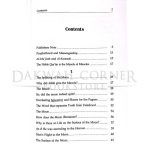
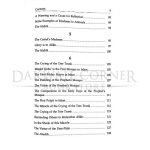
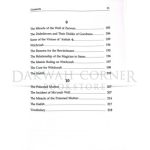
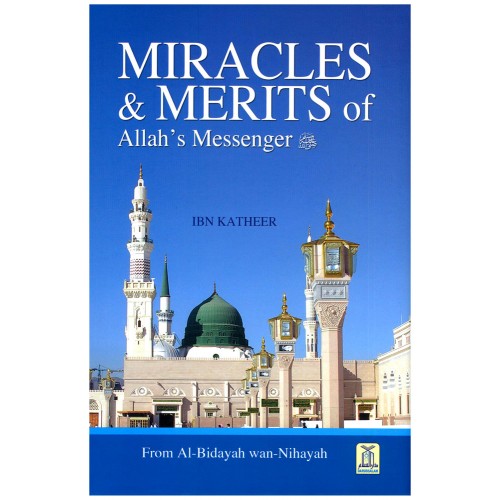
Allah supported his Messengers with miracles to help them in times of distress, to prove the truth of the messages that they were sent with, and to prevent liars and false claimers of Prophethood.
Although the main Miracle given to our Prophet [Islamic phrases=”Shallallahu ‘alaihi wa Sallam”]H[/Islamic] was the Noble Qur’an, but Allah supported him with many other Miracles also. Out of these many Miracles, we are presenting a few of them in this book.
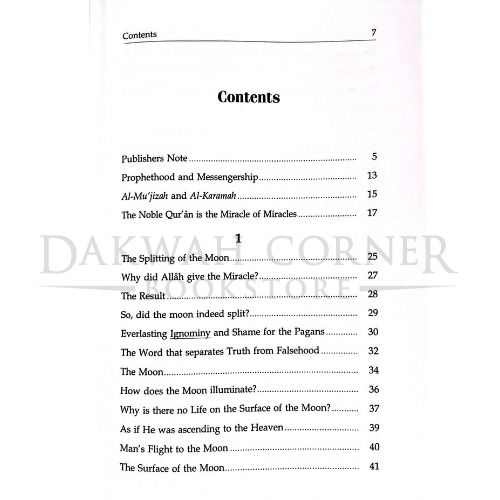
From this book we have started a new feature of providing the meanings of the difficult words. The underlined words are those which have their meanings in the vocabulary given at the end.
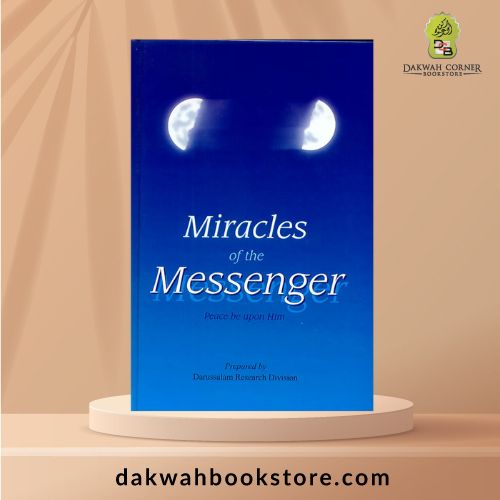
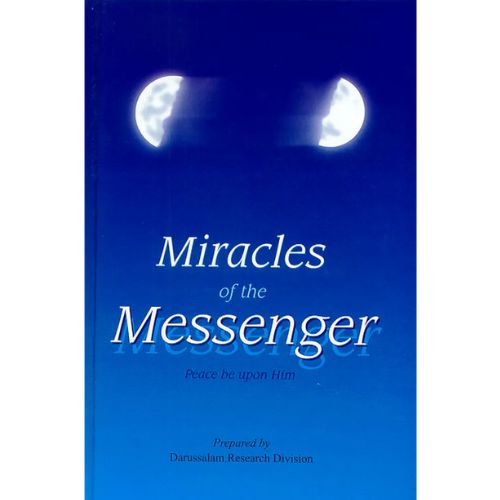
Miracles Of The Messenger (H/B) – Darussalam
RM50.00
Darussalam is pleased to present this book to Muslim youth. The purpose of this book is to enlighten our youth about the Miracles of the Prophet [Islamic phrases=”Shallallahu ‘alaihi wa Sallam”]H[/Islamic].
Frequently Bought Together
| Weight | 0.450 kg |
|---|---|
| Dimensions | 21 × 14 × 1 cm |
| Author | |
| Binding | Hardcover |
| ISBN | 9789960897561 |
| Pages | 239 |
| Year of publication | 2003 |
| Publisher | Darussalam |
Be the first to review “Miracles Of The Messenger (H/B) – Darussalam” Cancel reply
You must be logged in to post a review.
Related Products
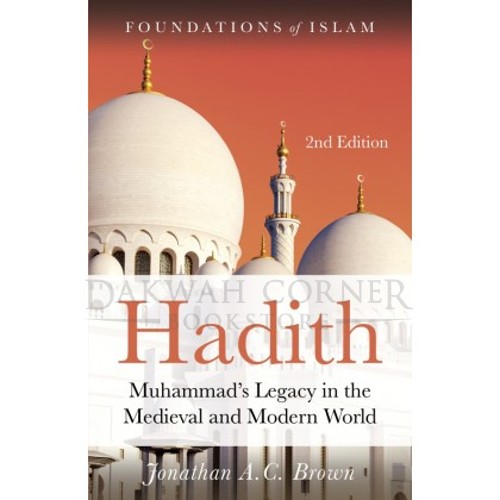
Hadith: Muhammad’s Legacy in the Medieval and Modern World (2nd Edition)
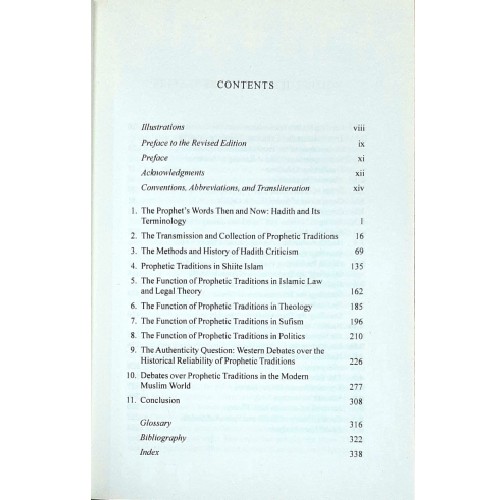
Contrary to popular opinion, the bulk of Islamic law does not come from the Quran but from hadith, first-hand reports of the Prophet Muhammad’s words and deeds, passed from generation to generation. However, with varying accounts often only committed to paper a century after the death of Muhammad, Islamic scholars, past and present, have been faced with complex questions of historical authenticity. In this wide-ranging introduction, Jonathan A. C. Brown explores the collection and criticism of hadith, and the controversy surrounding its role in modern Islam. This edition, revised and updated with additional case studies and attention to the very latest scholarship, also features a new chapter on how hadiths have been used politically, both historically and in the Arab Spring and its aftermath. Informative and accessible, it is perfectly suited to students, scholars and general readers interested in this critical element of Islam.
A Commentary On Nuzhatun Nazar Fi Tawheedi Nukhbatil Fikr ( 2 Vols)
About Hafiz Ibn Hajar Asqalani Imam Ahmad ibn Ali al-Asqalani (d. 852/1448); famously known as Ibn Hajar after one of his ancestors is arguably the best hadith scholar of the Mamluk period. The Dhahabi of his time and the amir al-muminin of the hadith scholars. Imam Suyuti says that he drank from the well of zamzam and prayed to Allah to give him more knowledge than Shams ad-Din adh-Dhahabi. He is the author of over 300 books some going into lengthy volumes. He died on Friday 28 Dhi al-Hijja 852 hijri and was buried in al-Qarrafa; Cairo; now famously known as the City of the Dead (madinat al-mawta)
Hadith Terminology and Classification (H/B)
Islam is a complete way of life that enlightens through the Qur’an and the Sunnah, the true path of guidance and success in this world and the hereafter. However, one must accurately comprehend what has been ordained through the Sunnah and identify the authentic hadiths of the Prophet (blessings and peace be upon him). To do that, it is imperative to understand the rules that govern the classification and definitions of hadith methodology and criticism.
Umdatul-Ahkami min Kalami Khairil-Anam (Principle Islamic Rulings, Taken From The Hadith Of The Prophet SAW) (POCKET SIZE)
The Sunnah of the Prophet Muhammad (ص) is the practical implementation of the Noble Qur’an, it was taught to the Prophet along with the Scripture, side by side. Neither the Noble Qur’an nor the honourable Sunnah can be understood correctly without recourse to the other.
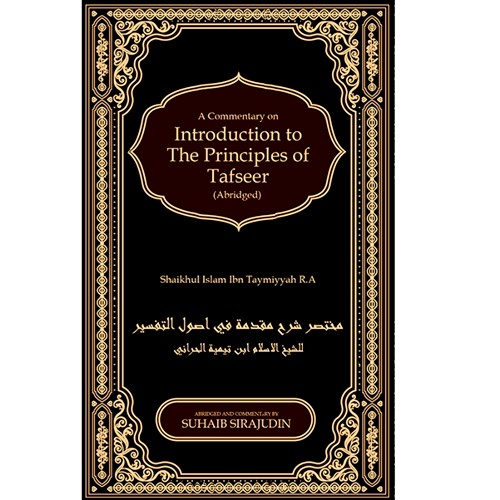
A Commentary on Introduction to The Principles of Tafseer (Abridged)
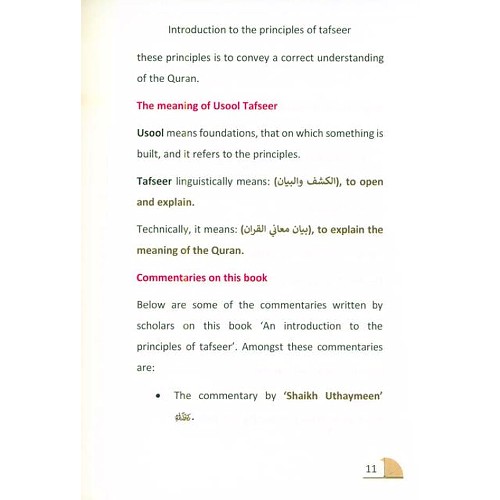
This is a summary of Shaykh Al Islam Ibn Taymiyyah’s Muqaddamah Fi Usool Tafseer (Introduction to the Principles of Tafsir). It discusses the principles of Tafseer that one should know before studying the Tafseer of the Quran.
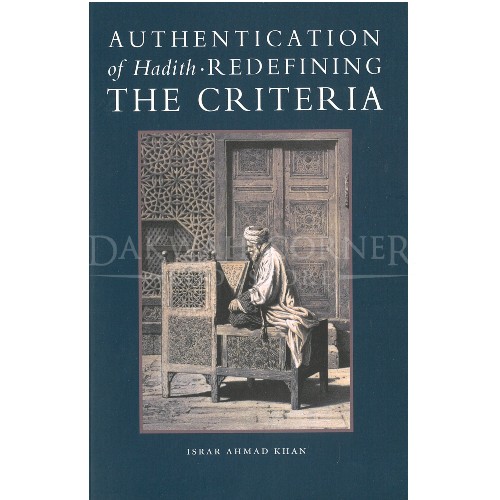
Authentication of Hadith: Redefining the Criteria (IIIT)
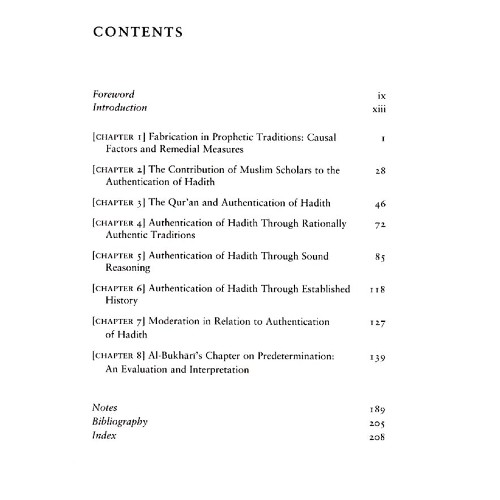
In today’s complex and volatile world the consequences of relying on fraudulent and counterfeit Hadith to legitimise extremist behaviour, issue violent fatwas, and justify blatant abuse, particularly of women, is not only far too easy but in fact dangerous. Israr Khan addresses the sensitive topic of Hadith authentication, focusing on the criteria adopted by classical scholars to maintain that concentration on the continuity and accuracy of the chain of narrators, rather than the textual content of Hadith, has led to particular Hadith being included which either contradict other Hadith directly, project the Prophet (SAAS) in an uncharacteristic light, or do not reflect and/or conflict with the teachings of the Qur an. The study traces in careful detail the historical development of the oral and written traditions, as well as the many targeted attempts at fabrication that took place, critiquing in methodical detail certain Hadith which have come to be widely accepted as authentic. The prominent collections we have today, were made possible by the development of the science of Hadith criticism, and Muslim scholars deserve deep appreciation for their painstaking work, as well as their invaluable contribution towards preserving the Hadith literature to the best of their ability. However, insists the author, the process is ongoing, and the closed door policy which currently surrounds Hadith authentication needs to be carefully reexamined.
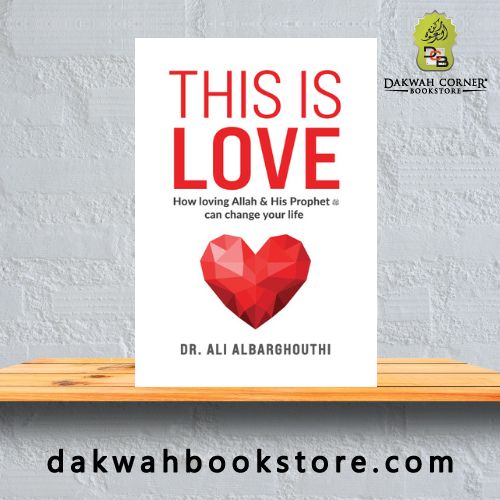
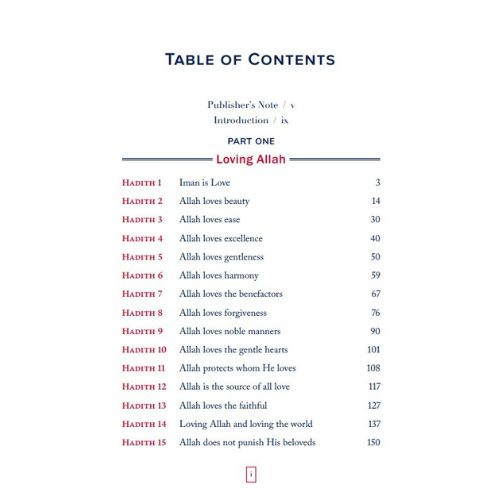
This is Love [3rd Edition]
This book presents the Islamic message of love through forty hadiths on loving Allah, His Prophet, and His creation. It explains the indispensability of divine love in human existence, the centrality of love in Islam, and the means to attain and spread love on earth.
Usool Al-Hadeeth (H/B)
Dr. Bilal Philips writes: “The Prophet’s sayings and actions were primarily based on revelation from Allah and, as such, must be considered a fundamental source of guidance second only to the Qur’an.” According to Dr. Philips, the Hadith, the record of these sayings and actions, plays a vital role in that it transmits revelation, tafseer (exegesis of the Qur’an), Islamic law, and the Islamic moral ideal. For instance, the Prophet’s “…character and social interactions became prime examples of moral conduct for Muslims. Consequently, the daily life of the Prophet (blessings and peace of Allah be upon him) as recorded in the hadith represents an ideal code of conduct. It is largely due to the science of hadith that the final message of Islam has been preserved in its original purity for all times.” In Usool al-Hadeeth, the reader will embark on a course of study that will, Allah willing, enable him or her to make critical and intelligent use of the body of Hadith literature in his or her daily life.
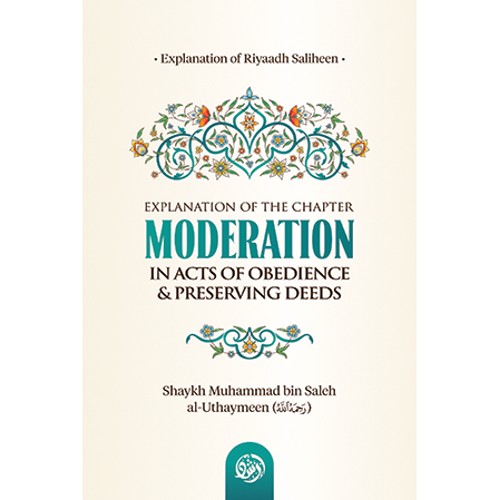
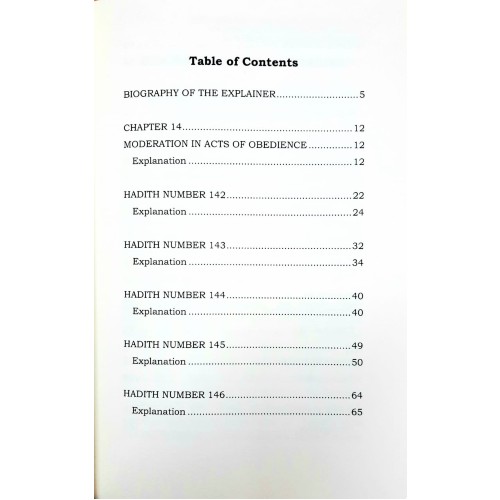
Explanation of the Chapter: Moderation In Acts Of Obedience
Moderation is that one maintains a middle course between extremism and negligence, because it is required from the person in all his circumstances to take a middle course between extremism and neglect. Allaah, the Most High, says, “And those, who, when they spend, are neither extravagant nor niggardly, but hold a medium (way) between those (extremes).” In this manner, the person should or rather must act moderately in acts of obedience. So you should not burden yourself with what you cannot bear because when the Prophet (sallallahu alayhi wa sallam) heard about the three individuals, one of whom said, “Indeed, I will not wed women,” and the second said, “I will observe fasting and never break it,” and the third said, “I will stand up in prayer at night and will not sleep”; he (alayhi salātu wa salaam) delivered a speech in which he said, “What is the matter with those who say such and such, indeed I pray at night and sleep, I observe fasting and break it, and I wed women? For whoever turns away from my Sunnah is not from me.”
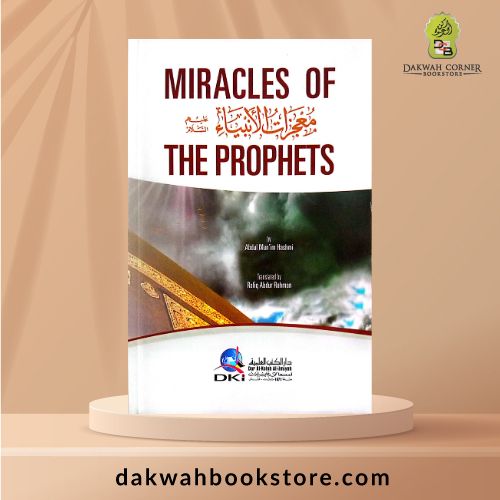
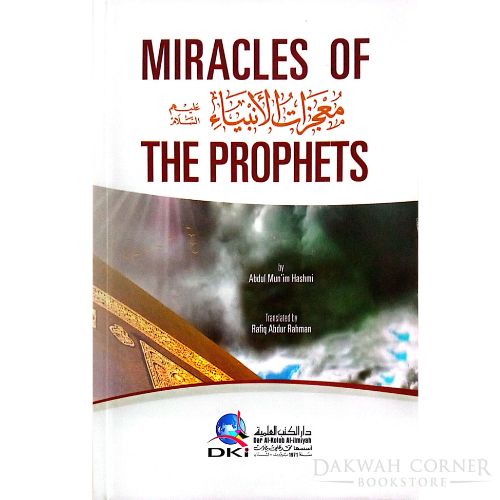
Miracles Of The Prophets (P/B) – DKI
The Glorious Qur’an Dealt with four topics:
- Faith,
- Rituals,
- The Stories, and
- The Rules.
The third topic of the Qur’an to be tackled in this book is about the many stories of the Prophets and their Miracles. These Stories are elaborately told, and the aim is honest as well as sublime; for they sharpen the hearts, beautify the tempers, teach sermons and manners, and, all in all, make the human self subtle and well-organized.
Recently Viewed
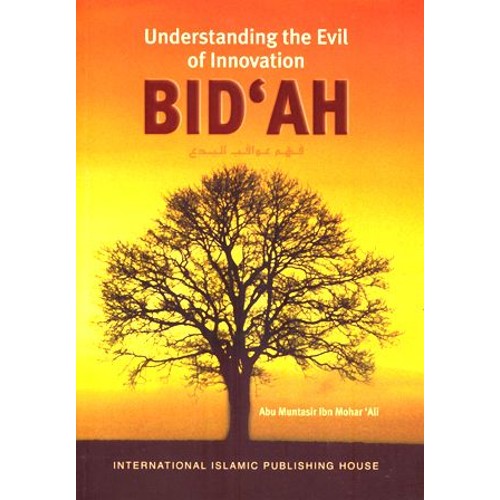
Understanding the Evil of Innovation Bid’ah (P/B)
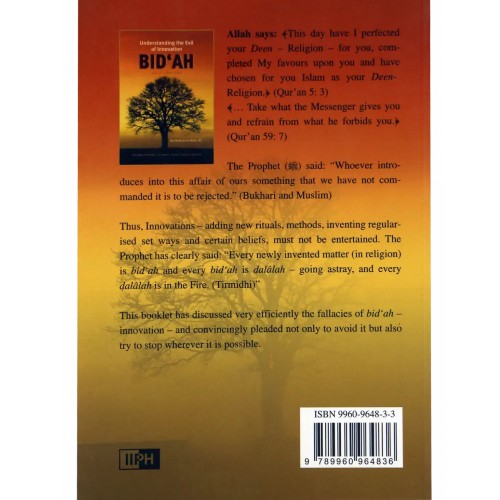
The author discusses society’s tendency to introduce innovations into religion, as proven by the fact that earlier divinely-revealed religions were corrupted by new rituals, new beliefs, or new methods of performing authentic rituals. The author describes the evil consequences of innovation in religion and explains how it can be prevented.


There are no reviews yet.