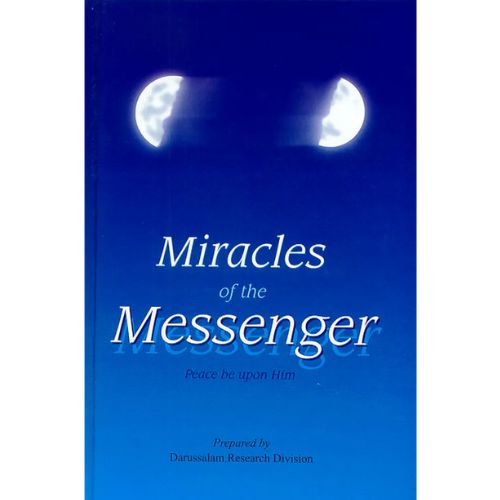
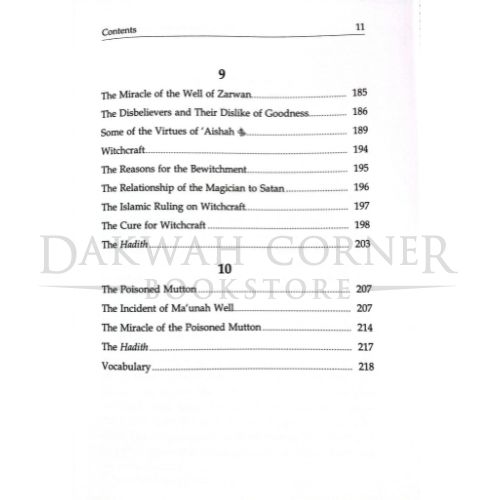
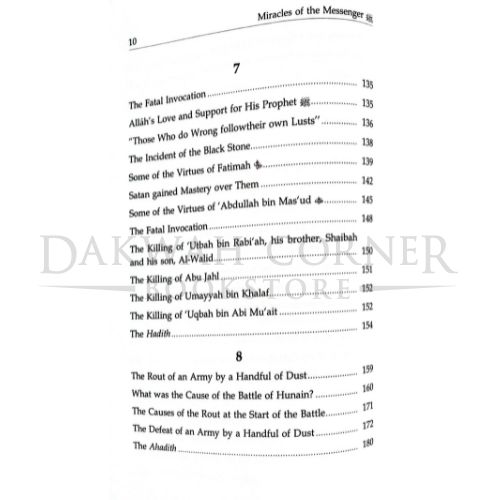
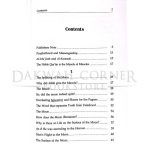
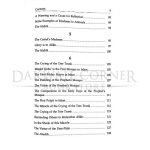
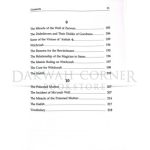
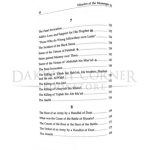
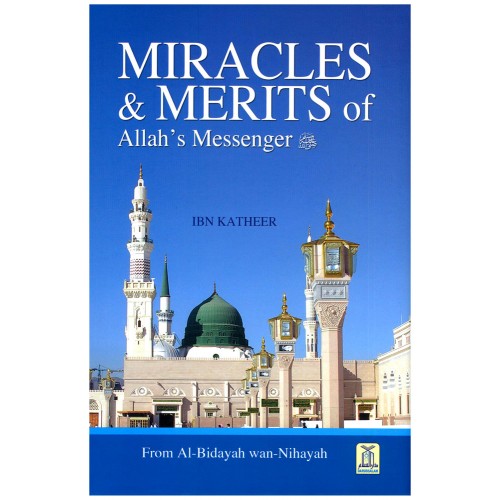
Allah supported his Messengers with miracles to help them in times of distress, to prove the truth of the messages that they were sent with, and to prevent liars and false claimers of Prophethood.
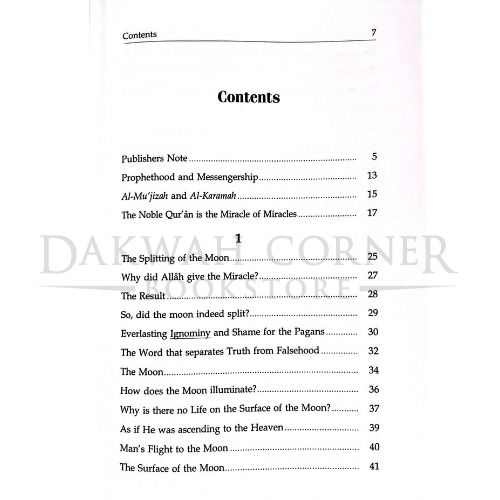
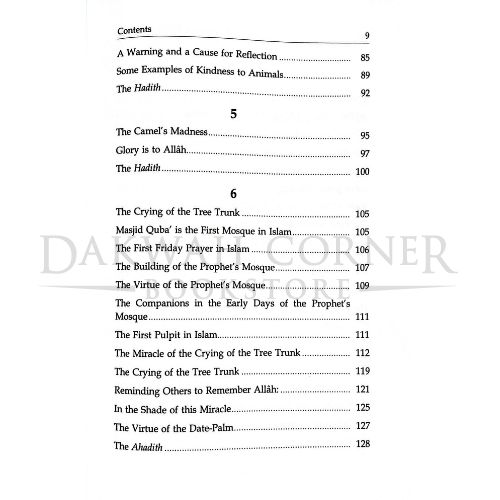
Although the main Miracle given to our Prophet [Islamic phrases=”Shallallahu ‘alaihi wa Sallam”]H[/Islamic] was the Noble Qur’an, but Allah supported him with many other Miracles also. Out of these many Miracles, we are presenting a few of them in this book.
From this book we have started a new feature of providing the meanings of the difficult words. The underlined words are those which have their meanings in the vocabulary given at the end.
Miracles Of The Messenger (H/B) – Darussalam
RM50.00
Darussalam is pleased to present this book to Muslim youth. The purpose of this book is to enlighten our youth about the Miracles of the Prophet [Islamic phrases=”Shallallahu ‘alaihi wa Sallam”]H[/Islamic].
Frequently Bought Together
| Weight | 0.450 kg |
|---|---|
| Dimensions | 21 × 14 × 1 cm |
| Author | |
| Binding | Hardcover |
| ISBN | 9789960897561 |
| Pages | 239 |
| Year of publication | 2003 |
| Publisher | Darussalam |
Be the first to review “Miracles Of The Messenger (H/B) – Darussalam” Cancel reply
You must be logged in to post a review.
Related Products
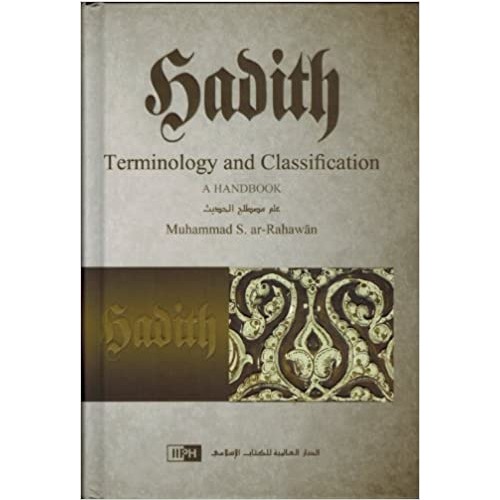
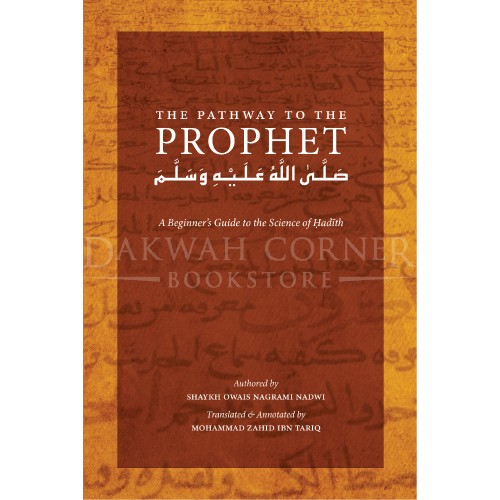
Hadith Terminology and Classification (H/B)
Islam is a complete way of life that enlightens through the Qur’an and the Sunnah, the true path of guidance and success in this world and the hereafter. However, one must accurately comprehend what has been ordained through the Sunnah and identify the authentic hadiths of the Prophet (blessings and peace be upon him). To do that, it is imperative to understand the rules that govern the classification and definitions of hadith methodology and criticism.
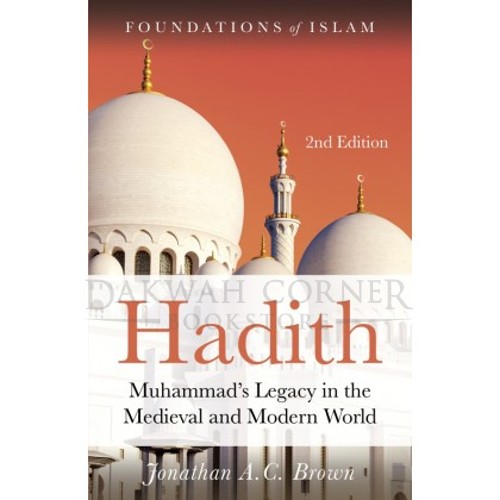
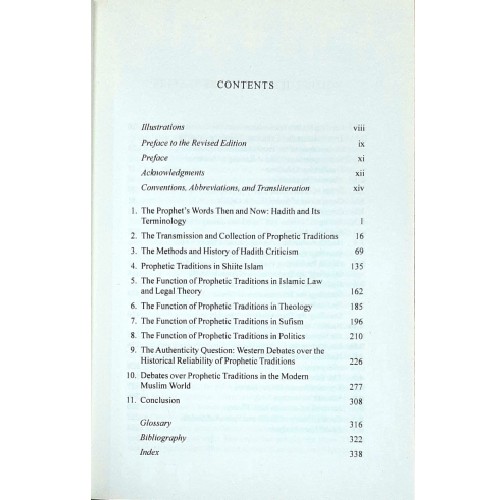
Hadith: Muhammad’s Legacy in the Medieval and Modern World (2nd Edition)
Contrary to popular opinion, the bulk of Islamic law does not come from the Quran but from hadith, first-hand reports of the Prophet Muhammad’s words and deeds, passed from generation to generation. However, with varying accounts often only committed to paper a century after the death of Muhammad, Islamic scholars, past and present, have been faced with complex questions of historical authenticity. In this wide-ranging introduction, Jonathan A. C. Brown explores the collection and criticism of hadith, and the controversy surrounding its role in modern Islam. This edition, revised and updated with additional case studies and attention to the very latest scholarship, also features a new chapter on how hadiths have been used politically, both historically and in the Arab Spring and its aftermath. Informative and accessible, it is perfectly suited to students, scholars and general readers interested in this critical element of Islam.
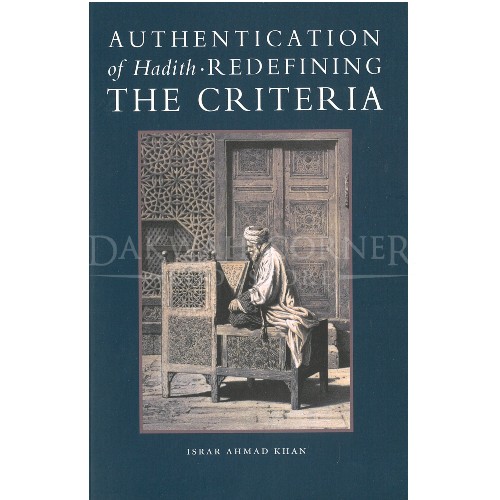
Authentication of Hadith: Redefining the Criteria (IIIT)
In today’s complex and volatile world the consequences of relying on fraudulent and counterfeit Hadith to legitimise extremist behaviour, issue violent fatwas, and justify blatant abuse, particularly of women, is not only far too easy but in fact dangerous. Israr Khan addresses the sensitive topic of Hadith authentication, focusing on the criteria adopted by classical scholars to maintain that concentration on the continuity and accuracy of the chain of narrators, rather than the textual content of Hadith, has led to particular Hadith being included which either contradict other Hadith directly, project the Prophet (SAAS) in an uncharacteristic light, or do not reflect and/or conflict with the teachings of the Qur an. The study traces in careful detail the historical development of the oral and written traditions, as well as the many targeted attempts at fabrication that took place, critiquing in methodical detail certain Hadith which have come to be widely accepted as authentic. The prominent collections we have today, were made possible by the development of the science of Hadith criticism, and Muslim scholars deserve deep appreciation for their painstaking work, as well as their invaluable contribution towards preserving the Hadith literature to the best of their ability. However, insists the author, the process is ongoing, and the closed door policy which currently surrounds Hadith authentication needs to be carefully reexamined.
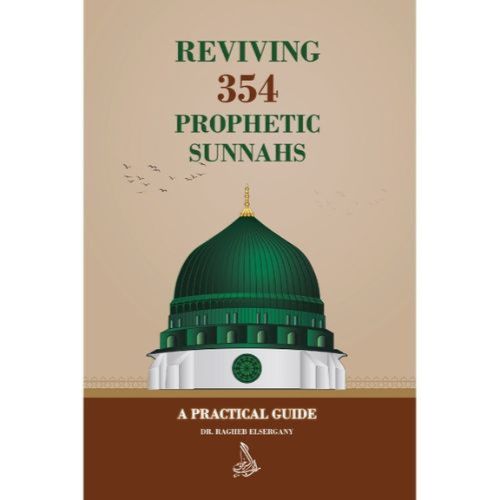
Reviving 354 Prophetic Sunnahs: A Practical Guide by Dr. Ragheb Elsergany
Prophet Muhammad (peace be upon him) predicted that a time would come when people would deliberately leave the Sunnah, and rely only on the Noble Quran. Both this authentic hadith and many verses of the Quran make it clear that to do so is delusional and misguided.
Usool Al-Hadeeth (H/B)
Dr. Bilal Philips writes: “The Prophet’s sayings and actions were primarily based on revelation from Allah and, as such, must be considered a fundamental source of guidance second only to the Qur’an.” According to Dr. Philips, the Hadith, the record of these sayings and actions, plays a vital role in that it transmits revelation, tafseer (exegesis of the Qur’an), Islamic law, and the Islamic moral ideal. For instance, the Prophet’s “…character and social interactions became prime examples of moral conduct for Muslims. Consequently, the daily life of the Prophet (blessings and peace of Allah be upon him) as recorded in the hadith represents an ideal code of conduct. It is largely due to the science of hadith that the final message of Islam has been preserved in its original purity for all times.” In Usool al-Hadeeth, the reader will embark on a course of study that will, Allah willing, enable him or her to make critical and intelligent use of the body of Hadith literature in his or her daily life.
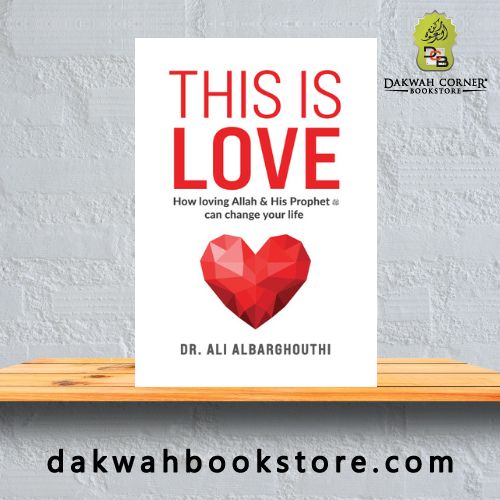
This is Love [3rd Edition]
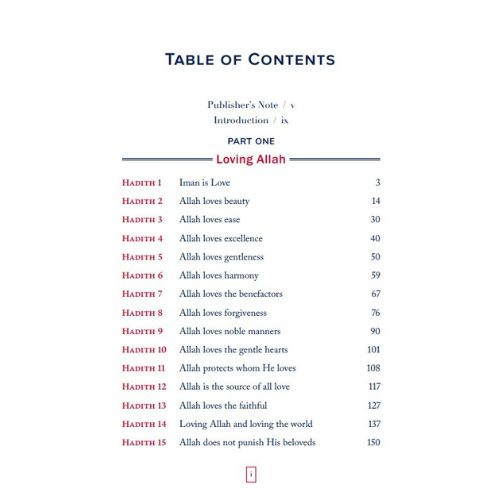
This book presents the Islamic message of love through forty hadiths on loving Allah, His Prophet, and His creation. It explains the indispensability of divine love in human existence, the centrality of love in Islam, and the means to attain and spread love on earth.
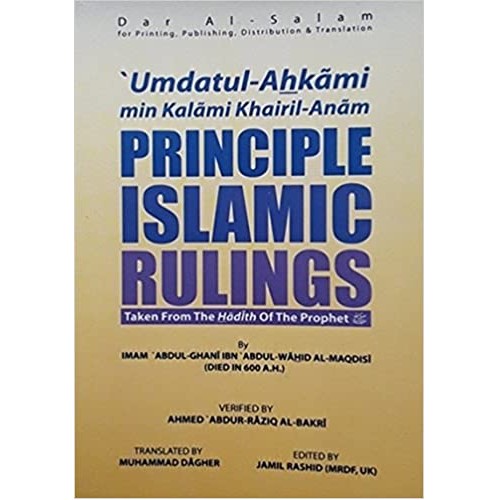
Umdatul-Ahkami min Kalami Khairil-Anam (Principle Islamic Rulings, Taken From The Hadith Of The Prophet SAW) (POCKET SIZE)
The Sunnah of the Prophet Muhammad (ص) is the practical implementation of the Noble Qur’an, it was taught to the Prophet along with the Scripture, side by side. Neither the Noble Qur’an nor the honourable Sunnah can be understood correctly without recourse to the other.
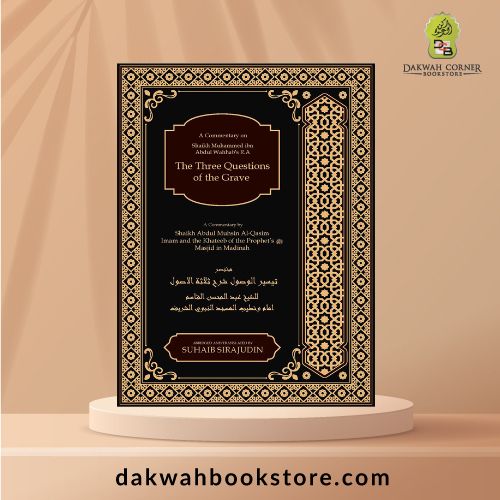
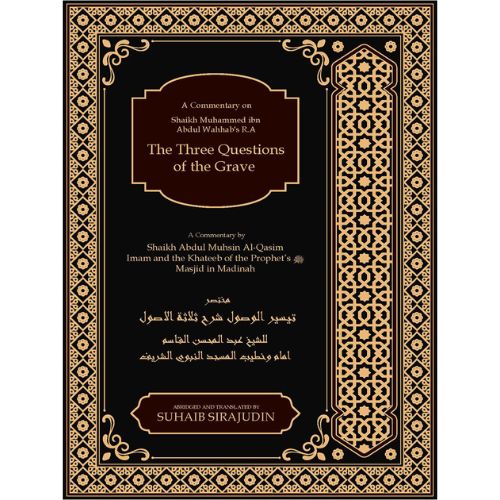
A Commentary on The Three Questions of the Grave
This is a summarised translation of Shaikh Abdul Muhsin Al Qasim’s (The Imam and the Khateeb of the Prophet’s Masjid in Madinah) book titled ‘Tayseerul Wusool’ which is a commentary on the book of Shaikh Muhammed ibn Abdul Wahhab’s Thalathatul Usool (The Three Questions of the Grave). It is a commentary on the three questions of the grave which every human being will be asked in his grave.
Recently Viewed
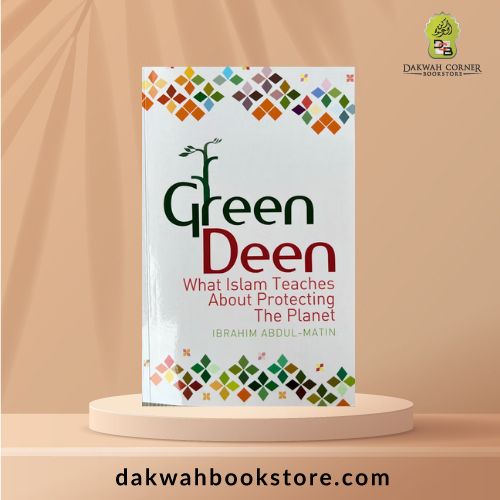
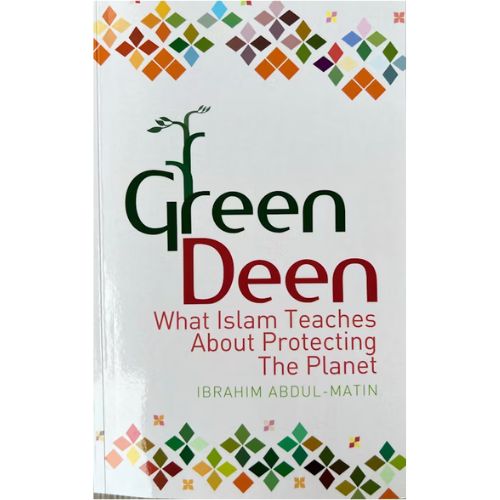
Green Deen: What Islam Teaches about Protecting the Planet
In this ground breaking book, Ibrahim Abdul-Matin draws on research, scripture and interviews with Muslims to trace Islam’s profound dedication to humankind’s collective role as stewards of the Earth. Abdul-Matin points out that the Prophet Muhammad declared that the Earth is a mosque. ‘Deen’ means ‘way’ in Arabic. Abdul-Matin offers dozens of examples of how Muslims can follow, and already are following, a Green Deen in four areas: waste, watts (energy), water and food. At last, people of all beliefs can appreciate the gifts and contributions that Islam and Muslims bring to the environmental movement.
Girl, Your Goal Is Jannah
A Transformational Guide for Muslim Women Are you ready to embark on a journey that will change the course of your life? In a world overflowing with distractions, ‘Girl, Your Goal Is Jannah’ is the guiding star you’ve been searching for. Each passage includes: •Scripture – An inspiring ayah or hadith to reflect and meditate on, giving you time to memorise and ingrain it into your heart and soul. • Guided Journal – Pages with thoughts and questions prompted by the ayah and hadith, along with space to record your own thoughts and responses. A perfect companion for individual worship or for group Islamic study.
Muhammad in the Hindu Scriptures (P/B)
God is One. Human nature is one. Human destiny is one. And God�s message to humanity vis-a-vis that destiny is one. However, the rebellious element in man�s nature has led him to disobey God on the one hand, and on the other, he has pushed on to distort the very message of God. But the message is never fully lost. It would be ludicrous and indeed heretical to think that the situation could have gone out of God’s control.
With every distortion, therefore, He has renewed the message to salvage humanity from self-ruin. More interesting than that is the fact
that He has inserted in every message a Pointer to the Final Guide and the message he would be entrusted with; a Pointer which shows the true
seeker where the uncorrupted message could be found – the message that no one would be able to distort any more. While the main body of the message has been corrupted, the Pointer contained within has not been destroyed. Muhammad in the Hindu Scriptures brings out the truth of this phenomenon.
In addition to the Vedas and the Puranas, the book has unearthed this Pointer in the Buddhist, Christian, Jewish and other Hindu scriptures. Each of these scriptures uses its own unique Pointer relevant to its own theological scheme and the religious mentality of its own people. Separately and jointly these Pointers lit up the road to Muhammad (blessings and peace be upon him) exclusively, without any iota of doubt.
By all accounts the Final Guru has been sent and the Last Testament is in our laps. Additionally, the existence of these Pointers in the earlier
scriptures is yet another dimension of God’s mechanism to guide mankind to the infallible Truth. Upon reading the book, the theist, the atheist and the agnostic will find a lot to think about.
Reflecting on the Names of Allah (P/B)
Prophet Muhammad: A Blessing for Mankind
Prophet Muhammad (blessings and peace of Allah be upon him) and the lessons he taught us from the continued hardships he underwent in every stage of his life are a real blessing for humankind. Being an orphan child made him compassionate to widows and orphans as well as to the poor. His multiple marriages strengthened the ties of kinship amongst the different tribes, dissolving long-standing enmity. His message and prophethood were challenged by the polytheistic society in Makkah, forcing him and his few followers to emigrate to Madinah. Despite his illiteracy and the struggles he faced, he conveyed Allah’s Book, the Noble Qur’an, to all humanity, teaching them the values and principles that are presently adopted by billions of Muslims throughout the world. In the Qur’an, Allah, the Almighty addresses the Prophet (blessings and peace of Allah be upon him), saying: {We have sent you only as a mercy to the worlds.} (Qur’an 21: 107)
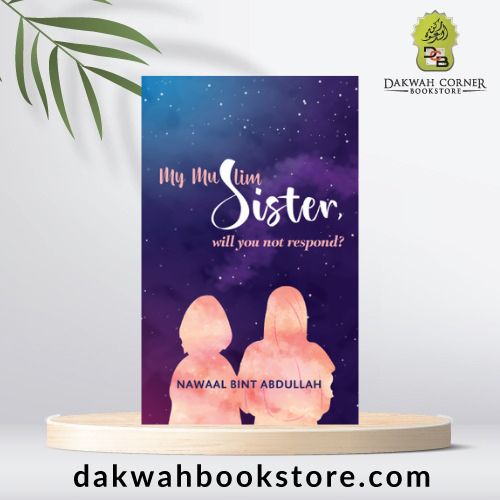
My Muslim Sister, will you not respond?
This book is the result of the author’s personal experiences and observation of the issues concerning muslim women of today. From the influences of society and culture, to the lack of understanding toward obligations and rights, women in general are under pressure to “look good.”
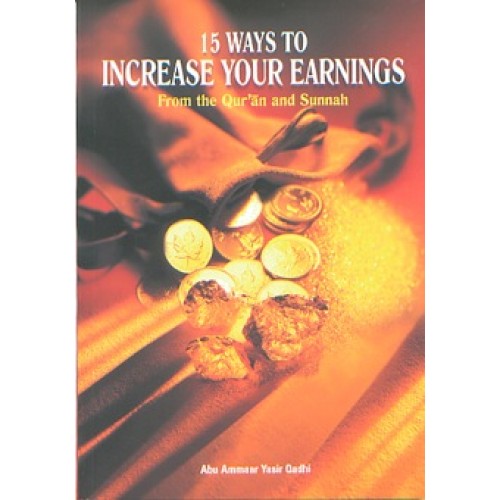
15 Ways to Increase Your Earnings from the Quran and Sunnah (P/B)
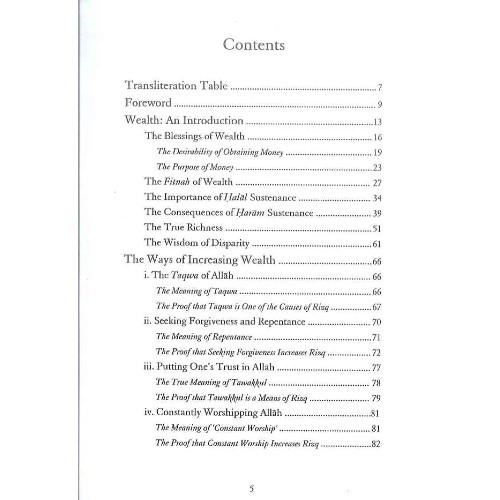
One of the blessings that Allah has given His servants is that of a convenient means of financial exchange, i.e. money. Money has since grown to become one of the most’ prized possessions of mankind, and like so many elements of the dunya, serves to test the obedience of Allah’s servants by challenging their system of priorities… Therefore, due to the fact that the Muslims of today are preoccupied with the seeking of money to an extent almost unparalleled in Islamic history, I felt the need to compile a short treatise explaining the manner in which Allah and His Messenger described how Muslims could increase their money. The focus of this book is upon encouraging Muslims to procure money through halal means, and to abstain from haram gains. Abu Ammaar Yasir Qadhi was born in Houston, TX, but completed his primary and secondary education in Jeddah, Saudi Arabia. He graduated with a B.Sc. in Chemical Engineering from the University of Houston, after which he was accepted as a student at the Islamic University of Madinah. After completing a diploma in Arabic, he graduated with a B.A. from the College of Hadith and Islamic Sciences. He is presently doing an M.A. in Islamic Theology (‘aqidah) from the College of Da’wah at the University. Of his published works are: Riyaa: Hidden Shirk; An Introduction to the Sciences of the Qur’an; An Explanation of the Four Principles of Shirk;Du’a: The Weapon of the Believer; and others.


There are no reviews yet.