



![[AQR] Mabadi’ ‘Ilm at-Tadabbur - مبادئ علم التدبر](https://shop.dakwahbookstore.com/wp-content/uploads/2025/03/TARIQ-10.jpg)


| Weight | 0.85 kg |
|---|---|
| Dimensions | 24 × 17 × 2 cm |
| Author | |
| Binding | Paperback |
| ISBN | 9780976862970 |
| Pages | 418 |
| Publisher | History Revival Foundation |
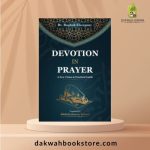
Devotion in Prayer P/B
RM65.00
Hurry up, Only 2 left.
Highlights:
somdn_product_page
Compare
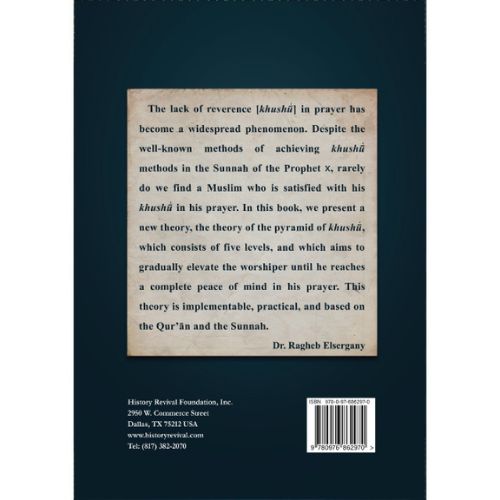
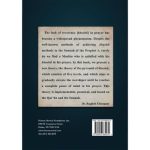
The lack of reverence [khushi] in prayer has become a widespread phenomenon. Despite the well-known methods of achieving khushu methods in the Sunnah of the Prophet, rarely do we find a Muslim who is satisfied with his khushi in his prayer. In this book, we present a new theory, the theory of the pyramid of khushů, which consists of five levels, and which aims to gradually elevate the worshiper until he reaches a complete peace of mind in his prayer. This theory is implementable, practical, and based on the Qur’an and the Sunnah.
Frequently Bought Together

1 Item
RM65.00
2 Add-Ons
RM76.00
Total
RM141.00
Additional information
Reviews (0)
Be the first to review “Devotion in Prayer P/B” Cancel reply
You must be logged in to post a review.
You may also like…


A Guide to Salah (Prayer) (P/B)
5 ★
5 ★
1 Rating
5 ★
1
4 ★
0
3 ★
0
2 ★
0
1 ★
0
Highlights:
This book is the result of direct research into the Sunnah of Prophet Muhammad saw and makes numerous references to the original sources. It contains all the essential details of salah without being too bulky or complicated, thus making it an ideal reference book either at home or while travelling.
A clear and concise explanation on how to pray. Also gives a detailed description of the preliminaries to salah, and different types of salah, with easy-to-follow illustrations.
RM16.00
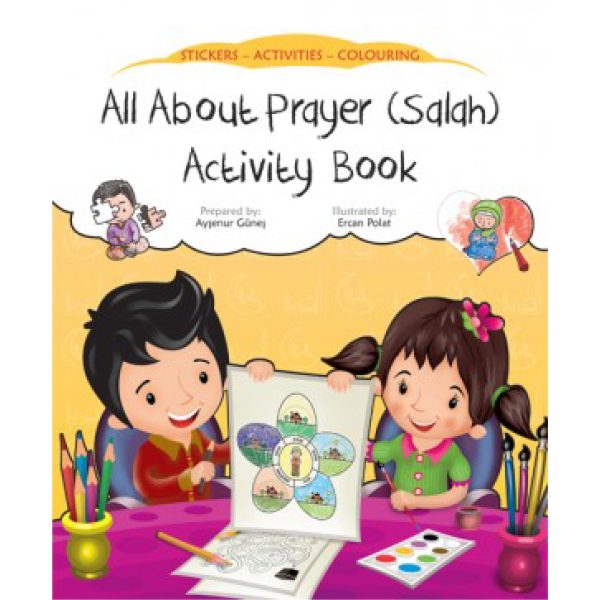
(READY STOCK✅) All About Prayer (Salah) Activity Book
Highlights:
Find out about the Muslim prayer with this fun sticker activity book. Features dot-to-dot drawings, coloring fun, puzzles to solve and over 60 stickers to stick.
Introduces children to the way Muslims prepare for prayer and the main parts involved in performing it, including calling adhan, facing the Kaaba and reciting words from the Qur’an.
RM22.00
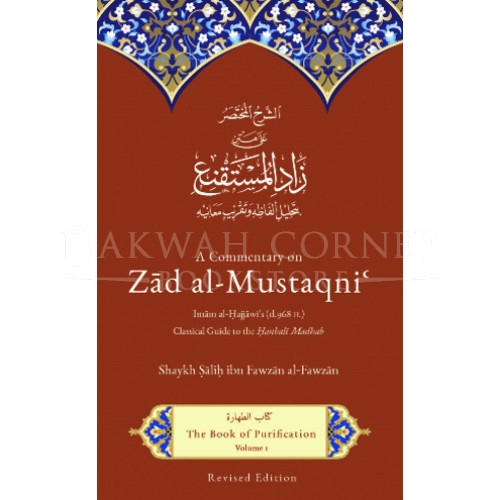


The Salah – The Prophet’s Prayer Described (H/B)
5 ★
5 ★
1 Rating
5 ★
1
4 ★
0
3 ★
0
2 ★
0
1 ★
0
Highlights:
It is not possible to us to perform the Salah (Prayer) as it should be performed unless we know the detailed description of the Prayer shown by Prophet Muhammad sallallahu ‘alayhi wasallam, such as essentials, manners, forms, supplications and remembrances. However, detailed familiarity with these aspects of the Prayer is difficult to be achieved by most people nowadays because of their limiting themselves to a particular madhhab (school of thought). In every mudhhab, there are traditions and sunnahs (Prophetic examples) which are not found in other madhhabs, and in every mudhhab there are sayings and actions which cannot be authentically traced back to the Prophet.
Many any books have been published on the Prayer of the Prophet but most are by later scholars that cater for a particular muddhab. This famous work, translated from the original Arabic Sifah Salah al-Nabi, brings together as many features of the Prophet’s Prayer from the takbir to the taslim, so that Muslims can fullfil the Prophet’s command to “pray as you see me pray”. This work is the result of an intensive research by the author on various traditions (Hadiths) and their relevance, judjed according to the strict rules of the science of Hadith.
RM35.00
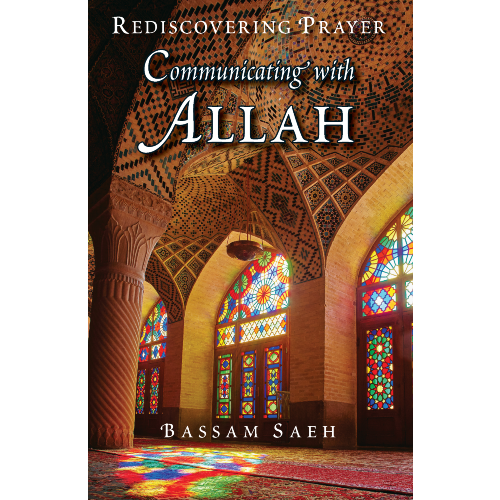
Communicating With Allah : Rediscovering Prayer P/B
Highlights:
Learn to let go of your worldly worries during your prayers (salah) and be more mindful before God.
Bassam Saeh
In a modern world of constant distraction, how are we to achieve the communion with the Divine that prayer is supposed to be? Rediscover prayer, with this book filled with short reminders containing practical examples to help readers attain a deeper sense of devotion to Allah
RM37.00
Related Products


Principles of Islamic Jurisprudence (2nd Revised Edition)
Highlights:
This book offers a detailed presentation of the theory of Muslim law (usul al-figh). Often regarded as the most sophisticated of the traditional Islamic disciplines, Muslim jurisprudence is concerned with the way in which the rituals and laws of religion are derived from the Qur’an and the Sunna – the precedent of the Prophet. Revelation, which is given to man to restore unity and help him achieve a just and devout order in society as well as in the soul, must be interpreted so as to render it practicable in every culture, while not betraying its spirit and immutable provisions. To achieve this, additional sources of legal authority are recognized, including consensus (ijma), analogical deduction (qiyas), public interest (maslaha) and local customary precedent (urf). In employing these, the jurist guards the five principles which it is the purpose of Islamic law to uphold, namely, the right to life, sound mind, property, lineage and religion.
RM75.00


Funeral Rites In Islam (H/B)
Highlights:
The purpose of this book is to provide English speaking Muslims a concise and authentic compilation of the instructions regarding funeral rites in Islam.
RM35.00

Shatibi’s Philosophy of Islamic Law (P/B)
Highlights:
Abu Ishaq al-Shatibi, who died in 1888, had sought an answer to the challenge posed by modernisation and change to Islamic law, by introducing maslahah, which forms the basis of his philosophy of Islamic law. In a fascinating way, the author leads us step by step to what he considers the true import of Shatibi’s views concerning jurisprudence.
RM41.00

Preservation of Health in Islamic Law (P/B)
Highlights:
Preservation of health (hifz al-sihhah) is the most important branch of Islamic medicine since it is primarily concerned with the prevention of illness rather than cure. This book represents one of the few attempts to introduce the role of Islamic medicine, although Chapter One provides information about a historical background of the preservation of helath in Islam, its aim is to provide fresh ant timely overview of the major aspects of legal, ritual and spiritual structures of teh Islamic law (shariah). These include the laws related to Ibadah, Islamic family laws, foods and drinks as well as environmental laws, for maintaning and preserving human health. Findings indicated that prevention of any diseases from Islamic medical law presentive cannot attain any real success unless it emanates from an Islamic fundamental teaching, namely: the pillars of Islam. Iman and observance of the Islamic rituals such as Salah, zakah, Sawm and Hajj, have played an important role in shaping the attitude, behavior and model personality of the Muslim, in boosting the spiritual motivation or attitude change, and in disseminating the message of prevention. This indicates that bodily and spiritual health goes hand in hand and that pyscho-spritual balance and health is a primary consideration whereas physical health is a secondary one.
RM47.00


The Ultimate Guide to Umrah by Darussalam
Highlights:
Based on the famous book ‘Getting the Best out of Hajj’ With special chapters on Umrah in Ramadaan & Visiting Madinah After Hajj, a Muslim considers Umrah to be the most significant worship that brings the opportunity of rewards and the blessings of visiting Ka’bah and the Prophet’s Mosque along with other sacred places one wishes to visit and try to feel the atmosphere present at the time of Allah’s Messenger (peace be upon him) and the hardships he had to bear while preaching Islam. During such a visit, a newcomer has to face many difficulties because of a lack of knowledge about the rites and places. To provide complete details about everything, a pilgrim wants to know, the first time this book has been compiled with the utmost care and research so as to make it useful in every respect.
RM55.00


Fast According to the Quran & Sunnah
Highlights:
Saum (Fast) is a third Pillar of Islam. Allah’s Messenger said, Allah says: “Every deed of the son of Adam is for him, except Saum (fasting). It is for Me and I shall reward for it.”
As the status of this act of worship is so high it is essential to learn the pilings pertaining to this month of fasting so that Muslims will know what is obligatory in order to do it, what is forbidden to avoid it, and what is permissible so that they do not unnecessarily subject themselves to any hardship by depriving themselves from it.
This book consists of all the main issues of Fast. The main objective of this work is to serve an easy and authentic reference to the reader.
RM35.00


Funerals Regulations and Exhortations (H/B)
Highlights:
Our soul inevitably follows a route starting from birth, passing through death, and ending with our resurrection in the next life. The inevitable journey discusses over a sequence of titles: sickness, inheritance, funerals, Life in Barzakh and so on…
RM75.00


Ibn Ashur Treatise on Maqasid al-Shariah (P/B)
Highlights:
Ibn Khaldun, the fourteenth century Arab historiographer and historian, is viewed as a founder of modern historiography, sociology and economics. He lived during a turbulent part of history, and out of his experiences, he ?conceived and created a philosophy of history that was undoubtedly the greatest work ever created by a man of intelligence…?. This work tells of the period of unrest in Ibn Khaldun?s life marked by political rivalries. It is during this turbulent period which provided him with the opportunity to write the Muqaddimah (or Prolegomena), earning him an immortal place among historians, sociologists and philosophe
RM72.00


Remembrance & Prayer: The way of Prophet Muhammad s.a.w
Highlights:
Remembrance and Prayer: The Way of Prophet Muhammad, was one of the first works of Shaykh al Ghazali’s to be translated into English. The book describes in vivid prose how the Prophet, upon him be peace, used to remember Allah and pray to Him. Not only are the exquisitely beautiful, deeply moving and penetrating words of the Prophet given in the English translation, but in the original Arabic as well, thus allowing those desirous of memorizing Arabic access to the original texts. The intimate relationship with Allah, which was the hallmark of the Prophet’s life, becomes clear and vivid. The book’s contents are immensely relevant. to the life and concerns of modern man, whose life has been made barren by the present secularist machinery.
RM75.00


Zakah According to the Quran & Sunnah (Darussalam)
Highlights:
Zakah, the third Pillar of Islam, is probably the first Pillar of its economic system. It represents the first and most important mechanism to implement economic justice and to provide sustenance to the economically unfortunate, two issues for which Islam is especially sensitive. These two issues are the essence of this book. This book consists of all the main issues of Zakat (i-e, Zakah on Gold, Silver, Paper Money, Livestock, Fruits, Grains, Rented Land, Buried treasures, Minerals, Trade, Shares, Stocks, and Exploited Assets etc). The main objective of this work is to serve an easy and authentic reference to the reader.
RM65.00

Istihsan (P/B)
Highlights:
This work constitutes a critical analysis of classical and modern aspects of the concept of istihsan (juristic preference), an important principle in Islamic legal legislation throughout history. Although there has been many research works on the subject, it still requires further investigation on the role and nature of istihsan with regard to a combination of classical and modern approaches. Consisting of four chapters, the author begins by introducing some general principles of Islamic law, before discussing the history of istihsan during the time of the Prophet and his Companions. He also analyses the validity of istihsan as a source of law and discusses the differences among scholars on its method of implementation.
RM57.00

Islamic Rules of Order (P/B)
Highlights:
Organizations must have rules of order to facilitate their debate and to fill in the procedures not detailed by their constitutional documents. While most American organizations are content to operate by Robert’s Rules of Order, Muslim organizations have often wrestled with questions over whether the rules of order systemized by a Western military figure are in accord with the Qur’an and the Sunnah.
This book tackles the matter directly and takes into account the Qur’an, the sunnah, Islamic manners and the history of Islamic consultation and leadership to provide a simple, practical guide to organizational procedure that can be incorporated into the governance of Muslim organizations. The book includes advice on writing bylaws and on complying with the best practices of the U.S. Dept. of Justice in a way that is Islamically authentic, transparent, and accountable. It provides a basic starting point for any Muslim organization while allowing for flexibility so that organizations may make any variations they require within their own bylaws and constitution, so that it can accommodate differing schools of thought on Islamic law. In its discursive approach it is an essential primer for understanding the value of rules of order and the Islamic context for their application. The Islamic Rules of Order has been adopted as the rules of order of the Association of Muslims Social Scientists.
RM50.00
Recently Viewed
Islamic Rules of Order (P/B)
Highlights:
Organizations must have rules of order to facilitate their debate and to fill in the procedures not detailed by their constitutional documents. While most American organizations are content to operate by Robert’s Rules of Order, Muslim organizations have often wrestled with questions over whether the rules of order systemized by a Western military figure are in accord with the Qur’an and the Sunnah.
This book tackles the matter directly and takes into account the Qur’an, the sunnah, Islamic manners and the history of Islamic consultation and leadership to provide a simple, practical guide to organizational procedure that can be incorporated into the governance of Muslim organizations. The book includes advice on writing bylaws and on complying with the best practices of the U.S. Dept. of Justice in a way that is Islamically authentic, transparent, and accountable. It provides a basic starting point for any Muslim organization while allowing for flexibility so that organizations may make any variations they require within their own bylaws and constitution, so that it can accommodate differing schools of thought on Islamic law. In its discursive approach it is an essential primer for understanding the value of rules of order and the Islamic context for their application. The Islamic Rules of Order has been adopted as the rules of order of the Association of Muslims Social Scientists.
RM50.00
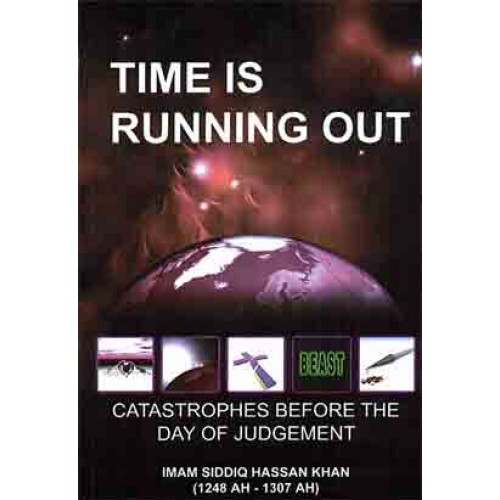
Time is Running Out (P/B)
Highlights:
Discusses the following topics:
- What is the Hour? When will it be? What are its signs?
- Meaning of al fitnah
- Near coming of the Hour
- Fitan affecting the Muslim Ummah
- Certain Fitan which have already passed
- Major signs before the day of judgment
- Appear of ad Dajjal
- Descent of Jesus, son of Mary
- Appearance of Gog and Magog
- Rising of the sun from the west
- Emergence of the beast from the Earth
- Ad Dukhan (The Smoke)
- The Pleasant Wind
- The Last major sign will be a fire
RM46.00
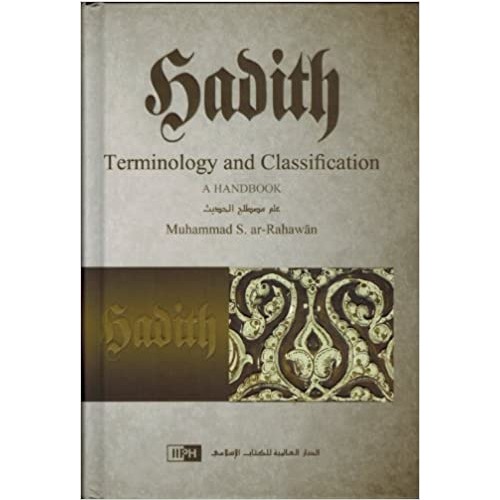
Hadith Terminology and Classification (H/B)
Highlights:
Islam is a complete way of life that enlightens through the Qur’an and the Sunnah, the true path of guidance and success in this world and the hereafter. However, one must accurately comprehend what has been ordained through the Sunnah and identify the authentic hadiths of the Prophet (blessings and peace be upon him). To do that, it is imperative to understand the rules that govern the classification and definitions of hadith methodology and criticism.
RM65.00
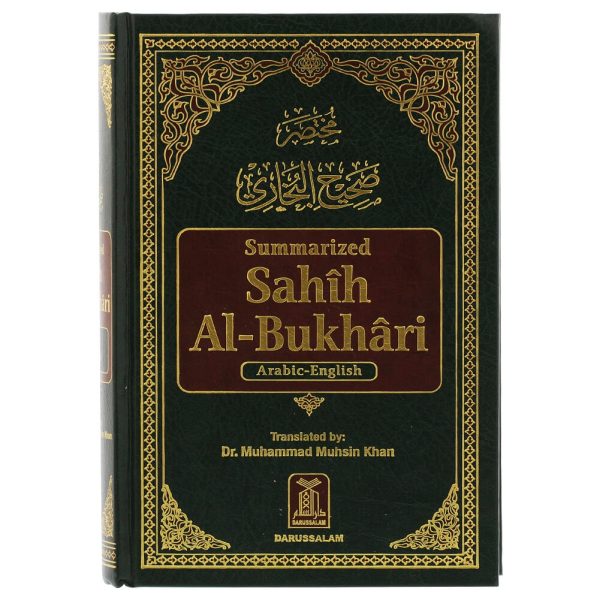
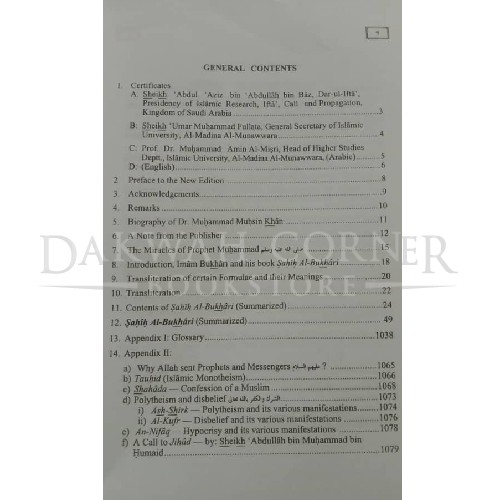
Summarized Sahih Al-Bukhari (Medium)
Highlights:
Noble Hadith and Hadith Sciences
RM90.00
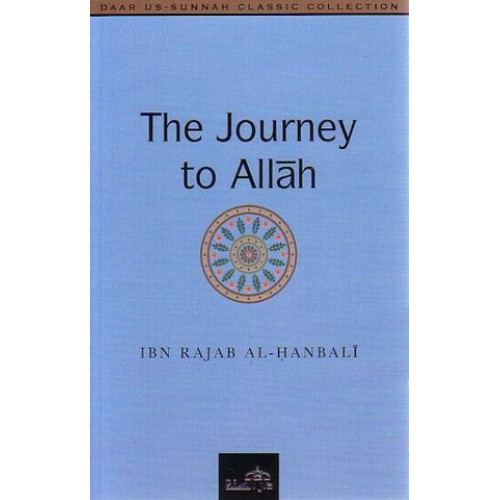
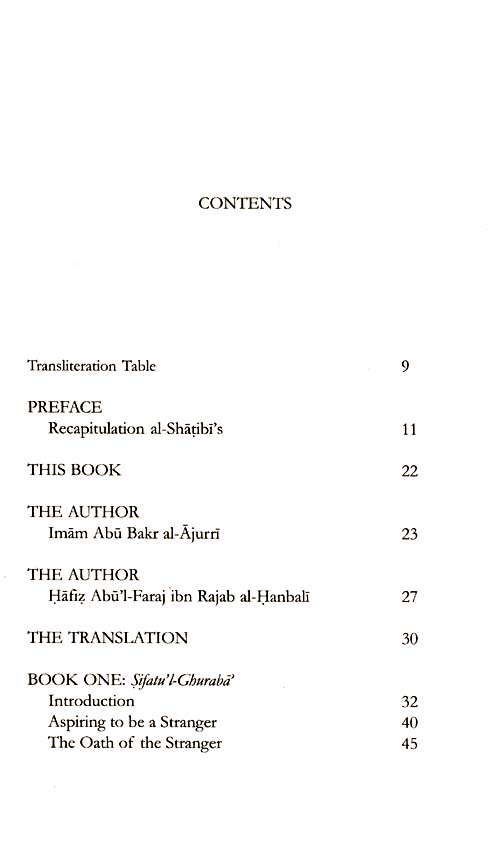
The Journey to Allah (P/B)
5 ★
5 ★
1 Rating
5 ★
1
4 ★
0
3 ★
0
2 ★
0
1 ★
0
Highlights:
Bukhari records on the authority of abu Hurayrah (raiyAllahu ?anhu) that the Prophet said, ?Your actions alone will not save any of you.? They asked, ?Messenger of Allah, not even you?? He replied, ?not even me, unless Allah were to envelop me in His mercy.
Be firm; steadfast and balanced; and journey [to Allah] in the beginning of the day, the end of the day, and a portion of the latter part of the night. Moderation, moderation! Through this you will attain your goal!?
He also recorded this hadith in another place with the wording, ?This religion is easy, none makes it hard upon himself except that it overwhelms him; therefore be firm, steadfast, and balanced; upon which have glad tidings! Seek help in this by journeying [to Allah] at the beginning of the day, at the end of the day, and a portion of the latter part of the night.?
He also records on the authority of ?A?ishah (raiyAllahu ?anhu) that the Prophet said, ?be firm, steadfast, and balanced upon which have glad tidings for indeed actions alone will not cause one to enter Paradise.? They asked, ?Messenger of allah, not even you?? He replied, ?not even me, unless Allah were to envelop me in His forgiveness and mercy.?
He also records on her authority that the Prophet said, ?be firm, steadfast, and balanced: know that your actions alone will not be a cause for your entry into Paradise and that the most beloved actions to allah are those that are done continuously and persistently, even if they be few.?
These noble ahadith detail a great and important principle from which stem many issues related to the journey to Allah while wayfaring along His Path.
Some of the Salaf said, ?The Hereafter consists either of allah?s forgiveness or the Fire; and this world is either a source of allah?s protection or a source of destruction.? On his deathbed, Muhammad ibn Wasi bid farewell to his companions saying, ?Peace be upon you, either to the Fire or to the forgiveness of allah.?
RM49.00
The Light Within Islam
Highlights:
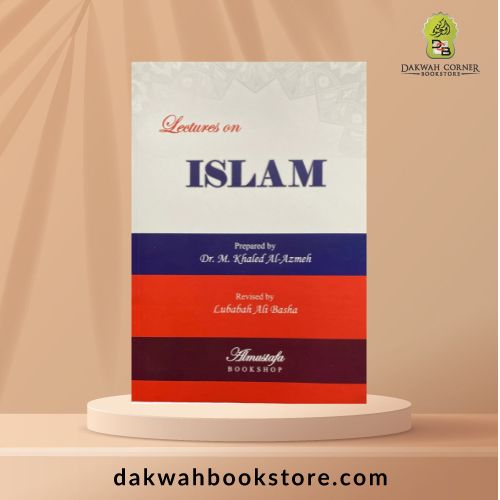
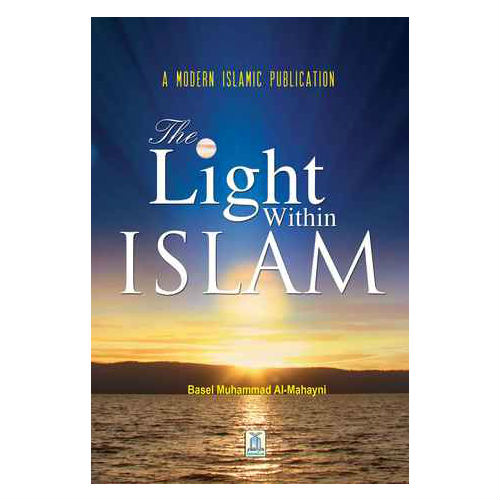
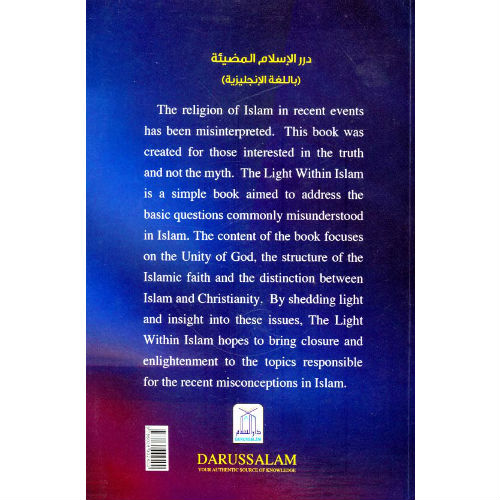
The religion of Islam in recent events has been misinterpreted. This book was created for those interested in the truth and not the myth. The Light within Islam is a simple book aimed to address the basic questions commonly misunderstood in Islam. The content of the book focuses on the Unity of God, the structure of the Islamic faith and the distinction between Islam and Christianity. By shedding light and insight into these issues, The Light within Islam hopes to bring closure and enlightenment to the topics responsible for the recent misconceptions is Islam.
RM19.00
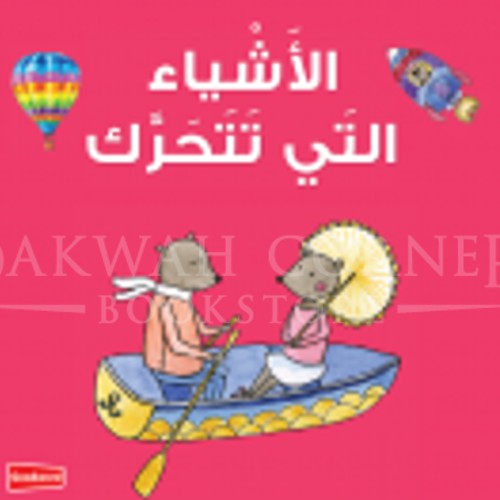
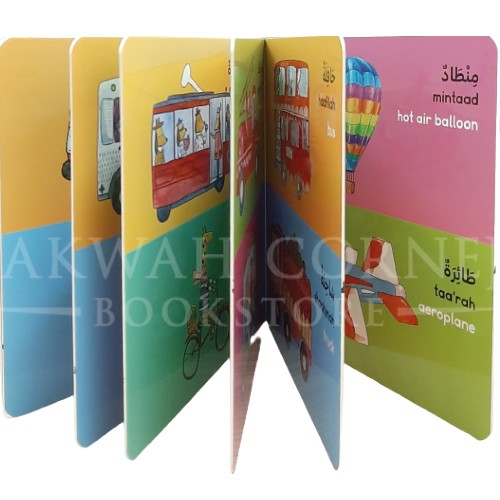
[CB] Things that Move Board Book (الاشياء التي تتحرك)
Highlights:
Things That Move Board Book | Arabic-English | Islamic Baby Book
RM20.00
An Introduction to The Sciences of The Qur’an (H/B) Al-Hidaayah UK
Highlights:
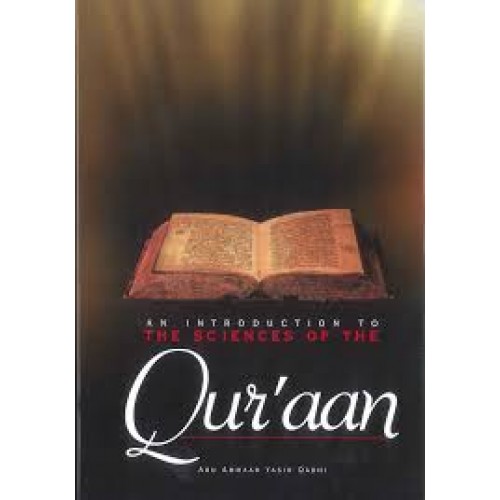
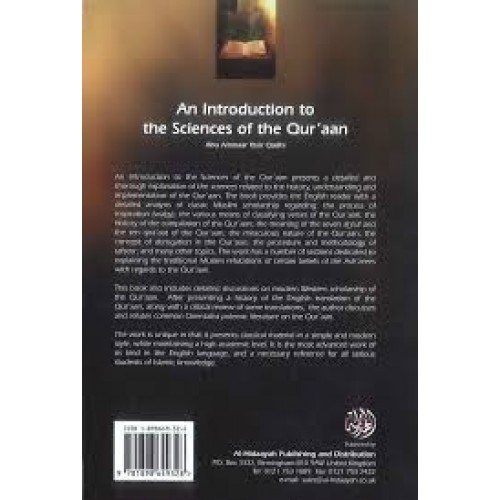
An introduction to the Sciences of the Qur’aan presents a detailed and thorough explanation of the sciences related to the history, understanding and implementation of the Qur’aan. The book provides the English reader with a detailed analysis of classic Muslim scholarship regarding: the process on Inspiration (Wahy); the various means of classifying verses of the Qur’aan; the history of the compilation of the Qur’aan; the meaning of the seven ahruf and the ten qira’aat of the Qur’aan; the miraculous nature of the Qur’aan; the concept of abrogation in the Qur’aan; the procedure and methodology of tafseer; and many other topics. The work has a number of sections dedicated to explaining the traditional Muslim refutations of certain belief of the Ash’arees with regards to the Qur’aan.
This book also includes detailed discussions on modern Western scholarship of the Qur’aan. After presenting a history of the English translation of the Qur’aan, along with a critical review of some translations, the author discusses and refutes common Orientalist polemic literature on the Qur’aan.
The work is unique in that it presents classical material in a simple and modern style, while maintaning a hight academic level. It is the most advanced work of its kind in the English language, and a necessary reference for all serious students of Islamic knowledge.
RM149.00




My Dad’s Beard
4 ★
4 ★
1 Rating
5 ★
0
4 ★
1
3 ★
0
2 ★
0
1 ★
0
Highlights:
This book is huge in size and huge in sentiment! It honours the male figures in the family and glorifies the Sunnah of keeping a beard. An adorable little boy personifies his love for his father through his beard, sharing how it looks at different times, makes him even more handsome, and why the whole family love it! Full of fun and fantastic for sharing!
RM86.00
There are no reviews yet.