




![[AC] Sharh Usul Al Sunah Imam Ahli Sunnah Ahmad/ شرح أصول السنة لامام اهل السنة احمد بن حنبل الشيباني](https://shop.dakwahbookstore.com/wp-content/uploads/2024/12/website-500x500-2024-12-06T215731.251.jpg)
![[AC] Mukhtasar Minhaj Al Qasidin / مختصر منهاج القاصدين](https://shop.dakwahbookstore.com/wp-content/uploads/2024/12/website-500x500-100.jpg)
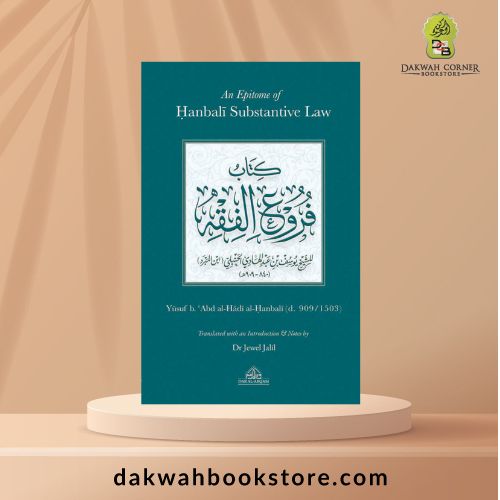
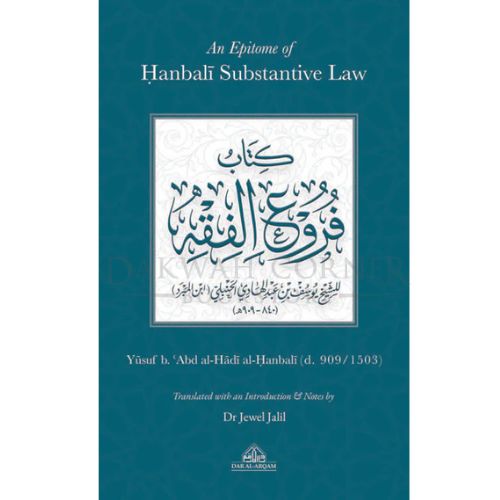
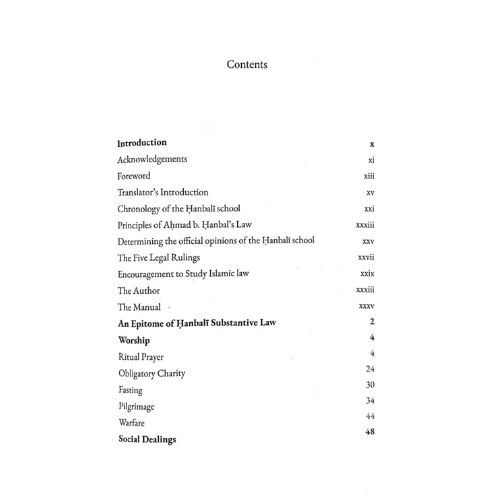
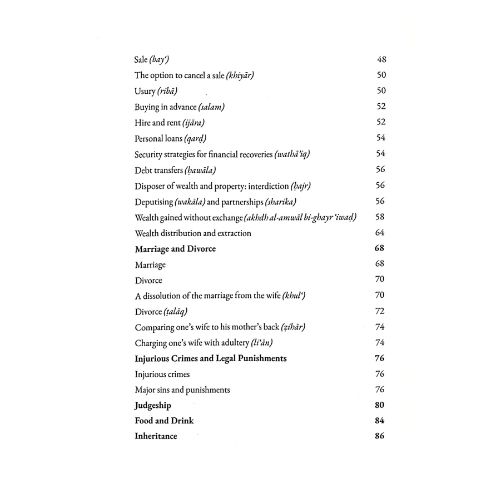
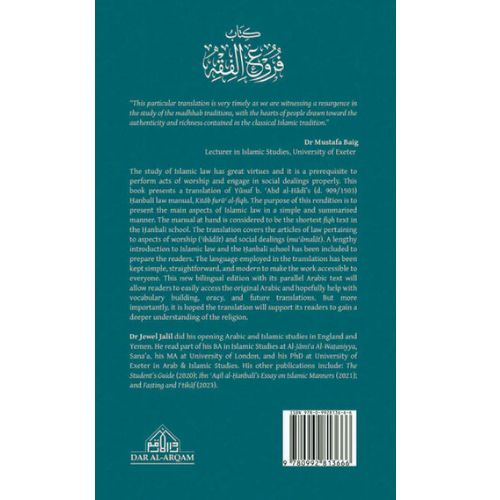
This book presents a translation of Yūsuf b. ʿAbd al-Hādī’s (d. 909/1503) Ḥanbalī law manual, Kitāb furūʿ al-fiqh. The purpose of this rendition is to present the main aspects of Islamic law in a simple and summarised manner. The manual at hand is considered to be the shortest fiqh text in the Ḥanbalī school. The translation covers the articles of law pertaining to aspects of worship (ʿibādāt) and social dealings (muʿāmalāt). A lengthy introduction to Islamic law and the Ḥanbalī school has been included to prepare the readers. The language employed in the translation has been kept simple, straightforward, and modern to make the work accessible to everyone. This new bilingual edition with its parallel Arabic text will allow readers to easily access the original Arabic and hopefully help with vocabulary building, oracy, and future translations. But more importantly, it is hoped the translation will support its readers to gain a deeper understanding of the religion.
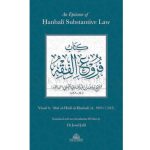
An Apitome of Hanbali Substantive Law
RM90.00
Frequently Bought Together
| Weight | 0.50 kg |
|---|---|
| Dimensions | 16 × 1.5 × 24 cm |
| Author | |
| Binding | Paperback |
| ISBN | 9780992813666 |
| Publisher | Dar Al-Arqam |
Be the first to review “An Apitome of Hanbali Substantive Law” Cancel reply
You must be logged in to post a review.
You may also like…
Comprehensive Islamic Jurisprudence (New Cover)


Devotion in Prayer P/B
The lack of reverence [khushi] in prayer has become a widespread phenomenon. Despite the well-known methods of achieving khushu methods in the Sunnah of the Prophet, rarely do we find a Muslim who is satisfied with his khushi in his prayer. In this book, we present a new theory, the theory of the pyramid of khushů, which consists of five levels, and which aims to gradually elevate the worshiper until he reaches a complete peace of mind in his prayer. This theory is implementable, practical, and based on the Qur’an and the Sunnah.
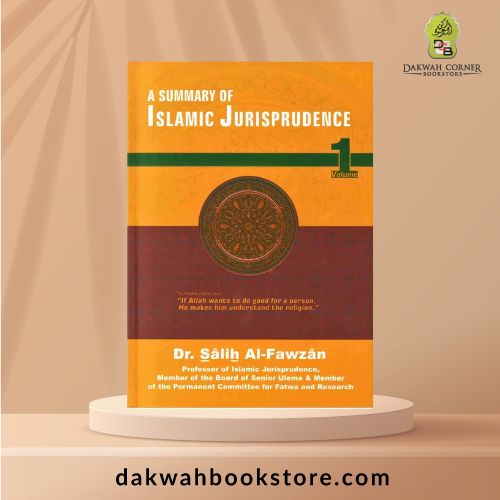
A Summary Of Islamic Jurisprudence – 2 Volumes
This book is an introduction to Islamic Jurisprudence for readers without a substantial background in this field. In two volumes, Sheikh Salih Al-Fawzan has projected light on jurisprudential issues of utmost importance in a genuine and reader-friendly style, free from any jargon or sophisticated expressions. A Summary of Islamic Jurisprudence, in this translated version, fulfills a long-standing need on the past of English-speaking Muslims for a brief, introductory book on Islamic jurisprudence. It is a valuable book for novice readers, be they Muslims or non-Muslims, who do not have thorough knowledge of the Islamic jurisprudence. The chapters of this book focus on major issues in Islamic jurisprudence. Volume one covers issues such as Purification, Prayer, Zakah, Fasting, Hajj and Jihad. And Volume two covers Transactions, Inheritance, Marriage, Divorce, Legal Punishments, Food, Judiciary and others.


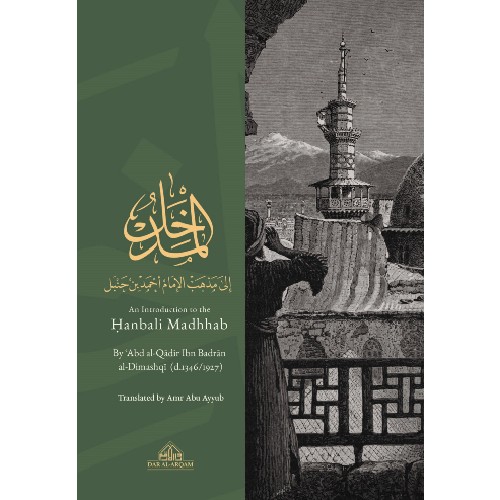
An Introduction to the Hanbali Madhhab (P/B) – Dar al-Arqam
A complete translation of Ibn Badran’s masterpiece, al-Madkhal ila Madhhab al-Imam Ahmad ibn Hanbal.
Related Products


Funeral Rites In Islam (H/B)
The purpose of this book is to provide English speaking Muslims a concise and authentic compilation of the instructions regarding funeral rites in Islam.

Istihsan (P/B)
This work constitutes a critical analysis of classical and modern aspects of the concept of istihsan (juristic preference), an important principle in Islamic legal legislation throughout history. Although there has been many research works on the subject, it still requires further investigation on the role and nature of istihsan with regard to a combination of classical and modern approaches. Consisting of four chapters, the author begins by introducing some general principles of Islamic law, before discussing the history of istihsan during the time of the Prophet and his Companions. He also analyses the validity of istihsan as a source of law and discusses the differences among scholars on its method of implementation.


Remembrance & Prayer: The way of Prophet Muhammad s.a.w
Remembrance and Prayer: The Way of Prophet Muhammad, was one of the first works of Shaykh al Ghazali’s to be translated into English. The book describes in vivid prose how the Prophet, upon him be peace, used to remember Allah and pray to Him. Not only are the exquisitely beautiful, deeply moving and penetrating words of the Prophet given in the English translation, but in the original Arabic as well, thus allowing those desirous of memorizing Arabic access to the original texts. The intimate relationship with Allah, which was the hallmark of the Prophet’s life, becomes clear and vivid. The book’s contents are immensely relevant. to the life and concerns of modern man, whose life has been made barren by the present secularist machinery.


Hajj & Umrah (Pocket Guide) – English Version
A useful pocket guide that includes the rites of Umrah,Hajj, and visiting Madinah.


Principles of Islamic Jurisprudence (2nd Revised Edition)
This book offers a detailed presentation of the theory of Muslim law (usul al-figh). Often regarded as the most sophisticated of the traditional Islamic disciplines, Muslim jurisprudence is concerned with the way in which the rituals and laws of religion are derived from the Qur’an and the Sunna – the precedent of the Prophet. Revelation, which is given to man to restore unity and help him achieve a just and devout order in society as well as in the soul, must be interpreted so as to render it practicable in every culture, while not betraying its spirit and immutable provisions. To achieve this, additional sources of legal authority are recognized, including consensus (ijma), analogical deduction (qiyas), public interest (maslaha) and local customary precedent (urf). In employing these, the jurist guards the five principles which it is the purpose of Islamic law to uphold, namely, the right to life, sound mind, property, lineage and religion.

Shatibi’s Philosophy of Islamic Law (P/B)
Abu Ishaq al-Shatibi, who died in 1888, had sought an answer to the challenge posed by modernisation and change to Islamic law, by introducing maslahah, which forms the basis of his philosophy of Islamic law. In a fascinating way, the author leads us step by step to what he considers the true import of Shatibi’s views concerning jurisprudence.

The Problems of the Illegitimate Child (P/B)
This book addresses the views of the Sunni scholars regarding the importance of genealogical relationship (nasab) in Islamic family law and examines the role of legitimacy on the basis of the legal maxim “al-walad li al-firash”, evidence (al-bayyinah), and doubtful intercourse (wat’ shubhah). It also elucidates the views of the Sunni schools of law on how to establish illegitimacy. For the Sunni jurists, there are several situations that determine the illegitimacy of the child. A child is considered illegitimate if its birth is the outcome of adultery (zina) or the result of legitimate union but accompanied with imprecation (li‘an). Other circumstances include the birth of the child taking place in less than six lunar months, the father of the child being categorized as one who is incapable of begetting, or the birth as a result of marital relationship considered unlawful because of consanguinity. The book also deals comprehensively with the moral, religious, legal and other aspects of the illegitimate child and the foundling in the works of the Sunni jurists. The status and rights of the illegitimate child and the foundling in the Islamic family law of Malaysia and Brunei are also discussed by referring to some provisions from Federal Territory Act 1984 (Act 303) and Brunei law.


Ibn Ashur Treatise on Maqasid al-Shariah (P/B)
Ibn Khaldun, the fourteenth century Arab historiographer and historian, is viewed as a founder of modern historiography, sociology and economics. He lived during a turbulent part of history, and out of his experiences, he ?conceived and created a philosophy of history that was undoubtedly the greatest work ever created by a man of intelligence…?. This work tells of the period of unrest in Ibn Khaldun?s life marked by political rivalries. It is during this turbulent period which provided him with the opportunity to write the Muqaddimah (or Prolegomena), earning him an immortal place among historians, sociologists and philosophe

Forensic Psychiatry In Islamic Jurisprudence (P/B) (IBT)
This is the first book in Forensic Psychiatry that focuses on the application of psychiatry to legal issues connected to Islamic jurisprudence. It gives contemporary psychiatry in any Islamic country a broad spectrum of tools to work with, enabling the utilization of options specific to particular societal and cultural norms. This book will appeal to both the general as well as the academic reader.


Common Mistakes Regarding Prayer – IIPH
Formal prayer (salat) is the second pillar of Islam, and the most important of a Muslim’s acts of worship. Prophet Muhammad (PBUH) said: “The first of one’s actions for which a slave of Allah will be held accountable on the Day of Judgment will be one’s prayers. If they are correct and accounted for, then he (or she) will have succeeded (gained paradise); and if they are lacking, then he (or she) will have failed (lost paradise). If there is something defective in his (or her) obligatory prayers, the Lord will say: ‘See if my slave has any supererogatory prayers with which that which was defective in his (or her) obligatory prayers may be completed. Then the rest of his (or her) deeds will be judged in like manner.” (At-Tirmidhi and others) Shaykh Mashhur Hasan Salman has compiled a list of the most common errors that we make when we pray, discussing and explaining each one. This book is a valuable aid to Muslims hoping to perfect their prayers, so that their prayers may be free of defects and acceptable to Allah. This new and revised edition of the English translation of his work presents the text in a fluent, highly readable style.


Al-Jumu’ah: The Day of Congregation
In our busy lives, Friday comes around once a week. It often comes and goes without our being really aware of it. For many Muslim men, it may be punctuated by the congregational prayer that they make special efforts to attend. For many Muslim women, it may go by just like any other day. This ought not to be the case. In this unique book, Dr. Gowher Yusuf gives us reason to stop and think about how special Friday (al-Jumu‘ah) really is, and what we should be doing to achieve the many bounteous blessings it holds for those who observe it. Drawing constantly from the Qur`an and the Sunnah and the great works of the scholars of Islam, Dr. Gowher Yusuf explores this topic in depth and presents it to the reader in simple language for them to understand and ponder over. This book travels through the various issues pertaining to the Friday prayer and its Khutbah, or sermon. These issues are explained within the Islamic framework, thus abolishing any myths and misunderstandings and clarifying the topic for the reader. Dr. Yusuf writes: The day of the week known as al-Jumu‘ah, or simply Jumu‘ah, is Friday, and it is special. Compared to the other days of the week, Friday has been accorded the largest amount of merit, so much so that the father of all humankind, Prophet Âdam (peace be upon him), was created on this day and a particular prayer was ordered for this day. It was from the guidance given to Prophet Muhammad (blessings and peace of Allah be upon him) to magnify this day, honour it, and designate it for acts of worship. …On a Friday, we all will be gathered and will stand congregated in front of Allah, the Exalted, on the Day of Resurrection, also called the Day of Accountability or the Day of Judgement.

Hajj & Umrah And Visitors (H/B)
Rites and Selected Etiquettes for those intending to Perfom Hajj & Umrah and Visitors In this book the author calls attention to the most important things that those who intend to perform Hajj, Umrah or Visiting the Prophets Mosque in Medinah must have as provisions. The author has made his work brief and arranged its topics according to their priorities. the author mentions a considerable number of sayings of the people of knowledge and calling the attention of the reader to some important matters.
Recently Viewed

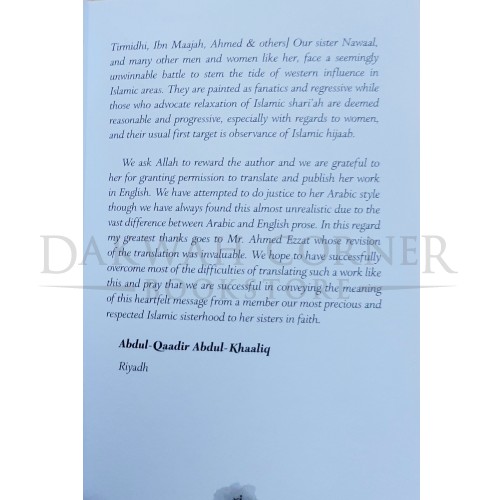
My Muslim Sister, will you not respond?
This book is the result of the author’s personal experiences and observation of the issues concerning muslim women of today. From the influences of society and culture, to the lack of understanding toward obligations and rights, women in general are under pressure to “look good.”

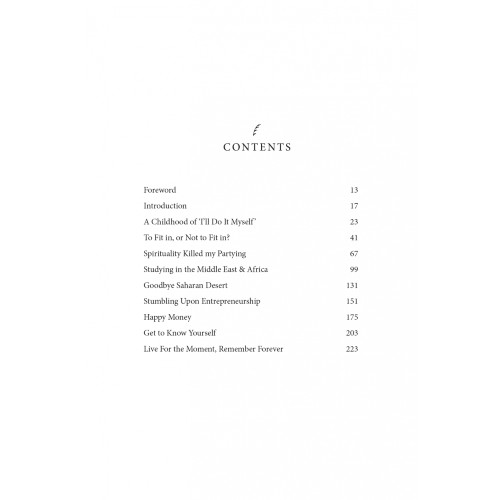
To God Through Money by Mohamed Geraldez (Claritas)
This true story begins with a young woman giving birth to a boy, alone in a Californian hospital. His childhood pursuit of candy, music, money and figuring out whether he’s part of the Hispanic, Black, White or Asian crowd, makes him soul search before he embarks on a spiritual journey. Trading his surroundings of beaches, booze, drugs, guns, murder and gangs — for several years in the Saharan Desert and the Middle East, he lives the life of a nomad and student of ancient knowledge. The twist in the tale is that an entrepreneur returns — focused on independence and living according to a philosophy which he calls ‘Happy Money.’
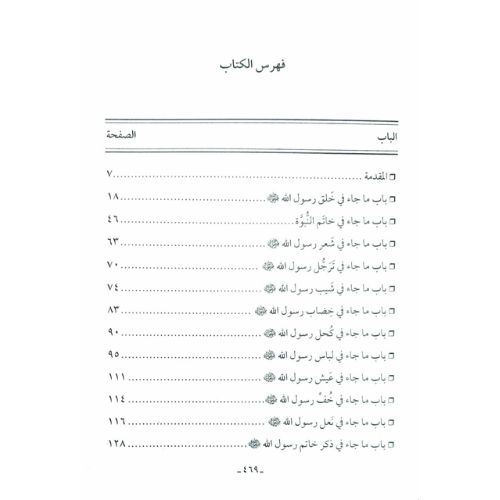

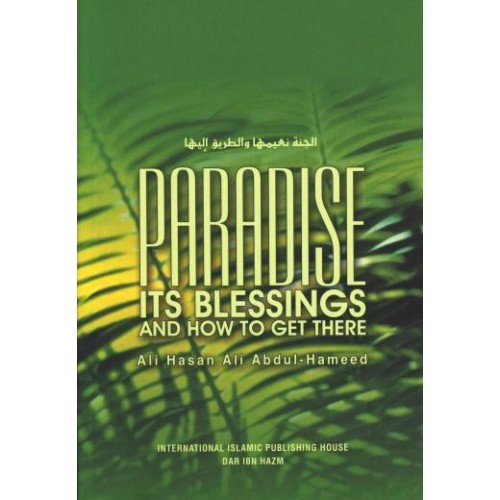
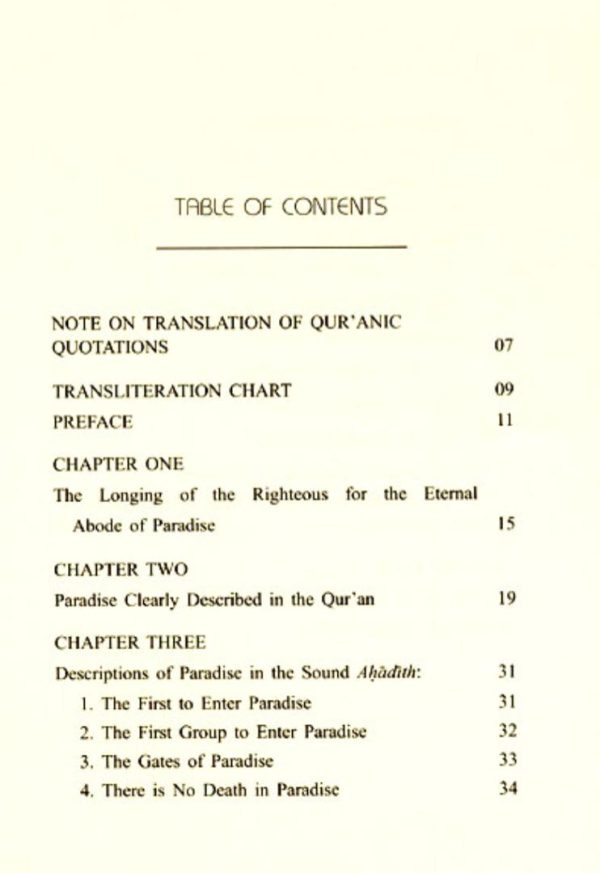
Paradise Its Blessings and How To Get There (P/B)
Paradise and its inhabitants as portrayed in the Qur’an and the Hadith, then discusses the various rewards and blessings that are promised to those who make it there. Finally, the author lists the many and myriad deeds that a Muslim can do that will help him or her to achieve the Garden of Eden.
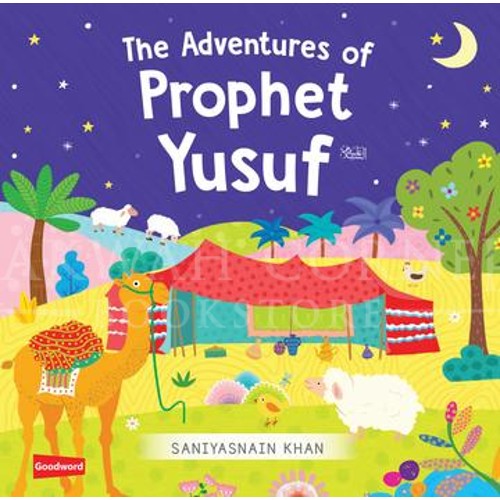

The Adventures of Prophet Yusuf Board Book (Delightful Series)
This enchantingly illustrated board book, delightfully introduces to the children the inspiring life and times of the Prophet Yusuf.

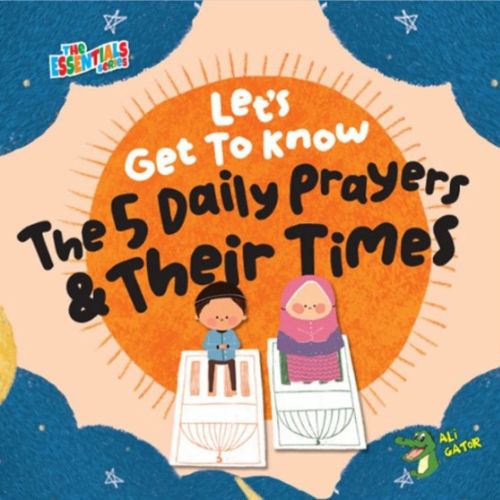
The Essential Series: Let’s Get to Know the 5 Daily Prayers & Their Times
Introduce your child to the beauty of Islam’s five daily prayers with this engaging guide designed for young learners.
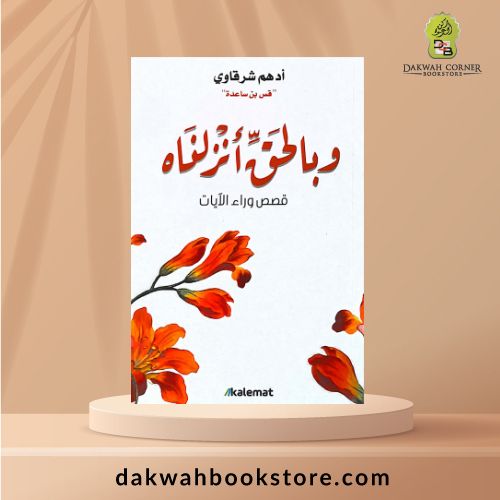
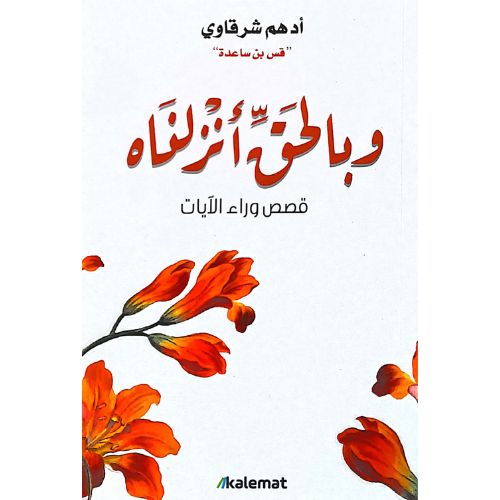
[MM] Wa bil Haq Anzalnahu / و بالحق أنزلناه
و بالحق انزلناه ويحدثُ أن تقرأ آيةً في القرآن، فتحتضنك كما لا يمكن لأي ذراعين احتضانَكَ! وتستدك كما لا يمكن لأي عكاز إسنادَكَ! وتعزيك كما لا يمكن لأي كلام عزاءَكَ ! وتواسيك ما لا يمكن لأي قول مواساتك هذا القرآنُ حِضْن، وعُكاز، وعزاء ومواساة، وأحياناً كثيرة ضماد لجروح كثيرة لا يراها الناس!
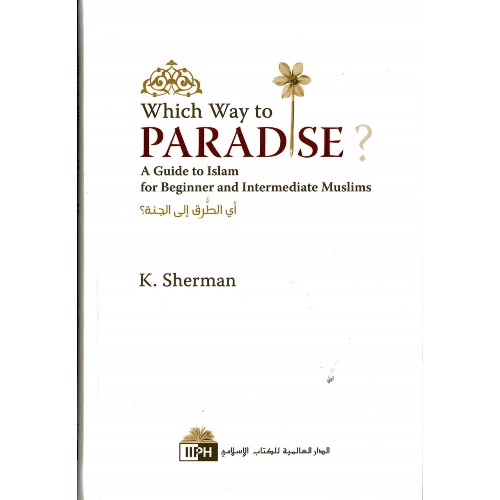
Which Way to Paradise? – IIPH
Which Way to Paradise? A Guide to Islam for Beginner and Intermediate Muslims seeks to elucidate Islamic principles and injunctions and elaborate on the very spirit of Islam, while at the same time exposing and refuting common misconceptions about the religion.
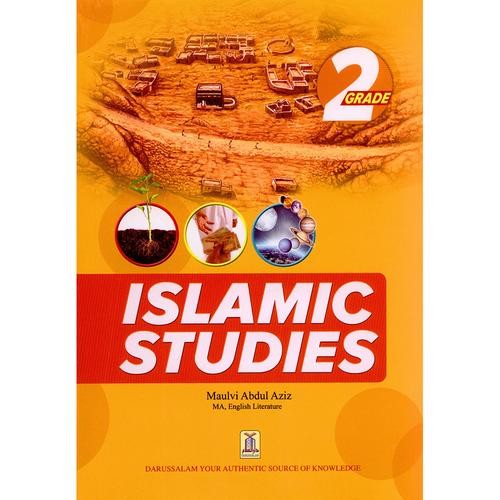
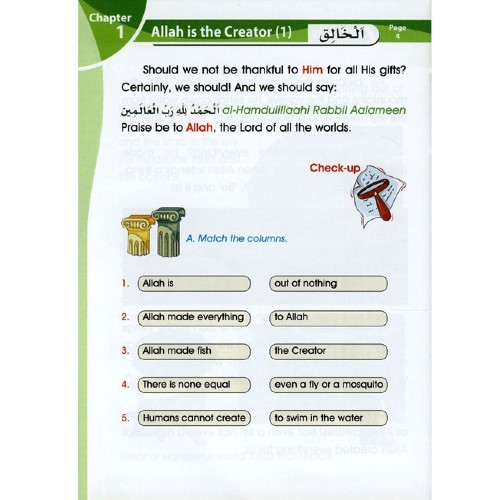
Islamic Studies Grade 2 – Darussalam
Grade 2 covers a variety of topics, including Allah as the Creator, the All Knower; the books of Allah; telling lies; the etiquette of talking; the Islamic calendar; and more. This book also contains fun activities and review sections.
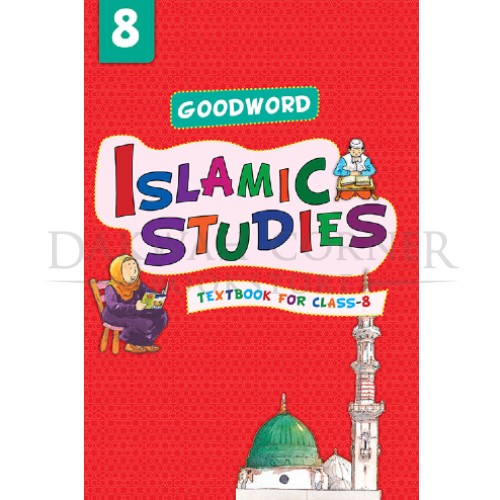

Goodword Islamic Studies Textbook for Class 8
This course has been designed to present the young students comprehensive Islamic education, comprising general Islamic knowledge based on the Quran and Hadith. Instead of teaching moral principles directly, they are taught through themes chosen from the Quran and other Islamic sources. A major portion of the course comprises the text of the Quran, which is followed by exercises to test the depth of understanding of the students. Though basically intended for use as a school text book, it is also an ideal tool for home schooling involving both the parents and the children. In this way children will nt only learn the ethical values conveyed by the message of Islam but will also be stimulated to want to know more about Islamic teachings when they grow up..
There are no reviews yet.