




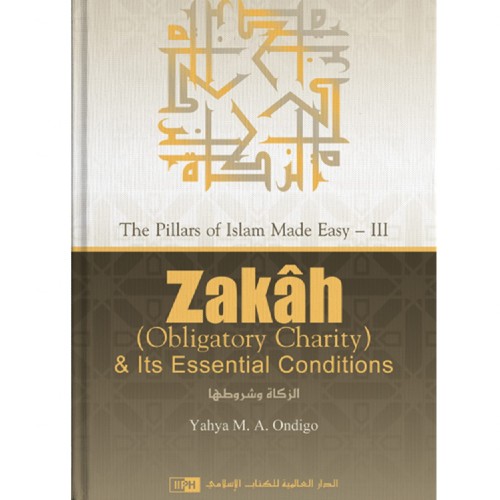
| Weight | 0.5 kg |
|---|---|
| Product Type | Book |
| Author | |
| Publisher | Darussalam |
| Pages | 335 |
| ISBN | 9786035001540 |
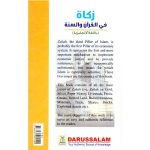
Zakah According to the Quran & Sunnah (Darussalam)
RM65.00
Hurry up, Only 1 left.

Highlights:
somdn_product_page
Compare
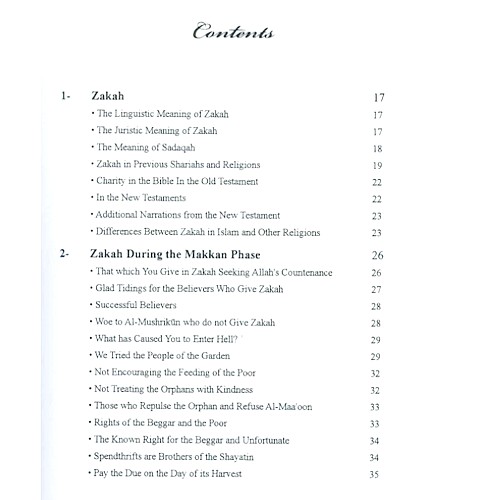
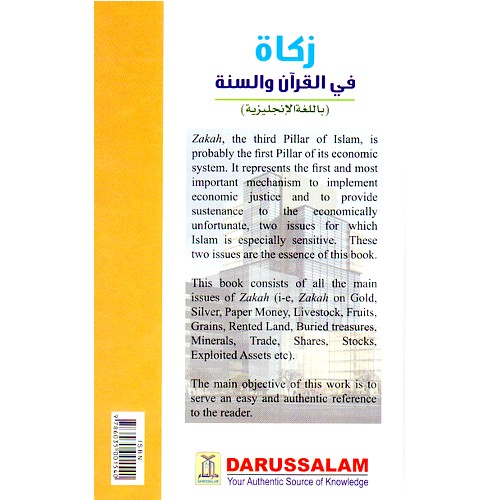
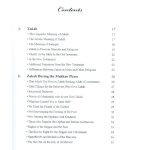
Zakah, the third Pillar of Islam, is probably the first Pillar of its economic system. It represents the first and most important mechanism to implement economic justice and to provide sustenance to the economically unfortunate, two issues for which Islam is especially sensitive. These two issues are the essence of this book. This book consists of all the main issues of Zakat (i-e, Zakah on Gold, Silver, Paper Money, Livestock, Fruits, Grains, Rented Land, Buried treasures, Minerals, Trade, Shares, Stocks, and Exploited Assets etc). The main objective of this work is to serve an easy and authentic reference to the reader.
Frequently Bought Together
1 Item
RM65.00
2 Add-Ons
RM142.00
Total
RM207.00
Additional information
Reviews (0)
Be the first to review “Zakah According to the Quran & Sunnah (Darussalam)” Cancel reply
You must be logged in to post a review.
Related Products

Preservation of Health in Islamic Law (P/B)
Highlights:
Preservation of health (hifz al-sihhah) is the most important branch of Islamic medicine since it is primarily concerned with the prevention of illness rather than cure. This book represents one of the few attempts to introduce the role of Islamic medicine, although Chapter One provides information about a historical background of the preservation of helath in Islam, its aim is to provide fresh ant timely overview of the major aspects of legal, ritual and spiritual structures of teh Islamic law (shariah). These include the laws related to Ibadah, Islamic family laws, foods and drinks as well as environmental laws, for maintaning and preserving human health. Findings indicated that prevention of any diseases from Islamic medical law presentive cannot attain any real success unless it emanates from an Islamic fundamental teaching, namely: the pillars of Islam. Iman and observance of the Islamic rituals such as Salah, zakah, Sawm and Hajj, have played an important role in shaping the attitude, behavior and model personality of the Muslim, in boosting the spiritual motivation or attitude change, and in disseminating the message of prevention. This indicates that bodily and spiritual health goes hand in hand and that pyscho-spritual balance and health is a primary consideration whereas physical health is a secondary one.
RM47.00


Fiqh According To The Quran & Sunnah (2 vol)
Highlights:
The complete set, ‘Al-Lubab Fee Fiqh As-Sunnah Wal-Kitab,’ contains all of the books of Islamic Fiqh and its chapters, accompanied by evidence and is presented in a clear and simple manner, in order that they may be understood by the young and the old, without blindly following any of the schools of Jurisprudence, but rather being subject to authentic proofs and following the most authoritative opinions, without fanatical adherence to any particular group. Rather the author agrees with each group when the truth is with them and contradicts them when they veer from that which is correct.
Fiqh is to achieve access to knowledge of that which is unclear through knowledge of that which is proven, so it is more specific than mere knowledge or learning. And fiqh is knowledge of the juristic law. It is said Faquha -A man has acquired understanding and so he has become a Faqeeh (A scholar of Islamic Jurisprudence); and it is said Faqiha – He has understood it, i.e he has attained understanding of it, and it is said Tafaqqaha – he has devoted himself to the acquisition of (Islamic) Knowledge and specialized in it. Fiqh has been a subject of contention among the scholars as well as layman throughout the history of Islam.
RM180.00

Hajj & Umrah And Visitors (H/B)
Highlights:
Rites and Selected Etiquettes for those intending to Perfom Hajj & Umrah and Visitors In this book the author calls attention to the most important things that those who intend to perform Hajj, Umrah or Visiting the Prophets Mosque in Medinah must have as provisions. The author has made his work brief and arranged its topics according to their priorities. the author mentions a considerable number of sayings of the people of knowledge and calling the attention of the reader to some important matters.
RM45.00

Shatibi’s Philosophy of Islamic Law (P/B)
Highlights:
Abu Ishaq al-Shatibi, who died in 1888, had sought an answer to the challenge posed by modernisation and change to Islamic law, by introducing maslahah, which forms the basis of his philosophy of Islamic law. In a fascinating way, the author leads us step by step to what he considers the true import of Shatibi’s views concerning jurisprudence.
RM41.00

The Pillars of Islam Made Easy – II Salah & Its Essential Conditions (H/B)
Highlights:
Salah is one of the five pillars on which the edifice of Islam rests. Most of us feel that we already know all there is about salah – the formal prayers of a Muslim. However, very few individuals actually do justice to it or derive any worldly or spiritual benefits from it.
Salah & Its Essential Conditions is an effort to detail the essential prerequiires of salah. Moreever, it takes a detailed look at its importance along with the different types of obligatory and voluntary prayers. It alsa presents an illustrated guide to help those who wish to learn or correct the performance of their prayers.
Inshallah, all those who wish to improve their salah will find plenty of help in this book whether they are looking for information on cleanliness and purify, locating the direction of qibla, improving their congregation during salah, making up for the missed salah, or joining acongregation when the imam has already sarted the salah, or joining a congregation when the imam has already started the salah. All in all, it is a relevant handbook on what the Prophet (saw) has described as the coolness of his eyes.
RM50.00


Common Mistakes Regarding Prayer – IIPH
Highlights:
Formal prayer (salat) is the second pillar of Islam, and the most important of a Muslim’s acts of worship. Prophet Muhammad (PBUH) said: “The first of one’s actions for which a slave of Allah will be held accountable on the Day of Judgment will be one’s prayers. If they are correct and accounted for, then he (or she) will have succeeded (gained paradise); and if they are lacking, then he (or she) will have failed (lost paradise). If there is something defective in his (or her) obligatory prayers, the Lord will say: ‘See if my slave has any supererogatory prayers with which that which was defective in his (or her) obligatory prayers may be completed. Then the rest of his (or her) deeds will be judged in like manner.” (At-Tirmidhi and others) Shaykh Mashhur Hasan Salman has compiled a list of the most common errors that we make when we pray, discussing and explaining each one. This book is a valuable aid to Muslims hoping to perfect their prayers, so that their prayers may be free of defects and acceptable to Allah. This new and revised edition of the English translation of his work presents the text in a fluent, highly readable style.
RM38.00


Ibn Ashur Treatise on Maqasid al-Shariah (P/B)
Highlights:
Ibn Khaldun, the fourteenth century Arab historiographer and historian, is viewed as a founder of modern historiography, sociology and economics. He lived during a turbulent part of history, and out of his experiences, he ?conceived and created a philosophy of history that was undoubtedly the greatest work ever created by a man of intelligence…?. This work tells of the period of unrest in Ibn Khaldun?s life marked by political rivalries. It is during this turbulent period which provided him with the opportunity to write the Muqaddimah (or Prolegomena), earning him an immortal place among historians, sociologists and philosophe
RM72.00


Should A Muslim Follow A Particular Madhhab?
Highlights:
In this book, the author has widely described the main principle of Taqleed. He says that Allah and Prophet Mohammed (SAW) has not ordered us to follow any opinions and interpretations. So there’s a possibility of being correct or incorrect in the opinions because there are many issues on which the Imams had different views and they explain them according to their own reasons and speculations, but the real and true Islam is based on the book (Quran) and Prophet’s Sunnah.
Allah says: “But no, by your Lord, they can have no Faith until they make you judge in all disputed matters between them, and find in themselves no resistance against your decision, and accept them with full submission.” And the prophet said: “I leave you with two things as long as you hold them tightly, you never go astray: they are the book of Allah and my Sunnah.” In this sense, the author has described the difference between different Madhahib (madhabs/mazhabs), and their views and urged to follow only the Quran and Sunnah.
RM11.00


Islamic Rulings on Menstruation and Postpartum Condition
Highlights:
The birth of human being is a most amazing phenomenon. The physical cycles that the body of woman must endure in order to maintain this act of creation should be respected to the highest degree. Allah mentions that our mothers have born us with difficulty and struggle and because of this are due the highest respect. one among many of the difficulties that women must brave, are the doubts that these conditions present to the correct obervance of her religion. How is her fassting affected, how are her prayers affected, how is her ability to pursue her studies, and how are her conjugal relations affected by her ever changing physical condition in relation to her as the sole vessel of the birth of man. A really valuable publication by Darussalam for all Muslim woman to study
RM11.00


Principles of Islamic Jurisprudence (2nd Revised Edition)
Highlights:
This book offers a detailed presentation of the theory of Muslim law (usul al-figh). Often regarded as the most sophisticated of the traditional Islamic disciplines, Muslim jurisprudence is concerned with the way in which the rituals and laws of religion are derived from the Qur’an and the Sunna – the precedent of the Prophet. Revelation, which is given to man to restore unity and help him achieve a just and devout order in society as well as in the soul, must be interpreted so as to render it practicable in every culture, while not betraying its spirit and immutable provisions. To achieve this, additional sources of legal authority are recognized, including consensus (ijma), analogical deduction (qiyas), public interest (maslaha) and local customary precedent (urf). In employing these, the jurist guards the five principles which it is the purpose of Islamic law to uphold, namely, the right to life, sound mind, property, lineage and religion.
RM75.00

The Concise Presentation of the Fiqh of the Sunnah and the Noble Book
Highlights:
Written by Dr. Abdul-Azeem Badawi and translated by Jamal al-Din M. Zarabozo, The Concise Presentation of the Fiqh of the Sunnah and the Noble Book covers the fiqh of diverse topics like purity, prayer, fasting, zakah, pilgrimage, marriage, business transactions, foods, inheritance, criminal offenses, and jihad. Dr. Badawi relies only on the Quran and the Sunnah, making it an authentic Islamic book on fiqh and a collection of sound hadiths.
RM90.00

Istihsan (P/B)
Highlights:
This work constitutes a critical analysis of classical and modern aspects of the concept of istihsan (juristic preference), an important principle in Islamic legal legislation throughout history. Although there has been many research works on the subject, it still requires further investigation on the role and nature of istihsan with regard to a combination of classical and modern approaches. Consisting of four chapters, the author begins by introducing some general principles of Islamic law, before discussing the history of istihsan during the time of the Prophet and his Companions. He also analyses the validity of istihsan as a source of law and discusses the differences among scholars on its method of implementation.
RM57.00
Recently Viewed



Devotion in Prayer P/B
Highlights:
The lack of reverence [khushi] in prayer has become a widespread phenomenon. Despite the well-known methods of achieving khushu methods in the Sunnah of the Prophet, rarely do we find a Muslim who is satisfied with his khushi in his prayer. In this book, we present a new theory, the theory of the pyramid of khushů, which consists of five levels, and which aims to gradually elevate the worshiper until he reaches a complete peace of mind in his prayer. This theory is implementable, practical, and based on the Qur’an and the Sunnah.
RM65.00
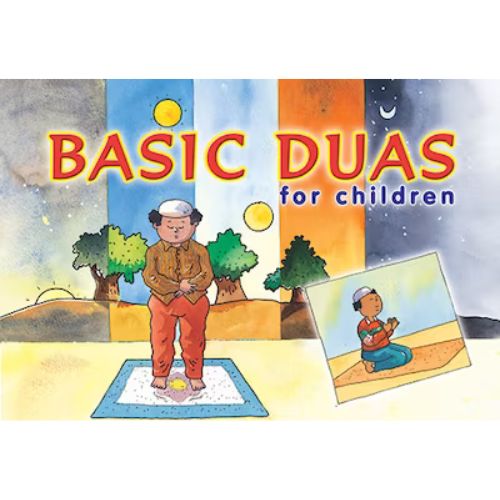
Basic Duas for Childrens
Highlights:
Duas your children can recite at various times through the day, in simple rhyming text that is easy on the ears.
RM15.00
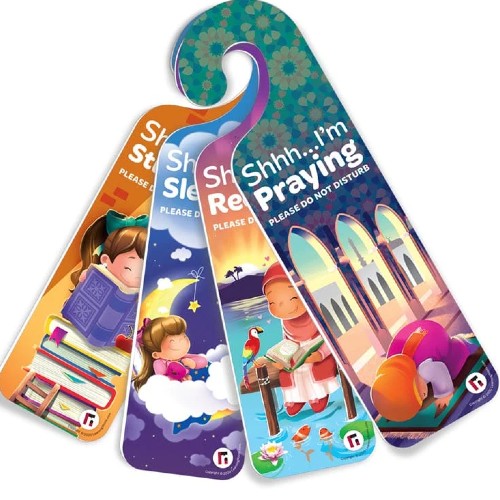
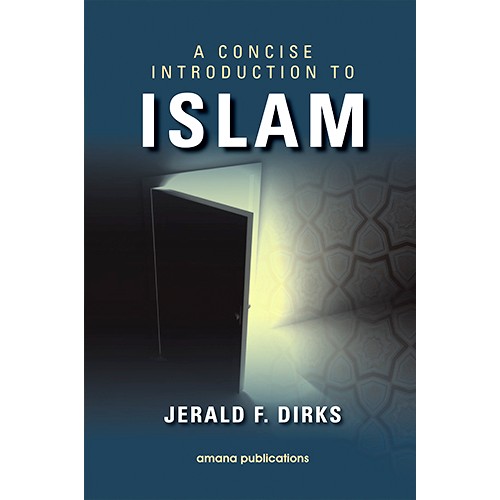
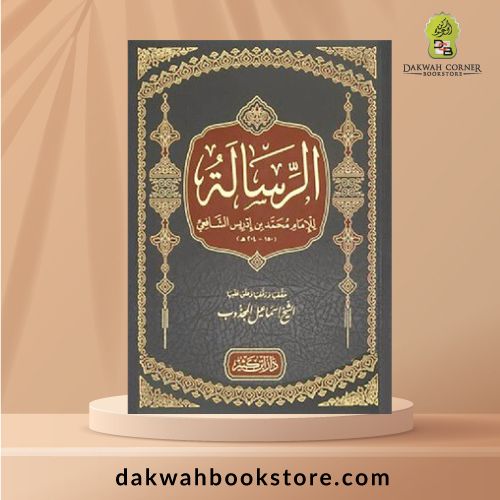
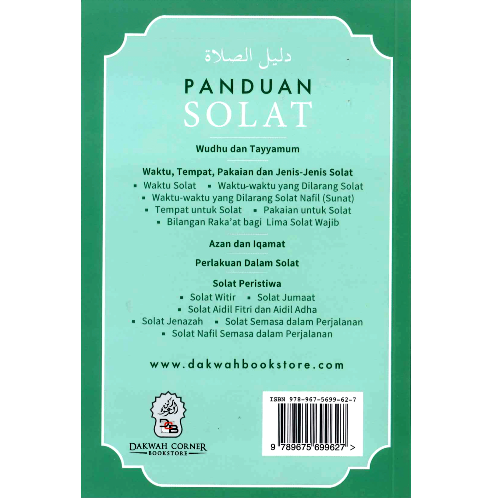
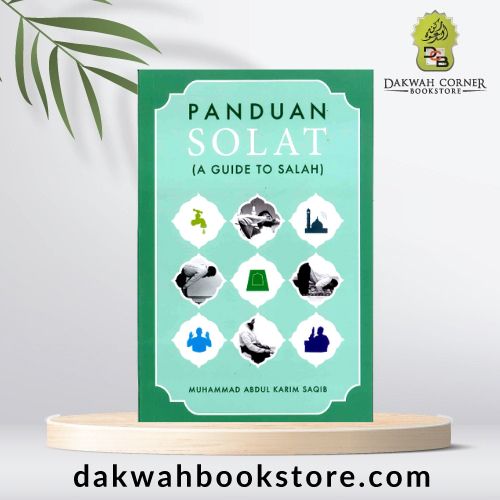
Panduan Solat (A Guide To Salah)
Highlights:
Panduan Solat
Wudhu dan Tayyamum
Waktu, Tempat, Pakaian dan Jenis-Jenis Solat
RM16.00
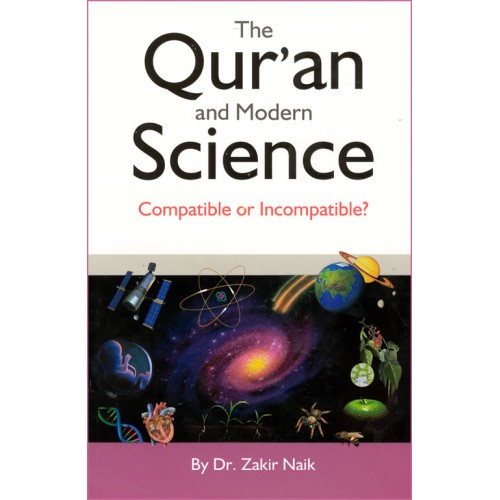
The Quran & Modern Science: Compatible or Incompatible? (P/B)
Highlights:
Ever since the dawn of human life on this planet, Man has always sought to understand Nature, his own place in the scheme of Creation and the purpose of Life itself. In this seek for Truth, spanning many centuries and diverse civilizations, the course of history has been determined to a large extent by organizing religion which has shaped human life. While some religions have been based on books as claimed by their adherents to be divinely inspired, others have relied only on human experience.
The main source of the Islamic faith, Al-Qur’an, is a book believed by Muslims, to be of fully Divine origin. It is also believed by Muslims that it contains Divine guidance for all humankind. As the message of Quran is believed to be for all times, it should be relevant to every age. Does the Qur’an pass this test? I intend to give an objective analysis of the Muslim belief in this booklet regarding the Divine origin of the Qur’an, in the light of established scientific discoveries.
In the history of world civilization there was a time when ‘miracles’, or what was perceived to be a miracle, took precedence over human reason and logic. But how do we define the term ‘miracle’? A miracle is anything that takes place out of the normal course of life and for which humankind has no explanation. Though, we must be careful before we accept something as a miracle. An article in `The Times of India’, Mumbai, in 1993 reported that ‘a saint’ by the name ‘Baba Pilot’ claimed to have stayed continuously submerged under water in a tank for three consecutive days and nights.
But he refused the reporters to examine the base of the tank of water where he claimed to have performed this ‘miraculous’ feat. He argued by asking as to how one could examine the womb of a mother that gives birth to a child. The `Baba’ was hiding something and it was considered to be a gimmick simply to gain publicity.
Certainly, no contemporary man with even the slightest inkling towards rational thinking would accept such a ‘miracle’. We would have to accept Mr. P.C. Sorcar, the world famous magician known for his ingenious magical tricks and illusions, as the best god-man if such false miracles are the tests of divinity.
A book, claiming Divine origin, is in effect, claiming to be a miracle. Such a claim should be easily verifiable in any age, as per the standards of that age. It is believed by the Muslims that the Quran is the last and final revelation of God, the miracle of miracles revealed as a mercy to humankind. Both Quran and science are related. Let us therefore scrutinize the veracity of this belief.
RM26.00
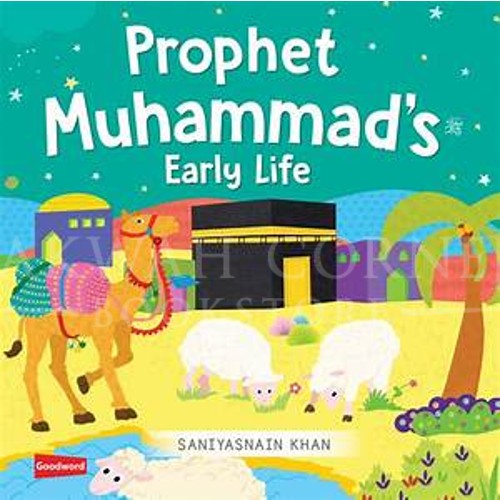
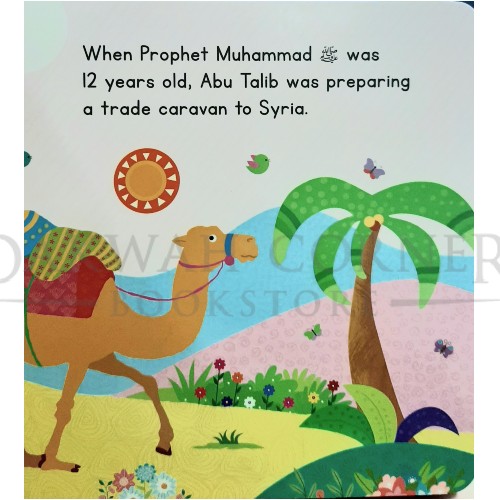
Prophet Muhammad’s Early Life Board Book (Delightful Series)
Highlights:
This enchantingly illustrated board book, delightfully introduces to the children the inspiring life and teachings of the Prophet Muhammad
RM22.00
[AQQ]Mushaf al-Qira’at al-‘Ashr min Tariqay al-Shatibiyyah wa al-Durrah / مصحف القراءات العشر من طريقي الشاطبية والدرة (L) 28*20
Highlights:
إليك ترجمة العبارة إلى اللغة العربية:
“مصحف القراءات العشر من طريقي الشاطبية والدرة هو نسخة من القرآن الكريم تجمع القراءات العشر المتواترة، مرتبة بناءً على طريقين رئيسيين للرواية، وهما: الشاطبية (القراءات السبع) والدرة المضية (القراءات الثلاث التي تُتم العشرة).”
RM150.00
The Choice : Islam & Christianity (Revised Edition)
5 ★
5 ★
1 Rating
5 ★
1
4 ★
0
3 ★
0
2 ★
0
1 ★
0
RM45.00
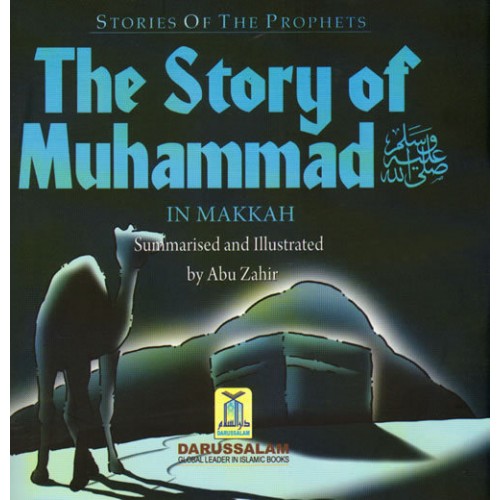
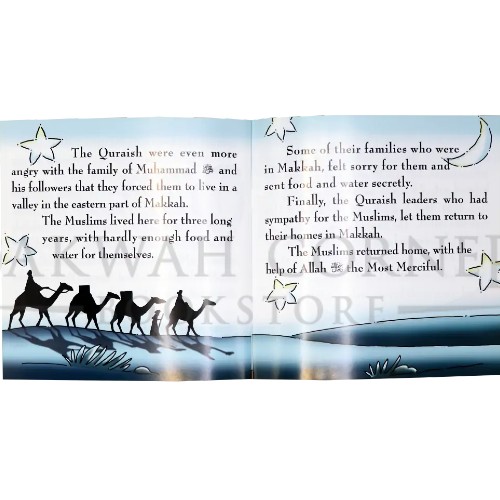
The Story of Muhammad S.A.W in Makkah
Highlights:
The Story of Muhammad (SAW) in Makkah By Abu Zahir (Stories Of The Prophets) A new amazing serious of childrens illustrated books, the book is easy to read and follow with pictures for little children to enjoy and learn about they beloved prophet.
RM11.00
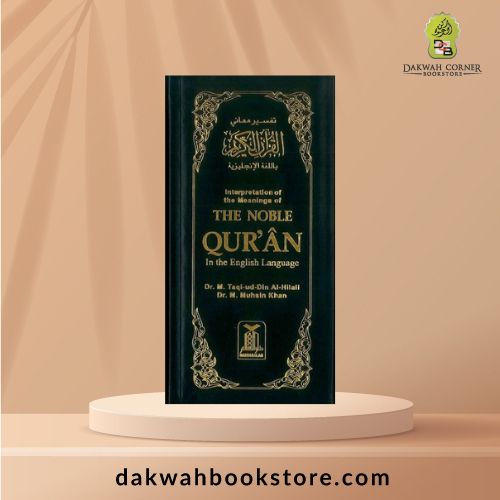
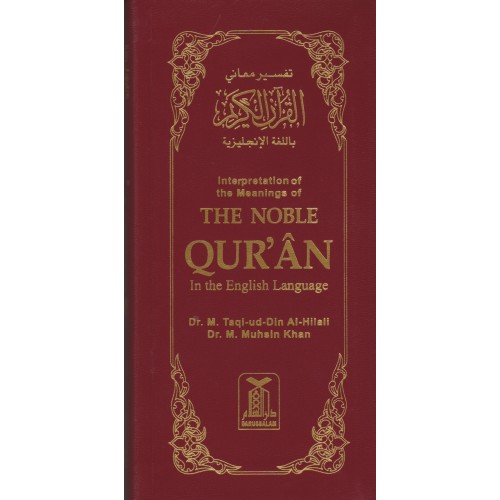
The Noble Quran (Tall Version English Text Only) (RANDOM COLOR)
Highlights:
Interpretion of the meanings of The Noble Quran in the English Language.
RM60.00
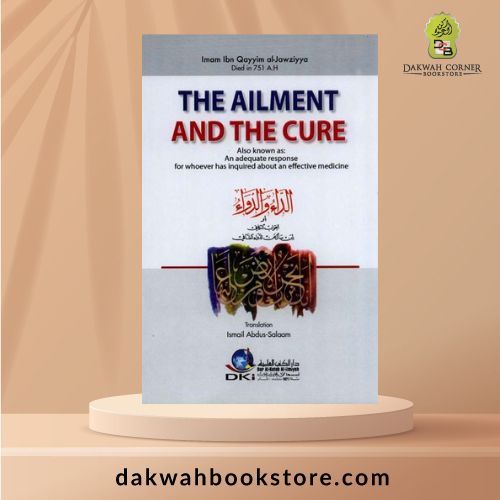
The Ailment And The Cure (P/B)
Highlights:
Imam Ibn Al-Qayyim Al-Jawziyyah
Also known as: “An Adequate Response for Whoever has Enquired About an Effective Medicine”
The Prophet (sallallahu alaihi wa sallam) has said, “Allah has not sent an ailment without sending a cure.” He also said, “There is a cure for every ailment, so if a medicine is effective, one will recover with the permission of Allah The Magnificent.”
This book collects all the medicines of the heart and soul that can make the Muslim better or a true Muslim, and Ibn Qayyim gathered in this book the different diseases of the hearts and their cures.
RM27.00
There are no reviews yet.