| Weight | 0.74 kg |
|---|---|
| Product Type | Book |
| Author | |
| Publisher | Islamic Text Society |
| Pages | 521 |
| ISBN | 9781903682838 |
War and Peace in Islam : The Uses and Abuses of Jihad (P/B)
RM145.00
Written by a number of Islamic religious authorities and Muslim scholars, this work presents the views and teachings of mainstream Sunni and Shi’i Islam on the subject of jihad. It authoritatively presents jihad as it is understood by the majority of the world’s 1.7 billion Muslims in the world today, and supports this understanding with extensive detail and scholarship. No word in English evokes more fear and misunderstanding than “jihad.” To date the books that have appeared on the subject in English by Western scholars have been either openly partisan and polemical or subtly traumatized by so many acts and images of terrorism in the name of jihad and by the historical memory of nearly 1,400 years of confrontation between Islam and Christianity. Though jihad is the central concern of War and Peace in Islam: The Uses and Abuses of Jihad, the range of the essays is not confined exclusively to the study of jihad. The work is divided into three parts: War and Its Practice, Peace and Its Practice, and Beyond Peace: The Practice of Forbearance, Mercy, Compassion and Love. The book aims to reveal the real meaning of jihad and to rectify many of the misunderstandings that surround both it and Islam’s relation with the “Other.”
Reviews:
“A dynamic myth-busting clarification of the real position of mainstream orthodox Islam on the whole question of violence and jihad.” —T. J. Winter, University of Cambridge
“This is the best book on the subject in English. It will be of inestimable value.” —Shaykh Mustafa Ceric, Grand Mufti Emeritus of Bosnia
Be the first to review “War and Peace in Islam : The Uses and Abuses of Jihad (P/B)” Cancel reply
You must be logged in to post a review.
Related Products

Common Mistakes Regarding Prayer – IIPH
Formal prayer (salat) is the second pillar of Islam, and the most important of a Muslim’s acts of worship. Prophet Muhammad (PBUH) said: “The first of one’s actions for which a slave of Allah will be held accountable on the Day of Judgment will be one’s prayers. If they are correct and accounted for, then he (or she) will have succeeded (gained paradise); and if they are lacking, then he (or she) will have failed (lost paradise). If there is something defective in his (or her) obligatory prayers, the Lord will say: ‘See if my slave has any supererogatory prayers with which that which was defective in his (or her) obligatory prayers may be completed. Then the rest of his (or her) deeds will be judged in like manner.” (At-Tirmidhi and others) Shaykh Mashhur Hasan Salman has compiled a list of the most common errors that we make when we pray, discussing and explaining each one. This book is a valuable aid to Muslims hoping to perfect their prayers, so that their prayers may be free of defects and acceptable to Allah. This new and revised edition of the English translation of his work presents the text in a fluent, highly readable style.
The Pillars of Islam Made Easy – II Salah & Its Essential Conditions (H/B)
Salah is one of the five pillars on which the edifice of Islam rests. Most of us feel that we already know all there is about salah – the formal prayers of a Muslim. However, very few individuals actually do justice to it or derive any worldly or spiritual benefits from it.
Salah & Its Essential Conditions is an effort to detail the essential prerequiires of salah. Moreever, it takes a detailed look at its importance along with the different types of obligatory and voluntary prayers. It alsa presents an illustrated guide to help those who wish to learn or correct the performance of their prayers.
Inshallah, all those who wish to improve their salah will find plenty of help in this book whether they are looking for information on cleanliness and purify, locating the direction of qibla, improving their congregation during salah, making up for the missed salah, or joining acongregation when the imam has already sarted the salah, or joining a congregation when the imam has already started the salah. All in all, it is a relevant handbook on what the Prophet (saw) has described as the coolness of his eyes.
Islamic Rules of Order (P/B)
Organizations must have rules of order to facilitate their debate and to fill in the procedures not detailed by their constitutional documents. While most American organizations are content to operate by Robert’s Rules of Order, Muslim organizations have often wrestled with questions over whether the rules of order systemized by a Western military figure are in accord with the Qur’an and the Sunnah.
This book tackles the matter directly and takes into account the Qur’an, the sunnah, Islamic manners and the history of Islamic consultation and leadership to provide a simple, practical guide to organizational procedure that can be incorporated into the governance of Muslim organizations. The book includes advice on writing bylaws and on complying with the best practices of the U.S. Dept. of Justice in a way that is Islamically authentic, transparent, and accountable. It provides a basic starting point for any Muslim organization while allowing for flexibility so that organizations may make any variations they require within their own bylaws and constitution, so that it can accommodate differing schools of thought on Islamic law. In its discursive approach it is an essential primer for understanding the value of rules of order and the Islamic context for their application. The Islamic Rules of Order has been adopted as the rules of order of the Association of Muslims Social Scientists.
Smoking Intoxicants & Narcotics (P/B)
This book deals with the epidemic of smoking, which enslaves many of today’s Muslims, and which is aggravated by that most victims belittle its dangers and deny its prohibition.
This book includes a discussions of intoxicants, establishing the prohibition of various practices associated with them, as well as penalties (in both lives) for those who partake in them.
This book also includes a discussion of narcotics, with an overview of marijuana and qaat (or khat). Based on their established effects and harms, we conclude that narcotics are strongly prohibited, except in very limited medical settings.
This book, we hope, will provide many Muslims with guidance toward a healthier, cleaner and worthies Islamic personality. My Allah grant us guidance and facilitation.
Fast According to the Quran & Sunnah
Saum (Fast) is a third Pillar of Islam. Allah’s Messenger said, Allah says: “Every deed of the son of Adam is for him, except Saum (fasting). It is for Me and I shall reward for it.”
As the status of this act of worship is so high it is essential to learn the pilings pertaining to this month of fasting so that Muslims will know what is obligatory in order to do it, what is forbidden to avoid it, and what is permissible so that they do not unnecessarily subject themselves to any hardship by depriving themselves from it.
This book consists of all the main issues of Fast. The main objective of this work is to serve an easy and authentic reference to the reader.
The Right to Education, Work and Welfare in Islam (P/B)
In The Right to Education, Work and Welfare in Islam Professor M.H. Kamali develops an Islamic perspective on three connected and complementary areas of rights and liberties. He urges that education is often a necessary ingredient of professional work even more so now than in earlier times when the range and variety of specialised knowledge were relatively limited. A person who acquires education, whether generally or at advanced levels of specialisation, is more likely to stand in a better position to enter the workforce and thus to contribute to the welfare of the community.
The author commences his discussions on education, work and welfare in Islam by focusing on how each is treated in the Qur’an; and follows this by the example of the Prophet and, after him, the Pious Caliphs who gave prominence to the education and welfare needs of people at times both of scarcity and affluence. Professor Kamali then moves forward to our time and discusses the right to education, the education of children, institutionalisation of learning, academic freedom and the debate between science and religion.
The section on work elaborates on the value of work, work ethics, workers’ and employers’ rights and responsibilities, and the role and responsibility of governments.
Finally, the section on welfare focuses on the importance in Islam of caring for those who are in need and the different forms of provision that can be made available by individuals, the state and charities.
Ibn Ashur Treatise on Maqasid al-Shariah (P/B)
Ibn Khaldun, the fourteenth century Arab historiographer and historian, is viewed as a founder of modern historiography, sociology and economics. He lived during a turbulent part of history, and out of his experiences, he ?conceived and created a philosophy of history that was undoubtedly the greatest work ever created by a man of intelligence…?. This work tells of the period of unrest in Ibn Khaldun?s life marked by political rivalries. It is during this turbulent period which provided him with the opportunity to write the Muqaddimah (or Prolegomena), earning him an immortal place among historians, sociologists and philosophe
The Problems of the Illegitimate Child (P/B)
This book addresses the views of the Sunni scholars regarding the importance of genealogical relationship (nasab) in Islamic family law and examines the role of legitimacy on the basis of the legal maxim “al-walad li al-firash”, evidence (al-bayyinah), and doubtful intercourse (wat’ shubhah). It also elucidates the views of the Sunni schools of law on how to establish illegitimacy. For the Sunni jurists, there are several situations that determine the illegitimacy of the child. A child is considered illegitimate if its birth is the outcome of adultery (zina) or the result of legitimate union but accompanied with imprecation (li‘an). Other circumstances include the birth of the child taking place in less than six lunar months, the father of the child being categorized as one who is incapable of begetting, or the birth as a result of marital relationship considered unlawful because of consanguinity. The book also deals comprehensively with the moral, religious, legal and other aspects of the illegitimate child and the foundling in the works of the Sunni jurists. The status and rights of the illegitimate child and the foundling in the Islamic family law of Malaysia and Brunei are also discussed by referring to some provisions from Federal Territory Act 1984 (Act 303) and Brunei law.
Hajj & Umrah And Visitors (H/B)
Rites and Selected Etiquettes for those intending to Perfom Hajj & Umrah and Visitors In this book the author calls attention to the most important things that those who intend to perform Hajj, Umrah or Visiting the Prophets Mosque in Medinah must have as provisions. The author has made his work brief and arranged its topics according to their priorities. the author mentions a considerable number of sayings of the people of knowledge and calling the attention of the reader to some important matters.
Fiqh Course: Tahaarah, Salaah & Janaa’iz
This course was compiled for English-speaking Muslims and is especially beneficial for new Muslims. It covers tahârah (purification), salâh (prayer) and janâ‘iz (funerals). It is set out in an easy-to-understand manner, citing evidence from the Qur’an and authentic hadiths. The aim of this book is to provide the reader with a correct, yet uncomplicated guide to the performance of the aforementioned acts of worship. Allah willing, it is the first in a series which will cover all aspects of worship and Islamic jurisprudence.
Worship In Islam: An In-depth Study of Ibadah, Salah and Sawm (P/B)
Worship in Islam is in-depth study of the nature and significance of Islamic spirituality by Abul A‘la Mawdudi (1903–79), one of the leading Muslim intellectuals of the twentieth century, with special reference to the concepts of God’s Oneness (tawhid), the finality of Prophethood (risalah) and the Islamic system of worship (‘ibadah) with a focus upon prayer (salah) and fasting (sawm) and their role in the development of the Islamic personality and Islam’s social order. The distinguishing feature of Mawdudi’s approach is his elaboration of the social dimension of worship, which extends the traditional approach found in Islamic jurisprudence, with its focus upon ritual and self-purification, to consider worship’s transformative role in social life. Presenting a holistic view of the Islamic system, Mawdudi highlights Islam’s social, economic and political dimensions, which he argues has the capacity to resolve emergent issues and problems that humankind faces.
This historic text should be of wider interest to both students and specialists in contemporary Islamic thought, and includes an introduction by Professor Anis Ahmad.
Edited and translated into accessible English by Ahmad Imam Shafaq Hashemi, this book is an authoritative compilation by a leading Islamic twentieth-century revivalist on the central matter of worship’s role in Islam.
Forensic Psychiatry In Islamic Jurisprudence (P/B) (IBT)
This is the first book in Forensic Psychiatry that focuses on the application of psychiatry to legal issues connected to Islamic jurisprudence. It gives contemporary psychiatry in any Islamic country a broad spectrum of tools to work with, enabling the utilization of options specific to particular societal and cultural norms. This book will appeal to both the general as well as the academic reader.
Recently Viewed
[AC] Sharh Thalathah Al Usul / شرح ثلاثة الأصول
شرح الشيخ صالح العصيمي على ثلاثة الأصول للإمام محمد بن عبد الوهاب
طبعة مع التشكيل لأغلب النصوص
Allah Knows All About Me
As a Muslim parent, when you want to get a little serious about teaching your child the basics of Islamic faith, such as belief in Allah for example, it’s really hard to find books designed with the youngest children in mind. ‘Allah Knows All About Me,’ that’s been crafted, written and illustrated to introduce the youngest of children to belief in Allah, in a way they find as natural as life itself. This book is written using charming rhyming text with the repeated phrase ‘Allah knows all about me,’ which reinforces your child’s faith in their Creator with the turn of every page. The language is simple yet fluid so your child would love to read it time and time again. The narrative calls on everyday thoughts, feeling and emotions, helping your child to understand the concepts of faith in a way that relates to the way they see the world. So you are looking for a book that can instil the love of Allah in the hearts of your child while also introducing them to appealing literature, then ‘Allah Knows All About Me’ would be a wonderful member to your child’s library.
Al-Fiqh Al-Akbar Explained
Al-Fiqh al-Akbar is one of the earliest texts written on Islamic creed and one of the surviving works of Abu Hanifa, the Great Imam of jurisprudence and theology.
Salam Kids :Learn About Fasting
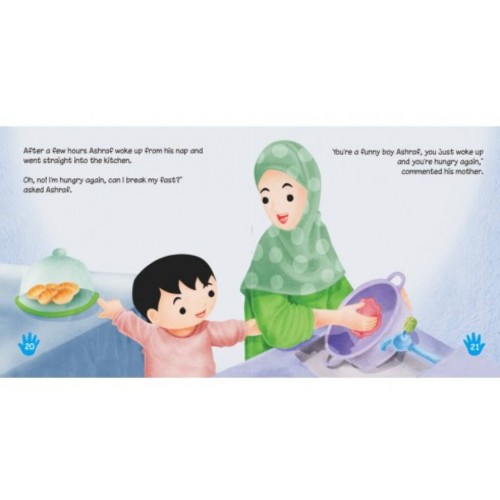
Ashraf is excited to be fasting for the first time. He hopes he can make it through the whole day, but he seems to be always hungry.
There’s a lot to learn about fasting and Ashraf is doing his best to please Allah.
The Salam Kids Series are books designed to encourage young children to try their best and start to implement Islamic practices into their lives.
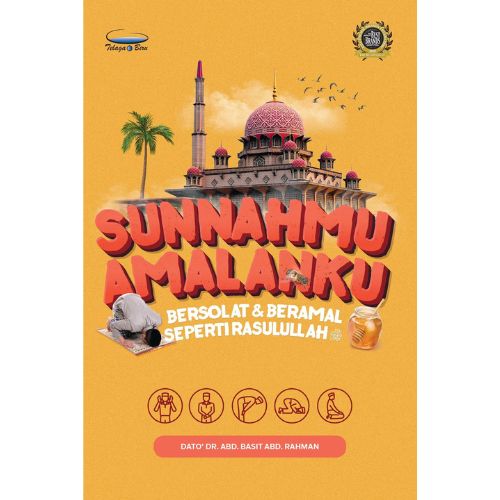
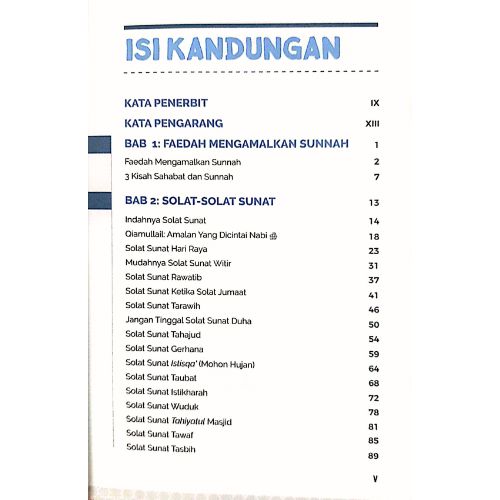
Sunnahmu Amalanku
KEISTIMEWAAN BUKU INI:
- Memahami dalam mentaati ajaran yang disampaikan oleh Rasulullah SAW secara menyeluruh.
- Mempertahankan agama Islam dari serangan musuh-musuh Islam dengan penghujahan ilmiah.
- Mencintai perkara yang disukai oleh Nabi Muhammad SAW serta membasahi lidah dengan berselawat kepadanya.
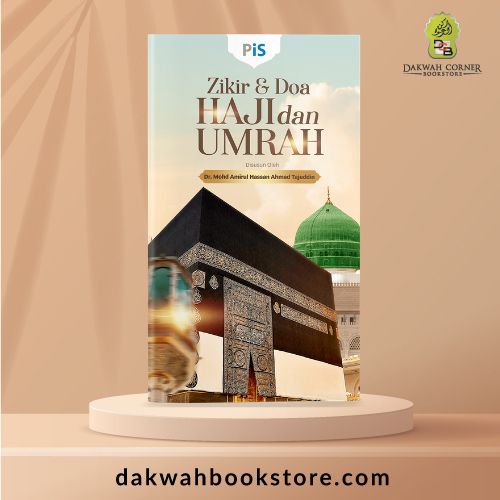
Zikir & Doa Haji dan Umrah
Adakah anda sedang mencari panduan doa yang sahih untuk mengiringi perjalanan suci Haji dan Umrah anda?
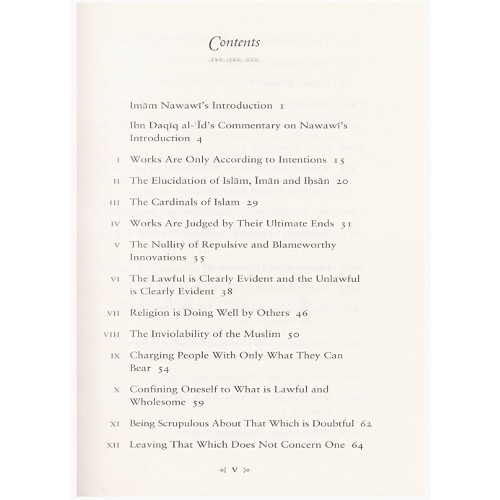
A Treasury of Hadith
This classical short commentary on Imam Nawawi’s famous collection of forty-two traditions of the Prophet Muhammad, may Allah bless him and give him peace, is an authoritative introduction to key Islamic principles and teachings, Accounted as hadith master, in this collection Imam Nawawi collected together those traditions that he considered were axial to the entire Islamic faith. As the first title in Kube’s new Treasury Series in Islamic Thought and Civilization, this accessible translation is presented in a beautiful gift format.
Ibn Daqiq al-‘Id (d.1302) was a Shafi’i mujtahid imam, who was educated in Damascus, Alexandria, and Egypt. Accounted as one of the greatest scholars in Islam in the fundamentals of law and belief, he wrote extensively in the areas of law, principles of jurisprudence, hadith, and tenets of faith. Imam Nawawi (d.1277) was accounted as an Imam of the later Shafi’i school and was known for his piety and knowledge.
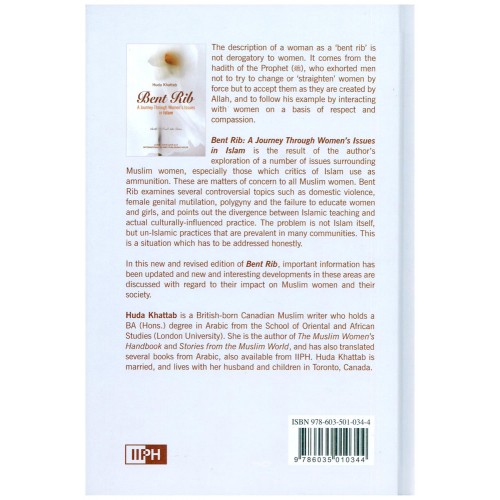
Bent Rib: A Journey Through Women’s Issues in Islam (H/B)
This book examines the role of women in Islam, their education and marriage, and several controversial topics such as domestic violence, female genital mutilation and polygyny. It addresses honestly the divergence between Islamic teaching and actual culturally-influenced practices.
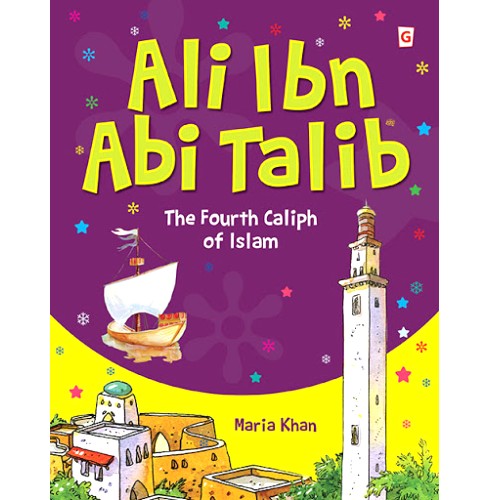
Ali Ibn Abi Talib: The Fourth Caliph of Islam
This book is about the life and teachings of Ali Ibn Abi Talib (may Allah be pleased with Him), The Fourth Caliph of Islam.
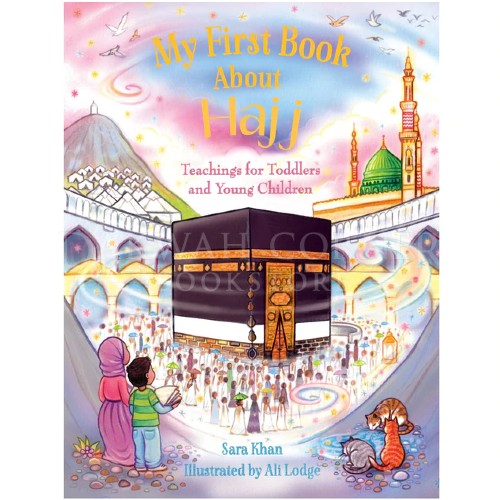
My First Book About Hajj (KUBE)
This simple but beautiful book gives children a glimpse into the greatest journey Muslims hope and dream to make at least once in their lifetime . It introduces the concept of Hajj as one of the five pillars of Islam and outlines the steps involved when performing this Islamic ritual . It aims to educate and instil a love for Islam’s holiest sites as well as a desire to want to visit them from a young age . It is a book to be treasured by children, with large, colourful illustrations and carefully written text that children will understand and enjoy .
Recommended for ages 2+
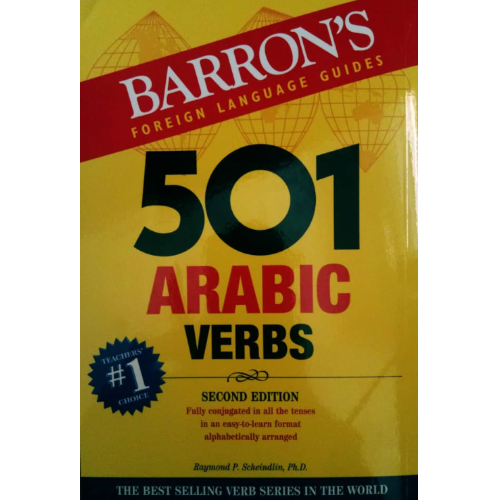
Arabic Verbs: Fully Conjugated All Forms Bilingual Edition
This update, easy-to-use reference book gives you:
- The 501 most common Arabic verbs in a table format
- Both the Arabic characters and their English infinitive form at the top of each page
- Exemplary essay that discusses Arabic verb formation and usage
- Common idioms with example sentences to demonstrate verb usage
- A grammar review and a pattern index
- Indexes that list verbs in both root order and strict alphabetical order


There are no reviews yet.