


| Weight | 0.74 kg |
|---|---|
| Product Type | Book |
| Author | |
| Publisher | Islamic Text Society |
| Pages | 521 |
| ISBN | 9781903682838 |
War and Peace in Islam : The Uses and Abuses of Jihad (P/B)
RM145.00
Hurry up, Only 1 left.
Highlights:
somdn_product_page
Compare
Written by a number of Islamic religious authorities and Muslim scholars, this work presents the views and teachings of mainstream Sunni and Shi’i Islam on the subject of jihad. It authoritatively presents jihad as it is understood by the majority of the world’s 1.7 billion Muslims in the world today, and supports this understanding with extensive detail and scholarship. No word in English evokes more fear and misunderstanding than “jihad.” To date the books that have appeared on the subject in English by Western scholars have been either openly partisan and polemical or subtly traumatized by so many acts and images of terrorism in the name of jihad and by the historical memory of nearly 1,400 years of confrontation between Islam and Christianity. Though jihad is the central concern of War and Peace in Islam: The Uses and Abuses of Jihad, the range of the essays is not confined exclusively to the study of jihad. The work is divided into three parts: War and Its Practice, Peace and Its Practice, and Beyond Peace: The Practice of Forbearance, Mercy, Compassion and Love. The book aims to reveal the real meaning of jihad and to rectify many of the misunderstandings that surround both it and Islam’s relation with the “Other.”
Reviews:
“A dynamic myth-busting clarification of the real position of mainstream orthodox Islam on the whole question of violence and jihad.” —T. J. Winter, University of Cambridge
“This is the best book on the subject in English. It will be of inestimable value.” —Shaykh Mustafa Ceric, Grand Mufti Emeritus of Bosnia
SKU: SJ185
Category: Sharia, Fiqh and Jurisprudence
Additional information
Reviews (0)
Be the first to review “War and Peace in Islam : The Uses and Abuses of Jihad (P/B)” Cancel reply
You must be logged in to post a review.
Related Products

Worship In Islam: An In-depth Study of Ibadah, Salah and Sawm (P/B)
Highlights:
Worship in Islam is in-depth study of the nature and significance of Islamic spirituality by Abul A‘la Mawdudi (1903–79), one of the leading Muslim intellectuals of the twentieth century, with special reference to the concepts of God’s Oneness (tawhid), the finality of Prophethood (risalah) and the Islamic system of worship (‘ibadah) with a focus upon prayer (salah) and fasting (sawm) and their role in the development of the Islamic personality and Islam’s social order. The distinguishing feature of Mawdudi’s approach is his elaboration of the social dimension of worship, which extends the traditional approach found in Islamic jurisprudence, with its focus upon ritual and self-purification, to consider worship’s transformative role in social life. Presenting a holistic view of the Islamic system, Mawdudi highlights Islam’s social, economic and political dimensions, which he argues has the capacity to resolve emergent issues and problems that humankind faces.
This historic text should be of wider interest to both students and specialists in contemporary Islamic thought, and includes an introduction by Professor Anis Ahmad.
Edited and translated into accessible English by Ahmad Imam Shafaq Hashemi, this book is an authoritative compilation by a leading Islamic twentieth-century revivalist on the central matter of worship’s role in Islam.
RM84.00


Having Fun The Halal Way Entertainment In Islam
5 ★
5 ★
1 Rating
5 ★
1
4 ★
0
3 ★
0
2 ★
0
1 ★
0
Highlights:
With the advent of technology, the entertainment industry has flourished and become immensely popular. Combine this with the exponential advances in technology, and the result is an increasing number of ways to amuse ourselves. As a result of such advances, Muslim react in a variety of manners towards entertainment. Some label entertainment as completely forbidden. This sometimes includes parents who say no to almost everything that their young ones deem to be ‘fun’, without providing them with suitable alternatives. Others, who do not want to take this extreme approach, fall into the trap of excessive use of – and even addiction to – various sources of entertainment, without any limits.
In Having Fun the Halal Way, Ismail Kamdar explores the teachings of Islam regarding entertainment. Drawing upon the Quran, the Sunnah and the understanding of the righteous scholars of Islam, he provides a detailed and balanced analysis of the topic. He not only explains the detriments of the current entertainment industry, but also suggests alternative means to have a good time with friends and family members.
RM18.00


Fiqh According To The Quran & Sunnah (2 vol)
Highlights:
The complete set, ‘Al-Lubab Fee Fiqh As-Sunnah Wal-Kitab,’ contains all of the books of Islamic Fiqh and its chapters, accompanied by evidence and is presented in a clear and simple manner, in order that they may be understood by the young and the old, without blindly following any of the schools of Jurisprudence, but rather being subject to authentic proofs and following the most authoritative opinions, without fanatical adherence to any particular group. Rather the author agrees with each group when the truth is with them and contradicts them when they veer from that which is correct.
Fiqh is to achieve access to knowledge of that which is unclear through knowledge of that which is proven, so it is more specific than mere knowledge or learning. And fiqh is knowledge of the juristic law. It is said Faquha -A man has acquired understanding and so he has become a Faqeeh (A scholar of Islamic Jurisprudence); and it is said Faqiha – He has understood it, i.e he has attained understanding of it, and it is said Tafaqqaha – he has devoted himself to the acquisition of (Islamic) Knowledge and specialized in it. Fiqh has been a subject of contention among the scholars as well as layman throughout the history of Islam.
RM180.00


Principles of Islamic Jurisprudence (2nd Revised Edition)
Highlights:
This book offers a detailed presentation of the theory of Muslim law (usul al-figh). Often regarded as the most sophisticated of the traditional Islamic disciplines, Muslim jurisprudence is concerned with the way in which the rituals and laws of religion are derived from the Qur’an and the Sunna – the precedent of the Prophet. Revelation, which is given to man to restore unity and help him achieve a just and devout order in society as well as in the soul, must be interpreted so as to render it practicable in every culture, while not betraying its spirit and immutable provisions. To achieve this, additional sources of legal authority are recognized, including consensus (ijma), analogical deduction (qiyas), public interest (maslaha) and local customary precedent (urf). In employing these, the jurist guards the five principles which it is the purpose of Islamic law to uphold, namely, the right to life, sound mind, property, lineage and religion.
RM75.00


Common Mistakes Regarding Prayer – IIPH
Highlights:
Formal prayer (salat) is the second pillar of Islam, and the most important of a Muslim’s acts of worship. Prophet Muhammad (PBUH) said: “The first of one’s actions for which a slave of Allah will be held accountable on the Day of Judgment will be one’s prayers. If they are correct and accounted for, then he (or she) will have succeeded (gained paradise); and if they are lacking, then he (or she) will have failed (lost paradise). If there is something defective in his (or her) obligatory prayers, the Lord will say: ‘See if my slave has any supererogatory prayers with which that which was defective in his (or her) obligatory prayers may be completed. Then the rest of his (or her) deeds will be judged in like manner.” (At-Tirmidhi and others) Shaykh Mashhur Hasan Salman has compiled a list of the most common errors that we make when we pray, discussing and explaining each one. This book is a valuable aid to Muslims hoping to perfect their prayers, so that their prayers may be free of defects and acceptable to Allah. This new and revised edition of the English translation of his work presents the text in a fluent, highly readable style.
RM38.00


Fiqh Course: Tahaarah, Salaah & Janaa’iz
Highlights:
This course was compiled for English-speaking Muslims and is especially beneficial for new Muslims. It covers tahârah (purification), salâh (prayer) and janâ‘iz (funerals). It is set out in an easy-to-understand manner, citing evidence from the Qur’an and authentic hadiths. The aim of this book is to provide the reader with a correct, yet uncomplicated guide to the performance of the aforementioned acts of worship. Allah willing, it is the first in a series which will cover all aspects of worship and Islamic jurisprudence.
RM46.00


Should A Muslim Follow A Particular Madhhab?
Highlights:
In this book, the author has widely described the main principle of Taqleed. He says that Allah and Prophet Mohammed (SAW) has not ordered us to follow any opinions and interpretations. So there’s a possibility of being correct or incorrect in the opinions because there are many issues on which the Imams had different views and they explain them according to their own reasons and speculations, but the real and true Islam is based on the book (Quran) and Prophet’s Sunnah.
Allah says: “But no, by your Lord, they can have no Faith until they make you judge in all disputed matters between them, and find in themselves no resistance against your decision, and accept them with full submission.” And the prophet said: “I leave you with two things as long as you hold them tightly, you never go astray: they are the book of Allah and my Sunnah.” In this sense, the author has described the difference between different Madhahib (madhabs/mazhabs), and their views and urged to follow only the Quran and Sunnah.
RM11.00


Funerals Regulations and Exhortations (H/B)
Highlights:
Our soul inevitably follows a route starting from birth, passing through death, and ending with our resurrection in the next life. The inevitable journey discusses over a sequence of titles: sickness, inheritance, funerals, Life in Barzakh and so on…
RM75.00

Preservation of Health in Islamic Law (P/B)
Highlights:
Preservation of health (hifz al-sihhah) is the most important branch of Islamic medicine since it is primarily concerned with the prevention of illness rather than cure. This book represents one of the few attempts to introduce the role of Islamic medicine, although Chapter One provides information about a historical background of the preservation of helath in Islam, its aim is to provide fresh ant timely overview of the major aspects of legal, ritual and spiritual structures of teh Islamic law (shariah). These include the laws related to Ibadah, Islamic family laws, foods and drinks as well as environmental laws, for maintaning and preserving human health. Findings indicated that prevention of any diseases from Islamic medical law presentive cannot attain any real success unless it emanates from an Islamic fundamental teaching, namely: the pillars of Islam. Iman and observance of the Islamic rituals such as Salah, zakah, Sawm and Hajj, have played an important role in shaping the attitude, behavior and model personality of the Muslim, in boosting the spiritual motivation or attitude change, and in disseminating the message of prevention. This indicates that bodily and spiritual health goes hand in hand and that pyscho-spritual balance and health is a primary consideration whereas physical health is a secondary one.
RM47.00

The Right to Education, Work and Welfare in Islam (P/B)
Highlights:
In The Right to Education, Work and Welfare in Islam Professor M.H. Kamali develops an Islamic perspective on three connected and complementary areas of rights and liberties. He urges that education is often a necessary ingredient of professional work even more so now than in earlier times when the range and variety of specialised knowledge were relatively limited. A person who acquires education, whether generally or at advanced levels of specialisation, is more likely to stand in a better position to enter the workforce and thus to contribute to the welfare of the community.
The author commences his discussions on education, work and welfare in Islam by focusing on how each is treated in the Qur’an; and follows this by the example of the Prophet and, after him, the Pious Caliphs who gave prominence to the education and welfare needs of people at times both of scarcity and affluence. Professor Kamali then moves forward to our time and discusses the right to education, the education of children, institutionalisation of learning, academic freedom and the debate between science and religion.
The section on work elaborates on the value of work, work ethics, workers’ and employers’ rights and responsibilities, and the role and responsibility of governments.
Finally, the section on welfare focuses on the importance in Islam of caring for those who are in need and the different forms of provision that can be made available by individuals, the state and charities.
RM63.00

Islamic Fatawa Regarding Women (H/B)
Highlights:
Women face a lot of special problems regarding their menses, postpartum bleeding, istihada, hijab, mixing with men, rights & duties with respect to their husband, husband’s household, children, inheritance, marriage, divorce, etc
More than 350 of such problems & issues have been answered in this book by Grand Mufti of Saudi Arabia Sheikh Ibn Baz, and the eminent scholars like Sheikh Ibn Uthaimin, Sheikh Ibn Jibreen and others.
.
RM56.00

Islamic Rules of Order (P/B)
Highlights:
Organizations must have rules of order to facilitate their debate and to fill in the procedures not detailed by their constitutional documents. While most American organizations are content to operate by Robert’s Rules of Order, Muslim organizations have often wrestled with questions over whether the rules of order systemized by a Western military figure are in accord with the Qur’an and the Sunnah.
This book tackles the matter directly and takes into account the Qur’an, the sunnah, Islamic manners and the history of Islamic consultation and leadership to provide a simple, practical guide to organizational procedure that can be incorporated into the governance of Muslim organizations. The book includes advice on writing bylaws and on complying with the best practices of the U.S. Dept. of Justice in a way that is Islamically authentic, transparent, and accountable. It provides a basic starting point for any Muslim organization while allowing for flexibility so that organizations may make any variations they require within their own bylaws and constitution, so that it can accommodate differing schools of thought on Islamic law. In its discursive approach it is an essential primer for understanding the value of rules of order and the Islamic context for their application. The Islamic Rules of Order has been adopted as the rules of order of the Association of Muslims Social Scientists.
RM50.00
Recently Viewed


My Amazing Super Power
Highlights:
Conversation between a mother and a son trying to change his perspective and fantasy towards being a super hero, by acknowledging his true and amazing power which is his own EEMAN.
RM15.00
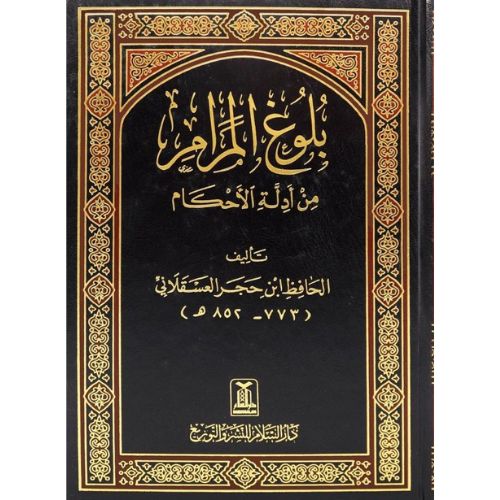
[HH] Bulugh Al-Maram (Arabic) – Darussalam
Highlights:
Bulugh Al-Maram is based upon the Ahadith of our Prophet which have been the sources of Islamic Jurisprudence. Al-Hafiz Ibn Hajar Al-Asqalani (Hijrah 777-853) has recorded the true significance of the Ahadith and their origins & also made a comparison of the versions, if the sources are more than one
RM60.00
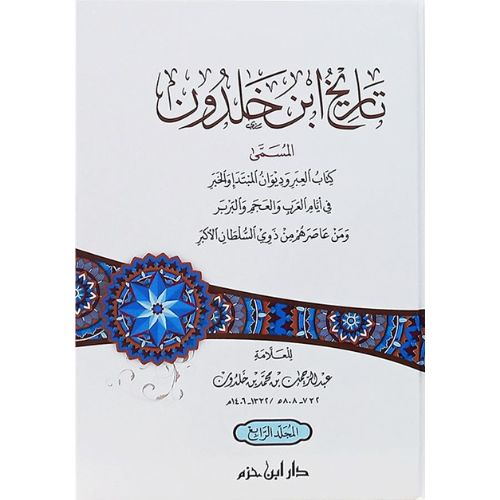
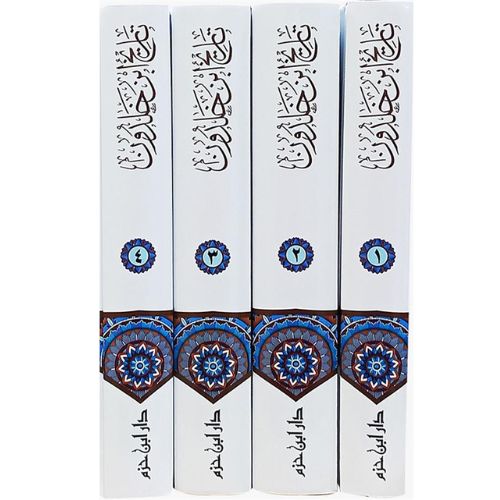
[HS] Tarikh Ibn Khaldun 4 Vol (تاريخ ابن خلدون 1 /4)
Highlights:
كتاب “تاريخ الطبري” تاريخ “الرسل والملوك” أو الأمم والملوك من أهم كتب المصادر في مجال التاريخ، إذ يعد أوفى عمل تاريخي بين مصنفات العرب أقامه مصنفه على منهج مرسوم، وساقه في طريق استقرائي شامل، بلغت فيه الرواية مبلغها من الثقة والأمانة، أكمل ما قام به المؤرخون قبله، كاليعقوبي والبلاذري، والواقدي، ومهد لمن جاء بعده كالمسعودي، وابن مسكويه وابن الأثير وابن خلدون ولم يقتصر على تاريخ الإسلام بل أرخ لما قبل الهجرة بل ابتدأ من القول في ابتداء الخلق ما كان أوله
RM390.00
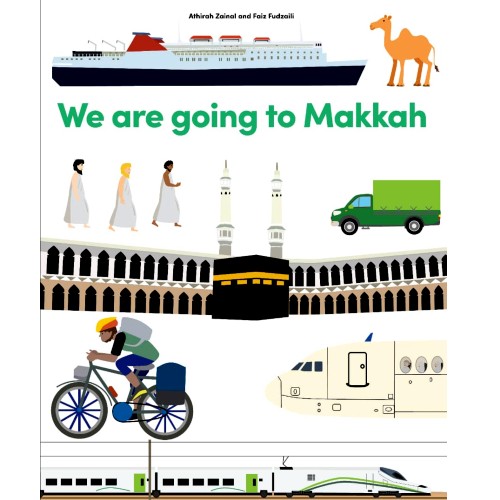
We are going to Makkah
Highlights:
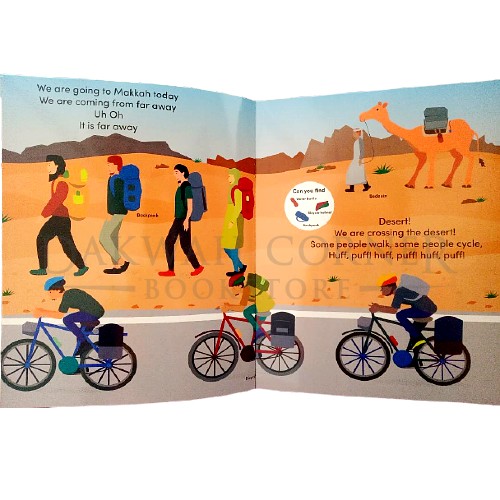
A fun book exploring how do people get to Makkah, the sacred city. People converge to Makkah by different modes of transport from far far away. Zoom! Zoom! Bismillah! and off to Makkah we go!
RM28.90
RM25.00 RM35.00
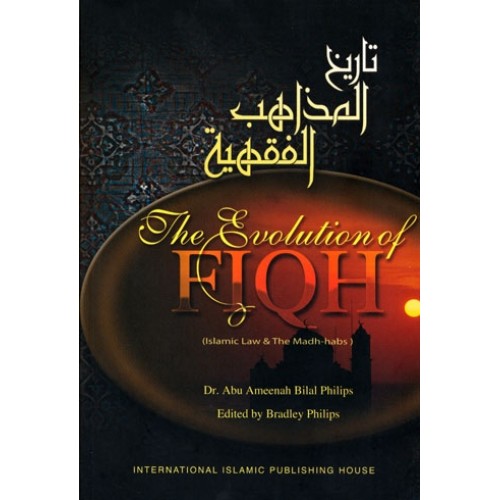
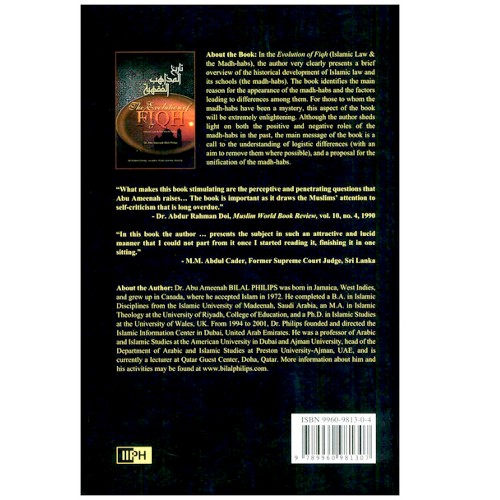
The Evolution of Fiqh (H/B)
Highlights:
In The Evolution of Fiqh: Islamic Law & the Madh-habs, Dr. Bilal Philips presents a brief overview of the historical development of Islamic law and its schools of jurisprudence (the madh-habs). This authentic Islamic book on fiqh identifies the main reason for the appearance of the madh-habs and the factors leading to differences among them, with a call to understanding juristic differences and removing them where possible.
RM45.00
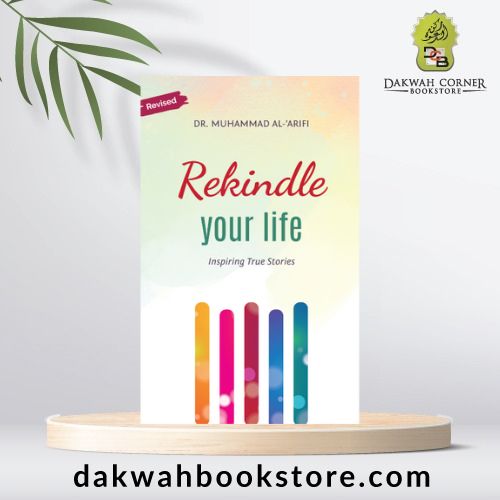
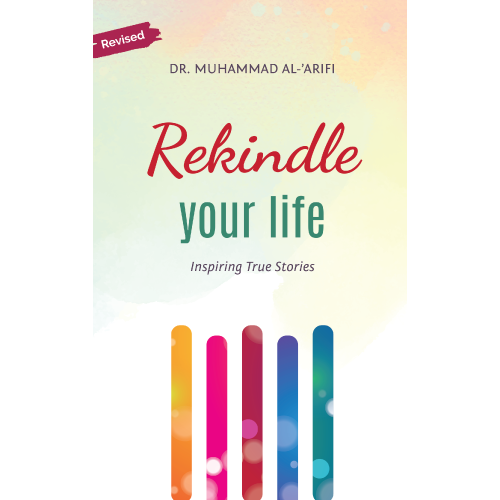
Rekindle Your Life (Revised) by Dr. Arifi
5 ★
5 ★
1 Rating
5 ★
1
4 ★
0
3 ★
0
2 ★
0
1 ★
0
Highlights:
Rekindle Your Life centres upon encouragement towards good deeds and noble characters, abstinence from sins by giving reminders in a very beautiful way about Paradise and its delight, the reality of death, turning to Allah in repentance and enlightening faith through inspired, true and wonderful stories from various aspects of life past and present.
RM35.00
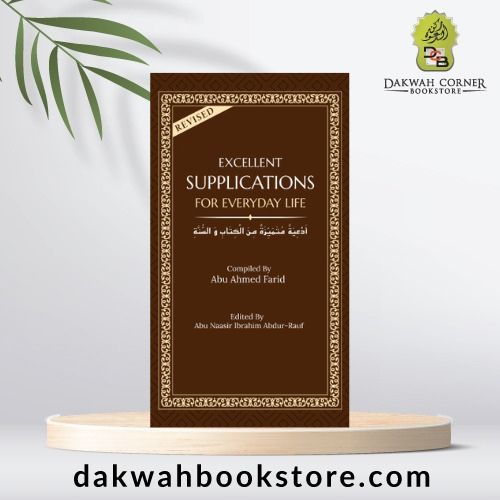
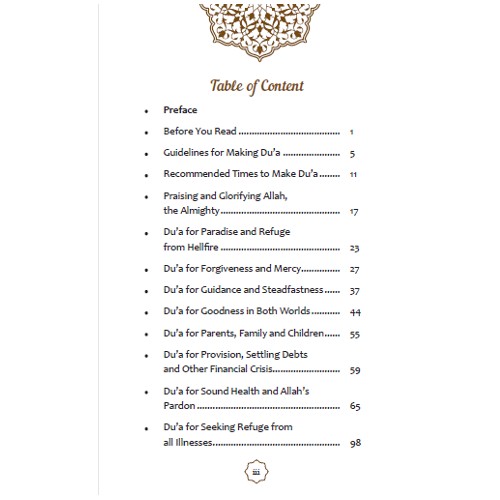
Excellent Supplications For Everyday Life (Revised)
Highlights:
This concise and beautiful collection of supplications is a selection from the Noble Qur’an and authentic traditions of the Prophet Muhammad ﷺ.
RM20.00
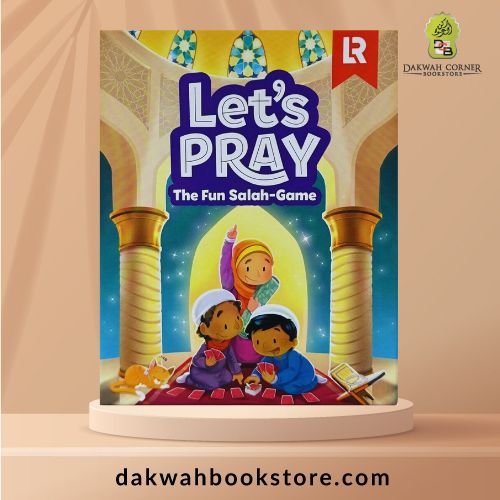
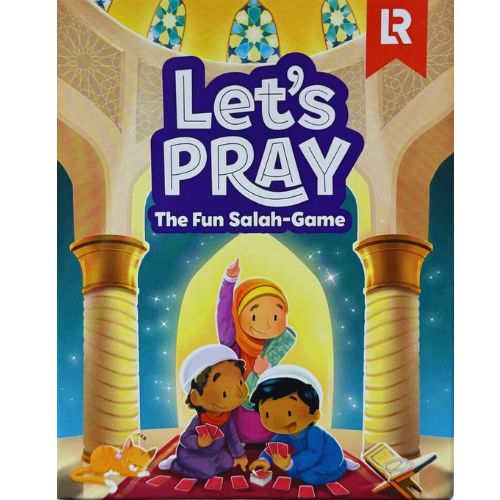
Let’s Pray: The Fun Salah Game
Highlights:
Salah is a blessing, not a burden. And the way in which we teach Salah can have a great impact on our children. Let’s pray makes learning Salah fun and enjoyable so it sticks for life.
RM87.00


Muharramat: Forbidden Matters Some People Take Lightly
5 ★
5 ★
1 Rating
5 ★
1
4 ★
0
3 ★
0
2 ★
0
1 ★
0
Highlights:
Some Muslims who are either ignorant or of weak faith still commit many acts which Allah never allowed. Ignorance is not an excuse for doing something wrong or illegal, hence it is important to make an effort to learn what these muharramât or forbidden acts are, in order to avoid ever committing them. The author, Shaykh Muhammad Sâlih al-Munajjid, explains many of the forbidden acts that have to do with calling on human beings and things other than Allah, worshipping the dead and circumambulating their graves, invoking prophets and the dead, magic, fortune-telling, believing in the power of astrologists and planets and other acts that go against the Islamic creed of monotheism (tawheed). As such, this book of prohibitions regarding beliefs and acts of worship is a helpful resource for Muslims, if they are really practicing Islam and want to avoid committing great sins.
RM11.00 – RM27.00Price range: RM11.00 through RM27.00
HardcoverPaperback
Clear
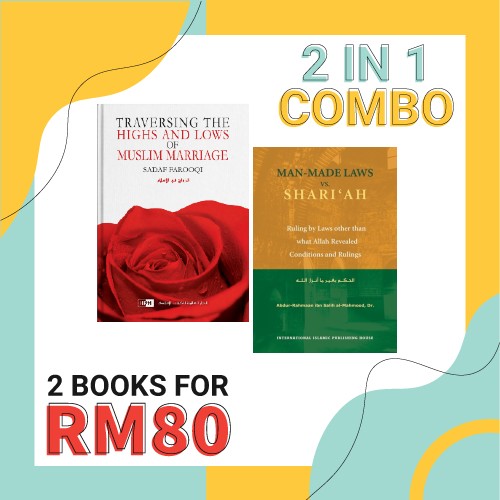
2IN1 Combo P02
Highlights:
1. Man Made Laws Vs. Shari‘ah (384 pages)
2. Traversing the Highs and Lows of Muslim Marriage (195 pages)
RM73.00 RM86.00
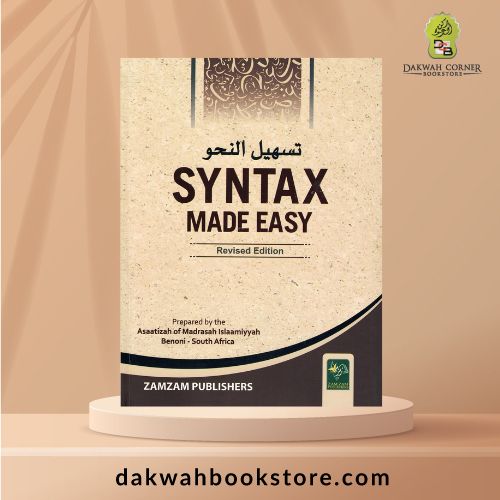
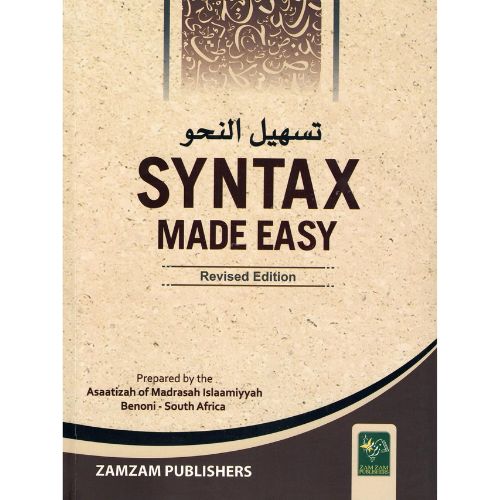
[AR] Syntax Made Easy
Highlights:
An Arabic Grammar primer based on Ilm-un-Nahw. Syntax Made Easy is an expanded English translation of the Arabic Grammar work, ‘Ilm al-Nahw – a standard textbook.
RM25.00
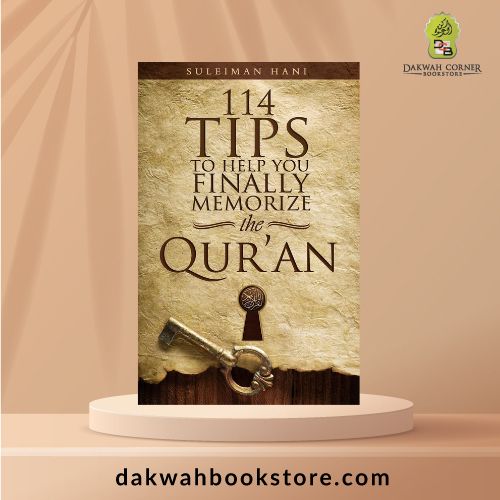
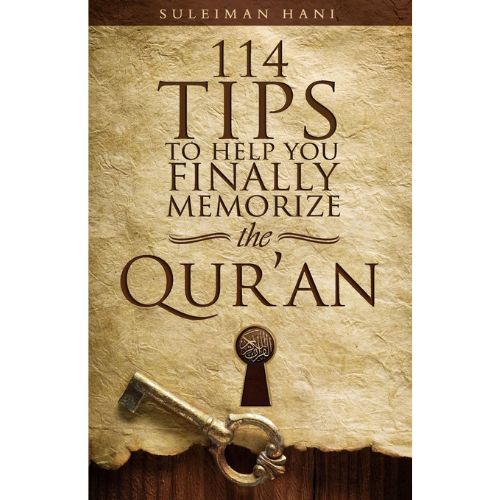
114 Tips to Help You Finally Memorize The Qur’an (P/B)
5 ★
5 ★
1 Rating
5 ★
1
4 ★
0
3 ★
0
2 ★
0
1 ★
0
Highlights:
“114 Tips to Help You Finally Memorize the Qur’an is a concise book that aims to equip readers of all backgrounds with the information and techniques necessary in order to begin, continue with, and complete the memorization of the Qur’an, eliminating thereby the common excuse and reasons for not memorizing.”
RM80.00

Kindness to Parents
Highlights:
Kindness to Parents is a very enlightening booklet by Abdul Malik Al-Qasim. He has collected several stories and narrations that demonstrate the Birr (being dutiful) and kindness to our righteous Salaf towards their parents’ needs and necessities, in obedience to Allah’s worship in sincerity. He refers from the Noble Qur’an that a man is never allowed to say ‘Uff” (fie) if he smells a bad order coming from his parents or one of them.
The author has exposed shortcomings and errors of many among us who don not preserve the rights of their parents.
RM17.00
There are no reviews yet.