

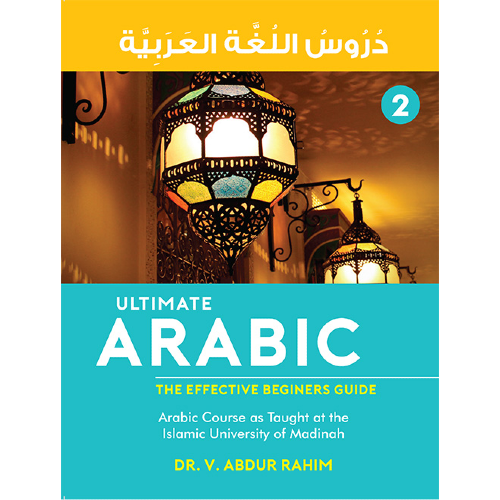
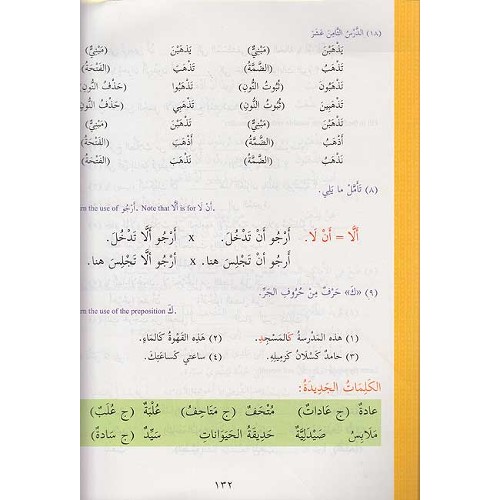
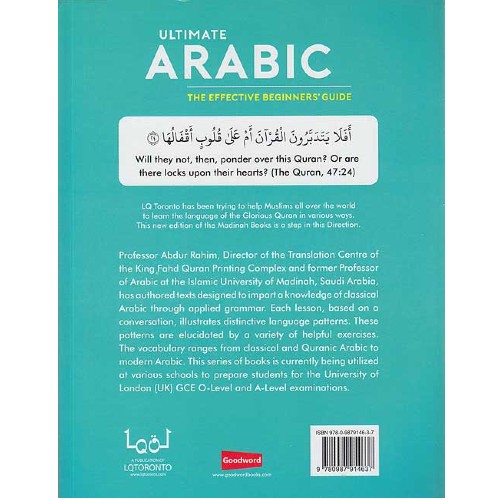
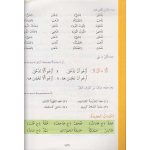
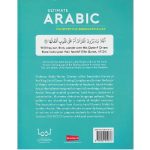
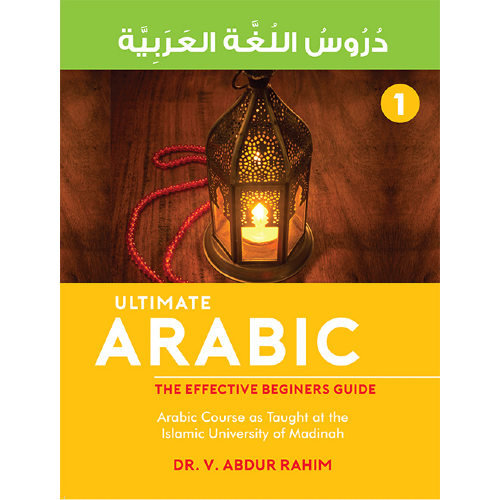
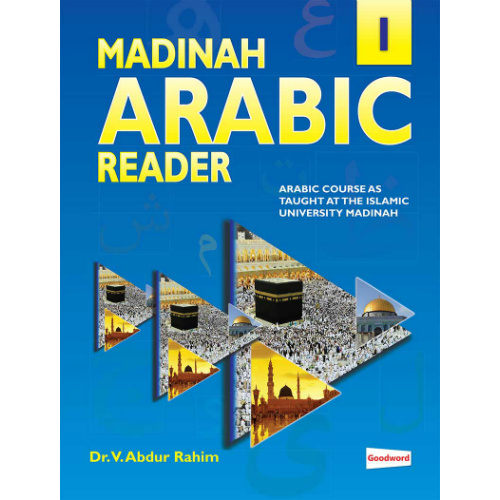
Professor Abdur Rahim, Director of the Translation Centre of the King Fahd Quran Printing Complex and former Professor of Arabic at the Islamic University of Madinah, Saudi Arabia, has authored texts designed to impart a knowledge of classical Arabic through applied grammar. Each lesson, based on a conversation, illustrates distinctive language patterns. These patterns are elucidated by a variety of helpful exercises. The vocabulary ranges from classical and Quranic Arabic to modern Arabic. This series of books is currently being utilized at various schools to prepare students for the University of London (UK) GCE O-Level and A-Level examinations.
Ultimate Arabic Book 2
Next product
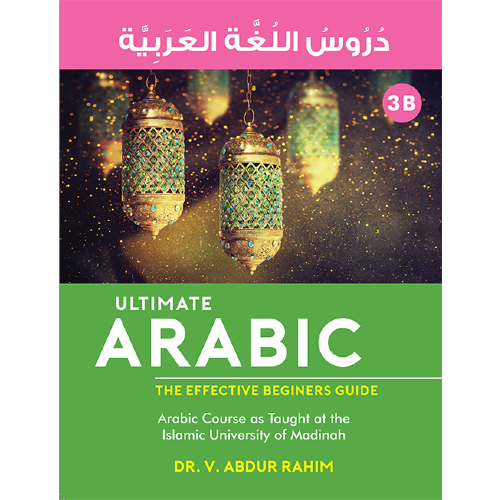
Ultimate Arabic Book 3B
RM80.00
RM75.00
Hurry up, Only 1 left.

Frequently Bought Together
1 Item
RM75.00
1 Add-Ons
RM55.00
Total
RM130.00
Additional information
| Weight | .950 kg |
|---|---|
| Author | |
| Binding | Paperbound |
| ISBN | 9780987914637 |
| Publisher | Goodword |
Reviews (0)
Be the first to review “Ultimate Arabic Book 2” Cancel reply
You must be logged in to post a review.
Related Products
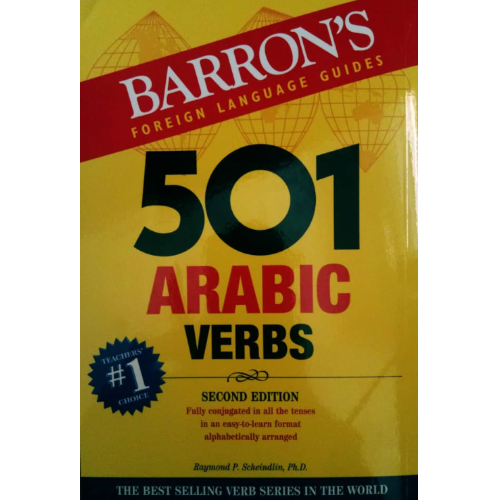
Arabic Verbs: Fully Conjugated All Forms Bilingual Edition
Highlights:
This update, easy-to-use reference book gives you:
- The 501 most common Arabic verbs in a table format
- Both the Arabic characters and their English infinitive form at the top of each page
- Exemplary essay that discusses Arabic verb formation and usage
- Common idioms with example sentences to demonstrate verb usage
- A grammar review and a pattern index
- Indexes that list verbs in both root order and strict alphabetical order
RM135.00
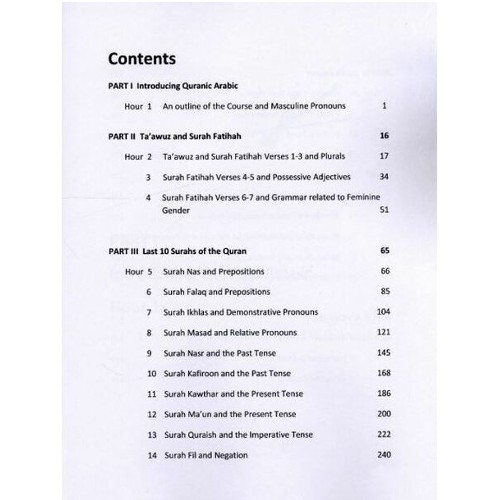
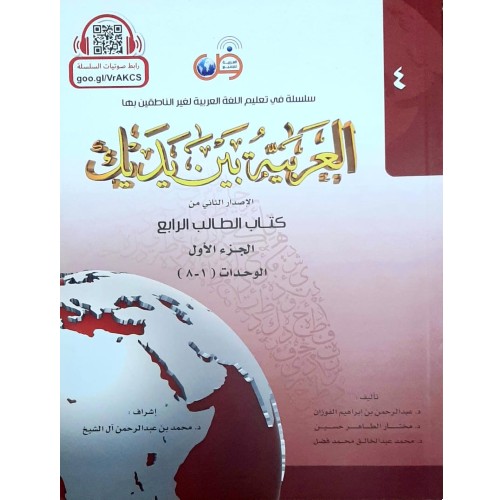
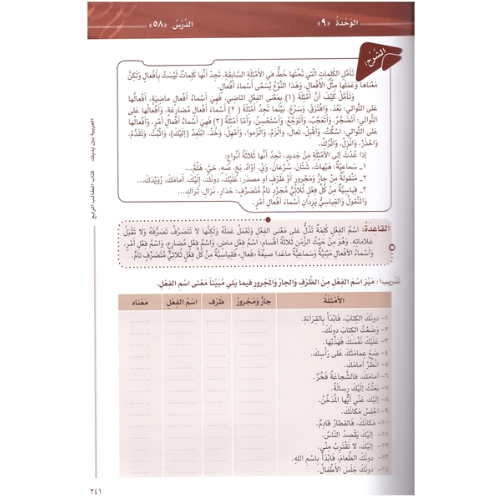
[AR] Al-Arabiyyah Bayna Yadayk Book 4 Part 1
Highlights:
Al-’Arabiyyah bayna yadayk Means Arabic in Your Hands.
The great thing about these books is that it covers a lot of vocabulary through pictures, Images and using Arabic Only, introduces the students to grammar later and gradually rather than pushing them at the deep end before they can swim.
Much like Arabic Course for English Speaking Students 3 Volumes Set, UKIA, it is more Islamic inclined and fulfils the desire for the student of knowledge to learn the language of the Qur’an.
Students who had completed all three books wanted something else to reach higher competency, which has given rise to volume 4, which is available in 2 Parts.
Al-’Arabiyyah bayna yadayk series comes in 3 Basic Student Books and a further study Book 4 Parts 1 & Book 4 Part 2
RM85.00
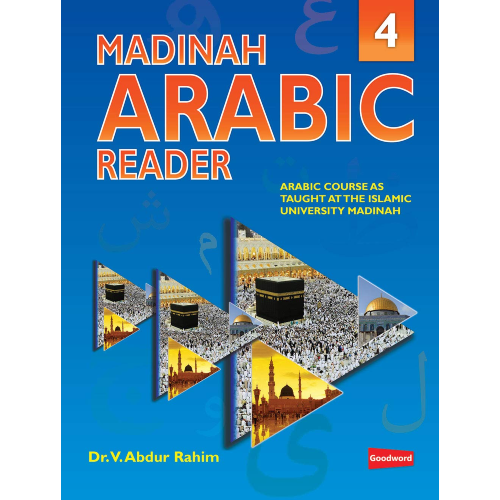
Madinah Arabic Reader (Book 4)
Highlights:
Professor Abdur Rahim, Director of the Translation Centre of the King Fahd Quran Printing Complex and former Professor of Arabic at the Islamic University of Madinah, Saudi Arabia, has authored texts designed to impart a knowledge of classical Arabic through applied grammar. Each lesson, based on a conversation, illustrates distinctive language patterns. These patterns are elucidated by a variety of helpful exercises. The vocabulary ranges from classical and Quranic Arabic to modern Arabic. This series of books is currently being utilized at various schools to prepare students for the University of London (UK) GCE O-Level and A-Level examinations.
RM30.00
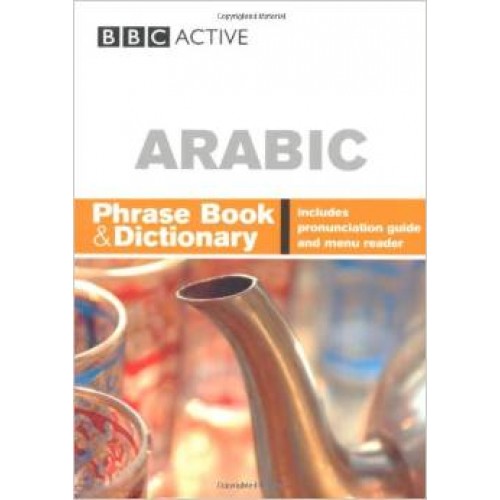
BBC Speak and Learn Arabic : Phrasebook and Dictionary (P/B)
Highlights:
Compact and easy to use, this handy guide includes travel and language tips plus a two-way mini-dictionary, so you’ll never be stuck for the right word. It is arranged by topic in clear, colour-coded sections, and offers phrases for every eventuality. Its simple-to-read format allows you to build your own sentences and develop your language skills. Also featuring a comprehensive menu-reader and pronunciation guide, it is the ideal companion to any trip.
RM20.00
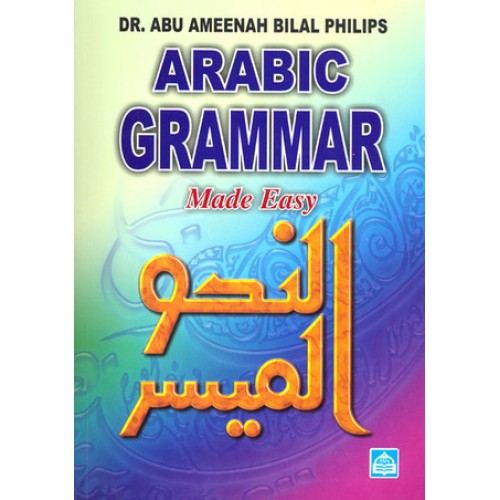
Arabic Grammar Made Easy (P/B)
Highlights:
An approach to teaching the Arabic language by introducing vocabulary and grammar in small doses, based on the most commonly used words in Arabic literature and the most frequently used grammatical constructions. Book One focuses on the rules of nominal sentences.
RM33.00
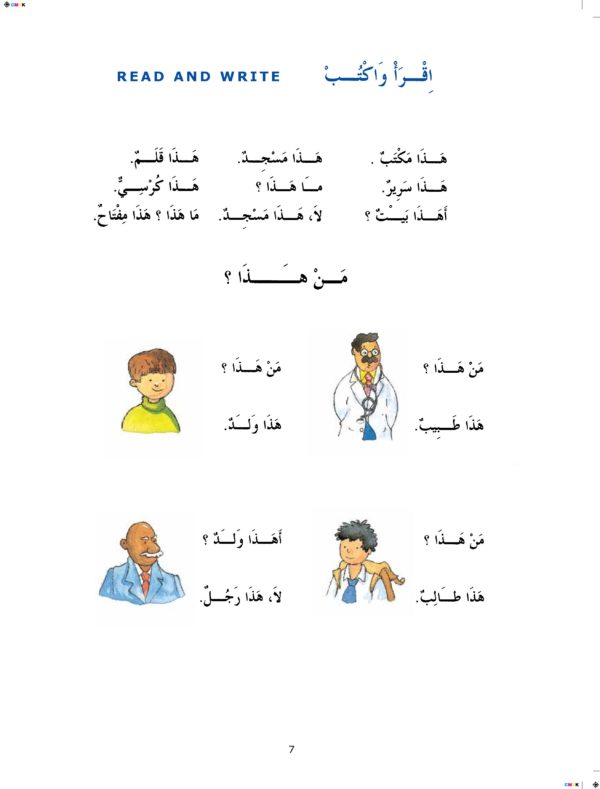
Madinah Arabic Reader (Book 1)
5 ★
5 ★
1 Rating
5 ★
1
4 ★
0
3 ★
0
2 ★
0
1 ★
0
Highlights:
Arabic Learning
RM26.00
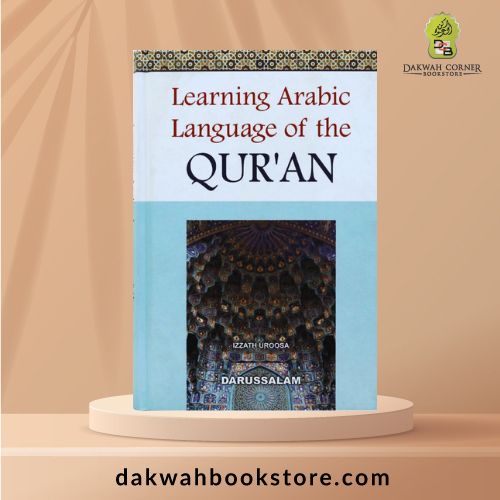
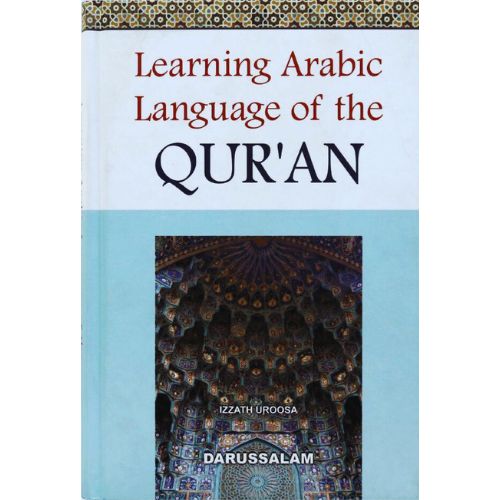
Learning Arabic Language Of The Qur’an
Highlights:
Other components that make this book attractive and useful are the simplicity of the language used, and its clarity and effectiveness of expression in achieving its objective. This book can be used by students of different ages whose intention is to learn Arabic with an eye toward proper understanding of the Qur’an.
The author has profound knowledge of both the Arabic and English languages. She also possesses a deep insight into Qur’anic expressions. She studied Arabic in Saudi Arabia and in India. This comprehensive book is the result of her diligence and commitment to learning and teaching the Qur’anic Arabic.
May Allah reward her for this valuable service to the understanding of the Qur’an and make it popular among the students and the academic world at large.
Prof. Mohsin Usmani Nadwi, Professor of Arabic and Dean at English and Foreign languages University (formerly CIEFL) Hyderabad, India.
RM90.00
Let’s Speak Arabic
Highlights:
For business or pleasure you need Let’s Speak Arabic for useful vocabulary and phrases. The book is organized to make Arabic learning easy and accessible. Let’s Speak Arabic focuses exclusively on the most common, everyday situations you will encounter in Arabic-speaking countries. It is just what you need to communicate successfully in basic Arabic.
RM18.00
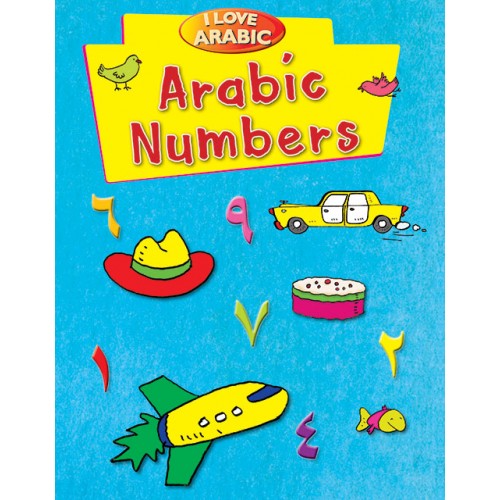
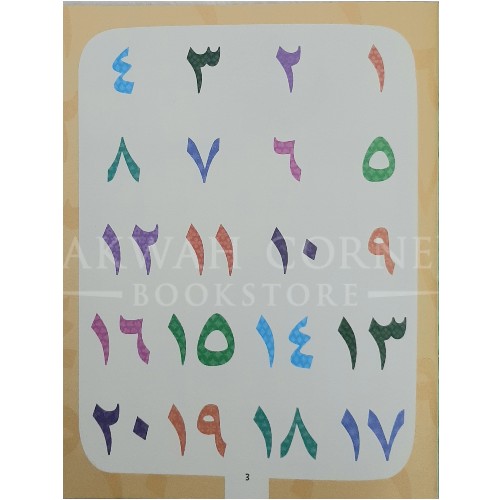
I Love Arabic: Arabic Numbers
Highlights:
Arabic Numbers, the third book in the I Love Arabic series, introduces young learners to identifying, counting and writing Arabic numbers. This colourful book presents each number along with delightful illustrations, which the young learner has to identify, count, say aloud and then practice writing. Arabic Numbers is an exciting first book for young learners who want to master Arabic numbers. Arabic Numbers develops these skills: * Identifying numbers * Counting numbers * Writing numbers.
RM15.00
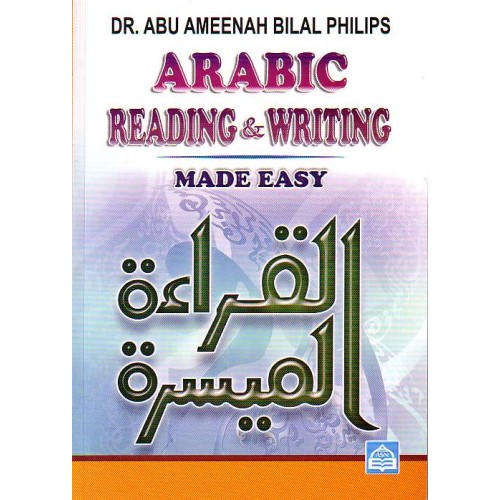
Arabic Reading & Writing Made Easy
Highlights:
The learner does not need to have memorized all the 28 Arabic alphabets and the 112 variations before learning to read and write.
RM35.00
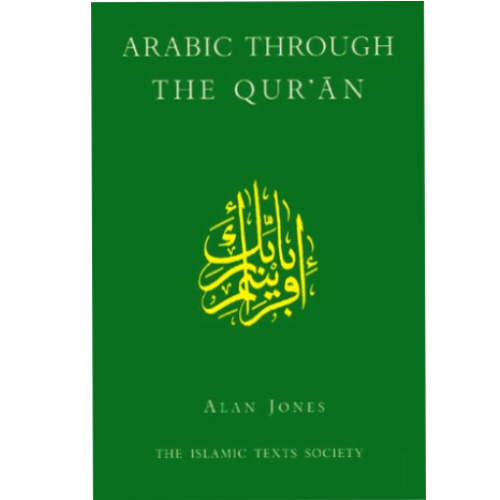
Arabic Through The Qur’an
Highlights:
Whether used as a means of self-instruction or as part of higher learning coursework, this language primer is ideally suited for those wishing to learn classical Arabic and for Muslims who wish to learn Arabic exclusively for use in their religious and spiritual practice. Designed to enhance the understanding of the Qur’an and its vocabulary that has infiltrated the whole of Arabic and Islamic literature, this workbook provides 40 easy-to-follow lessons for learning Qur’anic rather than modern Arabic. Beginning with a section on the Arabic alphabet, the text moves on to individual lessons that address one or more grammatical topics, ranging from the basics of nouns, adjectives, and prepositions to the more complex concepts of the imperative, the passive, and conditional sentence, introducing new vocabulary in the process. Accompanying translation exercises, a glossary of technical terms, and an index supplement the main text.
RM105.00
Recently Viewed
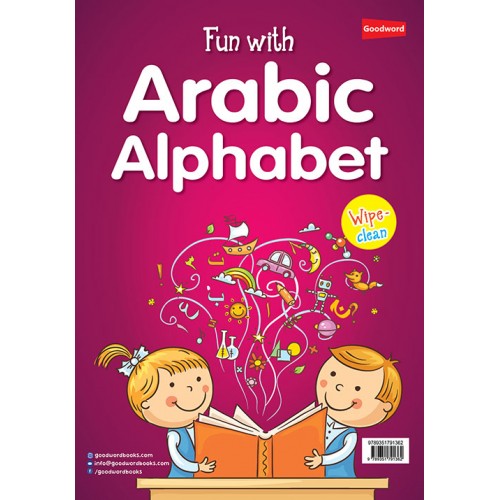
Fun with Arabic Alphabet
Highlights:
Fun ways to learn the Arabic alphabet!
RM20.00

Madinah Arabic Reader (Book 2)
5 ★
5 ★
1 Rating
5 ★
1
4 ★
0
3 ★
0
2 ★
0
1 ★
0
Highlights:
Professor Abdur Rahim, Director of the Translation Centre of the King Fahd Quran Printing Complex and former Professor of Arabic at the Islamic University of Madinah, Saudi Arabia, has authored texts designed to impart a knowledge of classical Arabic through applied grammar. Each lesson, based on a conversation, illustrates distinctive language patterns. These patterns are elucidated by a variety of helpful exercises. The vocabulary ranges from classical and Quranic Arabic to modern Arabic. This series of books is currently being utilized at various schools to prepare students for the University of London (UK) GCE O-Level and A-Level examinations.
RM26.00
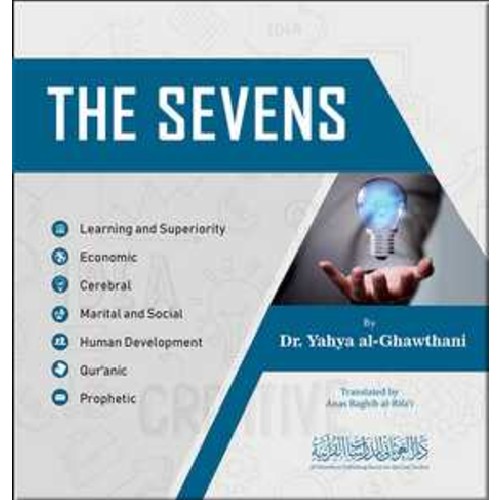
The Sevens
Highlights:
A concise guide for lecturers and trainers. It includes 70 Sevens which are among the strongest assistant to you in life. They are the extract of the experiments and experiences of successful scholars, within intensified points and concentrated pivots
RM60.00
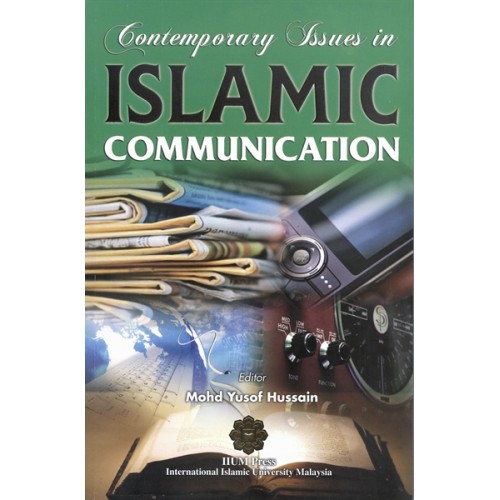
Contemporary Issues In Islamic Communication
Highlights:
The book contains a collection of essays on issues that are of concern to Muslim media and scholars and practitioners. The issues are those that are constantly highlighted in the mass media in the Muslim world. All the issues are discussed from the Islamic perspective. The main purpose of the book is to give readers a clear understanding of how Muslims view contemporary issues that are reported and discussed in present day mass media. The book is written for students majoring in communication at the International Islamic University Malaysia. It is also useful for students taking courses on communication issues in other universities.
RM37.00
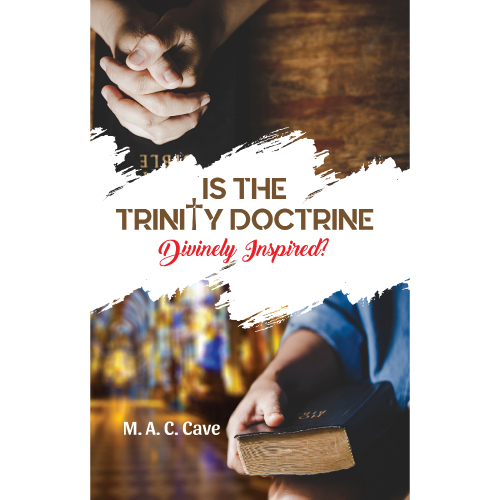
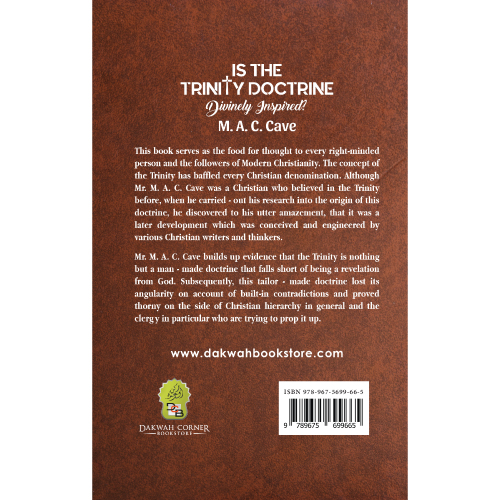
Is the Trinity Doctrine Divinely Inspired?
Highlights:
This book serves as the food for thought to every right-minded person and the followers of Modern Christianity. The concept of the Trinity has baffled every Christian denomination. Although Mr. M. A. C. Cave was a Christian who believed in the Trinity before, when he carried – out his research into the origin of this doctrine, he discovered to his utter amazement, that it was a later development which was conceived and engineered by various Christian writers and thinkers.
Mr. M. A. C. Cave builds up evidence that the Trinity is nothing but a man – made doctrine that falls short of being a revelation from God. Subsequently, this tailor – made doctrine lost its angularity on account of built-in contradictions and proved thorny on the side of Christian hierarchy in general and the clergy in particular who are trying to prop it up.
RM15.00
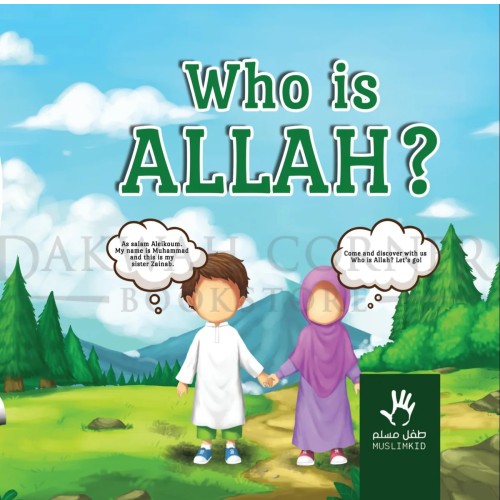
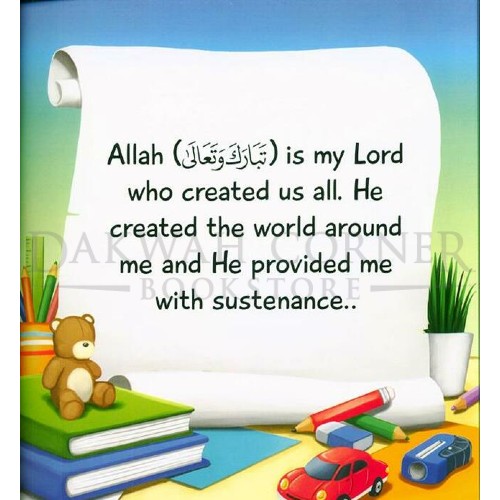
Who Is Allah? (MuslimKid)
Highlights:
Discover a selection of captivating illustrations, accompanied by basic, but important concepts for young Muslim children. Who is Allah? is the first in a series of five books on Aqeedah for children. This hardcover, 60-page book, explains who our Lord is in a fun and easy-to-understand way. This book has been specially designed to help encourage independence and learning in children. The characters in the book are expressionless to help develop young and curious imaginations.
RM50.00
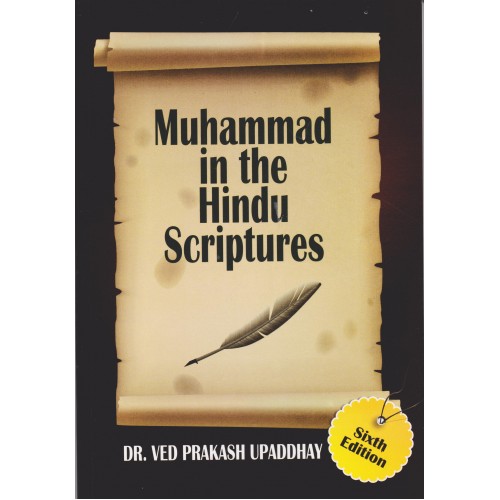
Muhammad in the Hindu Scriptures (P/B)
Highlights:
God is One. Human nature is one. Human destiny is one. And God�s message to humanity vis-a-vis that destiny is one. However, the rebellious element in man�s nature has led him to disobey God on the one hand, and on the other, he has pushed on to distort the very message of God. But the message is never fully lost. It would be ludicrous and indeed heretical to think that the situation could have gone out of God’s control.
With every distortion, therefore, He has renewed the message to salvage humanity from self-ruin. More interesting than that is the fact
that He has inserted in every message a Pointer to the Final Guide and the message he would be entrusted with; a Pointer which shows the true
seeker where the uncorrupted message could be found – the message that no one would be able to distort any more. While the main body of the message has been corrupted, the Pointer contained within has not been destroyed. Muhammad in the Hindu Scriptures brings out the truth of this phenomenon.
In addition to the Vedas and the Puranas, the book has unearthed this Pointer in the Buddhist, Christian, Jewish and other Hindu scriptures. Each of these scriptures uses its own unique Pointer relevant to its own theological scheme and the religious mentality of its own people. Separately and jointly these Pointers lit up the road to Muhammad (blessings and peace be upon him) exclusively, without any iota of doubt.
By all accounts the Final Guru has been sent and the Last Testament is in our laps. Additionally, the existence of these Pointers in the earlier
scriptures is yet another dimension of God’s mechanism to guide mankind to the infallible Truth. Upon reading the book, the theist, the atheist and the agnostic will find a lot to think about.
RM20.00
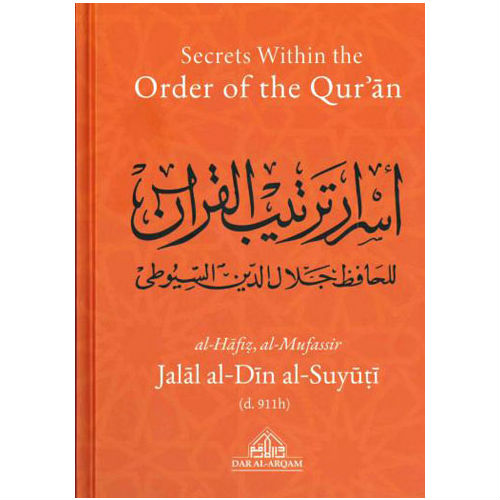
Secrets Within the Order of the Qur’an (H/B)
Highlights:
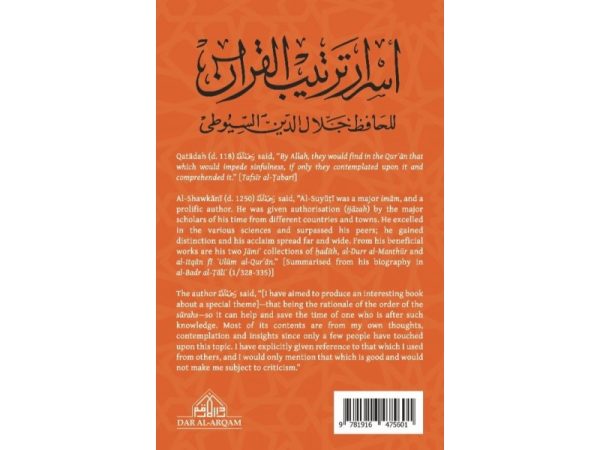
This unique book displays the genius of al-Suyūṭī in exegesis of the Qurʾān. Through his deep reflection and knowledge of the Qurʾān and its related sciences, he provides insights into why its chapters are ordered so and unveils intricacies to the reader which could only have been unearthed by one possessing such mastery and genius. The author states at many junctures within the book that he is displaying his reflections to the reader, so one is given the opportunity through this intimate writing style to ponder over the Qurʾān from the perspective of a true tafsīr master.
RM100.00
There are no reviews yet.