


![[HH] Al Musannaf 1/25 Vols / المصنف لابن أبي شيبة](https://shop.dakwahbookstore.com/wp-content/uploads/2024/08/website-500x500-21.jpg)
![[QQ] Tafsir Al Salaf, Tarikhuhu wa A'lamuhu wa Masadiruhu / تفسير السلف](https://shop.dakwahbookstore.com/wp-content/uploads/2024/08/website-500x500-60.jpg)

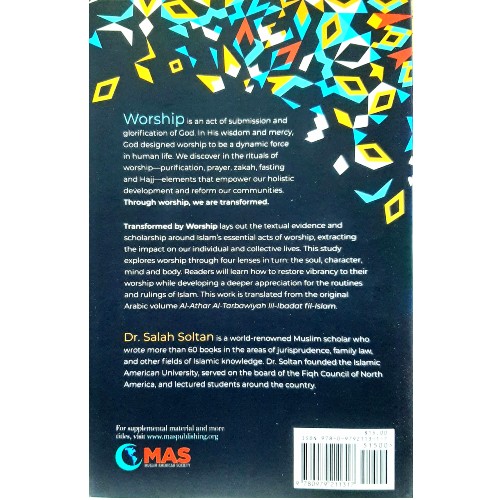
Author: Dr. Salah Soltan is a world-renowned Muslim scholar who wrote more than 60 books in the areas of jurisprudence, family law, and other fields of Islamic knowledge. Dr. Soltan founded the Islamic American University, served on the board of the Fiqh Council of North America, and lectured students around the country.
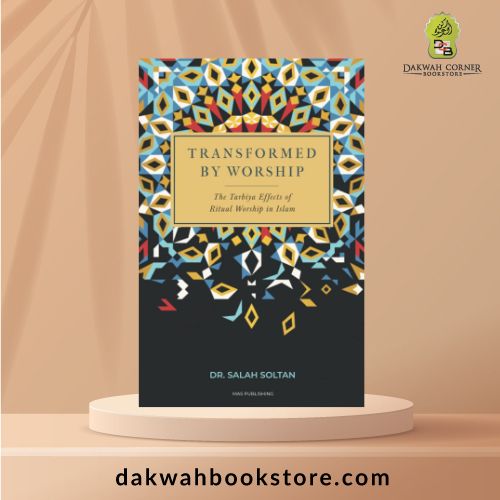
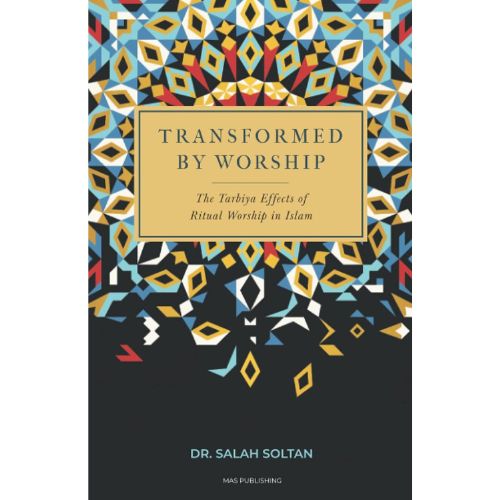
Transformed by Worship: The Tarbiya Effects of Ritual Worship In Islam
RM75.00
Hurry up, Only 2 left.
Highlights:
somdn_product_page
Compare
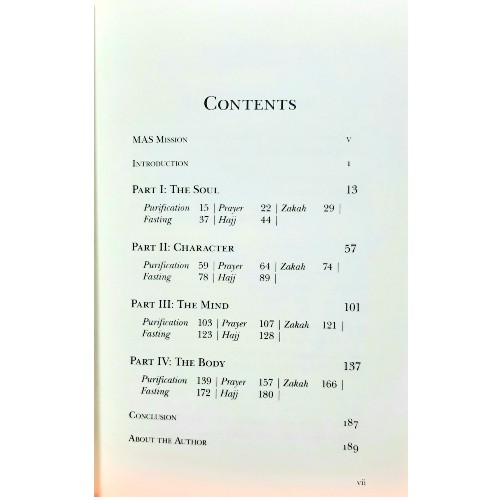
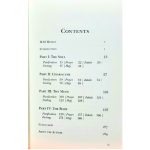
Worship is an act of submission and glorification of God. In His wisdom and mercy, God designed worship to be a dynamic force in human life. We discover in the rituals of worship—purification, prayer, zakah, fasting and Hajj—elements that empower our holistic development and reform our communities. Through worship, we are transformed. Transformed by Worship lays out the textual evidence and scholarship around Islam’s essential acts of worship, extracting the impact on our individual and collective lives. This study explores worship through four lenses in turn: the soul, character, mind and body. Readers will learn how to restore vibrancy to their worship while developing a deeper appreciation for the routines and rulings of Islam. This work is translated from the original Arabic volume Al-Athar Al-Tarbawiyah lil-Ibadat fil-Islam.
SKU: SJ280
Categories: Popular Titles Worldwide, Sharia, Fiqh and Jurisprudence
Brand: MAS Publishing
Frequently Bought Together
1 Item
RM75.00
2 Add-Ons
RM49.00
Total
RM124.00
Additional information
| Weight | 0.45 kg |
|---|---|
| Dimensions | 21.5 × 14 × 1.4 cm |
| Author | |
| Binding | Paperback |
| ISBN | 9780979211317 |
| Pages | 189 |
| Publisher | MAS Publishing |
Reviews (0)
Be the first to review “Transformed by Worship: The Tarbiya Effects of Ritual Worship In Islam” Cancel reply
You must be logged in to post a review.
You may also like…


33 Ways of Developing Al-Khushoo`: Humility and Devotion in Prayer
5 ★
5 ★
1 Rating
5 ★
1
4 ★
0
3 ★
0
2 ★
0
1 ★
0
Highlights:
Shaykh Muhammad Salih al-Munajjid’s little book is perhaps one of the most widely-circulated among Muslims today. This is because the topic touches worshippers where it hurts—we know that we often lapse into an automatic sort of prayer when we lose concentration. The Shaykh points out that this loss of concentration really stems from a lack of humility and devotion—in Arabic, khushoo‘. His aim in writing this book is to help us to get back that khushoo‘. His step-by-step approach makes it simple. He gives practical advice and uses the excellent example of the prayer of the Messenger of Allah (blessings and peace be upon him) to guide us, so that as worshippers, we can truly return to a state of humility and devotion before the Lord.
RM15.00

A Guide to Male-Female Interaction
Highlights:
Are Muslim men allowed to interact with female students, and vice versa, in a virtual classroom? Can a Muslim woman pursue a professional career that necessitates her interaction with men? Is it appropriate for a woman to serve her husband’s guests? Do mixed wedding ceremonies comply with the Sharia? Read this bilingual book to find the answers and more!
RM56.00
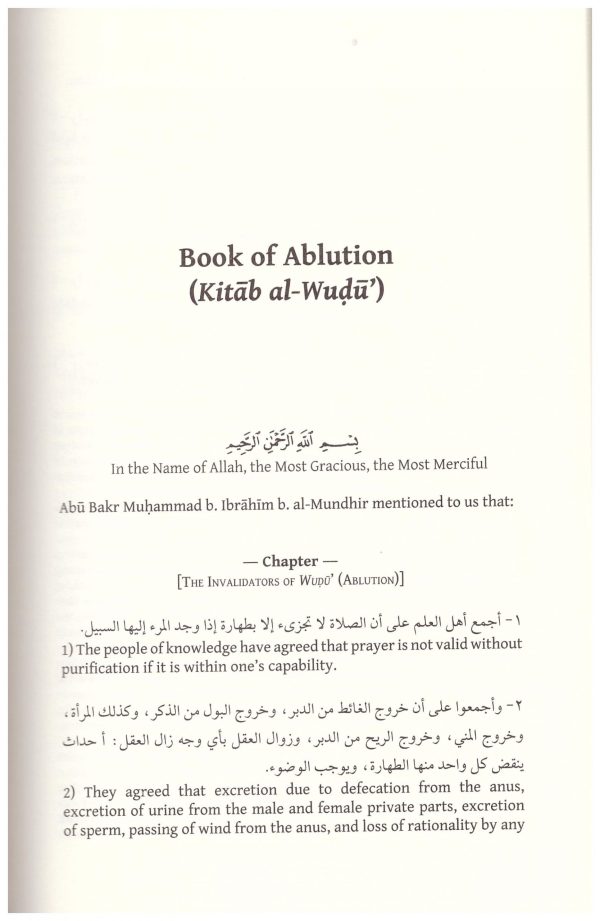
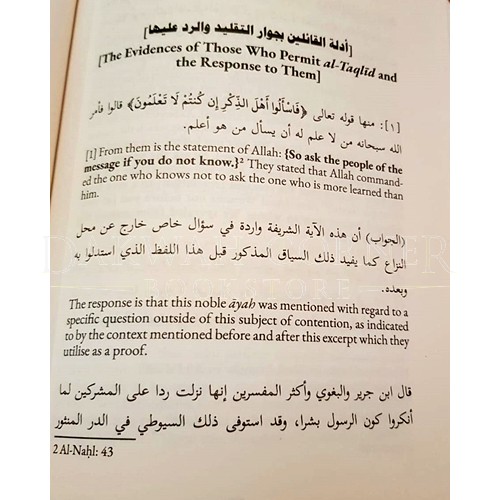
A Critique Of The Ruling Of Al-Taqlid (Dar ar Arqam)
Highlights:
Abu Dāwūd stated that Aḥmad said to him, “Do not make taqlīd of me, nor Mālik, al-Shāfiʿī, al-Awzāʿī or al-Thawrī; rather take from where they took.” [Masāʾil al-Imām Aḥmad (pp.276-277).
Nawāb Ṣiddīq Ḥasan Khan relays, “He was the judge of the congregation, the shaykh of al-Islam, the muhaqqiq, the ʿallāmah, the imām, the sulṭān of the ʿulamā, the imām of the world, the seal of the ḥuffāẓ (i.e. major ḥadīth scholars) without dispute, the proof for debaters, the supreme in isnād and the foremost within the domain of al-ijtihād. […] He did not see one similar to himself, and those who saw him did not see his likeness in knowledge and piety, and in standing for the truth with strength of character and preciseness of tongue. […] He gained proficiency within all the rational and textual sciences. This was to the point that he reached the apex of human understanding, his power of examination was acceded to by both friend and foe, his excellence in the sciences of ijtihād was acknowledged, and [he became] the one to clarify the matters of subtlety within the religion. […] From his works is Nayl al-Awṭār Sharḥ Muntaqā al-Akhbār of Ibn Taymiyyah, in four volumes. The eye of time has not been adorned with its likeness in examination, nor has the entirety of time granted its similitude in attention to the smallest of detail.” [Summarised extracts from his biography in al-Tāj al-Mukallal (443-449)]
The author states, “One of the researching scholars amongst the people of knowledge requested me to compile a treatise for him that would contain affirmation of the truth regarding al-taqlīd, as to whether it is permissible or not, in a manner that no doubt would be left after it nor objection to it would be accepted. Since the questioner is one of the eminent scholars, the response will be in the manner of ilm al-munāẓarah (the science of dialectics).”
RM85.00

Related Products


Funeral Rites In Islam (H/B)
Highlights:
The purpose of this book is to provide English speaking Muslims a concise and authentic compilation of the instructions regarding funeral rites in Islam.
RM35.00

Hajj & Umrah And Visitors (H/B)
Highlights:
Rites and Selected Etiquettes for those intending to Perfom Hajj & Umrah and Visitors In this book the author calls attention to the most important things that those who intend to perform Hajj, Umrah or Visiting the Prophets Mosque in Medinah must have as provisions. The author has made his work brief and arranged its topics according to their priorities. the author mentions a considerable number of sayings of the people of knowledge and calling the attention of the reader to some important matters.
RM45.00

Worship In Islam: An In-depth Study of Ibadah, Salah and Sawm (P/B)
Highlights:
Worship in Islam is in-depth study of the nature and significance of Islamic spirituality by Abul A‘la Mawdudi (1903–79), one of the leading Muslim intellectuals of the twentieth century, with special reference to the concepts of God’s Oneness (tawhid), the finality of Prophethood (risalah) and the Islamic system of worship (‘ibadah) with a focus upon prayer (salah) and fasting (sawm) and their role in the development of the Islamic personality and Islam’s social order. The distinguishing feature of Mawdudi’s approach is his elaboration of the social dimension of worship, which extends the traditional approach found in Islamic jurisprudence, with its focus upon ritual and self-purification, to consider worship’s transformative role in social life. Presenting a holistic view of the Islamic system, Mawdudi highlights Islam’s social, economic and political dimensions, which he argues has the capacity to resolve emergent issues and problems that humankind faces.
This historic text should be of wider interest to both students and specialists in contemporary Islamic thought, and includes an introduction by Professor Anis Ahmad.
Edited and translated into accessible English by Ahmad Imam Shafaq Hashemi, this book is an authoritative compilation by a leading Islamic twentieth-century revivalist on the central matter of worship’s role in Islam.
RM84.00


Remembrance & Prayer: The way of Prophet Muhammad s.a.w
Highlights:
Remembrance and Prayer: The Way of Prophet Muhammad, was one of the first works of Shaykh al Ghazali’s to be translated into English. The book describes in vivid prose how the Prophet, upon him be peace, used to remember Allah and pray to Him. Not only are the exquisitely beautiful, deeply moving and penetrating words of the Prophet given in the English translation, but in the original Arabic as well, thus allowing those desirous of memorizing Arabic access to the original texts. The intimate relationship with Allah, which was the hallmark of the Prophet’s life, becomes clear and vivid. The book’s contents are immensely relevant. to the life and concerns of modern man, whose life has been made barren by the present secularist machinery.
RM75.00


Having Fun The Halal Way Entertainment In Islam
5 ★
5 ★
1 Rating
5 ★
1
4 ★
0
3 ★
0
2 ★
0
1 ★
0
Highlights:
With the advent of technology, the entertainment industry has flourished and become immensely popular. Combine this with the exponential advances in technology, and the result is an increasing number of ways to amuse ourselves. As a result of such advances, Muslim react in a variety of manners towards entertainment. Some label entertainment as completely forbidden. This sometimes includes parents who say no to almost everything that their young ones deem to be ‘fun’, without providing them with suitable alternatives. Others, who do not want to take this extreme approach, fall into the trap of excessive use of – and even addiction to – various sources of entertainment, without any limits.
In Having Fun the Halal Way, Ismail Kamdar explores the teachings of Islam regarding entertainment. Drawing upon the Quran, the Sunnah and the understanding of the righteous scholars of Islam, he provides a detailed and balanced analysis of the topic. He not only explains the detriments of the current entertainment industry, but also suggests alternative means to have a good time with friends and family members.
RM18.00


Hajj & Umrah (Pocket Guide) – English Version
5 ★
5 ★
2 Ratings
5 ★
2
4 ★
0
3 ★
0
2 ★
0
1 ★
0
Highlights:
A useful pocket guide that includes the rites of Umrah,Hajj, and visiting Madinah.
RM14.00

Islamic Rules of Order (P/B)
Highlights:
Organizations must have rules of order to facilitate their debate and to fill in the procedures not detailed by their constitutional documents. While most American organizations are content to operate by Robert’s Rules of Order, Muslim organizations have often wrestled with questions over whether the rules of order systemized by a Western military figure are in accord with the Qur’an and the Sunnah.
This book tackles the matter directly and takes into account the Qur’an, the sunnah, Islamic manners and the history of Islamic consultation and leadership to provide a simple, practical guide to organizational procedure that can be incorporated into the governance of Muslim organizations. The book includes advice on writing bylaws and on complying with the best practices of the U.S. Dept. of Justice in a way that is Islamically authentic, transparent, and accountable. It provides a basic starting point for any Muslim organization while allowing for flexibility so that organizations may make any variations they require within their own bylaws and constitution, so that it can accommodate differing schools of thought on Islamic law. In its discursive approach it is an essential primer for understanding the value of rules of order and the Islamic context for their application. The Islamic Rules of Order has been adopted as the rules of order of the Association of Muslims Social Scientists.
RM50.00

Forensic Psychiatry In Islamic Jurisprudence (P/B) (IBT)
Highlights:
This is the first book in Forensic Psychiatry that focuses on the application of psychiatry to legal issues connected to Islamic jurisprudence. It gives contemporary psychiatry in any Islamic country a broad spectrum of tools to work with, enabling the utilization of options specific to particular societal and cultural norms. This book will appeal to both the general as well as the academic reader.
RM40.00


Common Mistakes Regarding Prayer – IIPH
Highlights:
Formal prayer (salat) is the second pillar of Islam, and the most important of a Muslim’s acts of worship. Prophet Muhammad (PBUH) said: “The first of one’s actions for which a slave of Allah will be held accountable on the Day of Judgment will be one’s prayers. If they are correct and accounted for, then he (or she) will have succeeded (gained paradise); and if they are lacking, then he (or she) will have failed (lost paradise). If there is something defective in his (or her) obligatory prayers, the Lord will say: ‘See if my slave has any supererogatory prayers with which that which was defective in his (or her) obligatory prayers may be completed. Then the rest of his (or her) deeds will be judged in like manner.” (At-Tirmidhi and others) Shaykh Mashhur Hasan Salman has compiled a list of the most common errors that we make when we pray, discussing and explaining each one. This book is a valuable aid to Muslims hoping to perfect their prayers, so that their prayers may be free of defects and acceptable to Allah. This new and revised edition of the English translation of his work presents the text in a fluent, highly readable style.
RM38.00

The Pillars of Islam Made Easy I- Shahadah (Testimony of Faith) & Its Essential Conditions (H/B)
Highlights:
For a Muslim, the testimony of faith is the affirmation that there is no god other than Allah and that Prophet Muhammad (saw) is His servant and messenger. This testimony is second nature to most Muslims; yet it is disappointing to note that many of them are not aware of the seven conditions attached to it.
RM40.00


Ibn Ashur Treatise on Maqasid al-Shariah (P/B)
Highlights:
Ibn Khaldun, the fourteenth century Arab historiographer and historian, is viewed as a founder of modern historiography, sociology and economics. He lived during a turbulent part of history, and out of his experiences, he ?conceived and created a philosophy of history that was undoubtedly the greatest work ever created by a man of intelligence…?. This work tells of the period of unrest in Ibn Khaldun?s life marked by political rivalries. It is during this turbulent period which provided him with the opportunity to write the Muqaddimah (or Prolegomena), earning him an immortal place among historians, sociologists and philosophe
RM72.00

The Right to Education, Work and Welfare in Islam (P/B)
Highlights:
In The Right to Education, Work and Welfare in Islam Professor M.H. Kamali develops an Islamic perspective on three connected and complementary areas of rights and liberties. He urges that education is often a necessary ingredient of professional work even more so now than in earlier times when the range and variety of specialised knowledge were relatively limited. A person who acquires education, whether generally or at advanced levels of specialisation, is more likely to stand in a better position to enter the workforce and thus to contribute to the welfare of the community.
The author commences his discussions on education, work and welfare in Islam by focusing on how each is treated in the Qur’an; and follows this by the example of the Prophet and, after him, the Pious Caliphs who gave prominence to the education and welfare needs of people at times both of scarcity and affluence. Professor Kamali then moves forward to our time and discusses the right to education, the education of children, institutionalisation of learning, academic freedom and the debate between science and religion.
The section on work elaborates on the value of work, work ethics, workers’ and employers’ rights and responsibilities, and the role and responsibility of governments.
Finally, the section on welfare focuses on the importance in Islam of caring for those who are in need and the different forms of provision that can be made available by individuals, the state and charities.
RM63.00
Recently Viewed
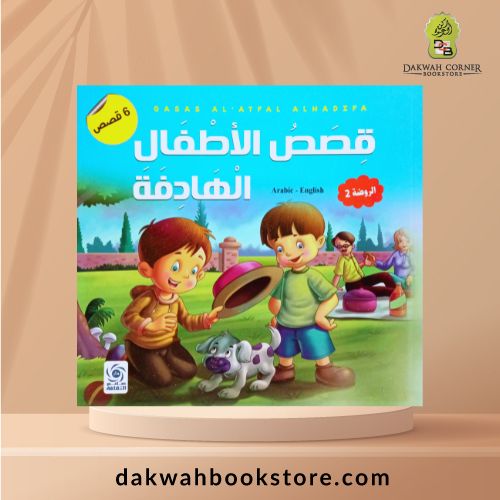
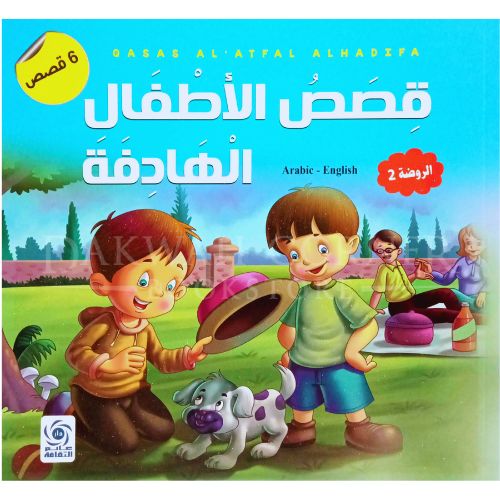
[CB] Qisas Al Atfal Al Hadifa / قصص الأطفال الهادفة
Highlights:
قصص الأطفال الهادفة
ابتسامة سالي ▪️
زيارة مهمة ▪️
صديقي المشاغب ▪️
غالي والعصائر ▪️
هدايا الجد ▪️
هيا نتعاون ▪️
RM35.00


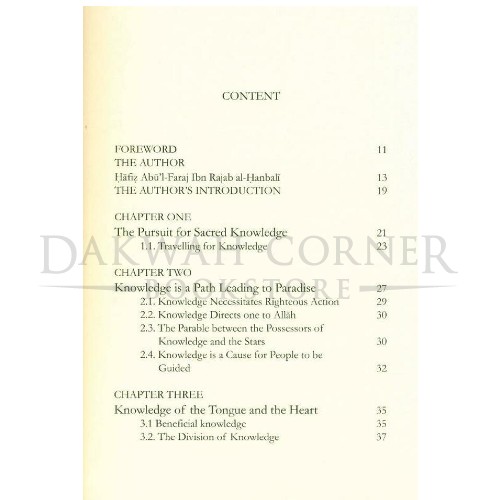
Inheritors of The Prophets
Highlights:
In this eighth installment of the Ibn Rajab series, the illustrious Imam, may Allah have mercy upon him, penned a truly inspiring work highlighting the merits of knowledge, its types, and the role it plays in transforming an individual.
RM50.00
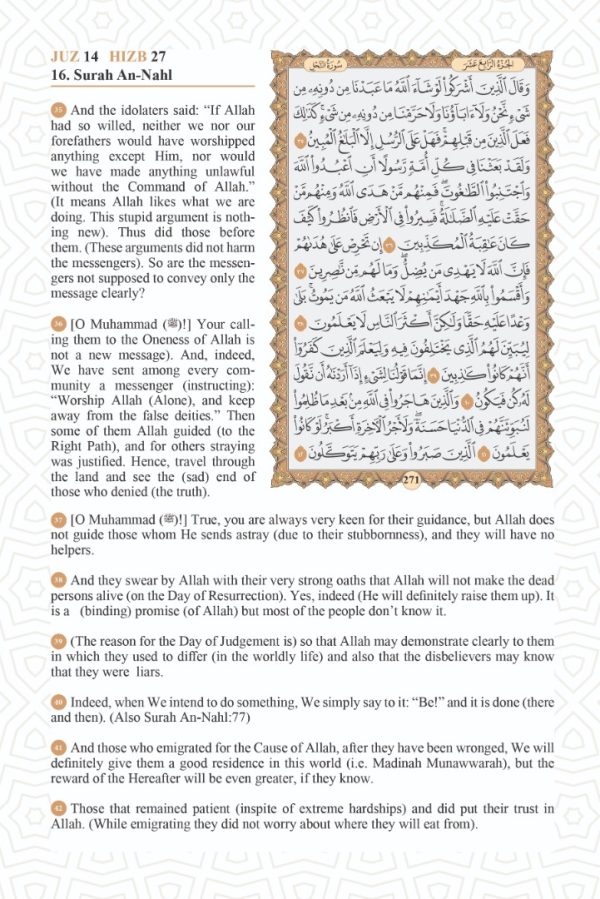
The Easy Qur’an New (Full Arabic Page) 6×9
Highlights:
The Easy Qur’an translation reviewed and approved by the Ministry of Information Saudi Arabia and Religious affairs Ministry Islamic Republic of Pakistan.
Published by Da’wah Corner Bookstore Saudi Arabia
RM60.00
A Mercy to the Universe
Highlights:
Mercy is clemency and forbearance; mercy is the disposition to forgive or show compassion; mercy means a favor or a blessing; mercy further denotes the qualities of kindness, sympathy, generosity, and beneficence. Suffice is to say that all of these qualities were present in abundance in the character of the Prophet Muhammad (May Allah have his peace and blessings on him).
He was a mercy not just to believers, but to disbelievers as well, for he would invite them to come out of darkness and into the light of true guidance. He is a favor and blessing for mankind, not just the Arabs, the people among whom he was sent, but for people of all races and colors. His staunchest enemies became his closest followers when the cloud of blind prejudice was removed from their sight and when they were able, for the very first time, to see with clarity the true nature of the Prophet’s character.
This book deals with many of the qualities that the Prophet possessed that made him the mercy to everyone. It starts with His perfect lineage, His noble upbringing, and his fully dedicated worship. This book then gives many of the qualities of the Prophet including his generosity, humbleness, bravery, patience, and leadership to name a few. Each chapter includes examples from the life of the Prophet on how he was the perfect living example of that quality. The book ends with the perfection of life of the Prophet with his farewell sermon and even his noble death where he demonstrated some of those qualities as well.
RM46.00
Rizq Lawful Earnings (P/B)
Highlights:
Narrated by Umar Ibn al-Khattaab (May Allah be pleased with him), the Prophet (Peace be upon him) said:
“If you put your faith completely in Allah, He will arrange for your sustenance in the same way as he provides for the bird. They go out in the morning with their stomachs empty and return filled in the evening.” (Tirmidhee)
This book discusses the place of pride Islam gives to making lawful earnings and rizq through hard work and striving. It also looks at the contempt Islam places on begging and indolence. Then it looks at which earnings are lawful, which are not and the many ways by which wealth can increase while seeking the pleasure of Allah (Glorified and Exalted is He).
RM30.00
There are no reviews yet.