| Weight | 0.25 kg |
|---|---|
| Product Type | Book |
| Author | |
| Publisher | IIPH |
| Pages | 158 |
| ISBN | 9786035010368 |
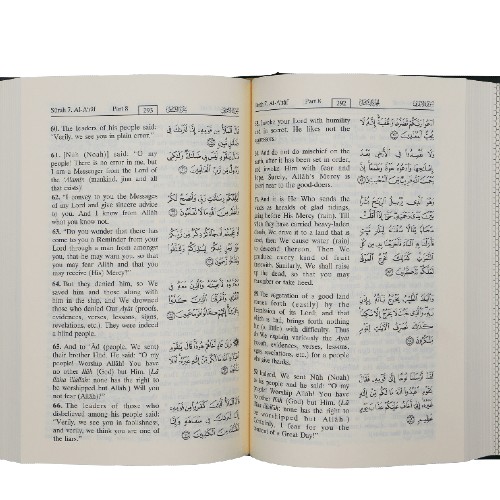
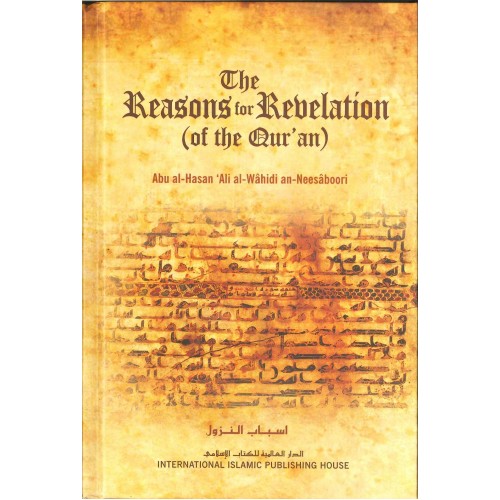
The Reasons for the Revelation (IIPH)
RM31.00
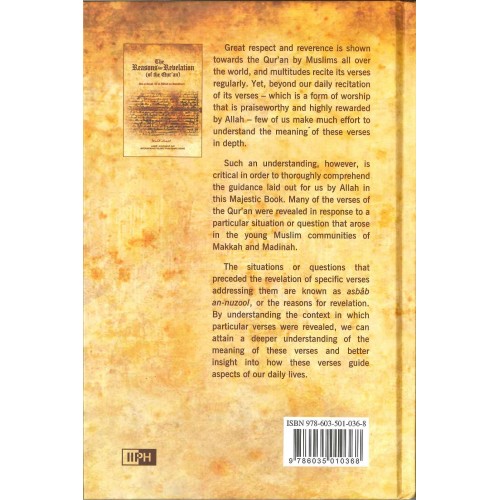
Have you ever wondered in what circumstances a particular verse or Soorah was revealed? In this translation of the great work ‘Asbaab an-Nuzool’ by the great Muslim scholar Ali ibn Ahmad an-Neesaboori, you may well find the answer. This first volume covers the first four sections of the Qur’an, from Sorrah al-Fatihah to verse 22 of Soorah an-Nisa. The publication of this book reflects our continuing effort to bring to the English speaking Muslims works previously only available to Arab speakers.
Be the first to review “The Reasons for the Revelation (IIPH)” Cancel reply
You must be logged in to post a review.
Related Products
Divine Speech
The Quran, the sacred scripture of Islam, is revered as the spoken word of God by approximately one-fifth of the world’s population. Since its inception, the power of the Quran has derived not only from its message, but also from the inimitable literary style and rhetorical impact that the Arabic scripture has on its audiences. Divine Speech: Exploring the Quran as Literature attempts to make some of the most recent Arabic and European-language scholarship on its literary features accessible to a wider, English-speaking audience. These features include its language and word choice, its use of figures of speech and other rhetorical devices, its manner of narrating parables and stories, and the structure, coherence, and the order of its “chapters”-aspects that typically remain mysterious to readers of English translations of the text. Divine Speech furnishes its readers with a better appreciation of the Quran from a literary perspective, and in the process stimulates interest in, and provides tools and resources for, further study of the scripture.
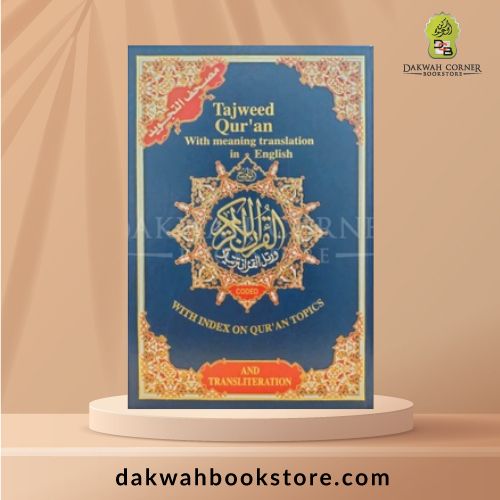
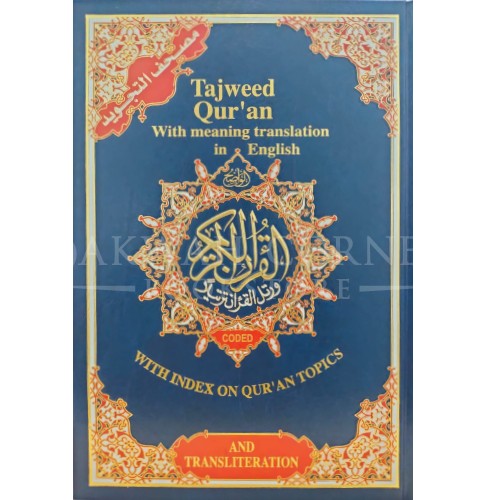
Tajweed Qur’an with Meaning Translation in English and Transliteration
Translation: meanings of the Quranic versus are translated into English and placed on the margins around the Arabic text.
Transliteration: Arabic letters are presented by English letters with added symbols in order to give the same sound of Arabic letters.
English transliteration makes it easier for the speakers of the English language to read the Tajweed Quran in Arabic pronunciation using the English alphabet letters.
Considering that this Part contains small suras; it is a perfect start for kids, beginners and students.
This Amma Part comes in the standard portrait form, with a nice glossy soft cover. Each page contains 15 lines as any standard Quran.
Meanings tranlated by Abdullah Yusuf Ali
Alla (sw) ordered us in his holy book to recite the Quran with Tajweed … “Quran recitation modulating”. System of Tajweed serves as a guide for improving the recitation of Quranic style. It was in this way that the Qur’an revealed to Prophet Muhammad (peace be upon him), as well as the manner in which he recited it. Therefore, the readers of the Quran are eager to realize the promise of the Prophet Muhammad (pbuh): “whoever recites the Quran correctly and proficiently will be with the bountiful dutiful writers (the angels of the preserved tablet – Al lauh Al Mahfuz”.
Based on a practical understanding of phonology, we have color-coded some letters to facilitate the correct recitation of the holy Quran. This enabled us to classify these letters into three possible categories to enhance the reader’s knowledge and remembering of Tajweed rules:
– The letters which requires expanded vocalization. We used red color to highlight these letters.
– The letters which are nasalized these letters are green in color.
– The dark blue color indicates the emphasis of the letter (R), the blue color indicates the unrest letters-echoing sound- (qualquala)
– While the letters which are written but are not vocalized. These letters are gray in color.
The reader will get used to reciting the Quran by using colors very easily. By engaging the eye, the reader will find him/herself applying 24 rules of Tajweed with ease and precision while his/her mind is left un-enganged to comprehend and understand the meaning of the holy Quran. For more details click here
This Tajweed Quran is in Hafs narration.
All our Tajweed Quran products -including this Quran- come with the following:
- Color coded letters: to present the Tajweed rules, very good and simple way to learn and apply Tajweed rules.
- Obvious script: extra spaces were added between the words in order to make it easier to read and recite the Quran.
- Permissible stops: long spaces were added at certain places where it is permissible to stop. It helps to avoid stopping at wrong places or times.
- A set of very useful indexes such as: Surahs Color Index, Subject Index.
- Tajweed rules explained in details with helpful illustration.
The Soul of the Quran (P/B)
This book is a unique collection of prayers and verses distilled from the Sacred Book. It contains one hundred and fifty four passages of exquisite beauty, majestic prose and breadth of vision. Lucid in style and rich in spiritual wisdom, they have been judiciously selected to inspire and uplift the soul.
Tafsir 67 : A Commentary on Surah al Mulk (P/B)
The beauty of the Qur’an is such that its miracles cannot truly be understood until one contemplates every verse of every surah; this alone makes tafsir one of the most amazing sciences of Islam. Surah Al-Mulk is a chapter of the Quran which would be recited every night by the Prophet (peace be upon him), in its midst are deep meanings which highlight the purpose of our creation, as well as entailing the message of Islam. In this book, the author takes the reader on a wonderful journey through the gardens of the first surah in the 29th Juzz of the Qur’an.
About the Author: Dr. Philips was born in 1947 in Jamaica, but grew up in Canada, where he converted to Islam in 1972. He completed a diploma in Arabic language and a B.A. degree in 1979 from the College of Islamic Disciplines at the Islamic University of Madinah, an Islamic university in Saudi Arabia. At the University of Riyadh College of Education he completed his M.A. in Islamic Theology in 1985, and in 1994 he completed his Ph.D in Islamic Theology in the department of Islamic studies at the University of Wales. He later taught Islamic education and Arabic language in private schools in Riyadh for over ten years. Because of his opposition to Saudi Arabia’s position in the Gulf War, he had to leave the country and for three years he lectured M.Ed. students in the Islamic Studies department of Shariff Kabunsuan College (SKC) in Cotabato City, Mindanao, the Philippines. Islamic Information Center Since 1994, he has founded and directed the Islamic Information Center (which is now known as Discover Islam) in Dubai, United Arab Emirates, and is known as a prolific speaker and author on topics relating to Islam, including audio lectures and books. Presently, he is a lecturer of Arabic language and Islamic Studies at the American University in Dubai and ‘Ajman University in Ajman, United Arab Emirates. He frequently appears at the Islamic Research Foundation in Mumbai, India, on lecture tours. He has also founded the Distance Learning Program called Islamic Online University, which offers a four year degree in Islamic Studies plus a variety of short courses. Dr. Philips is something of a pioneer as a person of Western origin achieving the status of a scholar of Islam inside the tradition.
Usool at-Tafseer (H/B)
Usool at-Tafseer, essentially refers to the branches of knowledge necessary for providing an accurate interpretation of the Quranic texts, such as Arabic grammar and syntax, Arabic literature and Quranic sciences (Uloom al-Quran). Familiarity with modern fields of learning, like the pure sciences and social sciences is also necessary for a commentator in this era to make the Quraanic explanations relevant to human society. This book addresses the actual step-by-step methodology of interpreting Quran to ensure that interpretations are not merely the result of human whims and fancies.
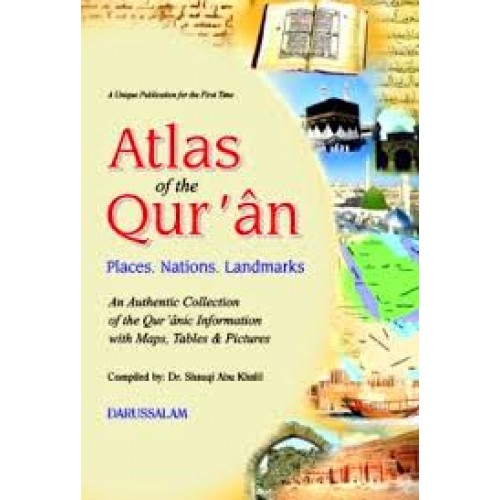
Atlas of the Qur’an (Darussalam)
This Atlas is new in its subject, a subject that has not been touched before. It helps whoever recites the Qur’an or studies it to specify the locations mentioned by the Noble Verses, and to mark those places of ancient people mentioned in the Qur’Gn. This is besides locating areas where the incidents of the prophetic Seerah occurred.
Eventually the diligent reader will easily recognize those places, learn about them, and take heed of them while reciting.
Eventually the diligent reader will easily recognize those places, learn about them, and take heed of them while reciting. The Atlas has also revealed obscure places we used to pass through inattentively, like the site where Nuh’s Ark settled, the site of the curved Sand-hills {Al Ahqah}, the cave of the young faithful men, the houses of median, the site of Sodom and other places determined by the Atlas depending on reliable sources.
Thus the Atlas eliminates all the guessing and the fantasies we used to encounter when reciting the Noble Quran, and takes us to the specific place.
The Noble Qur’an pocket size H/B (Arabic/English)
The Noble Qur’an is a widely popular translation by Islamic University – Madina scholars Dr. Muhsin Khan and Dr. Taqi-ud-Din Hilali. It features frequent footnotes gleaned by the translators from Tafsir At-Tabari, Tafsir Ibn Kathir, and Sahih-al-Bukhari. Arabic-English format with detailed index.
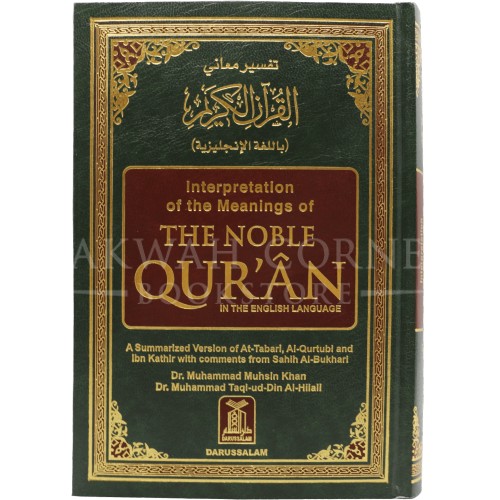
Interpretation of the meanings of the Noble Qur’an with Arabic text in the modern English language. A summarized version of At-Tabari, Al-Qurtubi and Ibn Kathir with comments from Sahih Al-Bukhari.
This summarized 1 volume version offers brief commentary and Ahadith wherever necessary. This unique combination of commentary and relevant Ahadith makes this a very useful study reference tool. The Arabic text is taken from Mushaf al Madinah.
114 Tips to Help You Finally Memorize The Qur’an (P/B)
“114 Tips to Help You Finally Memorize the Qur’an is a concise book that aims to equip readers of all backgrounds with the information and techniques necessary in order to begin, continue with, and complete the memorization of the Qur’an, eliminating thereby the common excuse and reasons for not memorizing.”
Interpretation of The Meanings of The Noble Qur’an- A5 (23x15cm)
Interpretation of the Meanings of The Noble Qur’an in the English Language
927 black and white pages
The Sources of the Qur’an
“Who is the author of the Qur’an?” On this subject scholars have flagrantly contradicted each other. This work attempts to make a critical review of the major ‘authorship’ theories by pressing into service logical arguments, historical evidence, textual analysis and scientific data. Probably, the only point of agreement about the Qur’an is that it was uttered for the first time by a man who was born in Makkah (Mecca), a city of Arabia, in the sixth century—a man by the name of Muhammad (blessings and peace be upon him). As to the source of the Qur’an, scholars are divided into three main groups: those who believe that Muhammad (blessings and peace be upon him) himself was the author; those who believe that he was not the author himself but learned it from another human author or authors; and those who believe that the Qur’an has no human author but is rather a word-for-word revelation from God. Hamza Njozi examines the three theories and comes to a firm and logical conclusion.
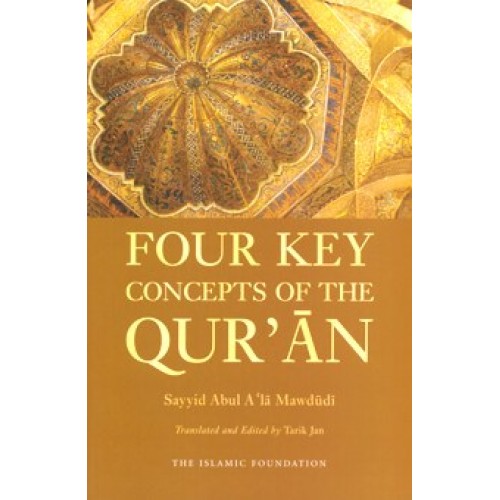
Four Key Concept of the Qur’an
Four Key concepts oF the Qur’An elucidates these basic Qur’anic concepts Ilah, Rabb, Ibadah and Din in order to bring out fully the Islamic way of life, as distinct from other perspectives. This elaboration goes a long way in developing a sound understanding of the Qur’an. It also explains the man-God relationship in Islam, guiding Muslims on how to lead their lives in total surrender to Allah.
Recently Viewed
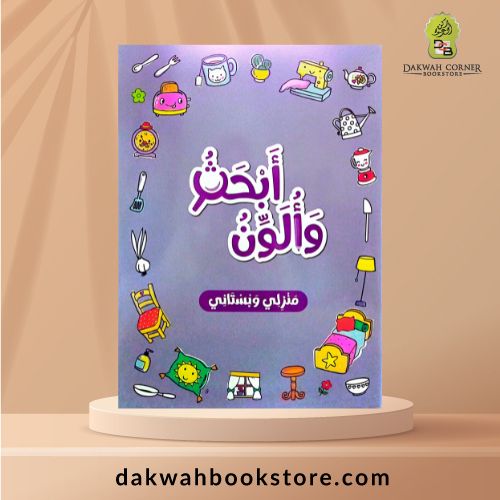
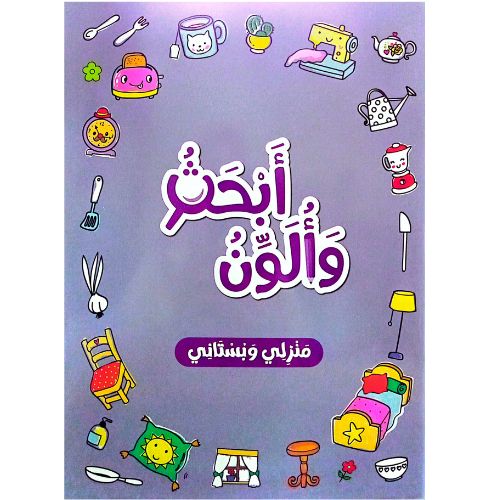
[CB] Abhath Wa’ulawwin – Manzilii Wa Bustaanii / (أبحث وألون (منزلي وبستاني
يَا وَيْلِي تَسَلَّلَتْ مِثْرَانٌ إِلَى المَكْتَبِ جِدْهَا ثُمَّ لَوْنَهَا بِالزَّمَادِيِّ.
وَمَاذَا نَصْنَعُ بِمِضَخَّاتِ الهَوَاءِ الَّتِي فِي المِرْآبِ؟ لَوْنَهَا بِالأَخْضَرِ.
هَذَا الكِتَابُ أَبْحَثُ وَأُلَوِّنُ يَنْتَقِلُ بِكَ مِنَ المَنْزِلِ إِلَى البُسْتَانِ، بَدْءًا مِنَ المَاصَّاتِ البُرْتُقَالِيَّةِ إِلَى الجَوَارِبِ مُتَعَدِّدَةِ الأَلْوَانِ، مُرُورًا بِمَقَاعِدِ البُسْتَانِ:
تَجَوَّلُ فِي مَنْزِلِكَ وَبُسْتَانِكَ وَاكْسُهَا لَوْنًا جَمِيلًا.
Tajdid, Islah and Civilization Renewal in Islam
The history of Islamic thought is marked by a continuous tradition of internal revitalisation and reform embedded in the principles of islah, and tajdid. The ultimate purpose has been to bring existing realities and social change in line with the transcendent and universal standard of the Qur’an and Sunnah through a process of restoration and reform. The tradition of islah-tajdid has thus consistently challenged the Muslim status quo and prompted fresh interpretation of the Qur an and Sunnah, understood and implemented through the methodologies of interpretation and ijtihad, as well as the rejection of unwarranted accretions to the original messages of Islam. The basic theme of the paper is that civilisational renewal is an integral part of Islamic thought. The paper looks into the meaning, definition and origins of tajdid and islah and their relationship with ijtihad, and how these have been manifested in the writings and contributions of the thought leaders of Islam throughout its history. It also develops tajdid-related formulas and guidelines that should lead the efforts of contemporary Muslims in forging the objectives of inter-civilisational harmony and their cooperation for the common good.
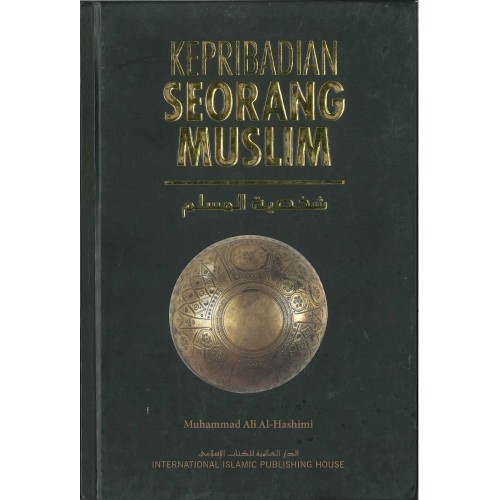
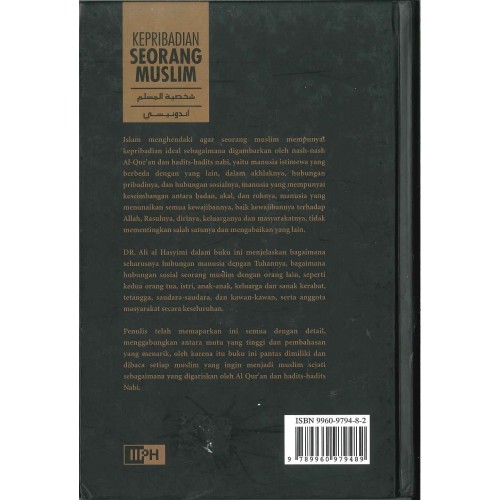
Kepribadian Seorang Muslim
Kepribadian Seorang Muslim: yang ditekankan oleh Al Qur’an maupun sunnah. Kalau kita membaca Al-Qur’an dan hadits-hadits nabi saw maka kita akan mendapatkan banyak sekali petunjuk dan ajaran yang mengajarkan agar seorang muslim menjadi orang yang paripurna, menjadi orang yang berguna bagi bangsa dan agamanya, namun tidak semua orang bisa memahami nash-nash Al-Qur’an dan hadits berkaitan dengan karkter dan sifat-sifat seorang muslim. Dalam buku ini penulis menyajikan kepada kita hasil telaah beliau yang luas dan mendalam tentang karakter seorang muslim sebagaimana yang dikehendaki olah Al-Qur’an dan hadits nabi. Beliau memaparkan bagaiman semestinya hubungan antara seorang muslim dengan tuhannya, dengan kedua orang tuanya, dengan saudara-saudaranya, dengan anak dan isterinya, dengan tetangga dan masyarakatnya, bangsa dan negaranya. This is the Indonesian translation of the book The Ideal Muslim: The True Islamic Personality of the Muslim as Defined in the Qur’an and Sunnah. In all areas of life, we can learn through the teachings of Prophet Muhammad (blessings and peace of Allah be upon him). There are many lessons to learn by his example. They lead us to believe that the good personality traits of a Muslim are ones that naturally propel us to be closer to Allah. In this book we examine proofs from the Qur’an and the Sunnah that give us an idea about those characteristics that will guide us in our hearts and actions to be better people in the eyes of our Creator. The author gives a clear overview of the practical aspects of the Islamic lifestyle, as exemplified by the Prophet (blessings and peace of Allah be upon him) and his Companions. Moving from the innermost aspect of the individual’s spiritual life to his dealings with all those around him, one can see how the Muslim is expected to interact with all others in his life. This book is valuable for individual self-development, but will also serve as a rich source of material and ideas for study circles and discussion groups. The author supports each point with extensively evidential quotations
from the Qur’an and Sunnah and gives us thereby an insight into the life of the first Muslim community in Madinah. At a time when alien influences are overwhelming Muslims throughout the world and the temptation to adopt un-Islamic ways is greater than ever, this book serves as a timely reminder to us to go back to our Islamic sources and to adhere to our distinct, divinely-ordained way of life.
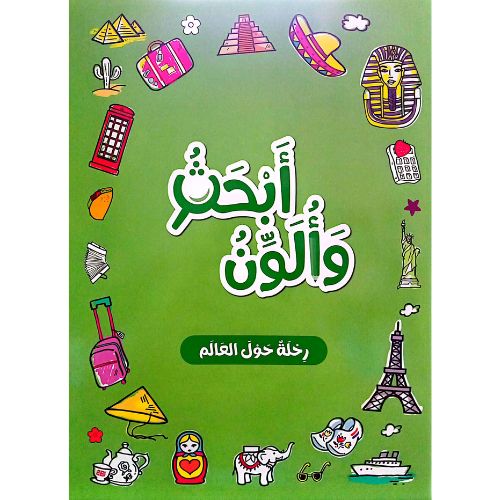
[CB] Abhath Wa’ulawwin – Rihlah Hawl Al-‘Aalam / (ابحث والون (رحلة حول العالم
هَلْ تَرَى الحَافِلاتِ الإِنْجِلِيزِيَّةَ ذَاتَ الطَّابَقَيْنِ؟ جِدْهَا ثُمَّ لَوْنُهَا بِالْأَحْمَرِ،
وَالقُدُورَ المغربيَّةَ؟ تِلْكَ لَوْنَهَا بِالْأَصْفَرِ.
وَخِيَامَ الهُنُودِ الحُمْرِ؟ يُمْكِنُكَ تَلْوِينُهَا بِمَا شِئْتَ مِنْ أَلْوَانٍ.
فِي هَذَا الكِتَابِ أَبْحَثُ وَأُلَوِّنُ سَتَذْهَبُ لِتَكْتَشِفَ العَالَمِ!
مِنْ تِمْثَالِ أَبِي الهَوْلِ المِصْرِيِّ ، إِلَى الدُّمَى الرُّوسِيَّةِ ، مُرُورًا بِالْأَهْرَامَاتِ الْأَزْتِيكِيَّةِ.
اكْتَشِفِ الأَشْيَاءَ الَّتِي تُمَيِّزُ كُلَّ بَلَدٍ، وَاكْسُهَا أَلْوَانًا جَمِيلَةً
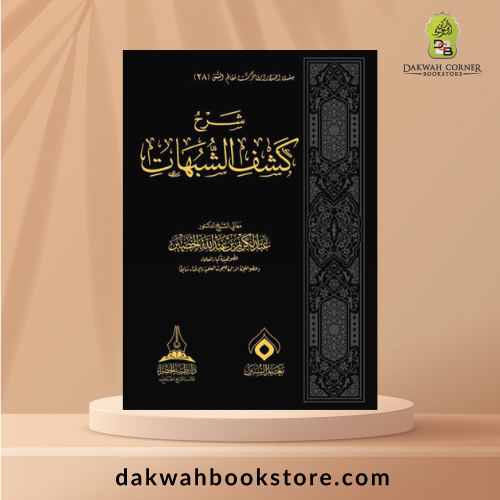
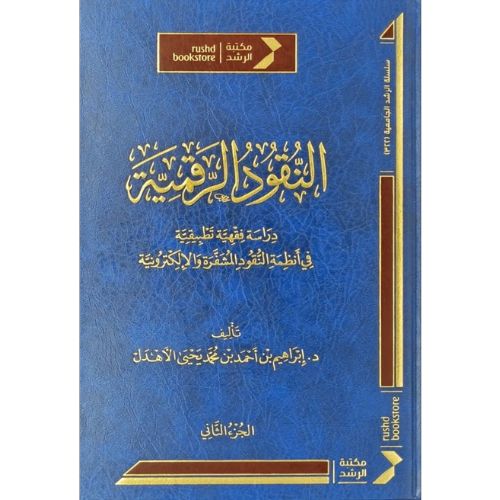
[AEF] Al-Nuqud al-Raqmiyyah / النقود الرقمية دراسة فقهية
النقود الرقمية دراسة فقهية
دراسة النقود الرقمية من منظور فقهي تتطلب التمييز بين أنواعها المختلفة، حيث يختلف الحكم الشرعي باختلاف الجهة المصدرة ومدى خضوعها للرقابة القانونية والمالية
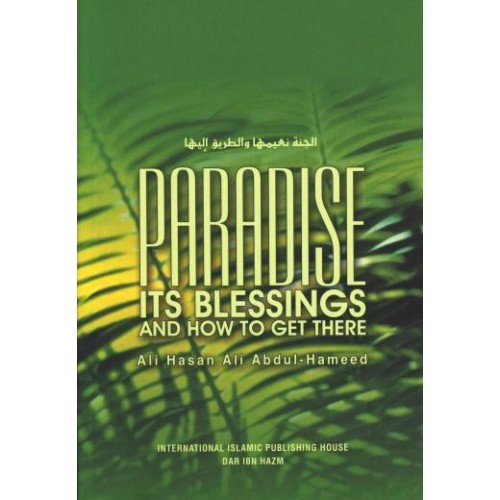
Paradise Its Blessings and How To Get There (P/B)
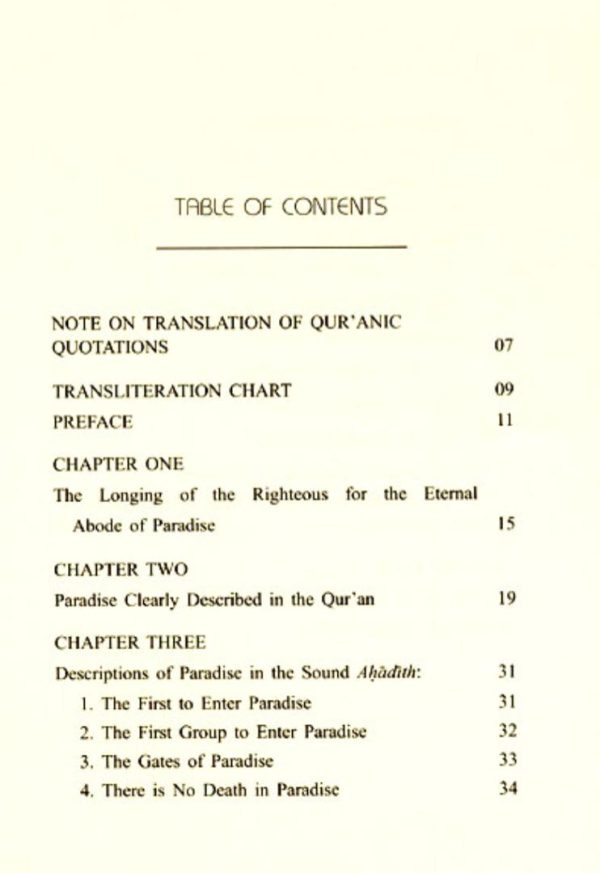
Paradise and its inhabitants as portrayed in the Qur’an and the Hadith, then discusses the various rewards and blessings that are promised to those who make it there. Finally, the author lists the many and myriad deeds that a Muslim can do that will help him or her to achieve the Garden of Eden.


There are no reviews yet.