| Weight | 0.135 kg |
|---|---|
| Product Type | Book |
| Author | |
| Publisher | Darussalam |
| Pages | 80 |
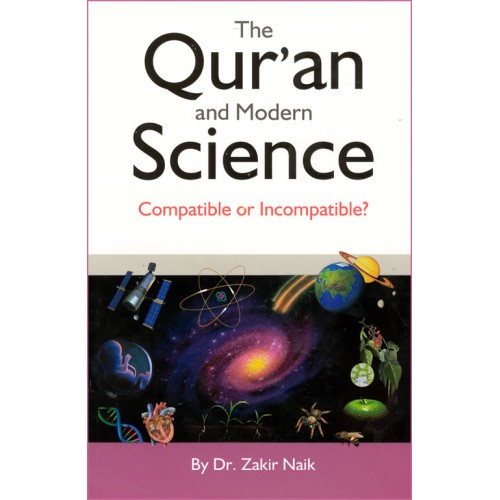
The Quran & Modern Science: Compatible or Incompatible? (P/B)
RM26.00
Ever since the dawn of human life on this planet, Man has always sought to understand Nature, his own place in the scheme of Creation and the purpose of Life itself. In this seek for Truth, spanning many centuries and diverse civilizations, the course of history has been determined to a large extent by organizing religion which has shaped human life. While some religions have been based on books as claimed by their adherents to be divinely inspired, others have relied only on human experience.
The main source of the Islamic faith, Al-Qur’an, is a book believed by Muslims, to be of fully Divine origin. It is also believed by Muslims that it contains Divine guidance for all humankind. As the message of Quran is believed to be for all times, it should be relevant to every age. Does the Qur’an pass this test? I intend to give an objective analysis of the Muslim belief in this booklet regarding the Divine origin of the Qur’an, in the light of established scientific discoveries.
In the history of world civilization there was a time when ‘miracles’, or what was perceived to be a miracle, took precedence over human reason and logic. But how do we define the term ‘miracle’? A miracle is anything that takes place out of the normal course of life and for which humankind has no explanation. Though, we must be careful before we accept something as a miracle. An article in `The Times of India’, Mumbai, in 1993 reported that ‘a saint’ by the name ‘Baba Pilot’ claimed to have stayed continuously submerged under water in a tank for three consecutive days and nights.
But he refused the reporters to examine the base of the tank of water where he claimed to have performed this ‘miraculous’ feat. He argued by asking as to how one could examine the womb of a mother that gives birth to a child. The `Baba’ was hiding something and it was considered to be a gimmick simply to gain publicity.
Certainly, no contemporary man with even the slightest inkling towards rational thinking would accept such a ‘miracle’. We would have to accept Mr. P.C. Sorcar, the world famous magician known for his ingenious magical tricks and illusions, as the best god-man if such false miracles are the tests of divinity.
A book, claiming Divine origin, is in effect, claiming to be a miracle. Such a claim should be easily verifiable in any age, as per the standards of that age. It is believed by the Muslims that the Quran is the last and final revelation of God, the miracle of miracles revealed as a mercy to humankind. Both Quran and science are related. Let us therefore scrutinize the veracity of this belief.
Be the first to review “The Quran & Modern Science: Compatible or Incompatible? (P/B)” Cancel reply
You must be logged in to post a review.
Related Products
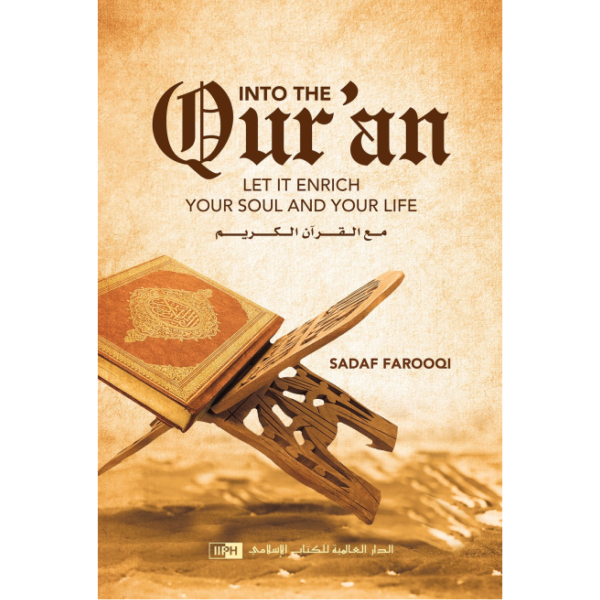
Into The Qur’an Let It Enrich Your Soul and Your Life
Do you want to improve the quality of your relationship with the Qur’an? If yes, then this book is definitely for you! Beautifully written, straight from the author’s heart, Into the Qur’an offers comprehensive and inspiring reminders about commandments from the Qur’an and the Hadith, in a way that you can apply to everyday life. Sadaf Farooqi urges you to study the Qur’an and then implement its teachings, regardless of personal whims and desires or traditional customs and practices.
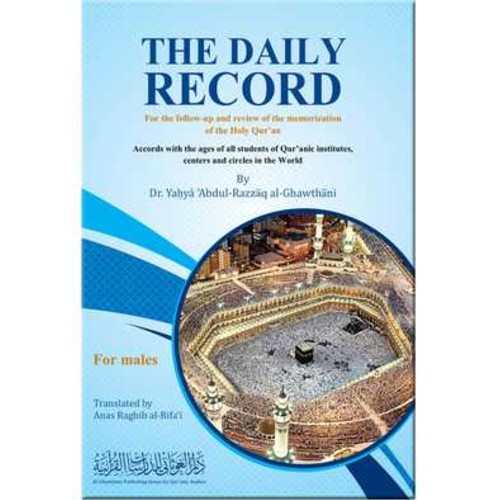
The Daily Record (For Male)
The Daily Record for Following up on Memorizing the Holy Quran
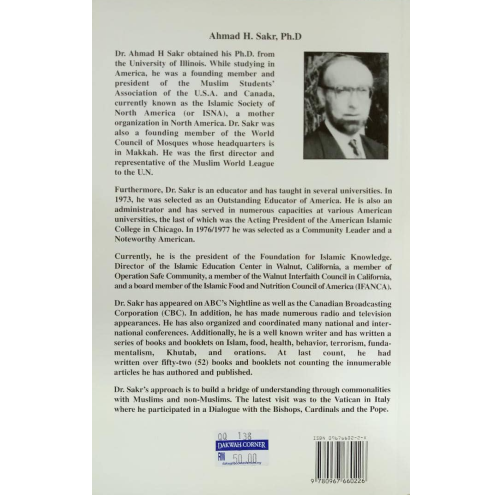
Understanding the Qur’an By Ahmad H. Sakr
This Book was published in the year of 2000. It is composed of over (270) pages. The Book is composed of (30) chapters with (2) Addendum, a worksheet and Quizzes. This Book is very important to all those who read the Qur’an. It is not easy to understand the Qur’an by reading without understanding.
The Qur’an and Its Study
A contemporary exploration of Qur’anic studies, analysing the various approaches to the Qur’an taken by leading scholars through the centuries.
Variant Readings Of The Qur’an: A Critical Study Of Their Historical And Linguistic Origins – IIIT
This fascinating and important book attempts to investigate the nature of the seven Ahruf in which the Qur’an has been revealed and the reason for the variations in readings among the Qurraa of the Quran. It studies, examines, and discusses:
- The revelation of the Qur’an in the seven ahruf concluding that they represent seven linguistical ways of recitation
- The compilation of the Quran during the lifetime of the Prophet and the preservation of the Quran in the memories of the Companions as well as in written form, the compilation during the time of Abu Bakr, and the further compilation during the time of Uthman
- The problem of naskh to demonstrate the completeness and trustworthiness of the Quran and that no verses are missing or were read and abrogated by naskh al-tilawah either with or without hukm
- The Uthmanic masahif and their relation to the seven ahruf
- The language of the Quran and whether it includes one, several, or all the dialects of the Arabs
- The origin of the qiraat and conditions governing accepted readings
- Ikhtiyar (i.e., the selection of one reading rather than another) and the rules governing the Qurraa’ who selected a reading.
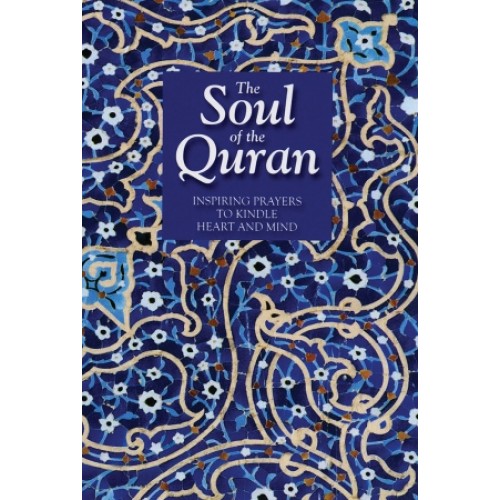
The Soul of the Quran (P/B)
This book is a unique collection of prayers and verses distilled from the Sacred Book. It contains one hundred and fifty four passages of exquisite beauty, majestic prose and breadth of vision. Lucid in style and rich in spiritual wisdom, they have been judiciously selected to inspire and uplift the soul.
The Sources of the Qur’an
“Who is the author of the Qur’an?” On this subject scholars have flagrantly contradicted each other. This work attempts to make a critical review of the major ‘authorship’ theories by pressing into service logical arguments, historical evidence, textual analysis and scientific data. Probably, the only point of agreement about the Qur’an is that it was uttered for the first time by a man who was born in Makkah (Mecca), a city of Arabia, in the sixth century—a man by the name of Muhammad (blessings and peace be upon him). As to the source of the Qur’an, scholars are divided into three main groups: those who believe that Muhammad (blessings and peace be upon him) himself was the author; those who believe that he was not the author himself but learned it from another human author or authors; and those who believe that the Qur’an has no human author but is rather a word-for-word revelation from God. Hamza Njozi examines the three theories and comes to a firm and logical conclusion.
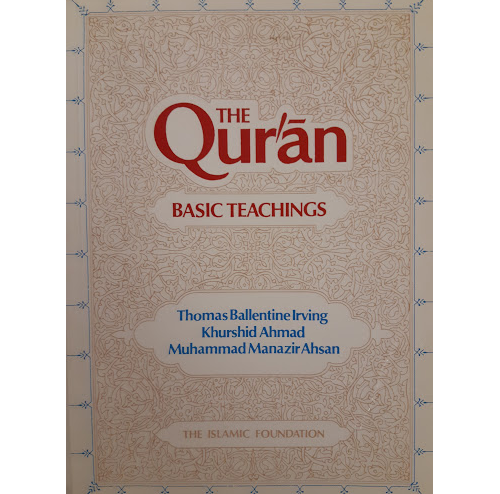
The Quran: Basic Teachings
An anthology of selections from the Quran in contemporary English on topics ranging from Tawhid to politics, economics and the mission of the Ummah.succeeds in its goal of presenting the basic ideas of the Quran in a clear, systematic way for the general reader.
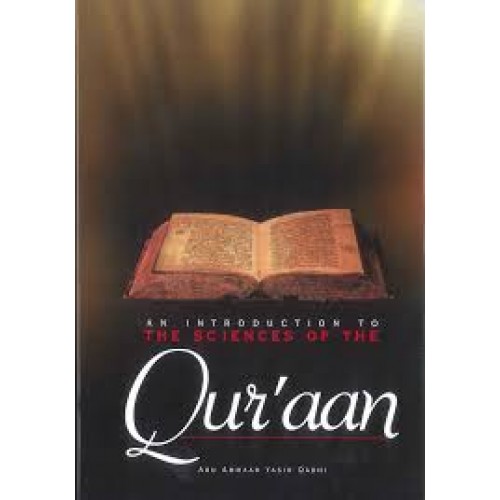
An Introduction to The Sciences of The Qur’an (H/B) Al-Hidaayah UK
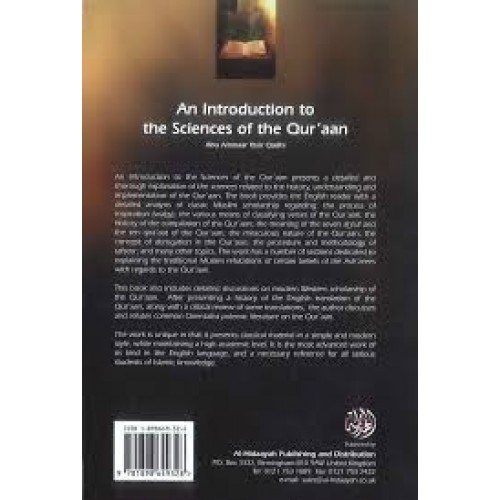
An introduction to the Sciences of the Qur’aan presents a detailed and thorough explanation of the sciences related to the history, understanding and implementation of the Qur’aan. The book provides the English reader with a detailed analysis of classic Muslim scholarship regarding: the process on Inspiration (Wahy); the various means of classifying verses of the Qur’aan; the history of the compilation of the Qur’aan; the meaning of the seven ahruf and the ten qira’aat of the Qur’aan; the miraculous nature of the Qur’aan; the concept of abrogation in the Qur’aan; the procedure and methodology of tafseer; and many other topics. The work has a number of sections dedicated to explaining the traditional Muslim refutations of certain belief of the Ash’arees with regards to the Qur’aan.
This book also includes detailed discussions on modern Western scholarship of the Qur’aan. After presenting a history of the English translation of the Qur’aan, along with a critical review of some translations, the author discusses and refutes common Orientalist polemic literature on the Qur’aan.
The work is unique in that it presents classical material in a simple and modern style, while maintaning a hight academic level. It is the most advanced work of its kind in the English language, and a necessary reference for all serious students of Islamic knowledge.
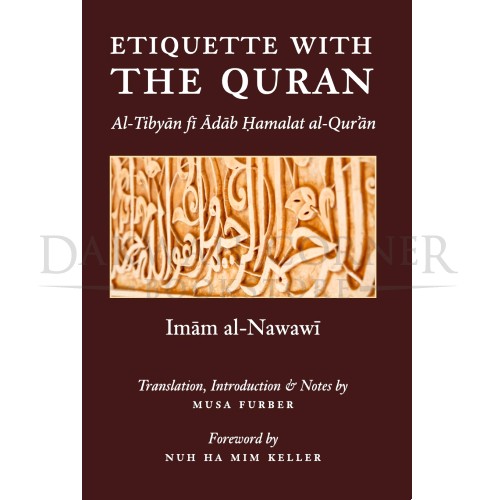
Etiquette With The Quran (Islamosaic)
An enduring classic work on the etiquette that a Muslim must or should have with regard to handling and reciting the Quran (the Muslim scripture). The topics this volume raises include: ritual cleanliness, opportune times for recitation, the etiquette that students have with their teachers (and that teachers must have with their students), and variety of other issues that every Muslim should know and frequently ask about.
He present works was designed and written to explain to men and women how best to benefit from the Book of Allah. The blessing of the Quran is that whoever recites it as it should be recited is changed by it, and brought by imperceptible degrees to see why everything is the way it is. The seed of this knowledge is a humble intention to draw nearer to the Divine, the soil in which it takes root are reverence, awe, and love, ant its fruit is this world and the next. It is well known to everyone conversant wuth the Islamic disciplines that the learning of many thins does not teach wisdom, and that traditional books do not reveal their secrets or bestow their benefits to those without the key to them.
This key is adab, the “the right way of doing things,” rendered in the title as “etiquette.”… Books, especially sacred ones, give their knowledge to those of adab, and Westerns who know something about the sciences of Islam have been waiting for a book like this in English for a long time.
-From the Foreword by
Nuh Ha Mim Keller
Recently Viewed
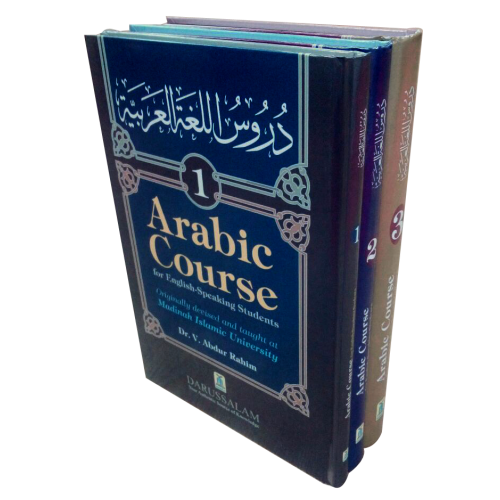
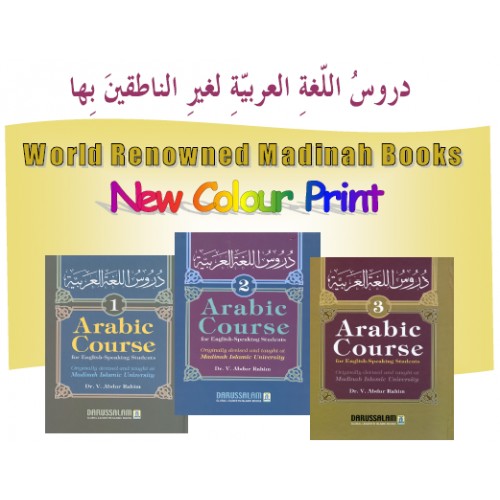
Arabic Course for English-Speaking Students -3 Vols (H/B)
Easy Arabic Course (Durus al-Lughat al-Arabiyah) – For English-Speaking Students. As per the curricula and norms pescribed by the Islamic University of Madinah.
Combines Modern Arabic vocabulary with Islamic terminology as used in the Qur’an and hadith. Assists in learning Arabic grammar and essential language skills Uses a conversational approach to help understand grammatical usages in its perfect form. Contains Multi-skil exercises to improve vocabulary and language
On Remembering Death by Ibn Rajab Al-Hanbali
“Abdullah Ali’s faithful transaltion of a section concerning the meditation of death from Ibn Rajab’s famous work on yearly devotions is much needed in our culture of forgetfulness.
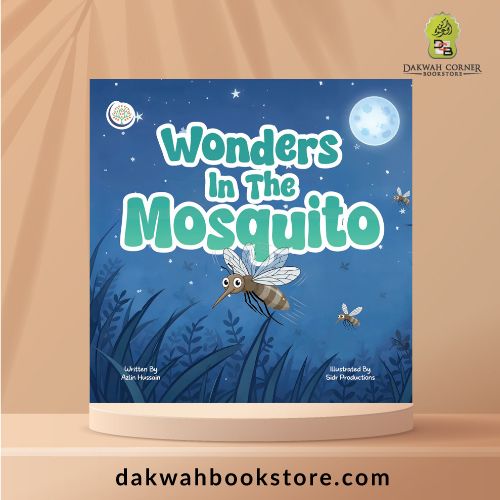
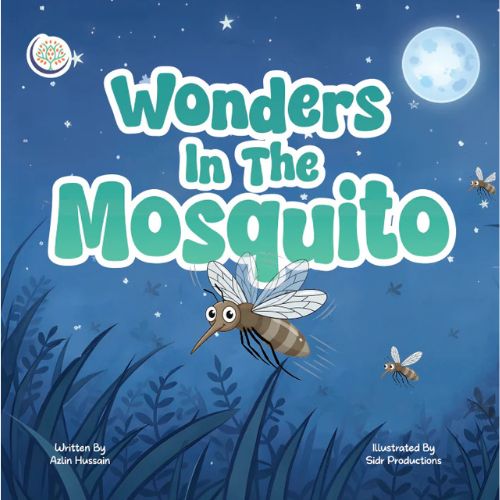
Wonders In The Mosquito
Discover the tiny mosquito and its amazing secrets in this child-friendly science book for ages 4+.
Children will marvel at its tiny, perfect design and discover the wonders Allah places in even the smallest creatures.
A warm. inspiring read that nurtures curiosity. gratitude, and connection with Allah.
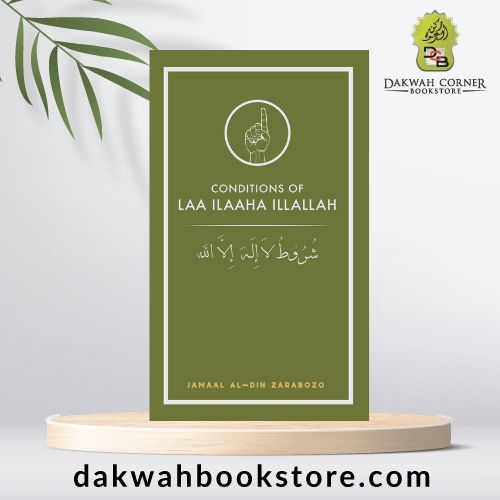
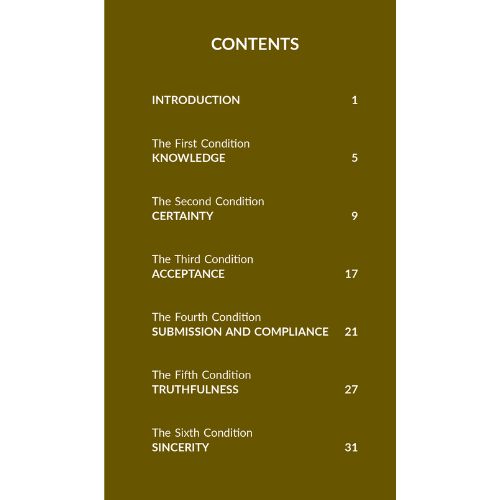
Conditions of LAA ILAAHA ILLALLAH (Revised Edition)
The famous Taabi’i Wahb ibn Munabbih was once asked,
“Isn’t the statement of laa ilaaha ill-Allah the key to Paradise?” He answered, “Yes, but every key has ridges, the door will open for you. Yet if you do not have the right ridges the door will not open for you.”
That is, it is saying {while meeting} certain conditions. These conditions are what will differentiate the person who will benefit from his making of that statement from the one who will not benefit from that statement.
Difference Between Advising And Shaming ( Dar as-Sunnah)
[This book] beautifully illustrates the difference between advising that is encouraged and shaming that is not permitted.
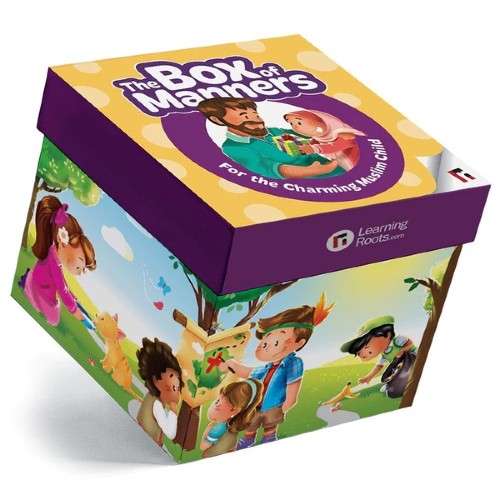
The Box of Manners ( New Edition)
Discover the Secret Behind Well Mannered Children
Are you sometimes embarrassed by the way your children behave in front of guests or when they’re outdoors?
Do you feel frustrated because your kids don’t always listen to you and do as you say?
Do you wish your children were more dignified, polite, or just simply behaved themselves?! After all, Muslims are renowned for their upright behaviour, right?


There are no reviews yet.