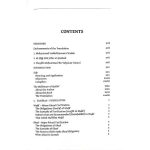
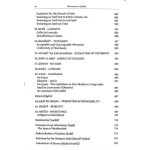
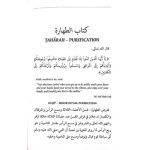
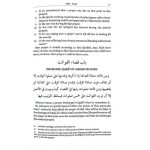
The author of Mukhtaṣar al-Qudūrī, the Ḥanafī Jurist, Shaykh Abū’l-Ḥusayn Aḥmad ibn Muḥammad ibn Aḥmad ibn Ja‘far ibn Hamdān al-Qudūrī, was born in Baghdād in 362 AH/973 CE and died on Sunday, 5th Rajab, 428 AH/1037 CE aged 66. He is considered an utterly truthful (ṣadūq) hadith narrator by Ibn Khallikān, al-Ḥāfiz Ibn Kathīr, Ibn al-Jawzī, and others, and was one of the aṣḥāb at-tarjīḥ in the Ḥanafī madhhab, which is one of the highest grades in the knowledge of fiqh.
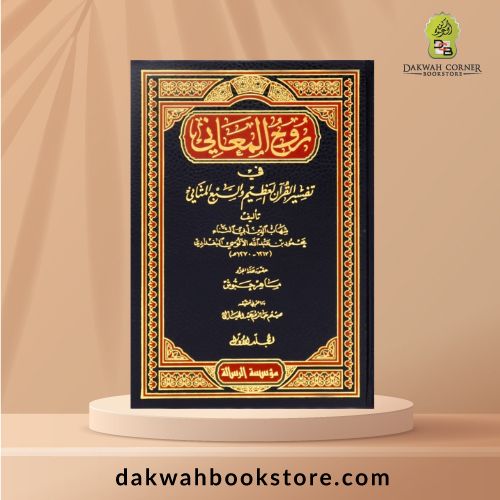
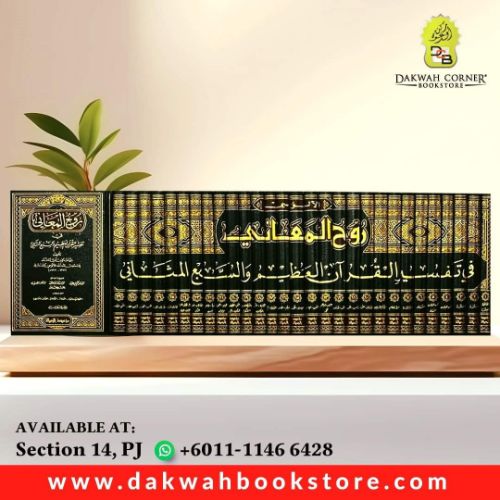
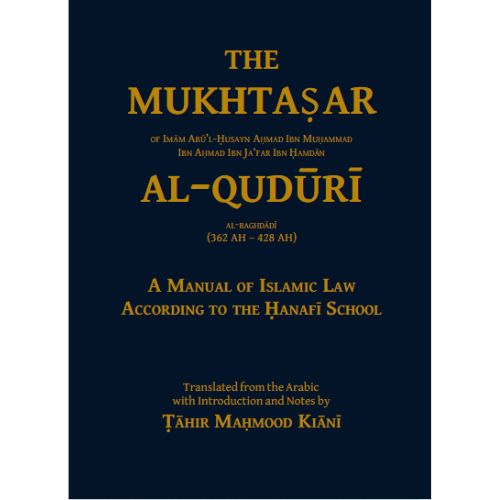
The Mukhtasar Al-Quduri
RM265.00
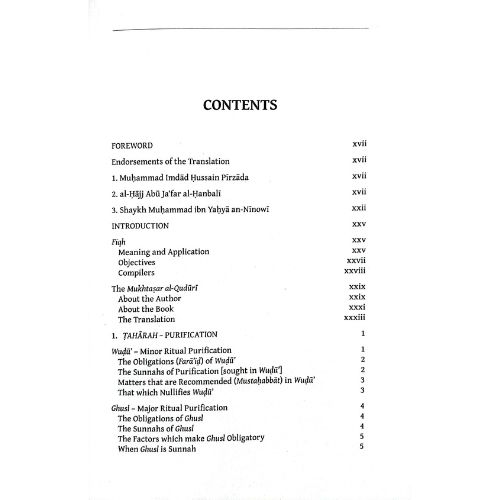
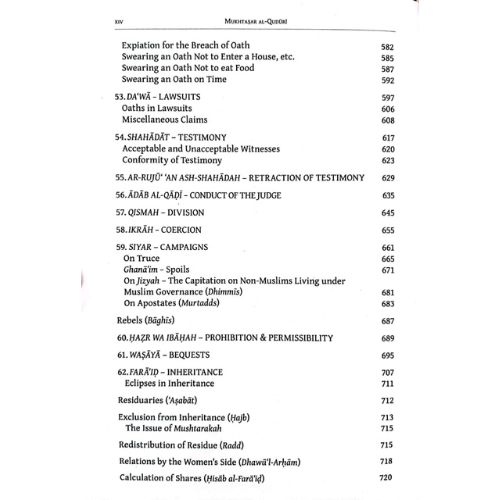
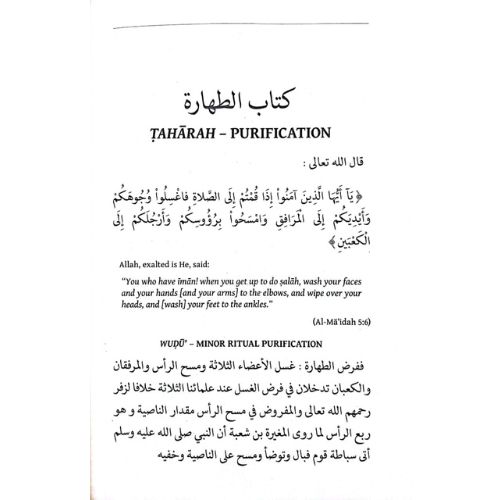
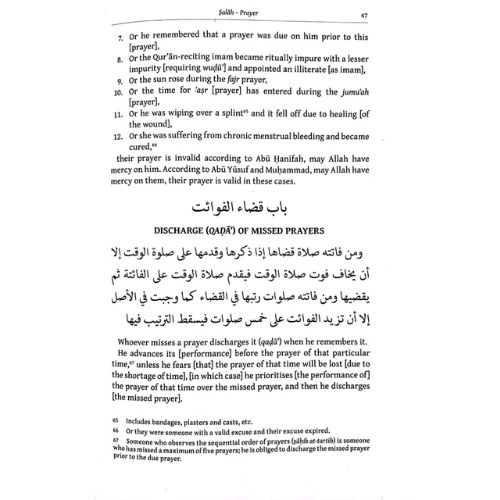
The Mukhtasar Al-Quduri is one of the most celebrated and influential treatises in any Muslim school of methodology and thought and is the foundation for the Hanafi school.
It is both the first source for scholars and a manual for the general reader.
This is its first ever complete translation in English.
Frequently Bought Together
| Weight | 1.60 kg |
|---|---|
| Dimensions | 24 × 16 × 7 cm |
| Author | |
| Binding | Hardcover |
| ISBN | 9781842001189 |
| Pages | 761 |
| Publisher | Taha |
Be the first to review “The Mukhtasar Al-Quduri” Cancel reply
You must be logged in to post a review.
You may also like…
Devotion in Prayer P/B
The lack of reverence [khushi] in prayer has become a widespread phenomenon. Despite the well-known methods of achieving khushu methods in the Sunnah of the Prophet, rarely do we find a Muslim who is satisfied with his khushi in his prayer. In this book, we present a new theory, the theory of the pyramid of khushů, which consists of five levels, and which aims to gradually elevate the worshiper until he reaches a complete peace of mind in his prayer. This theory is implementable, practical, and based on the Qur’an and the Sunnah.
Related Products
Funerals Regulations and Exhortations (H/B)
Our soul inevitably follows a route starting from birth, passing through death, and ending with our resurrection in the next life. The inevitable journey discusses over a sequence of titles: sickness, inheritance, funerals, Life in Barzakh and so on…
The Concise Presentation of the Fiqh of the Sunnah and the Noble Book
Written by Dr. Abdul-Azeem Badawi and translated by Jamal al-Din M. Zarabozo, The Concise Presentation of the Fiqh of the Sunnah and the Noble Book covers the fiqh of diverse topics like purity, prayer, fasting, zakah, pilgrimage, marriage, business transactions, foods, inheritance, criminal offenses, and jihad. Dr. Badawi relies only on the Quran and the Sunnah, making it an authentic Islamic book on fiqh and a collection of sound hadiths.
A Guide to Male-Female Interaction
Are Muslim men allowed to interact with female students, and vice versa, in a virtual classroom? Can a Muslim woman pursue a professional career that necessitates her interaction with men? Is it appropriate for a woman to serve her husband’s guests? Do mixed wedding ceremonies comply with the Sharia? Read this bilingual book to find the answers and more!
Worship In Islam: An In-depth Study of Ibadah, Salah and Sawm (P/B)
Worship in Islam is in-depth study of the nature and significance of Islamic spirituality by Abul A‘la Mawdudi (1903–79), one of the leading Muslim intellectuals of the twentieth century, with special reference to the concepts of God’s Oneness (tawhid), the finality of Prophethood (risalah) and the Islamic system of worship (‘ibadah) with a focus upon prayer (salah) and fasting (sawm) and their role in the development of the Islamic personality and Islam’s social order. The distinguishing feature of Mawdudi’s approach is his elaboration of the social dimension of worship, which extends the traditional approach found in Islamic jurisprudence, with its focus upon ritual and self-purification, to consider worship’s transformative role in social life. Presenting a holistic view of the Islamic system, Mawdudi highlights Islam’s social, economic and political dimensions, which he argues has the capacity to resolve emergent issues and problems that humankind faces.
This historic text should be of wider interest to both students and specialists in contemporary Islamic thought, and includes an introduction by Professor Anis Ahmad.
Edited and translated into accessible English by Ahmad Imam Shafaq Hashemi, this book is an authoritative compilation by a leading Islamic twentieth-century revivalist on the central matter of worship’s role in Islam.
Istihsan (P/B)
This work constitutes a critical analysis of classical and modern aspects of the concept of istihsan (juristic preference), an important principle in Islamic legal legislation throughout history. Although there has been many research works on the subject, it still requires further investigation on the role and nature of istihsan with regard to a combination of classical and modern approaches. Consisting of four chapters, the author begins by introducing some general principles of Islamic law, before discussing the history of istihsan during the time of the Prophet and his Companions. He also analyses the validity of istihsan as a source of law and discusses the differences among scholars on its method of implementation.
The Ultimate Guide to Umrah by Darussalam
Remembrance & Prayer: The way of Prophet Muhammad s.a.w
Remembrance and Prayer: The Way of Prophet Muhammad, was one of the first works of Shaykh al Ghazali’s to be translated into English. The book describes in vivid prose how the Prophet, upon him be peace, used to remember Allah and pray to Him. Not only are the exquisitely beautiful, deeply moving and penetrating words of the Prophet given in the English translation, but in the original Arabic as well, thus allowing those desirous of memorizing Arabic access to the original texts. The intimate relationship with Allah, which was the hallmark of the Prophet’s life, becomes clear and vivid. The book’s contents are immensely relevant. to the life and concerns of modern man, whose life has been made barren by the present secularist machinery.
The Right to Education, Work and Welfare in Islam (P/B)
In The Right to Education, Work and Welfare in Islam Professor M.H. Kamali develops an Islamic perspective on three connected and complementary areas of rights and liberties. He urges that education is often a necessary ingredient of professional work even more so now than in earlier times when the range and variety of specialised knowledge were relatively limited. A person who acquires education, whether generally or at advanced levels of specialisation, is more likely to stand in a better position to enter the workforce and thus to contribute to the welfare of the community.
The author commences his discussions on education, work and welfare in Islam by focusing on how each is treated in the Qur’an; and follows this by the example of the Prophet and, after him, the Pious Caliphs who gave prominence to the education and welfare needs of people at times both of scarcity and affluence. Professor Kamali then moves forward to our time and discusses the right to education, the education of children, institutionalisation of learning, academic freedom and the debate between science and religion.
The section on work elaborates on the value of work, work ethics, workers’ and employers’ rights and responsibilities, and the role and responsibility of governments.
Finally, the section on welfare focuses on the importance in Islam of caring for those who are in need and the different forms of provision that can be made available by individuals, the state and charities.
Fiqh According To The Quran & Sunnah (2 vol)
The complete set, ‘Al-Lubab Fee Fiqh As-Sunnah Wal-Kitab,’ contains all of the books of Islamic Fiqh and its chapters, accompanied by evidence and is presented in a clear and simple manner, in order that they may be understood by the young and the old, without blindly following any of the schools of Jurisprudence, but rather being subject to authentic proofs and following the most authoritative opinions, without fanatical adherence to any particular group. Rather the author agrees with each group when the truth is with them and contradicts them when they veer from that which is correct.
Fiqh is to achieve access to knowledge of that which is unclear through knowledge of that which is proven, so it is more specific than mere knowledge or learning. And fiqh is knowledge of the juristic law. It is said Faquha -A man has acquired understanding and so he has become a Faqeeh (A scholar of Islamic Jurisprudence); and it is said Faqiha – He has understood it, i.e he has attained understanding of it, and it is said Tafaqqaha – he has devoted himself to the acquisition of (Islamic) Knowledge and specialized in it. Fiqh has been a subject of contention among the scholars as well as layman throughout the history of Islam.
Should A Muslim Follow A Particular Madhhab?
In this book, the author has widely described the main principle of Taqleed. He says that Allah and Prophet Mohammed (SAW) has not ordered us to follow any opinions and interpretations. So there’s a possibility of being correct or incorrect in the opinions because there are many issues on which the Imams had different views and they explain them according to their own reasons and speculations, but the real and true Islam is based on the book (Quran) and Prophet’s Sunnah.
Allah says: “But no, by your Lord, they can have no Faith until they make you judge in all disputed matters between them, and find in themselves no resistance against your decision, and accept them with full submission.” And the prophet said: “I leave you with two things as long as you hold them tightly, you never go astray: they are the book of Allah and my Sunnah.” In this sense, the author has described the difference between different Madhahib (madhabs/mazhabs), and their views and urged to follow only the Quran and Sunnah.
Common Mistakes Regarding Prayer – IIPH
Formal prayer (salat) is the second pillar of Islam, and the most important of a Muslim’s acts of worship. Prophet Muhammad (PBUH) said: “The first of one’s actions for which a slave of Allah will be held accountable on the Day of Judgment will be one’s prayers. If they are correct and accounted for, then he (or she) will have succeeded (gained paradise); and if they are lacking, then he (or she) will have failed (lost paradise). If there is something defective in his (or her) obligatory prayers, the Lord will say: ‘See if my slave has any supererogatory prayers with which that which was defective in his (or her) obligatory prayers may be completed. Then the rest of his (or her) deeds will be judged in like manner.” (At-Tirmidhi and others) Shaykh Mashhur Hasan Salman has compiled a list of the most common errors that we make when we pray, discussing and explaining each one. This book is a valuable aid to Muslims hoping to perfect their prayers, so that their prayers may be free of defects and acceptable to Allah. This new and revised edition of the English translation of his work presents the text in a fluent, highly readable style.
Fiqh Course: Tahaarah, Salaah & Janaa’iz
This course was compiled for English-speaking Muslims and is especially beneficial for new Muslims. It covers tahârah (purification), salâh (prayer) and janâ‘iz (funerals). It is set out in an easy-to-understand manner, citing evidence from the Qur’an and authentic hadiths. The aim of this book is to provide the reader with a correct, yet uncomplicated guide to the performance of the aforementioned acts of worship. Allah willing, it is the first in a series which will cover all aspects of worship and Islamic jurisprudence.
Recently Viewed
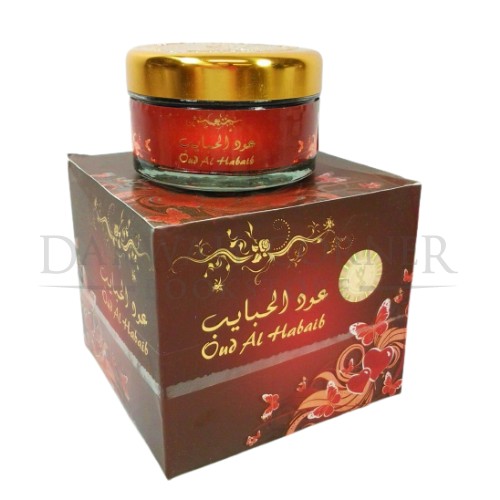
Oud Al Habaib
High-quality bukhoor burn Incense gives a fresh scent for your HOME, SHOP, or OFFICE.
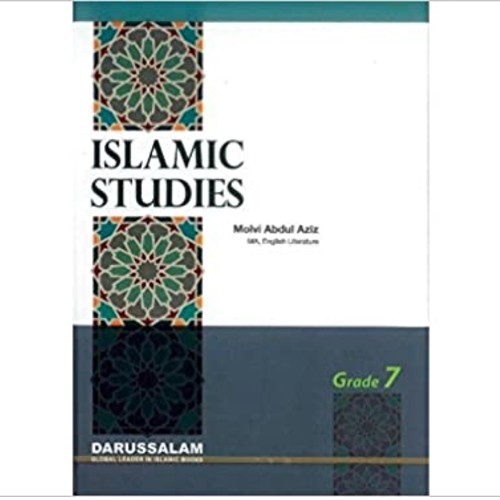
Islamic Studies Grade 7- Darussalam
This full-color Grade 7 textbook (for the seventh grade or similar level) is part of the Islamic Education series which covers all areas of Islamic studies: Tafseer, Hadeeth, Tawheed, Fiqh, Seerah, and general etiquette relating to different areas and situations.
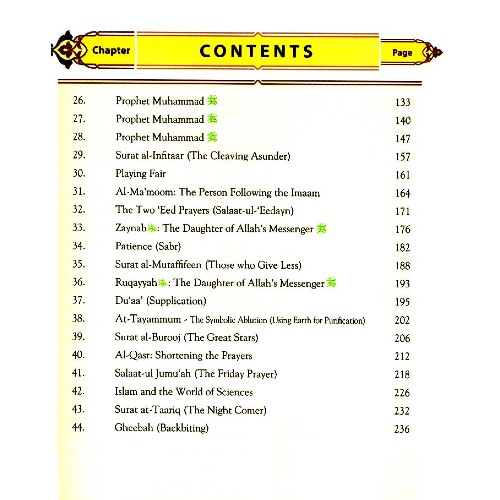
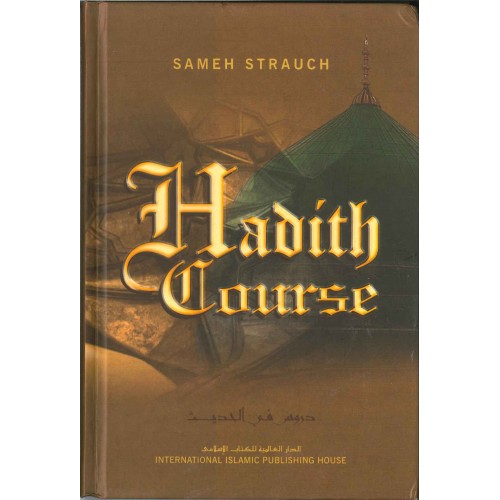
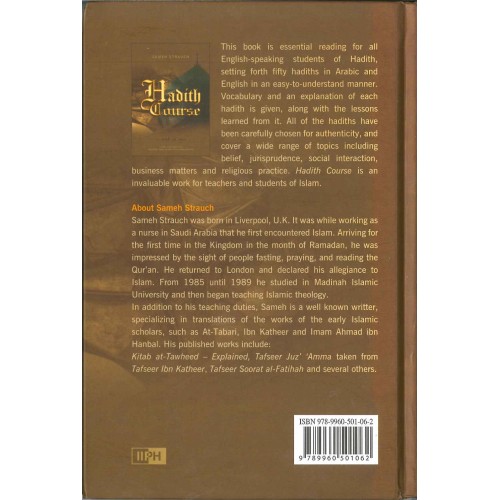
Hadith Course
Hadith Course is essential reading for all English speaking students of Hadith, presenting fifty hadiths in Arabic and English in an easy-to-understand manner. Vocabulary and an explanation of each hadith are given, along with the lessons learned from it. All of the hadiths have been carefully chosen for authenticity and cover a wide range of topics, including belief, jurisprudence, social matters, business and much more. This book is an invaluable handbook for schools and self-learners.
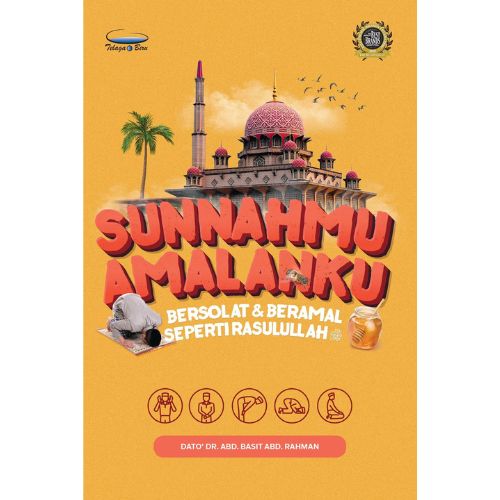
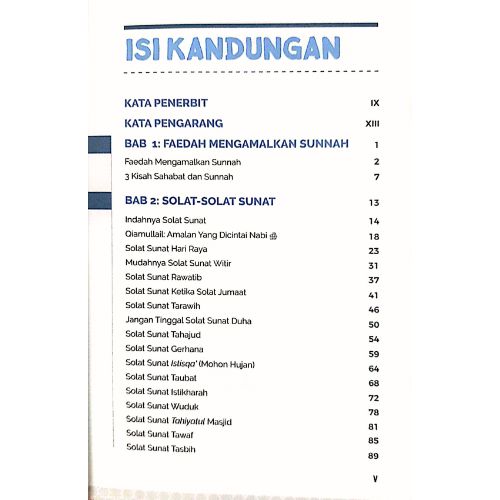
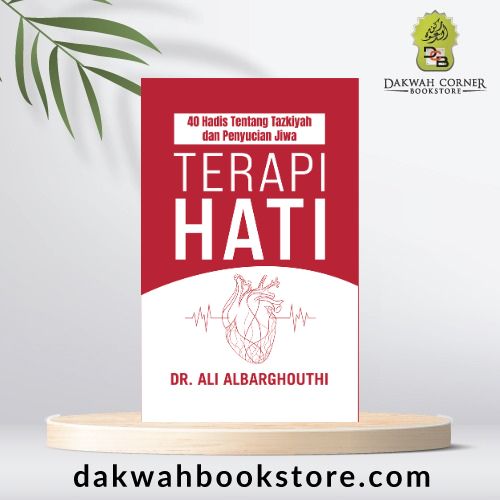
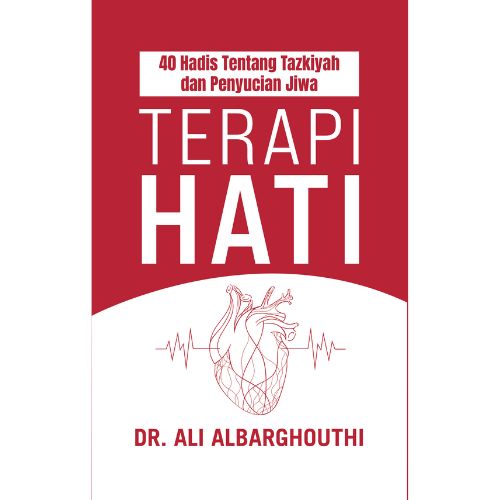
Sunnahmu Amalanku
KEISTIMEWAAN BUKU INI:
- Memahami dalam mentaati ajaran yang disampaikan oleh Rasulullah SAW secara menyeluruh.
- Mempertahankan agama Islam dari serangan musuh-musuh Islam dengan penghujahan ilmiah.
- Mencintai perkara yang disukai oleh Nabi Muhammad SAW serta membasahi lidah dengan berselawat kepadanya.
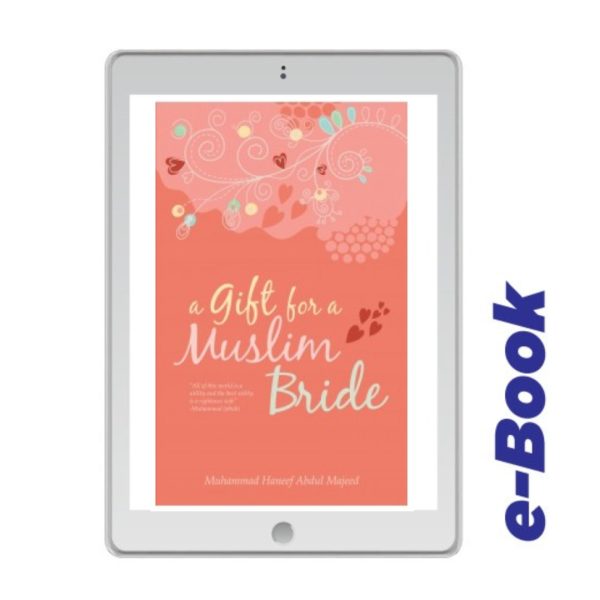
(E-Book) A Gift for a Muslim Bride
This book, truthfully, is an ideal gift to Muslim sisters (brides) and women in general, as it mainly deals with the concerned affairs of the marital life according to the Qur’an and Sunnah; touching upon topics like the excellence of a righteous wife, her attributes and duties to her husband.
It also contains stories of exemplary women, advices and other preciuos parting advices as a light of guidance. By practicing them, a home can become a garden of Jannah (Paradise).
This edition in hand has been improved and revised, with authenticated sayings and references for readers to gain beneficial insight into maintaining a beautiful marital life.
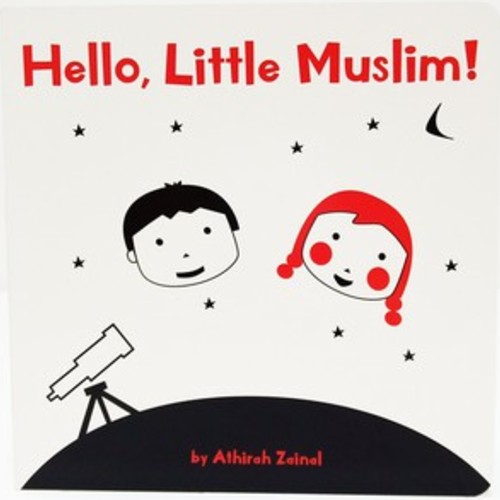
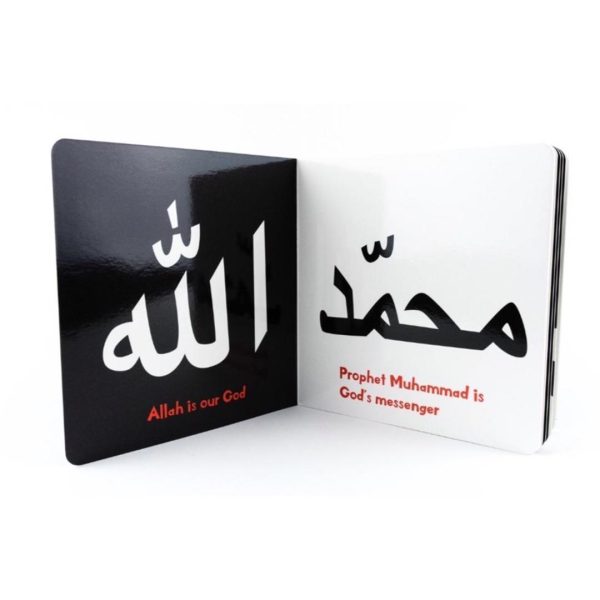
Hello, Little Muslim!
A high contrast book that is best for your baby. Babies positively respond to high contrasting colors and it improves brain growth and visual development.


There are no reviews yet.