| Weight | 0.435 kg |
|---|---|
| Author | |
| ISBN | 9781539004110 |
| Pages | 346 |
| Product Type | Book |
| Publisher | LeadUS |
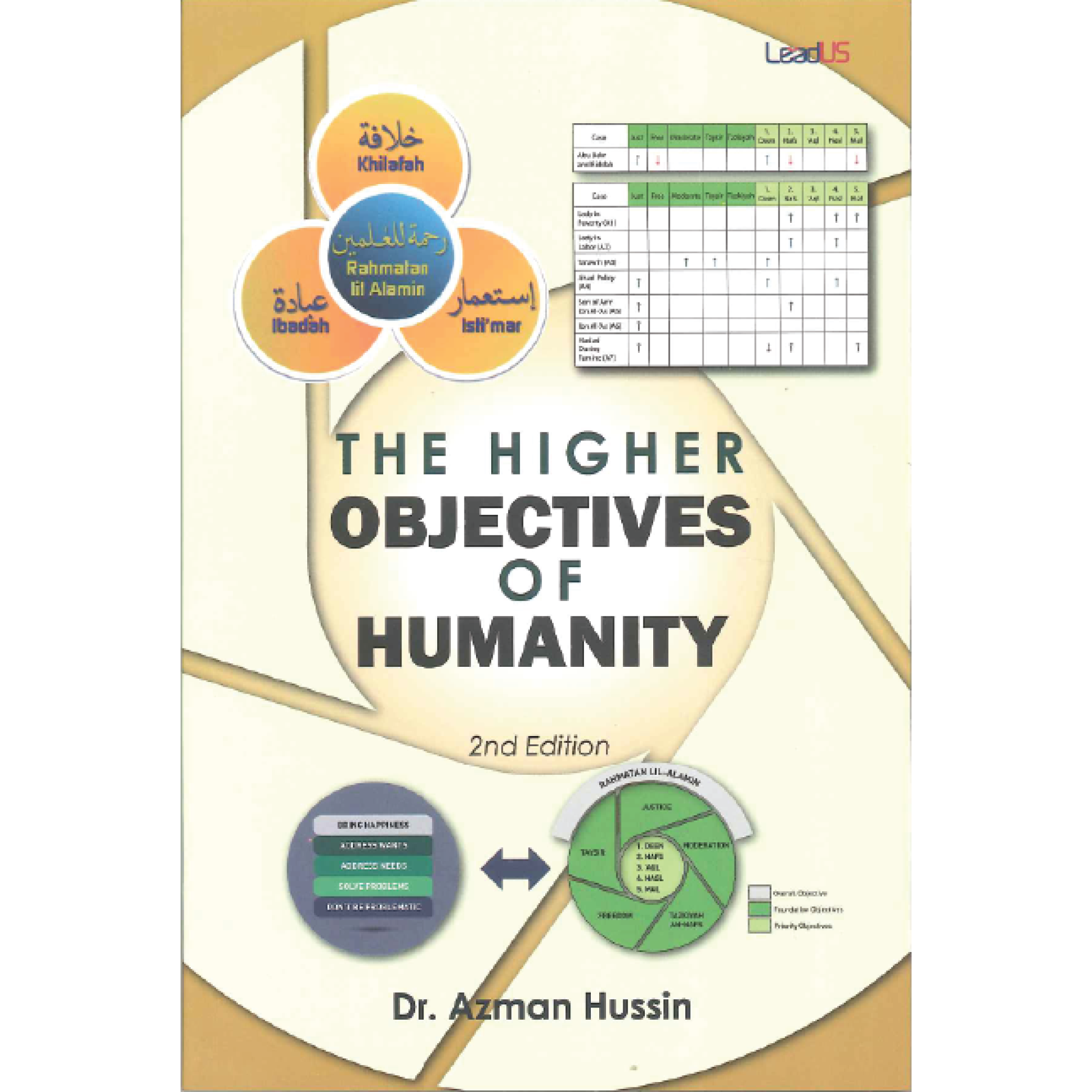
The Higher Objectives of Humanity
RM45.00
A video summary of this book can be found here: https://www.youtube.com/watch?v=YdNQxv_ODdc&t=26s This book discusses the why, what and how of Rahmatan lil-Alamin as the higher objective of humanity. It presents a practical understanding of the purpose of creation and humanity to improve the individual and collective well-being of Muslims and society. The intention is to re-introduce and re-emphasize the correct Islamic perspective of humanity. The first five chapters revisits the common understanding among Muslims as to why mankind is created. We show that the prevalent view that we are created to worship Allah (SWT) is incomplete. There is a higher and more noble purpose; Rahmatan lil-Alamin (mercy to the worlds). We next describe the what of Rahmatan lil-Alamin. The best role model of Rahmatan lil-Alamin is undoubtedly Prophet Muhammad (SAW), the last and final prophet and messenger, whom Allah (SWT) sent with a very clear purpose, “And We have not sent you but as a mercy to the worlds.” [21:107]. We present many examples from the history of Prophet Muhammad (SAW) and a collection of his (SAW) sayings and advice on being the best. The final chapters of the book deal with the how of Rahmatan lil-Alamin. We describe in detail how the Muslim can apply Rahmatan lil-Alamin daily in his or her life. We propose a practical model of Rahmatan lil-Alamin that we induced from the Quran. We also addressed how to apply Rahmatan lil-Alamin to a broader society by proposing a decision-making tool that can guide us as persons and as communities to make decisions that conform to the foundations and priorities of Rahmatan lil-Alamin. We present case studies from the history of the Companions using this decision-making model. This book seeks to establish a connection between Islam and civilization within a civilizational and ethical framework. We believe that a more proper and complete understanding of the Islamic view about humanity may present to us new perspectives of Islam and how Muslims should engage with fellow Muslims and people of other faiths. In fact, the implication of this new reinterpretation framework goes even further in that: any human civilization built on this framework is the most prosperous for the whole and also for the individuals in it.
Be the first to review “The Higher Objectives of Humanity” Cancel reply
You must be logged in to post a review.
Related Products
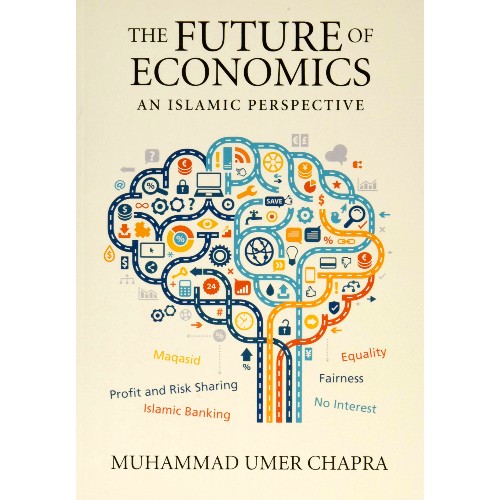
The Future of Economics An Islamic Perpective
This profound book is a powerful yet balanced critique of mainstream economics that makes a forceful plea for taking economics out of its secular and occident-centered cocoon. It presents an innovative and formidable case to re-link economics with moral and egalitarian concerns so as to harness the discipline in the service of humanity
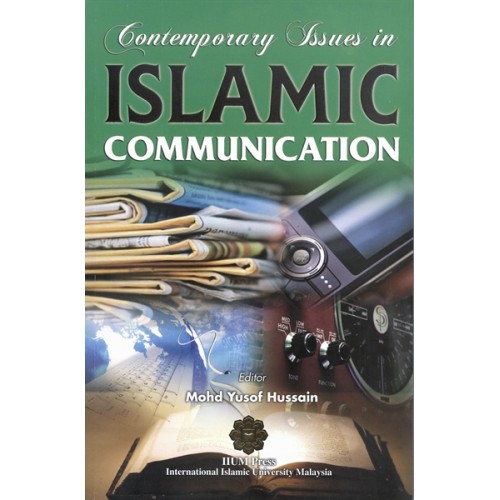
Contemporary Issues In Islamic Communication
The book contains a collection of essays on issues that are of concern to Muslim media and scholars and practitioners. The issues are those that are constantly highlighted in the mass media in the Muslim world. All the issues are discussed from the Islamic perspective. The main purpose of the book is to give readers a clear understanding of how Muslims view contemporary issues that are reported and discussed in present day mass media. The book is written for students majoring in communication at the International Islamic University Malaysia. It is also useful for students taking courses on communication issues in other universities.
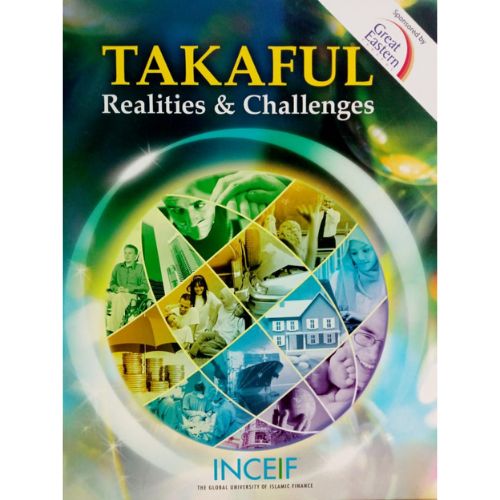
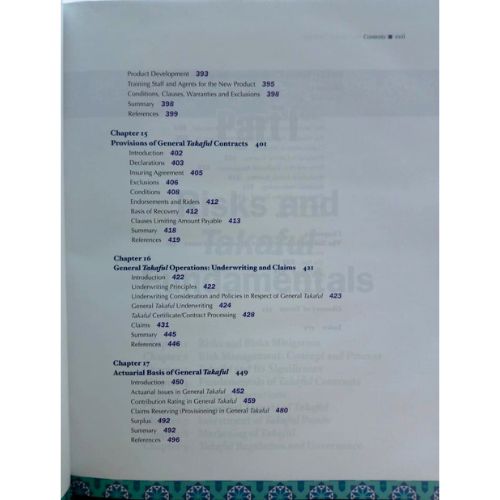
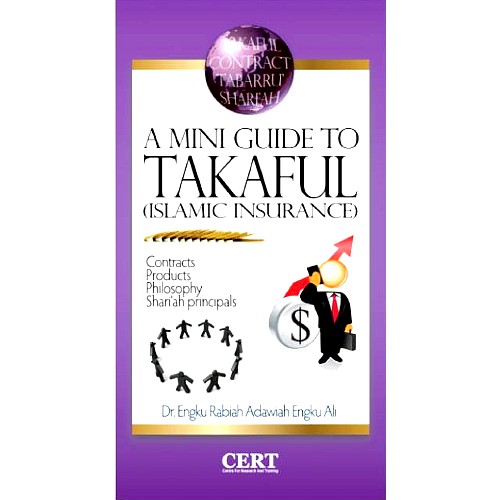
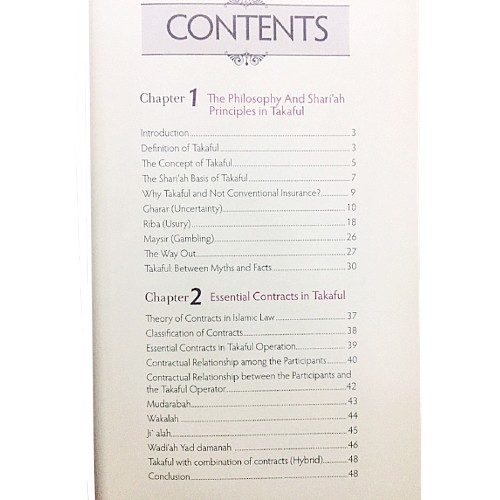
A Mini Guide to Takaful (Islamic Insurance)
This Mini Guide will prove useful and constructive to readers who want a better understanding of the takaful industry in contemporary Islamic finance.
Economic concepts of Ibn Taimiyah
This valuable work presents Ibn Taimiyah’s thoughts on the concept of Islamic economics, the state in the economy, on public finance, money, interest, prices, partnership, and profit-sharing, and offers a comparison of his ideas with those of some medieval scholars in Europe, along with a study of his influence on Islamic thinkers in later periods.
States Do Not Go to Heaven: Towards a Theory of Islamic Agency in International Relations
This book compares and contrasts Islamic world views and Western theoretical perspectives on international relations to suggest that a combination of the two could lead to a mutually beneficial redefinition of contemporary international relations utilizing Western theoretical tools and incorporating an Islamic perspective. Particular focus is given to the Islamic concept of istikhlaf as an ontological and normative foundation. The reasoning being that all man-made social arrangements on “earth”, as well as international society, should be considered a realm of istikhlaf. This allows for return to an eternal and critical first principle, linking all social roles to this principle, which is that man as designated by the Qur’an, is God’s khalifah or Vicegerent on earth. It’s a statement of great magnitude.
Islamic Legal Maxims & Their Application in Islamic Finance (2nd Ed.)
Islamic Legal Maxims and Their Application in Islamic Finance is one of the most comprehensive compilations of Islamic legal maxims available in English. The most important feature of this book is that it explains each maxim in a way comprehensible to both Shari’ah experts and Islamic finance practitioners. Another feature is its emphasis on the application of the maxims in the actual practice of Islamic finance.
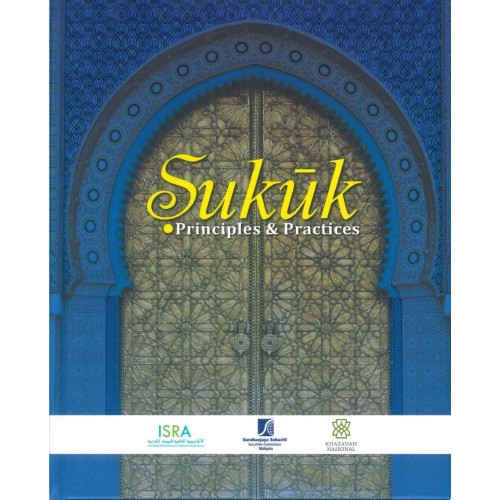
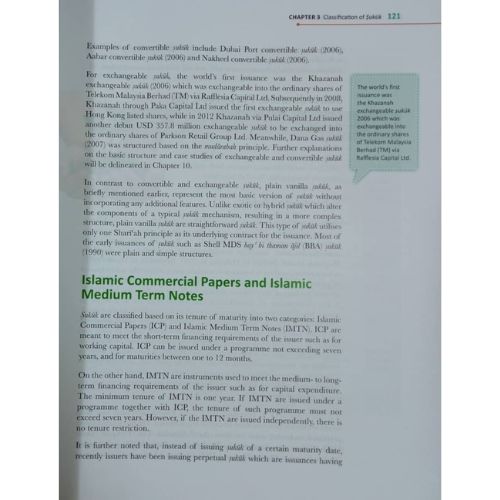
Sukuk: Principles & Practices (P/B)
Sukuk are an important asset class which has captured the attention of a wide range of issuers and investors, regulators and sovereigns, and academics and market players. The sukuk industry has made remarkable leaps since its modern inception in the 1990s. It has grown in size and volume, evolved in structural possibilities, and successfully expanded the boundaries of the Islamic capital market to far-flung jurisdictions worldwide. Its promising future has led the International Shari’ah Research Academy for Islamic Finance (ISRA) and Securities Commission Malaysia (SC Malaysia) to collaborate to provide essential and comprehensive knowledge on this key instrument of the Islamic capital market.
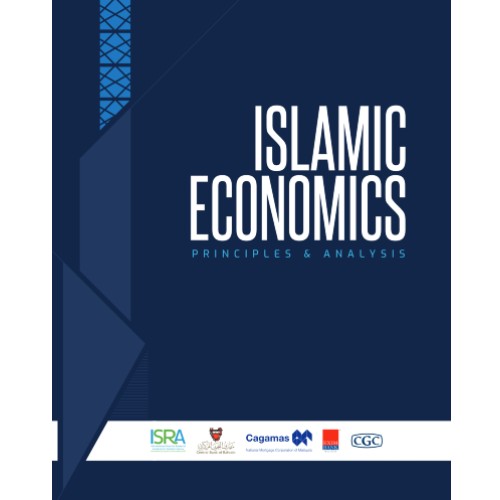
Islamic Economics : Principles & Analysis (P/B)
Economics is a social science that studies the behaviour and interactions of economic agents and analyses how economies work at the macro- and micro-levels. It studies production, distribution and consumption of goods and services, identifies economic problems and phenomena, and addresses economic questions from a positive perspective (what is) as well as a normative (how it should be) perspective. Islamic economics examines the same areas as its conventional counterpart. However, it involves the application of Sharīʿah to the different economic functions and issues. It is postulated that Islam offers a better approach compared to conventional economics in managing economic activities and solving economic and social issues.
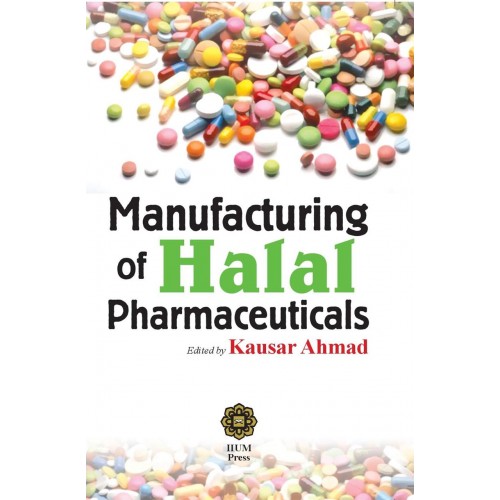
Manufacturing of Halal Pharmaceuticals (P/B)
This book aims to cover the fundamental aspects of pharmaceutical manufacturing from the Islamic worldview to inspire students that whatever they do including very mundane routine work such as checking pH can be an ‘ibādah – if they work within the sphere of Islamic teachings and in shā’ Allah all the time and effort will be rewarded by Allah SWT. The first chapter describes the Islamic perspectives towards the safeguarding of life vis-à-vis the use of medicines or pharmaceuticals and can be considered as an overview for the Islamic manufacturing practices. Although this book is about the manufacturing of pharmaceuticals, other industries may benefit from the discourse and examples given. As much as possible, processes and regulations are described in the book so that it covers the syllabus of industrial pharmacy for undergraduate use and still can be referred for postgraduate studies.
Recently Viewed
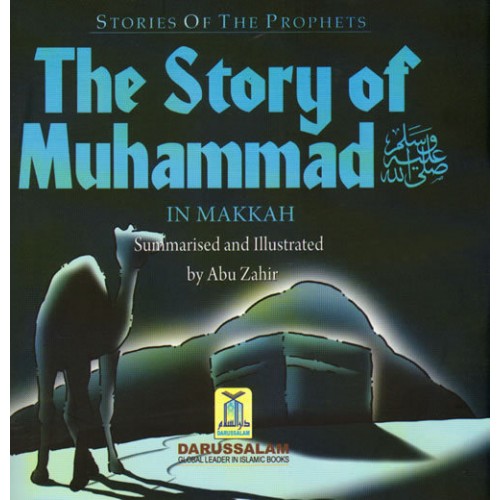
The Story of Muhammad S.A.W in Makkah
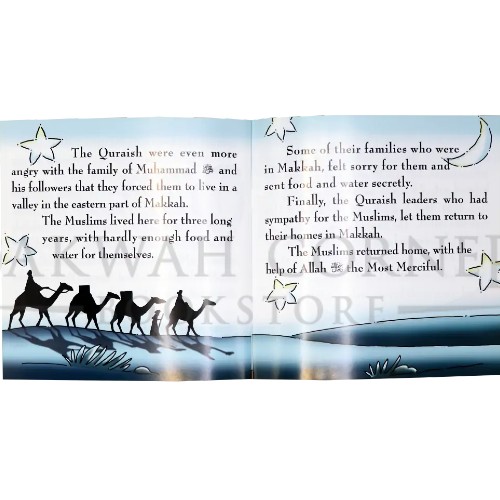
The Story of Muhammad (SAW) in Makkah By Abu Zahir (Stories Of The Prophets) A new amazing serious of childrens illustrated books, the book is easy to read and follow with pictures for little children to enjoy and learn about they beloved prophet.
100 Hadith Sunan Abu Dawud (Revised Edition 2025)
The Sources of the Qur’an
“Who is the author of the Qur’an?” On this subject scholars have flagrantly contradicted each other. This work attempts to make a critical review of the major ‘authorship’ theories by pressing into service logical arguments, historical evidence, textual analysis and scientific data. Probably, the only point of agreement about the Qur’an is that it was uttered for the first time by a man who was born in Makkah (Mecca), a city of Arabia, in the sixth century—a man by the name of Muhammad (blessings and peace be upon him). As to the source of the Qur’an, scholars are divided into three main groups: those who believe that Muhammad (blessings and peace be upon him) himself was the author; those who believe that he was not the author himself but learned it from another human author or authors; and those who believe that the Qur’an has no human author but is rather a word-for-word revelation from God. Hamza Njozi examines the three theories and comes to a firm and logical conclusion.
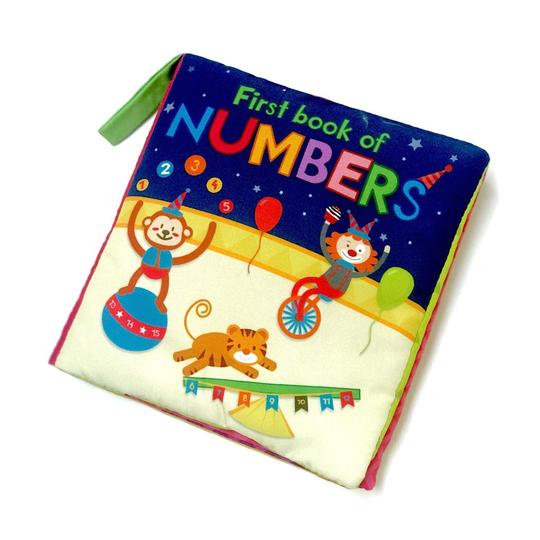
SOFT BOOK – First Book of NUMBERS
Numbers from 1 to 20
Complete with pictures to count
Colorful illustrations
Adventure to Al-Kahf (Revised Edition)
Take your children on an adventure across the words of Allah as we join the companions of the cave on a journey of activities and discovery of knowledge in the quest to improve ourselves and become better Muslims. This picture book of Surah al-Kahf, verses 1-26, is layered with pages of beautiful and vibrant illustrations. Read the stories, recite the verses, make reflections, and explore every page.
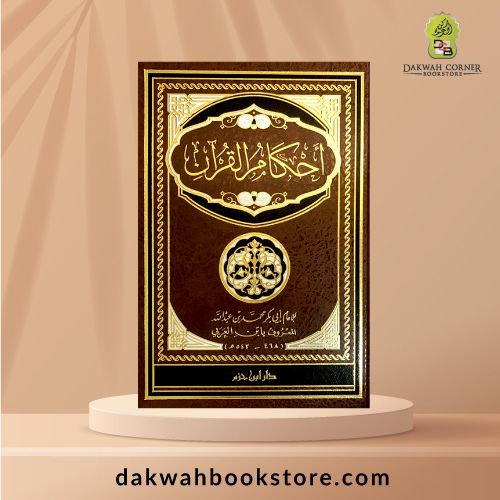
[ATQ] Ahkam Alquran / أحكام القرآن
أحكام القرآن كتاب تفسير فقهي للقرآن الكريم حسب المذهب الحنفي من تأليف أبو بكر الجصاص، استنبط مؤلفه من آيات الأحكام، مع ذكر اختلاف العلماء، ثم ينبسط في ذكر الأدلة بتوسع من الكتاب والسنة واللغة العربية والنظر.


There are no reviews yet.