| Weight | 0.435 kg |
|---|---|
| Author | |
| ISBN | 9781539004110 |
| Pages | 346 |
| Product Type | Book |
| Publisher | LeadUS |
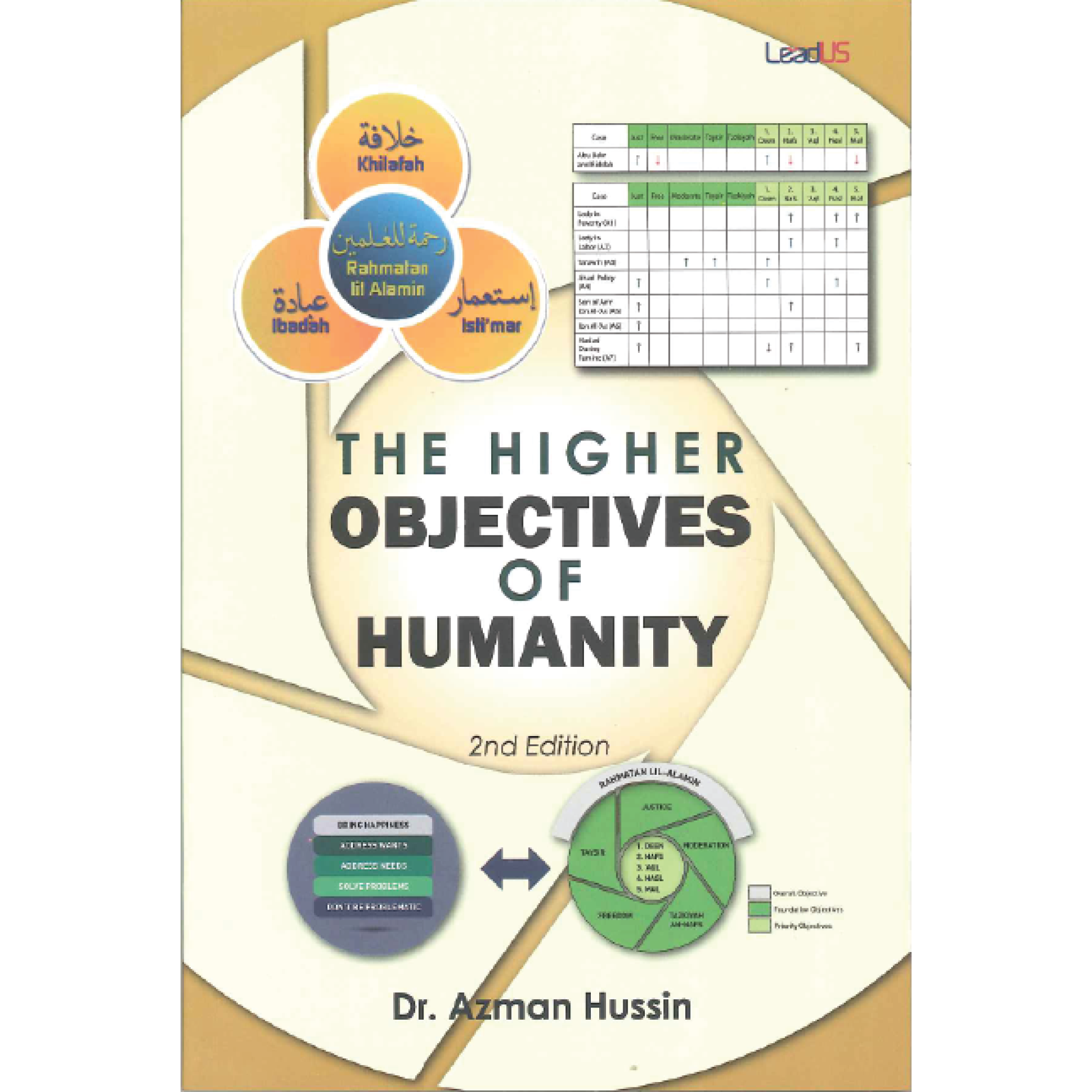
The Higher Objectives of Humanity
RM45.00
A video summary of this book can be found here: https://www.youtube.com/watch?v=YdNQxv_ODdc&t=26s This book discusses the why, what and how of Rahmatan lil-Alamin as the higher objective of humanity. It presents a practical understanding of the purpose of creation and humanity to improve the individual and collective well-being of Muslims and society. The intention is to re-introduce and re-emphasize the correct Islamic perspective of humanity. The first five chapters revisits the common understanding among Muslims as to why mankind is created. We show that the prevalent view that we are created to worship Allah (SWT) is incomplete. There is a higher and more noble purpose; Rahmatan lil-Alamin (mercy to the worlds). We next describe the what of Rahmatan lil-Alamin. The best role model of Rahmatan lil-Alamin is undoubtedly Prophet Muhammad (SAW), the last and final prophet and messenger, whom Allah (SWT) sent with a very clear purpose, “And We have not sent you but as a mercy to the worlds.” [21:107]. We present many examples from the history of Prophet Muhammad (SAW) and a collection of his (SAW) sayings and advice on being the best. The final chapters of the book deal with the how of Rahmatan lil-Alamin. We describe in detail how the Muslim can apply Rahmatan lil-Alamin daily in his or her life. We propose a practical model of Rahmatan lil-Alamin that we induced from the Quran. We also addressed how to apply Rahmatan lil-Alamin to a broader society by proposing a decision-making tool that can guide us as persons and as communities to make decisions that conform to the foundations and priorities of Rahmatan lil-Alamin. We present case studies from the history of the Companions using this decision-making model. This book seeks to establish a connection between Islam and civilization within a civilizational and ethical framework. We believe that a more proper and complete understanding of the Islamic view about humanity may present to us new perspectives of Islam and how Muslims should engage with fellow Muslims and people of other faiths. In fact, the implication of this new reinterpretation framework goes even further in that: any human civilization built on this framework is the most prosperous for the whole and also for the individuals in it.
Be the first to review “The Higher Objectives of Humanity” Cancel reply
You must be logged in to post a review.
Related Products
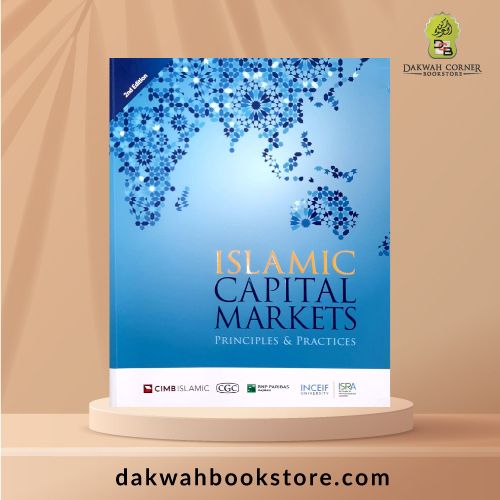
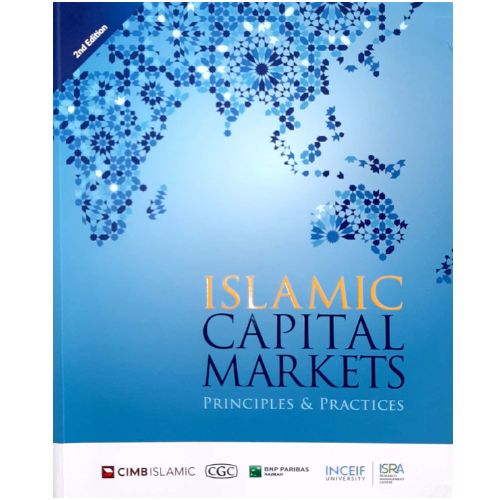
Islamic Capital Markets: Principles and Practices (P/B)
KEY FEATURES OF THE BOOK
* It elucidates the principles and practices of the Islamic capital market with academic rigours.
* It sheds light on the cutting-edge practical issues faced by the industry.
* Every chapter contains relevant case studies and supportive illustrations.
* Multiple Choice Questions (MCQs) and discussion questions are provided at the end each chapter.
KEY SUBJECTS
Shari’ah framework, Regulatory framework, Corporate and Shari’ah governance, Risk management, Accounting and taxation, Sukuk Islamic equity market, Islamic unit trust, REITs and ETFs, Islamic private equity and venture capital, Islamic derivatives and hedging and Islamic structured investment products.
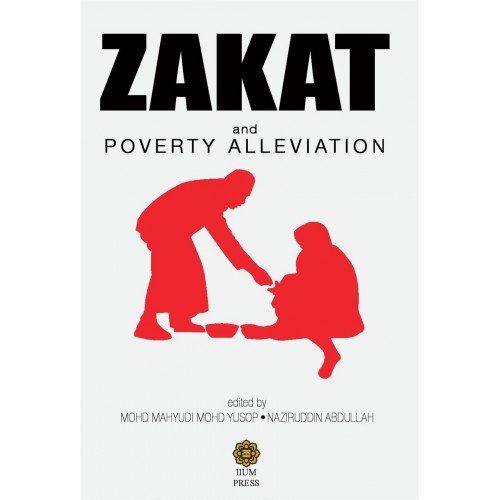
Zakat and Poverty Alleviation (P/B)
This edited book aims to raise issues pertaining to the topic of zakat and its primary goal of poverty alleviation. It portrays the dynamism of zakat by highlighting pertinent issues on the management of zakat institutions and innovative programmes that are designed as effective distribution mechanisms. Discussions include zakat payment motives, ways to measure the efficiency of zakat disbursement, economic development initiatives, housing programme, microfinancing, and actual impact on poverty alleviation. The discussions raised put emphasis on policy-orientation with dedicated sections on policy implications and recommendations. This approach is deemed necessary since it could guide the thought process of interested parties towards the creation of new ideas to actualize zakat as a very reliable tool in addressing the massive problem of poverty among Muslim communities. This special feature also significantly adds to the much-needed reference materials in courses on zakat at the intermediate level of undergraduate studies and introductory level of postgraduate programmes.
Islamic Financial System: Principles & Operations
This second edition of the book marks another milestone of a collaborative effort between prominent scholars and practitioners of the Islamic finance industry. It sheds light on the front line issues faced by the Islamic finance industry with academic rigor. Each chapter in the book is complete with figures, diagrams, tables, case studies, a set of review questions and problems and a list of references for further reading. It offers invigorating discussion on a comprehensive range of topics related to Islamic finance, combining both theoretical foundations and operational aspects.
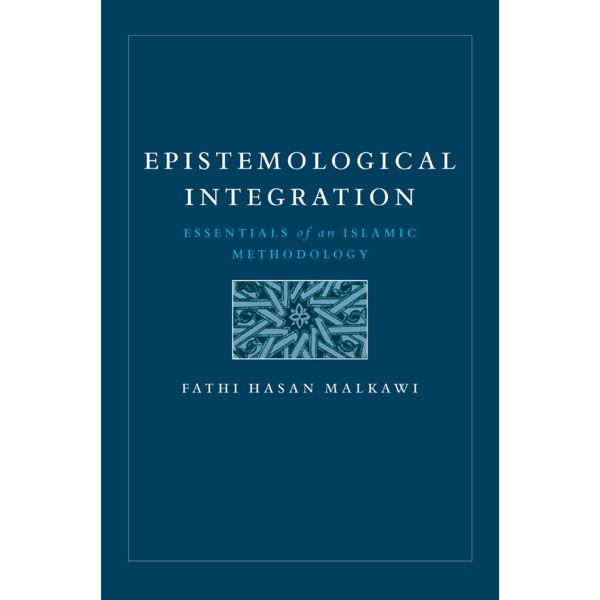
Epistemological Integration Essentials of an Islamic Methodology
Epistemological Integration: Essentials of an Islamic Methodology is a program which seeks to construct an intellectual framework for Islamic methodology with a view to realizing practical training in the thoughtful investigation of issues related to knowledge in various fields. The book’s title affirms the distinctive types of integration that characterize Islamic methodology, including integration of sources, means, and schools of thought, as well as existing realities with desired ideals etc. This is fully consistent with human nature, as variety is fundamental to the functions people perform and skills they master. The work essentially makes the case that fundamental to any Muslim recovery is laying the foundations of sound thinking and values that integrate the two main sources of knowledge: Revelation and Reality (that is the created worlds both physical, societal and psychological) under the umbrella of Tawhid. Islamic methodology adopts that and extends human hopes to integrate efforts so that humanity can realistically achieve prosperity on earth and earn eternal happiness in the afterlife.
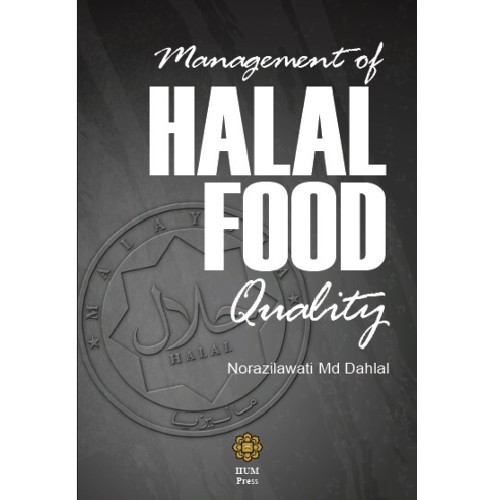
Management of Halal Food Quality
Management of Islamic-based development is a new mechanism in quality management including halal food quality. Considering the issue of integrity in halal food-quality management, efforts to empower the economy of the country through halal food are faced with obstacles and constraints. This book highlights issues commonly found in the management field. This is seen important as those in the management of halal food quality are sometimes trapped in issues that can tarnish Islam. The production of foods that are not pure in nature (halal status not genuine) can also have a negative effect on the morals and souls of Muslims.
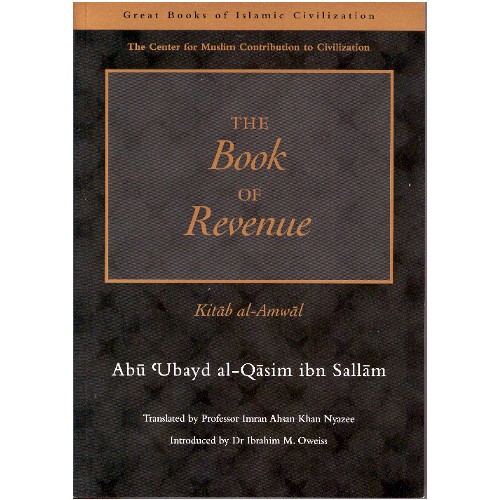
The Book Of Revenue
Kitab al-Amwal (The Book of Revenue) is the work of a brilliant legal mind. Abu Ubayd al-Qasim ibn Sallam provides us with an accurate record of legal precedents laid down in the first two centuries of Islam, in particular those pertaining to the sources of revenue and the avenues of public expenditure. The power of the book, however, lies in the method of the author and the analysis undertaken by him. He gathers together the traditions of the Prophet (pbuh), the opinions of his companions, and the views of eminent jurists, and then subjects them to legal analysis that is unparalleled in Islamic legal literature. The book is essential for every student of Islamic law, especially those who wish to master the art of interpreting and analyzing legal traditions and early precedents. In the discipline known as fiqh al-sunnah, there is no book or manual that can compete with this outstanding work.
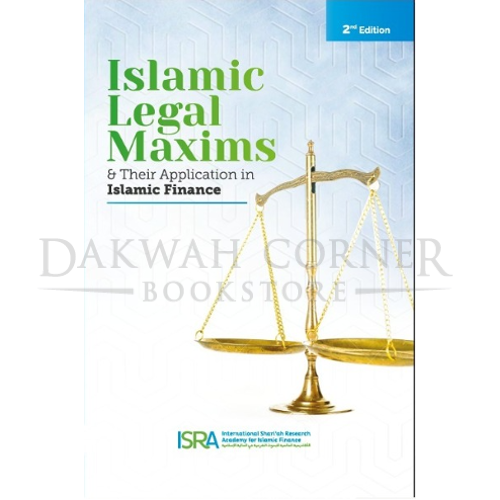
Islamic Legal Maxims & Their Application in Islamic Finance (2nd Ed.)
Islamic Legal Maxims and Their Application in Islamic Finance is one of the most comprehensive compilations of Islamic legal maxims available in English. The most important feature of this book is that it explains each maxim in a way comprehensible to both Shari’ah experts and Islamic finance practitioners. Another feature is its emphasis on the application of the maxims in the actual practice of Islamic finance.
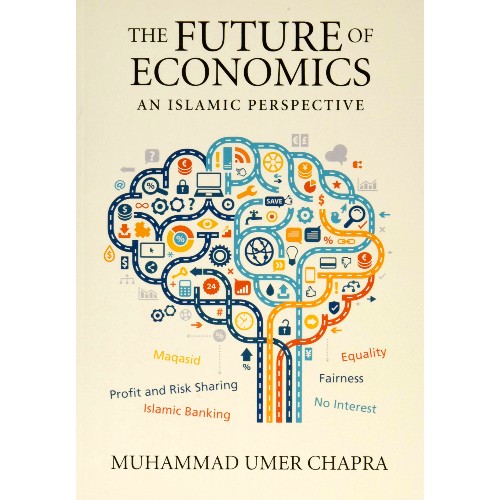
The Future of Economics An Islamic Perpective
This profound book is a powerful yet balanced critique of mainstream economics that makes a forceful plea for taking economics out of its secular and occident-centered cocoon. It presents an innovative and formidable case to re-link economics with moral and egalitarian concerns so as to harness the discipline in the service of humanity
Islamic Economics : Principles & Analysis (P/B)
Economics is a social science that studies the behaviour and interactions of economic agents and analyses how economies work at the macro- and micro-levels. It studies production, distribution and consumption of goods and services, identifies economic problems and phenomena, and addresses economic questions from a positive perspective (what is) as well as a normative (how it should be) perspective. Islamic economics examines the same areas as its conventional counterpart. However, it involves the application of Sharīʿah to the different economic functions and issues. It is postulated that Islam offers a better approach compared to conventional economics in managing economic activities and solving economic and social issues.
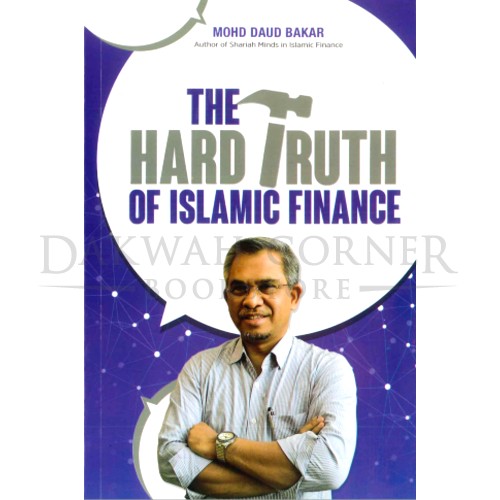
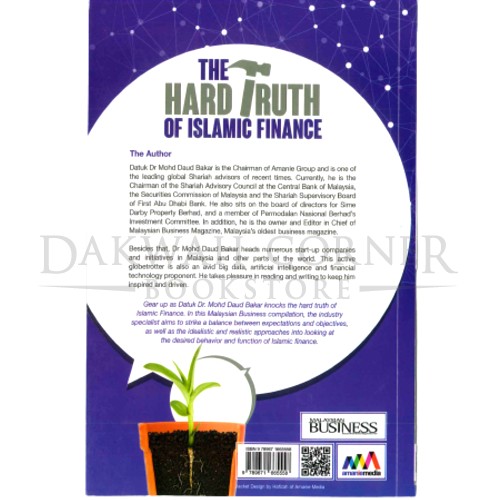
The Hard Truth of Islamic Finance
What is the book all about? It seeks to strike a balance between objectives and expectations. While expectations are easy, meeting objectives is hard.
The book also aims at unlocking the real face of Islamic finance without any make-up or cosmetic touch-up. The moment it is linked to something external and artificial, it becomes cluttered.
For all intents and purposes, every discipline has its core torso and fabric. Islamic finance should have its own ‘DNA’ and identity. The book is simply about bringing Islamic finance back to its basics. You may add on additional verticals and layers but it cant be on the expense of its core foundation.
Recently Viewed
Usool Al-Hadeeth (H/B)
Dr. Bilal Philips writes: “The Prophet’s sayings and actions were primarily based on revelation from Allah and, as such, must be considered a fundamental source of guidance second only to the Qur’an.” According to Dr. Philips, the Hadith, the record of these sayings and actions, plays a vital role in that it transmits revelation, tafseer (exegesis of the Qur’an), Islamic law, and the Islamic moral ideal. For instance, the Prophet’s “…character and social interactions became prime examples of moral conduct for Muslims. Consequently, the daily life of the Prophet (blessings and peace of Allah be upon him) as recorded in the hadith represents an ideal code of conduct. It is largely due to the science of hadith that the final message of Islam has been preserved in its original purity for all times.” In Usool al-Hadeeth, the reader will embark on a course of study that will, Allah willing, enable him or her to make critical and intelligent use of the body of Hadith literature in his or her daily life.
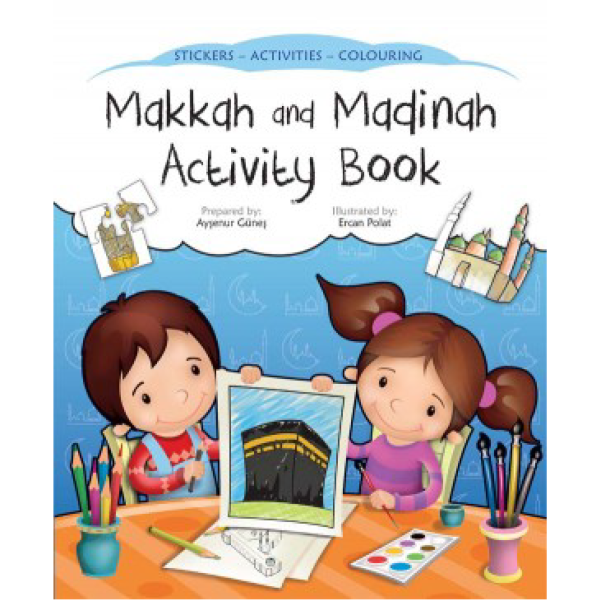
Makkah and Madinah Activity Book
Explore the wonders of Makkah and Madinah with this fun activity book. Features dot-to-dot drawings, coloring fun, puzzles to solve and 63 stickers to stick.
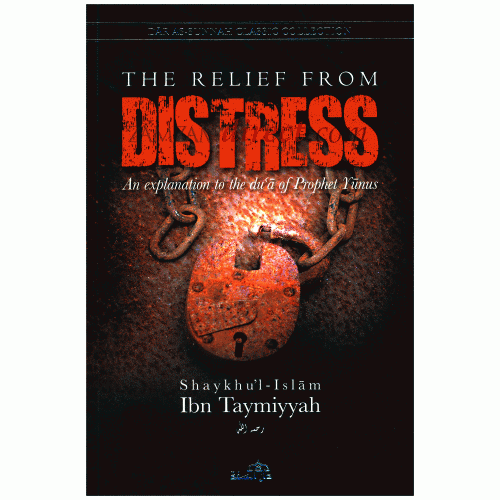
The Relief From Distress : An Explanation to the dua of Prophet Yunus (P/B)
Shaykh al-Islam Ibn Taymiyyah, may Allah sanctify his soul, was asked about the saying of the Prophet (pbuh),
The invocation of my brother Yunus, “none has the right to be worshipped save You; glory be to You, far removed are You from any imperfection; I have been amongst the wrong-doers,” none who is experiencing difficulty employs it except that Allah would relieve him of his difficulty.
What is the meaning of this du’a (prayer, supplication)?
Are their any unstated conditions that have to be met when one articulates it?
What is the connection between belief in the heart and the meaning of this supplication such that it leads to the removal of difficulty?
Why did he explicitly confess, ‘I have been amongst the wrong-doers’ when it is known that tawhid in itself leads to the removal of difficulty?
Is it sufficient to acknowledge ones’ sin alone, or must this be accompanied by repentance and the firm resolve not to repeat that sin in the future?
Why is it that difficulty and harm is removed only when a person relinquishes any hope, reliance and dependency upon the creation?
How can the heart relinquish the characteristic of putting hope in the creation and depending on them, and instead put its hope in Allah, Exalted is He, and turn to Him in its entirety?
What are the methods that would aid the heart in doing this?
The author replies to these questions in the form of this book.
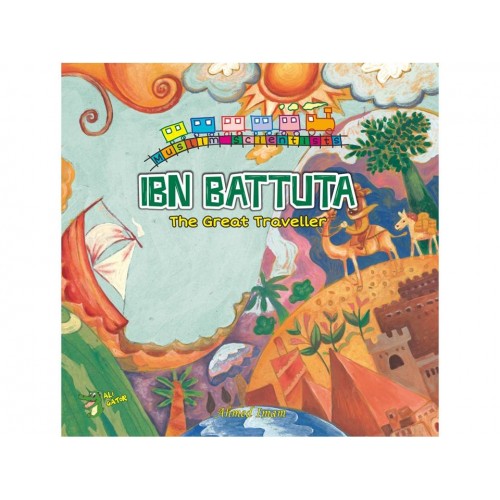
Ibn Battuta – The Great Traveller (The Muslim Scientists Series)
The Muslim Scientists series introduces children to great scientist, scholars & adventurers from the Golden Age of Islam.
Ibn Battuta travelled for 30 years, performing Hajj 4 times, no wonder he is called “The Great Traveller”.
Full Colour
24 pages
EVERY HOME & SCHOOL LIBRARY MUST HAVE THIS SERIES AS PART OF THEIR ISLAMIC COLLECTION
101 Seerah Stories and Dua (H/B)
101 Seerah Stories and Dua is a richly illustrated collection of 101 great stories told in simple language that children will easily understand and relate to. Each story comes with delightful illustrations and a beautiful prayer. The book includes well known tales from the life of the Prophet Muhammad — the Year of Elephant, the birth and childhood of the Prophet, the revelation of the Quran, the first Muslims, opposition of the Quraysh, the spread of Islam and migration to Madinah to name a few. It’s a unique experience the whole family will cherish and revisit again and again!
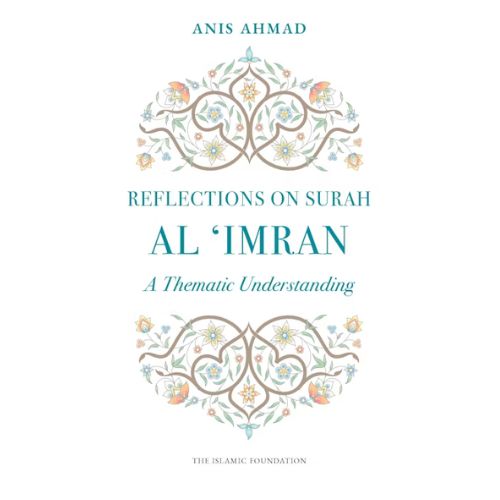
Reflections on Surah Al ‘Imran (P/B) – Kube
Continuing with the Reflections series, this book focusses on the third chapter in the Holy Qur’an. Written in simple and easy to read format, allowing the reader to absorb the key points of Surah Al-Imran is trying to convey.
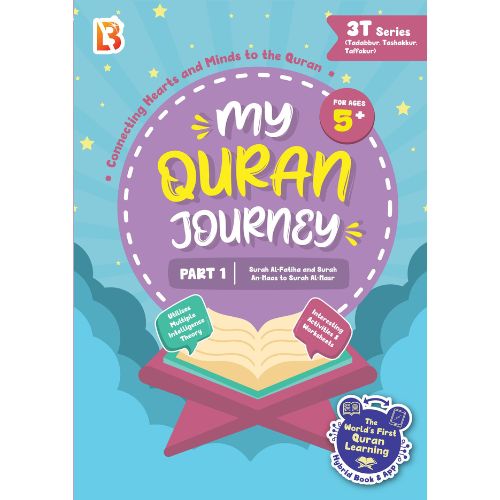
My Quran Journey Part 1
“My Quran Journey” is the inaugural volume in a captivating series crafted to introduce children to the Quran in a child-friendly manner. Embark on an enchanting adventure through Surah Al-Fatiha and the last 5 Surahs of Juz Amma. Explore timeless wisdom with word-to-word translations. complemented by stunning illustrations and thought-provoking life lessons. Engage with interactive sections to enhance comprehension and nurture a Lifelong Love for the Quran.
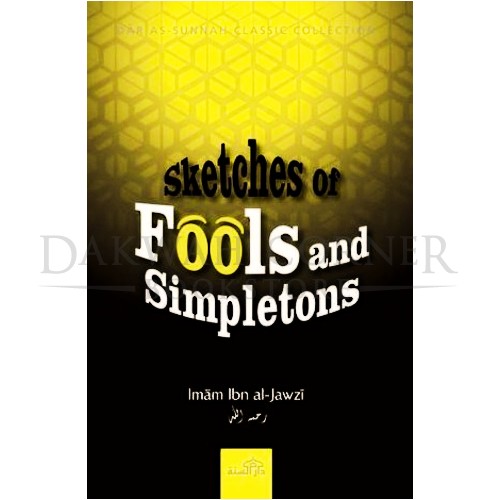
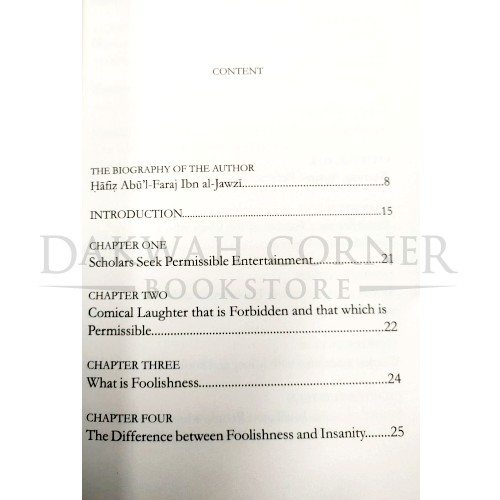
Sketches of Fools and Simpletons by Imam Ibn Al-Jawzi
Lack of sense leads to acts of foolishness, allowing them to mothball into comical gags. Ibrahim Al-Nazzam was once asked, “What are the limits of foolishness?” To which he replied, “You asked about that which has no limits.”
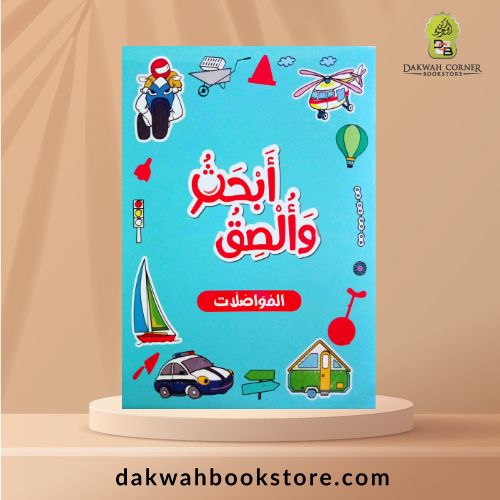
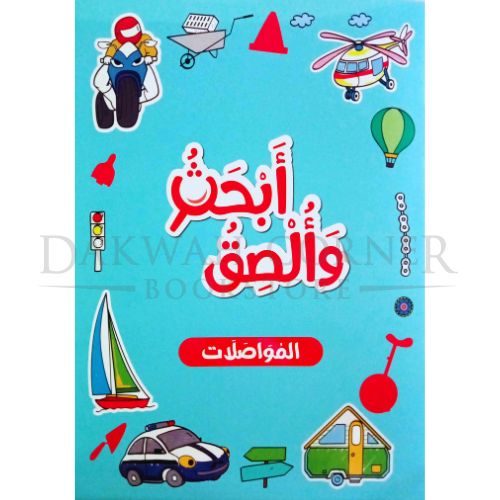
[CB] Abhath Waulsiq – Al-Muwasalaat / أبحث وألصق (المواصلات)
أَلْصِقِ القَاطِرَةَ فِي مَكَانِهَا، وَزَخْرِفِ المَنَاطِيدَ بِالنُّجُومِ،
وَأَلْبِسُ سَائِقَ الفُورْمُولَا 1 خُوذَةً.
سَتَجِدُ فِي كِتَابِ الإِلصَاقِ وَالتَّلْوِينِ المُسَلِّي هَذَا العَدِيدَ مِنَ المُوَاصَلَاتِ:
قَوَارِبَ شِرَاعِيَّةٍ وَقِطَارَاتٍ وَشَاحِنَاتٍ وَحَافِلَاتٍ وَجَرَّافَاتٍ، بَلْ وَدَرَّاجَاتٍ أَحَادِيَّةٍ
أَيْضًا. بَعْدَ أَنْ تَفْرَغَ مِنْ الصَاقِ المُلْصَقَاتِ، لَوْنِ الرُّسُومَاتِ بِالأَقْلَامِ المُلَوَّنَةِ.
Way To The Quran
An authoritative and accessible study guide that covers what the Book means to the believers and sets out the essential prerequisites of body, mind, and heart that serve to light up the inner life with the Qur’anic worldview; the etiquette of reciting, reading, and understanding the Qur’an; how to study the Qur’an collectively; and how to live by its teachings.
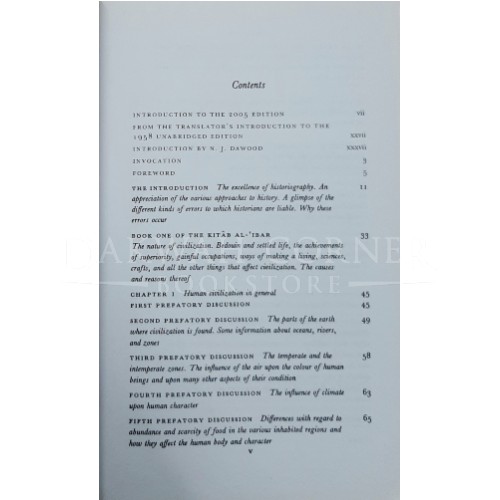
The Muqaddimah: An Introduction To History
The Muqaddimah: An Introduction to History –Abridged Edition
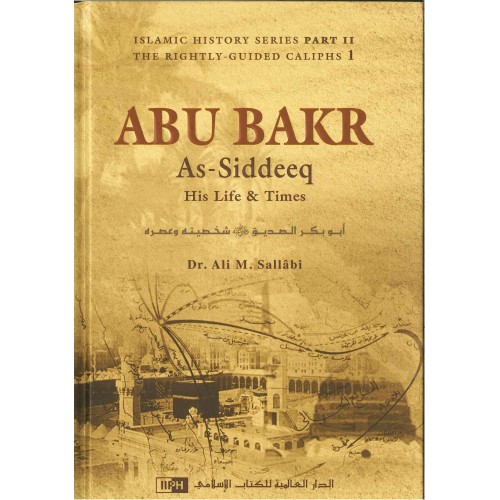
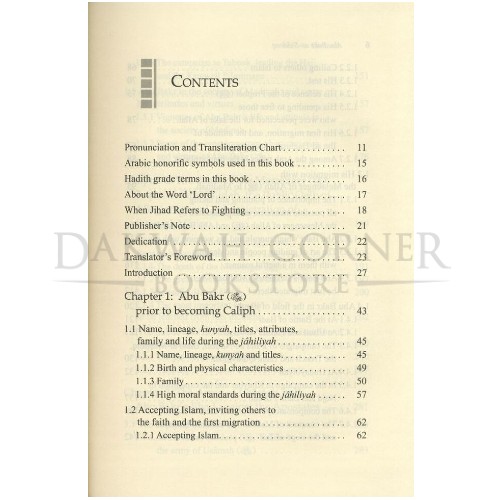
Abu Bakr As-Siddeeq His Life And Times (IIPH)
The life of the first Rightly-Guided Caliph, Abu Bakr as-Siddeeq (may Allah be pleased with him) is a valuable roadmap for the Muslims of today. One of the first people to believe and embrace the Prophet’s Message of Islam, Abu Bakr remained a close companion of the Prophet (blessings and peace be upon him) throughout the Prophet’s life. Appointed as the Prophet’s successor on the basis of consultation, Abu Bakr proved to be a great leader who, with Allah’s help, steered the Ummah through difficult times. He faced numerous challenges within Arabia: some people apostatized, others refused to pay zakâh, and quite a few individuals emerged as false prophets, attracting many followers. Outside Arabia, the Persians and Byzantines keenly observed these developments, looking for an opportunity to crush the new state. Abu Bakr employed effective strategies to deal with these challenges and had remarkable success in doing so. Thus, he paved way for the Islamic conquests that toppled tyrants and carried the message of Islam to the entire world. His leadership should be a great source of inspiration for the Muslims today.


There are no reviews yet.