| Weight | 0.80 kg |
|---|---|
| Dimensions | 22.8 × 15.2 × 2.2 cm |
| Author | |
| Binding | Paperback |
| ISBN | 9781944904142 |
| Pages | 614 |
| Year of publication | 2018 |
| Publisher | Islamosaic |
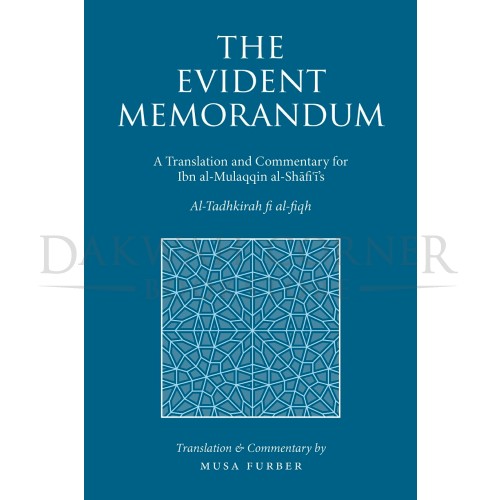
The Evident Memorandum
RM125.00
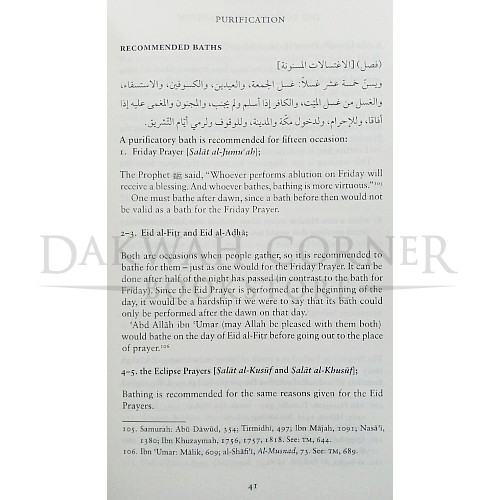
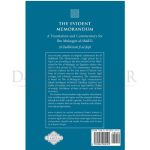
The Evident Memorandum: A Translation and Commentary for Ibn al-Mulaqqin al-Shāfiʿī’s Al-Tadhkirah fi al-fiqh
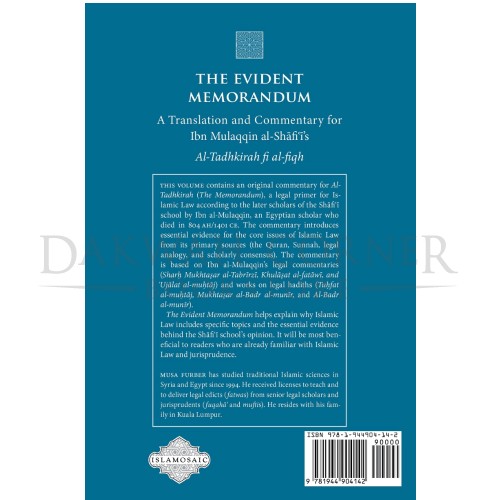
This volume contains an original commentary for Al-Tadhkirah (The Memorandum), a legal primer for Islamic Law according to the later scholars of the Shāfiʿī school by Ibn al-Mulaqqin, an Egyptian scholar who died in 804 AH/1401 CE. The commentary introduces essential evidence for the core issues of Islamic Law from its primary sources (the Quran, Sunnah, legal analogy, and scholarly consensus).
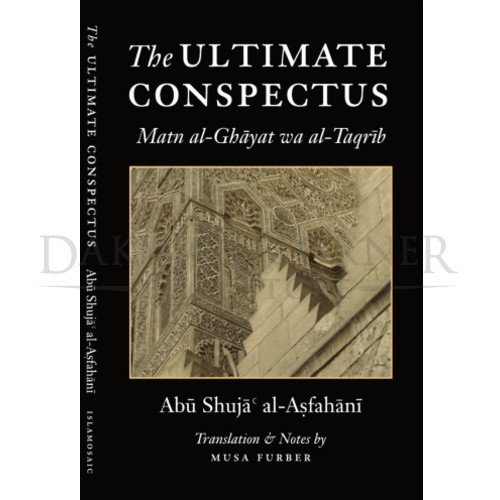
The Arabic text of Al-Tadhkirah is approximately 8,500 words in length. It is two hundred words longer than Abū Shujāʿ al-Aṣfahānī (b. 433AH/1042CE)’s Matn al-ghāyat wa-l-taqrīb (published as The Ultimate Conspectus). Although the two are roughly the same size, Ibn Mulaqqin’s style is more economical than Abū Shujāʿ’s, allowing him to cover more within the same word count. And while Ibn Mulaqqin discusses more issues, he does occasionally skip a few details that Abū Shujāʿ includes.
The primary sources for comments in this book are Ibn Mulaqqin’s books of fiqh, including Sharḥ Mukhtasar al-Tabrīzī, ʿUjālat al-muḥtāj, and Khulāṣat al-fatāwī. The bulk of the commentary comes from Sharḥ Mukhtaṣar al-Tabrīzī. Comments and hadith in the commentary can be sourced back to either one of Ibn Mulaqqin’s fiqh texts or a Shāfiʿī fiqh text through an appendix that cross-references each chapter and section in this book against its sources. Each hadith mentioned in the book is traced back to its primary sources, along with a reference to one or more of Ibn Mulaqqin’s hadith works. In the few instances where a hadith is not included in one of Ibn Mulaqqin’s works, it is referenced it to a Shāfiʿī text that does. Through this, readers can be assured that the hadiths cited here are ones that Shāfiʿīs themselves use.
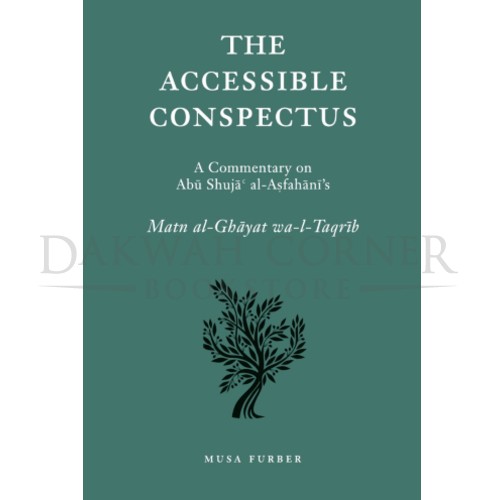
Readers will find the book most beneficial after reading The Accessible Conspectus and Sharh al-Waraqat.
Be the first to review “The Evident Memorandum” Cancel reply
You must be logged in to post a review.
Related Products

Common Mistakes Regarding Prayer – IIPH
Formal prayer (salat) is the second pillar of Islam, and the most important of a Muslim’s acts of worship. Prophet Muhammad (PBUH) said: “The first of one’s actions for which a slave of Allah will be held accountable on the Day of Judgment will be one’s prayers. If they are correct and accounted for, then he (or she) will have succeeded (gained paradise); and if they are lacking, then he (or she) will have failed (lost paradise). If there is something defective in his (or her) obligatory prayers, the Lord will say: ‘See if my slave has any supererogatory prayers with which that which was defective in his (or her) obligatory prayers may be completed. Then the rest of his (or her) deeds will be judged in like manner.” (At-Tirmidhi and others) Shaykh Mashhur Hasan Salman has compiled a list of the most common errors that we make when we pray, discussing and explaining each one. This book is a valuable aid to Muslims hoping to perfect their prayers, so that their prayers may be free of defects and acceptable to Allah. This new and revised edition of the English translation of his work presents the text in a fluent, highly readable style.
Hajj & Umrah And Visitors (H/B)
Rites and Selected Etiquettes for those intending to Perfom Hajj & Umrah and Visitors In this book the author calls attention to the most important things that those who intend to perform Hajj, Umrah or Visiting the Prophets Mosque in Medinah must have as provisions. The author has made his work brief and arranged its topics according to their priorities. the author mentions a considerable number of sayings of the people of knowledge and calling the attention of the reader to some important matters.
Funeral Rites In Islam (H/B)
The purpose of this book is to provide English speaking Muslims a concise and authentic compilation of the instructions regarding funeral rites in Islam.
Worship In Islam: An In-depth Study of Ibadah, Salah and Sawm (P/B)
Worship in Islam is in-depth study of the nature and significance of Islamic spirituality by Abul A‘la Mawdudi (1903–79), one of the leading Muslim intellectuals of the twentieth century, with special reference to the concepts of God’s Oneness (tawhid), the finality of Prophethood (risalah) and the Islamic system of worship (‘ibadah) with a focus upon prayer (salah) and fasting (sawm) and their role in the development of the Islamic personality and Islam’s social order. The distinguishing feature of Mawdudi’s approach is his elaboration of the social dimension of worship, which extends the traditional approach found in Islamic jurisprudence, with its focus upon ritual and self-purification, to consider worship’s transformative role in social life. Presenting a holistic view of the Islamic system, Mawdudi highlights Islam’s social, economic and political dimensions, which he argues has the capacity to resolve emergent issues and problems that humankind faces.
This historic text should be of wider interest to both students and specialists in contemporary Islamic thought, and includes an introduction by Professor Anis Ahmad.
Edited and translated into accessible English by Ahmad Imam Shafaq Hashemi, this book is an authoritative compilation by a leading Islamic twentieth-century revivalist on the central matter of worship’s role in Islam.
Should A Muslim Follow A Particular Madhhab?
In this book, the author has widely described the main principle of Taqleed. He says that Allah and Prophet Mohammed (SAW) has not ordered us to follow any opinions and interpretations. So there’s a possibility of being correct or incorrect in the opinions because there are many issues on which the Imams had different views and they explain them according to their own reasons and speculations, but the real and true Islam is based on the book (Quran) and Prophet’s Sunnah.
Allah says: “But no, by your Lord, they can have no Faith until they make you judge in all disputed matters between them, and find in themselves no resistance against your decision, and accept them with full submission.” And the prophet said: “I leave you with two things as long as you hold them tightly, you never go astray: they are the book of Allah and my Sunnah.” In this sense, the author has described the difference between different Madhahib (madhabs/mazhabs), and their views and urged to follow only the Quran and Sunnah.
Ibn Ashur Treatise on Maqasid al-Shariah (P/B)
Ibn Khaldun, the fourteenth century Arab historiographer and historian, is viewed as a founder of modern historiography, sociology and economics. He lived during a turbulent part of history, and out of his experiences, he ?conceived and created a philosophy of history that was undoubtedly the greatest work ever created by a man of intelligence…?. This work tells of the period of unrest in Ibn Khaldun?s life marked by political rivalries. It is during this turbulent period which provided him with the opportunity to write the Muqaddimah (or Prolegomena), earning him an immortal place among historians, sociologists and philosophe
Istihsan (P/B)
This work constitutes a critical analysis of classical and modern aspects of the concept of istihsan (juristic preference), an important principle in Islamic legal legislation throughout history. Although there has been many research works on the subject, it still requires further investigation on the role and nature of istihsan with regard to a combination of classical and modern approaches. Consisting of four chapters, the author begins by introducing some general principles of Islamic law, before discussing the history of istihsan during the time of the Prophet and his Companions. He also analyses the validity of istihsan as a source of law and discusses the differences among scholars on its method of implementation.
Islamic Rulings on Menstruation and Postpartum Condition
The birth of human being is a most amazing phenomenon. The physical cycles that the body of woman must endure in order to maintain this act of creation should be respected to the highest degree. Allah mentions that our mothers have born us with difficulty and struggle and because of this are due the highest respect. one among many of the difficulties that women must brave, are the doubts that these conditions present to the correct obervance of her religion. How is her fassting affected, how are her prayers affected, how is her ability to pursue her studies, and how are her conjugal relations affected by her ever changing physical condition in relation to her as the sole vessel of the birth of man. A really valuable publication by Darussalam for all Muslim woman to study
Having Fun The Halal Way Entertainment In Islam
With the advent of technology, the entertainment industry has flourished and become immensely popular. Combine this with the exponential advances in technology, and the result is an increasing number of ways to amuse ourselves. As a result of such advances, Muslim react in a variety of manners towards entertainment. Some label entertainment as completely forbidden. This sometimes includes parents who say no to almost everything that their young ones deem to be ‘fun’, without providing them with suitable alternatives. Others, who do not want to take this extreme approach, fall into the trap of excessive use of – and even addiction to – various sources of entertainment, without any limits.
In Having Fun the Halal Way, Ismail Kamdar explores the teachings of Islam regarding entertainment. Drawing upon the Quran, the Sunnah and the understanding of the righteous scholars of Islam, he provides a detailed and balanced analysis of the topic. He not only explains the detriments of the current entertainment industry, but also suggests alternative means to have a good time with friends and family members.
Forensic Psychiatry In Islamic Jurisprudence (P/B) (IBT)
This is the first book in Forensic Psychiatry that focuses on the application of psychiatry to legal issues connected to Islamic jurisprudence. It gives contemporary psychiatry in any Islamic country a broad spectrum of tools to work with, enabling the utilization of options specific to particular societal and cultural norms. This book will appeal to both the general as well as the academic reader.
Al-Jumu’ah: The Day of Congregation
In our busy lives, Friday comes around once a week. It often comes and goes without our being really aware of it. For many Muslim men, it may be punctuated by the congregational prayer that they make special efforts to attend. For many Muslim women, it may go by just like any other day. This ought not to be the case. In this unique book, Dr. Gowher Yusuf gives us reason to stop and think about how special Friday (al-Jumu‘ah) really is, and what we should be doing to achieve the many bounteous blessings it holds for those who observe it. Drawing constantly from the Qur`an and the Sunnah and the great works of the scholars of Islam, Dr. Gowher Yusuf explores this topic in depth and presents it to the reader in simple language for them to understand and ponder over. This book travels through the various issues pertaining to the Friday prayer and its Khutbah, or sermon. These issues are explained within the Islamic framework, thus abolishing any myths and misunderstandings and clarifying the topic for the reader. Dr. Yusuf writes: The day of the week known as al-Jumu‘ah, or simply Jumu‘ah, is Friday, and it is special. Compared to the other days of the week, Friday has been accorded the largest amount of merit, so much so that the father of all humankind, Prophet Âdam (peace be upon him), was created on this day and a particular prayer was ordered for this day. It was from the guidance given to Prophet Muhammad (blessings and peace of Allah be upon him) to magnify this day, honour it, and designate it for acts of worship. …On a Friday, we all will be gathered and will stand congregated in front of Allah, the Exalted, on the Day of Resurrection, also called the Day of Accountability or the Day of Judgement.
Islamic Rules of Order (P/B)
Organizations must have rules of order to facilitate their debate and to fill in the procedures not detailed by their constitutional documents. While most American organizations are content to operate by Robert’s Rules of Order, Muslim organizations have often wrestled with questions over whether the rules of order systemized by a Western military figure are in accord with the Qur’an and the Sunnah.
This book tackles the matter directly and takes into account the Qur’an, the sunnah, Islamic manners and the history of Islamic consultation and leadership to provide a simple, practical guide to organizational procedure that can be incorporated into the governance of Muslim organizations. The book includes advice on writing bylaws and on complying with the best practices of the U.S. Dept. of Justice in a way that is Islamically authentic, transparent, and accountable. It provides a basic starting point for any Muslim organization while allowing for flexibility so that organizations may make any variations they require within their own bylaws and constitution, so that it can accommodate differing schools of thought on Islamic law. In its discursive approach it is an essential primer for understanding the value of rules of order and the Islamic context for their application. The Islamic Rules of Order has been adopted as the rules of order of the Association of Muslims Social Scientists.
Recently Viewed
Creative Thinking An Islamic Perspective (2nd Edition)
Enthusiastic readers, notably those who have special interest in thinking and cognition, are expected to know a great deal on creativity both as a skill and as a discipline. However, rare are those who have thoughts on what a religion like Islam has to say about it. Many vital fields of studies seem to have been alienated from religious principles and values, as if religion distrupts the smoth and triumphant march of human knowledge. This book presents a humble argument for the worth of Islamic principles and values in the domain of thinking and creativity. Though this work is an introductory textbook devised for teaching purposes, it hopes to meet the expectations of those who seek detailed and informative account of the subject.
The Dajjal and The Return of Jesus (P/B)
The Prophet said “There has been no affliction, nor will be until the hour establishes, greater than that of the Dajjal”
The emergence of the Dajjal will be the greatest affliction ever faced by mankind, from the creation of Adam until the last Hour, without exception. Allaah will give him the ability to wreak discord, evil and disbelief on an unprecedented scale.
His tenure on Earth will be characterized by terror, havoc and despair. He will make the truth appear as falsehood and vice versa.
He is able to delude mankind with his false promises and miracles. The vast majority of people on Earth will be convinced that he is their Lord, and follow him to Hell.
Jesus will return to Earth to destro Dajjal and lead mankind safely out of the dark stormy night. He will usher in a period of peace, justice and happiness.
This book is essential reading for every seeker of Truth. It equips the reader with the tools to save himself and his loved ones from this terrible trial.
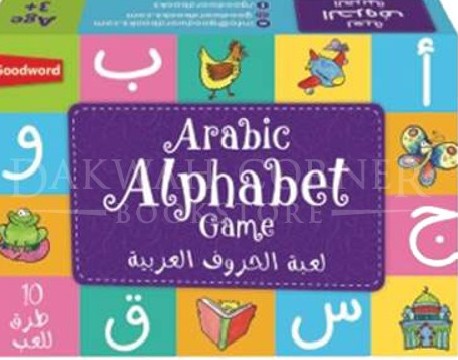
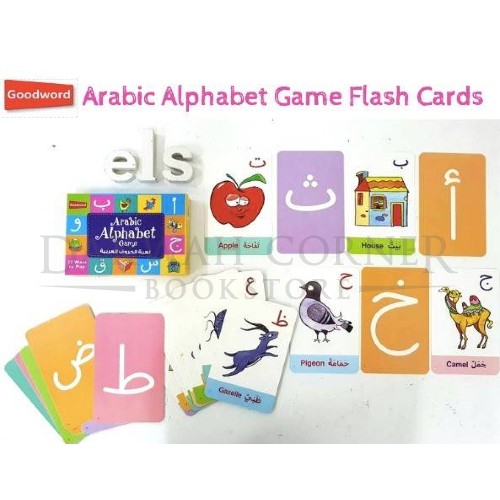
[GM] Arabic Alphabet Game
28 double-sided cards help to teach both the alphabet and words!
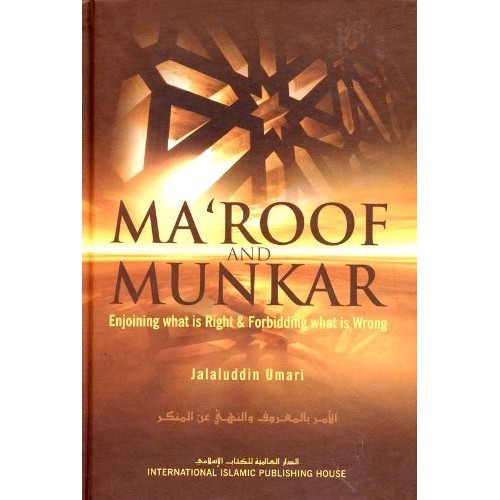
Ma’roof And Munkar – Enjoining what is Right & Forbidding what is Wrong
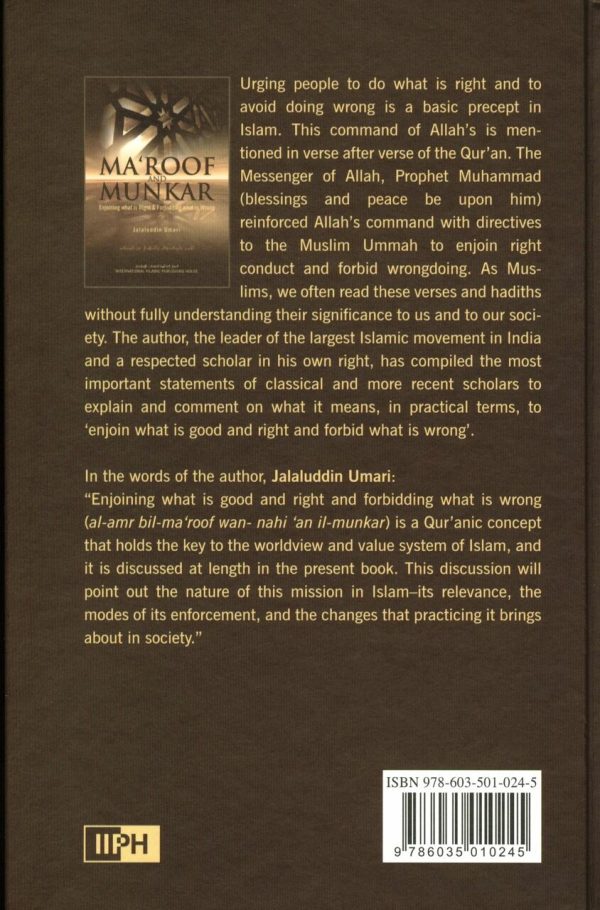
Ma’roof and Munkar (Enjoining what is Right & Forbidding What is Wrong) By : Jalaludin Umari Urging people to do what is right and to avoid doing wrong is a basic precept in islam . This command of allah is mentiones in verse after verse of the quran. The Messenger of Allah,Prophet Muhammad (PBUH) reinforced Allah’s command with Directives to the muslim Ummah to enjoin right conduct and forbid wrongdoing. As Muslims , we often read these verses and hadiths without fully understanding their significance to us and to our society . The Author has compiled the most important statements of classical and more recent scholars to explain and comment on what it means,in practical terms to enjoin what is good and right and forbid what is wrong.
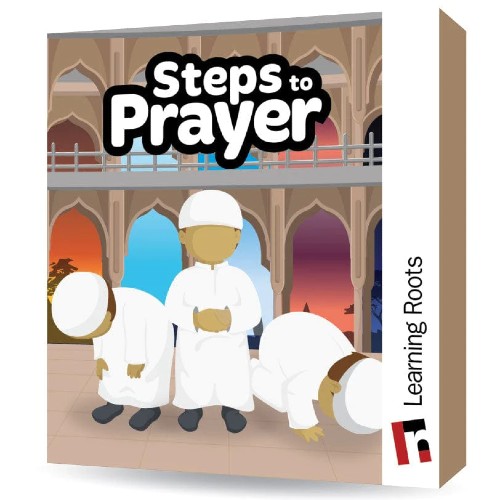
Steps to Prayer by Learning Roots
Teach Your Child How to Pray, Step by Step
Are you looking for a fun and effective way to teach your child how to pray?
With the Steps to Prayer (formerly known as ‘What’s Next?‘), you can teach your child how to perform the Salah in an engaging and comprehensive way. Here’s how:
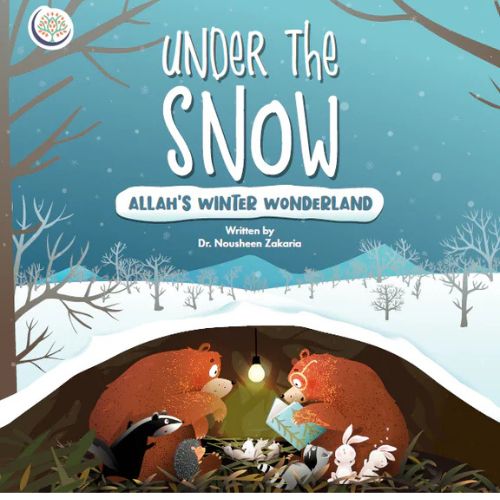
Under The Snow (P/B)
It’s cold. It’s snowy. But what happens to animals outside? From bears in their dens to bunnies in their tunnels, every creature finds shelter and food in Allah’s winter wonderland.
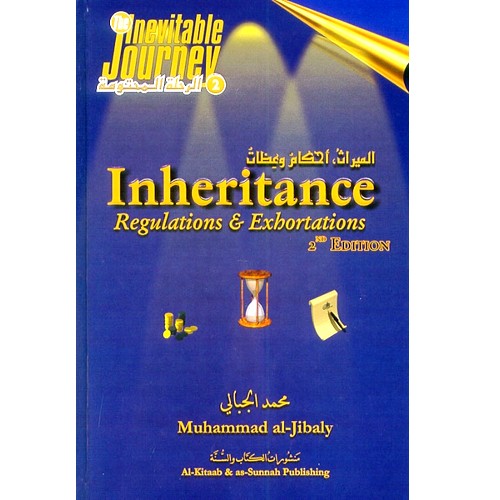
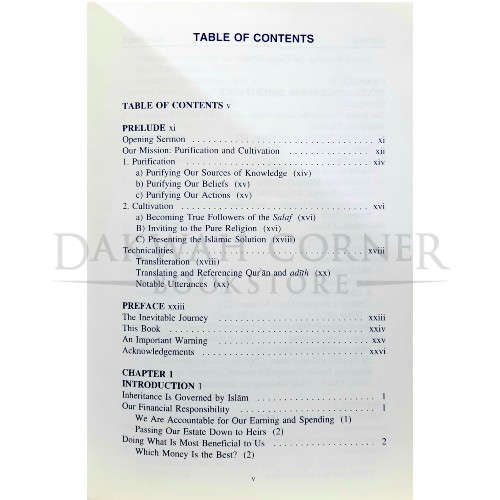
Inheritance Regulations & Exhortations
Description from the publisher: We inevitably go through the journey starting in this life, and extending into the grave, before our final abode in the hereafter. In the process, we pass through stages of sickness, death, and the intermediate life in the grave (al-Barzakh). Writing a will is a religious obligation on every capable Muslim. It protects against many problems and conflicts that could arise after a person’s death. This obligation is more emphasized in the West; Failing to write a well founded will may result in the distribution of one’s estate in discord with the Islamic law, and may lead to losses for some of the rightful inheritors
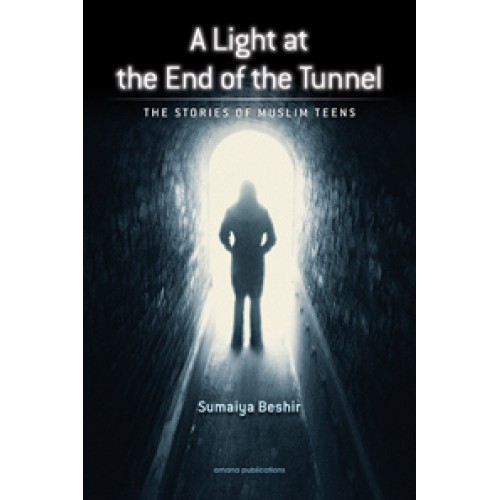
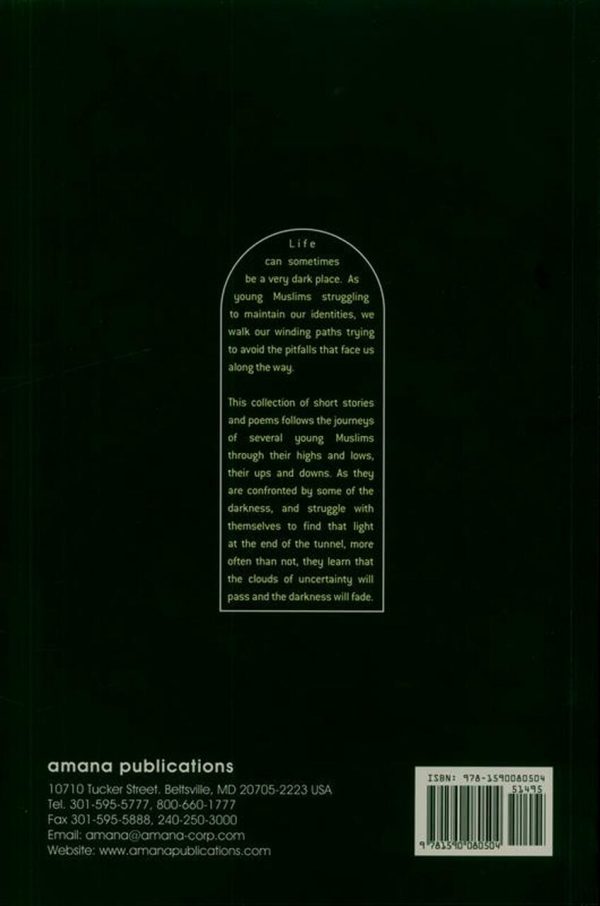
A Light at the End of the Tunnel (P/B)
The book features a collection of short stories written by Muslim teens. Through their stories they share the struggles and experiences they have faced on issues such as dating, friendship, hijab, respecting parents, clarifying misconceptions about Islam and defining one’s identity.
[ALA] Al Qara’balanah Fi Fan Al Sarf / القرعبلانة في فن الصرف
كتاب “القرعبلانة في فن الصرف“ هو مصنف تعليمي متميز في علم التصريف، ألفه الدكتور عبد العزيز بن علي الحربي، الأستاذ في جامعة أم القرى ورئيس مجمع اللغة العربية بمكة المكرمة.


There are no reviews yet.