| Weight | 0.46 kg |
|---|---|
| Dimensions | 29.5 × 21 × 1 cm |
| Author | |
| ISBN | 9786030316083 |
| Pages | 110 |
| Year of publication | 2019 (2nd Edition) |
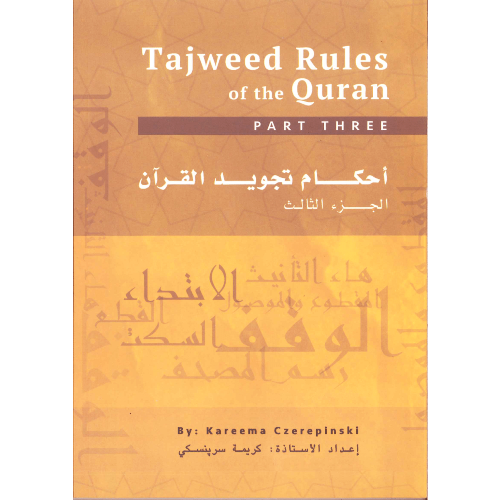
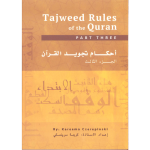
Tajweed Rules of the Quran (Part Three)
RM30.00
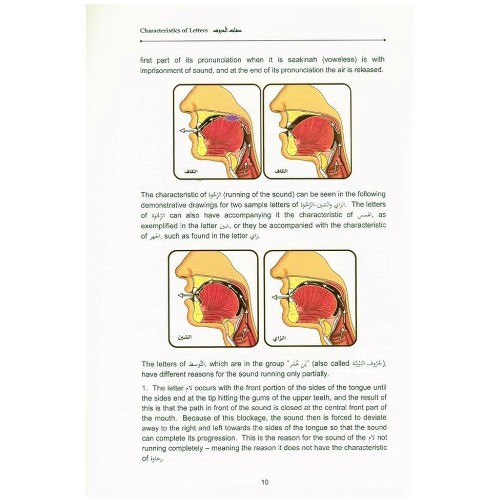
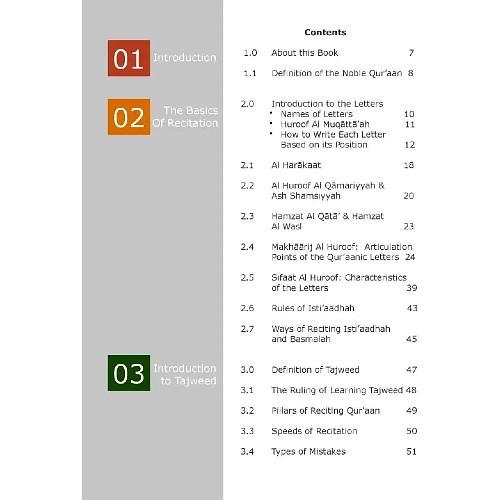
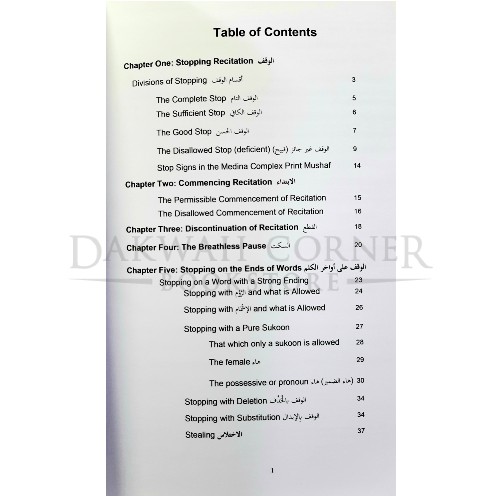
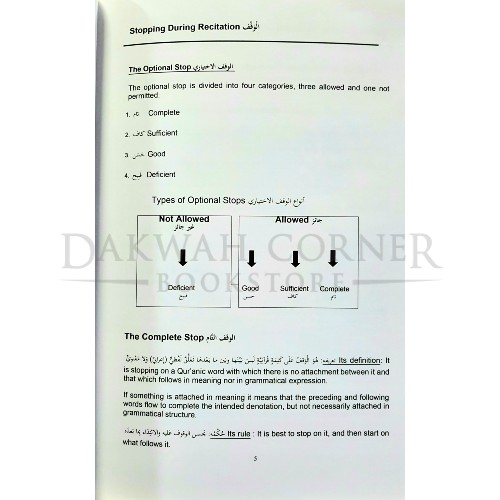
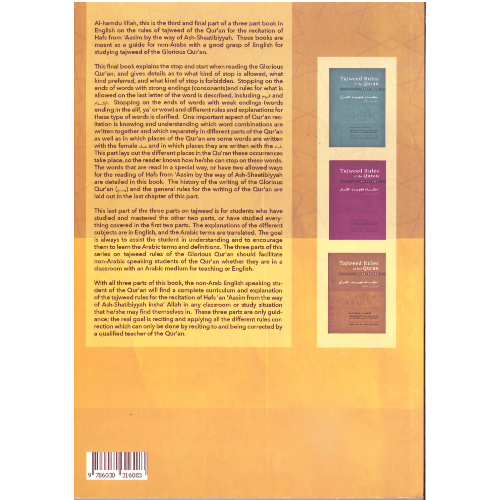
This is the third and final part of a three part series in English on the rules of tajweed the Qur’an for the recitation of Hafs from ‘Aasim by the way of Ash-Shaatibiyyah. These books are meant as a guide for non-Arabs with a good grasp of English for studying tajweed of the Glorious Qur’an. This final book explains the stop and start when reading the Glorious Qur’an, and gives details as to what kind of stop is allowed, what kind is preferred, and what kind of stop is forbidden. Stopping on the ends of words with strong endings (consonants) and rules for what is allowed on the last letter of the word is described, including ar-room (الروم) and al-ishmaam (الإشمام). Stopping on the ends of words with weak endings (words ending in the alif, ya’ or wow) and different rules and explanations for these type of words is clarified. One important aspect of Qur’an recitation is knowing and understanding which word combinations are written together and which separately in different parts of the Qur’an as well as in which places of the Qur’an are some words are written the female haa (هاء), and in which places they are written with the taa (تاء). This part lays out the different places in the Qur’an these occurrences take place, so the reader knows how he/she can stop on these words. The words that are read in a special way, or have two allowed ways for the reading of Hafs from ‘Aasim by the way of Ash-Shaatibiyyah are detailed in this book. The history of the writing of the Glorious Qur’an (رسم) and the general rules for the writing of the Qur’an are laid out in the last chapter of this part. This last part of the three parts on tajweed is for students who have studied and mastered the other two parts, or have studied everything covered in the first two parts. The explanations of the different subjects are in English, and the Arabic terms are translated. The goal is always to assist the students in understanding and to encourage them to learn the Arabic terms and definitions. The three parts of this series on tajweed rules of the Glorious Qur’an should facilitate non-Arabic speaking students of the Qur’an whether they are in a classroom with an Arabic medium for teaching or English. With this third part completed, insha’ Allah the non-Arab English speaking student of the Qur’an will find a complete curriculum and explanation of the tajweed rules for the recitation of Hafs ‘an ‘Aasim from the way of Ash-Shatibiyyah in any classroom or study situation that he/she may find themselves in. These three parts are only guidance; the real goal is reciting and applying all the different rules correction which can only be done by reciting to and being corrected by a qualified teacher of the Qur’an.
Be the first to review “Tajweed Rules of the Quran (Part Three)” Cancel reply
You must be logged in to post a review.
Related Products
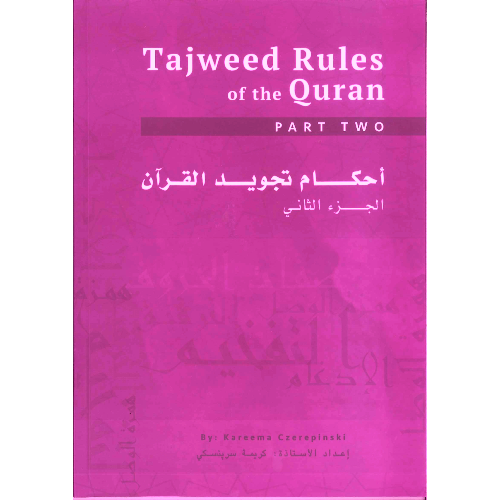
Tajweed Rules of the Quran (Part Two)
By Allah’s grace, this is the second part of a three part book on the rules of tajweed of the Qur’an, for the recitation of Hafs from ‘Aasim by the way of Ash-Shaatibiyyah. It is is intended to be a guide for nom-Arabs with a good grasp in English in studying tajweed.
This book explains the concept of the accent (an-nabr) in the recitation of the Glourious Qur’an and the conditions of its use, it is also defines and explains the important chapter on the characteristics of the letter, velarization and attenuation (tafkheem and tarqeeq) are covered in this part, as well as the concept of the two alike, the two similar, the two close, and the two far and the rules for merging (idghaam) and clarity (ith-haar) in these different relationships. A brief introductory to grammar term is made in this book to assist the student in understanding the last chapter, that of the connecting hamzah (hamzah al-wasl).
The explanation of the different subject are in English, and the Arabic terms are translated. This is to assist the student in understanding and encourage them to learn the Arabic definitions and terms. This book should facilitate non-Arabs studying tajweed in a classroom with explanations taught in Arabic or in English.
This book cannot replace the importance of reciting to and being corrected by a trained teacher of tajweed, instead it is a guide and an aid in understanding the concepts of tajweed, the application can only be refined by recitation and correction.
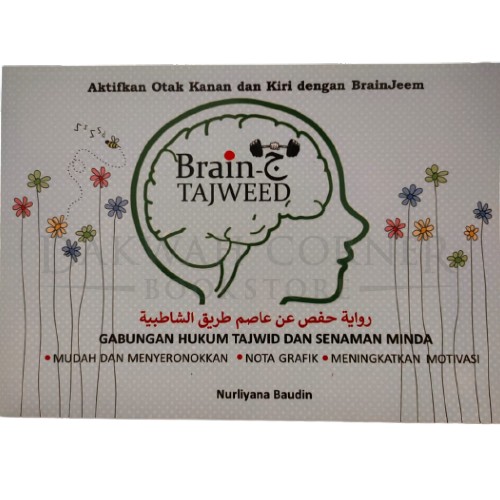
BrainJeem Tajweed – Gabungan Hukum Tajwid dan Senaman Minda
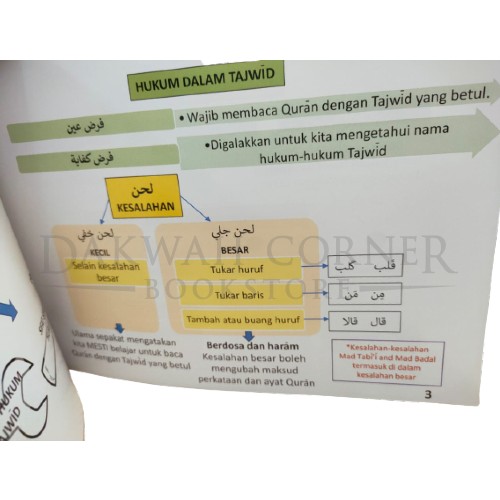
BrainJeem Tajwid merupakan pembelajaran kreatif dalam mengenalpasti hukum-hukum Tajwid dengan mudah dan menyeronokkan. Gabungan bunyi dan brain-gym akan mengaktifkan otak kiri dan kanan anda dan membantu anda kekal fokus dan bertenaga. Inovasi BrainJeem Tajweed berfungsi sebagai pembakar semangat supaya kita cintakan ilmu Tajwid dan seronok mendalami Quran.
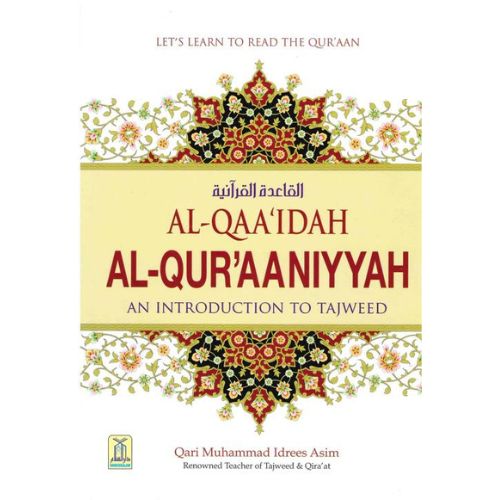
Al-Qaa’idah Al-Qur’aaniyah (An Introduction to Tajweed)
Learning to read the Qur’an properly is one of the many obligatory duties of a Muslim. Recitation gets better and more beautiful as one continues to read the Qur’an, meticulously following the rules and techniques Qur’anic recitation (tajweed).
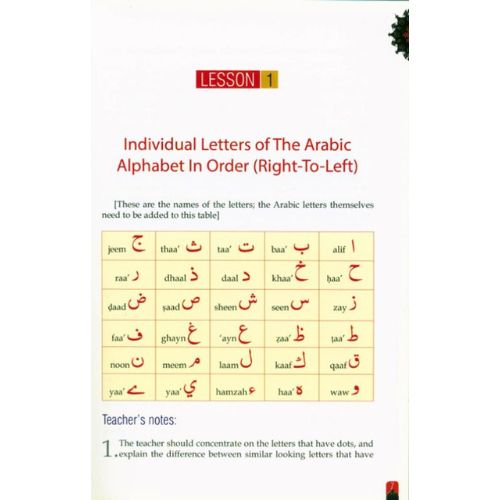
If you want to learn the art of Qur’anic recitation in the most beautiful and sublime manner, then this is the book for you. Al-Qaaidah Al Quraaniyyah is a good book to learn tajweed easily with lessons, extensive notes, and exercises for the English-speaking students.
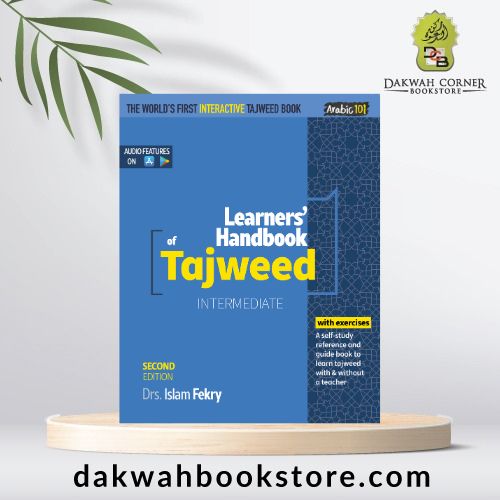
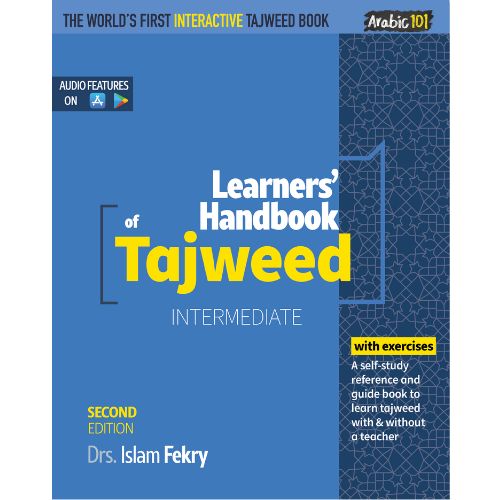
Learners Handbook Tajweed (Intermediate) – Second Edition (Arabic 101 Series)
Starting from Scratch – Tajweed Made Easy
Holy Quran and Quranic Sciences
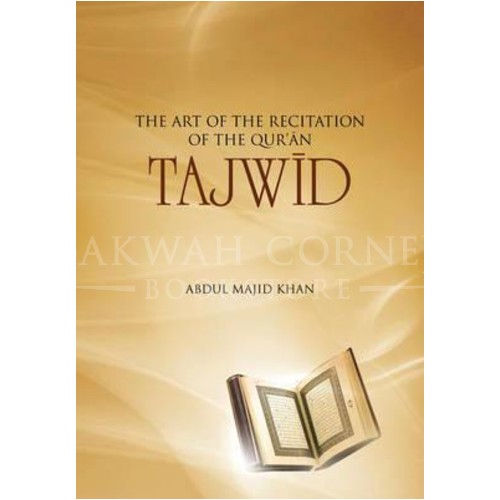
Tajwid : The Art of the Recitation of the Qur’an
This book on the art of the recitation of the Holy Qur’an is easy to follow with its simple yet detailed presentation of subjects. It is accessible for beginners who have had little exposure to Tajwid. It does not require any knowledge of Arabic grammar or understanding of the Arabic language. It provides both the young and adult English speaking Muslims with the best organization and presentation of the art of Tajwid. The Art of the Recitation of the Qur’an can be used for self-study or with the guidance of a teacher at Islamic schools and colleges as well as theology faculties. This book is primarily intended for the English speaking audience. The explanations in this work are augmented by figures, charts, tables, and examples for full and easy comprehension by English speaking Muslims. Readers will also find a Glossary of Arabic and Phonetic terms extremely helpful in learning the rules of Tajwid.
Recently Viewed
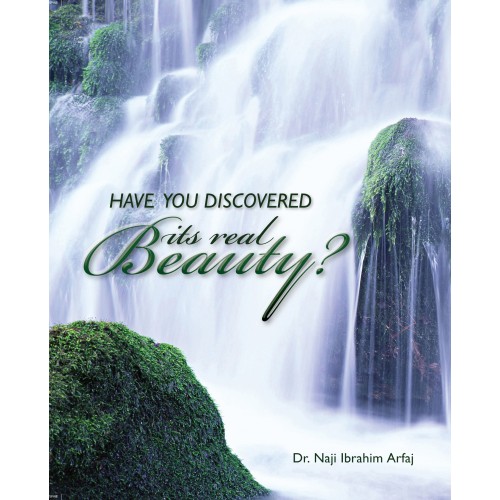
Have You Discovered Its Real Beauty
PhD in Applied Linguistics (Michigan State University, USA)
Dr. Arfaj spent more than 20 years researching comparative religion. This book came about as a result of his extensive research and experience.
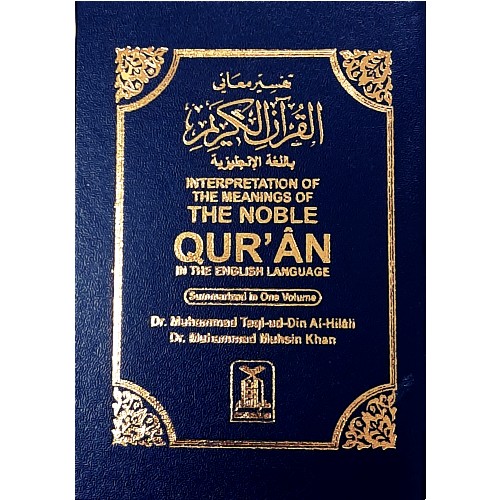
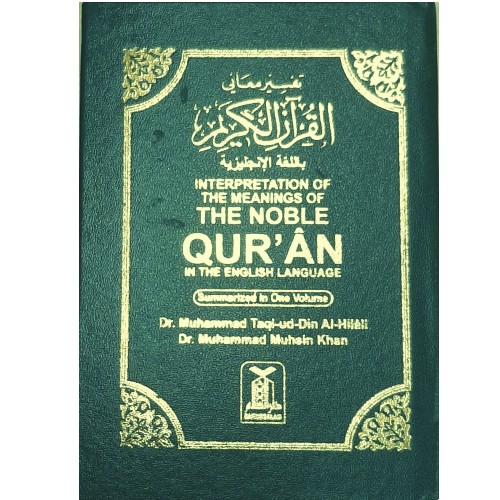
The Noble Qur’an pocket size H/B (Arabic/English)
The Noble Qur’an is a widely popular translation by Islamic University – Madina scholars Dr. Muhsin Khan and Dr. Taqi-ud-Din Hilali. It features frequent footnotes gleaned by the translators from Tafsir At-Tabari, Tafsir Ibn Kathir, and Sahih-al-Bukhari. Arabic-English format with detailed index.
Interpretation of the meanings of the Noble Qur’an with Arabic text in the modern English language. A summarized version of At-Tabari, Al-Qurtubi and Ibn Kathir with comments from Sahih Al-Bukhari.
This summarized 1 volume version offers brief commentary and Ahadith wherever necessary. This unique combination of commentary and relevant Ahadith makes this a very useful study reference tool. The Arabic text is taken from Mushaf al Madinah.
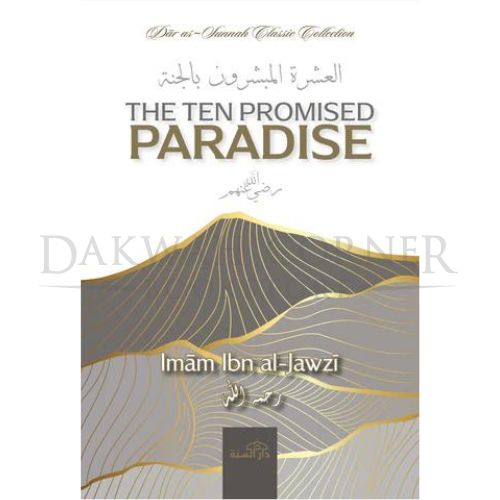
The Ten Promised Paradise (Dar usSunnah)
“Not equal are those of you who spent (in the way of Allah) and fought before the victory (in Makkah). They are far greater in rank than those who spent and fought afterwards. Yet Allah has promised each a fine reward.” {57:10}While the Companions of the Prophet # were given the glad tidings of Paradise in general, there are those promised Paradise individually such as those mentioned in Hadith of ‘Al-‘Ashara Mubashara’. This term is used as a designation for those ten great Companions singled out by the Prophet peace and blessing be upon him for the privilege of being among the inhabitants of Paradise during their lifetime.
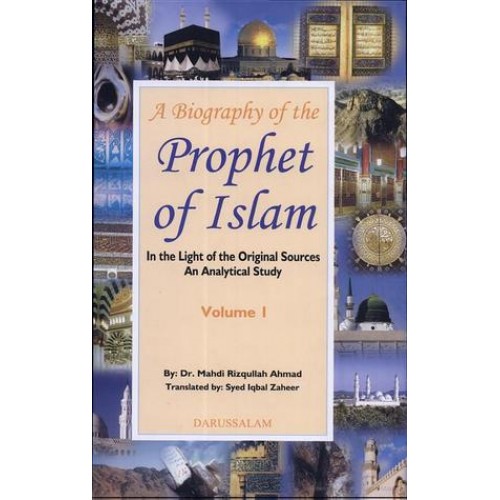
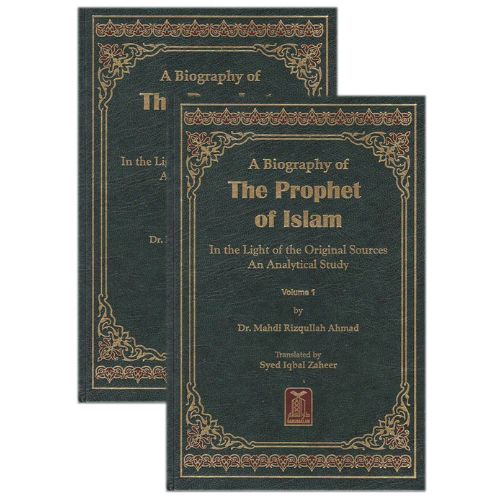
A Biography of the Prophet of Islam : In the Light of the Original Sources An Analytical Study (2 Volumes)
This work on the life history of the Prophet (Sallalahu Ale Wasalam) stands out from other works in quite a few ways. First, every detail mentioned has been traced back to original sources, whose authenticity has been discussed extensively in the footnotes. Second, the events of the Prophet’s life have been related to modern times and lessons drawn for the benefit of those who happen to face similar situations in their struggle to spread the Prophetic message.
Better Me : 365 Ways to Transform Your Everyday Life
Medicine And Pharmacy In The The Prophetic Traditions (H/B)
Medicine and Pharmacy in the Qur’an and Prophetic Traditions aims to integrate the science of healing into the religion of Islam. It provides advice and guidance on maintaining sound health and preventing diseases and ailments in compliance with the Qur’an and the Sunnah of Prophet Muhammad (blessings and peace be upon him). It also discusses the Qur’anic verses related to health, sickness, and cure, as well as the spiritual and physical remedies recommended by the Prophet (blessings and peace be upon him) in light of modern knowledge.


There are no reviews yet.