

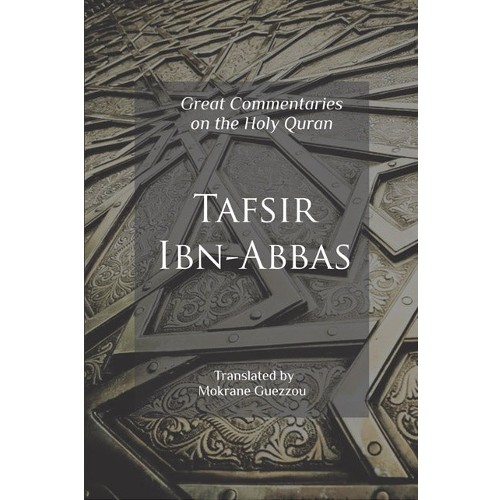
Attributed variously to the Companion Abdullah Ibn Abbas (d. 68/687) and to Muhammad ibn Ya‘qub al-Firuzabadi (d. 817/1414), Tanwîr al-Miqbâs is one of the most pivotal works for understanding the environment which influenced the development of Qur’anic exegesis. Despite its uncertain authorship and its reliance on the controversial Isrâ’îliyyat or Israelite stories, Tanwîr al-Miqbâs nevertheless offers readers valuable insight into the circulation and exchange of popular ideas between Islam, Judaism and Christianity during the formative phase of Islamic exegesis.
Additional information
| Weight | 1.4 kg |
|---|---|
| Dimensions | 23 × 16 × 6 cm |
| Author | |
| Binding | Paperback |
| Publisher | Maktaba Islamia |
Reviews (0)
Be the first to review “Tafsir Ibn Abbas (2 volume set) – Maktaba Islamia” Cancel reply
You must be logged in to post a review.
Related Products

Usool at-Tafseer (H/B)
Highlights:
Usool at-Tafseer, essentially refers to the branches of knowledge necessary for providing an accurate interpretation of the Quranic texts, such as Arabic grammar and syntax, Arabic literature and Quranic sciences (Uloom al-Quran). Familiarity with modern fields of learning, like the pure sciences and social sciences is also necessary for a commentator in this era to make the Quraanic explanations relevant to human society. This book addresses the actual step-by-step methodology of interpreting Quran to ensure that interpretations are not merely the result of human whims and fancies.
RM60.00
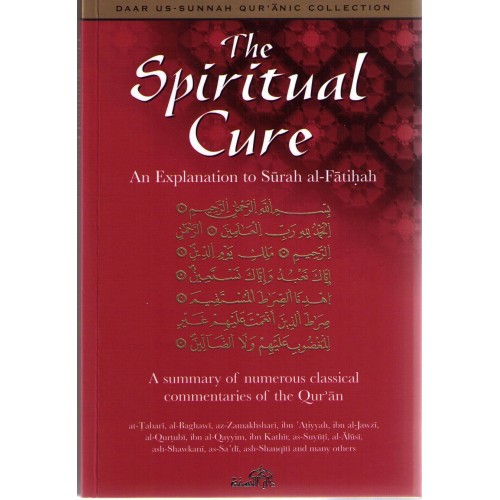
The Spiritual Cure An Explanation to Surah al-Fatihah (P/B)
Highlights:
Surah al Fatiha is the greatest chapter of the Qur’an, its like is not found in the rest of the Book or in the previous scriptures. It is a
Light that was granted to Prophet Muhammad (S) which had not been granted to any other Prophet or Messenger before him; indeed
some of the Salaf stated that when this chapter was revealed, Shaytãn l let out a great cry of lament.
It holds a central position in the daily Prayer hence the daily life of the Muslim.
The underlying theme, of al-Fatiha is one of contemplation and serenity; pondering the Names and Attributes of Allah, pondering the creation , and acknowledging that He Alone deserves praise and Worship, that He Alone should be asked for help, that He Alone Should be feared and hoped in, that He Alone should be invoked, that there is indeed a Day of Judgment, and that guidance has come to us and we are required to follow it.
It calls us to carefully scrutinise our relationship with our Lord: are we living according to the dictates of ‘none has the right to be worshipped save of Allah’ or not? This opening chapter, despite its brevity, calls man to fulfil the rights of Tawhid, the right that Allah has over us to worship Him Alone without any partner
A Summary of numerous Classical Commentaries of the Qur’an
at-Tabari, al-Baghawi, Az-Zamakhshari, ibn Atityyah, Ibn Jawzi, Al-Qurtubi, Ibn Qayyim, Ibn Kathir, as-Suyuti, Alusi, ash-Shawkani, as-Sa’di, ash-Shaqiti and many Others
RM73.00

Starting from Scratch – Tajweed Made Easy
Highlights:
Holy Quran and Quranic Sciences
RM10.00
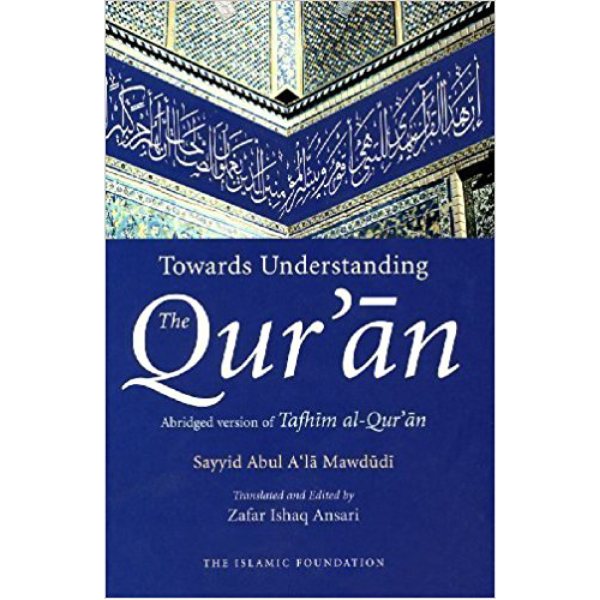
Towards Understanding The Quran : English/Arabic Edition (with commentary in English) (H/B)
Highlights:
Towards Understanding The Qur’an Abridged version is a fresh English rendering of Tafhim al-Qur’an, Sayyid Mawdudi’s monumental and masterly Urdu translation of the Qur’an and a selection of his commentary. Here is a work with a difference, by a scholar of an entirely different sort. An immense wealth of profound understanding of the Qur’an is here, a vast treasure of knowledge and deep insight, and a valuable exposition of some social, political, economic and legal teachings of the Qur’an. But what makes this work unique is that it presents the Qur’an as a book to be lived by, a mission to be lived for, and a duty that the reader can no longer evade or postpone. This rare quality is imparted not only by the depth of his scholarship and style of exposition but also because Sayyid Mawdudi lived by what he expounded as his life abundantly proves. Despite being an abridged version it endeavors to answer many contemporary questions and makes the Qur’an fully relevant to the concerns of our day, yet it loses nothing of its timelessness nor sacrifices any of the traditional understanding. It demonstrates the unity and coherence of the Qur’an by centering everything in it on its message, like pearls hung upon a single thread. A Glossary, Biographical Notes, and General and Subject Indexes add to the understanding of the Qur’an. To sum up: in this work, Sayyid Mawdudi is offering us what we need most to understand and live by the Qur’an.
RM120.00
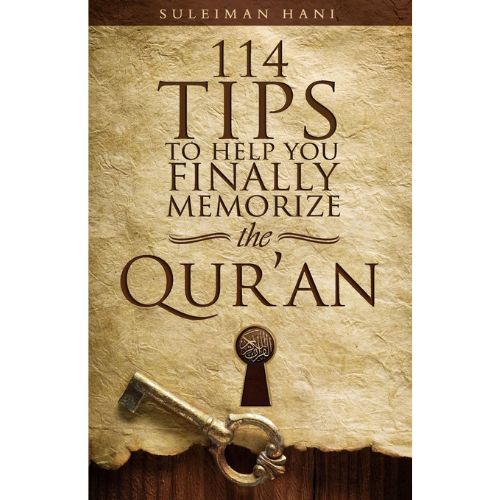
114 Tips to Help You Finally Memorize The Qur’an (P/B)
5 ★
5 ★
1 Rating
5 ★
1
4 ★
0
3 ★
0
2 ★
0
1 ★
0
Highlights:
“114 Tips to Help You Finally Memorize the Qur’an is a concise book that aims to equip readers of all backgrounds with the information and techniques necessary in order to begin, continue with, and complete the memorization of the Qur’an, eliminating thereby the common excuse and reasons for not memorizing.”
RM80.00

What is the Holy Quran & How to Recite it? (H/B)
Highlights:
This book guides readers to pronunciate the Arabic alphabet from their correct point of articulations. It also guides them to recite the Holy Qur’an according to the laws and principles of the art of recitation and intonation.
The correct pronunciation of the Arabic words and alphabet was difficult to some extent for the people living in the West as compared to those of East. So they need some more efforts to solve this problem and to make it easy for them.
By the grace of Allah, this book will do the job successfully and in a very convenient way.
RM46.00
The Meaning of The Holy Qur’an -Pocket Size (P/B) (IBT)
Highlights:
This very handy pocket-sized edition contains the complete meaning of the Holy Qur’an, without the Arabic text and the commentaries. Weighing just under 170 grammes, sized 9.5 cm X 13 cm and with a thickness of 1.5cm, it is intended as a handy travel companion as well as a gift to friends and colleagues.
RM23.00
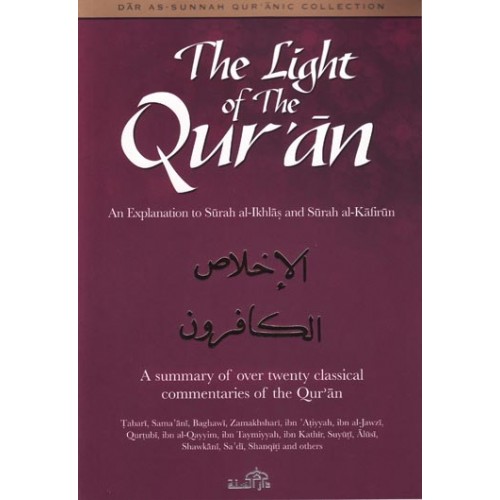
The Light of The Qur’an
Highlights:
The Prophet peace and blessings of Allah be upon him, passed by a person reciting Surah Al – Kafirun and remarked, “He has been saved from shirk”. He passed by another reciting Surah Al – Ikhlas and remarked. Paradise has become obligatory for him. Reported by Muslim.
These two chapters have both been given the title Al-Ikhlas, or purity of faith, because they deal with the topic of Tawhid in all its various aspects. Al – Ikhlas concentrates on the pure, essential faith in Allah that all mankind is required to have. Al – Kafirun deals with purity of deed and disavowal of disbelief and paganism. Both chapters lay out the parameters of mans relationship with his/her lord and creator, as well as his/her relationship those around him/her.
Pure, unblemished monotheism combined with sincerity in belief and deed defines the relationship with Allah. Hi is one and only true God, unique, without peer, equal or opposite, and nothing is like on to him. He is the one who stands in need of nothing whereas everything is in dire need of him.
Maintaining the essential Muslim identity and character defines the relationship between the Muslim and his fellow man. The Muslim is unambiguous about his religion, truthful and upright in speech, deed and his dealings with those around him. Hi is proud of his faith and has unshakable conviction in it. He loves his lord, his Messenger and the Muslims and is loyal to them. Because of this, the dearest thing to him is his religion and he will not compromise it, pleasing Allah comes before pleasing the people.
The prophet would frequently recite these two chapters in prayer because of the commonality of their theme and to stress that success is achieved, in this life and the next, by internalising their message and living by it.
RM41.00
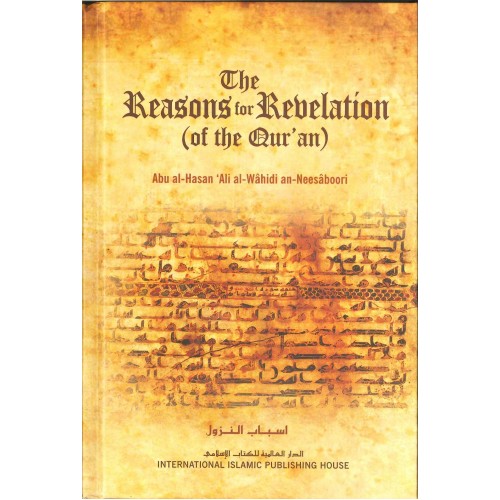
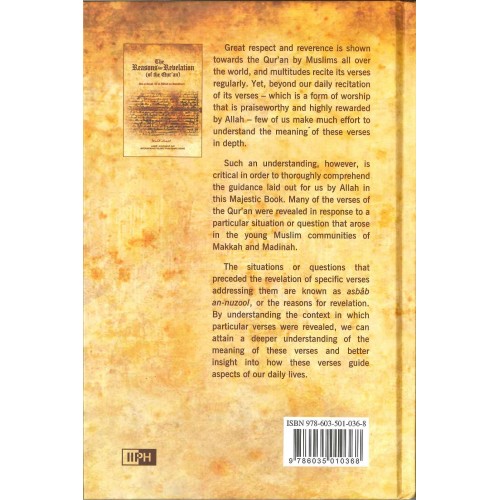
The Reasons for the Revelation (IIPH)
Highlights:
Have you ever wondered in what circumstances a particular verse or Soorah was revealed? In this translation of the great work ‘Asbaab an-Nuzool’ by the great Muslim scholar Ali ibn Ahmad an-Neesaboori, you may well find the answer. This first volume covers the first four sections of the Qur’an, from Sorrah al-Fatihah to verse 22 of Soorah an-Nisa. The publication of this book reflects our continuing effort to bring to the English speaking Muslims works previously only available to Arab speakers.
RM31.00


The Sources of the Qur’an
Highlights:
“Who is the author of the Qur’an?” On this subject scholars have flagrantly contradicted each other. This work attempts to make a critical review of the major ‘authorship’ theories by pressing into service logical arguments, historical evidence, textual analysis and scientific data. Probably, the only point of agreement about the Qur’an is that it was uttered for the first time by a man who was born in Makkah (Mecca), a city of Arabia, in the sixth century—a man by the name of Muhammad (blessings and peace be upon him). As to the source of the Qur’an, scholars are divided into three main groups: those who believe that Muhammad (blessings and peace be upon him) himself was the author; those who believe that he was not the author himself but learned it from another human author or authors; and those who believe that the Qur’an has no human author but is rather a word-for-word revelation from God. Hamza Njozi examines the three theories and comes to a firm and logical conclusion.
RM14.00
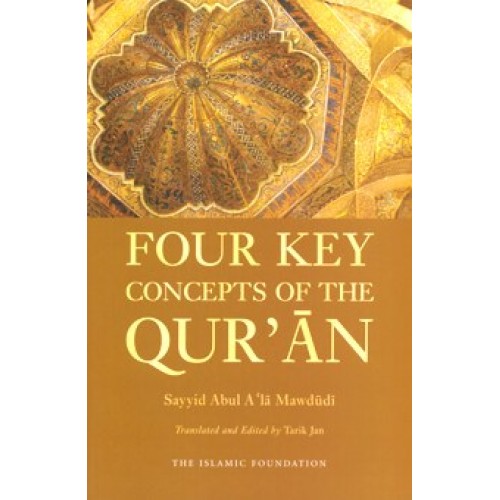
Four Key Concept of the Qur’an
Highlights:
Four Key concepts oF the Qur’An elucidates these basic Qur’anic concepts Ilah, Rabb, Ibadah and Din in order to bring out fully the Islamic way of life, as distinct from other perspectives. This elaboration goes a long way in developing a sound understanding of the Qur’an. It also explains the man-God relationship in Islam, guiding Muslims on how to lead their lives in total surrender to Allah.
RM46.00
Recently Viewed
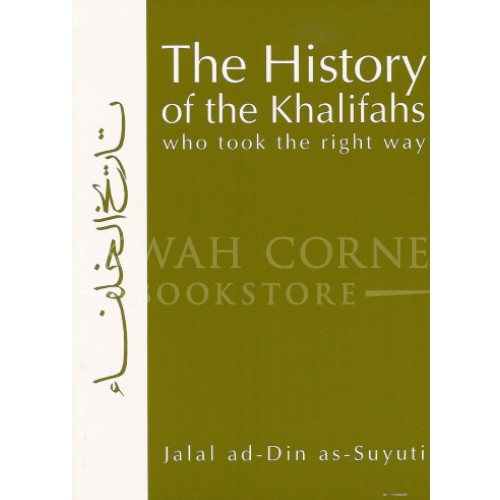
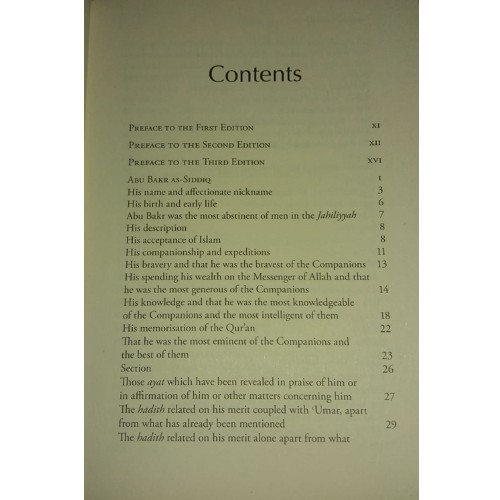
The History Of The Khalifahs Who Took The Right Way
Highlights:
Taken from Tarikh al-Khulafa, this classical work presents authentic hadith in the retelling of the biographies of the first four Khalifahs of Islam (May Allah be Pleased with them) illustrating both the integrity and wisdom that they displayed in governance. This book also highlights their contributions to that body of practice which is known as the Sunnah.
RM54.00

RM40.00 – RM180.00Price range: RM40.00 through RM180.00
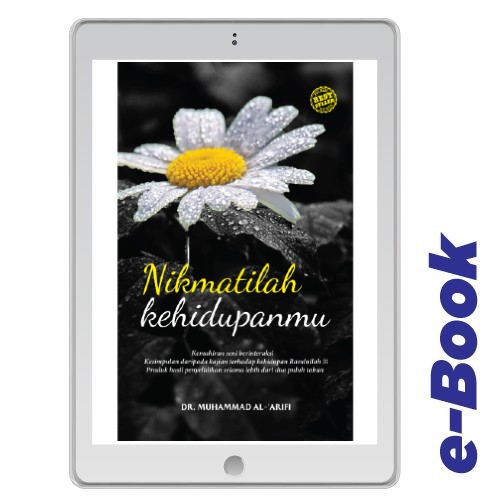
(E-Book) Nikmatilah Kehidupanmu
Highlights:
You need to register an account when purchase ESPECIALLY E-Books from dakwahcornerbookstore.com
This will enable you to keep track your links and Password for Ebook, whenever you log in to your account. We will keep your personal information private and ensure it is safe.
You can either register for an account before or upon checking out your order.
RM43.00
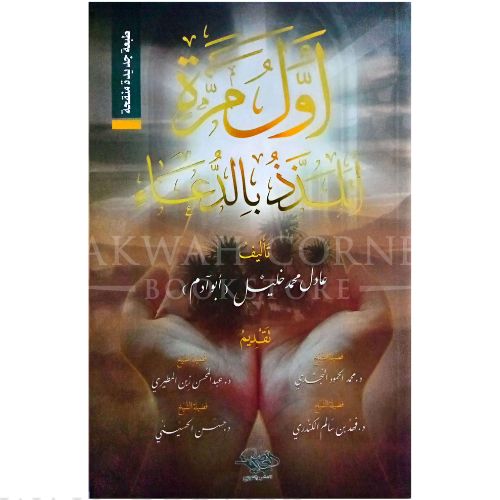

The Middle Path of Moderration in Islam (H/B)
Highlights:
In The Middle Path of Moderation in Islam, leading Islamic law expert Mohammad Hashim Kamali examines the concept of wasatiyyah, or moderation, arguing that scholars, religious communities, and policy circles alike must have access to this governing principle that drives the silent majority of Muslims, rather than focusing on the extremist fringe. Kamari explores wasatiyyah in both historical/conceptual terms and in contemporary/practical terms. Tracing the definition and scope of the concept from the foundational sources of Islam, the Qu’ran and Hadith, he demonstrates that wasatiyyah has a long and well-developed history in Islamic law and applies the concept to contemporary issues of global policy, such as justice, women’s rights, environmental and financial balance, and globalization.
Framing his work as an open dialogue against a now-decades long formulation of the arguably destructive Huntingtonian “clash of civilizations” thesis as well as the public rhetoric of fear of Muslim extremism since the attacks of September 11, 2001, Kamali connects historical conceptions of wasatiyyah to the themes of state and international law, governance, and cultural maladies in the Muslim world and beyond. Both a descriptive and prescriptive meditation on a key but often neglected principle of Islam, The Middle Path of Moderation in Islam provides insight into an idea that is in the strategic interest of the West both to show and practice for themselves and to recognize in Muslim countries.
RM189.00
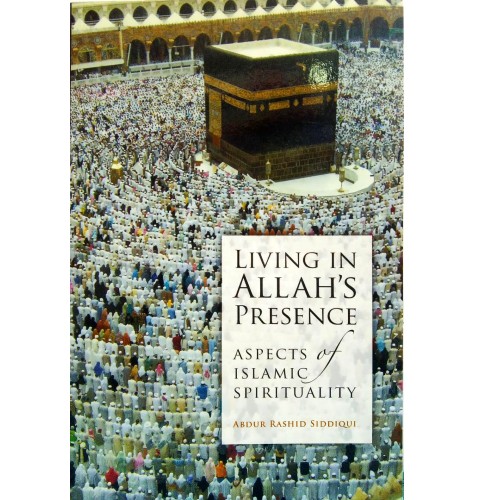
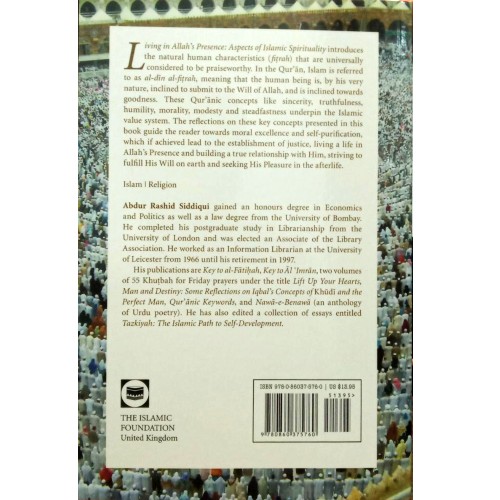
Living in Allah’s Presence: Aspects of Islamic Spirituality
Highlights:
Living in Allah’s Presence: Aspects of Islamic Spirituality introduces the natural human characteristics (fitrah) that are universally considered to be praiseworthy. In the Qur’an, Islam is referred to as al-din al-fitrah, meaning that the human being is, by his very nature, inclined to submit to the Will of Allah, and is inclined towards goodness. These Qur’anic concepts like sincerity, truthfulness, humility, morality, modesty and steadfastness underpin the Islamic value system. The reflections on these key concepts presented in this book guide the reader towards moral excellence and self-purification, which if achieved lead to the establishment of justice, living a life in Allah’s Presence and building a true relationship with Him, striving to fulfil His Will on earth and seeking His Pleasure in the afterlife.
RM52.00
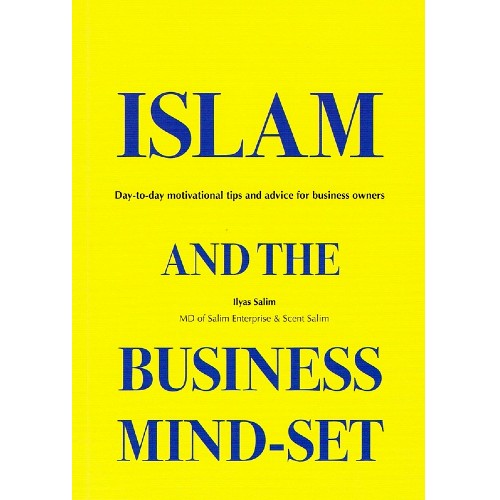
Islam And The Business Mind-Set
Highlights:
Written by one of the top young entrepreneurs in the North of England, Ilyas Salim is MD of Salim Enterprise, a global investment company.
From this book, you will learn how to:
- Create a business mentality
- Start a moral and ethical business
- Expand your business
- Work smarter, not harder
- Attract Barakah into your business
- Achieve not just a work/life balance, but a total life balance.
All this is within the framework of the Qur’an and Hadith and examples from the life of the Prophet Muhammad SAW.
RM25.00
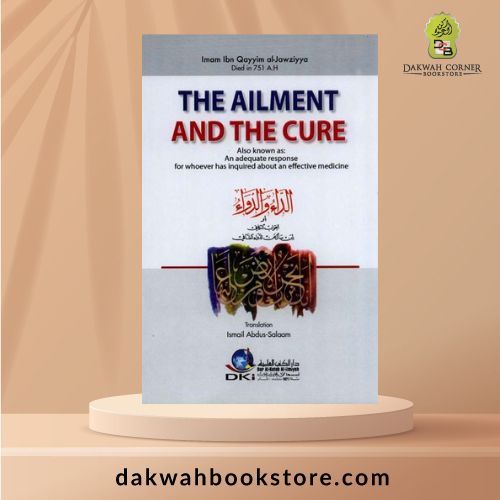
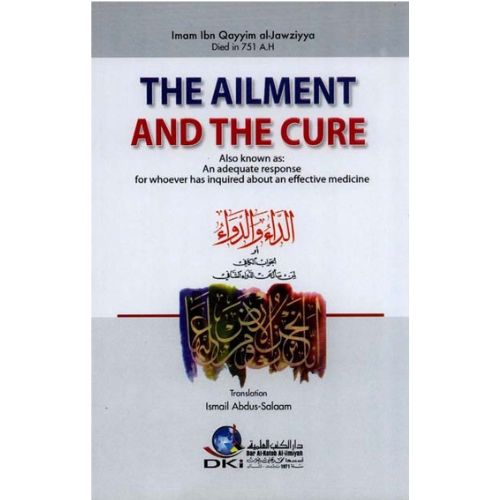
The Ailment And The Cure (P/B)
Highlights:
Imam Ibn Al-Qayyim Al-Jawziyyah
Also known as: “An Adequate Response for Whoever has Enquired About an Effective Medicine”
The Prophet (sallallahu alaihi wa sallam) has said, “Allah has not sent an ailment without sending a cure.” He also said, “There is a cure for every ailment, so if a medicine is effective, one will recover with the permission of Allah The Magnificent.”
This book collects all the medicines of the heart and soul that can make the Muslim better or a true Muslim, and Ibn Qayyim gathered in this book the different diseases of the hearts and their cures.
RM27.00
There are no reviews yet.