

| Weight | 0.17 kg |
|---|---|
| Product Type | Book |
| Author | |
| Publisher | Al Hidaayah UK |
| ISBN | 9781898649748 |
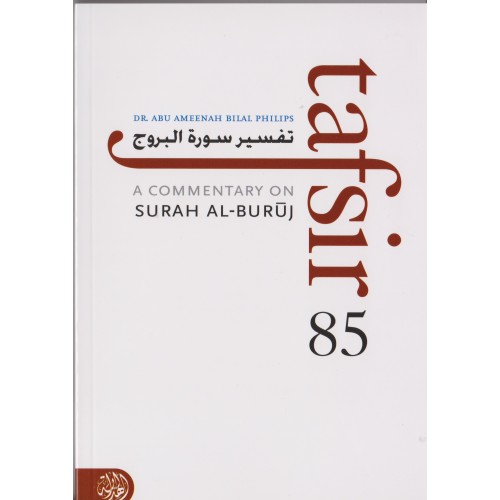
Tafsir 85 : A commentary on Surah Al-Buruj (P/B)
RM45.00
Hurry up, Only 3 left.
Additional information
Reviews (0)
Be the first to review “Tafsir 85 : A commentary on Surah Al-Buruj (P/B)” Cancel reply
You must be logged in to post a review.
Related Products
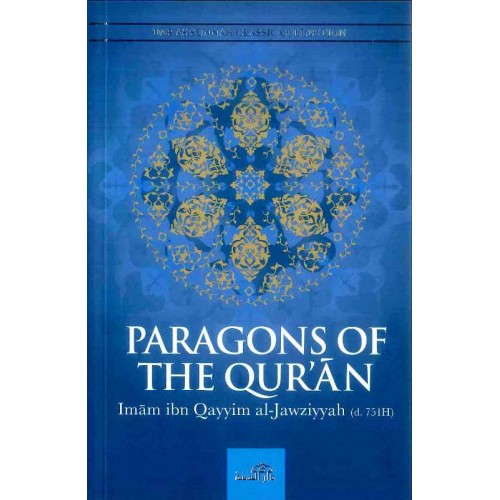
Paragons of The Qur’an (P/B)
Highlights:
In discussing the unique style, theme and content of the Qur’an – this is the first work of its kind in English literature.
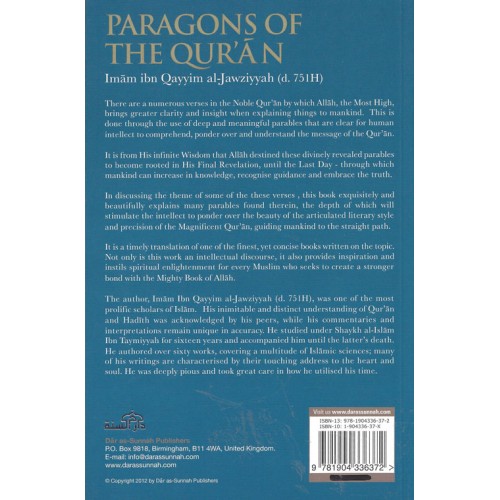
There are a numerous verses in the Noble Qur’an by which Allah, the Most High, brings Greater clarity and insight when explaining things to mankind. This is done through the use of deep and meaningful parables that are clear for human intellect to comprehend, ponder over and understand the message of the Qur’an. It is from his infinite Wisdom that Allah destined these divinely revealed parables to become rooted in His Final Revelation, until the Last Day – through which mankind can increase in knowledge, recognise guidance and embrace the truth.
This book explains many parables in the Qur’an, in such depth – exquisitely and beautifully. It is an amazing work that will get the intellect thinking and pondering over the beauty and precisions of the Magnificent Qur’an, guiding mankind to the straight path. Not only is this work an intellectual discourse, but also a spiritual enlightenment for every Muslim.
It is a timely translation of one on the finest, yet concise books written on the topic. Not only is this work an intellectual discourse, it also provides inspiration and instils spiritual enlightenment for every Muslim who seeks to create a stronger bond with the Mighty Book Of Allah.
In discussing the theme of some of these verses, this book exquisitely and beautifully explains many parables found therein, the depth of which will stimulate the intellect to ponder over the beauty of the articulated literary style and precision of the Magnificent Quran, guiding mankind to the straight path.
RM49.00
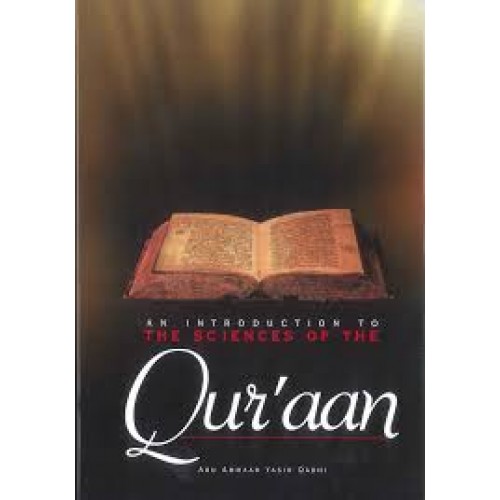
An Introduction to The Sciences of The Qur’an (H/B) Al-Hidaayah UK
Highlights:
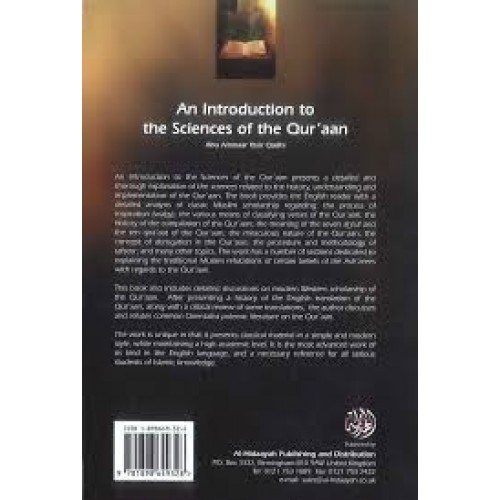
An introduction to the Sciences of the Qur’aan presents a detailed and thorough explanation of the sciences related to the history, understanding and implementation of the Qur’aan. The book provides the English reader with a detailed analysis of classic Muslim scholarship regarding: the process on Inspiration (Wahy); the various means of classifying verses of the Qur’aan; the history of the compilation of the Qur’aan; the meaning of the seven ahruf and the ten qira’aat of the Qur’aan; the miraculous nature of the Qur’aan; the concept of abrogation in the Qur’aan; the procedure and methodology of tafseer; and many other topics. The work has a number of sections dedicated to explaining the traditional Muslim refutations of certain belief of the Ash’arees with regards to the Qur’aan.
This book also includes detailed discussions on modern Western scholarship of the Qur’aan. After presenting a history of the English translation of the Qur’aan, along with a critical review of some translations, the author discusses and refutes common Orientalist polemic literature on the Qur’aan.
The work is unique in that it presents classical material in a simple and modern style, while maintaning a hight academic level. It is the most advanced work of its kind in the English language, and a necessary reference for all serious students of Islamic knowledge.
RM149.00
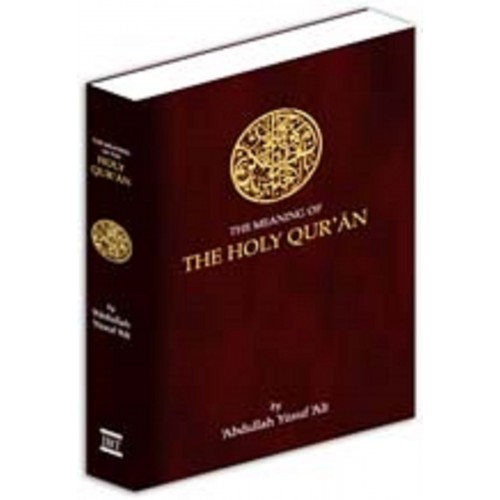
The Meaning of The Holy Qur’an -Pocket Size (P/B) (IBT)
Highlights:
This very handy pocket-sized edition contains the complete meaning of the Holy Qur’an, without the Arabic text and the commentaries. Weighing just under 170 grammes, sized 9.5 cm X 13 cm and with a thickness of 1.5cm, it is intended as a handy travel companion as well as a gift to friends and colleagues.
RM23.00

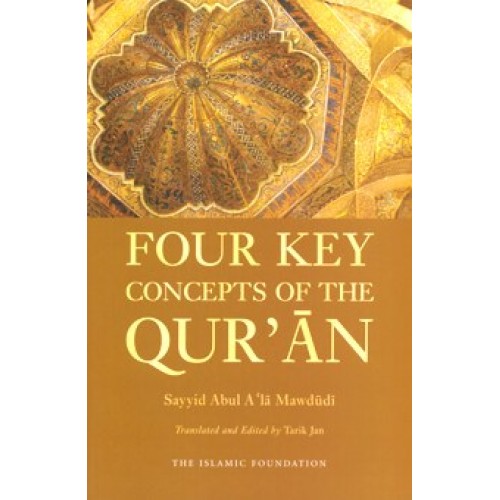
Four Key Concept of the Qur’an
Highlights:
Four Key concepts oF the Qur’An elucidates these basic Qur’anic concepts Ilah, Rabb, Ibadah and Din in order to bring out fully the Islamic way of life, as distinct from other perspectives. This elaboration goes a long way in developing a sound understanding of the Qur’an. It also explains the man-God relationship in Islam, guiding Muslims on how to lead their lives in total surrender to Allah.
RM46.00
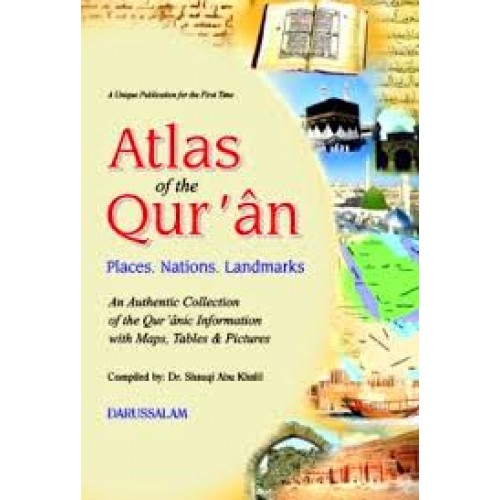
Atlas of the Qur’an (Darussalam)
Highlights:
This Atlas is new in its subject, a subject that has not been touched before. It helps whoever recites the Qur’an or studies it to specify the locations mentioned by the Noble Verses, and to mark those places of ancient people mentioned in the Qur’Gn. This is besides locating areas where the incidents of the prophetic Seerah occurred.
Eventually the diligent reader will easily recognize those places, learn about them, and take heed of them while reciting.
Eventually the diligent reader will easily recognize those places, learn about them, and take heed of them while reciting. The Atlas has also revealed obscure places we used to pass through inattentively, like the site where Nuh’s Ark settled, the site of the curved Sand-hills {Al Ahqah}, the cave of the young faithful men, the houses of median, the site of Sodom and other places determined by the Atlas depending on reliable sources.
Thus the Atlas eliminates all the guessing and the fantasies we used to encounter when reciting the Noble Quran, and takes us to the specific place.
RM80.00
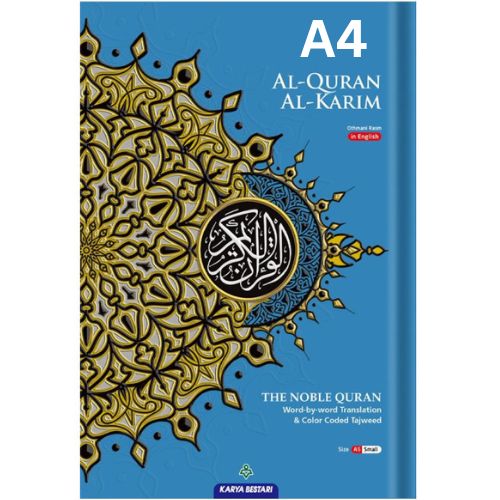
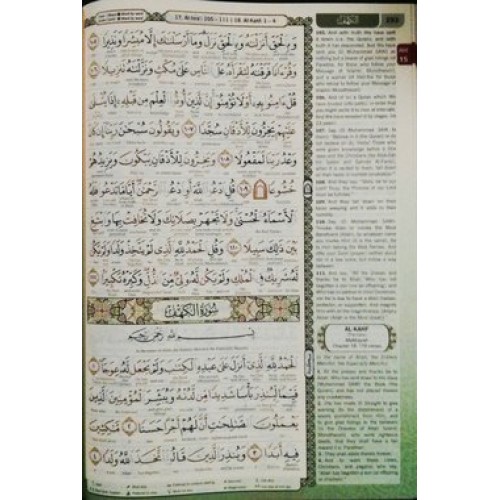
The Noble Quran Word-By-Word Translation & Color Coded Tajweed A4 (Arabic-English) – RANDOM COLOR
5 ★
5 ★
1 Rating
5 ★
1
4 ★
0
3 ★
0
2 ★
0
1 ★
0
Highlights:
The Noble Quran (Al-Quran Al-Kareem Maqdis) is a translation learning method of word-by-word Al-Quran with every word and sentence is colored differently, in Arabic and English.
Every word in the Quran was translated literally so that the reader could understand the meaning of every single word. It needs to be remembered that not all literal translation represents the exact meaning of the word since the Quran uses varied Arabic language style and sometimes metaphor.
Accordingly, to understand the full or intended meaning of the word or the verse, Muhsin Khan’s the Holy Quran Translation had been included in this edition. However, to comprehend more of the meaning of the Quran, reading the commentary of the Quran from trusted scholars would be necessary.
Approved by the Department of Islamic Development of Malaysia (JAKIM) and Malaysian Ministry of Home Affairs (KDN).
Features:
● Rasm Uthmani script in English
● Word-by-word translation Arabic-English
● Color coded tajweed
● Asbab al-Nuzul
● Authentic Hadiths
● Riyad-us-Saliheen
● Al-Quran Language Dictionary (Mu’jam)
Size A4 Large
SPECIFIC COLOR PLEASE DM US.
RM85.00


The Sources of the Qur’an
Highlights:
“Who is the author of the Qur’an?” On this subject scholars have flagrantly contradicted each other. This work attempts to make a critical review of the major ‘authorship’ theories by pressing into service logical arguments, historical evidence, textual analysis and scientific data. Probably, the only point of agreement about the Qur’an is that it was uttered for the first time by a man who was born in Makkah (Mecca), a city of Arabia, in the sixth century—a man by the name of Muhammad (blessings and peace be upon him). As to the source of the Qur’an, scholars are divided into three main groups: those who believe that Muhammad (blessings and peace be upon him) himself was the author; those who believe that he was not the author himself but learned it from another human author or authors; and those who believe that the Qur’an has no human author but is rather a word-for-word revelation from God. Hamza Njozi examines the three theories and comes to a firm and logical conclusion.
RM14.00
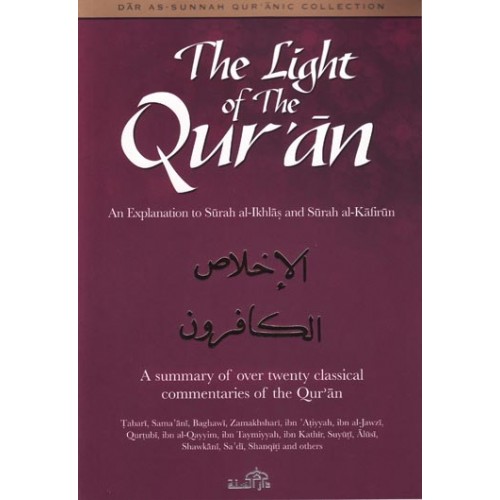
The Light of The Qur’an
Highlights:
The Prophet peace and blessings of Allah be upon him, passed by a person reciting Surah Al – Kafirun and remarked, “He has been saved from shirk”. He passed by another reciting Surah Al – Ikhlas and remarked. Paradise has become obligatory for him. Reported by Muslim.
These two chapters have both been given the title Al-Ikhlas, or purity of faith, because they deal with the topic of Tawhid in all its various aspects. Al – Ikhlas concentrates on the pure, essential faith in Allah that all mankind is required to have. Al – Kafirun deals with purity of deed and disavowal of disbelief and paganism. Both chapters lay out the parameters of mans relationship with his/her lord and creator, as well as his/her relationship those around him/her.
Pure, unblemished monotheism combined with sincerity in belief and deed defines the relationship with Allah. Hi is one and only true God, unique, without peer, equal or opposite, and nothing is like on to him. He is the one who stands in need of nothing whereas everything is in dire need of him.
Maintaining the essential Muslim identity and character defines the relationship between the Muslim and his fellow man. The Muslim is unambiguous about his religion, truthful and upright in speech, deed and his dealings with those around him. Hi is proud of his faith and has unshakable conviction in it. He loves his lord, his Messenger and the Muslims and is loyal to them. Because of this, the dearest thing to him is his religion and he will not compromise it, pleasing Allah comes before pleasing the people.
The prophet would frequently recite these two chapters in prayer because of the commonality of their theme and to stress that success is achieved, in this life and the next, by internalising their message and living by it.
RM41.00


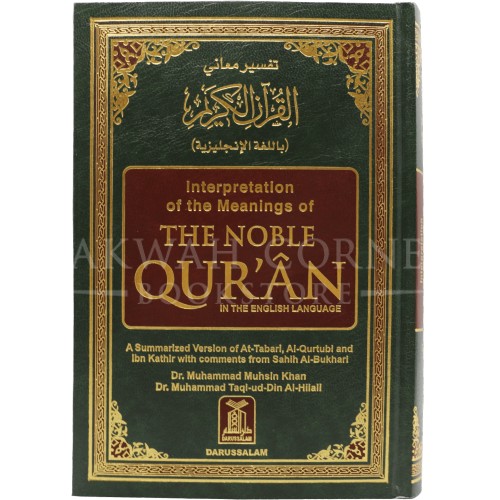
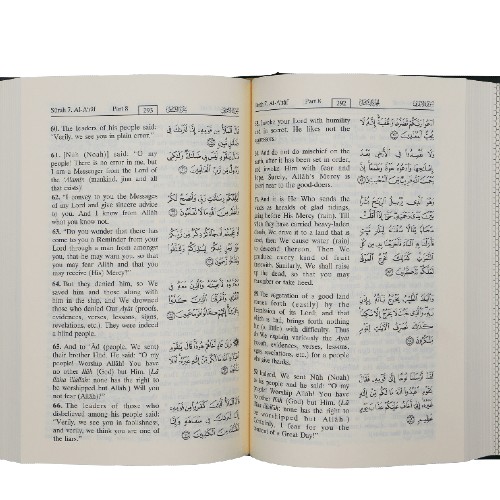
Interpretation of The Meanings of The Noble Qur’an- A5 (23x15cm)
Highlights:
Interpretation of the Meanings of The Noble Qur’an in the English Language
927 black and white pages
RM115.00

Daily Wisdom: Selections from the Holy Qur’an (H/B)
Highlights:
This beautiful presentation of a selection from the Holy Qur’an engages the reader in a moment of daily reflection. Edited for ease of comprehension, English-speaking readers will find this compilation both spiritually enriching and easy to understand. With 365 verses covering the whole year, this is a must for every home.
An introduction to the Qur’an and its eternal message for humanity is included, giving the reader an insight into its origin, purpose, and style.
Abdur Raheem Kidwai is professor of English at the Aligarh Muslim University in India and the well-known author of many works on the Qur’an and Islam.
RM75.00
Recently Viewed
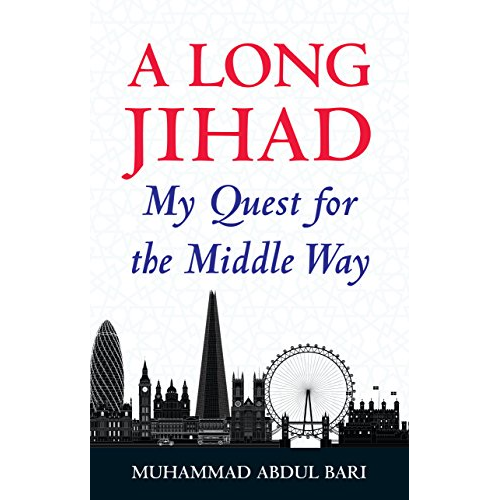
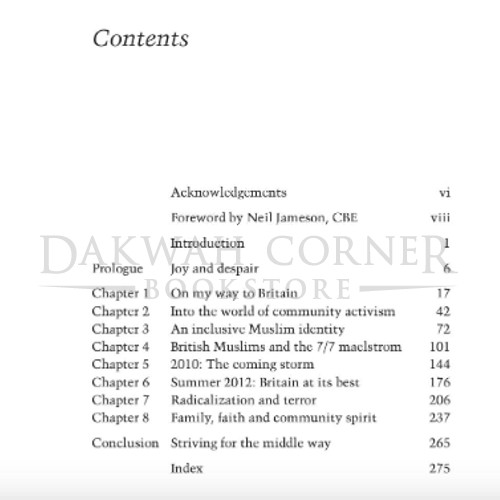
A Long Jihad : My Quest For The Middle Way
Highlights:
In this memoir, Dr Muhammad Abdul Bari asks us to look beyond the extremism and violence that all too often defines the Muslim community toward those, like himself, navigating a middle-way life.
RM65.00
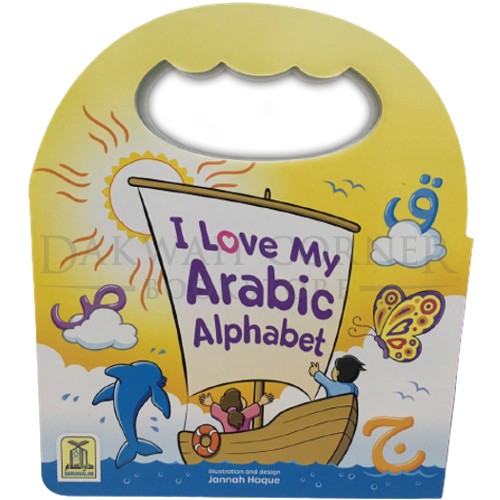
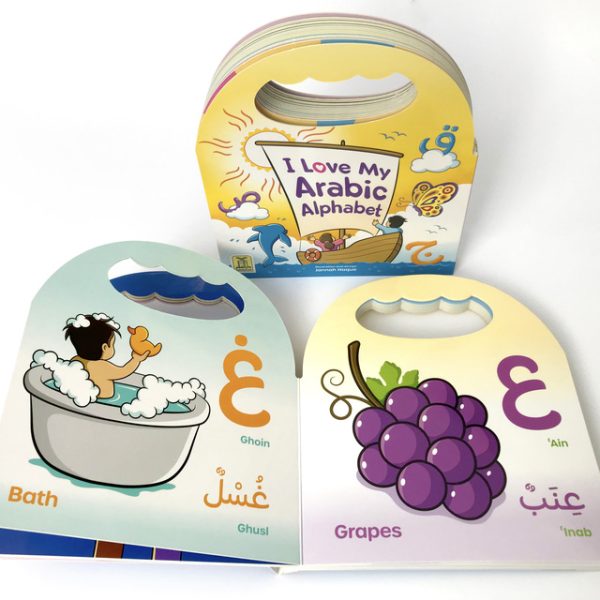
I Love My Arabic Alphabet (without Eyes)
Highlights:
I Love My Arabic Alphabet
Create a Fun and Loving Connection
Get your child excited and engaged with this colourful and charming alphabet book with bold, friendly illustrations and carefully selected simple words from the Quran. Give your child an early start in recognising and loving Arabic letters and words while building a strong spiritual connection that will last a lifetime.
RM40.00

Worship In Islam: An In-depth Study of Ibadah, Salah and Sawm (P/B)
Highlights:
Worship in Islam is in-depth study of the nature and significance of Islamic spirituality by Abul A‘la Mawdudi (1903–79), one of the leading Muslim intellectuals of the twentieth century, with special reference to the concepts of God’s Oneness (tawhid), the finality of Prophethood (risalah) and the Islamic system of worship (‘ibadah) with a focus upon prayer (salah) and fasting (sawm) and their role in the development of the Islamic personality and Islam’s social order. The distinguishing feature of Mawdudi’s approach is his elaboration of the social dimension of worship, which extends the traditional approach found in Islamic jurisprudence, with its focus upon ritual and self-purification, to consider worship’s transformative role in social life. Presenting a holistic view of the Islamic system, Mawdudi highlights Islam’s social, economic and political dimensions, which he argues has the capacity to resolve emergent issues and problems that humankind faces.
This historic text should be of wider interest to both students and specialists in contemporary Islamic thought, and includes an introduction by Professor Anis Ahmad.
Edited and translated into accessible English by Ahmad Imam Shafaq Hashemi, this book is an authoritative compilation by a leading Islamic twentieth-century revivalist on the central matter of worship’s role in Islam.
RM84.00
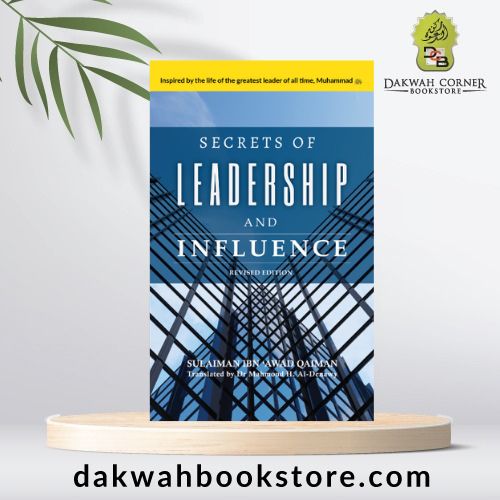
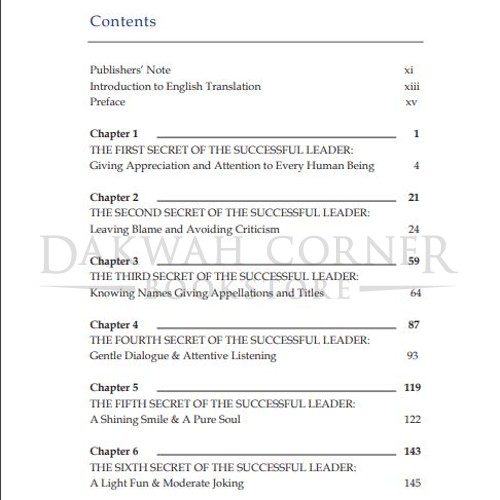


Fiqh Course: Tahaarah, Salaah & Janaa’iz
Highlights:
This course was compiled for English-speaking Muslims and is especially beneficial for new Muslims. It covers tahârah (purification), salâh (prayer) and janâ‘iz (funerals). It is set out in an easy-to-understand manner, citing evidence from the Qur’an and authentic hadiths. The aim of this book is to provide the reader with a correct, yet uncomplicated guide to the performance of the aforementioned acts of worship. Allah willing, it is the first in a series which will cover all aspects of worship and Islamic jurisprudence.
RM46.00
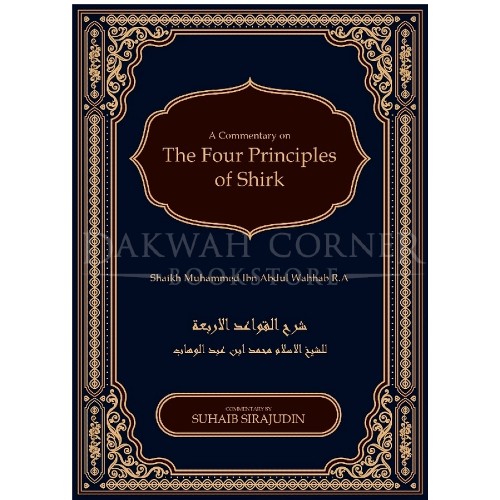
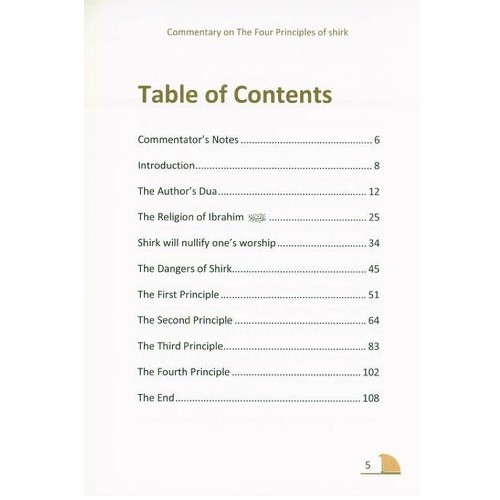
A Commentary on The Four Principles of Shirk
Highlights:
A commentary on the treatise of Shaikh Muhammed ibn Abdul Wahhab’s ‘Qawaidul Arba’ah’ The Four Principles of Shirk. In this treatise, the Shaikh discusses and brings the evidence for four principles; about knowing the disbelievers, knowing what they worship, that they differ in their religions, and the mushrikeen of now are worse than those before.
RM53.00
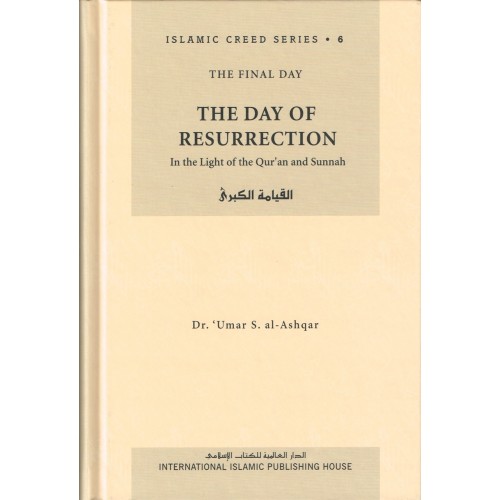
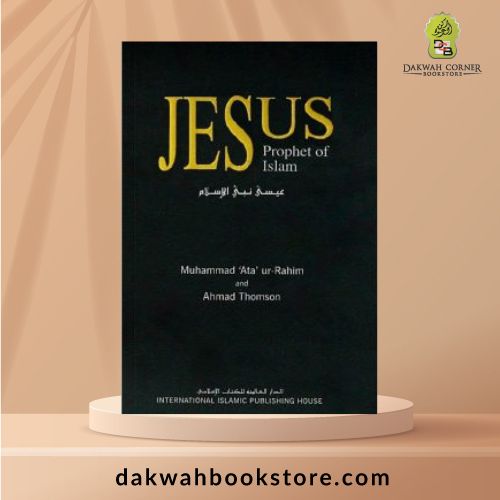
Jesus Prophet of Islam (H/B) – IIPH
Highlights:
1996 expanded and revised edition. This book examines Jesus as a prophet teaching the Unity of God, and the historical collapse of Christianity as it abandoned his teaching. The author sketches the dramatic picture of the original followers of Jesus who affirmed Unity. What emerges is that “Christianity” is the fiction that replaced their truth. A work that covers the Gospel of Barnabas, the Gospel of Hermes, the Shephard, early and later Unitarian Christians, Jesus in the Gospels and in the Qur’an and Hadith. The author clearly shows the idea of Jesus as part of a Trinity was a Greek Pagan idea adopted by early Christian mission-aries to gain converts among the Greek, and did not become a widely accepted Christian doctrine until after the Council of Nicea in 325 A.D.
RM46.00


RM21.00
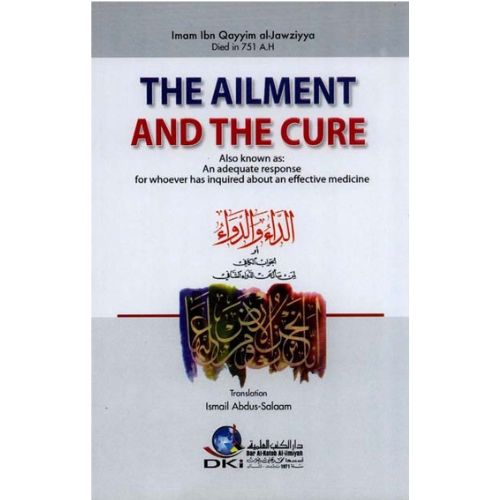
The Ailment And The Cure (P/B)
Highlights:
Imam Ibn Al-Qayyim Al-Jawziyyah
Also known as: “An Adequate Response for Whoever has Enquired About an Effective Medicine”
The Prophet (sallallahu alaihi wa sallam) has said, “Allah has not sent an ailment without sending a cure.” He also said, “There is a cure for every ailment, so if a medicine is effective, one will recover with the permission of Allah The Magnificent.”
This book collects all the medicines of the heart and soul that can make the Muslim better or a true Muslim, and Ibn Qayyim gathered in this book the different diseases of the hearts and their cures.
RM27.00
There are no reviews yet.