



| Weight | 0.27 kg |
|---|---|
| Product Type | Book |
| Author | |
| Publisher | IIPH |
| Pages | 128 |
| ISBN | 9789960953397 |
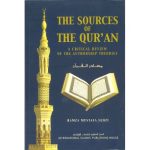
The Sources of the Qur’an
RM14.00
Hurry up, Only 1 left.
Highlights:
somdn_product_page
Compare
“Who is the author of the Qur’an?” On this subject scholars have flagrantly contradicted each other. This work attempts to make a critical review of the major ‘authorship’ theories by pressing into service logical arguments, historical evidence, textual analysis and scientific data. Probably, the only point of agreement about the Qur’an is that it was uttered for the first time by a man who was born in Makkah (Mecca), a city of Arabia, in the sixth century—a man by the name of Muhammad (blessings and peace be upon him). As to the source of the Qur’an, scholars are divided into three main groups: those who believe that Muhammad (blessings and peace be upon him) himself was the author; those who believe that he was not the author himself but learned it from another human author or authors; and those who believe that the Qur’an has no human author but is rather a word-for-word revelation from God. Hamza Njozi examines the three theories and comes to a firm and logical conclusion.
SKU: QQ297
Categories: Holy Quran and Quranic Sciences, Quranic Science/ Related
Additional information
Reviews (0)
Be the first to review “The Sources of the Qur’an” Cancel reply
You must be logged in to post a review.
Related Products
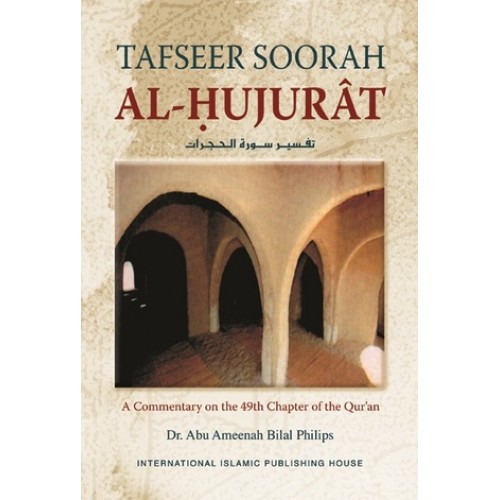
Tafseer Soorah Al-Hujurat (H/B)
Highlights:
Tafseer Soorah al-Hujurât: A Commentary on the 49th Chapter of the Qur’an is a treasury of divine advice, commandments, and prohibitions regarding common problems in social relations, including gossip, spying, arguing, and bigotry. To make the best use of this chapter, the believer needs a detailed explanation of the meanings of the verses.
Dr. Bilal Philips has based his tafseer (exegesis) on the methodology used in the classical works of tafseer. He has relied first of all on the explanations found within the Qur’an itself, then on explanations found in the Sunnah and related incidents which occurred at the time of the revelation of the verses in question. Beyond these primary sources, Dr. Philips has relied on the interpretations made by the Prophet’s Companions (may Allah be pleased with them) who were noted for their ability to interpret and comment on the Qur’an. ‘Abdullâh ibn ‘Abbâs, for example, was called ‘The interpreter of the Qur’an’ by Prophet Muhammad (blessings and peace of Allah be upon him). Finally, the author has made use of the grammatical explanations given in the classical tafseer works. Wherever possible, Dr. Philips has tried to apply the derived meanings of the verses to the problems of contemporary society.
RM40.50 RM60.00
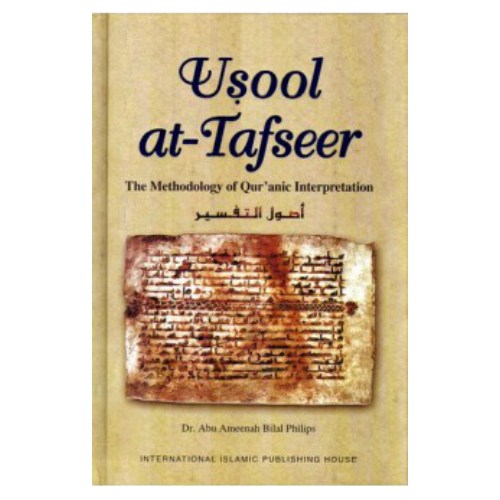
Usool at-Tafseer (H/B)
Highlights:
Usool at-Tafseer, essentially refers to the branches of knowledge necessary for providing an accurate interpretation of the Quranic texts, such as Arabic grammar and syntax, Arabic literature and Quranic sciences (Uloom al-Quran). Familiarity with modern fields of learning, like the pure sciences and social sciences is also necessary for a commentator in this era to make the Quraanic explanations relevant to human society. This book addresses the actual step-by-step methodology of interpreting Quran to ensure that interpretations are not merely the result of human whims and fancies.
RM60.00
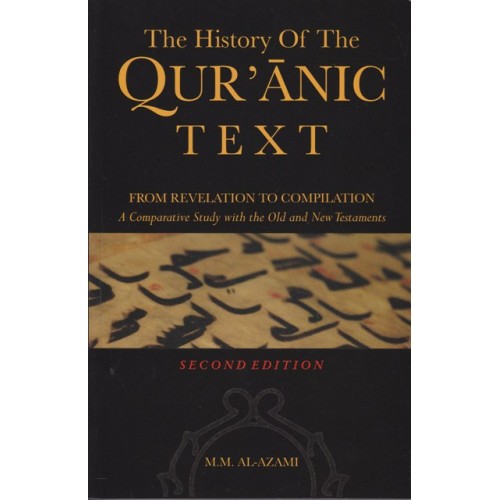
The History of the Qur’anic Text (P/B) (IBT)
Highlights:
The Qur’an reigns supreme in Muslim hearts as the most sacred of texts: a profusion of exalted ideas to rouse the mind, noble histories to stir the soul, universal truths to awaken the conscience and precise injunctions directing humanity to its own deliverance, all distilled into the melodious essence that is the Word of Allah. Through fourteen centuries Muslims have persevered in championing the text against corruption, memorising its every word and contemplating its every phrase, so that in our own times untold millions have enthusiastically committed each letter to heart.
Beginning with a catalogue of ancient and contemporary attacks on the Qur’an, this expansive book provides unique insights into the holy text’s immaculate preservation throughout its history, as well as exploring many of the accusations leveled against it. The reception of divine revelations, Prophet Muhammad’s role in teaching and disseminating these verses, the text’s compilation under his guidance and the setting of its final external shape shortly after his death, are meticulously and scientifically examined alongside such topics as the origins of Arabic, its paleography and orthography, the so-called Mushaf of Ibn Mas’ud, and the strict methodology employed in assembling textual fragments.
By way of comparison the author investigates the histories of the Old and New Testaments, relying entirely on Judaeo-Christian sources including the Dead Sea Scrolls and uncovers a startling range of alterations that touch almost every fact of the Biblical Scriptures. Using this as a springboard for assessing Western theories regarding the Qur’an, he makes a sophisticated yet passionate case for questioning the aims of Western scholarship in continuously undermining Islam’s holy book, and illustrates convincingly that such research, motivated by more than mere curiousity, has no scientific bearing on the Qur’an’s integrity.
This monumental effort, a scholarly work composed in an impassioned tone, provides a welcome foundation for sincere study at a time when assailing the Qur’an has become all too common.
A cornerstone addition to any personal library. A Truly monumental effort. This work presents a cogent and powerful argument for the Qur’an’s unique inviolability.
RM79.00
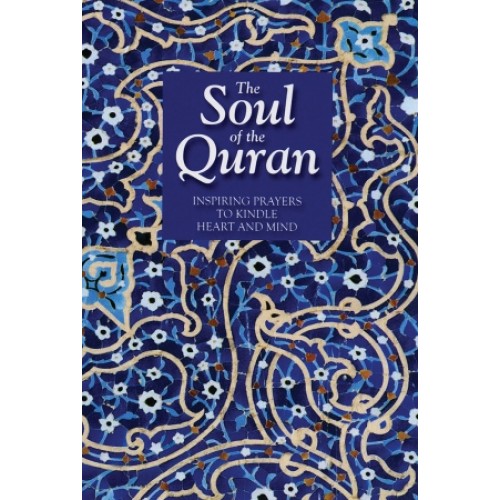
The Soul of the Quran (P/B)
Highlights:
This book is a unique collection of prayers and verses distilled from the Sacred Book. It contains one hundred and fifty four passages of exquisite beauty, majestic prose and breadth of vision. Lucid in style and rich in spiritual wisdom, they have been judiciously selected to inspire and uplift the soul.
RM14.00
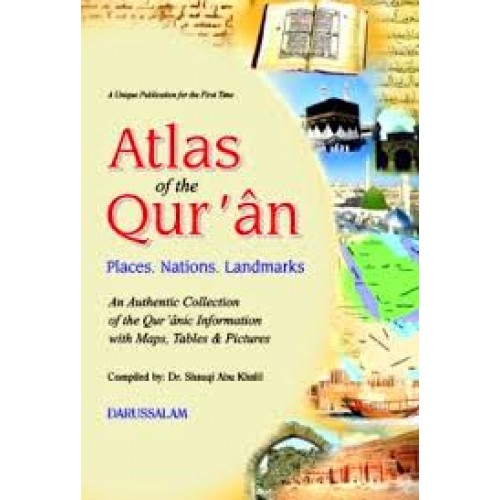
Atlas of the Qur’an (Darussalam)
Highlights:
This Atlas is new in its subject, a subject that has not been touched before. It helps whoever recites the Qur’an or studies it to specify the locations mentioned by the Noble Verses, and to mark those places of ancient people mentioned in the Qur’Gn. This is besides locating areas where the incidents of the prophetic Seerah occurred.
Eventually the diligent reader will easily recognize those places, learn about them, and take heed of them while reciting.
Eventually the diligent reader will easily recognize those places, learn about them, and take heed of them while reciting. The Atlas has also revealed obscure places we used to pass through inattentively, like the site where Nuh’s Ark settled, the site of the curved Sand-hills {Al Ahqah}, the cave of the young faithful men, the houses of median, the site of Sodom and other places determined by the Atlas depending on reliable sources.
Thus the Atlas eliminates all the guessing and the fantasies we used to encounter when reciting the Noble Quran, and takes us to the specific place.
RM80.00
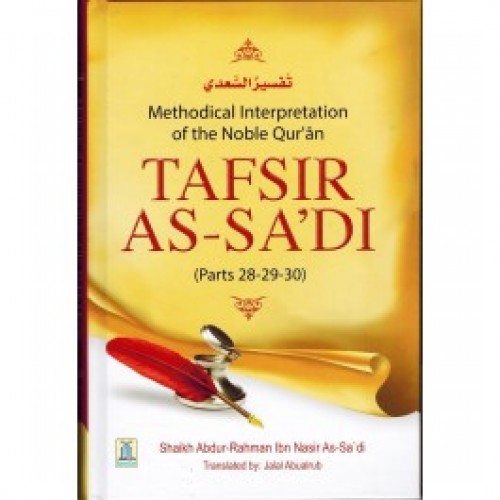
Tafsir As-Sadi (Parts 28-29-30) Methodical Interpretation Of The Noble Quran (H/B)
Highlights:
Tafsir As-Sa’di is a straightforward, easy to read, easy to understand explanation of the meaning of Qur’anic Ayat and statements. In addition to the simplicity of Ibn Sa’di’s writing, it is also articulate and eloquent.
Consequently, for those newly acquainted with Tafsir and those new to Islam, this Tafsir provides an uncomplicated, deep and insightful comprehension into the meaning and explanation of the Qur’an.
The uniqueness of this Tafsir is in the style the Shaikh used to explain the Ayat in a way that it is similar to everyday writing, without listing the various prophetic sayings or statements of the scholars of Tafsir, which Shaikh Ibn Sa’di used as a basis of his Tafsir.
RM80.00
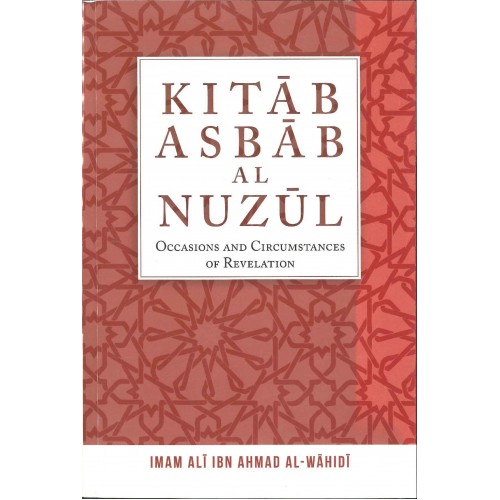
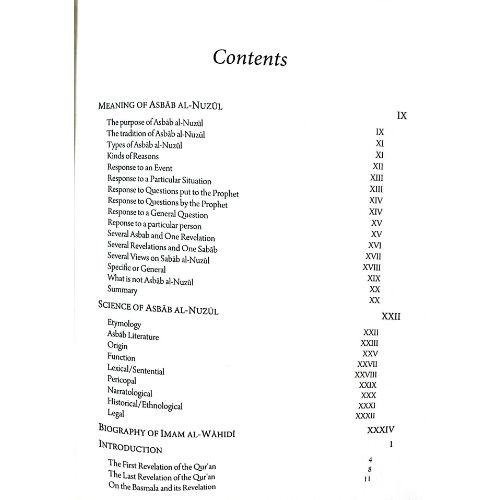

Quranic Wisdom
Highlights:
According to the Quran, a person’s life has been divided into two phases: the pre-death period and the post-death period.
The present life is only temporary and is meant as a test. Depending upon our performance in this test, we shall be judged in the eternal life after death. The Quran aims to make one aware of this reality and help one lead one’s life in this world in such a way that one is rewarded with Paradise in the life Hereafter
RM20.00
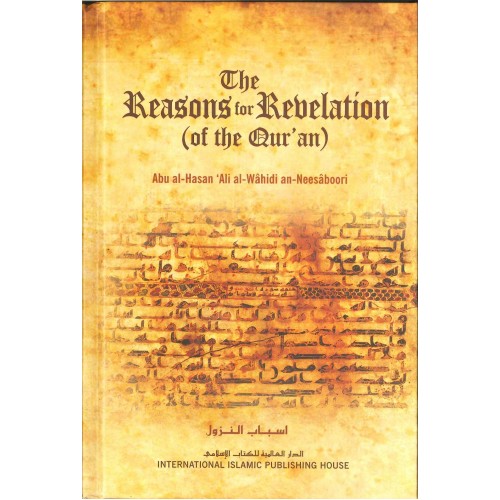
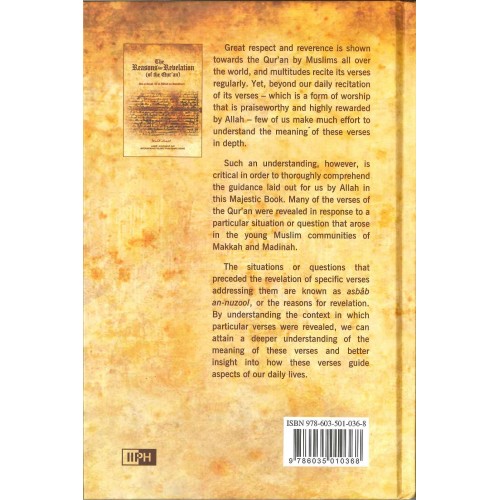
The Reasons for the Revelation (IIPH)
Highlights:
Have you ever wondered in what circumstances a particular verse or Soorah was revealed? In this translation of the great work ‘Asbaab an-Nuzool’ by the great Muslim scholar Ali ibn Ahmad an-Neesaboori, you may well find the answer. This first volume covers the first four sections of the Qur’an, from Sorrah al-Fatihah to verse 22 of Soorah an-Nisa. The publication of this book reflects our continuing effort to bring to the English speaking Muslims works previously only available to Arab speakers.
RM31.00


Divine Speech
5 ★
5 ★
3 Ratings
5 ★
3
4 ★
0
3 ★
0
2 ★
0
1 ★
0
Highlights:
The Quran, the sacred scripture of Islam, is revered as the spoken word of God by approximately one-fifth of the world’s population. Since its inception, the power of the Quran has derived not only from its message, but also from the inimitable literary style and rhetorical impact that the Arabic scripture has on its audiences. Divine Speech: Exploring the Quran as Literature attempts to make some of the most recent Arabic and European-language scholarship on its literary features accessible to a wider, English-speaking audience. These features include its language and word choice, its use of figures of speech and other rhetorical devices, its manner of narrating parables and stories, and the structure, coherence, and the order of its “chapters”-aspects that typically remain mysterious to readers of English translations of the text. Divine Speech furnishes its readers with a better appreciation of the Quran from a literary perspective, and in the process stimulates interest in, and provides tools and resources for, further study of the scripture.
RM100.00

Daily Wisdom: Selections from the Holy Qur’an (H/B)
Highlights:
This beautiful presentation of a selection from the Holy Qur’an engages the reader in a moment of daily reflection. Edited for ease of comprehension, English-speaking readers will find this compilation both spiritually enriching and easy to understand. With 365 verses covering the whole year, this is a must for every home.
An introduction to the Qur’an and its eternal message for humanity is included, giving the reader an insight into its origin, purpose, and style.
Abdur Raheem Kidwai is professor of English at the Aligarh Muslim University in India and the well-known author of many works on the Qur’an and Islam.
RM75.00
Recently Viewed
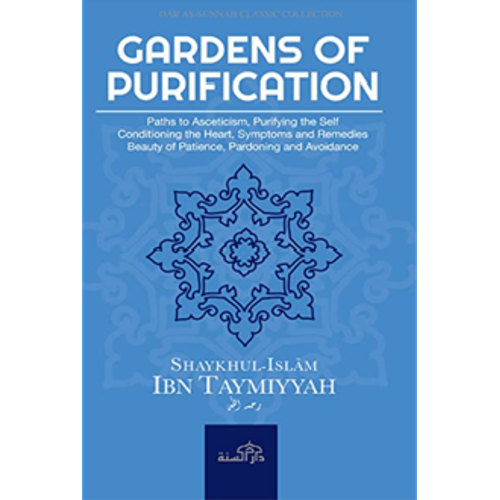
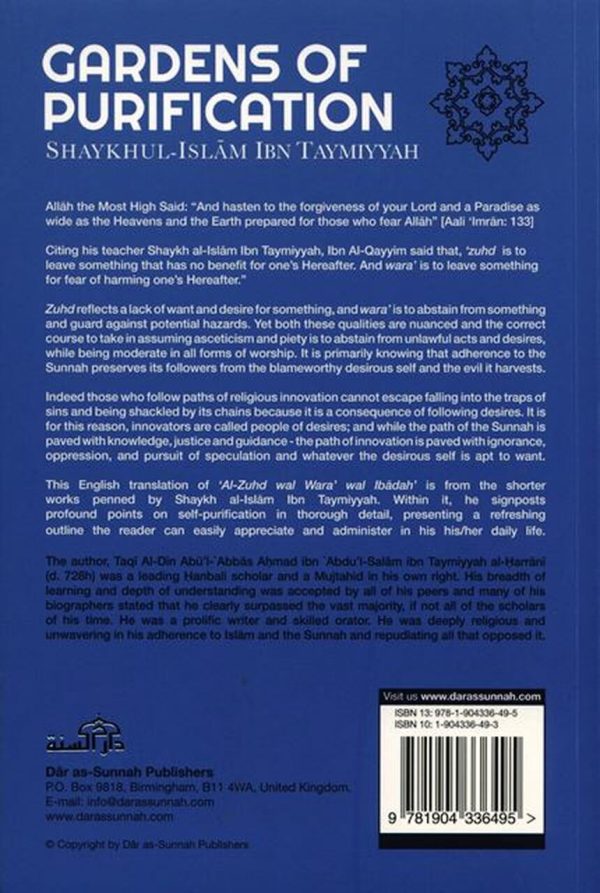
Gardens of Purification
5 ★
5 ★
1 Rating
5 ★
1
4 ★
0
3 ★
0
2 ★
0
1 ★
0
Highlights:
Paths to Asceticism, Purifying the Self. Conditioning the Heart, Symptoms and Remedies. Beauty of Patience, Pardoning and Avoidance
RM90.00
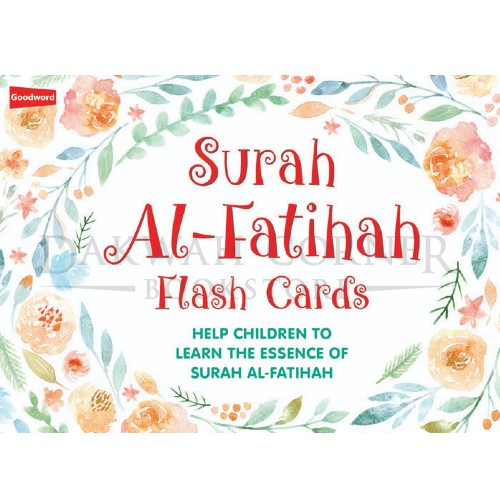
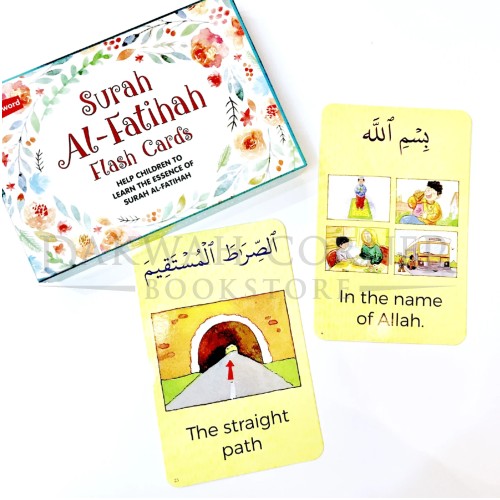
Surah Al-Fatihah (Flash Card)
5 ★
5 ★
2 Ratings
5 ★
2
4 ★
0
3 ★
0
2 ★
0
1 ★
0
Highlights:
A set of 32 beautifully crafted flash cards to help children understand and memorize the true essence of Surah Al Fatihah.
- Vocabulary learning is made fun and exciting by picture-word association.
- Exercise cards to stimulate imagination and reinforce the concept behind each ayah for practical and linguistic understanding.
- Comes with instruction booklet – suggests various games to engage with children.
Suitable for 3+ years old.
RM30.00

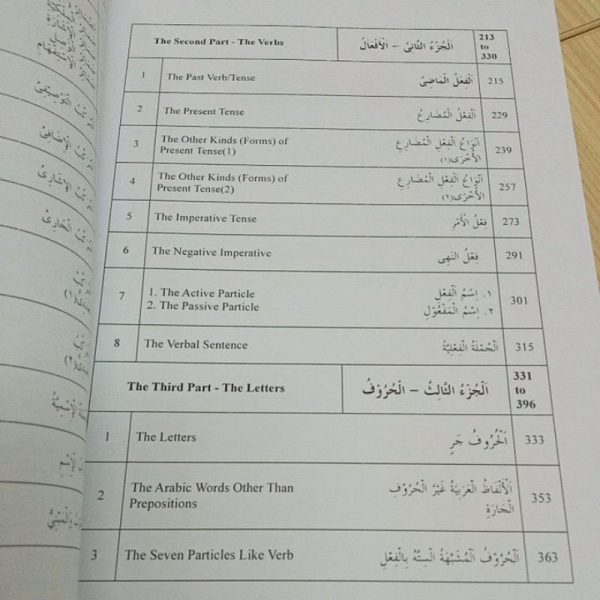
Quranic Arabic With Basic Grammar
Highlights:
This book, which is a compilation of the author’s lectures in seminars during his post-doctoral research at the Centre for Islamic Development Management Studies, Universiti Sains Malaysia, dwells on Arabic language with a focus on Quranic grammar. It comprises of three parts, each part contains various units. The first part contains 15 unit which look into the nouns, pronouns, different types of compounds, the nominal sentence and punctuation. The second part consists of seven units which discuss the various types of tenses, sentences, the imperatives and the particles. The last part featuring five units covers prepositions and different types of words in Arabic.
RM79.00
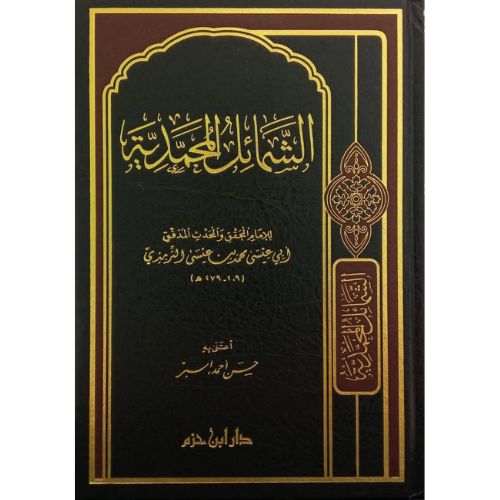
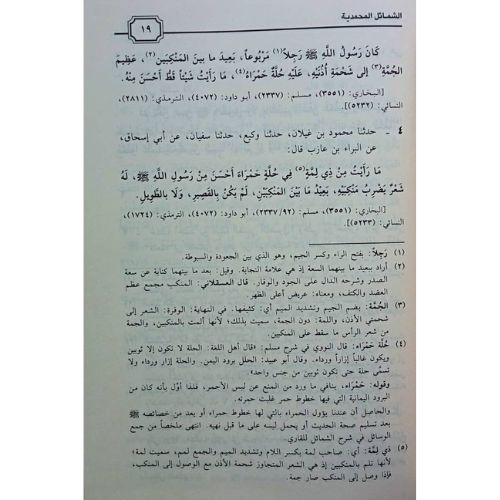
[SB] Ash-Shama’il al-Muhammadiyyah / الشمائل المحمدية
Highlights:
الشرح الميسر على ألفية ابن مالك في النحو والصرف – د. عبد العزيز بن علي الحربي
RM40.00
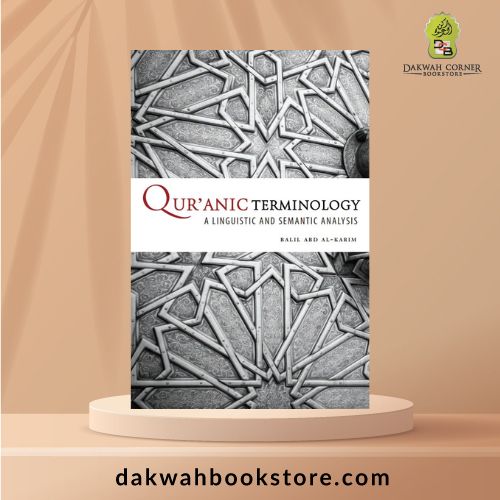
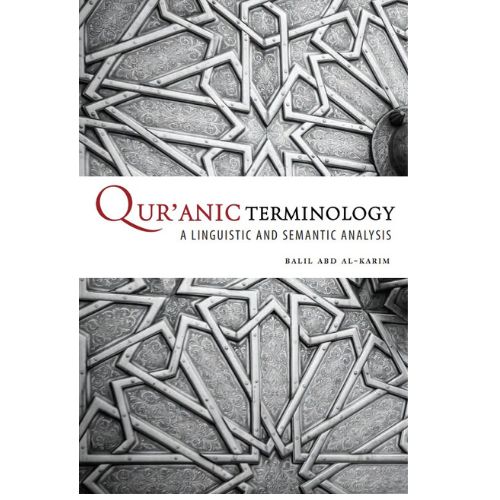
Qur’anic Terminology a Linguistic and Semantic Analysis (IIIT)
Highlights:
There is no way to understand the Qur’an properly, or to elucidate as accurately as possible the meaning of its verses, without studying Qur’anic terminology and concepts. Taken together these sum up the universal truth of the Faith (the great moral code), not only animating the text and giving it incredible life, precision, and flexibility, but also enriching the communication of the Qur’anic message through their beautiful and comprehensive nature.
RM67.00
The Noble Quran (Tall Version English Text Only) (RANDOM COLOR)
Highlights:
Interpretion of the meanings of The Noble Quran in the English Language.
RM60.00
Spiritual Disease and It’s Cure
Highlights:
The Imam was asked a long question of which a part was – What is the opinion of the scholars regarding a man who is afflicted by a disease, and knows that if it should continue it would damage his life? The Imam Quoted the Hadith from Sahih Bukhari The prophet (S) said: ‘Allah has appointed a remedy for every disease He has sent down’ Imam Ahmad reported on the authority of Usamah bin Shareek that the ‘ Prophet (S) said Allah has not made a disease without providing a remedy for it, wih the exception of one disease, namely old age’ This Applies to the medicine for the heart, soul and body. The well being of the servant’s heart, is far more important than that of his body, for while the well being of his body enables him to lead a life that is free from illnesses in this world, that of the heart ensures him both a fortunate life in this world and eternal bliss in the next.
Imam Ibn al-Qayyim al-Jawziyya was born into a scholarly and virtuous family in 691 AH/ 1292 A.D. At that time Damascus was a centre of literature and thought. Many schools were located there and he studied and graduated under the protection, direction and sponsorship of his father. He was particularly influenced by his Shaykh and teacher Imam Ibn Taymiyyah, and also by Ibn ash-Shirazi amongst others. Ibn al-Qayyim al-Jawziyya died in the city of Damascus the year 751 AH/1350 C.E.,when he was scarcely 60 years old, and was buried at the cemetery of Bab- al-Saghir, near the grave of his father – Rahimahuma Allah.
RM56.00
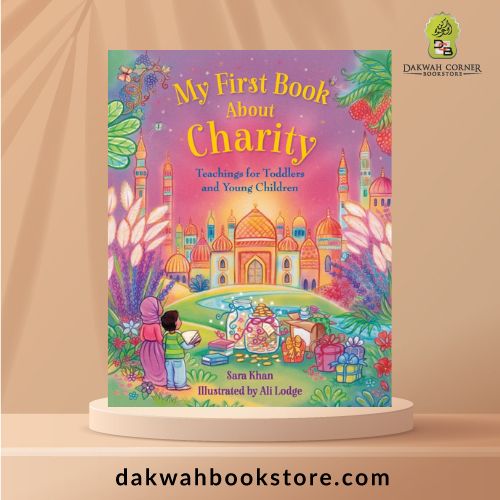
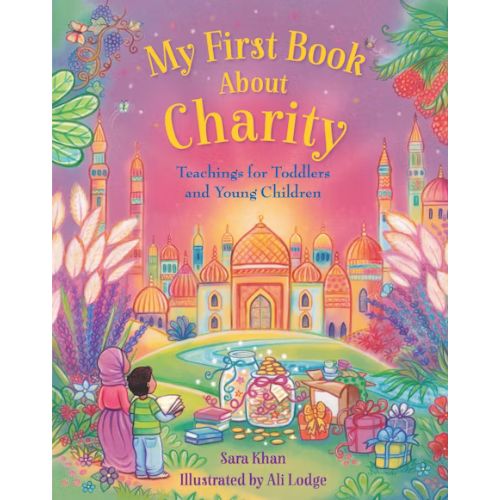
My First Book About Charity Board Book
Highlights:
“The perfect book to introduce children to the act of giving charity.”
RM43.00
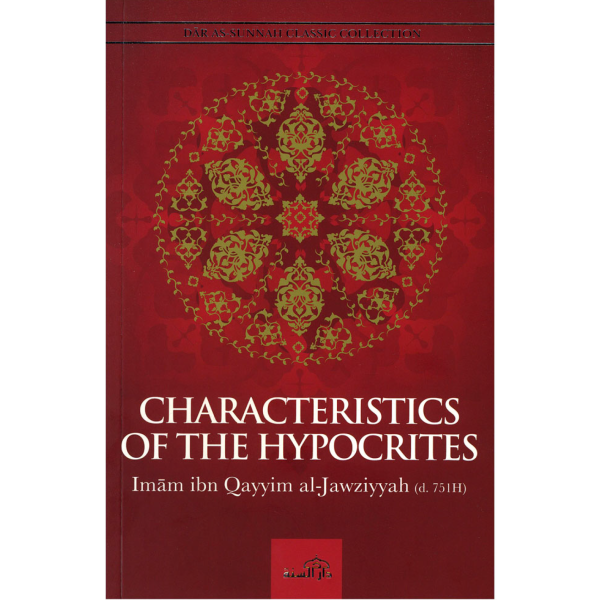
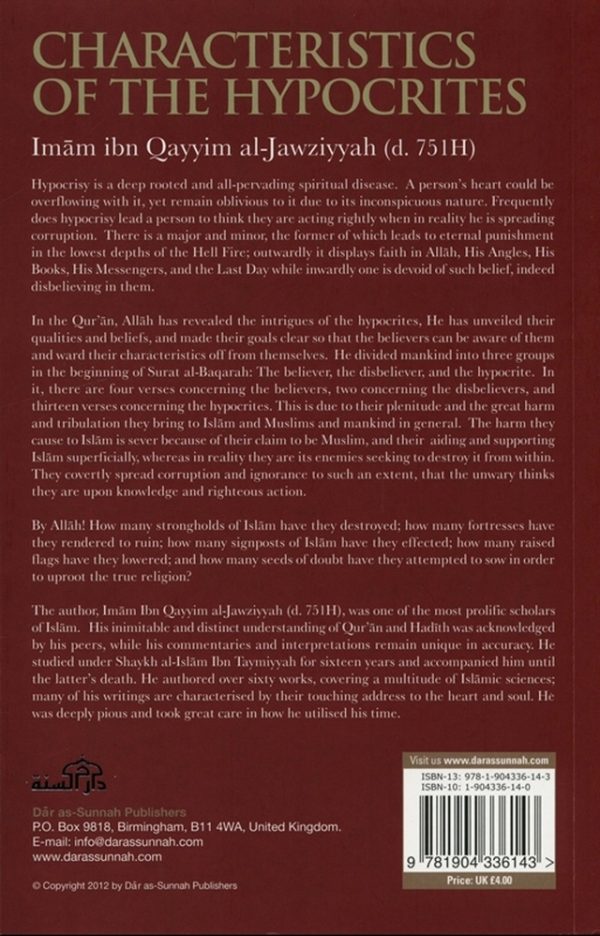
Characteristics Of The Hypocrites
Highlights:
Hypocrisy is a deep-rooted and all-pervading spiritual disease. A person’s heart could be overflowing with it yet be oblivious of it due to its hidden and subtle nature; frequently does it lead a person to think they are acting rightly when in reality he is spreading corruption. It is of two types: major and minor; majority hypocrisy leads to eternal punishment in the lowest depths of Hell; it is to outwardly display faith in Allah, His Angles, His Books, His Messengers, and the last Day whereas inwardly one is devoid of such belief, indeed disbelieving in it. They do not believe that Allah spoke to a man amongst men who He appointed to be Messenger: guiding them by His permission and warning them of His punishments.
RM37.00
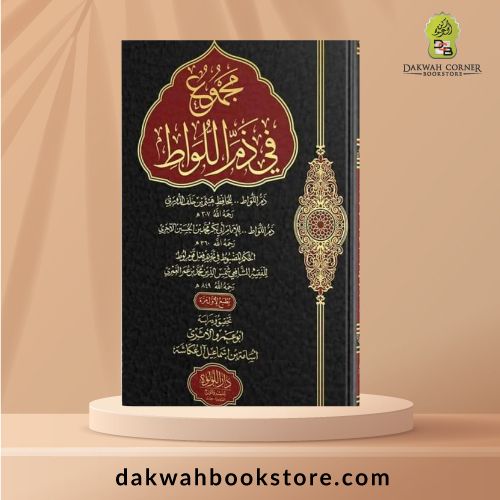
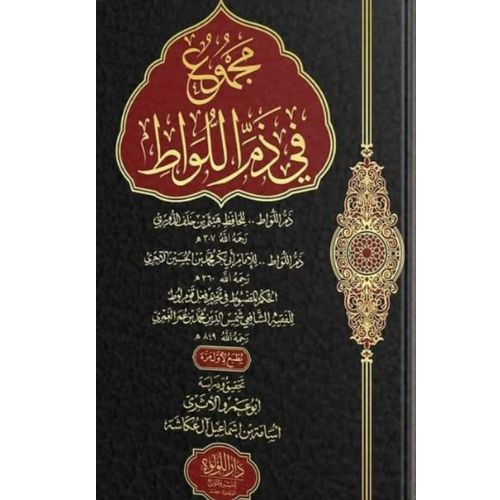
[AMM] Majmu’ fi Dham al-Liwat / مجموع في ذم اللواط
Highlights:
زين الشيطان لقوم نبي الله لوط عليه السلام فعل اللواط وحلاها لهم ورغبهم ووسوس لهم حتي وقعوا فيها وجعلوها في ناديهم. فقام لوط عليه السلام بالنصح والدعوة وتبين الحق حتّى أتى أمر الله فجعل عاليها سافلها وموعظة للناس أجمعين. فتم جمع ما ورد من آيات وأحاديث وأقوال الصحابة والتابعين في المسألة في مصنف مستقل.
RM85.00
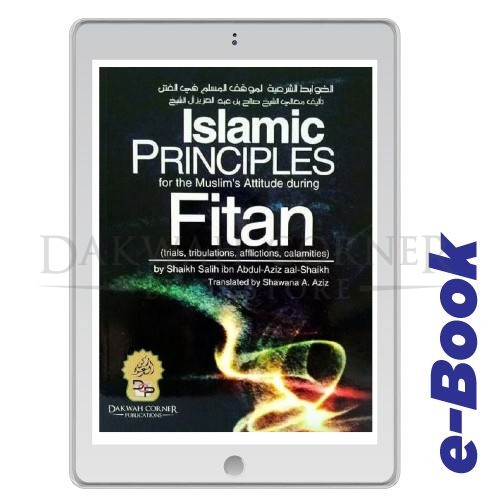
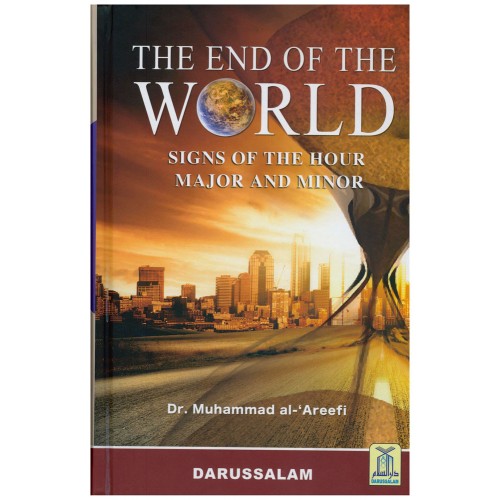
End of the World – Darussalam
Highlights:
In recent times things have become very confusing and we have begun to see in book stores and on websites speculations about future events, based on ayah and hadeeths which refer to these future events concerning the signs of the Hour.
Sometimes you hear about the appearance of the Mahdi, sometimes you hear that the final battle between the Good and the Evil is close at hand, other time you hear some thing happening in the East or in the West.
So, learn about the Final hour and it signs by reading this book which is backed by proofs from Quran and Hadith.
RM85.00
There are no reviews yet.