

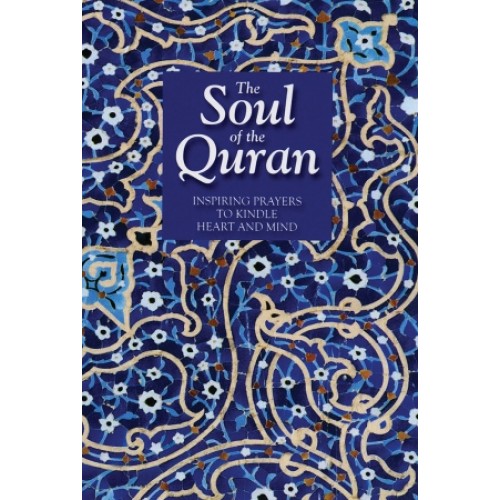


| Weight | 0.245 kg |
|---|---|
| Product Type | Book |
| Author | |
| Pages | 155 |
| ISBN | 8185063133 |
The Soul of the Quran (P/B)
RM14.00
Out of Stock

Highlights:
somdn_product_page
Compare
This book is a unique collection of prayers and verses distilled from the Sacred Book. It contains one hundred and fifty four passages of exquisite beauty, majestic prose and breadth of vision. Lucid in style and rich in spiritual wisdom, they have been judiciously selected to inspire and uplift the soul.
Additional information
Reviews (0)
Be the first to review “The Soul of the Quran (P/B)” Cancel reply
You must be logged in to post a review.
Related Products
Study The Noble Qur’an Word for Word (3 volumes) – Colour
Highlights:
Available NOW only for online shopping.
Complete Qur’an in 3 volumes Colour Version (10 Parts per book). Individual volumes are available from the related items section. The first coloured Word-for-Word English translation to understand the meanings of the Arabic verses along with grammatical terms. Read more below…
RM350.00
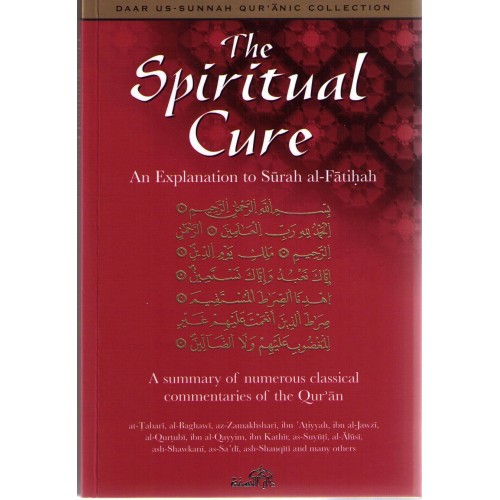
The Spiritual Cure An Explanation to Surah al-Fatihah (P/B)
Highlights:
Surah al Fatiha is the greatest chapter of the Qur’an, its like is not found in the rest of the Book or in the previous scriptures. It is a
Light that was granted to Prophet Muhammad (S) which had not been granted to any other Prophet or Messenger before him; indeed
some of the Salaf stated that when this chapter was revealed, Shaytãn l let out a great cry of lament.
It holds a central position in the daily Prayer hence the daily life of the Muslim.
The underlying theme, of al-Fatiha is one of contemplation and serenity; pondering the Names and Attributes of Allah, pondering the creation , and acknowledging that He Alone deserves praise and Worship, that He Alone should be asked for help, that He Alone Should be feared and hoped in, that He Alone should be invoked, that there is indeed a Day of Judgment, and that guidance has come to us and we are required to follow it.
It calls us to carefully scrutinise our relationship with our Lord: are we living according to the dictates of ‘none has the right to be worshipped save of Allah’ or not? This opening chapter, despite its brevity, calls man to fulfil the rights of Tawhid, the right that Allah has over us to worship Him Alone without any partner
A Summary of numerous Classical Commentaries of the Qur’an
at-Tabari, al-Baghawi, Az-Zamakhshari, ibn Atityyah, Ibn Jawzi, Al-Qurtubi, Ibn Qayyim, Ibn Kathir, as-Suyuti, Alusi, ash-Shawkani, as-Sa’di, ash-Shaqiti and many Others
RM73.00
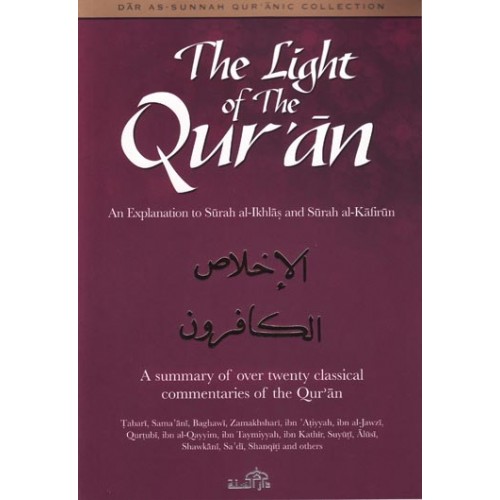
The Light of The Qur’an
Highlights:
The Prophet peace and blessings of Allah be upon him, passed by a person reciting Surah Al – Kafirun and remarked, “He has been saved from shirk”. He passed by another reciting Surah Al – Ikhlas and remarked. Paradise has become obligatory for him. Reported by Muslim.
These two chapters have both been given the title Al-Ikhlas, or purity of faith, because they deal with the topic of Tawhid in all its various aspects. Al – Ikhlas concentrates on the pure, essential faith in Allah that all mankind is required to have. Al – Kafirun deals with purity of deed and disavowal of disbelief and paganism. Both chapters lay out the parameters of mans relationship with his/her lord and creator, as well as his/her relationship those around him/her.
Pure, unblemished monotheism combined with sincerity in belief and deed defines the relationship with Allah. Hi is one and only true God, unique, without peer, equal or opposite, and nothing is like on to him. He is the one who stands in need of nothing whereas everything is in dire need of him.
Maintaining the essential Muslim identity and character defines the relationship between the Muslim and his fellow man. The Muslim is unambiguous about his religion, truthful and upright in speech, deed and his dealings with those around him. Hi is proud of his faith and has unshakable conviction in it. He loves his lord, his Messenger and the Muslims and is loyal to them. Because of this, the dearest thing to him is his religion and he will not compromise it, pleasing Allah comes before pleasing the people.
The prophet would frequently recite these two chapters in prayer because of the commonality of their theme and to stress that success is achieved, in this life and the next, by internalising their message and living by it.
RM41.00
114 Tips to Help You Finally Memorize The Qur’an (P/B)
5 ★
5 ★
1 Rating
5 ★
1
4 ★
0
3 ★
0
2 ★
0
1 ★
0
Highlights:
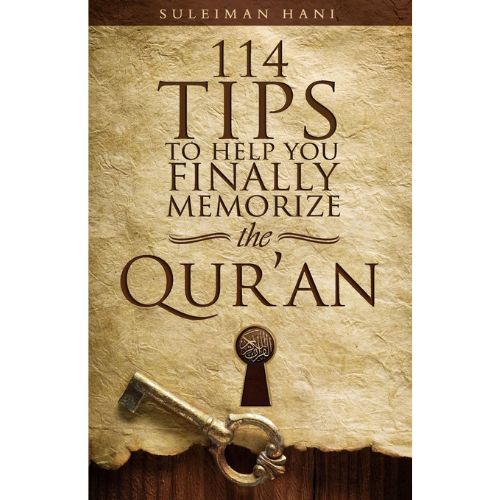
“114 Tips to Help You Finally Memorize the Qur’an is a concise book that aims to equip readers of all backgrounds with the information and techniques necessary in order to begin, continue with, and complete the memorization of the Qur’an, eliminating thereby the common excuse and reasons for not memorizing.”
RM80.00
Tafsir 67 : A Commentary on Surah al Mulk (P/B)
Highlights:
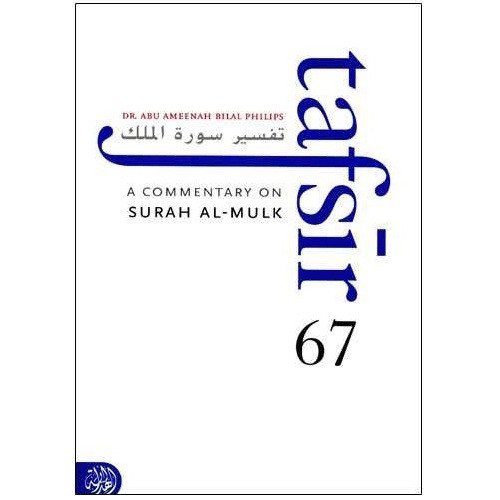
The beauty of the Qur’an is such that its miracles cannot truly be understood until one contemplates every verse of every surah; this alone makes tafsir one of the most amazing sciences of Islam. Surah Al-Mulk is a chapter of the Quran which would be recited every night by the Prophet (peace be upon him), in its midst are deep meanings which highlight the purpose of our creation, as well as entailing the message of Islam. In this book, the author takes the reader on a wonderful journey through the gardens of the first surah in the 29th Juzz of the Qur’an.
About the Author: Dr. Philips was born in 1947 in Jamaica, but grew up in Canada, where he converted to Islam in 1972. He completed a diploma in Arabic language and a B.A. degree in 1979 from the College of Islamic Disciplines at the Islamic University of Madinah, an Islamic university in Saudi Arabia. At the University of Riyadh College of Education he completed his M.A. in Islamic Theology in 1985, and in 1994 he completed his Ph.D in Islamic Theology in the department of Islamic studies at the University of Wales. He later taught Islamic education and Arabic language in private schools in Riyadh for over ten years. Because of his opposition to Saudi Arabia’s position in the Gulf War, he had to leave the country and for three years he lectured M.Ed. students in the Islamic Studies department of Shariff Kabunsuan College (SKC) in Cotabato City, Mindanao, the Philippines. Islamic Information Center Since 1994, he has founded and directed the Islamic Information Center (which is now known as Discover Islam) in Dubai, United Arab Emirates, and is known as a prolific speaker and author on topics relating to Islam, including audio lectures and books. Presently, he is a lecturer of Arabic language and Islamic Studies at the American University in Dubai and ‘Ajman University in Ajman, United Arab Emirates. He frequently appears at the Islamic Research Foundation in Mumbai, India, on lecture tours. He has also founded the Distance Learning Program called Islamic Online University, which offers a four year degree in Islamic Studies plus a variety of short courses. Dr. Philips is something of a pioneer as a person of Western origin achieving the status of a scholar of Islam inside the tradition.
RM63.00
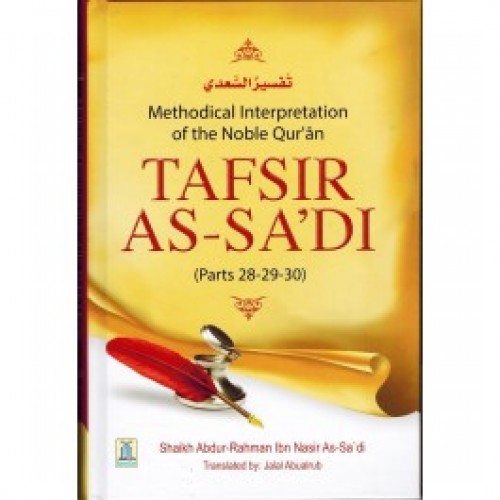
Tafsir As-Sadi (Parts 28-29-30) Methodical Interpretation Of The Noble Quran (H/B)
Highlights:
Tafsir As-Sa’di is a straightforward, easy to read, easy to understand explanation of the meaning of Qur’anic Ayat and statements. In addition to the simplicity of Ibn Sa’di’s writing, it is also articulate and eloquent.
Consequently, for those newly acquainted with Tafsir and those new to Islam, this Tafsir provides an uncomplicated, deep and insightful comprehension into the meaning and explanation of the Qur’an.
The uniqueness of this Tafsir is in the style the Shaikh used to explain the Ayat in a way that it is similar to everyday writing, without listing the various prophetic sayings or statements of the scholars of Tafsir, which Shaikh Ibn Sa’di used as a basis of his Tafsir.
RM80.00
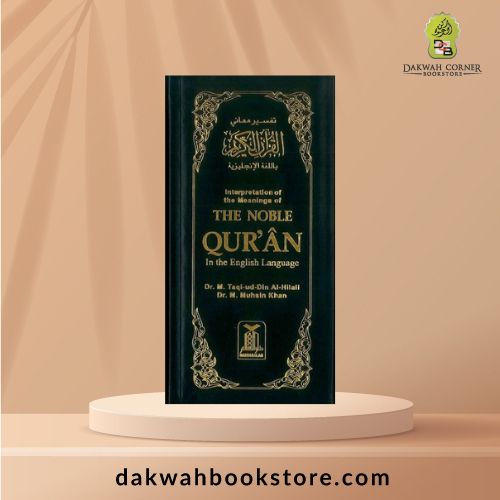
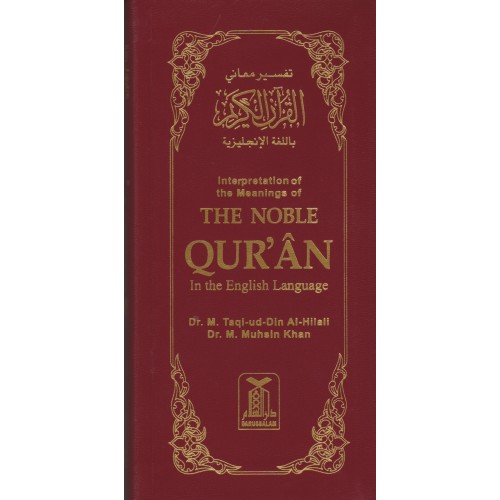
The Noble Quran (Tall Version English Text Only) (RANDOM COLOR)
Highlights:
Interpretion of the meanings of The Noble Quran in the English Language.
RM60.00
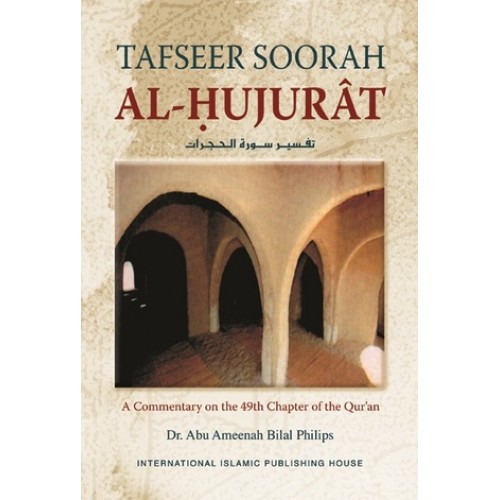
Tafseer Soorah Al-Hujurat (H/B)
Highlights:
Tafseer Soorah al-Hujurât: A Commentary on the 49th Chapter of the Qur’an is a treasury of divine advice, commandments, and prohibitions regarding common problems in social relations, including gossip, spying, arguing, and bigotry. To make the best use of this chapter, the believer needs a detailed explanation of the meanings of the verses.
Dr. Bilal Philips has based his tafseer (exegesis) on the methodology used in the classical works of tafseer. He has relied first of all on the explanations found within the Qur’an itself, then on explanations found in the Sunnah and related incidents which occurred at the time of the revelation of the verses in question. Beyond these primary sources, Dr. Philips has relied on the interpretations made by the Prophet’s Companions (may Allah be pleased with them) who were noted for their ability to interpret and comment on the Qur’an. ‘Abdullâh ibn ‘Abbâs, for example, was called ‘The interpreter of the Qur’an’ by Prophet Muhammad (blessings and peace of Allah be upon him). Finally, the author has made use of the grammatical explanations given in the classical tafseer works. Wherever possible, Dr. Philips has tried to apply the derived meanings of the verses to the problems of contemporary society.
RM40.50 RM60.00
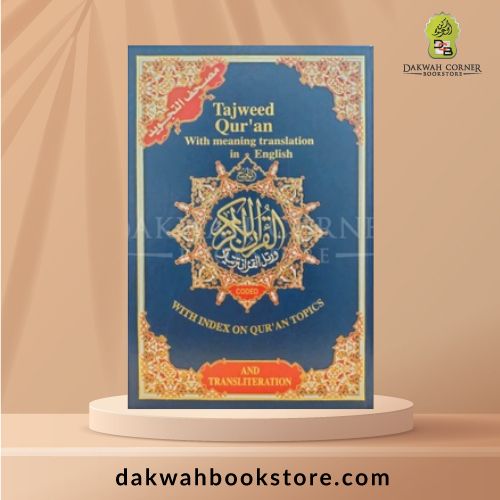
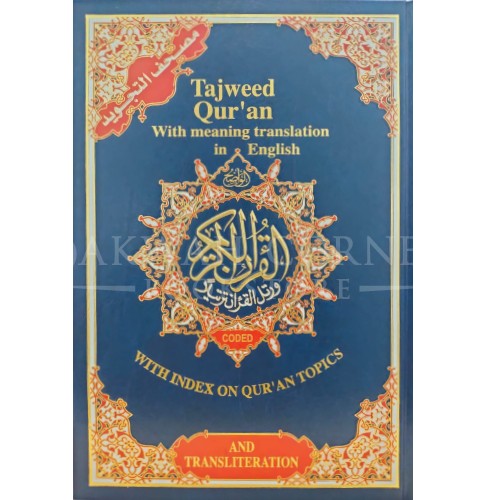
Tajweed Qur’an with Meaning Translation in English and Transliteration
Highlights:
Translation: meanings of the Quranic versus are translated into English and placed on the margins around the Arabic text.
Transliteration: Arabic letters are presented by English letters with added symbols in order to give the same sound of Arabic letters.
English transliteration makes it easier for the speakers of the English language to read the Tajweed Quran in Arabic pronunciation using the English alphabet letters.
Considering that this Part contains small suras; it is a perfect start for kids, beginners and students.
This Amma Part comes in the standard portrait form, with a nice glossy soft cover. Each page contains 15 lines as any standard Quran.
Meanings tranlated by Abdullah Yusuf Ali
Alla (sw) ordered us in his holy book to recite the Quran with Tajweed … “Quran recitation modulating”. System of Tajweed serves as a guide for improving the recitation of Quranic style. It was in this way that the Qur’an revealed to Prophet Muhammad (peace be upon him), as well as the manner in which he recited it. Therefore, the readers of the Quran are eager to realize the promise of the Prophet Muhammad (pbuh): “whoever recites the Quran correctly and proficiently will be with the bountiful dutiful writers (the angels of the preserved tablet – Al lauh Al Mahfuz”.
Based on a practical understanding of phonology, we have color-coded some letters to facilitate the correct recitation of the holy Quran. This enabled us to classify these letters into three possible categories to enhance the reader’s knowledge and remembering of Tajweed rules:
– The letters which requires expanded vocalization. We used red color to highlight these letters.
– The letters which are nasalized these letters are green in color.
– The dark blue color indicates the emphasis of the letter (R), the blue color indicates the unrest letters-echoing sound- (qualquala)
– While the letters which are written but are not vocalized. These letters are gray in color.
The reader will get used to reciting the Quran by using colors very easily. By engaging the eye, the reader will find him/herself applying 24 rules of Tajweed with ease and precision while his/her mind is left un-enganged to comprehend and understand the meaning of the holy Quran. For more details click here
This Tajweed Quran is in Hafs narration.
All our Tajweed Quran products -including this Quran- come with the following:
- Color coded letters: to present the Tajweed rules, very good and simple way to learn and apply Tajweed rules.
- Obvious script: extra spaces were added between the words in order to make it easier to read and recite the Quran.
- Permissible stops: long spaces were added at certain places where it is permissible to stop. It helps to avoid stopping at wrong places or times.
- A set of very useful indexes such as: Surahs Color Index, Subject Index.
- Tajweed rules explained in details with helpful illustration.
RM200.00
The Meaning of The Holy Qur’an -Pocket Size (P/B) (IBT)
Highlights:
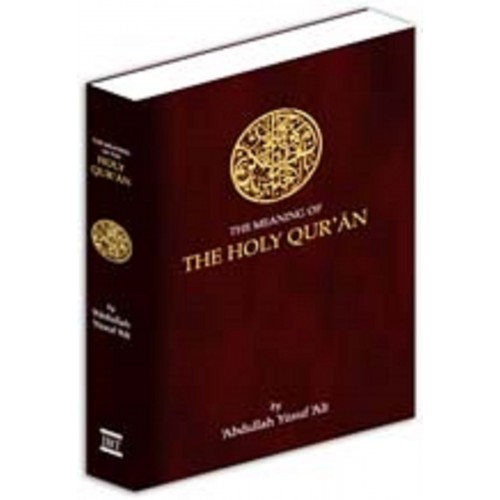
This very handy pocket-sized edition contains the complete meaning of the Holy Qur’an, without the Arabic text and the commentaries. Weighing just under 170 grammes, sized 9.5 cm X 13 cm and with a thickness of 1.5cm, it is intended as a handy travel companion as well as a gift to friends and colleagues.
RM23.00
Recently Viewed
Reverence for The Salah (Maktabatulirshad Publication)
Highlights:
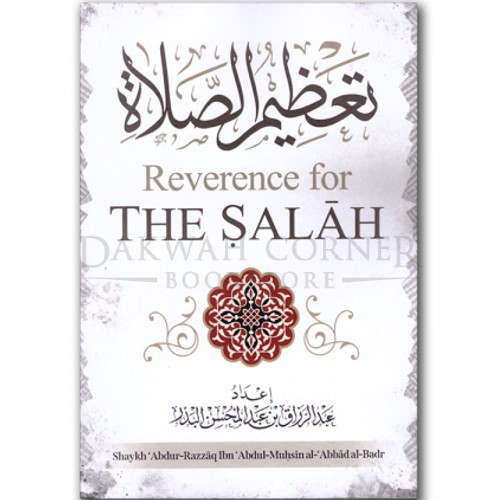
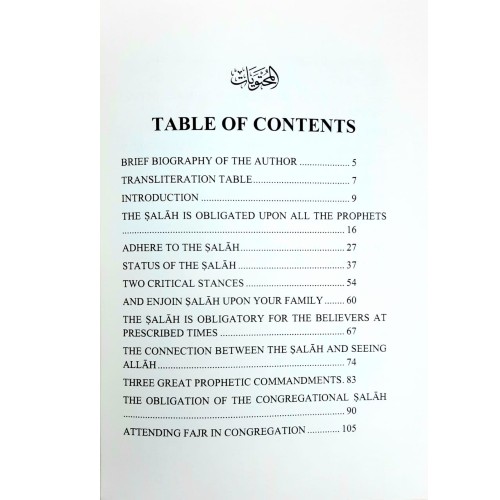
The Salah is the most crucial affair in a Muslim’s life. To preserve one’s religion, one has to observe it consistently; otherwise, one would be negligent of the Salah, let alone other acts of worship. It is the pillar of Islam, as it is soundly reported from the Prophet (May Allah elevate his rank & grant him peace). At the same time, the remaining deeds serve as the axis of support. Similarly, a tent without a pillar is useless. The Salah is the criterion for accepting all other deeds; if it is rejected [by Allah], all other deeds will be rejected. It is the first obligation ever in Islam and the last act of worship to wither. So, if one is negligent to the first and the last thing in Islam, then one will lose everything in-between.
Inadequate observance of the Salah that lacks adherence to its prescribed form in the manner performed by the Messenger of Allah (May Allah elevate his rank & grant him peace) will derail one’s religion. It will invalidate all deeds, cause misconduct in one’s religious and worldly affairs.
RM95.00
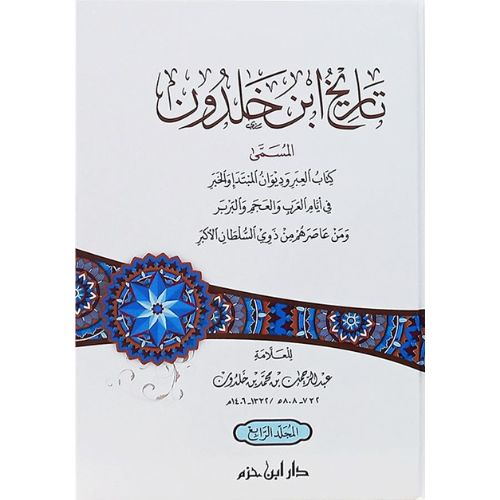
[HS] Tarikh Ibn Khaldun 4 Vol (تاريخ ابن خلدون 1 /4)
Highlights:
كتاب “تاريخ الطبري” تاريخ “الرسل والملوك” أو الأمم والملوك من أهم كتب المصادر في مجال التاريخ، إذ يعد أوفى عمل تاريخي بين مصنفات العرب أقامه مصنفه على منهج مرسوم، وساقه في طريق استقرائي شامل، بلغت فيه الرواية مبلغها من الثقة والأمانة، أكمل ما قام به المؤرخون قبله، كاليعقوبي والبلاذري، والواقدي، ومهد لمن جاء بعده كالمسعودي، وابن مسكويه وابن الأثير وابن خلدون ولم يقتصر على تاريخ الإسلام بل أرخ لما قبل الهجرة بل ابتدأ من القول في ابتداء الخلق ما كان أوله
RM390.00
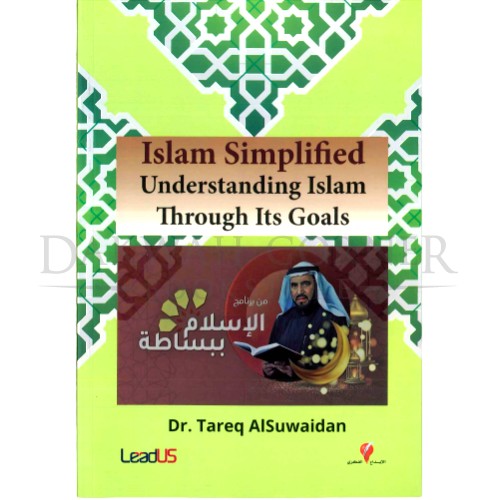
Islam Simplified: Understanding Islam Through Its Goals
Highlights:
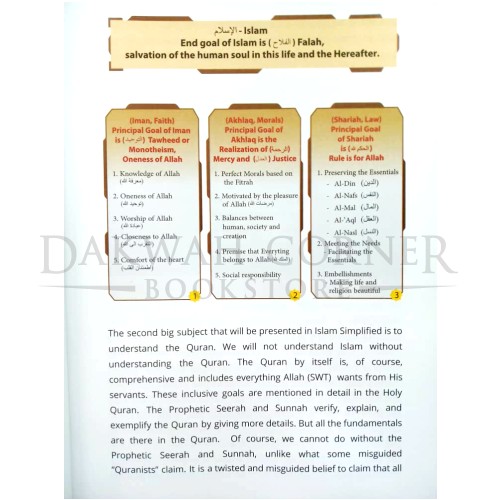
Islam Simplified introduces Islam simply and comprehensive by presenting the overall framework of Islam that highlights the goal-oriented view of Islam so that Muslims and non-Muslims will understand clearly the “Why” of Islam.
RM37.00
My First Arabic Sound Book
Highlights:
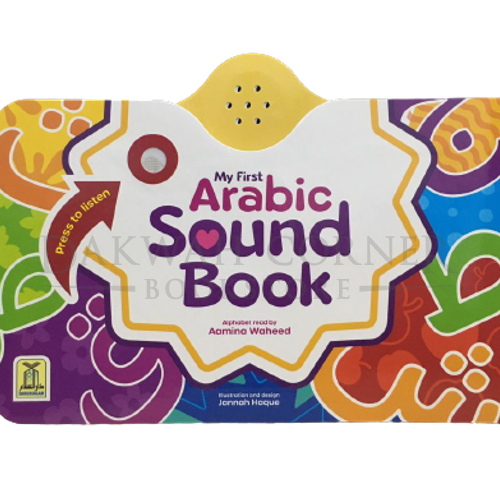
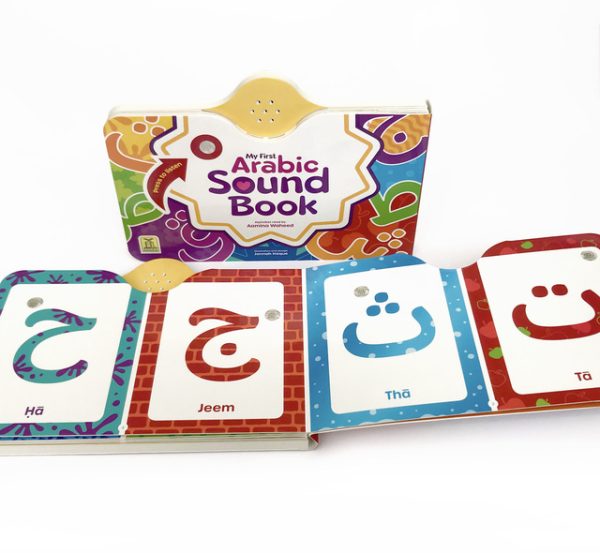
My First Arabic Sound Book
It Reads to you!
Delight your child with this amazing sound book which reads out the Arabic alphabet when you touch the page!
RM90.00
Akhlaaq Comes Alive (P/B)
Highlights:
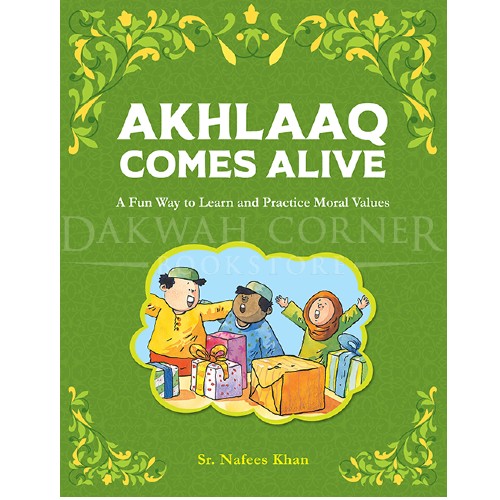
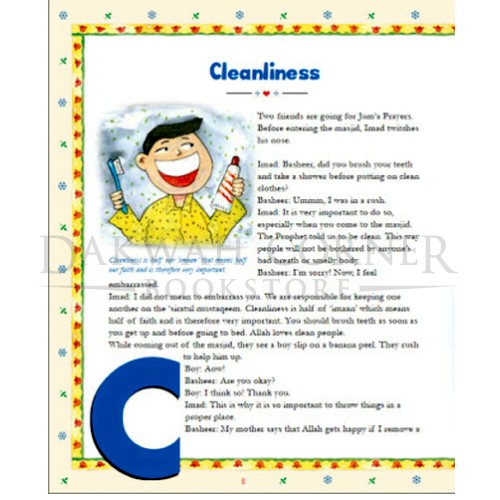
Often elders find it difficult to find a fun way to teach children akhlaaq, that is, moral values and good manners in Islam. All About Akhlaaq, being a fun book, will aid them in this. Designed for use at home and school, it covers a wide range of moral issues and the occasions in daily life when good manners are essential. Colourful and story-filled, with an easy-to-use format and short skits, it will give a better understanding of each akhlaaq by encouraging children, parents and teachers to engage in role playing. Each theme, listed alphabetically, is expressed in simple language and has attractive illustrations on every page. What better way to learn akhlaaq than by acting it out! So, be active and practice akhlaaq!
RM25.00


The Best in Islam
Highlights:
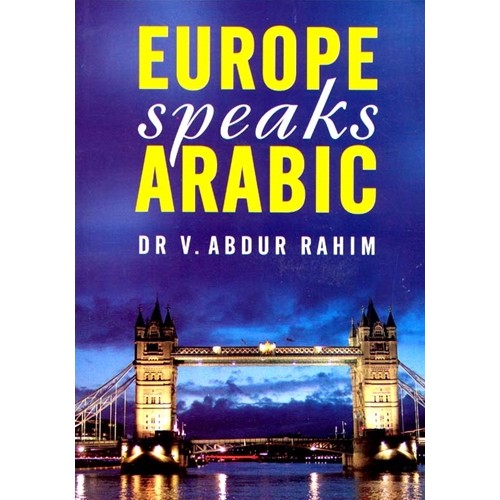
A groundbreaking, first-of-its-kind, compilation of authentic prophetic statements and Qur’anic verses that describe people, places and things using the terms of praise: “Good”, “Better” and “Best” or their equivalents like “beloved”, “more beloved” and “most beloved.” The 182 Hadeeth and Quranic verses are alphabetically grouped according to their various subject matters.
This truly unique work, originally compiled in the beginning of the 1990s, was aimed at enlightening English readers with issues which Islam considers to be the best and most pleasing to the Almighty God. Hence, readers can appreciate the higher objectives and goals of Islamic teachings, rites and rituals.
RM36.00
Mushaf Tajwid (Riwayat Warsh) (L)
Highlights:
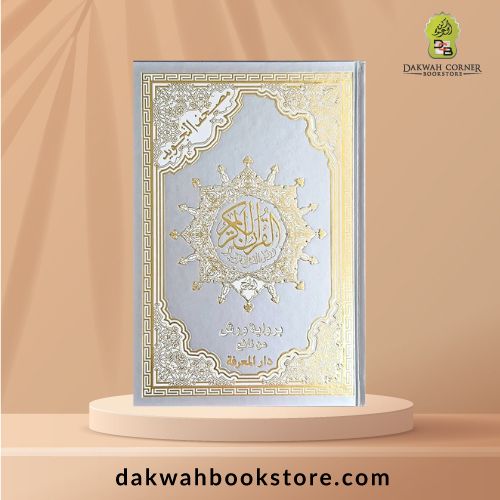
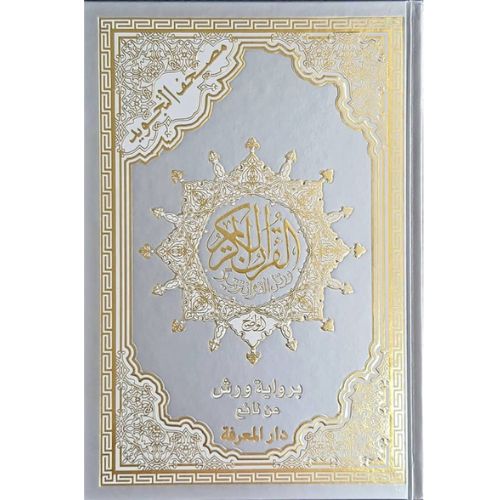
Mushaf Al Quran Qiraat Nafi’ Riwayat Warash Warsh Warsy Tajwid Warna.
RM130.00
Men Around the Messenger (IBT)
Highlights:
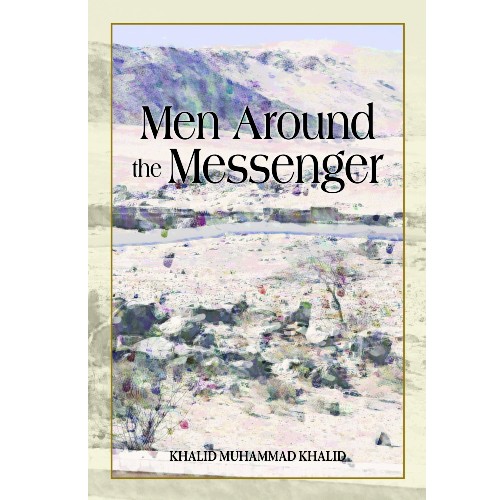
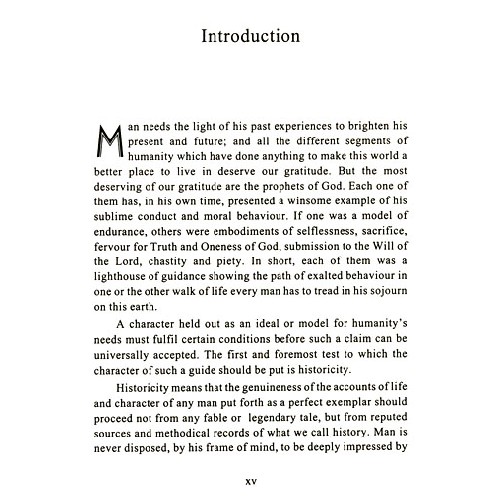
This book is a translation based on Khalid Muhammad Khalid’s celebrated work in Arabic, Rijal Hawla al-Rasul. The sixty-four companions presented here are representative of that unique generation, a generation without parallel in history. They come from all walks of life and character. These are stories of real people which can be historically verified. These stories will touch the souls of the believers, for they will find in them yet another proof of that conviction that fills their hearts.
RM59.00
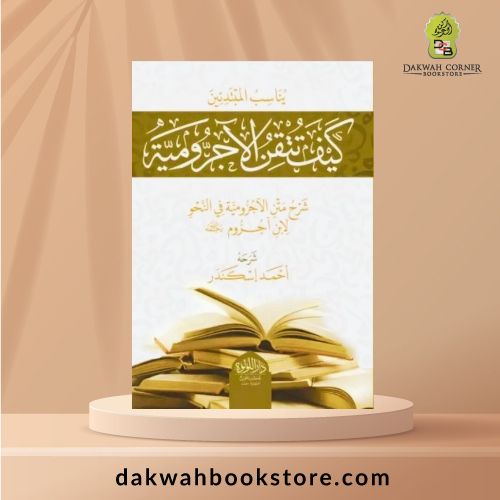
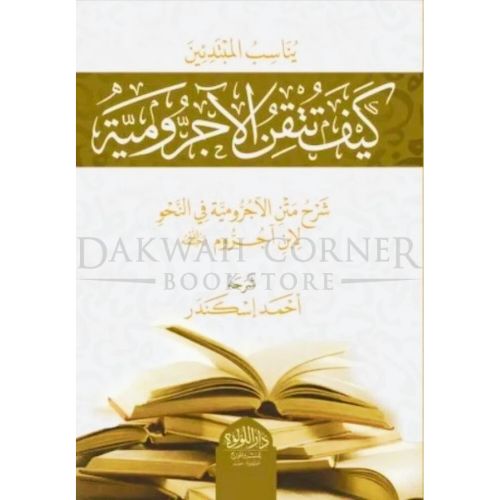
[AR] Kayfa Tutkinun Ajrumiyyah / كيف تتقن الاجرومية
Highlights:
“كيف تتقن الآجرومية” هو إصدار جديد ضمن سلسلة “تسهيل تعليم اللغة العربية” للأستاذ أحمد إسكندر، بعد النجاح الكبير الذي حققته مؤلفاته السابقة: “كيف تتقن النحو”، “الصرف”، و”البلاغة”.
يُعد هذا الكتاب دليلًا تعليميًّا يهدف إلى تبسيط وتوضيح قواعد النحو العربي للمبتدئين، معتمدًا على متن الآجرومية، وهو نص تعليمي شهير في علم النحو ألفه الإمام محمد بن محمد بن داود بن آجروم.
يتناول الكتاب موضوعات أساسية في النحو، مثل: أقسام الكلام، الإعراب، الأفعال، المرفوعات، المنصوبات، والمخفوضات من الأسماء. يتميز بأسلوب سهل ومنهجي، مما يجعله مناسبًا للطلاب الذين يبدؤون رحلتهم في تعلم قواعد اللغة العربية.
RM100.00
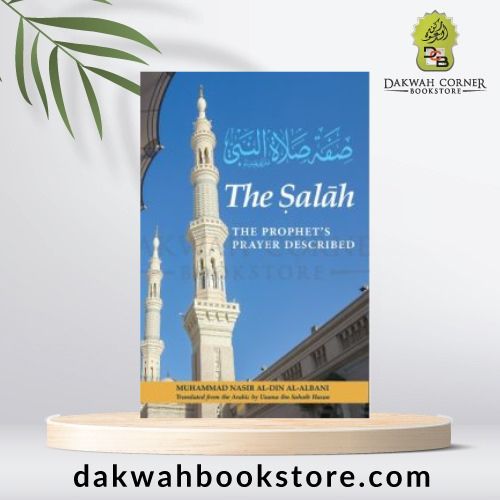
The Salah – The Prophet’s Prayer Described (H/B)
5 ★
5 ★
1 Rating
5 ★
1
4 ★
0
3 ★
0
2 ★
0
1 ★
0
Highlights:
It is not possible to us to perform the Salah (Prayer) as it should be performed unless we know the detailed description of the Prayer shown by Prophet Muhammad sallallahu ‘alayhi wasallam, such as essentials, manners, forms, supplications and remembrances. However, detailed familiarity with these aspects of the Prayer is difficult to be achieved by most people nowadays because of their limiting themselves to a particular madhhab (school of thought). In every mudhhab, there are traditions and sunnahs (Prophetic examples) which are not found in other madhhabs, and in every mudhhab there are sayings and actions which cannot be authentically traced back to the Prophet.
Many any books have been published on the Prayer of the Prophet but most are by later scholars that cater for a particular muddhab. This famous work, translated from the original Arabic Sifah Salah al-Nabi, brings together as many features of the Prophet’s Prayer from the takbir to the taslim, so that Muslims can fullfil the Prophet’s command to “pray as you see me pray”. This work is the result of an intensive research by the author on various traditions (Hadiths) and their relevance, judjed according to the strict rules of the science of Hadith.
RM35.00
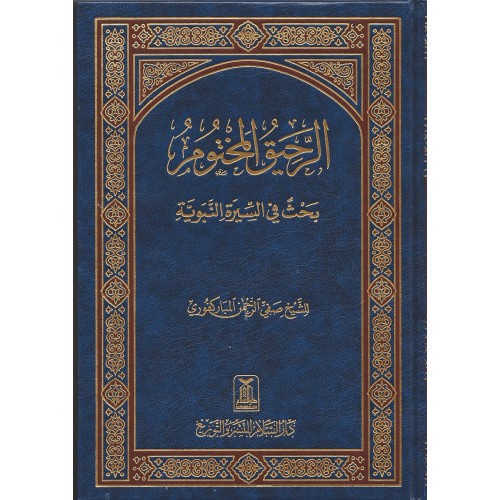
[SB] Ar-Raheeq Al Makhtum (Arabic Only – Large) الرحيق المختوم
Highlights:
Ar-Raheeq AI-Makhturn is a book of great value and praiseworthy work on the Seerah of our beloved Prophet Muhammad. This book has been written by the Eminent Shaikh Safiur-Rahman Mubarakpuri of Jamiah Salafiyah, Banaras (India). The first Islamic Conference on Seerah (biography of the Prophet) was held in 1976 in Pakistan sponsored by the Muslim World League. The League announced a world contest for writing a book on the life of the Prophet.
One hundred and seventy-one manuscripts were received from all over the world. Out of these, eighty-five were in the Arabic Language, sixty-four in Urdu, twenty-one were in English and one in French and Hausa.
A board of highly qualified scholars judged the manuscripts and announced the results. The manuscript of Shaikh Safiur-Rahman Mubarakpuri, Jamiah Salafiyah Banaras (India), author of the book in hand received first the grand prize for its authentic and sound collections of the narrations. Dr. Majid Ali Khan, New Delhi, India, placed second. The third prize went to Dr. Naseer Ahmed, Islamic University, Lahore, Pakistan. The fourth prize was awarded to Mr. Harnid Mahmud of Egypt. The fifth and final prize was awarded to Abdus-Salam Hashim of Madinah Munawwarah.
A complete authoritative book on the life of Prophet Muhammad (S) by Sheikh Safi-ur-Rahman al-Mubarkpuri. It was honored by the World Muslim League as first prize winner book. Whoever wants to know the whole life style of the Prophet in detail must read this book.
Muhammad (S) is the Messenger of Allah, and those who are with him, are severe against the disbelievers, and merciful among themselves. You see them bowing and falling down prostrate (in prayer), seeking bounty from Allah and (His) Good Pleasure. The mark of them (i.e. of their Faith) is on their faces (fore heads) from the traces of prostration (during prayers). This is their description in the Taurah (Torah). But their description in the Injeel (Gospel) is like a (sown) seed which sends forth its shoot, then makes it strong, and becomes thick and it stands straight on its stem, delighting the sowers, that He may enrage the disbelievers with them. Allah has promised those among them who believe and do righteous good deeds, forgiveness and a mighty reward (Paradise). (Al-Fath: 29)
The Prophet Muhammad (S) said: ‘The example of guidance and knowledge with which Allah has sent me is like abundant rain falling on the earth. Some of which was fertile soil that absorbed rain-water and brought forth vegetation and grass in abundance. (And) another portion of it was hard and held the rain-water and Allah benefited the people with it and they utilized it for drinking (making their animals drink from it) and to irrigate the land for cultivation. (And) a portion of it was barren which could neither hold the water nor bring forth vegetation (then that land gave no benefits). The first is the example of the person who comprehends Allah’s Religion (Islam) and gets benefit (from the knowledge) which Allah (Azawajal) has revealed through me (the Prophet) and learns and then teaches it to others. The (last example is that of a) person who does not care for it and does not take Allah’s Guidance revealed through me (he is like that barren land).’ (Al-Mukarramah)
Someone asked ‘Aishah (R) about the noble character and manners of the Prophet (S). She answered: ‘Have you not read the Qur’an? His character is a complete explanation of the Qur’an.’
It means that whatever is commanded and prohibited in the Qur’an, its practical example is present in the manners of Muhammad In other words, the ideal and perfect example of good manners and character which the Qur’an demands from mankind, was present in the person of Muhammad in its highest degree.
Scholars of Ahadith (traditions) and writers of the biography of Muhammad , the Messenger of Allah, have explored his life from every angle and aspect from birth to death. Every event, every incident of his life has been described and narrated, but none had claimed that he has given his life’s recording its full rights. Hundreds of books have been written on the life of Muhammad and this endeavor will continue till the Day of Resurrection.
RM65.00
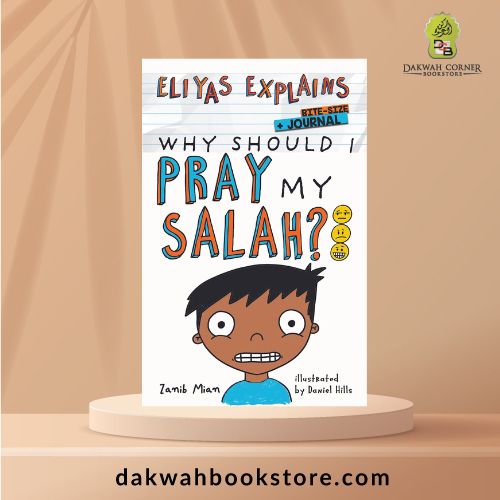

Eliyas Explains Why Should I Pray My Salah: Bitesize + Journal
Highlights:
For anyone who wants to pray, but isn’t motivated enough and for those who pray, but want to enjoy their salah with presence of mind and heart.
RM45.00
There are no reviews yet.