


| Weight | 0.725 kg |
|---|---|
| ISBN | 9781905837038 |
| Binding | Hardbound |
| Publisher | Al-Kitaab & as-Sunnah Publishing |
| Author | |
| Pages | 296 |
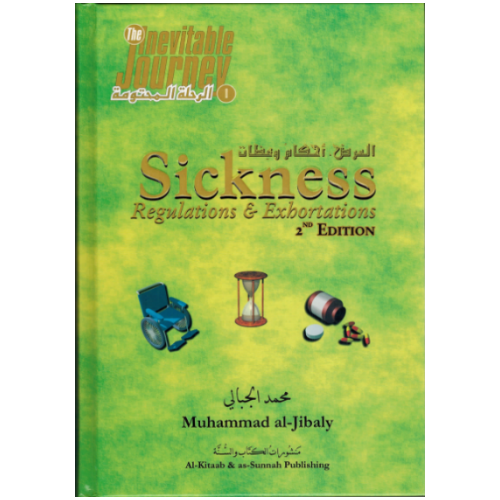
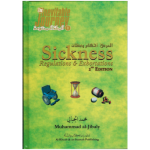
Sickness Regulations & Exhortations
RM67.00
Hurry up, Only 1 left.
Highlights:
somdn_product_page
Compare
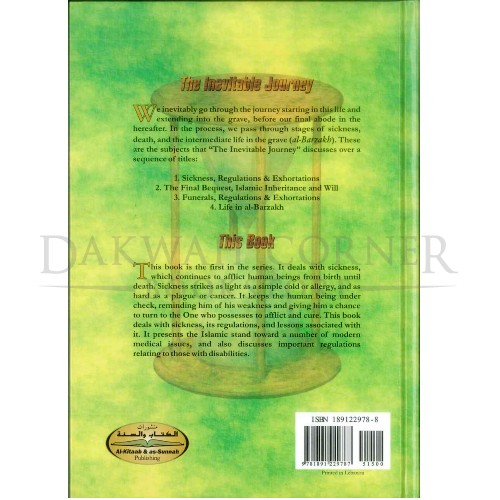
This book is the first in the series. It deals with sickness, which continues to afflict human beings from birth until death. Sickness strikes as light as a simple cold or allergy, and as hard as a plague or cancer. It keeps the human being under check, reminding him of his weakness and giving him a chance to turn to the One who possesses to afflict and cure. This book deals with sickness, its regulations, and lessons associated with it. It presents the Islamic stand toward a number of modern medical issues, and also discusses important regulations relating to those with disabilities.
SKU: SJ45
Category: Sharia, Fiqh and Jurisprudence
Additional information
Reviews (0)
Be the first to review “Sickness Regulations & Exhortations” Cancel reply
You must be logged in to post a review.
You may also like…


Funerals Regulations and Exhortations (H/B)
Highlights:
Our soul inevitably follows a route starting from birth, passing through death, and ending with our resurrection in the next life. The inevitable journey discusses over a sequence of titles: sickness, inheritance, funerals, Life in Barzakh and so on…
RM75.00
Related Products


Getting the Best Out of Hajj
Highlights:
The book provides a realistic view of Hajj as it is today, with detailed explanations of all the rites. It provides Figh related issues about Hajj, Salah and personal behaviour according to the Quran and Sunnah, to enable you to obtain the best value for your time spent in the holy cities. It also provides information and suggestions about planning for the journey, what to expect and how to survive, so you can depart with full confidence. This is a must have for all those planning to go on Hajj!
RM75.00


Fiqh According To The Quran & Sunnah (2 vol)
Highlights:
The complete set, ‘Al-Lubab Fee Fiqh As-Sunnah Wal-Kitab,’ contains all of the books of Islamic Fiqh and its chapters, accompanied by evidence and is presented in a clear and simple manner, in order that they may be understood by the young and the old, without blindly following any of the schools of Jurisprudence, but rather being subject to authentic proofs and following the most authoritative opinions, without fanatical adherence to any particular group. Rather the author agrees with each group when the truth is with them and contradicts them when they veer from that which is correct.
Fiqh is to achieve access to knowledge of that which is unclear through knowledge of that which is proven, so it is more specific than mere knowledge or learning. And fiqh is knowledge of the juristic law. It is said Faquha -A man has acquired understanding and so he has become a Faqeeh (A scholar of Islamic Jurisprudence); and it is said Faqiha – He has understood it, i.e he has attained understanding of it, and it is said Tafaqqaha – he has devoted himself to the acquisition of (Islamic) Knowledge and specialized in it. Fiqh has been a subject of contention among the scholars as well as layman throughout the history of Islam.
RM180.00

The Right to Education, Work and Welfare in Islam (P/B)
Highlights:
In The Right to Education, Work and Welfare in Islam Professor M.H. Kamali develops an Islamic perspective on three connected and complementary areas of rights and liberties. He urges that education is often a necessary ingredient of professional work even more so now than in earlier times when the range and variety of specialised knowledge were relatively limited. A person who acquires education, whether generally or at advanced levels of specialisation, is more likely to stand in a better position to enter the workforce and thus to contribute to the welfare of the community.
The author commences his discussions on education, work and welfare in Islam by focusing on how each is treated in the Qur’an; and follows this by the example of the Prophet and, after him, the Pious Caliphs who gave prominence to the education and welfare needs of people at times both of scarcity and affluence. Professor Kamali then moves forward to our time and discusses the right to education, the education of children, institutionalisation of learning, academic freedom and the debate between science and religion.
The section on work elaborates on the value of work, work ethics, workers’ and employers’ rights and responsibilities, and the role and responsibility of governments.
Finally, the section on welfare focuses on the importance in Islam of caring for those who are in need and the different forms of provision that can be made available by individuals, the state and charities.
RM63.00

The Pillars of Islam Made Easy I- Shahadah (Testimony of Faith) & Its Essential Conditions (H/B)
Highlights:
For a Muslim, the testimony of faith is the affirmation that there is no god other than Allah and that Prophet Muhammad (saw) is His servant and messenger. This testimony is second nature to most Muslims; yet it is disappointing to note that many of them are not aware of the seven conditions attached to it.
RM40.00


Common Mistakes Regarding Prayer – IIPH
Highlights:
Formal prayer (salat) is the second pillar of Islam, and the most important of a Muslim’s acts of worship. Prophet Muhammad (PBUH) said: “The first of one’s actions for which a slave of Allah will be held accountable on the Day of Judgment will be one’s prayers. If they are correct and accounted for, then he (or she) will have succeeded (gained paradise); and if they are lacking, then he (or she) will have failed (lost paradise). If there is something defective in his (or her) obligatory prayers, the Lord will say: ‘See if my slave has any supererogatory prayers with which that which was defective in his (or her) obligatory prayers may be completed. Then the rest of his (or her) deeds will be judged in like manner.” (At-Tirmidhi and others) Shaykh Mashhur Hasan Salman has compiled a list of the most common errors that we make when we pray, discussing and explaining each one. This book is a valuable aid to Muslims hoping to perfect their prayers, so that their prayers may be free of defects and acceptable to Allah. This new and revised edition of the English translation of his work presents the text in a fluent, highly readable style.
RM38.00


Should A Muslim Follow A Particular Madhhab?
Highlights:
In this book, the author has widely described the main principle of Taqleed. He says that Allah and Prophet Mohammed (SAW) has not ordered us to follow any opinions and interpretations. So there’s a possibility of being correct or incorrect in the opinions because there are many issues on which the Imams had different views and they explain them according to their own reasons and speculations, but the real and true Islam is based on the book (Quran) and Prophet’s Sunnah.
Allah says: “But no, by your Lord, they can have no Faith until they make you judge in all disputed matters between them, and find in themselves no resistance against your decision, and accept them with full submission.” And the prophet said: “I leave you with two things as long as you hold them tightly, you never go astray: they are the book of Allah and my Sunnah.” In this sense, the author has described the difference between different Madhahib (madhabs/mazhabs), and their views and urged to follow only the Quran and Sunnah.
RM11.00


Ibn Ashur Treatise on Maqasid al-Shariah (P/B)
Highlights:
Ibn Khaldun, the fourteenth century Arab historiographer and historian, is viewed as a founder of modern historiography, sociology and economics. He lived during a turbulent part of history, and out of his experiences, he ?conceived and created a philosophy of history that was undoubtedly the greatest work ever created by a man of intelligence…?. This work tells of the period of unrest in Ibn Khaldun?s life marked by political rivalries. It is during this turbulent period which provided him with the opportunity to write the Muqaddimah (or Prolegomena), earning him an immortal place among historians, sociologists and philosophe
RM72.00

The Problems of the Illegitimate Child (P/B)
Highlights:
This book addresses the views of the Sunni scholars regarding the importance of genealogical relationship (nasab) in Islamic family law and examines the role of legitimacy on the basis of the legal maxim “al-walad li al-firash”, evidence (al-bayyinah), and doubtful intercourse (wat’ shubhah). It also elucidates the views of the Sunni schools of law on how to establish illegitimacy. For the Sunni jurists, there are several situations that determine the illegitimacy of the child. A child is considered illegitimate if its birth is the outcome of adultery (zina) or the result of legitimate union but accompanied with imprecation (li‘an). Other circumstances include the birth of the child taking place in less than six lunar months, the father of the child being categorized as one who is incapable of begetting, or the birth as a result of marital relationship considered unlawful because of consanguinity. The book also deals comprehensively with the moral, religious, legal and other aspects of the illegitimate child and the foundling in the works of the Sunni jurists. The status and rights of the illegitimate child and the foundling in the Islamic family law of Malaysia and Brunei are also discussed by referring to some provisions from Federal Territory Act 1984 (Act 303) and Brunei law.
RM49.00


Fast According to the Quran & Sunnah
Highlights:
Saum (Fast) is a third Pillar of Islam. Allah’s Messenger said, Allah says: “Every deed of the son of Adam is for him, except Saum (fasting). It is for Me and I shall reward for it.”
As the status of this act of worship is so high it is essential to learn the pilings pertaining to this month of fasting so that Muslims will know what is obligatory in order to do it, what is forbidden to avoid it, and what is permissible so that they do not unnecessarily subject themselves to any hardship by depriving themselves from it.
This book consists of all the main issues of Fast. The main objective of this work is to serve an easy and authentic reference to the reader.
RM35.00


Funeral Rites In Islam (H/B)
Highlights:
The purpose of this book is to provide English speaking Muslims a concise and authentic compilation of the instructions regarding funeral rites in Islam.
RM35.00


Zakah According to the Quran & Sunnah (Darussalam)
Highlights:
Zakah, the third Pillar of Islam, is probably the first Pillar of its economic system. It represents the first and most important mechanism to implement economic justice and to provide sustenance to the economically unfortunate, two issues for which Islam is especially sensitive. These two issues are the essence of this book. This book consists of all the main issues of Zakat (i-e, Zakah on Gold, Silver, Paper Money, Livestock, Fruits, Grains, Rented Land, Buried treasures, Minerals, Trade, Shares, Stocks, and Exploited Assets etc). The main objective of this work is to serve an easy and authentic reference to the reader.
RM65.00

The Pillars of Islam Made Easy – II Salah & Its Essential Conditions (H/B)
Highlights:
Salah is one of the five pillars on which the edifice of Islam rests. Most of us feel that we already know all there is about salah – the formal prayers of a Muslim. However, very few individuals actually do justice to it or derive any worldly or spiritual benefits from it.
Salah & Its Essential Conditions is an effort to detail the essential prerequiires of salah. Moreever, it takes a detailed look at its importance along with the different types of obligatory and voluntary prayers. It alsa presents an illustrated guide to help those who wish to learn or correct the performance of their prayers.
Inshallah, all those who wish to improve their salah will find plenty of help in this book whether they are looking for information on cleanliness and purify, locating the direction of qibla, improving their congregation during salah, making up for the missed salah, or joining acongregation when the imam has already sarted the salah, or joining a congregation when the imam has already started the salah. All in all, it is a relevant handbook on what the Prophet (saw) has described as the coolness of his eyes.
RM50.00
Recently Viewed
[HH] Sahih al-Bukhari / صحيح البخاري
Highlights:
يعد هذا الكتاب من أشهر كتب الإمام البخاري رحمه الله ، بل هو من أشهر كتب الإسلام ، وأوسعها انتشاراً في العالم ، فقل لا يخلو بيت مسلم من هذا الكتاب ، وهو من أنفس الكتب الجامعة للترغيب والترهيب ، ولسائر أنواع آداب الإسلام والمسلمين ، اذ جمع ما يحتاج اليه في سائر الأحوال ، واشتمل على ما ينبغي التخلق به من الأخلاق ، وما ينبغي التمسك به من الأقوال والأفعال فكان بحق رياضاً للصالحين
RM130.00
Arabic Through The Qur’an
Highlights:
Whether used as a means of self-instruction or as part of higher learning coursework, this language primer is ideally suited for those wishing to learn classical Arabic and for Muslims who wish to learn Arabic exclusively for use in their religious and spiritual practice. Designed to enhance the understanding of the Qur’an and its vocabulary that has infiltrated the whole of Arabic and Islamic literature, this workbook provides 40 easy-to-follow lessons for learning Qur’anic rather than modern Arabic. Beginning with a section on the Arabic alphabet, the text moves on to individual lessons that address one or more grammatical topics, ranging from the basics of nouns, adjectives, and prepositions to the more complex concepts of the imperative, the passive, and conditional sentence, introducing new vocabulary in the process. Accompanying translation exercises, a glossary of technical terms, and an index supplement the main text.
RM105.00
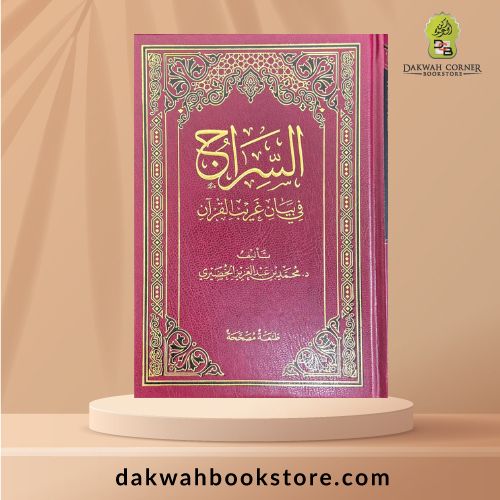
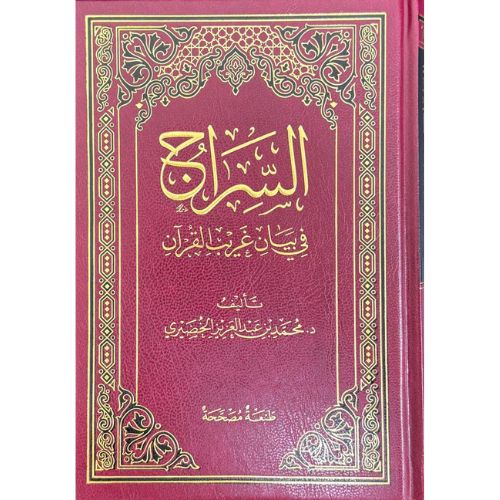
[AUQ]As-Siraj Fi Bayan Gharib Al-Qur’an/ السراج في بيان غريب القرآن
Highlights:
أما عبارة “بيان غريب القرآن” فهي توضّح موضوع الكتاب بدقة، حيث تشير إلى شرح الكلمات النادرة أو الصعبة في القرآن الكريم وبيان معانيها اللغوية. وهذا النوع من الكتب مهم لطلاب العلم والباحثين في اللغة العربية وعلوم القرآن، لأنه يساعد على فهم المفردات القرآنية التي قد تكون غير مألوفة.
وبشكل عام، فإن العنوان يجمع بين الأسلوب البلاغي الجذاب والدلالة العلمية الواضحة، مما يعكس هدف المؤلف في توضيح معاني الألفاظ الغريبة في القرآن الكريم وتسهيل فهمها للقارئ.
RM40.00
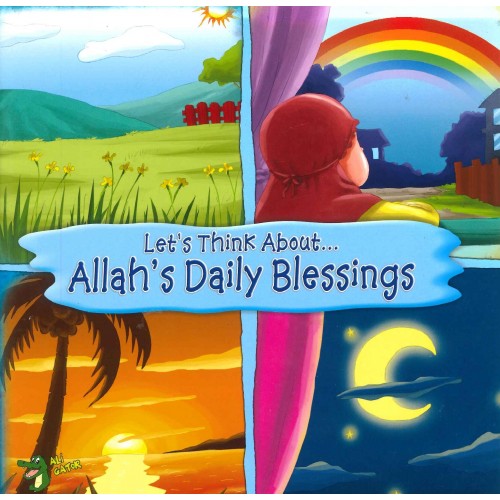
Let’s Think About Allah’s Daily Blessings
Highlights:
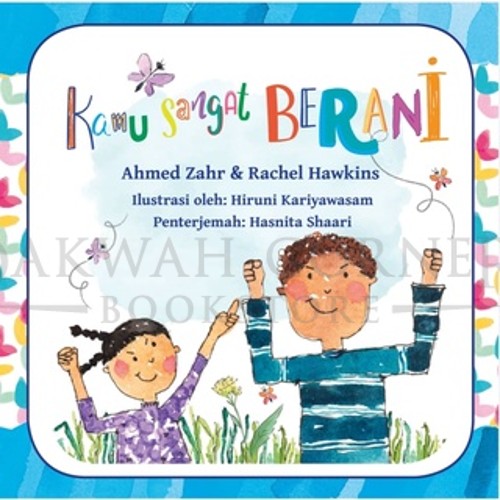
Let’s Think About… Daily Blessing gets children thinking about the world in which they live.
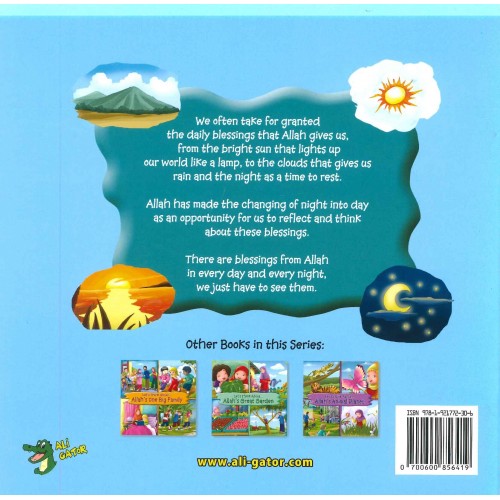
We often take for granted the daily blessing that Allah gives us, from the bright sun that lights up our world like a lamp, to the clouds that gives us rain and the night as a time to rest.
Allah has made the changing of night into day as an opportunity for us to reflect and think about these blessings.
There are blessing from Allah in every day and every night, we just have to see them.
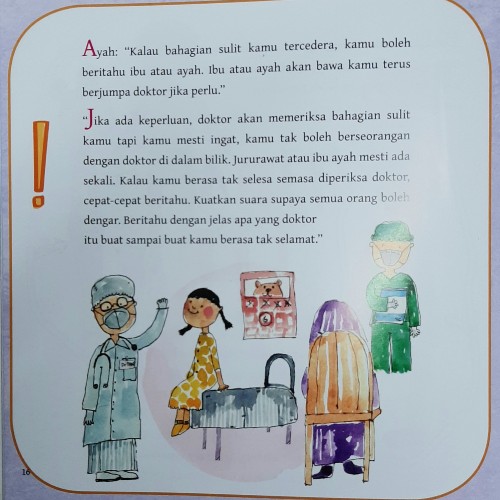
There are four new easy to read titles in the Let’s Think About… series. All with simple to read text and beautiful illustrations to attract young minds.
The notes to teachers and parents section provides a list of points to consider and questions to ask as you read along. This allows for the young readers to receive the maximum benefit from the books, whilst enjoying them.
Full Color
RM20.00
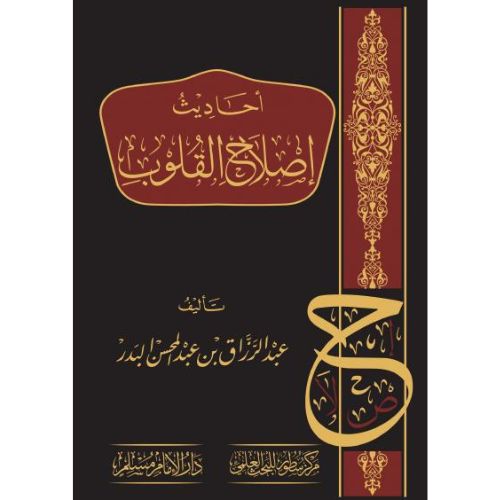
[AH] Ahadith Islah Al Qulub / أحاديث إصلاح القلوب
Highlights:
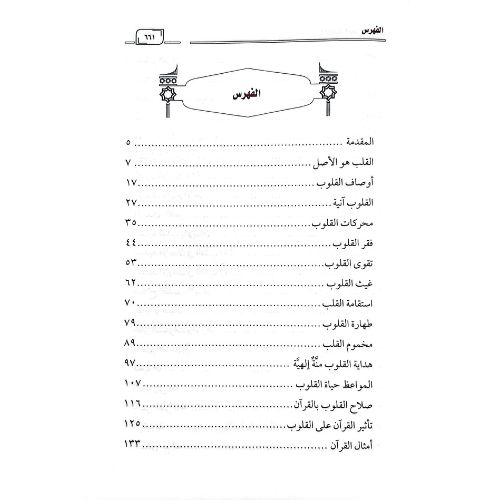
فإن أولى ما صرفت فيه الهمم والعزائم إصلاح القلوب وعلاجها وحفظ صحتها ودفع أسقامها وحمايتها مما يفسدها، وهو المقصود بالقصد، لعظم خطرها وشدة تأثيرها على الأبدان صلاحا أو فسادا.
RM90.00
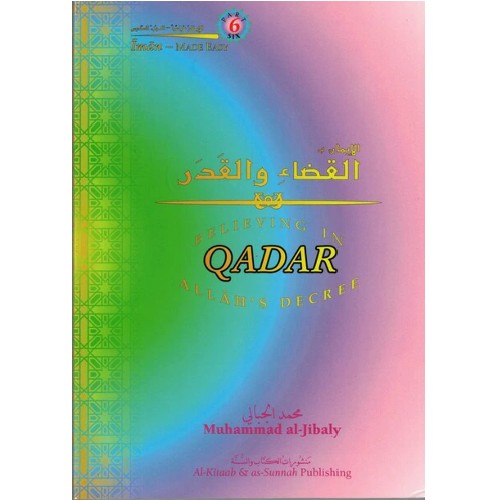
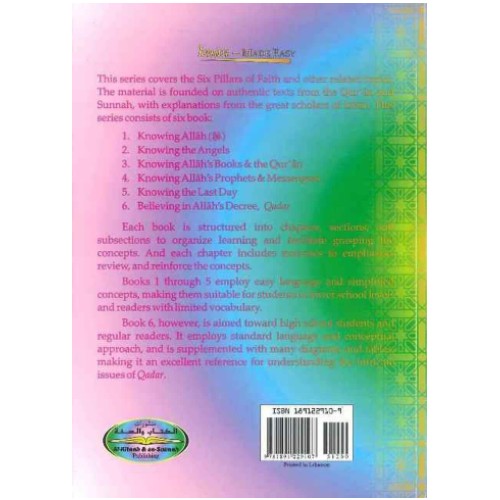
Believing In Allah’s Decree, Qadar (Eeman Made Easy Series)
Highlights:
This series of books presents stories of outstanding moral and educational value. The narrations are taken from texts of the Quran and authentic sunnah, enhanced by extensive remarks and commentaries, and supplemented with important conclusions and lessons.
RM51.00
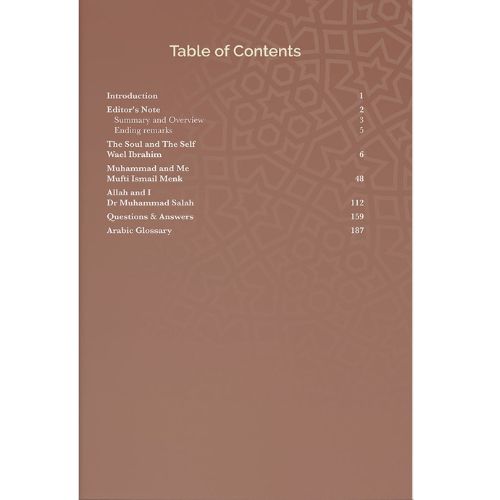


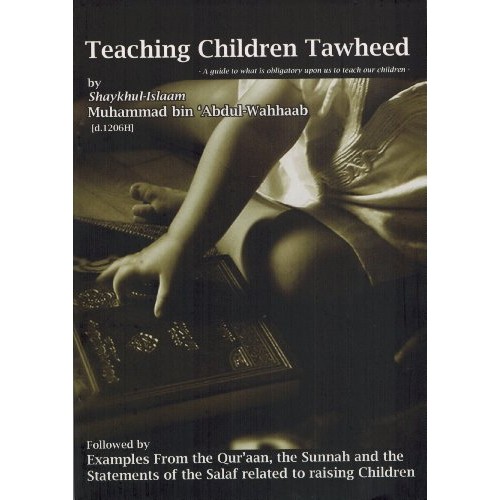
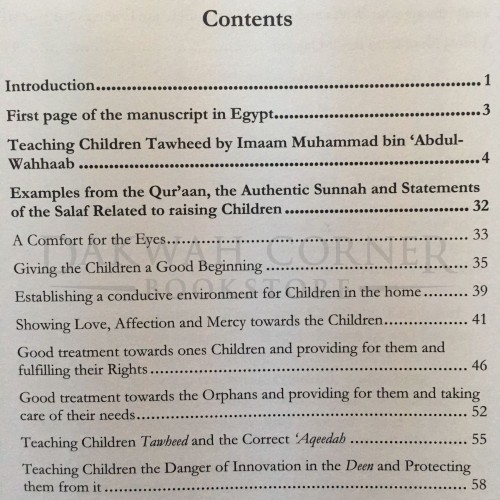
Teaching Children Tawheed (P/B)
Highlights:
The noble Imam, Shaykh Muhammad bin ‘Abdul-Wahhab said:
“So this beneficial treatise is in regards to what is obligatory upon the human being to teach the children, before teaching them the Qur’an, so he becomes a person who is complete, upon the fitrah of Islam, and a good, firm muwwahid (person of Tawheed) upon the path of Eman (true, correct faith).”
RM65.00
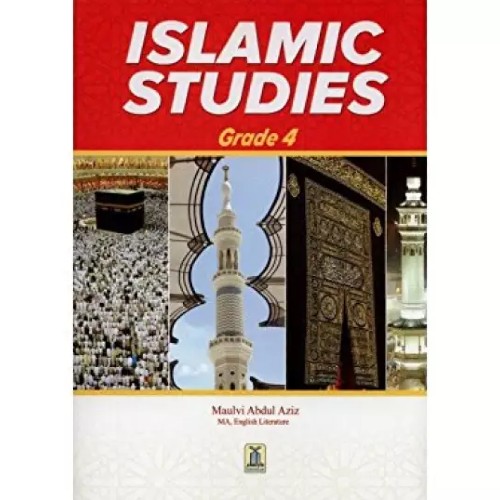
Islamic Studies Grade 4 – Darussalam
Highlights:
.The present series covers all areas of Islamic studies: Tafseer, Hadeeth, Tawheed, Fiqh, Seerah, and general etiquette relating to different areas and situations. Every effort has been made to ensure that the material presented in the series is authentic and most of the terms are presented in their original Arabic script, along with the transliteration and the translation of their meanings. This also applies the supplications which have to be memorized in their Arabic version. The aim re is to help the readers read the original text and understand its meaning. Each lesson is followed by exercises covering a question about the lesson.
RM110.00
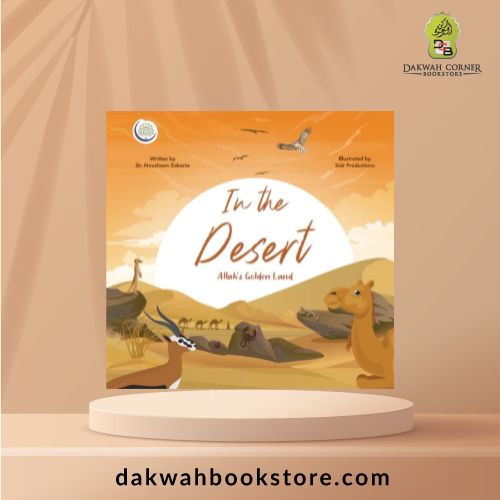
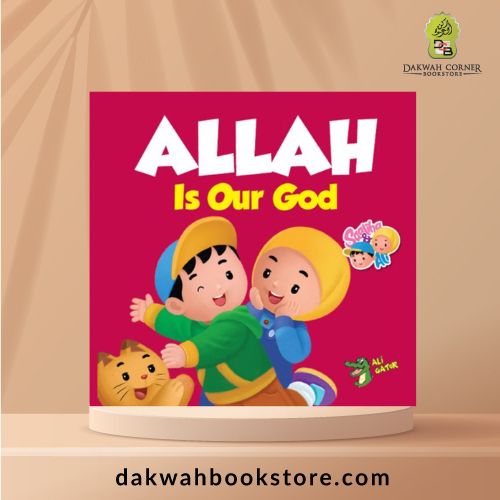
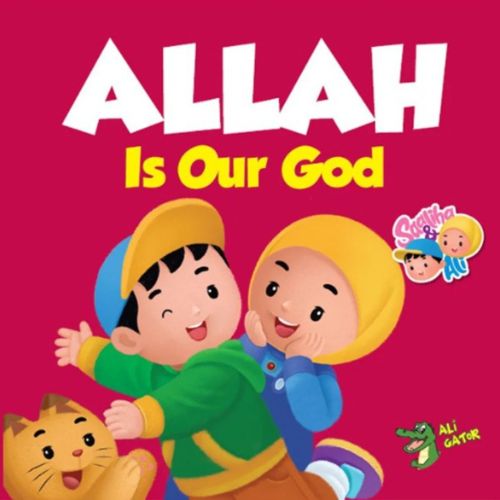
Saaliha & Ali: Allah is Our God
Highlights:
Help your child develop a meaningful relationship with Allah through this thoughtfully crafted introductory guide.
RM22.00
There are no reviews yet.