| Weight | 0.5 kg |
|---|---|
| Product Type | Book |
| Author | |
| Publisher | Ilmiah Publishers |
| Pages | 294 |
| ISBN | 9789675826153 |
The Right to Education, Work and Welfare in Islam (P/B)
RM63.00
In The Right to Education, Work and Welfare in Islam Professor M.H. Kamali develops an Islamic perspective on three connected and complementary areas of rights and liberties. He urges that education is often a necessary ingredient of professional work even more so now than in earlier times when the range and variety of specialised knowledge were relatively limited. A person who acquires education, whether generally or at advanced levels of specialisation, is more likely to stand in a better position to enter the workforce and thus to contribute to the welfare of the community.
The author commences his discussions on education, work and welfare in Islam by focusing on how each is treated in the Qur’an; and follows this by the example of the Prophet and, after him, the Pious Caliphs who gave prominence to the education and welfare needs of people at times both of scarcity and affluence. Professor Kamali then moves forward to our time and discusses the right to education, the education of children, institutionalisation of learning, academic freedom and the debate between science and religion.
The section on work elaborates on the value of work, work ethics, workers’ and employers’ rights and responsibilities, and the role and responsibility of governments.
Finally, the section on welfare focuses on the importance in Islam of caring for those who are in need and the different forms of provision that can be made available by individuals, the state and charities.
Be the first to review “The Right to Education, Work and Welfare in Islam (P/B)” Cancel reply
You must be logged in to post a review.
Related Products
A Guide to Male-Female Interaction
Are Muslim men allowed to interact with female students, and vice versa, in a virtual classroom? Can a Muslim woman pursue a professional career that necessitates her interaction with men? Is it appropriate for a woman to serve her husband’s guests? Do mixed wedding ceremonies comply with the Sharia? Read this bilingual book to find the answers and more!
The Pillars of Islam Made Easy I- Shahadah (Testimony of Faith) & Its Essential Conditions (H/B)
For a Muslim, the testimony of faith is the affirmation that there is no god other than Allah and that Prophet Muhammad (saw) is His servant and messenger. This testimony is second nature to most Muslims; yet it is disappointing to note that many of them are not aware of the seven conditions attached to it.
Istihsan (P/B)
This work constitutes a critical analysis of classical and modern aspects of the concept of istihsan (juristic preference), an important principle in Islamic legal legislation throughout history. Although there has been many research works on the subject, it still requires further investigation on the role and nature of istihsan with regard to a combination of classical and modern approaches. Consisting of four chapters, the author begins by introducing some general principles of Islamic law, before discussing the history of istihsan during the time of the Prophet and his Companions. He also analyses the validity of istihsan as a source of law and discusses the differences among scholars on its method of implementation.
The Concise Presentation of the Fiqh of the Sunnah and the Noble Book
Written by Dr. Abdul-Azeem Badawi and translated by Jamal al-Din M. Zarabozo, The Concise Presentation of the Fiqh of the Sunnah and the Noble Book covers the fiqh of diverse topics like purity, prayer, fasting, zakah, pilgrimage, marriage, business transactions, foods, inheritance, criminal offenses, and jihad. Dr. Badawi relies only on the Quran and the Sunnah, making it an authentic Islamic book on fiqh and a collection of sound hadiths.
Hajj & Umrah (Pocket Guide) – English Version
A useful pocket guide that includes the rites of Umrah,Hajj, and visiting Madinah.
Ibn Ashur Treatise on Maqasid al-Shariah (P/B)
Ibn Khaldun, the fourteenth century Arab historiographer and historian, is viewed as a founder of modern historiography, sociology and economics. He lived during a turbulent part of history, and out of his experiences, he ?conceived and created a philosophy of history that was undoubtedly the greatest work ever created by a man of intelligence…?. This work tells of the period of unrest in Ibn Khaldun?s life marked by political rivalries. It is during this turbulent period which provided him with the opportunity to write the Muqaddimah (or Prolegomena), earning him an immortal place among historians, sociologists and philosophe
The Ultimate Guide to Umrah by Darussalam
War and Peace in Islam : The Uses and Abuses of Jihad (P/B)
Written by a number of Islamic religious authorities and Muslim scholars, this work presents the views and teachings of mainstream Sunni and Shi’i Islam on the subject of jihad. It authoritatively presents jihad as it is understood by the majority of the world’s 1.7 billion Muslims in the world today, and supports this understanding with extensive detail and scholarship. No word in English evokes more fear and misunderstanding than “jihad.” To date the books that have appeared on the subject in English by Western scholars have been either openly partisan and polemical or subtly traumatized by so many acts and images of terrorism in the name of jihad and by the historical memory of nearly 1,400 years of confrontation between Islam and Christianity. Though jihad is the central concern of War and Peace in Islam: The Uses and Abuses of Jihad, the range of the essays is not confined exclusively to the study of jihad. The work is divided into three parts: War and Its Practice, Peace and Its Practice, and Beyond Peace: The Practice of Forbearance, Mercy, Compassion and Love. The book aims to reveal the real meaning of jihad and to rectify many of the misunderstandings that surround both it and Islam’s relation with the “Other.”
Reviews:
“A dynamic myth-busting clarification of the real position of mainstream orthodox Islam on the whole question of violence and jihad.” —T. J. Winter, University of Cambridge
“This is the best book on the subject in English. It will be of inestimable value.” —Shaykh Mustafa Ceric, Grand Mufti Emeritus of Bosnia
Worship In Islam: An In-depth Study of Ibadah, Salah and Sawm (P/B)
Worship in Islam is in-depth study of the nature and significance of Islamic spirituality by Abul A‘la Mawdudi (1903–79), one of the leading Muslim intellectuals of the twentieth century, with special reference to the concepts of God’s Oneness (tawhid), the finality of Prophethood (risalah) and the Islamic system of worship (‘ibadah) with a focus upon prayer (salah) and fasting (sawm) and their role in the development of the Islamic personality and Islam’s social order. The distinguishing feature of Mawdudi’s approach is his elaboration of the social dimension of worship, which extends the traditional approach found in Islamic jurisprudence, with its focus upon ritual and self-purification, to consider worship’s transformative role in social life. Presenting a holistic view of the Islamic system, Mawdudi highlights Islam’s social, economic and political dimensions, which he argues has the capacity to resolve emergent issues and problems that humankind faces.
This historic text should be of wider interest to both students and specialists in contemporary Islamic thought, and includes an introduction by Professor Anis Ahmad.
Edited and translated into accessible English by Ahmad Imam Shafaq Hashemi, this book is an authoritative compilation by a leading Islamic twentieth-century revivalist on the central matter of worship’s role in Islam.
Fiqh Course: Tahaarah, Salaah & Janaa’iz
This course was compiled for English-speaking Muslims and is especially beneficial for new Muslims. It covers tahârah (purification), salâh (prayer) and janâ‘iz (funerals). It is set out in an easy-to-understand manner, citing evidence from the Qur’an and authentic hadiths. The aim of this book is to provide the reader with a correct, yet uncomplicated guide to the performance of the aforementioned acts of worship. Allah willing, it is the first in a series which will cover all aspects of worship and Islamic jurisprudence.
The Pillars of Islam Made Easy – II Salah & Its Essential Conditions (H/B)
Salah is one of the five pillars on which the edifice of Islam rests. Most of us feel that we already know all there is about salah – the formal prayers of a Muslim. However, very few individuals actually do justice to it or derive any worldly or spiritual benefits from it.
Salah & Its Essential Conditions is an effort to detail the essential prerequiires of salah. Moreever, it takes a detailed look at its importance along with the different types of obligatory and voluntary prayers. It alsa presents an illustrated guide to help those who wish to learn or correct the performance of their prayers.
Inshallah, all those who wish to improve their salah will find plenty of help in this book whether they are looking for information on cleanliness and purify, locating the direction of qibla, improving their congregation during salah, making up for the missed salah, or joining acongregation when the imam has already sarted the salah, or joining a congregation when the imam has already started the salah. All in all, it is a relevant handbook on what the Prophet (saw) has described as the coolness of his eyes.
Islamic Fatawa Regarding Women (H/B)
Women face a lot of special problems regarding their menses, postpartum bleeding, istihada, hijab, mixing with men, rights & duties with respect to their husband, husband’s household, children, inheritance, marriage, divorce, etc
More than 350 of such problems & issues have been answered in this book by Grand Mufti of Saudi Arabia Sheikh Ibn Baz, and the eminent scholars like Sheikh Ibn Uthaimin, Sheikh Ibn Jibreen and others.
.
Recently Viewed
A Muslim Boy’s Guide to Life’s Big Changes (Ta-Ha)
Motivational & Manners
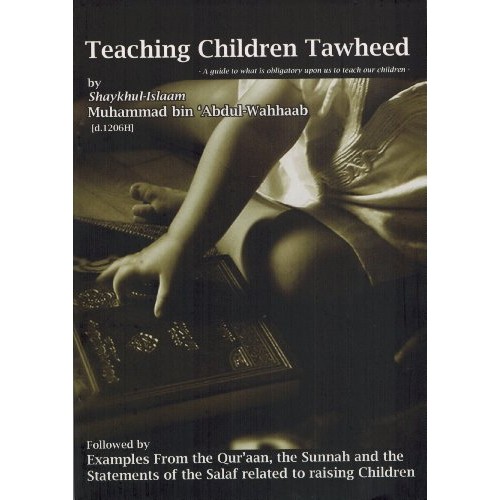
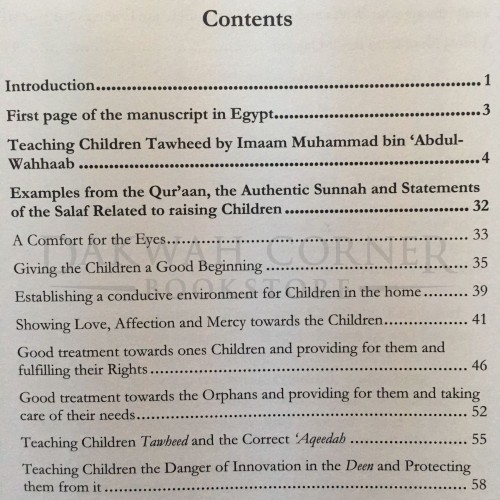
Teaching Children Tawheed (P/B)
The noble Imam, Shaykh Muhammad bin ‘Abdul-Wahhab said:
“So this beneficial treatise is in regards to what is obligatory upon the human being to teach the children, before teaching them the Qur’an, so he becomes a person who is complete, upon the fitrah of Islam, and a good, firm muwwahid (person of Tawheed) upon the path of Eman (true, correct faith).”
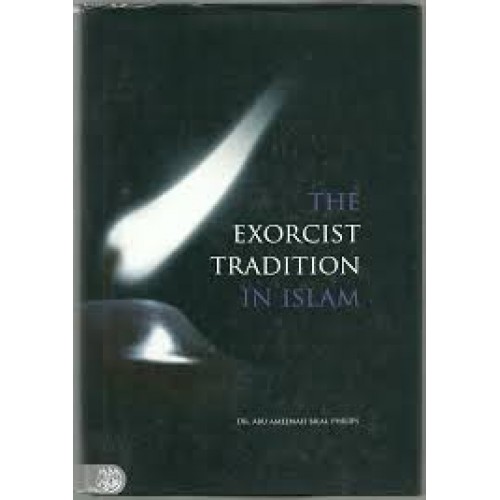
The Exorcist Tradition in Islam (H/B)
This original work was first presented as a Ph.D. thesis in 1994 at the University of Wales. It is a well-balanced combination of library as well as
field research which systematically and critically assesses the theory and practice of exorcism among orthodox Muslims.
The field research is comprised of interviews with seventeen exorcists from seven countries. The results are analysed in the main text, and the interviews themselves are reproduced in a sizeable appendix. This book is a unique contribution to the understanding of a subject little known among western scholars.
This work is specifically aimed at filling a gap in modern research on the Islamic concept of exorcism and the supernatural world related to it, based upon the sources considered authentic by Islamic authorities and augmented by field research. The possession of humans by jinns and their expulsion are thoroughly discussed. A comparative study is made with Christian exorcist tradition and the medical professions point of view. Case studies of leading Muslim exorcists from Egypt, Sudan, Saudi Arabia, Bahrain, Pakistan and India are included.
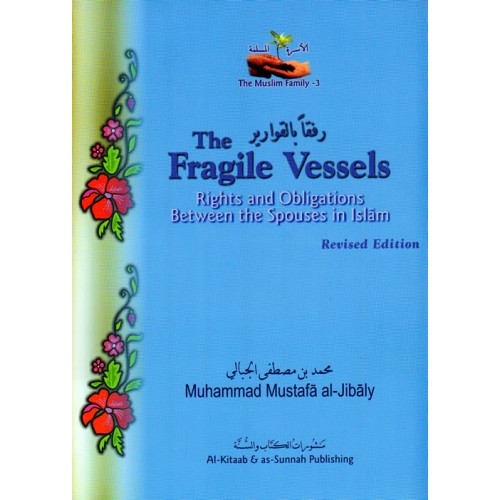
The Fragile Vessels (P/B)
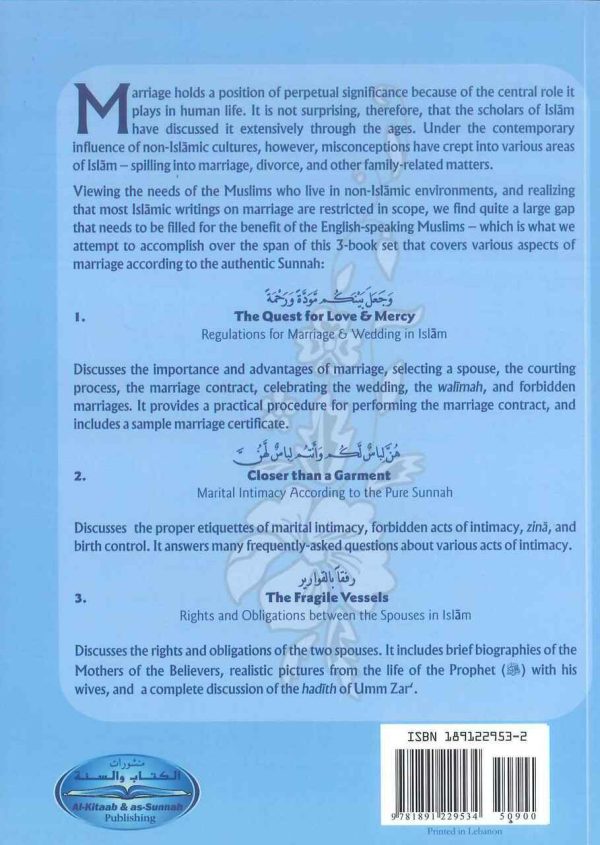
This is one of a 3-book series covering various aspects of marriage according to the authentic Sunnah. Marriage plays a most central role in the human life, and has been largely discussed by the scholars of Islaam through the ages, resulting in numerous writings and treatises. Some of those writings, mostly by contemporary scholars, have been translated into English. However, we find them restricted in scope, addressing Muslims who live in predominantly Islaamic countries, or overlooking important real issues that have developed under modern civilization. This leaves quite a large gap that needs to be filled for the benefit of the Muslims in English-speaking countries, and this is what we attempt to fulfill over the span of three books.”
Covers the obligations of the two spouses, the wife’s rights, and the husband’s rights. Contains biographies of the Mothers of the Believers, paints a very realistic picture from the life of the Prophet (pbuh) with his wives, and presents a complete discussion of the hadeeth of Ummar Zar’.
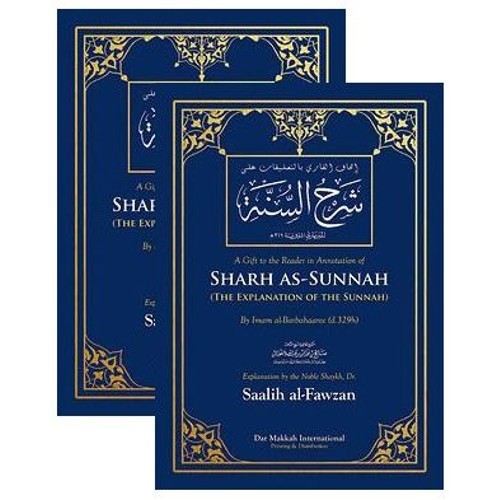
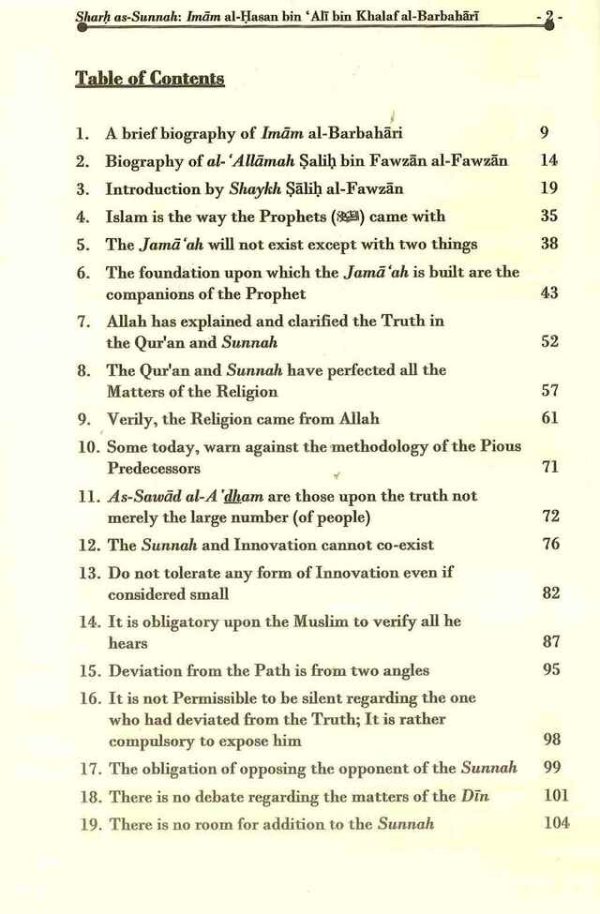
Sharh As-Sunnah : The Explanation of the Sunnah (2 Vol Set)
About The Book This is the highly beneficial two volume work in explanation of the famous works by Imam al-Barbahari (d.329h) by the esteemed & noble Shaykh, Dr Saalih al- Fawzan. Its importance can be seen by virtue of its being compiled in the early times; as it is one of the books of the earliest Salaf – those who lived in the same period with the great Imams, acquired knowledge from them and reported their pure Aqidah(creed) About The Author Imaam Al-Barbahaaree, rahimahullaah was a formidable and imposing Imaam of the 4th centuty Hijri who spoke out with the truth and called to the Sunnah and to the following of narrations. He also had renown and the respect of the ruler. In his gatherings, various circles for the study of hadeeth, the narrations and Fiqh were held. These were attended by many of the scholars of hadeeth and fiqh. The scholar, Abu ‘Abdillaah said: “If you see a person of Baghdaad loving Abul-Hasan Ibn Bashshaar and Abu Muhammad Al-Barbahaaree, then know that he is a person of the Sunnah.” The Imam Died in 329 Hijri
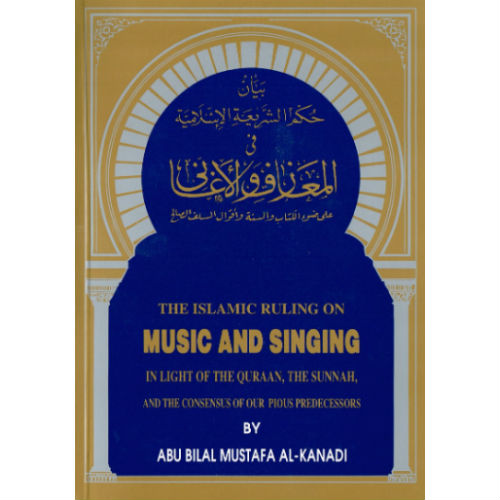
The Islamic Ruling on Music and Singing (P/B)
The legality of music and singing in the Islamic shari’ah (the divinely-revealed law) is an issue which is hotly debated among individuals and scholars in Islamic societies of our present day. Arriving at the correct view requires unbiased, scholarly research of the available literature which must be supported by authentic, decisive proof.
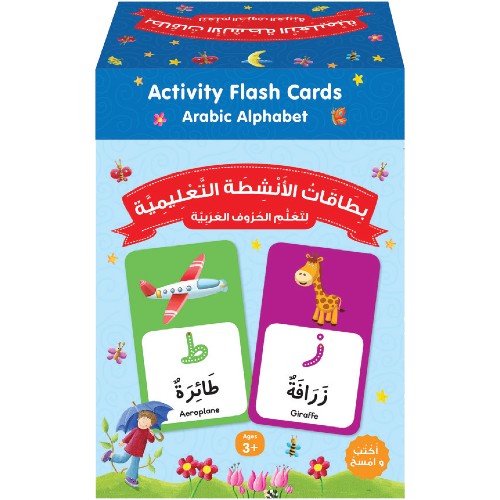
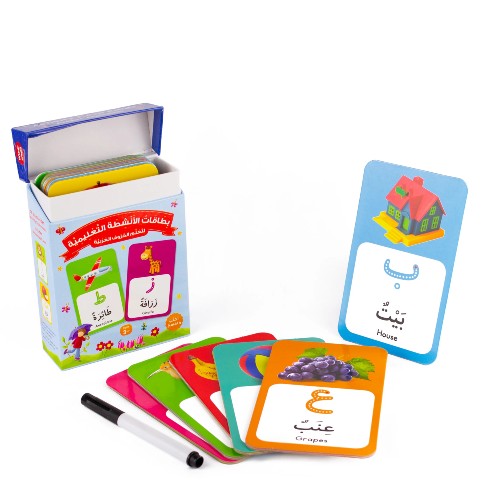
[GM] Activity Flash Cards Arabic Alphabet
28 double-sided cards help to teach both the alphabet and words!
Ages 3+
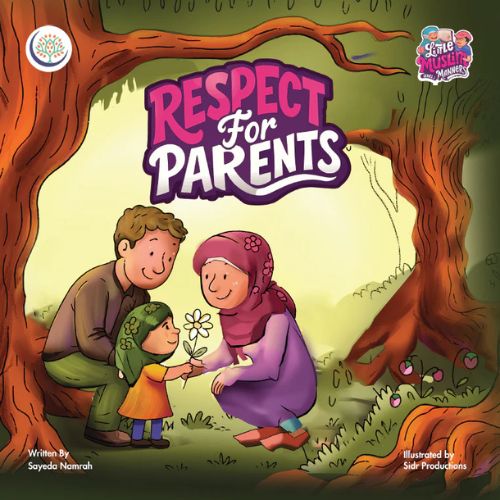
Respect For Parents (P/B)
Manners are part of our deen. The Little Muslim Manners Series helps toddlers (ages 1-4) learn everyday Islamic manners in fun and simple ways. From respect for parents and honesty, to kindness with neighbours and table manners, each book makes good behaviour easy to learn and love. Perfect for bedtime reading, circle time, or teaching first adab.


There are no reviews yet.