


| Weight | 0.5 kg |
|---|---|
| Product Type | Book |
| Author | |
| Publisher | Ilmiah Publishers |
| Pages | 294 |
| ISBN | 9789675826153 |
The Right to Education, Work and Welfare in Islam (P/B)
RM63.00
Out of Stock
Highlights:
somdn_product_page
Compare
In The Right to Education, Work and Welfare in Islam Professor M.H. Kamali develops an Islamic perspective on three connected and complementary areas of rights and liberties. He urges that education is often a necessary ingredient of professional work even more so now than in earlier times when the range and variety of specialised knowledge were relatively limited. A person who acquires education, whether generally or at advanced levels of specialisation, is more likely to stand in a better position to enter the workforce and thus to contribute to the welfare of the community.
The author commences his discussions on education, work and welfare in Islam by focusing on how each is treated in the Qur’an; and follows this by the example of the Prophet and, after him, the Pious Caliphs who gave prominence to the education and welfare needs of people at times both of scarcity and affluence. Professor Kamali then moves forward to our time and discusses the right to education, the education of children, institutionalisation of learning, academic freedom and the debate between science and religion.
The section on work elaborates on the value of work, work ethics, workers’ and employers’ rights and responsibilities, and the role and responsibility of governments.
Finally, the section on welfare focuses on the importance in Islam of caring for those who are in need and the different forms of provision that can be made available by individuals, the state and charities.
SKU: SJ183
Category: Sharia, Fiqh and Jurisprudence
Additional information
Reviews (0)
Be the first to review “The Right to Education, Work and Welfare in Islam (P/B)” Cancel reply
You must be logged in to post a review.
Related Products


Funeral Rites In Islam (H/B)
Highlights:
The purpose of this book is to provide English speaking Muslims a concise and authentic compilation of the instructions regarding funeral rites in Islam.
RM35.00


Ibn Ashur Treatise on Maqasid al-Shariah (P/B)
Highlights:
Ibn Khaldun, the fourteenth century Arab historiographer and historian, is viewed as a founder of modern historiography, sociology and economics. He lived during a turbulent part of history, and out of his experiences, he ?conceived and created a philosophy of history that was undoubtedly the greatest work ever created by a man of intelligence…?. This work tells of the period of unrest in Ibn Khaldun?s life marked by political rivalries. It is during this turbulent period which provided him with the opportunity to write the Muqaddimah (or Prolegomena), earning him an immortal place among historians, sociologists and philosophe
RM72.00


Should A Muslim Follow A Particular Madhhab?
Highlights:
In this book, the author has widely described the main principle of Taqleed. He says that Allah and Prophet Mohammed (SAW) has not ordered us to follow any opinions and interpretations. So there’s a possibility of being correct or incorrect in the opinions because there are many issues on which the Imams had different views and they explain them according to their own reasons and speculations, but the real and true Islam is based on the book (Quran) and Prophet’s Sunnah.
Allah says: “But no, by your Lord, they can have no Faith until they make you judge in all disputed matters between them, and find in themselves no resistance against your decision, and accept them with full submission.” And the prophet said: “I leave you with two things as long as you hold them tightly, you never go astray: they are the book of Allah and my Sunnah.” In this sense, the author has described the difference between different Madhahib (madhabs/mazhabs), and their views and urged to follow only the Quran and Sunnah.
RM11.00

Preservation of Health in Islamic Law (P/B)
Highlights:
Preservation of health (hifz al-sihhah) is the most important branch of Islamic medicine since it is primarily concerned with the prevention of illness rather than cure. This book represents one of the few attempts to introduce the role of Islamic medicine, although Chapter One provides information about a historical background of the preservation of helath in Islam, its aim is to provide fresh ant timely overview of the major aspects of legal, ritual and spiritual structures of teh Islamic law (shariah). These include the laws related to Ibadah, Islamic family laws, foods and drinks as well as environmental laws, for maintaning and preserving human health. Findings indicated that prevention of any diseases from Islamic medical law presentive cannot attain any real success unless it emanates from an Islamic fundamental teaching, namely: the pillars of Islam. Iman and observance of the Islamic rituals such as Salah, zakah, Sawm and Hajj, have played an important role in shaping the attitude, behavior and model personality of the Muslim, in boosting the spiritual motivation or attitude change, and in disseminating the message of prevention. This indicates that bodily and spiritual health goes hand in hand and that pyscho-spritual balance and health is a primary consideration whereas physical health is a secondary one.
RM47.00


The Concise Presentation of the Fiqh of the Sunnah and the Noble Book
Highlights:
Written by Dr. Abdul-Azeem Badawi and translated by Jamal al-Din M. Zarabozo, The Concise Presentation of the Fiqh of the Sunnah and the Noble Book covers the fiqh of diverse topics like purity, prayer, fasting, zakah, pilgrimage, marriage, business transactions, foods, inheritance, criminal offenses, and jihad. Dr. Badawi relies only on the Quran and the Sunnah, making it an authentic Islamic book on fiqh and a collection of sound hadiths.
RM90.00


Zakah According to the Quran & Sunnah (Darussalam)
Highlights:
Zakah, the third Pillar of Islam, is probably the first Pillar of its economic system. It represents the first and most important mechanism to implement economic justice and to provide sustenance to the economically unfortunate, two issues for which Islam is especially sensitive. These two issues are the essence of this book. This book consists of all the main issues of Zakat (i-e, Zakah on Gold, Silver, Paper Money, Livestock, Fruits, Grains, Rented Land, Buried treasures, Minerals, Trade, Shares, Stocks, and Exploited Assets etc). The main objective of this work is to serve an easy and authentic reference to the reader.
RM65.00


Fast According to the Quran & Sunnah
Highlights:
Saum (Fast) is a third Pillar of Islam. Allah’s Messenger said, Allah says: “Every deed of the son of Adam is for him, except Saum (fasting). It is for Me and I shall reward for it.”
As the status of this act of worship is so high it is essential to learn the pilings pertaining to this month of fasting so that Muslims will know what is obligatory in order to do it, what is forbidden to avoid it, and what is permissible so that they do not unnecessarily subject themselves to any hardship by depriving themselves from it.
This book consists of all the main issues of Fast. The main objective of this work is to serve an easy and authentic reference to the reader.
RM35.00

Istihsan (P/B)
Highlights:
This work constitutes a critical analysis of classical and modern aspects of the concept of istihsan (juristic preference), an important principle in Islamic legal legislation throughout history. Although there has been many research works on the subject, it still requires further investigation on the role and nature of istihsan with regard to a combination of classical and modern approaches. Consisting of four chapters, the author begins by introducing some general principles of Islamic law, before discussing the history of istihsan during the time of the Prophet and his Companions. He also analyses the validity of istihsan as a source of law and discusses the differences among scholars on its method of implementation.
RM57.00


Remembrance & Prayer: The way of Prophet Muhammad s.a.w
Highlights:
Remembrance and Prayer: The Way of Prophet Muhammad, was one of the first works of Shaykh al Ghazali’s to be translated into English. The book describes in vivid prose how the Prophet, upon him be peace, used to remember Allah and pray to Him. Not only are the exquisitely beautiful, deeply moving and penetrating words of the Prophet given in the English translation, but in the original Arabic as well, thus allowing those desirous of memorizing Arabic access to the original texts. The intimate relationship with Allah, which was the hallmark of the Prophet’s life, becomes clear and vivid. The book’s contents are immensely relevant. to the life and concerns of modern man, whose life has been made barren by the present secularist machinery.
RM75.00


Fiqh According To The Quran & Sunnah (2 vol)
Highlights:
The complete set, ‘Al-Lubab Fee Fiqh As-Sunnah Wal-Kitab,’ contains all of the books of Islamic Fiqh and its chapters, accompanied by evidence and is presented in a clear and simple manner, in order that they may be understood by the young and the old, without blindly following any of the schools of Jurisprudence, but rather being subject to authentic proofs and following the most authoritative opinions, without fanatical adherence to any particular group. Rather the author agrees with each group when the truth is with them and contradicts them when they veer from that which is correct.
Fiqh is to achieve access to knowledge of that which is unclear through knowledge of that which is proven, so it is more specific than mere knowledge or learning. And fiqh is knowledge of the juristic law. It is said Faquha -A man has acquired understanding and so he has become a Faqeeh (A scholar of Islamic Jurisprudence); and it is said Faqiha – He has understood it, i.e he has attained understanding of it, and it is said Tafaqqaha – he has devoted himself to the acquisition of (Islamic) Knowledge and specialized in it. Fiqh has been a subject of contention among the scholars as well as layman throughout the history of Islam.
RM180.00


Smoking Intoxicants & Narcotics (P/B)
Highlights:
This book deals with the epidemic of smoking, which enslaves many of today’s Muslims, and which is aggravated by that most victims belittle its dangers and deny its prohibition.
This book includes a discussions of intoxicants, establishing the prohibition of various practices associated with them, as well as penalties (in both lives) for those who partake in them.
This book also includes a discussion of narcotics, with an overview of marijuana and qaat (or khat). Based on their established effects and harms, we conclude that narcotics are strongly prohibited, except in very limited medical settings.
This book, we hope, will provide many Muslims with guidance toward a healthier, cleaner and worthies Islamic personality. My Allah grant us guidance and facilitation.
RM28.00

Worship In Islam: An In-depth Study of Ibadah, Salah and Sawm (P/B)
Highlights:
Worship in Islam is in-depth study of the nature and significance of Islamic spirituality by Abul A‘la Mawdudi (1903–79), one of the leading Muslim intellectuals of the twentieth century, with special reference to the concepts of God’s Oneness (tawhid), the finality of Prophethood (risalah) and the Islamic system of worship (‘ibadah) with a focus upon prayer (salah) and fasting (sawm) and their role in the development of the Islamic personality and Islam’s social order. The distinguishing feature of Mawdudi’s approach is his elaboration of the social dimension of worship, which extends the traditional approach found in Islamic jurisprudence, with its focus upon ritual and self-purification, to consider worship’s transformative role in social life. Presenting a holistic view of the Islamic system, Mawdudi highlights Islam’s social, economic and political dimensions, which he argues has the capacity to resolve emergent issues and problems that humankind faces.
This historic text should be of wider interest to both students and specialists in contemporary Islamic thought, and includes an introduction by Professor Anis Ahmad.
Edited and translated into accessible English by Ahmad Imam Shafaq Hashemi, this book is an authoritative compilation by a leading Islamic twentieth-century revivalist on the central matter of worship’s role in Islam.
RM84.00
Recently Viewed
The Right to Education, Work and Welfare in Islam (P/B)
Highlights:
In The Right to Education, Work and Welfare in Islam Professor M.H. Kamali develops an Islamic perspective on three connected and complementary areas of rights and liberties. He urges that education is often a necessary ingredient of professional work even more so now than in earlier times when the range and variety of specialised knowledge were relatively limited. A person who acquires education, whether generally or at advanced levels of specialisation, is more likely to stand in a better position to enter the workforce and thus to contribute to the welfare of the community.
The author commences his discussions on education, work and welfare in Islam by focusing on how each is treated in the Qur’an; and follows this by the example of the Prophet and, after him, the Pious Caliphs who gave prominence to the education and welfare needs of people at times both of scarcity and affluence. Professor Kamali then moves forward to our time and discusses the right to education, the education of children, institutionalisation of learning, academic freedom and the debate between science and religion.
The section on work elaborates on the value of work, work ethics, workers’ and employers’ rights and responsibilities, and the role and responsibility of governments.
Finally, the section on welfare focuses on the importance in Islam of caring for those who are in need and the different forms of provision that can be made available by individuals, the state and charities.
RM63.00
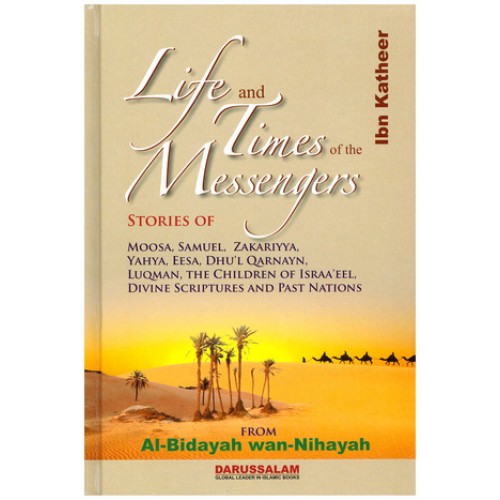
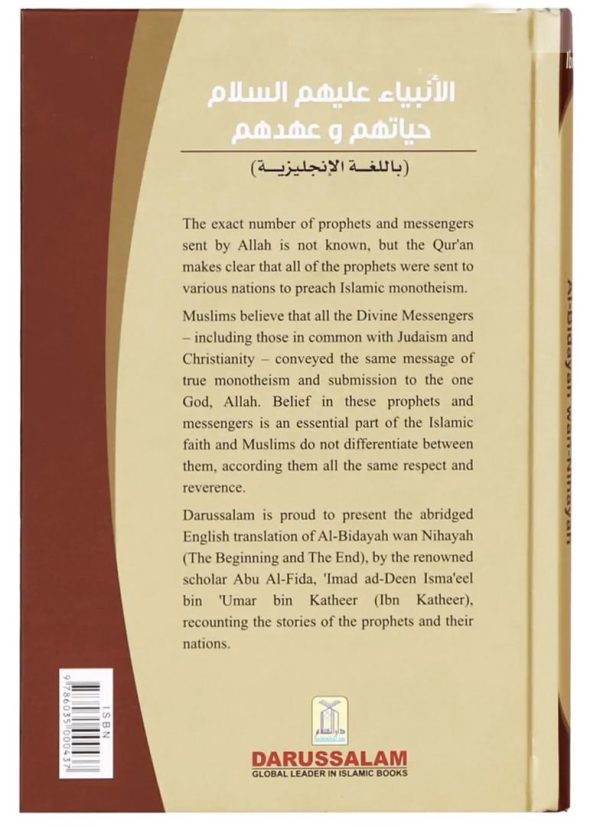
Life and the Times of the Messengers (H/B)
Highlights:
The exact number of prophets and messengers sent by Allah is not known, but the Qur’an makes clear that all of the prophets were sent to various nations to preach Islamic monotheism. Muslims believe that all the Divine Messengers ? including those in common with Judaism and Christianity ? conveyed the same message of true monotheism and submission to the one God, Allah. Belief in these prophets and messengers is an essential part of the Islamic faith and Muslims do not differentiate between them, according them all the same respect and reverence.
RM85.00
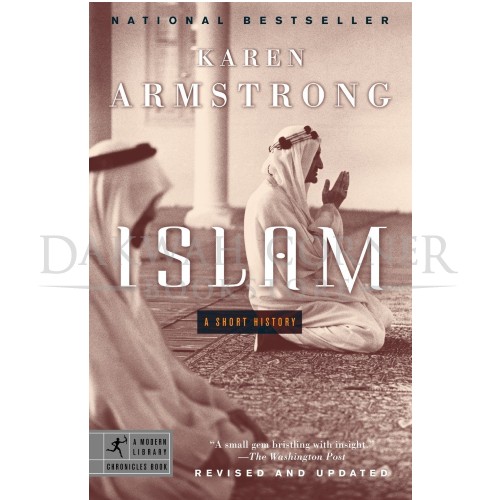
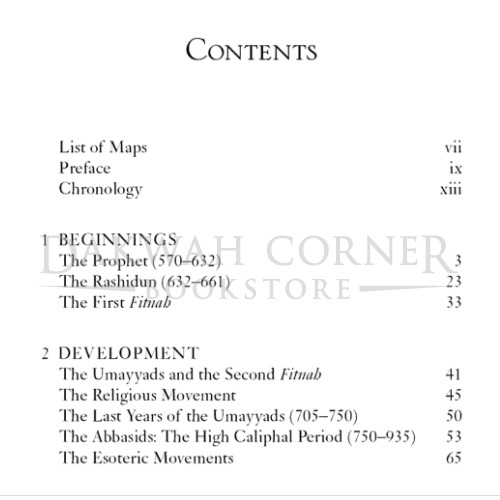
Islam: A Short History
Highlights:
With this brilliant book, Karen Armstrong issues a forceful challenge to those who hold the view that the West and Islam are civilizations set on a collision course. It is also a model of authority, elegance, and economy.
RM80.00
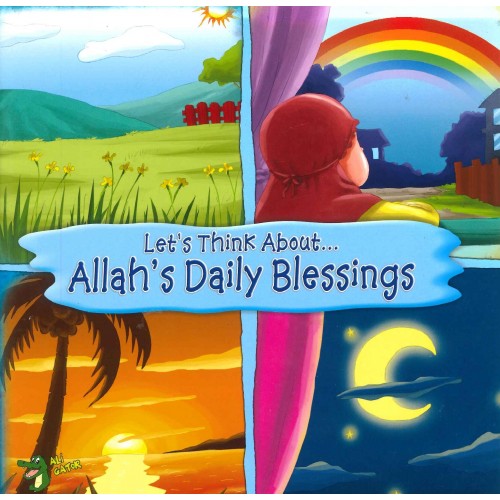
Let’s Think About Allah’s Daily Blessings
Highlights:
Let’s Think About… Daily Blessing gets children thinking about the world in which they live.
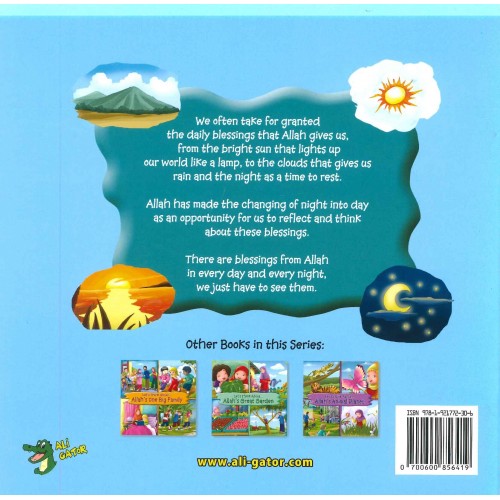
We often take for granted the daily blessing that Allah gives us, from the bright sun that lights up our world like a lamp, to the clouds that gives us rain and the night as a time to rest.
Allah has made the changing of night into day as an opportunity for us to reflect and think about these blessings.
There are blessing from Allah in every day and every night, we just have to see them.
There are four new easy to read titles in the Let’s Think About… series. All with simple to read text and beautiful illustrations to attract young minds.
The notes to teachers and parents section provides a list of points to consider and questions to ask as you read along. This allows for the young readers to receive the maximum benefit from the books, whilst enjoying them.
Full Color
RM20.00

In Search of God (P/B)
Highlights:
Some thinkers has said, ‘A smattering of knowledge turns people away from God. Grater knowledge brings them back to Him’. The author concludes in this book by examining various theories that the choice humanity have is not between the universe with God and the universe with God and the universe without God. The real option is between the universe with God and no universe at all. Therefore humanity is compelled to opt for the proposition the universe with God. Hence it is logical to say I exist, therefore, God exists.
RM11.00

Fundamentals of Islam (P/B)
Highlights:
Fundamentals of Islam is a revised English edition of the critically acclaimed Khutubah (original written in Urdu). It consist of Friday congregational addresses, in them he expounds familiar themes; like Iman, Islam, the Prayer, Fasting, Alms-giving, Pilgrimage and Jihad.
RM38.00
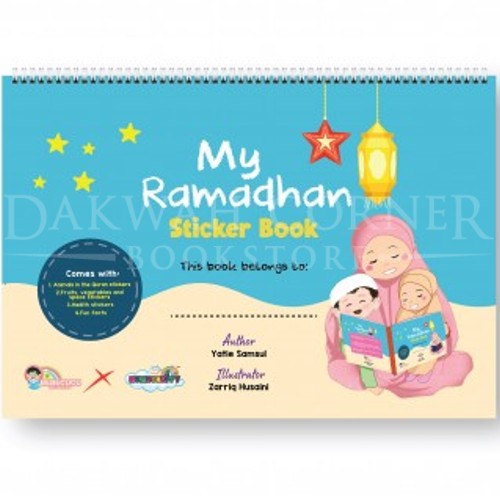
My Ramadhan Sticker Book
Highlights:
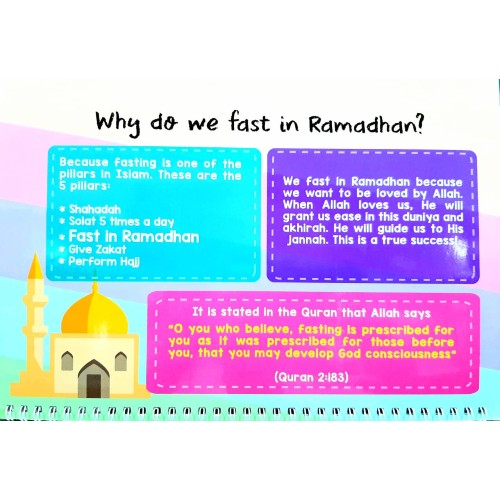
- Encourage your children to fast, pray and do good deeds during this holy month.
- By sticking the stickers, it will facilitate your children to see what they have done throughout the day and see their improvement day by day.
- Playing with stickers requires careful handling and helps to increase focus!
RM29.00
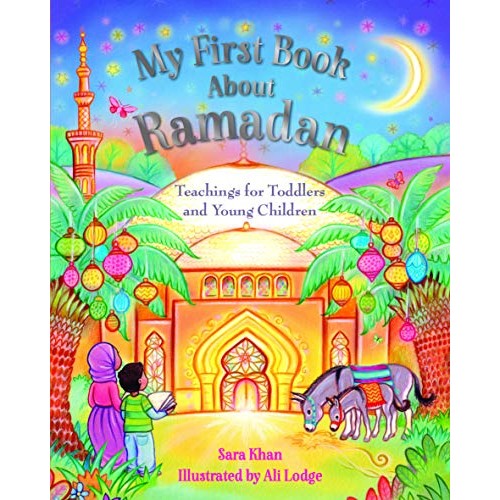
My First Book About Ramadhan
Highlights:
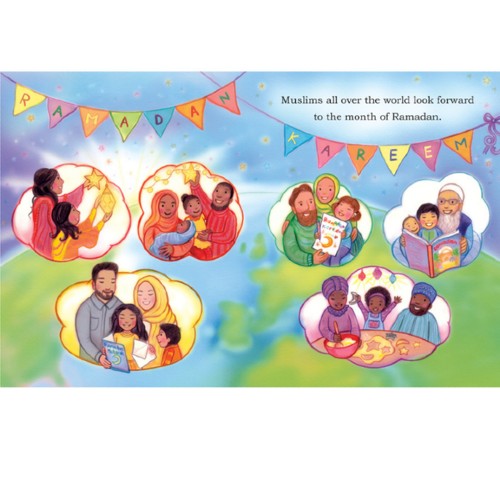
“The perfect book to introduce children to the month of Ramadan” This simple but beautiful board book presents children with some of the blessings of the month of Ramadan. It introduces the concept of fasting as one of the five pillars of Islam and explains how Muslims can make the most of this special month.
RM45.00
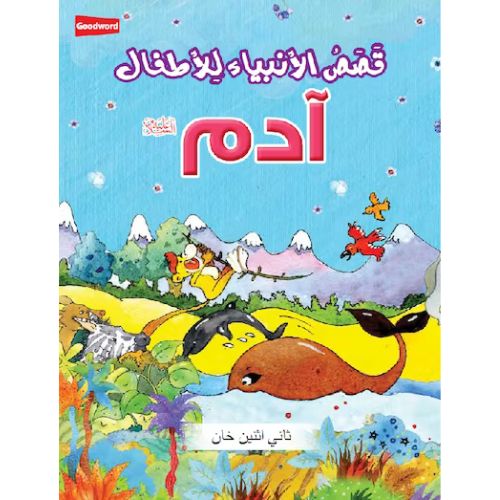
The Prophet Adam (Arabic)
Highlights:
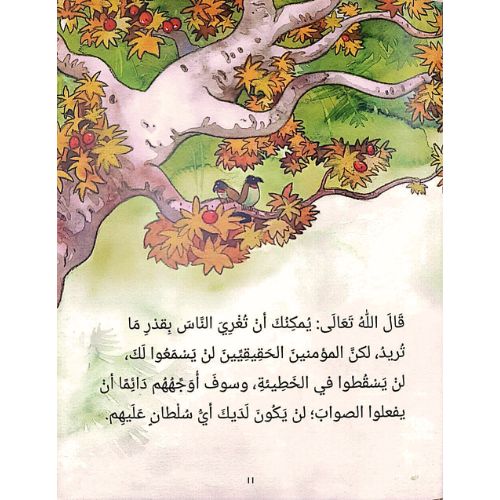
Quran Stories for Kids series provides an ideal first introduction to the Quran, its stories and people for little ones. Each attractive book retells one complete story from the Quran. Written in simple and easy-to-read narrative, with child-friendly illustrations on every page, will surely capture children’s attention and hold their interest. This appealing story about the Prophet Adam, impresses upon young children the need to treat every human being with love and respect.
RM10.00
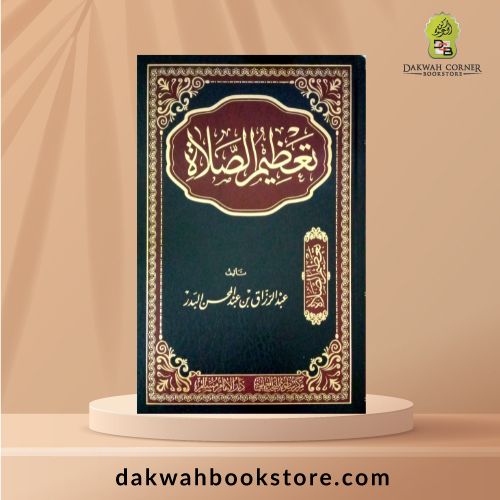
[APT] Ta’zim Solat / تعظيم الصلاة
Highlights:
عبدالرزاق بن عبد المحسن البدر رسالة للشيخ عبد الرزاق البدر حول تعظيم الصلاة, رسالة تحتوي على أبواب رائعة و نافعة – مع التشكيل لبع
حين تكون الهدايا باقية ونافعة، يمكنك إهداء هذا الكتاب لمن تحب.. نهتم بك وبأحبابك.
RM56.00
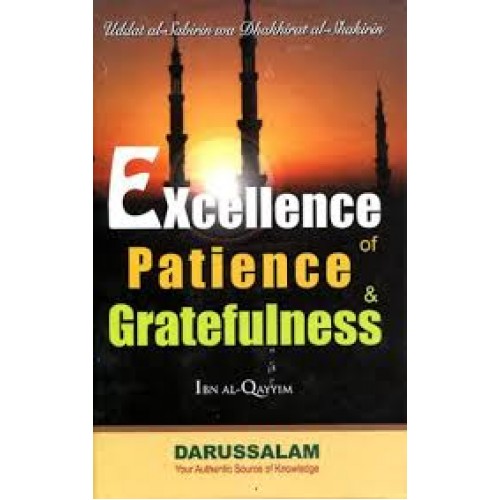
Excellence of Patience & Gratefulness
5 ★
5 ★
1 Rating
5 ★
1
4 ★
0
3 ★
0
2 ★
0
1 ★
0
Highlights:
This book is written to highlight the necessity and the pressing need to pursue these two qualities and to illustrate that happiness in this world and the Hereafter is dependent on them. It is intended to be a comprehensive, extensive and useful book.
RM65.00
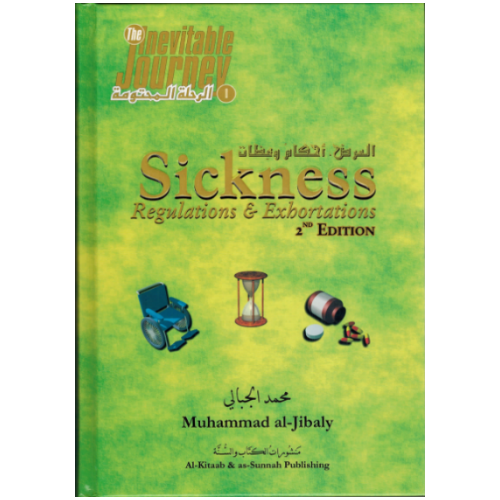
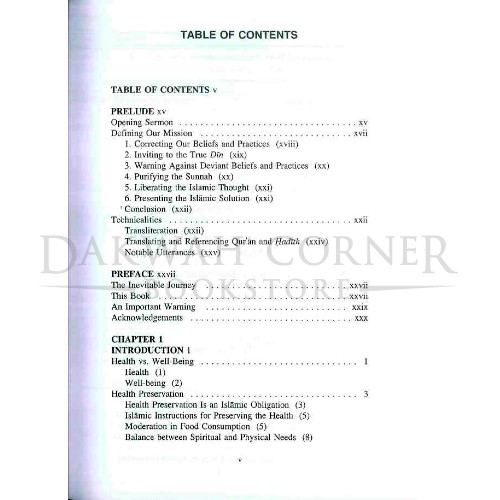
Sickness Regulations & Exhortations
Highlights:
This book is the first in the series. It deals with sickness, which continues to afflict human beings from birth until death. Sickness strikes as light as a simple cold or allergy, and as hard as a plague or cancer. It keeps the human being under check, reminding him of his weakness and giving him a chance to turn to the One who possesses to afflict and cure. This book deals with sickness, its regulations, and lessons associated with it. It presents the Islamic stand toward a number of modern medical issues, and also discusses important regulations relating to those with disabilities.
RM67.00
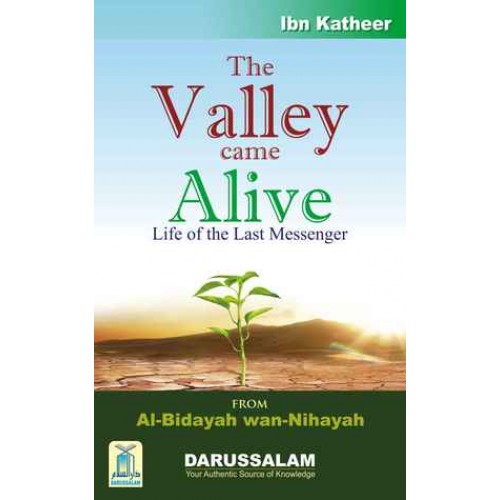
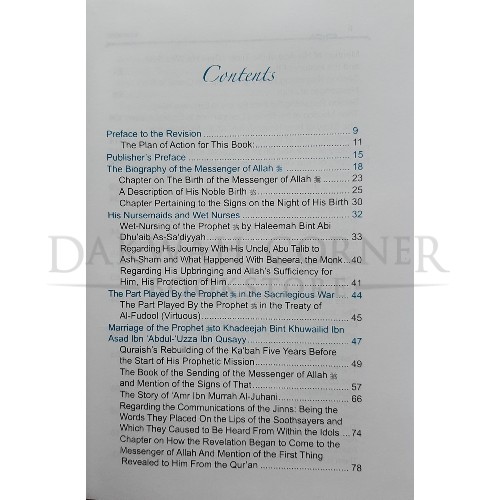
The Valley Came Alive (H/B)
Highlights:
Darussalam is proud to present the abridged English translation of the classic work: Al-Bidayah wan Nihayah, focusing exclusively on the life of Prophet Muhammad (peace be upon him). This volume contains a detail account of the life and times of the Messenger of Allah taken from a number of historical and traditional sources. The book reports the events of his blessed life, his battles, military campaigns, the delegations that met him, and sheds light upon the unique exemplary qualities, virtues and signs of his Messengership that make him a guide and role-model for all of humanity until the end of time.
A1-Bidayah wan Nihayah (The Beginning and The End) by the renowned scholar Abu Al-Fida ‘Imad ad-Deen lsma’eel bin ‘Umar ibn Katheer, is considered one of the most authoritative sources on Islamic history.
RM60.00
There are no reviews yet.