


| Weight | 0.27 kg |
|---|---|
| Author | |
| ISBN | 9781565646902 |
| Pages | 210 |
| Product Type | Book |
| Publisher | International Institute of Islamic Thought (IIIT) |
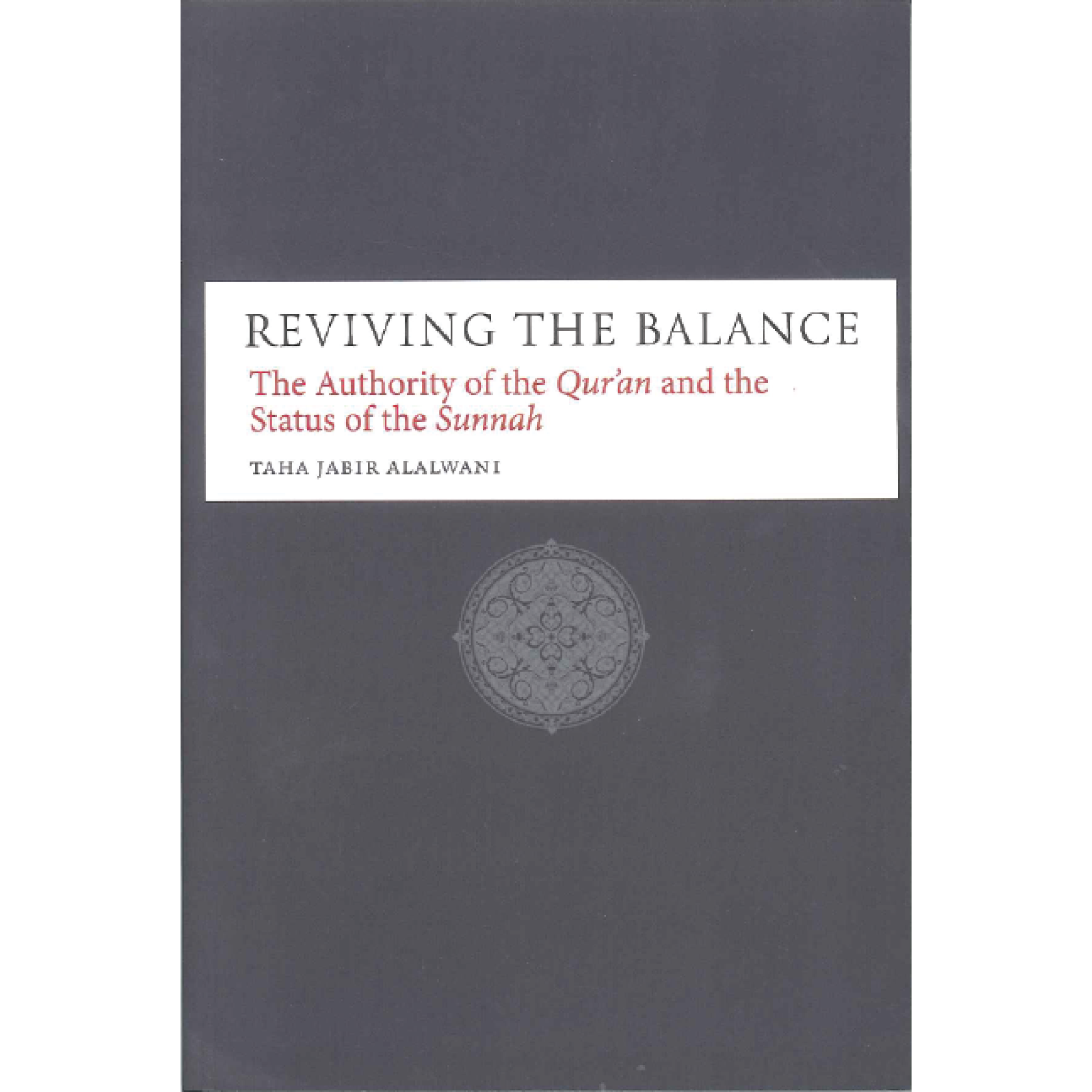
Reviving The Balance
RM105.00
Hurry up, Only 1 left.
Highlights:
somdn_product_page
Compare
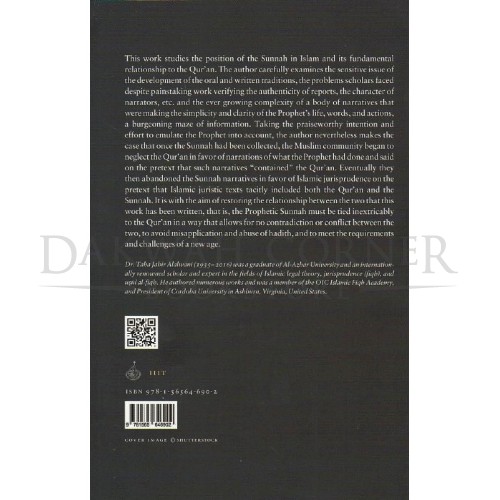
This work studies the position of the Sunnah in Islam and its fundamental relationship to the Qur’an. The author carefully examines the sensitive issue of the development of the oral and written traditions, the problems scholars faced despite painstaking work verifying the authenticity of reports, the character of narrators, etc. and the ever growing complexity of a body of narratives that were making the simplicity and clarity of the Prophet’s life, words, and actions, a burgeoning maze of information. Taking the praiseworthy intention and effort to emulate the Prophet into account, the author nevertheless makes the case that once the Sunnah had been collected, the Muslim community began to neglect the Qur’an in favor of narrations of what the Prophet had done and said on the pretext that such narratives “contained” the Qur’an. Eventually they then abandoned the Sunnah narratives in favor of Islamic jurisprudence on the pretext that Islamic juristic texts tacitly included both the Qur’an and the Sunnah. It is with the aim of restoring the relationship between the two that this work has been written, that is, the Prophetic Sunnah must be tied inextricably to the Qur’an in a way that allows for no contradiction or conflict between the two, to avoid misapplication and abuse of hadith, and to meet the requirements and challenges of a new age.
SKU: SJ211
Category: Sharia, Fiqh and Jurisprudence
Additional information
Reviews (0)
Be the first to review “Reviving The Balance” Cancel reply
You must be logged in to post a review.
Related Products

War and Peace in Islam : The Uses and Abuses of Jihad (P/B)
Highlights:
Written by a number of Islamic religious authorities and Muslim scholars, this work presents the views and teachings of mainstream Sunni and Shi’i Islam on the subject of jihad. It authoritatively presents jihad as it is understood by the majority of the world’s 1.7 billion Muslims in the world today, and supports this understanding with extensive detail and scholarship. No word in English evokes more fear and misunderstanding than “jihad.” To date the books that have appeared on the subject in English by Western scholars have been either openly partisan and polemical or subtly traumatized by so many acts and images of terrorism in the name of jihad and by the historical memory of nearly 1,400 years of confrontation between Islam and Christianity. Though jihad is the central concern of War and Peace in Islam: The Uses and Abuses of Jihad, the range of the essays is not confined exclusively to the study of jihad. The work is divided into three parts: War and Its Practice, Peace and Its Practice, and Beyond Peace: The Practice of Forbearance, Mercy, Compassion and Love. The book aims to reveal the real meaning of jihad and to rectify many of the misunderstandings that surround both it and Islam’s relation with the “Other.”
Reviews:
“A dynamic myth-busting clarification of the real position of mainstream orthodox Islam on the whole question of violence and jihad.” —T. J. Winter, University of Cambridge
“This is the best book on the subject in English. It will be of inestimable value.” —Shaykh Mustafa Ceric, Grand Mufti Emeritus of Bosnia
RM145.00


Getting the Best Out of Hajj
Highlights:
The book provides a realistic view of Hajj as it is today, with detailed explanations of all the rites. It provides Figh related issues about Hajj, Salah and personal behaviour according to the Quran and Sunnah, to enable you to obtain the best value for your time spent in the holy cities. It also provides information and suggestions about planning for the journey, what to expect and how to survive, so you can depart with full confidence. This is a must have for all those planning to go on Hajj!
RM75.00

Islamic Rules of Order (P/B)
Highlights:
Organizations must have rules of order to facilitate their debate and to fill in the procedures not detailed by their constitutional documents. While most American organizations are content to operate by Robert’s Rules of Order, Muslim organizations have often wrestled with questions over whether the rules of order systemized by a Western military figure are in accord with the Qur’an and the Sunnah.
This book tackles the matter directly and takes into account the Qur’an, the sunnah, Islamic manners and the history of Islamic consultation and leadership to provide a simple, practical guide to organizational procedure that can be incorporated into the governance of Muslim organizations. The book includes advice on writing bylaws and on complying with the best practices of the U.S. Dept. of Justice in a way that is Islamically authentic, transparent, and accountable. It provides a basic starting point for any Muslim organization while allowing for flexibility so that organizations may make any variations they require within their own bylaws and constitution, so that it can accommodate differing schools of thought on Islamic law. In its discursive approach it is an essential primer for understanding the value of rules of order and the Islamic context for their application. The Islamic Rules of Order has been adopted as the rules of order of the Association of Muslims Social Scientists.
RM50.00


Principles of Islamic Jurisprudence (2nd Revised Edition)
Highlights:
This book offers a detailed presentation of the theory of Muslim law (usul al-figh). Often regarded as the most sophisticated of the traditional Islamic disciplines, Muslim jurisprudence is concerned with the way in which the rituals and laws of religion are derived from the Qur’an and the Sunna – the precedent of the Prophet. Revelation, which is given to man to restore unity and help him achieve a just and devout order in society as well as in the soul, must be interpreted so as to render it practicable in every culture, while not betraying its spirit and immutable provisions. To achieve this, additional sources of legal authority are recognized, including consensus (ijma), analogical deduction (qiyas), public interest (maslaha) and local customary precedent (urf). In employing these, the jurist guards the five principles which it is the purpose of Islamic law to uphold, namely, the right to life, sound mind, property, lineage and religion.
RM75.00

Istihsan (P/B)
Highlights:
This work constitutes a critical analysis of classical and modern aspects of the concept of istihsan (juristic preference), an important principle in Islamic legal legislation throughout history. Although there has been many research works on the subject, it still requires further investigation on the role and nature of istihsan with regard to a combination of classical and modern approaches. Consisting of four chapters, the author begins by introducing some general principles of Islamic law, before discussing the history of istihsan during the time of the Prophet and his Companions. He also analyses the validity of istihsan as a source of law and discusses the differences among scholars on its method of implementation.
RM57.00


Fast According to the Quran & Sunnah
Highlights:
Saum (Fast) is a third Pillar of Islam. Allah’s Messenger said, Allah says: “Every deed of the son of Adam is for him, except Saum (fasting). It is for Me and I shall reward for it.”
As the status of this act of worship is so high it is essential to learn the pilings pertaining to this month of fasting so that Muslims will know what is obligatory in order to do it, what is forbidden to avoid it, and what is permissible so that they do not unnecessarily subject themselves to any hardship by depriving themselves from it.
This book consists of all the main issues of Fast. The main objective of this work is to serve an easy and authentic reference to the reader.
RM35.00


Fiqh Course: Tahaarah, Salaah & Janaa’iz
Highlights:
This course was compiled for English-speaking Muslims and is especially beneficial for new Muslims. It covers tahârah (purification), salâh (prayer) and janâ‘iz (funerals). It is set out in an easy-to-understand manner, citing evidence from the Qur’an and authentic hadiths. The aim of this book is to provide the reader with a correct, yet uncomplicated guide to the performance of the aforementioned acts of worship. Allah willing, it is the first in a series which will cover all aspects of worship and Islamic jurisprudence.
RM46.00

The Problems of the Illegitimate Child (P/B)
Highlights:
This book addresses the views of the Sunni scholars regarding the importance of genealogical relationship (nasab) in Islamic family law and examines the role of legitimacy on the basis of the legal maxim “al-walad li al-firash”, evidence (al-bayyinah), and doubtful intercourse (wat’ shubhah). It also elucidates the views of the Sunni schools of law on how to establish illegitimacy. For the Sunni jurists, there are several situations that determine the illegitimacy of the child. A child is considered illegitimate if its birth is the outcome of adultery (zina) or the result of legitimate union but accompanied with imprecation (li‘an). Other circumstances include the birth of the child taking place in less than six lunar months, the father of the child being categorized as one who is incapable of begetting, or the birth as a result of marital relationship considered unlawful because of consanguinity. The book also deals comprehensively with the moral, religious, legal and other aspects of the illegitimate child and the foundling in the works of the Sunni jurists. The status and rights of the illegitimate child and the foundling in the Islamic family law of Malaysia and Brunei are also discussed by referring to some provisions from Federal Territory Act 1984 (Act 303) and Brunei law.
RM49.00


Fiqh According To The Quran & Sunnah (2 vol)
Highlights:
The complete set, ‘Al-Lubab Fee Fiqh As-Sunnah Wal-Kitab,’ contains all of the books of Islamic Fiqh and its chapters, accompanied by evidence and is presented in a clear and simple manner, in order that they may be understood by the young and the old, without blindly following any of the schools of Jurisprudence, but rather being subject to authentic proofs and following the most authoritative opinions, without fanatical adherence to any particular group. Rather the author agrees with each group when the truth is with them and contradicts them when they veer from that which is correct.
Fiqh is to achieve access to knowledge of that which is unclear through knowledge of that which is proven, so it is more specific than mere knowledge or learning. And fiqh is knowledge of the juristic law. It is said Faquha -A man has acquired understanding and so he has become a Faqeeh (A scholar of Islamic Jurisprudence); and it is said Faqiha – He has understood it, i.e he has attained understanding of it, and it is said Tafaqqaha – he has devoted himself to the acquisition of (Islamic) Knowledge and specialized in it. Fiqh has been a subject of contention among the scholars as well as layman throughout the history of Islam.
RM180.00


Should A Muslim Follow A Particular Madhhab?
Highlights:
In this book, the author has widely described the main principle of Taqleed. He says that Allah and Prophet Mohammed (SAW) has not ordered us to follow any opinions and interpretations. So there’s a possibility of being correct or incorrect in the opinions because there are many issues on which the Imams had different views and they explain them according to their own reasons and speculations, but the real and true Islam is based on the book (Quran) and Prophet’s Sunnah.
Allah says: “But no, by your Lord, they can have no Faith until they make you judge in all disputed matters between them, and find in themselves no resistance against your decision, and accept them with full submission.” And the prophet said: “I leave you with two things as long as you hold them tightly, you never go astray: they are the book of Allah and my Sunnah.” In this sense, the author has described the difference between different Madhahib (madhabs/mazhabs), and their views and urged to follow only the Quran and Sunnah.
RM11.00

The Pillars of Islam Made Easy – II Salah & Its Essential Conditions (H/B)
Highlights:
Salah is one of the five pillars on which the edifice of Islam rests. Most of us feel that we already know all there is about salah – the formal prayers of a Muslim. However, very few individuals actually do justice to it or derive any worldly or spiritual benefits from it.
Salah & Its Essential Conditions is an effort to detail the essential prerequiires of salah. Moreever, it takes a detailed look at its importance along with the different types of obligatory and voluntary prayers. It alsa presents an illustrated guide to help those who wish to learn or correct the performance of their prayers.
Inshallah, all those who wish to improve their salah will find plenty of help in this book whether they are looking for information on cleanliness and purify, locating the direction of qibla, improving their congregation during salah, making up for the missed salah, or joining acongregation when the imam has already sarted the salah, or joining a congregation when the imam has already started the salah. All in all, it is a relevant handbook on what the Prophet (saw) has described as the coolness of his eyes.
RM50.00

Hajj & Umrah And Visitors (H/B)
Highlights:
Rites and Selected Etiquettes for those intending to Perfom Hajj & Umrah and Visitors In this book the author calls attention to the most important things that those who intend to perform Hajj, Umrah or Visiting the Prophets Mosque in Medinah must have as provisions. The author has made his work brief and arranged its topics according to their priorities. the author mentions a considerable number of sayings of the people of knowledge and calling the attention of the reader to some important matters.
RM45.00
Recently Viewed
Rekindle Your Life (Revised) by Dr. Arifi
5 ★
5 ★
1 Rating
5 ★
1
4 ★
0
3 ★
0
2 ★
0
1 ★
0
Highlights:
Rekindle Your Life centres upon encouragement towards good deeds and noble characters, abstinence from sins by giving reminders in a very beautiful way about Paradise and its delight, the reality of death, turning to Allah in repentance and enlightening faith through inspired, true and wonderful stories from various aspects of life past and present.
RM35.00

Hanaa Says Goodbye (P/B)
Highlights:
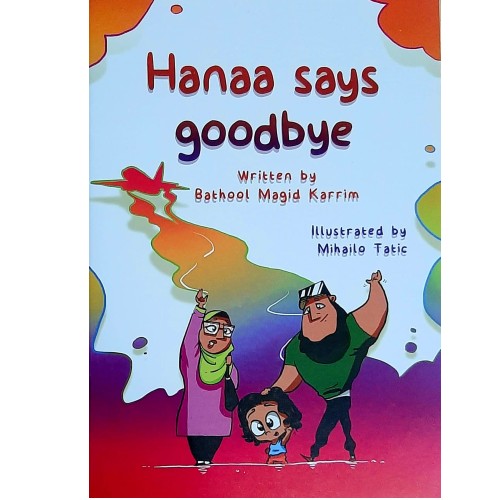
Hanaa says goodbye is the story of a little girl who must leave everything and everyone she knows to move to a new country.
Will saying goodbye prove too difficult for Hanaa?
Or will the promise of new adventure persuade her to embrace change?
RM35.00
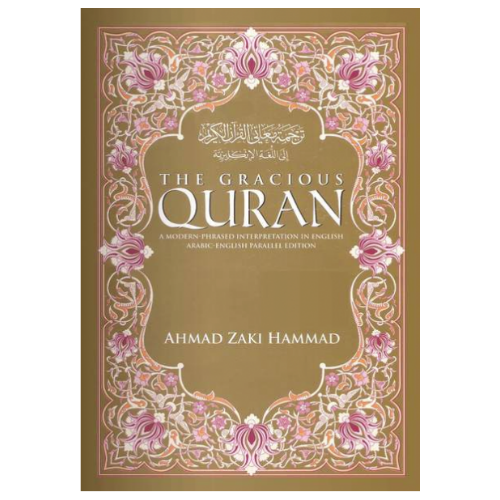
The Gracious Quran (H/B)
Highlights:
A modern-phrased interpretation in English (Arabic-English Parallel Edition)
This contemporary, authoritative translation interprets the Quran’s meaning for the English reader with unprecedented access to the Book that is the foundational source of Islam, its civilization and its peoples, who now comprise nearly one-fourth of humanity across the breadth of all the Earth’s continents and who form a crucial, contiguous community at the middle of the world.
Twenty years in the making, The Gracious Quran: A Modern-Phrased Interpretation of Its Meanings in English is both highly reliable and powerfully expressed. Where the Arabic of the Quran swells with important implication, that intent is conveyed in this rendering with a light hand in unobtrusive brackets, every effort having been expended to make its reading August, clear, accessible, and consistent while at the same time free of poetic pretension, philosophical complication, and lifeless literalisms. Its graceful layout and design augment the profound simplicity of the Quran’s message and give some semblance of resonance to its almost hypnotic power of literary expression.
The interpretation of The Gracious Quran is thoroughly guided by wide and deep experience with the civilizations of both luminous Islam and the enlightened west, while not unmindful of the light that infuses the world’s brilliant traditions. Fully four decades of scholarly expertise in Quranic studies and related disciplines are in its service, and the latest advances in the art of translation conspicuously benefit it.
About the translator:
Dr. Ahmad Zaki Hammad is an internationally known authority on Quran and Islamic Studies. He teaches Islamic Civilization and the Primary Disciplines of Quran Commentary, the Prophetic Traditions, and the Principles of Islamic Law at the foremost center of Islamic and Arabic learning in the Muslim world, AL-Azhar University (Faculty of Languages and Translations, Department of English). He is also a member of the Faculty of Shari’ah, Department of Juristic Studies.
He received his early Islamic and Arabic training at Al-Azhar University, Cairo, and was awarded the graduate degree of Alamiyyah from the Faculty of Theology. He holds a Ph.D., in Islamic Studies from the University of Chicago and is the author of a study of translation of Abu Hamid al-Ghazalis’s Al-Mustasfa min Ilm al-Usul, The Quintessence of the Science of the Principles of Islamic Law; and also Islamic Law: Understanding Juristic Differences, a Primer on the Science of al-Khulaf al Fiqhi in Light of the Shariah Sources.
He lived for many years in the United States, where he founded and served in numerous national and community Islamic institutions for American Muslims.
RM185.00
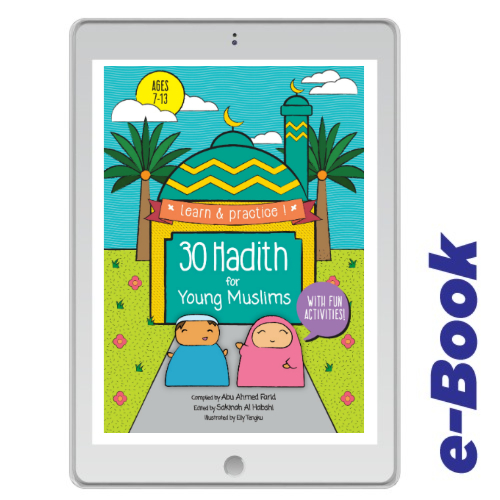
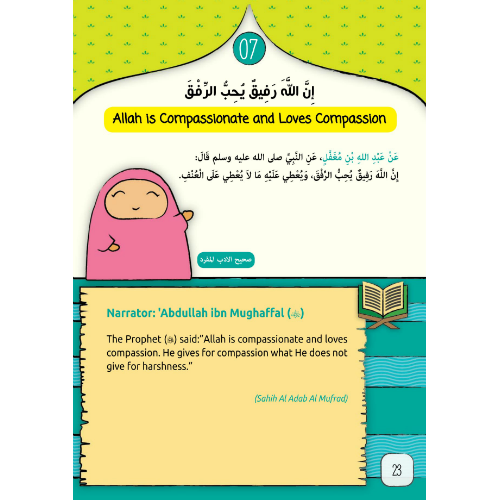
(E-Book) 30 Hadith For Young Muslims
3 ★
3 ★
1 Rating
5 ★
0
4 ★
0
3 ★
1
2 ★
0
1 ★
0
Highlights:
30 Hadith for Young Muslims aims to educate children from their tender age with the sayings of our beloved Prophet Muhammad (PBUH) in a fun, colorful, and simplified modern approach.
Unique features such as lessons, discussion corners, and activities make it an ideal teaching tool for parents, teachers and educational institutions.
Its creative presentation invites readers to grasp the knowledge of the noble hadith and apply them in their lives.
RM17.00
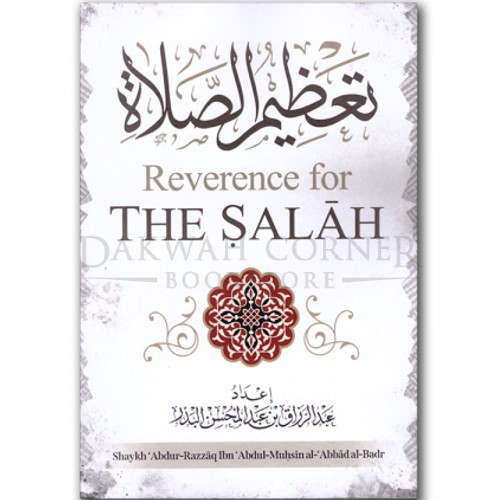
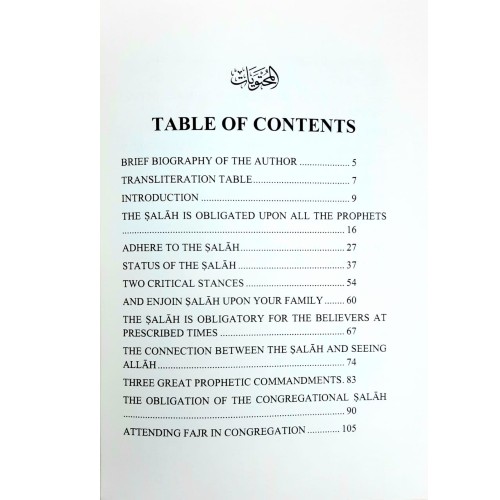
Reverence for The Salah (Maktabatulirshad Publication)
Highlights:
The Salah is the most crucial affair in a Muslim’s life. To preserve one’s religion, one has to observe it consistently; otherwise, one would be negligent of the Salah, let alone other acts of worship. It is the pillar of Islam, as it is soundly reported from the Prophet (May Allah elevate his rank & grant him peace). At the same time, the remaining deeds serve as the axis of support. Similarly, a tent without a pillar is useless. The Salah is the criterion for accepting all other deeds; if it is rejected [by Allah], all other deeds will be rejected. It is the first obligation ever in Islam and the last act of worship to wither. So, if one is negligent to the first and the last thing in Islam, then one will lose everything in-between.
Inadequate observance of the Salah that lacks adherence to its prescribed form in the manner performed by the Messenger of Allah (May Allah elevate his rank & grant him peace) will derail one’s religion. It will invalidate all deeds, cause misconduct in one’s religious and worldly affairs.
RM95.00
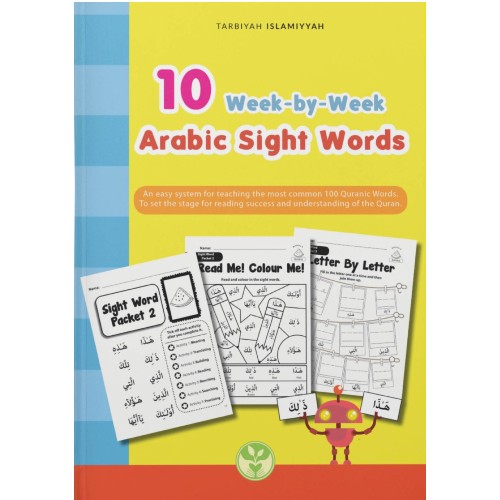

10 Week-by-Week Arabic Sight Words
Highlights:
An easy system for teaching the most common 100 Quranic Words.
The ultimate 10 Week by Week Arabic Sight Words Workbook. WIth activity pages that help kids recognize, write, and really LEARN the Top 100 Quranic high-frequency words. Which are key to reading success. Watch confidence soar as children master 100 sight words the most commonly encountered words in the Quran and Arabic language. Children read more fluently, write with greater ease, and spell more accurately when they know these high-frequency words!
RM90.00
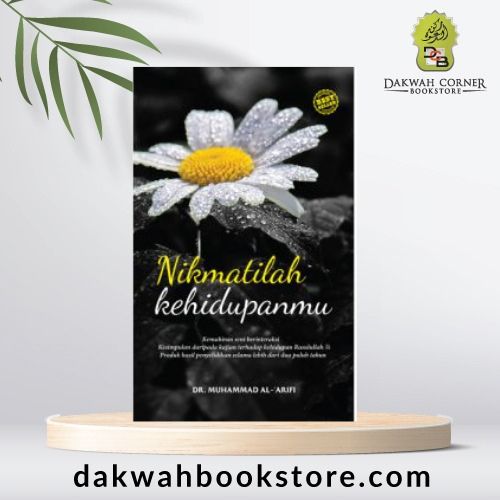
Nikmati Kehidupanmu (Revised Edition)
5 ★
5 ★
2 Ratings
5 ★
2
4 ★
0
3 ★
0
2 ★
0
1 ★
0
Highlights:
Produk hasil penyelidikan selama lebih dari dua puluh tahun, ‘Nikmatilah Kehidupanmu’ adalah terjemahan daripada buku terlaris berkaitan keagamaan dan motivasi dialam Bahasa Arab dan Bahasa Inggeris. Kini boleh didapati dalam Bahasa Malaysia. Buku yang menerangkan seni berinteraksi, hasil kajian terhadap kehidupan Rasulullah S.A.W .
RM25.00 RM50.00
Arabic Through The Qur’an
Highlights:
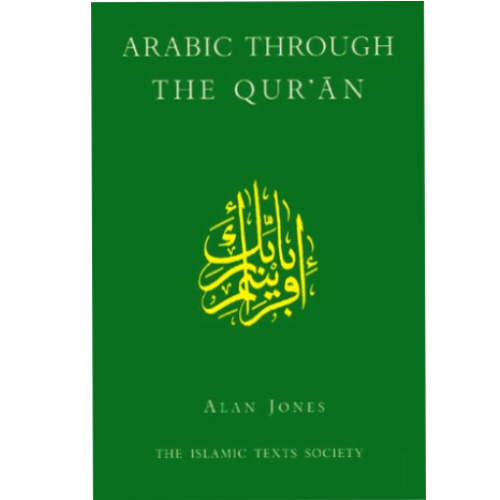
Whether used as a means of self-instruction or as part of higher learning coursework, this language primer is ideally suited for those wishing to learn classical Arabic and for Muslims who wish to learn Arabic exclusively for use in their religious and spiritual practice. Designed to enhance the understanding of the Qur’an and its vocabulary that has infiltrated the whole of Arabic and Islamic literature, this workbook provides 40 easy-to-follow lessons for learning Qur’anic rather than modern Arabic. Beginning with a section on the Arabic alphabet, the text moves on to individual lessons that address one or more grammatical topics, ranging from the basics of nouns, adjectives, and prepositions to the more complex concepts of the imperative, the passive, and conditional sentence, introducing new vocabulary in the process. Accompanying translation exercises, a glossary of technical terms, and an index supplement the main text.
RM105.00
2IN1 Combo P04
Highlights:
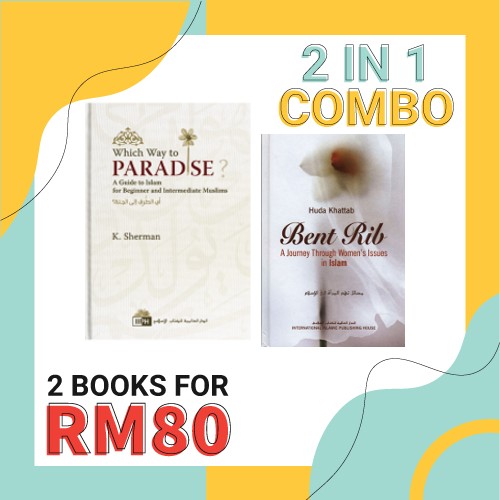
1. Bent Rib: A Journey Through Women’s Issues In Islam (176 pages)
2. Which Way to Paradise? (256 pages)
RM73.00 RM86.00
There are no reviews yet.