



| Weight | 0.27 kg |
|---|---|
| Author | |
| ISBN | 9781565646902 |
| Pages | 210 |
| Product Type | Book |
| Publisher | International Institute of Islamic Thought (IIIT) |
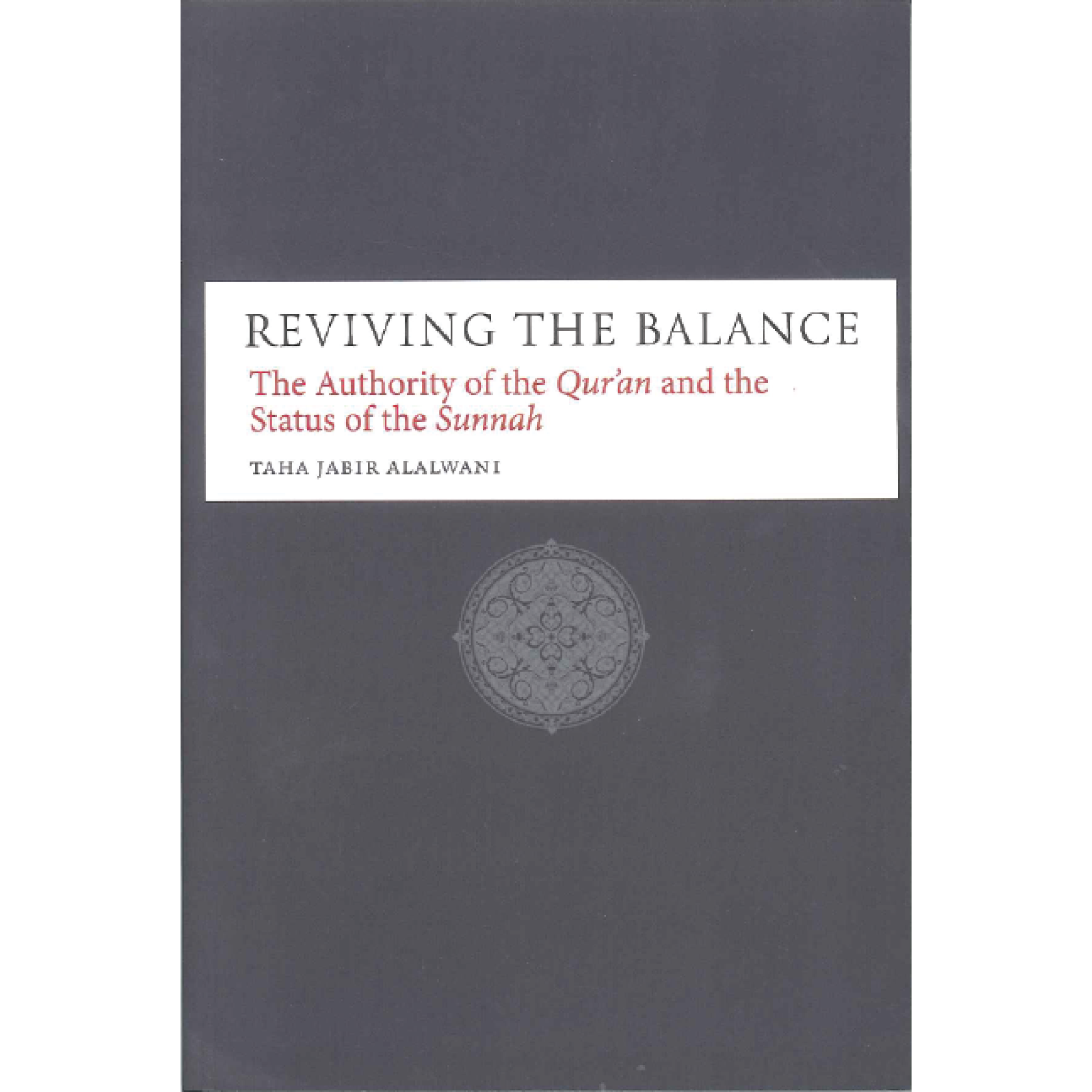
Reviving The Balance
RM105.00
Hurry up, Only 1 left.
Highlights:
somdn_product_page
Compare
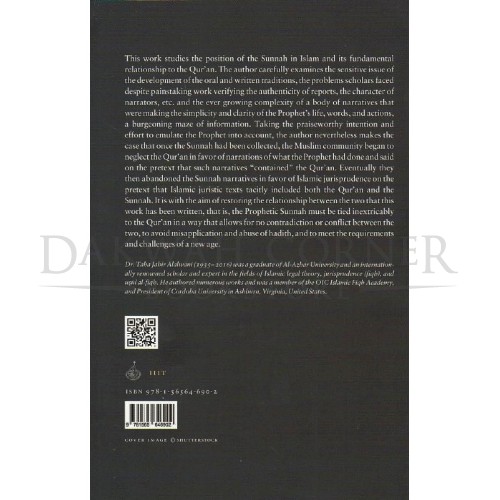
This work studies the position of the Sunnah in Islam and its fundamental relationship to the Qur’an. The author carefully examines the sensitive issue of the development of the oral and written traditions, the problems scholars faced despite painstaking work verifying the authenticity of reports, the character of narrators, etc. and the ever growing complexity of a body of narratives that were making the simplicity and clarity of the Prophet’s life, words, and actions, a burgeoning maze of information. Taking the praiseworthy intention and effort to emulate the Prophet into account, the author nevertheless makes the case that once the Sunnah had been collected, the Muslim community began to neglect the Qur’an in favor of narrations of what the Prophet had done and said on the pretext that such narratives “contained” the Qur’an. Eventually they then abandoned the Sunnah narratives in favor of Islamic jurisprudence on the pretext that Islamic juristic texts tacitly included both the Qur’an and the Sunnah. It is with the aim of restoring the relationship between the two that this work has been written, that is, the Prophetic Sunnah must be tied inextricably to the Qur’an in a way that allows for no contradiction or conflict between the two, to avoid misapplication and abuse of hadith, and to meet the requirements and challenges of a new age.
SKU: SJ211
Category: Sharia, Fiqh and Jurisprudence
Additional information
Reviews (0)
Be the first to review “Reviving The Balance” Cancel reply
You must be logged in to post a review.
Related Products


Fiqh According To The Quran & Sunnah (2 vol)
Highlights:
The complete set, ‘Al-Lubab Fee Fiqh As-Sunnah Wal-Kitab,’ contains all of the books of Islamic Fiqh and its chapters, accompanied by evidence and is presented in a clear and simple manner, in order that they may be understood by the young and the old, without blindly following any of the schools of Jurisprudence, but rather being subject to authentic proofs and following the most authoritative opinions, without fanatical adherence to any particular group. Rather the author agrees with each group when the truth is with them and contradicts them when they veer from that which is correct.
Fiqh is to achieve access to knowledge of that which is unclear through knowledge of that which is proven, so it is more specific than mere knowledge or learning. And fiqh is knowledge of the juristic law. It is said Faquha -A man has acquired understanding and so he has become a Faqeeh (A scholar of Islamic Jurisprudence); and it is said Faqiha – He has understood it, i.e he has attained understanding of it, and it is said Tafaqqaha – he has devoted himself to the acquisition of (Islamic) Knowledge and specialized in it. Fiqh has been a subject of contention among the scholars as well as layman throughout the history of Islam.
RM180.00

The Right to Education, Work and Welfare in Islam (P/B)
Highlights:
In The Right to Education, Work and Welfare in Islam Professor M.H. Kamali develops an Islamic perspective on three connected and complementary areas of rights and liberties. He urges that education is often a necessary ingredient of professional work even more so now than in earlier times when the range and variety of specialised knowledge were relatively limited. A person who acquires education, whether generally or at advanced levels of specialisation, is more likely to stand in a better position to enter the workforce and thus to contribute to the welfare of the community.
The author commences his discussions on education, work and welfare in Islam by focusing on how each is treated in the Qur’an; and follows this by the example of the Prophet and, after him, the Pious Caliphs who gave prominence to the education and welfare needs of people at times both of scarcity and affluence. Professor Kamali then moves forward to our time and discusses the right to education, the education of children, institutionalisation of learning, academic freedom and the debate between science and religion.
The section on work elaborates on the value of work, work ethics, workers’ and employers’ rights and responsibilities, and the role and responsibility of governments.
Finally, the section on welfare focuses on the importance in Islam of caring for those who are in need and the different forms of provision that can be made available by individuals, the state and charities.
RM63.00


Should A Muslim Follow A Particular Madhhab?
Highlights:
In this book, the author has widely described the main principle of Taqleed. He says that Allah and Prophet Mohammed (SAW) has not ordered us to follow any opinions and interpretations. So there’s a possibility of being correct or incorrect in the opinions because there are many issues on which the Imams had different views and they explain them according to their own reasons and speculations, but the real and true Islam is based on the book (Quran) and Prophet’s Sunnah.
Allah says: “But no, by your Lord, they can have no Faith until they make you judge in all disputed matters between them, and find in themselves no resistance against your decision, and accept them with full submission.” And the prophet said: “I leave you with two things as long as you hold them tightly, you never go astray: they are the book of Allah and my Sunnah.” In this sense, the author has described the difference between different Madhahib (madhabs/mazhabs), and their views and urged to follow only the Quran and Sunnah.
RM11.00


Principles of Islamic Jurisprudence (2nd Revised Edition)
Highlights:
This book offers a detailed presentation of the theory of Muslim law (usul al-figh). Often regarded as the most sophisticated of the traditional Islamic disciplines, Muslim jurisprudence is concerned with the way in which the rituals and laws of religion are derived from the Qur’an and the Sunna – the precedent of the Prophet. Revelation, which is given to man to restore unity and help him achieve a just and devout order in society as well as in the soul, must be interpreted so as to render it practicable in every culture, while not betraying its spirit and immutable provisions. To achieve this, additional sources of legal authority are recognized, including consensus (ijma), analogical deduction (qiyas), public interest (maslaha) and local customary precedent (urf). In employing these, the jurist guards the five principles which it is the purpose of Islamic law to uphold, namely, the right to life, sound mind, property, lineage and religion.
RM75.00


Fiqh Course: Tahaarah, Salaah & Janaa’iz
Highlights:
This course was compiled for English-speaking Muslims and is especially beneficial for new Muslims. It covers tahârah (purification), salâh (prayer) and janâ‘iz (funerals). It is set out in an easy-to-understand manner, citing evidence from the Qur’an and authentic hadiths. The aim of this book is to provide the reader with a correct, yet uncomplicated guide to the performance of the aforementioned acts of worship. Allah willing, it is the first in a series which will cover all aspects of worship and Islamic jurisprudence.
RM46.00

Islamic Rules of Order (P/B)
Highlights:
Organizations must have rules of order to facilitate their debate and to fill in the procedures not detailed by their constitutional documents. While most American organizations are content to operate by Robert’s Rules of Order, Muslim organizations have often wrestled with questions over whether the rules of order systemized by a Western military figure are in accord with the Qur’an and the Sunnah.
This book tackles the matter directly and takes into account the Qur’an, the sunnah, Islamic manners and the history of Islamic consultation and leadership to provide a simple, practical guide to organizational procedure that can be incorporated into the governance of Muslim organizations. The book includes advice on writing bylaws and on complying with the best practices of the U.S. Dept. of Justice in a way that is Islamically authentic, transparent, and accountable. It provides a basic starting point for any Muslim organization while allowing for flexibility so that organizations may make any variations they require within their own bylaws and constitution, so that it can accommodate differing schools of thought on Islamic law. In its discursive approach it is an essential primer for understanding the value of rules of order and the Islamic context for their application. The Islamic Rules of Order has been adopted as the rules of order of the Association of Muslims Social Scientists.
RM50.00

War and Peace in Islam : The Uses and Abuses of Jihad (P/B)
Highlights:
Written by a number of Islamic religious authorities and Muslim scholars, this work presents the views and teachings of mainstream Sunni and Shi’i Islam on the subject of jihad. It authoritatively presents jihad as it is understood by the majority of the world’s 1.7 billion Muslims in the world today, and supports this understanding with extensive detail and scholarship. No word in English evokes more fear and misunderstanding than “jihad.” To date the books that have appeared on the subject in English by Western scholars have been either openly partisan and polemical or subtly traumatized by so many acts and images of terrorism in the name of jihad and by the historical memory of nearly 1,400 years of confrontation between Islam and Christianity. Though jihad is the central concern of War and Peace in Islam: The Uses and Abuses of Jihad, the range of the essays is not confined exclusively to the study of jihad. The work is divided into three parts: War and Its Practice, Peace and Its Practice, and Beyond Peace: The Practice of Forbearance, Mercy, Compassion and Love. The book aims to reveal the real meaning of jihad and to rectify many of the misunderstandings that surround both it and Islam’s relation with the “Other.”
Reviews:
“A dynamic myth-busting clarification of the real position of mainstream orthodox Islam on the whole question of violence and jihad.” —T. J. Winter, University of Cambridge
“This is the best book on the subject in English. It will be of inestimable value.” —Shaykh Mustafa Ceric, Grand Mufti Emeritus of Bosnia
RM145.00


The Ultimate Guide to Umrah by Darussalam
Highlights:
Based on the famous book ‘Getting the Best out of Hajj’ With special chapters on Umrah in Ramadaan & Visiting Madinah After Hajj, a Muslim considers Umrah to be the most significant worship that brings the opportunity of rewards and the blessings of visiting Ka’bah and the Prophet’s Mosque along with other sacred places one wishes to visit and try to feel the atmosphere present at the time of Allah’s Messenger (peace be upon him) and the hardships he had to bear while preaching Islam. During such a visit, a newcomer has to face many difficulties because of a lack of knowledge about the rites and places. To provide complete details about everything, a pilgrim wants to know, the first time this book has been compiled with the utmost care and research so as to make it useful in every respect.
RM55.00


Remembrance & Prayer: The way of Prophet Muhammad s.a.w
Highlights:
Remembrance and Prayer: The Way of Prophet Muhammad, was one of the first works of Shaykh al Ghazali’s to be translated into English. The book describes in vivid prose how the Prophet, upon him be peace, used to remember Allah and pray to Him. Not only are the exquisitely beautiful, deeply moving and penetrating words of the Prophet given in the English translation, but in the original Arabic as well, thus allowing those desirous of memorizing Arabic access to the original texts. The intimate relationship with Allah, which was the hallmark of the Prophet’s life, becomes clear and vivid. The book’s contents are immensely relevant. to the life and concerns of modern man, whose life has been made barren by the present secularist machinery.
RM75.00

Istihsan (P/B)
Highlights:
This work constitutes a critical analysis of classical and modern aspects of the concept of istihsan (juristic preference), an important principle in Islamic legal legislation throughout history. Although there has been many research works on the subject, it still requires further investigation on the role and nature of istihsan with regard to a combination of classical and modern approaches. Consisting of four chapters, the author begins by introducing some general principles of Islamic law, before discussing the history of istihsan during the time of the Prophet and his Companions. He also analyses the validity of istihsan as a source of law and discusses the differences among scholars on its method of implementation.
RM57.00


The Concise Presentation of the Fiqh of the Sunnah and the Noble Book
Highlights:
Written by Dr. Abdul-Azeem Badawi and translated by Jamal al-Din M. Zarabozo, The Concise Presentation of the Fiqh of the Sunnah and the Noble Book covers the fiqh of diverse topics like purity, prayer, fasting, zakah, pilgrimage, marriage, business transactions, foods, inheritance, criminal offenses, and jihad. Dr. Badawi relies only on the Quran and the Sunnah, making it an authentic Islamic book on fiqh and a collection of sound hadiths.
RM90.00


Getting the Best Out of Hajj
Highlights:
The book provides a realistic view of Hajj as it is today, with detailed explanations of all the rites. It provides Figh related issues about Hajj, Salah and personal behaviour according to the Quran and Sunnah, to enable you to obtain the best value for your time spent in the holy cities. It also provides information and suggestions about planning for the journey, what to expect and how to survive, so you can depart with full confidence. This is a must have for all those planning to go on Hajj!
RM75.00
Recently Viewed
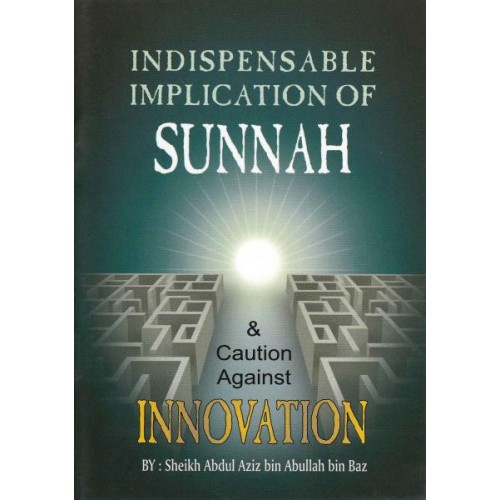
Indispensable Implication of Sunnah (P/B)
5 ★
5 ★
1 Rating
5 ★
1
4 ★
0
3 ★
0
2 ★
0
1 ★
0
Highlights:
The author has discusses the topic of innovation in Islam. For example, he proves that celebrating the Prophet’s birthday is not right according to the Qur’an and Sunnah.
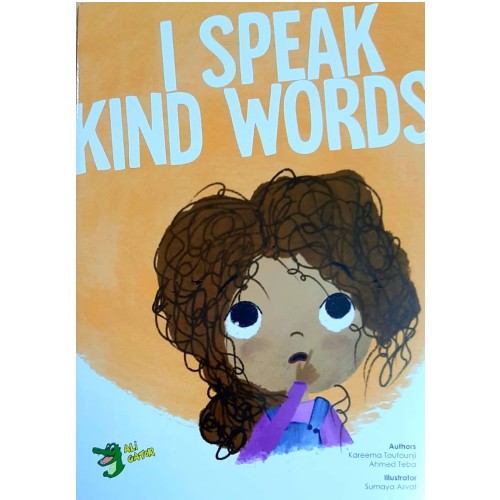

I Speak Kind Words (P/B)
Highlights:
Speak KIND WORDS, hmm, whats does that mean?
Well when you’re excited for DINNER but instead of chicken soup you get
BEANS.
Quirky poems to help young children live a virtuous life based on the character of our PERFECT example.
RM35.00

Four Key Concept of the Qur’an
Highlights:
Four Key concepts oF the Qur’An elucidates these basic Qur’anic concepts Ilah, Rabb, Ibadah and Din in order to bring out fully the Islamic way of life, as distinct from other perspectives. This elaboration goes a long way in developing a sound understanding of the Qur’an. It also explains the man-God relationship in Islam, guiding Muslims on how to lead their lives in total surrender to Allah.
RM46.00
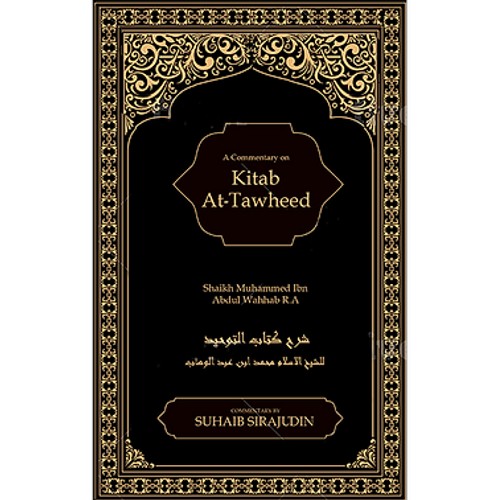
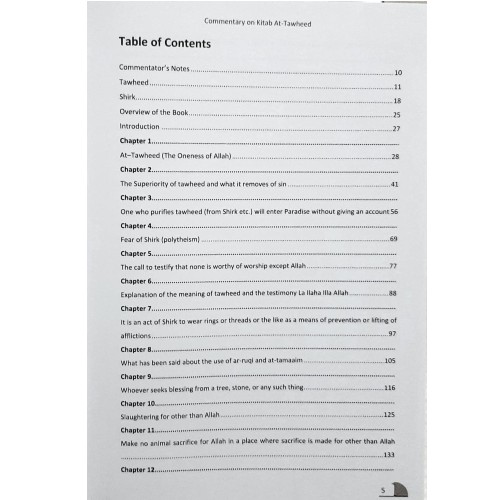
A Commentary On Kitab At-Tawheed
Highlights:
This is a commentary on the book of Shaikh Muhammed ibn Abdul Wahhab’s Kitab At-Tawheed (The Book of Tawheed). Kitab At-Tawheed is an excellent and comprehensive book. It illuminates to the reader the light of tawheed the Oneness of Allah tawheed, the very foundation of this deen, the single most important concept and the purpose behind our creation.
RM135.00
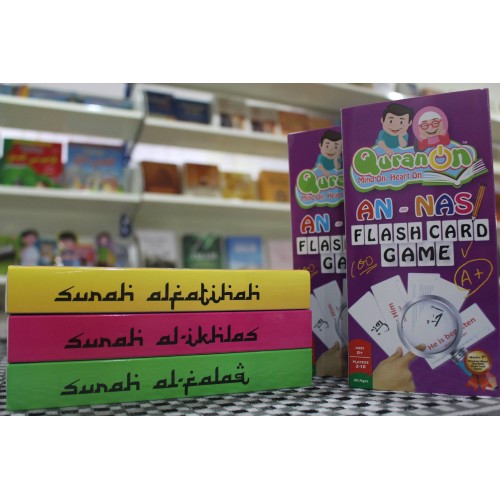
An-Nas Quran On Flash Card Game
Highlights:
Introducing our NEW QuranOn Flash Card Game that will enhance our understanding on the Arabic words, translations, makhraj, tajweed, grammar, meaningful contents and many more.
✔ Recite the verse in the surah clearly from one word to another.
✔ Combination of Arabic alphabets from word by word in the surah to the beginners.
✔ Translation for the each word.
RM40.00
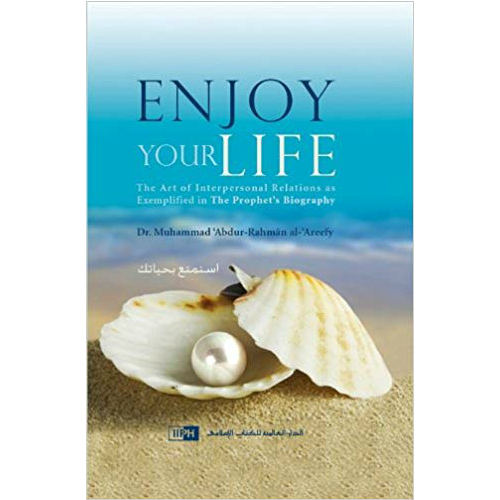
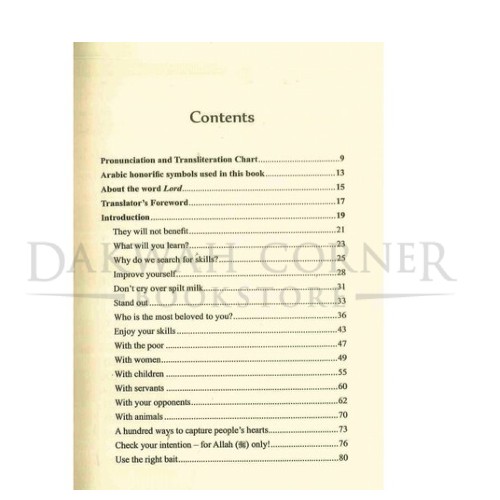
Enjoy Your Life (B/W) – IIPH
5 ★
5 ★
1 Rating
5 ★
1
4 ★
0
3 ★
0
2 ★
0
1 ★
0
Highlights:
Enjoy Your Life! Enjoy Your Life: The Art of Interpersonal Relations as Exemplified in The Prophet’s Biography is a comprehensive guide towards improving interpersonal skills and hence, enjoying life. The author, Dr. Muhammad ‘Abdur-Rahmân al-‘Areefy, writes: An enjoyable life entails learning and practicing multiple skills; the few who truly apply them savour the success that comes with it. Of course, atop the list of the successful is the chief of humanity, Muhammad (blessings and peace be upon him). His entire life was an ocean of pearls that I have scattered throughout the pages of this book.
Enjoy Your Life! is not the product of an effort of a month or a year. Rather, it has resulted from the research that I devoted myself to for twenty years. I inscribed it with my tears, pouring my soul and squeezing my memories into it. I penned down various incidents involving the joy of our eyes – our first teacher, Muhammad (blessings and peace be upon him). I highlighted his exceptional talents; his skills in dealing with people and enjoying his life. Enjoy Your Life! contains personal memories, real-life experiences, and incidents that I have publicised for the first time – praying that Allah, the Exalted, makes them a source of benefit for you.
Enjoy Your Life! contains words that are straight from my heart, hoping to find a place in yours. It is the dearest and most beloved of my books. I ask Allah, the Exalted, to benefit others with it, make this effort solely for His sake, and amply reward all those who have contributed to spread it.
RM85.00
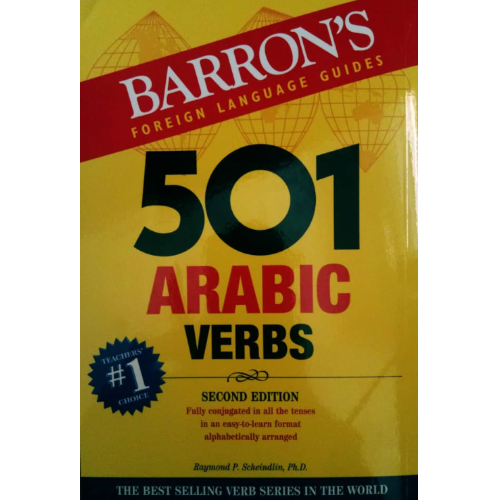
Arabic Verbs: Fully Conjugated All Forms Bilingual Edition
Highlights:
This update, easy-to-use reference book gives you:
- The 501 most common Arabic verbs in a table format
- Both the Arabic characters and their English infinitive form at the top of each page
- Exemplary essay that discusses Arabic verb formation and usage
- Common idioms with example sentences to demonstrate verb usage
- A grammar review and a pattern index
- Indexes that list verbs in both root order and strict alphabetical order
RM135.00

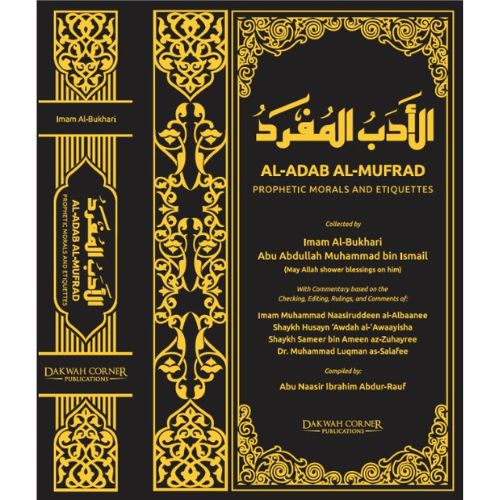
Al-Adab Al-Mufrad (DCB)
5 ★
5 ★
1 Rating
5 ★
1
4 ★
0
3 ★
0
2 ★
0
1 ★
0
Highlights:
Al-Adab Al-Mufrad
This lofty statement of the best of creations and the one who Allah revealed the Final Message to all of mankind through, indicates one of the primary objectives in which Islam was revealed for which is to call upon its followers to achieve high moral standards and conduct.
Every time Allah commands the believers to perform an act of worship, He draws their attention to its moral significance or its positive effect on the individual and society. Examples of this are numerous and include the following:
“Establish the prayer, for the prayer restrains from shameful and unjust deeds.” (Soorat Al-‛Ankaboot,29:45).
RM100.00
The Concise Presentation of the Fiqh of the Sunnah and the Noble Book
Highlights:
Written by Dr. Abdul-Azeem Badawi and translated by Jamal al-Din M. Zarabozo, The Concise Presentation of the Fiqh of the Sunnah and the Noble Book covers the fiqh of diverse topics like purity, prayer, fasting, zakah, pilgrimage, marriage, business transactions, foods, inheritance, criminal offenses, and jihad. Dr. Badawi relies only on the Quran and the Sunnah, making it an authentic Islamic book on fiqh and a collection of sound hadiths.
RM90.00
There are no reviews yet.