

| Weight | 0.08 kg |
|---|---|
| Author | |
| ISBN | 9789960992518 |
| Pages | 59 |
| Product Type | Book |
| Publisher | IIPH |
| Binding | Paperback |
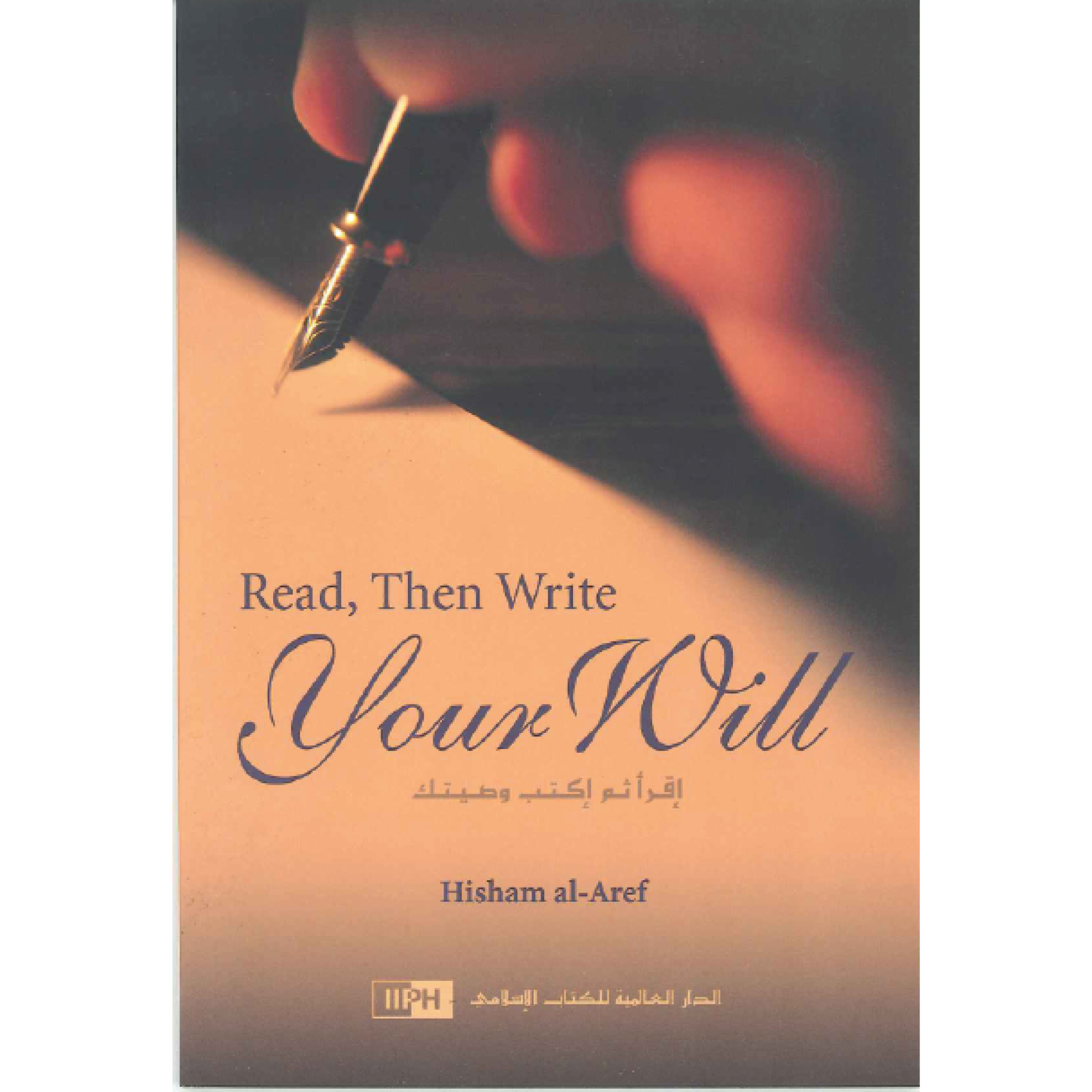
Read, Then Write Your Will
RM12.00
Hurry up, Only 3 left.
Highlights:
somdn_product_page
Compare
This book deals with the importance of having an Islamic will. Author Hisham Ibn Fahmi Ibn Moussa Al-Aref explains what a will is and how important it is in Islam.
Islam highly encourages, if not obligates, writing a will as soon as possible, since one does not know when Allah will take the Muslim’s soul back to Him. Many man-made laws also recognize the importance of a will and the difficulties that the absence of one can cause. The will can include both financial and religious matters and can be a document for reference and application without disputes.
SKU: SJ173
Category: Sharia, Fiqh and Jurisprudence
Additional information
Reviews (0)
Be the first to review “Read, Then Write Your Will” Cancel reply
You must be logged in to post a review.
Related Products

Islamic Rules of Order (P/B)
Highlights:
Organizations must have rules of order to facilitate their debate and to fill in the procedures not detailed by their constitutional documents. While most American organizations are content to operate by Robert’s Rules of Order, Muslim organizations have often wrestled with questions over whether the rules of order systemized by a Western military figure are in accord with the Qur’an and the Sunnah.
This book tackles the matter directly and takes into account the Qur’an, the sunnah, Islamic manners and the history of Islamic consultation and leadership to provide a simple, practical guide to organizational procedure that can be incorporated into the governance of Muslim organizations. The book includes advice on writing bylaws and on complying with the best practices of the U.S. Dept. of Justice in a way that is Islamically authentic, transparent, and accountable. It provides a basic starting point for any Muslim organization while allowing for flexibility so that organizations may make any variations they require within their own bylaws and constitution, so that it can accommodate differing schools of thought on Islamic law. In its discursive approach it is an essential primer for understanding the value of rules of order and the Islamic context for their application. The Islamic Rules of Order has been adopted as the rules of order of the Association of Muslims Social Scientists.
RM50.00

Istihsan (P/B)
Highlights:
This work constitutes a critical analysis of classical and modern aspects of the concept of istihsan (juristic preference), an important principle in Islamic legal legislation throughout history. Although there has been many research works on the subject, it still requires further investigation on the role and nature of istihsan with regard to a combination of classical and modern approaches. Consisting of four chapters, the author begins by introducing some general principles of Islamic law, before discussing the history of istihsan during the time of the Prophet and his Companions. He also analyses the validity of istihsan as a source of law and discusses the differences among scholars on its method of implementation.
RM57.00


Hajj & Umrah (Pocket Guide) – English Version
5 ★
5 ★
2 Ratings
5 ★
2
4 ★
0
3 ★
0
2 ★
0
1 ★
0
Highlights:
A useful pocket guide that includes the rites of Umrah,Hajj, and visiting Madinah.
RM14.00

A Guide to Male-Female Interaction
Highlights:
Are Muslim men allowed to interact with female students, and vice versa, in a virtual classroom? Can a Muslim woman pursue a professional career that necessitates her interaction with men? Is it appropriate for a woman to serve her husband’s guests? Do mixed wedding ceremonies comply with the Sharia? Read this bilingual book to find the answers and more!
RM56.00

Preservation of Health in Islamic Law (P/B)
Highlights:
Preservation of health (hifz al-sihhah) is the most important branch of Islamic medicine since it is primarily concerned with the prevention of illness rather than cure. This book represents one of the few attempts to introduce the role of Islamic medicine, although Chapter One provides information about a historical background of the preservation of helath in Islam, its aim is to provide fresh ant timely overview of the major aspects of legal, ritual and spiritual structures of teh Islamic law (shariah). These include the laws related to Ibadah, Islamic family laws, foods and drinks as well as environmental laws, for maintaning and preserving human health. Findings indicated that prevention of any diseases from Islamic medical law presentive cannot attain any real success unless it emanates from an Islamic fundamental teaching, namely: the pillars of Islam. Iman and observance of the Islamic rituals such as Salah, zakah, Sawm and Hajj, have played an important role in shaping the attitude, behavior and model personality of the Muslim, in boosting the spiritual motivation or attitude change, and in disseminating the message of prevention. This indicates that bodily and spiritual health goes hand in hand and that pyscho-spritual balance and health is a primary consideration whereas physical health is a secondary one.
RM47.00

Forensic Psychiatry In Islamic Jurisprudence (P/B) (IBT)
Highlights:
This is the first book in Forensic Psychiatry that focuses on the application of psychiatry to legal issues connected to Islamic jurisprudence. It gives contemporary psychiatry in any Islamic country a broad spectrum of tools to work with, enabling the utilization of options specific to particular societal and cultural norms. This book will appeal to both the general as well as the academic reader.
RM40.00

Worship In Islam: An In-depth Study of Ibadah, Salah and Sawm (P/B)
Highlights:
Worship in Islam is in-depth study of the nature and significance of Islamic spirituality by Abul A‘la Mawdudi (1903–79), one of the leading Muslim intellectuals of the twentieth century, with special reference to the concepts of God’s Oneness (tawhid), the finality of Prophethood (risalah) and the Islamic system of worship (‘ibadah) with a focus upon prayer (salah) and fasting (sawm) and their role in the development of the Islamic personality and Islam’s social order. The distinguishing feature of Mawdudi’s approach is his elaboration of the social dimension of worship, which extends the traditional approach found in Islamic jurisprudence, with its focus upon ritual and self-purification, to consider worship’s transformative role in social life. Presenting a holistic view of the Islamic system, Mawdudi highlights Islam’s social, economic and political dimensions, which he argues has the capacity to resolve emergent issues and problems that humankind faces.
This historic text should be of wider interest to both students and specialists in contemporary Islamic thought, and includes an introduction by Professor Anis Ahmad.
Edited and translated into accessible English by Ahmad Imam Shafaq Hashemi, this book is an authoritative compilation by a leading Islamic twentieth-century revivalist on the central matter of worship’s role in Islam.
RM84.00


Funeral Rites In Islam (H/B)
Highlights:
The purpose of this book is to provide English speaking Muslims a concise and authentic compilation of the instructions regarding funeral rites in Islam.
RM35.00

Hajj & Umrah And Visitors (H/B)
Highlights:
Rites and Selected Etiquettes for those intending to Perfom Hajj & Umrah and Visitors In this book the author calls attention to the most important things that those who intend to perform Hajj, Umrah or Visiting the Prophets Mosque in Medinah must have as provisions. The author has made his work brief and arranged its topics according to their priorities. the author mentions a considerable number of sayings of the people of knowledge and calling the attention of the reader to some important matters.
RM45.00


Fiqh Course: Tahaarah, Salaah & Janaa’iz
Highlights:
This course was compiled for English-speaking Muslims and is especially beneficial for new Muslims. It covers tahârah (purification), salâh (prayer) and janâ‘iz (funerals). It is set out in an easy-to-understand manner, citing evidence from the Qur’an and authentic hadiths. The aim of this book is to provide the reader with a correct, yet uncomplicated guide to the performance of the aforementioned acts of worship. Allah willing, it is the first in a series which will cover all aspects of worship and Islamic jurisprudence.
RM46.00


Fast According to the Quran & Sunnah
Highlights:
Saum (Fast) is a third Pillar of Islam. Allah’s Messenger said, Allah says: “Every deed of the son of Adam is for him, except Saum (fasting). It is for Me and I shall reward for it.”
As the status of this act of worship is so high it is essential to learn the pilings pertaining to this month of fasting so that Muslims will know what is obligatory in order to do it, what is forbidden to avoid it, and what is permissible so that they do not unnecessarily subject themselves to any hardship by depriving themselves from it.
This book consists of all the main issues of Fast. The main objective of this work is to serve an easy and authentic reference to the reader.
RM35.00

Shatibi’s Philosophy of Islamic Law (P/B)
Highlights:
Abu Ishaq al-Shatibi, who died in 1888, had sought an answer to the challenge posed by modernisation and change to Islamic law, by introducing maslahah, which forms the basis of his philosophy of Islamic law. In a fascinating way, the author leads us step by step to what he considers the true import of Shatibi’s views concerning jurisprudence.
RM41.00
Recently Viewed

Prophet Muhammad: A Blessing for Mankind
Highlights:
Prophet Muhammad (blessings and peace of Allah be upon him) and the lessons he taught us from the continued hardships he underwent in every stage of his life are a real blessing for humankind. Being an orphan child made him compassionate to widows and orphans as well as to the poor. His multiple marriages strengthened the ties of kinship amongst the different tribes, dissolving long-standing enmity. His message and prophethood were challenged by the polytheistic society in Makkah, forcing him and his few followers to emigrate to Madinah. Despite his illiteracy and the struggles he faced, he conveyed Allah’s Book, the Noble Qur’an, to all humanity, teaching them the values and principles that are presently adopted by billions of Muslims throughout the world. In the Qur’an, Allah, the Almighty addresses the Prophet (blessings and peace of Allah be upon him), saying: {We have sent you only as a mercy to the worlds.} (Qur’an 21: 107)
RM8.00 RM9.00
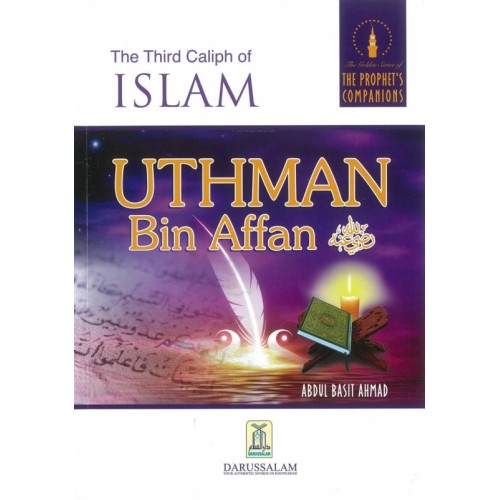
The Third Caliph of Islam: Uthman bin Affan (P/B)
Highlights:
Uthman bin Affan (R) was one of the early men who accepted Islam in Makkah. From the first moment he became a Muslim, he put all his wealth under the service of Islam. He spent most of his resources to satisfy the needs of poor Muslims. Recognizing his generosity and devotion to Islam, the Prophet (S) told him that his place would be in Paradise on the Hereafter. He married Ruqayah (R),the Prophet’s daughter. After she died, he married her sister Um Kulthum ;for that, the people at that time called him Dhun Nurain, “The Man with the Two Lights.”
RM26.00
Talk to Allah
4 ★
4 ★
1 Rating
5 ★
0
4 ★
1
3 ★
0
2 ★
0
1 ★
0
Highlights:
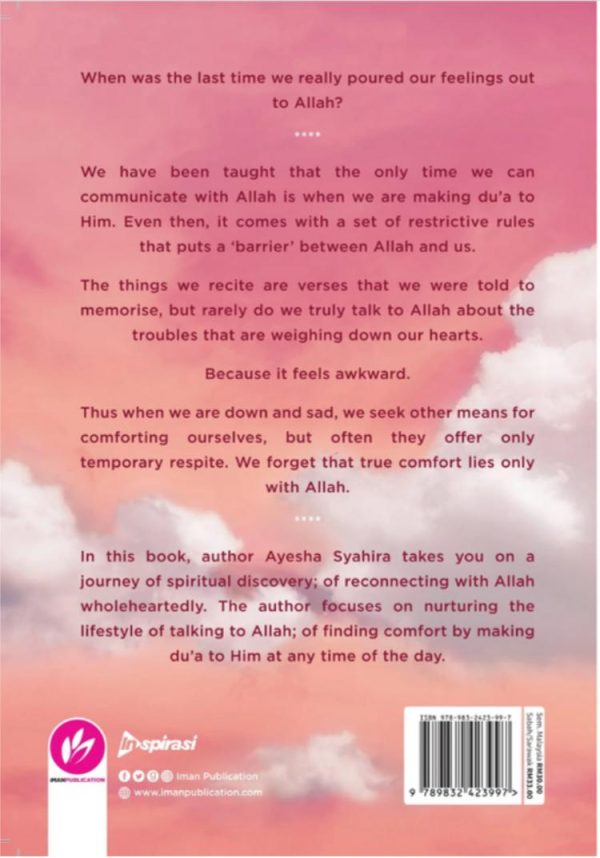
When was the last time we really poured our feelings out to Allah?
***
We have been taught that the only time we can communicate with Allah is when we are making du’a to Him. Even then, it comes with a set of restrictive rules that puts a ‘barrier’ between Allah and us.
The things we recite are verses that we were told to memorise, but rarely do we truly talk to Allah about the troubles that are weighing down our hearts.
Because it feels awkward.
Thus when we are down and sad, we seek other means for comforting ourselves, but often they offer only temporary respite. We forget that true comfort lies only with Allah.
***
In this book, author Ayesha Syahira takes you on a journey of spiritual discovery; of reconnecting with Allah wholeheartedly. The author focuses on nurturing the lifestyle of talking to Allah; of finding comfort by making du’a to Him at any time of the day.
RM30.00
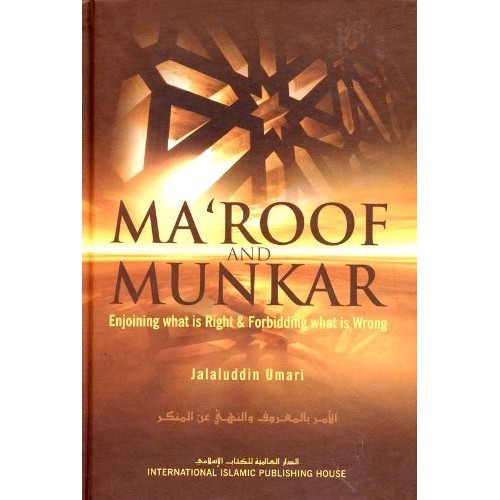
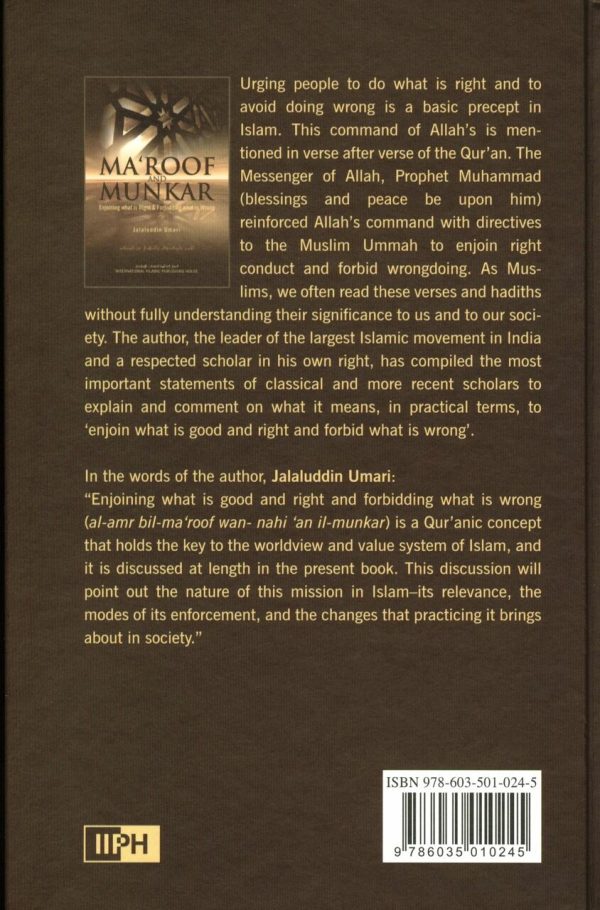
Ma’roof And Munkar – Enjoining what is Right & Forbidding what is Wrong
Highlights:
Ma’roof and Munkar (Enjoining what is Right & Forbidding What is Wrong) By : Jalaludin Umari Urging people to do what is right and to avoid doing wrong is a basic precept in islam . This command of allah is mentiones in verse after verse of the quran. The Messenger of Allah,Prophet Muhammad (PBUH) reinforced Allah’s command with Directives to the muslim Ummah to enjoin right conduct and forbid wrongdoing. As Muslims , we often read these verses and hadiths without fully understanding their significance to us and to our society . The Author has compiled the most important statements of classical and more recent scholars to explain and comment on what it means,in practical terms to enjoin what is good and right and forbid what is wrong.
RM33.00
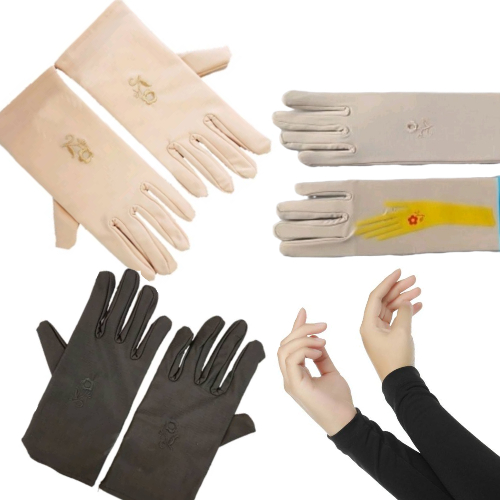
Handsocs & Gloves
Highlights:
- 100% polyester
- Elastik
- Lembut dan selesa
- Panjang menutupi paras pergelangan tangan hingga ke lengan
- Free saiz (37cm)Panjang
- Tebal dan tidak jarang
RM10.00 – RM12.00Price range: RM10.00 through RM12.00
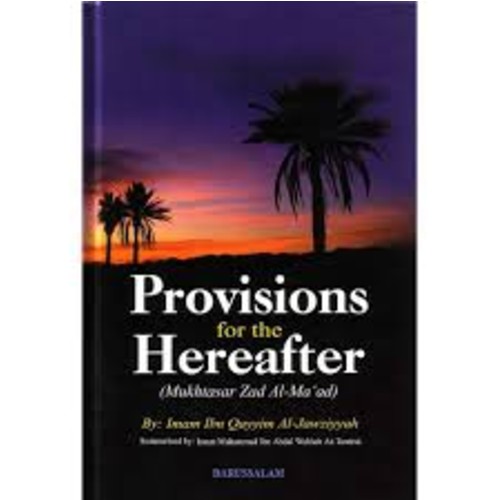

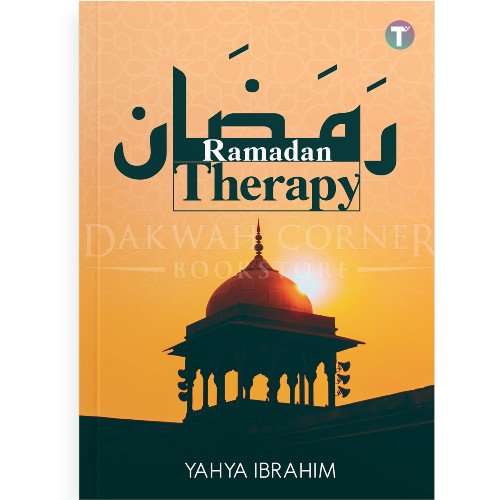
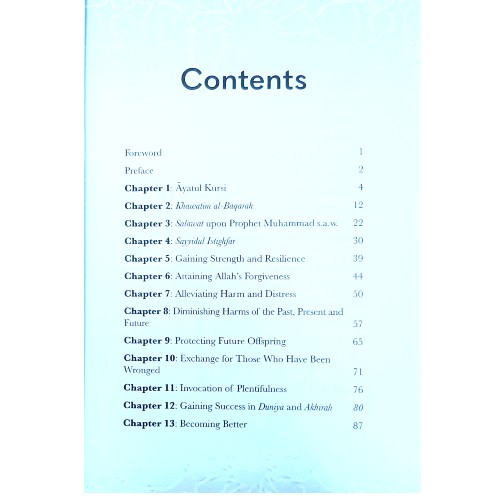
Ramadan Therapy
Highlights:
For every situation, Prophet Muhammad S.A.W. has prescribed various Du’a that can be read throughout Ramadan and even after it, as a form of therapy. It is with hope and faith that positive changes can come out of this beloved month of Ramadan to those who seek it.
RM60.00
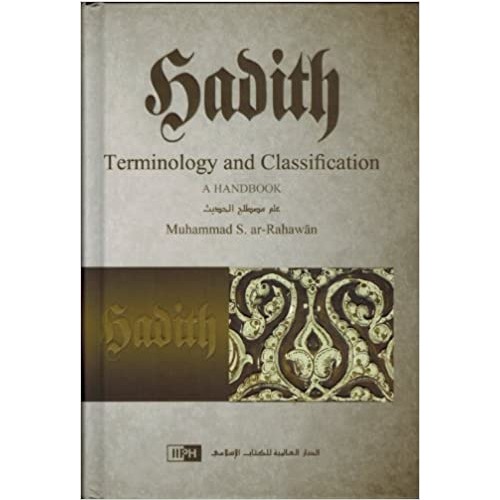
Hadith Terminology and Classification (H/B)
Highlights:
Islam is a complete way of life that enlightens through the Qur’an and the Sunnah, the true path of guidance and success in this world and the hereafter. However, one must accurately comprehend what has been ordained through the Sunnah and identify the authentic hadiths of the Prophet (blessings and peace be upon him). To do that, it is imperative to understand the rules that govern the classification and definitions of hadith methodology and criticism.
RM65.00
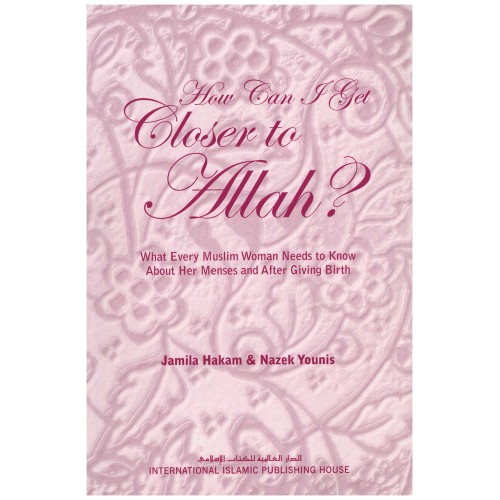
How can I get Closer To Allah? IIPH
5 ★
5 ★
1 Rating
5 ★
1
4 ★
0
3 ★
0
2 ★
0
1 ★
0
Highlights:
Whenever a Muslim woman has a question about her religion, she should seek the answer in the Qur’an (Allah’s revealed Word) and the Sunnah (the example in word and deed) of His Prophet Muhammad (blessings and peace of Allah be upon him). If the answer is not found in these two sources, she should look to trustworthy Muslim scholars for help. She is encouraged to read, study, and learn as much as she can about her religion, for the search for religious knowledge is an obligation upon every Muslim individual. A Muslim woman who is learning about her religion finds out quickly that the menstrual period and the period of bleeding after childbirth (postpartum bleeding) are times for her to leave off certain acts of worship such as formal prayer and fasting. It is important for believing women to be aware of exactly which acts are forbidden and which ones are permitted to them in these situations. This revised edition of How Can I Get Closer to Allah? is intended to clear up the issue as much as possible (with Allah’s permission).
RM10.00
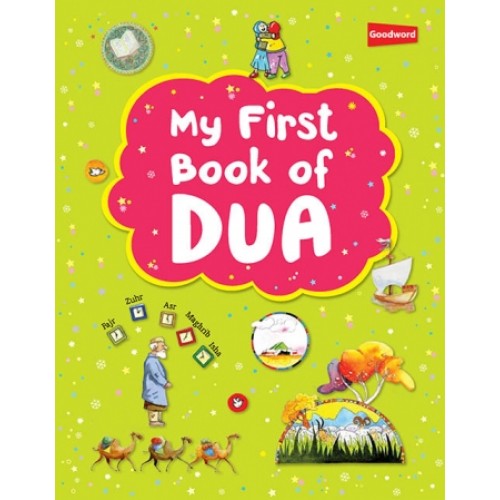
My First Book of Dua (H/B
Highlights:
My First Book of Dua is a delightful book for children which they may call their very own! Written with young hearts in mind, this short, easy-to-read book for 7 year-olds and above, is the perfect way to introduce children to the prayers from the Quran and the Hadith. My First Book of Dua helps children to learn to remember and thank Allah in a way that is meaningful and charming. This is a bright and appealing collection designed to be used at home, or at school. May this collection of prayers bring you wisdom and many blessings.
Speacial Features
- More than 150 prayers
- Delightful illustrations
- Exciting facts
- Hadith
- Quran quotes and references
RM35.00
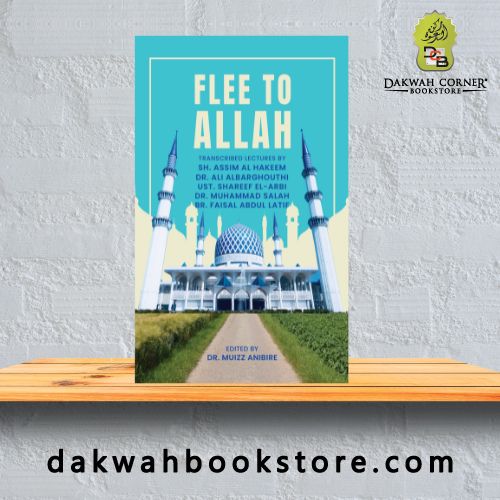
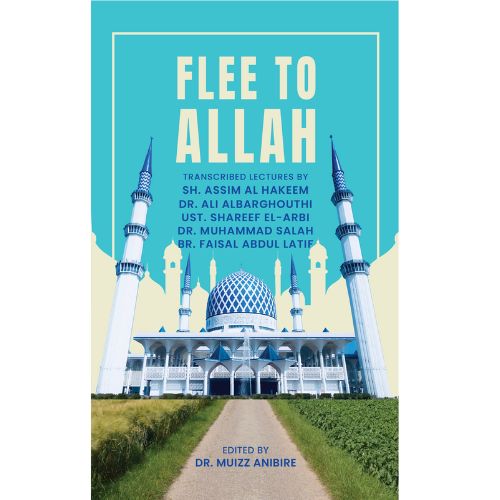
Flee To Allah
Highlights:
“Flee to Allah” is a timeless summons to seek refuge in the One Who shields us from life’s trials. By turning to Allah wholeheartedly, we free ourselves from sin, anxiety, and despair, and instead fortify our hearts with genuine hope. This divine command touches every facet of our being—spiritual, emotional, mental, and physical—guiding us toward enduring strength and resilience.
RM50.00
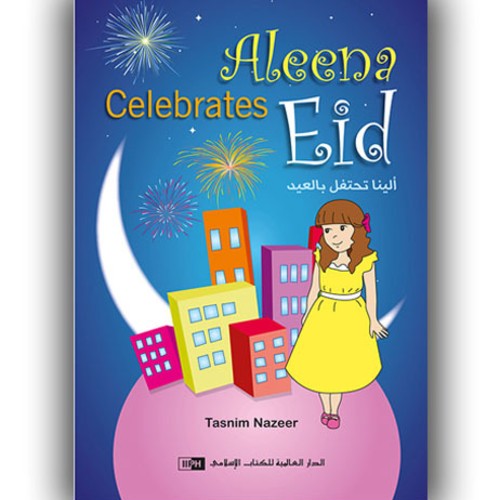
Aleena Celebrates Eid
Highlights:
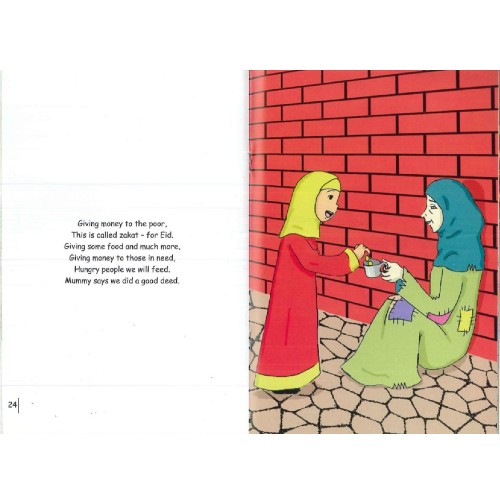
‘Aleena Celebrates Eid’, written by Tasnim Nazeer, is an interactive and engaging story which teaches your child about the glorious day of Eid al-Fitr. It is written in a lively, rhythmic tone through the eyes of little Aleena, who observes all the practices that make Eid a truly special day! From going to the mosque to offer Eid prayers, to dressing up in her new Eid clothes, Aleena’s day is full of excitement.
RM21.00
There are no reviews yet.