

| Weight | 0.08 kg |
|---|---|
| Author | |
| ISBN | 9789960992518 |
| Pages | 59 |
| Product Type | Book |
| Publisher | IIPH |
| Binding | Paperback |
Read, Then Write Your Will
RM12.00
Hurry up, Only 3 left.
Highlights:
somdn_product_page
Compare
This book deals with the importance of having an Islamic will. Author Hisham Ibn Fahmi Ibn Moussa Al-Aref explains what a will is and how important it is in Islam.
Islam highly encourages, if not obligates, writing a will as soon as possible, since one does not know when Allah will take the Muslim’s soul back to Him. Many man-made laws also recognize the importance of a will and the difficulties that the absence of one can cause. The will can include both financial and religious matters and can be a document for reference and application without disputes.
SKU: SJ173
Category: Sharia, Fiqh and Jurisprudence
Additional information
Reviews (0)
Be the first to review “Read, Then Write Your Will” Cancel reply
You must be logged in to post a review.
Related Products


Smoking Intoxicants & Narcotics (P/B)
Highlights:
This book deals with the epidemic of smoking, which enslaves many of today’s Muslims, and which is aggravated by that most victims belittle its dangers and deny its prohibition.
This book includes a discussions of intoxicants, establishing the prohibition of various practices associated with them, as well as penalties (in both lives) for those who partake in them.
This book also includes a discussion of narcotics, with an overview of marijuana and qaat (or khat). Based on their established effects and harms, we conclude that narcotics are strongly prohibited, except in very limited medical settings.
This book, we hope, will provide many Muslims with guidance toward a healthier, cleaner and worthies Islamic personality. My Allah grant us guidance and facilitation.
RM28.00

Forensic Psychiatry In Islamic Jurisprudence (P/B) (IBT)
Highlights:
This is the first book in Forensic Psychiatry that focuses on the application of psychiatry to legal issues connected to Islamic jurisprudence. It gives contemporary psychiatry in any Islamic country a broad spectrum of tools to work with, enabling the utilization of options specific to particular societal and cultural norms. This book will appeal to both the general as well as the academic reader.
RM40.00

The Right to Education, Work and Welfare in Islam (P/B)
Highlights:
In The Right to Education, Work and Welfare in Islam Professor M.H. Kamali develops an Islamic perspective on three connected and complementary areas of rights and liberties. He urges that education is often a necessary ingredient of professional work even more so now than in earlier times when the range and variety of specialised knowledge were relatively limited. A person who acquires education, whether generally or at advanced levels of specialisation, is more likely to stand in a better position to enter the workforce and thus to contribute to the welfare of the community.
The author commences his discussions on education, work and welfare in Islam by focusing on how each is treated in the Qur’an; and follows this by the example of the Prophet and, after him, the Pious Caliphs who gave prominence to the education and welfare needs of people at times both of scarcity and affluence. Professor Kamali then moves forward to our time and discusses the right to education, the education of children, institutionalisation of learning, academic freedom and the debate between science and religion.
The section on work elaborates on the value of work, work ethics, workers’ and employers’ rights and responsibilities, and the role and responsibility of governments.
Finally, the section on welfare focuses on the importance in Islam of caring for those who are in need and the different forms of provision that can be made available by individuals, the state and charities.
RM63.00

Islamic Fatawa Regarding Women (H/B)
Highlights:
Women face a lot of special problems regarding their menses, postpartum bleeding, istihada, hijab, mixing with men, rights & duties with respect to their husband, husband’s household, children, inheritance, marriage, divorce, etc
More than 350 of such problems & issues have been answered in this book by Grand Mufti of Saudi Arabia Sheikh Ibn Baz, and the eminent scholars like Sheikh Ibn Uthaimin, Sheikh Ibn Jibreen and others.
.
RM56.00


Having Fun The Halal Way Entertainment In Islam
5 ★
5 ★
1 Rating
5 ★
1
4 ★
0
3 ★
0
2 ★
0
1 ★
0
Highlights:
With the advent of technology, the entertainment industry has flourished and become immensely popular. Combine this with the exponential advances in technology, and the result is an increasing number of ways to amuse ourselves. As a result of such advances, Muslim react in a variety of manners towards entertainment. Some label entertainment as completely forbidden. This sometimes includes parents who say no to almost everything that their young ones deem to be ‘fun’, without providing them with suitable alternatives. Others, who do not want to take this extreme approach, fall into the trap of excessive use of – and even addiction to – various sources of entertainment, without any limits.
In Having Fun the Halal Way, Ismail Kamdar explores the teachings of Islam regarding entertainment. Drawing upon the Quran, the Sunnah and the understanding of the righteous scholars of Islam, he provides a detailed and balanced analysis of the topic. He not only explains the detriments of the current entertainment industry, but also suggests alternative means to have a good time with friends and family members.
RM18.00


Fiqh Course: Tahaarah, Salaah & Janaa’iz
Highlights:
This course was compiled for English-speaking Muslims and is especially beneficial for new Muslims. It covers tahârah (purification), salâh (prayer) and janâ‘iz (funerals). It is set out in an easy-to-understand manner, citing evidence from the Qur’an and authentic hadiths. The aim of this book is to provide the reader with a correct, yet uncomplicated guide to the performance of the aforementioned acts of worship. Allah willing, it is the first in a series which will cover all aspects of worship and Islamic jurisprudence.
RM46.00

The Pillars of Islam Made Easy – II Salah & Its Essential Conditions (H/B)
Highlights:
Salah is one of the five pillars on which the edifice of Islam rests. Most of us feel that we already know all there is about salah – the formal prayers of a Muslim. However, very few individuals actually do justice to it or derive any worldly or spiritual benefits from it.
Salah & Its Essential Conditions is an effort to detail the essential prerequiires of salah. Moreever, it takes a detailed look at its importance along with the different types of obligatory and voluntary prayers. It alsa presents an illustrated guide to help those who wish to learn or correct the performance of their prayers.
Inshallah, all those who wish to improve their salah will find plenty of help in this book whether they are looking for information on cleanliness and purify, locating the direction of qibla, improving their congregation during salah, making up for the missed salah, or joining acongregation when the imam has already sarted the salah, or joining a congregation when the imam has already started the salah. All in all, it is a relevant handbook on what the Prophet (saw) has described as the coolness of his eyes.
RM50.00


Fiqh According To The Quran & Sunnah (2 vol)
Highlights:
The complete set, ‘Al-Lubab Fee Fiqh As-Sunnah Wal-Kitab,’ contains all of the books of Islamic Fiqh and its chapters, accompanied by evidence and is presented in a clear and simple manner, in order that they may be understood by the young and the old, without blindly following any of the schools of Jurisprudence, but rather being subject to authentic proofs and following the most authoritative opinions, without fanatical adherence to any particular group. Rather the author agrees with each group when the truth is with them and contradicts them when they veer from that which is correct.
Fiqh is to achieve access to knowledge of that which is unclear through knowledge of that which is proven, so it is more specific than mere knowledge or learning. And fiqh is knowledge of the juristic law. It is said Faquha -A man has acquired understanding and so he has become a Faqeeh (A scholar of Islamic Jurisprudence); and it is said Faqiha – He has understood it, i.e he has attained understanding of it, and it is said Tafaqqaha – he has devoted himself to the acquisition of (Islamic) Knowledge and specialized in it. Fiqh has been a subject of contention among the scholars as well as layman throughout the history of Islam.
RM180.00


Zakah According to the Quran & Sunnah (Darussalam)
Highlights:
Zakah, the third Pillar of Islam, is probably the first Pillar of its economic system. It represents the first and most important mechanism to implement economic justice and to provide sustenance to the economically unfortunate, two issues for which Islam is especially sensitive. These two issues are the essence of this book. This book consists of all the main issues of Zakat (i-e, Zakah on Gold, Silver, Paper Money, Livestock, Fruits, Grains, Rented Land, Buried treasures, Minerals, Trade, Shares, Stocks, and Exploited Assets etc). The main objective of this work is to serve an easy and authentic reference to the reader.
RM65.00


Hajj & Umrah (Pocket Guide) – English Version
5 ★
5 ★
2 Ratings
5 ★
2
4 ★
0
3 ★
0
2 ★
0
1 ★
0
Highlights:
A useful pocket guide that includes the rites of Umrah,Hajj, and visiting Madinah.
RM14.00

A Guide to Male-Female Interaction
Highlights:
Are Muslim men allowed to interact with female students, and vice versa, in a virtual classroom? Can a Muslim woman pursue a professional career that necessitates her interaction with men? Is it appropriate for a woman to serve her husband’s guests? Do mixed wedding ceremonies comply with the Sharia? Read this bilingual book to find the answers and more!
RM56.00


Principles of Islamic Jurisprudence (2nd Revised Edition)
Highlights:
This book offers a detailed presentation of the theory of Muslim law (usul al-figh). Often regarded as the most sophisticated of the traditional Islamic disciplines, Muslim jurisprudence is concerned with the way in which the rituals and laws of religion are derived from the Qur’an and the Sunna – the precedent of the Prophet. Revelation, which is given to man to restore unity and help him achieve a just and devout order in society as well as in the soul, must be interpreted so as to render it practicable in every culture, while not betraying its spirit and immutable provisions. To achieve this, additional sources of legal authority are recognized, including consensus (ijma), analogical deduction (qiyas), public interest (maslaha) and local customary precedent (urf). In employing these, the jurist guards the five principles which it is the purpose of Islamic law to uphold, namely, the right to life, sound mind, property, lineage and religion.
RM75.00
Recently Viewed

When Wings Expand (P/B)
Highlights:
Writing on the pages of her journal, Nur, a teenage girl in Canada, charts the onset and advance of her mother’s cancer. Nur watches her mother’s body begin to shrink and her mood begin to darken. And when family and friends begin to encroach, Nur must face the prospect of her mother’s looming death.
RM40.00
How can I get Closer To Allah? IIPH
5 ★
5 ★
1 Rating
5 ★
1
4 ★
0
3 ★
0
2 ★
0
1 ★
0
Highlights:
Whenever a Muslim woman has a question about her religion, she should seek the answer in the Qur’an (Allah’s revealed Word) and the Sunnah (the example in word and deed) of His Prophet Muhammad (blessings and peace of Allah be upon him). If the answer is not found in these two sources, she should look to trustworthy Muslim scholars for help. She is encouraged to read, study, and learn as much as she can about her religion, for the search for religious knowledge is an obligation upon every Muslim individual. A Muslim woman who is learning about her religion finds out quickly that the menstrual period and the period of bleeding after childbirth (postpartum bleeding) are times for her to leave off certain acts of worship such as formal prayer and fasting. It is important for believing women to be aware of exactly which acts are forbidden and which ones are permitted to them in these situations. This revised edition of How Can I Get Closer to Allah? is intended to clear up the issue as much as possible (with Allah’s permission).
RM10.00
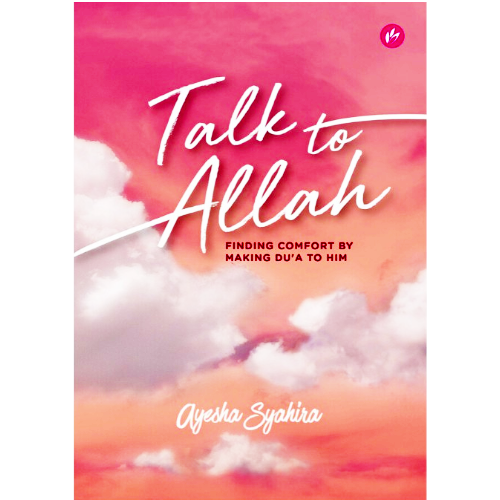
Talk to Allah
4 ★
4 ★
1 Rating
5 ★
0
4 ★
1
3 ★
0
2 ★
0
1 ★
0
Highlights:
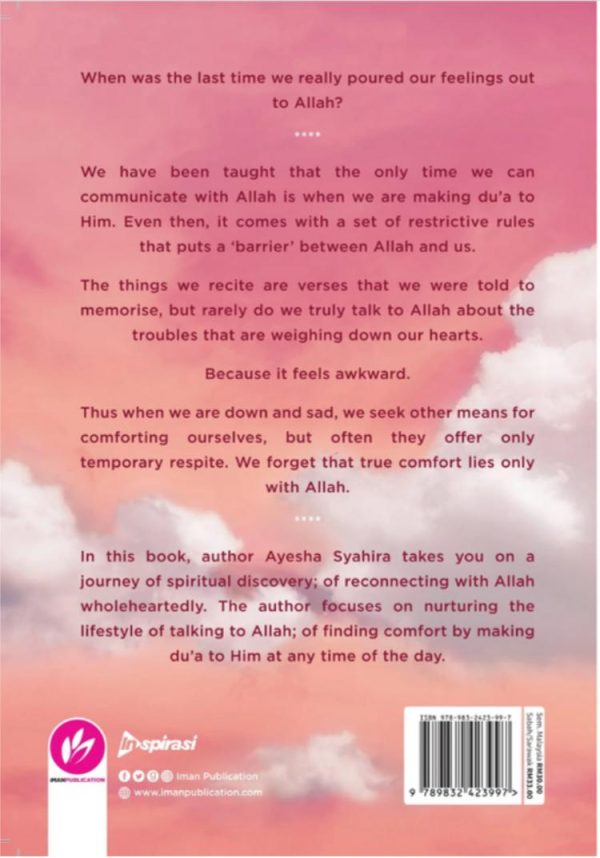
When was the last time we really poured our feelings out to Allah?
***
We have been taught that the only time we can communicate with Allah is when we are making du’a to Him. Even then, it comes with a set of restrictive rules that puts a ‘barrier’ between Allah and us.
The things we recite are verses that we were told to memorise, but rarely do we truly talk to Allah about the troubles that are weighing down our hearts.
Because it feels awkward.
Thus when we are down and sad, we seek other means for comforting ourselves, but often they offer only temporary respite. We forget that true comfort lies only with Allah.
***
In this book, author Ayesha Syahira takes you on a journey of spiritual discovery; of reconnecting with Allah wholeheartedly. The author focuses on nurturing the lifestyle of talking to Allah; of finding comfort by making du’a to Him at any time of the day.
RM30.00
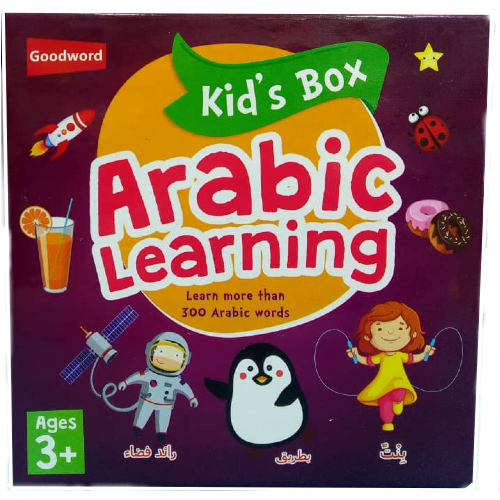
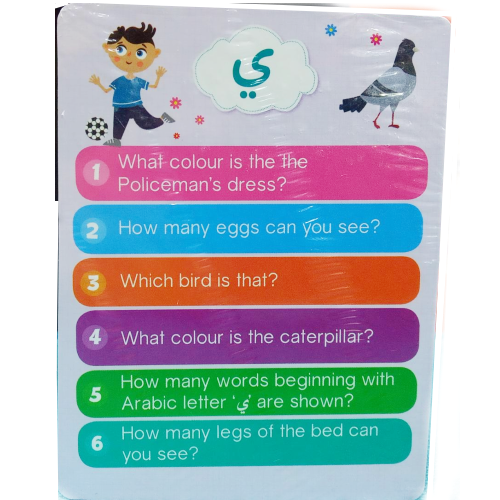
Kid’s Box: Arabic Learning
Highlights:
Learn Arabic Words & Develop Observation Skills
Perfect for encouraging children to build vocabulary and language skills, Kid’s Box: Arabic Alphabet helps children grasp basic Arabic words, their formation, meaning and usage. Children will love discovering and learning new words to build Arabic vocabulary in a fun way while playing various games.
- A card game for 2 and more players
- Suitable for children 3 years and above
- Learn more than 300 Arabic words
- Improves memory and concentration skills
- A simple, fun-filled and educational game
- Challenge your brain in just 15 minutes
- Full of fun illustrations
- A perfect boredom buster for children
- Includes words from topics such as animals, home, school, fruits, and transport.
Includes 56 double sided cards and a dice.
Suitable for 3+ years old
RM60.00
Aleena Celebrates Eid
Highlights:
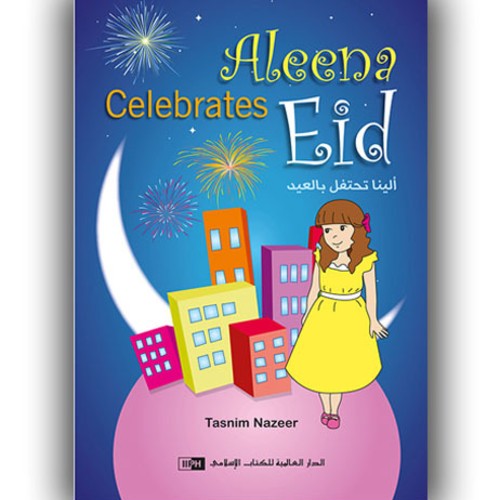
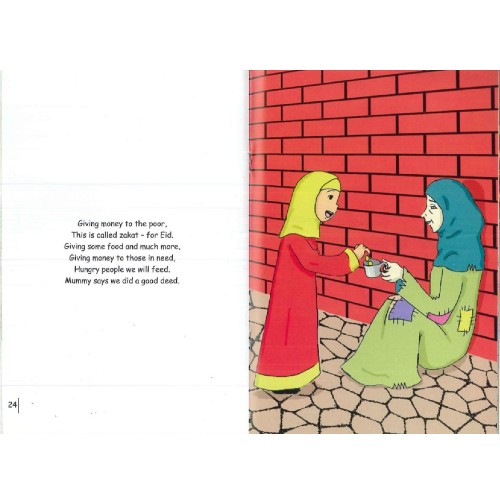
‘Aleena Celebrates Eid’, written by Tasnim Nazeer, is an interactive and engaging story which teaches your child about the glorious day of Eid al-Fitr. It is written in a lively, rhythmic tone through the eyes of little Aleena, who observes all the practices that make Eid a truly special day! From going to the mosque to offer Eid prayers, to dressing up in her new Eid clothes, Aleena’s day is full of excitement.
RM21.00

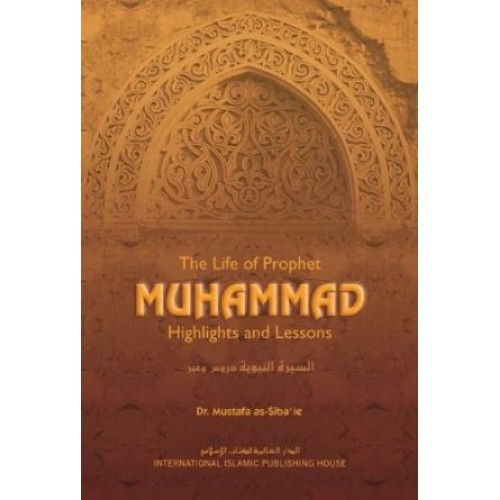
The Life of Prophet Muhammad (P/B)
Highlights:
Prophet Muhammad (blessings and peace be upon him) was born into a pagan society in which nearly every conceivable vice was practiced and very few virtues existed. As he grew up, he watched with disgust the great drama of evil around him. He witnessed how the human soul was suppressed, how men were oppressing and exploiting the have-nots, orphans, women, and the weakest members of society, and how the wealthy and strong enslaved the poor and weak. Through ignorance, error, superstition, and outright perversity, people were debauched by evil. Tyranny reigned supreme. The society was drunk with arrogance, empty religious formalism, and luxury. In those times of ignorance, Muhammad (blessings and peace be upon him) grew up. He was upright and truthful, and earned the complete trust of the people of Makkah. Muhammad (blessings and peace be upon him) was never taught formally by any human, and yet, in years to come, he would teach the whole world such as no one else in human history has done. You owe it to yourself to find out about this giant of history: you owe it to yourself to read this book.
RM10.00
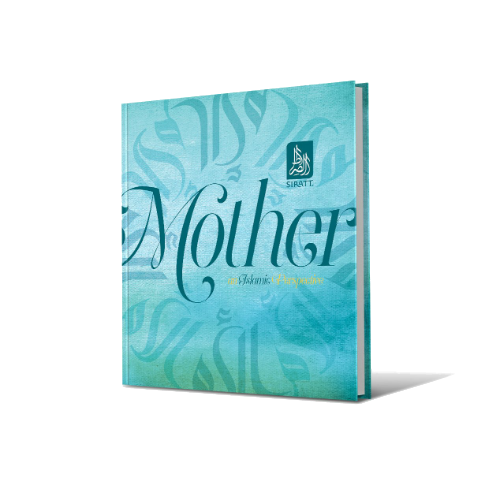
MOTHER
Highlights:
Mother The perfect gift to give a loved one or indeed to educate oneself as to the significance Islam places on this important relationship through relevant Qur’anic Ayah, Hadith, and Islamic Poetry.
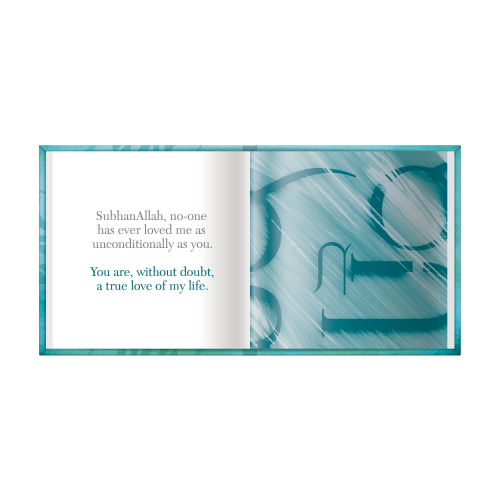
Example Quotes from GiftBook:
And We have enjoined upon man (to be good and dutiful) to his parents; (because) his mother bore him in weakness, and hardship, and his weaning is in two years. (Hear the Command, therefore,), Show gratitude (and thanks) to Me and to your parents; (then) unto Me is the final destination. [Q31:14]
Through you, Allah brought me here Great pain and suffering you did bear I could never pay you back Words of gratitude I do lack From pen to paper I do convey The innermost love with which I pray I do love you with all my heart In Paradise I hope we never part.
Ideal gifts to convey what we sometimes find difficult to say through relevant Qur’anic Ayah, Hadith, and Islamic Poetry.
RM36.00
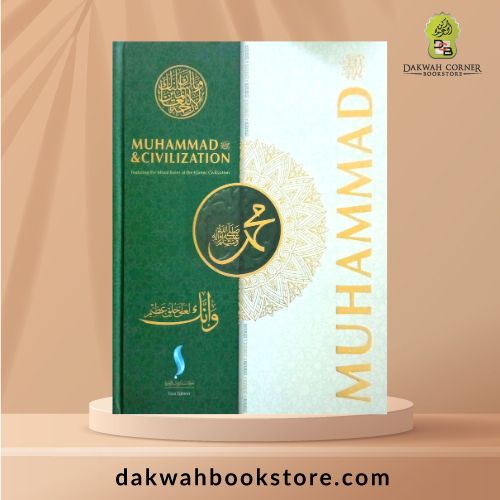
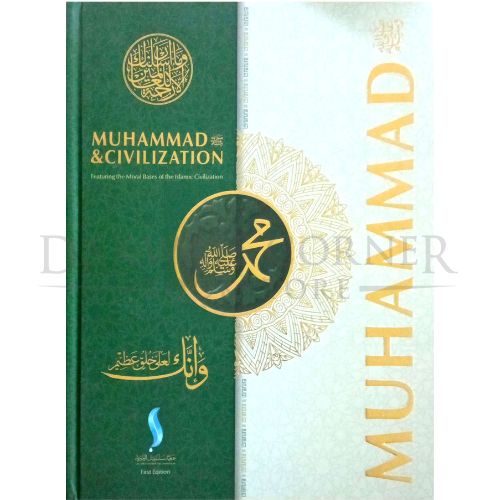
Muhammad & Civilization (H/B)
Highlights:
“My choice of Muhammad to lead the list of the world’s most influential persons may surprise some readers and may be questioned by others, but he was the only man in history who was supremely successful on both the religious and secular levels.”
– Michael H. Hart
Author of “The 100: A Ranking of the Most Influential Persons in History”
“If the grandeur of the aim, the smallness of the means, the immensity of the result are the three measures of a man’s genius, who would dare humanly compare a great man of modern history with Muhammad?”
– Alphonse de Lamartine
A French poet, writer and politician.
Author of “Histoire de la Turquie”
RM200.00
There are no reviews yet.