


| Weight | 0.17 kg |
|---|---|
| Product Type | Book |
| Author | |
| Publisher | IIPH |
| Pages | 94 |
| ISBN | 9789960850832 |
The Purpose of Creation (P/B)
RM15.00
Hurry up, Only 1 left.
Highlights:
somdn_product_page
Compare
Mankind must know about the purpose of their existence, their responsibility towards their Creator, and what they must do in preparation for the Day in which they shall return to Him – this work addresses these issues aptly in the authors usual readable style.
SKU: GB16
Categories: General Islamic Books, Recommendation
Additional information
Reviews (0)
Be the first to review “The Purpose of Creation (P/B)” Cancel reply
You must be logged in to post a review.
Related Products

Essential Lessons for Every Muslim
Highlights:
This work is a translation of Shaikh Abdul Aziz bin Baz’s book ‘Ad-Duroos Al-Muhimmah li-Ammatil-Ummah.’ It contains concise lessons that explain the fundamental teachings of Islam. This book covers a wide range of basic information such as the meaning of Tawhid (Islamic monotheism), the categories and implications of Shirk (polytheism), the regulations of prayer, and Islamic morals and manners. As the title implies, these are truly essential lessons for everyone who is concerned with the correctness of his Islamic beliefs and acts of worship.
RM15.00

Muslim Unification at Time of Crisis
Highlights:
This book authored by one of the great scholars of our time is an advice to the people of Ahulul ?Sunnah wal-Jamaah to unify and be merciful to each other, and cooperate upon righteousness and taqwa.
RM24.00

Ibn Taymeeyah’s Essay on the Jinn (P/B) ASN
Highlights:
Dr. Abu Ameenah Bilal Philips has rendered Ibn Taymiyah’s treatise, Eedaah-ud-Dalaalah fee ‘Umoom-ir-Risaalah, from volume 19 of Majmoo‘-ul-Fataawa into very readable English. This abridged and annotated translation is significant in that it is perhaps the first book available in English exclusively on the topic of spirit-possession and exorcism in Islam.
Ahmad ibn ‘Abdul-Haleem ibn Taymeeyah was bron in the town of Harran [near Edessa, in what was once Northern Iraq, but is now called Orfa and is a part of Turkey.], in the year 1263 CE. His father was a leading scholar of the Hanbalite school of Islamic law and so was his grandfather, who authored Muntaqaa al-Akhbaar, the text of ash-Shawkaanee’s Hadeeth classic Nayl al-Awtaar.
Ibn Taymeeyah mastered the various disciplines of Islamic study at an early age and read extensively the books of the various sects and religions in existence at that time. Much of his time and effort was spend defending the orthodox Islamic position against a tidal wave of deviation which had swept over the Muslim nation. Consequently, he faced many difficulties from both the prominent sectarian scholars of his time and from the authorities who supported them. His clashes with them led to his imprisonment on numerous occasions. Ibn Taymeeyah also fought, not only against internal enemies of Islaam, but also against its external enemies by both his Fatwaas (Islamic legal rulings) and his physical participation in battles. His ruling allowing the taking up arms against groups which recognized the Shahaadataan (declaration of faith) but refused to uphold some aspects of the fundamental principles of Islaam, greatly affected the resistance movement against the Tartars who had declared their acceptance of Islaam but did not rule according to divine law.
During these struggles he wrote countless books and treatises demonstrating his extensive reading and knowledge, not only of the positions of the early scholars, but also those of the legal and theological schools which had subsequently evolved. Ibn Taymeeyah also had a major effect on the open-minded schoars of his day, most of whom were from the Shaafi’ite school of law. Among the most famous of his students were IBN KATHEER, ADH-DHAHABEE and IBN AL-QAYYIM. The author died in 1328 while in prison in Damascus for his Fatwaa against undertaking journeys to visit the graves of saints [Ibn Taymeeyah’s ruling was based on the authentic statement reported by Abu Hurayrah wherein the Prophet Muhammad (sallallaahu alayhi wasallam) said, “Do not undertake a journey except to three masjids; this masjid of mine, Masjid al-Haraam (Makkah) and Masjid al-Aqsaa (Bayt al-Maqdis).” Collected by Al-Bukhaaree and Muslim]. His Fatwaa had been distorted by his enemies to say that he forbade visiting the Prophet Muhammad’s (sallallaahu alayhi wasallam) grave.
RM33.00

Dream Interpretation According to the Qur’an and Sunnah (P/B)
Highlights:
Separates the authentic Islamic teachings on dream interpretation from the myths, superstitions and fabrications being circulated on the subject. It also provides a guide for dream interpretation according to references found in the Quran and authentic hadeeths.
Since the English publication of Muhammad Al-Akili’s 508 page work entitled, Ibn Seerin’s Dictionary of Dreams: According to Islamic Inner Traditions in 1992, followed shortly thereafter by Dreams and Interpretations by Ibn Seereen, there has been an explosion of dream interpretation and interpreters among English-speaking Muslim communities in the West. On the other hand, dream interpretation has been a long established tradition in the Muslim East. However, it has become so mixed up with superstition, myths and fortunetelling, that most educated Muslims shun this area. The fact of the matter is that dream interpretation is mentioned in the Quran and was regularly practised by the Prophet (pbuh), himself. Consequently, there is a real need to understand this subject, especially, considering that humans spend about a third of their lives sleeping.
RM16.50


Islam A Total Beginners Guide – Part Three (P/B)
Highlights:
In present era we are facing lot of questions:
• What is status of women in Islam?
• Who is superior – man or women?
• What does Islam say about inter-religious marriages, man’s treatment towards his wife and privacy in homes?
• What does Islam say about dress, veil, clothing and ornaments, perfumes and the wisdom of banning gold and silk for men?
This beginner’s guide to Islam answers all such questions.
RM45.00

New Directions in Islamic Education : Pedagogy and Identity Formation (P/B)
Highlights:
New Directions in Islamic Education explores the relationship between pedagogy and the formation of religious identities within Islamic education settings that are based in minority and majority Muslim contexts. Based on empirical research, the book engages critically with the philosophical, theological and cultural dynamics that inform Muslim educational thought and practice. The book offers an integrated model of Islamic education that identifies the heart of the Islamic educational imagination as tarbiyah, a transformative process of becoming. Overall, this book seeks to ground the theory and practice of Islamic education within the experience of the educator and the learner, and it synthesises the spiritual foundations of Islam with the tradition of critical reflection within the classical Muslim educational heritage. This ground breaking and wide-ranging work should be of interest not only to Muslim educators and education specialists, but also to social scientists, theologians and policy makers.
RM120.00


Weakness of Faith (IIPH)
5 ★
5 ★
1 Rating
5 ★
1
4 ★
0
3 ★
0
2 ★
0
1 ★
0
Highlights:
The phenomenon of weak faith has become very widespread among Muslims, and many people complain about the hardness of their hearts. So often we hear the words, “I feel hardness in my heart,” “I do not find any joy in worship,” “I feel that my faith has hit rock bottom,” “Reading Qur’aan does not move me,” “I fall into sin so easily.” The effects of this affliction can be seen in many people, and this problem is the cause of every disaster and adversity.
One of the most important principles which must be understood in order to treat the problem of weak faith is that faith increases and decreases, or waxes and wanes. This is one of the basic principles of the ‘aqeedah of Ahl al-Sunnah wa’l-Jamaa’ah, who say that faith is something to be spoken in words, to be believed in in the heart, and to be put into action. Faith increases with obedience and decreases with disobedience.
‘… that they may grow more in Faith along with their (present) Faith…’ [al-Fath 48:4]
‘… Which of you has had his faith increased by it? …'[al-Tawbah 9:124]. aari, Fath, 1/51).
RM13.00 – RM30.00Price range: RM13.00 through RM30.00
HardcoverPaperback
Clear

Let Us Be Muslims (P/B)
Highlights:
LET US BE MUSLIMS is a new edited English version of Sayyid Mawdudi’s Urdu Khutubat. It is no ordinary book, says Khurram Murad in his long Introduction, for it has stirred more hearts and impelled more lives to change their course than any of his more erudite works. In these Friday congregational addresses, Sayyid Mawdudi expounds such familiar themes as Iman, Islam, the Prayer, Fasting, Almsgiving, Pilgrimage and Jihad. But, in an unusually beautiful, powerfully reasoned, eloquent and passionate, and yet simple and lucid style,
“Sayyid Abul A’la Al-Mawdudui (1903-1979), one of the chief architects of contemporary Islamic resurgence, was the an outstanding Islamic thinker and writer of his time. He devoted his life to expound the meaning and message of Islam and to organise a collective movement to establish the Islamic Order. In this struggle, he had to pass through all kinds of sufferings.
Between 1948-67, he spent a total of five years in different prisons of Pakistan. In 1953, he was also sentenced to death by a Martial Law court for writing a ‘seditious’ pamphlet, this sentence being later commuted to life imprisonment. In 1941, he founded Jama’at-I Islami, of which he remained Amir, until 1972 and which is one of the most prominent Islamic movements of our day. He authored more than one hundred works on Islam, both scholarly and popular, and his writings have been translated into forty languages.”
RM70.00

Kindness to Parents
Highlights:
Kindness to Parents is a very enlightening booklet by Abdul Malik Al-Qasim. He has collected several stories and narrations that demonstrate the Birr (being dutiful) and kindness to our righteous Salaf towards their parents’ needs and necessities, in obedience to Allah’s worship in sincerity. He refers from the Noble Qur’an that a man is never allowed to say ‘Uff” (fie) if he smells a bad order coming from his parents or one of them.
The author has exposed shortcomings and errors of many among us who don not preserve the rights of their parents.
RM17.00



Treatment of Magic, Evil Eye & Satan’s Touch (P/B)
Highlights:
A detailed treatise on the authentic treatments for afflictions of magic, evil eye and possession based on the Islamic teachings of the Qur’an and Sunnah of Muhammad.
RM65.00

Fundamentals of Islam (P/B)
Highlights:
Fundamentals of Islam is a revised English edition of the critically acclaimed Khutubah (original written in Urdu). It consist of Friday congregational addresses, in them he expounds familiar themes; like Iman, Islam, the Prayer, Fasting, Alms-giving, Pilgrimage and Jihad.
RM38.00
Recently Viewed
My Ramadhan Activity Book
Highlights:
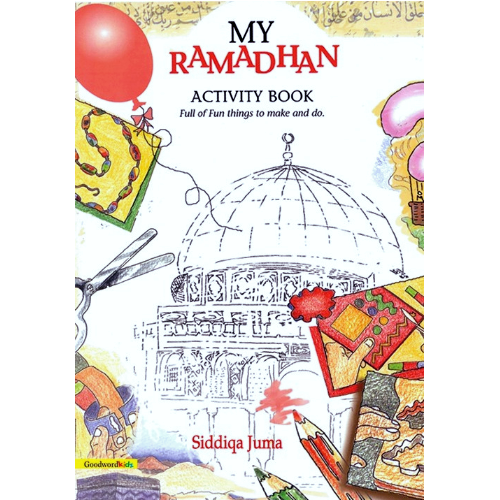
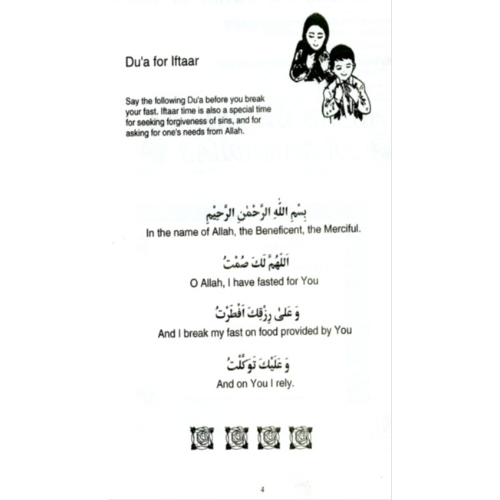
Eid-ul-Fitr is always an occasion for great fun and celebration. After a month-long Ramadan, everybody looks forward to a great Eid. Eid-ul-Fitr also calls for thanking Allah for His blessings, helping the poor and the needy around us and sharing our love and happiness with each other.
RM10.00
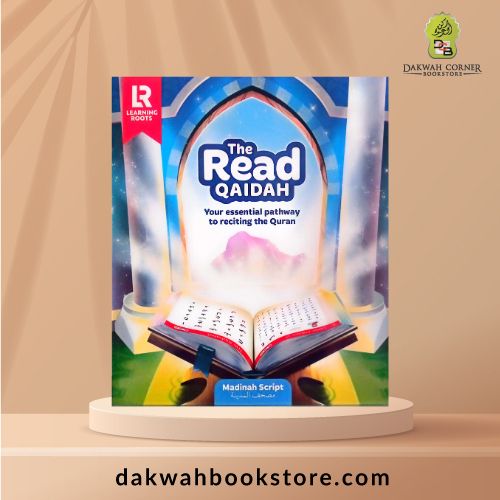
Read Qaidah (Madinah Script)
Highlights:
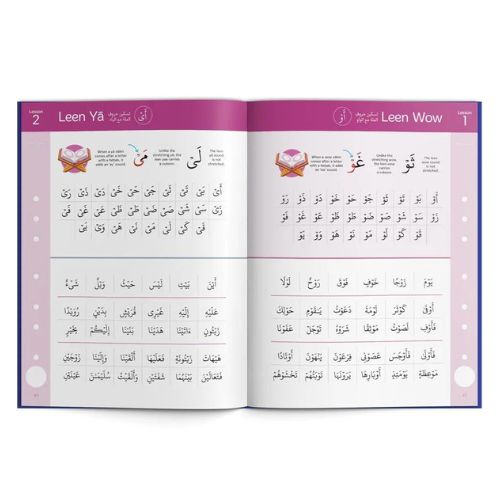
Easy progress through bitesize lessons
Read takes children step by step through letters, vowels, words and more until they’re ready for the Quran. Each line forms an easy, manageable lesson so children build momentum and progress.
- Motivational stickers
-
NOT Kiitab Compatible
RM45.00
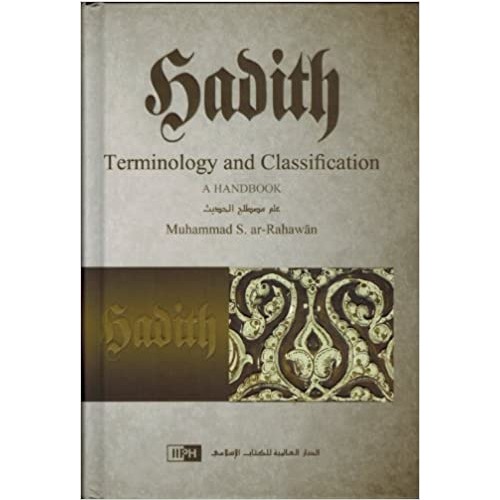
Hadith Terminology and Classification (H/B)
Highlights:
Islam is a complete way of life that enlightens through the Qur’an and the Sunnah, the true path of guidance and success in this world and the hereafter. However, one must accurately comprehend what has been ordained through the Sunnah and identify the authentic hadiths of the Prophet (blessings and peace be upon him). To do that, it is imperative to understand the rules that govern the classification and definitions of hadith methodology and criticism.
RM65.00
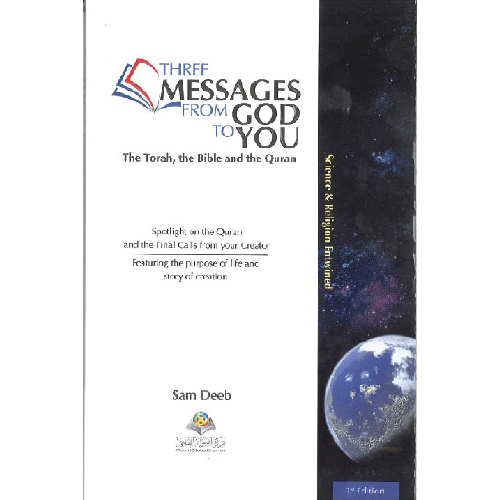
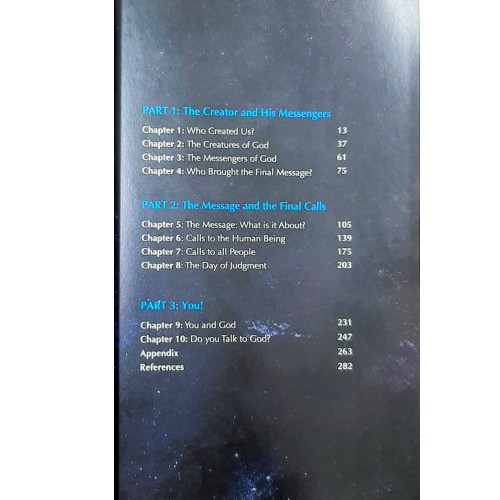
Three Messages from God to You
Highlights:
● Who created the universe? Who created us and the beings on the earth? Who gave life to billions of creatures on our plant? Is He our God? What is His name? Are there other creators than Him?
● Why do we live on the earth? What is the purpose of life? Did our creator really send us messages? What does He want to inform us? Are these messages true?
● Are the Torah, the Bible and the Quran true divine books? Are they related? Do they contain true Messages from God to us? Is there a final testament?
● Why all creatures die? Is there another life after death? Do we return to our Creator? Why?
RM25.00
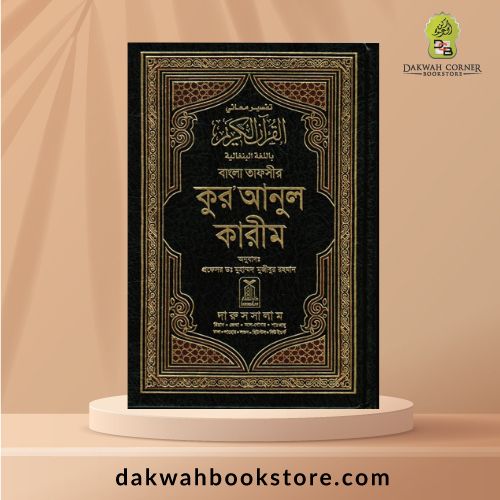
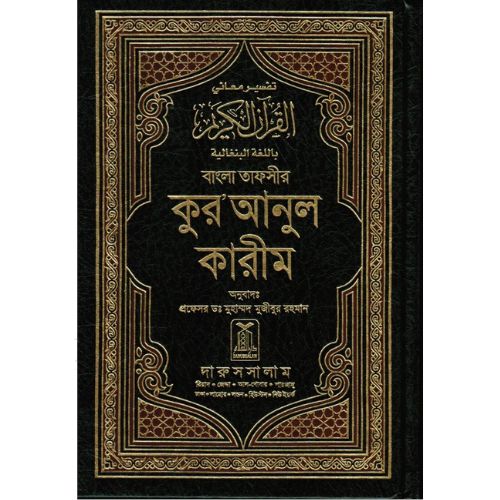
Quran Bengali Translation
Highlights:
Quran in Nepali Language ( Arabic To Nepali Translation)
The Noble Quran was Translated into Nepali with Arabic script included.
RM85.00
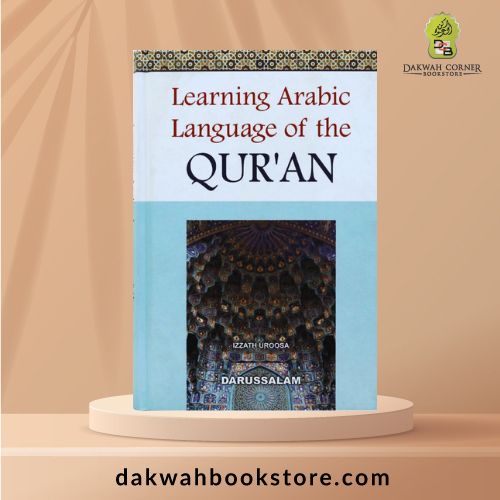
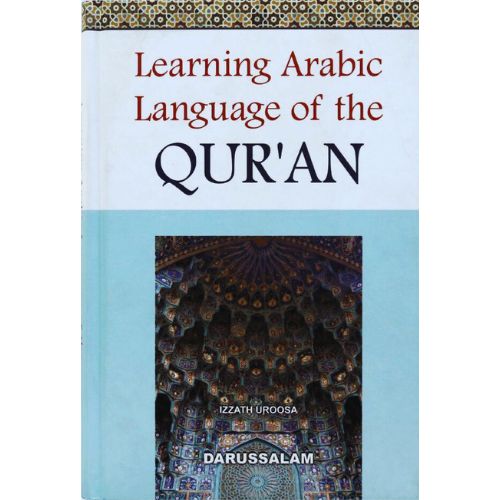
Learning Arabic Language Of The Qur’an
Highlights:
Other components that make this book attractive and useful are the simplicity of the language used, and its clarity and effectiveness of expression in achieving its objective. This book can be used by students of different ages whose intention is to learn Arabic with an eye toward proper understanding of the Qur’an.
The author has profound knowledge of both the Arabic and English languages. She also possesses a deep insight into Qur’anic expressions. She studied Arabic in Saudi Arabia and in India. This comprehensive book is the result of her diligence and commitment to learning and teaching the Qur’anic Arabic.
May Allah reward her for this valuable service to the understanding of the Qur’an and make it popular among the students and the academic world at large.
Prof. Mohsin Usmani Nadwi, Professor of Arabic and Dean at English and Foreign languages University (formerly CIEFL) Hyderabad, India.
RM90.00

The Problems of the Illegitimate Child (P/B)
Highlights:
This book addresses the views of the Sunni scholars regarding the importance of genealogical relationship (nasab) in Islamic family law and examines the role of legitimacy on the basis of the legal maxim “al-walad li al-firash”, evidence (al-bayyinah), and doubtful intercourse (wat’ shubhah). It also elucidates the views of the Sunni schools of law on how to establish illegitimacy. For the Sunni jurists, there are several situations that determine the illegitimacy of the child. A child is considered illegitimate if its birth is the outcome of adultery (zina) or the result of legitimate union but accompanied with imprecation (li‘an). Other circumstances include the birth of the child taking place in less than six lunar months, the father of the child being categorized as one who is incapable of begetting, or the birth as a result of marital relationship considered unlawful because of consanguinity. The book also deals comprehensively with the moral, religious, legal and other aspects of the illegitimate child and the foundling in the works of the Sunni jurists. The status and rights of the illegitimate child and the foundling in the Islamic family law of Malaysia and Brunei are also discussed by referring to some provisions from Federal Territory Act 1984 (Act 303) and Brunei law.
RM49.00

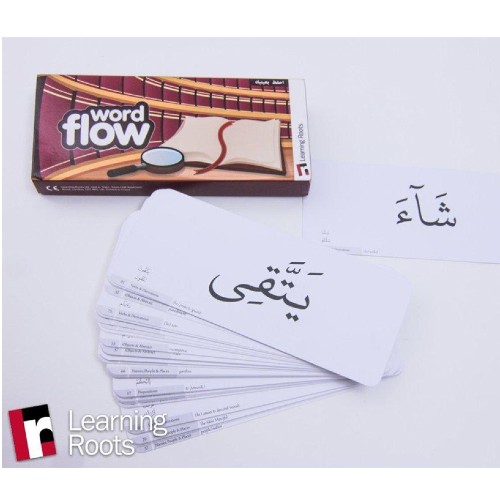
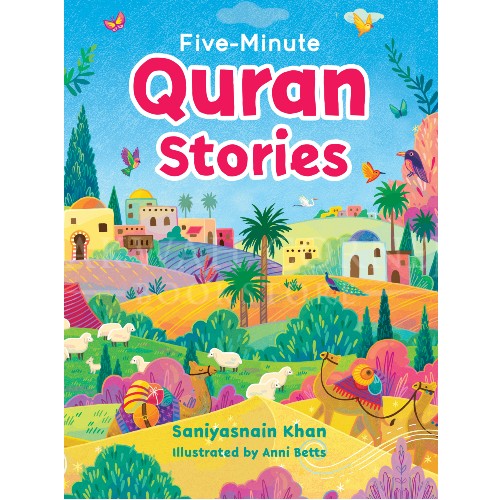
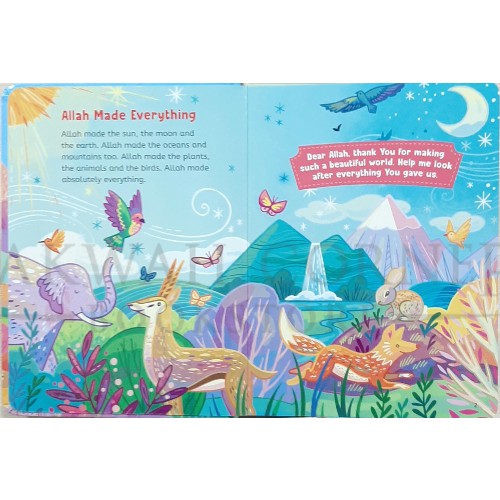
Five-Minute Quran Stories (H/B)
Highlights:
To help shape your child’s spiritual growth, this wonderful collection of Five-Minute Quran Stories is a perfect gift to inspire your little ones. Written in simple, short and engaging language, this treasure trove of Five-Minute Quran Stories is perfect to read aloud with the whole family. Featuring colourful and imaginative illustrations by Anni Betts, these stories are a marvellous early introduction to the wisdom of the Quran.
RM60.00
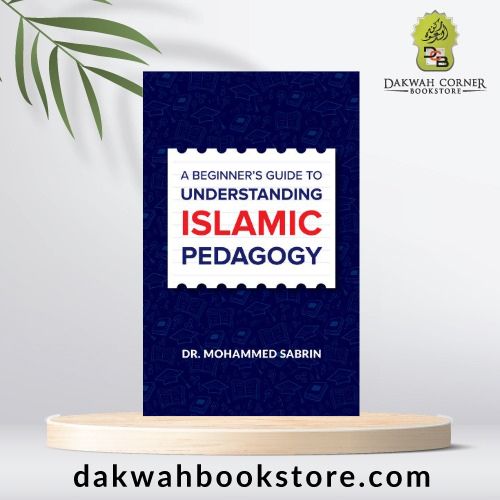

A Beginner’s Guide to Understanding Islamic Pedagogy
Highlights:
“Education all over the world has massive potential to create raw social change in society, but first we must realize it is not just what we teach, but how it is taught”. Dr. Mohammed Sabrin
RM14.00 RM20.00
Understanding Ramadan
Highlights:
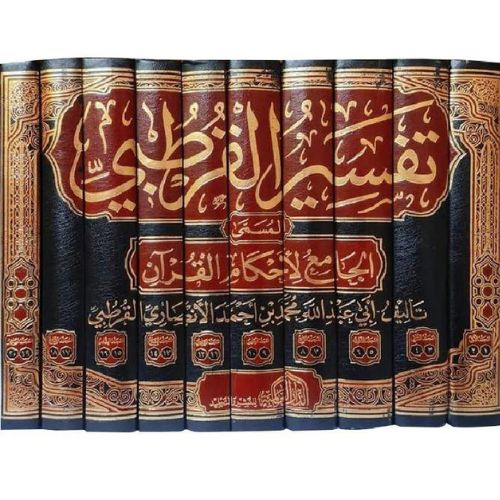
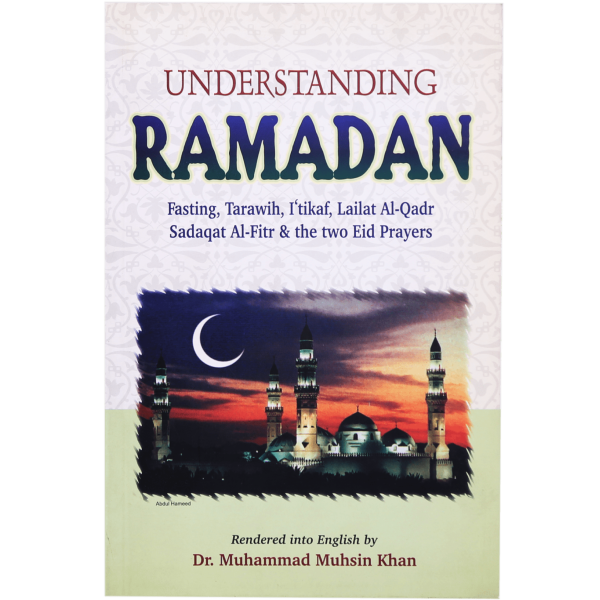
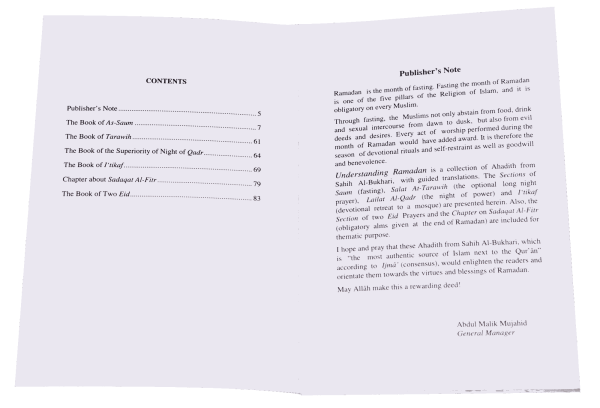
This book covers important aspects regarding Ramadan. The book is a collection of Ahadith from Sahih Al-Bukhari, with guided translations. The topics which are covered are Fasting, Salat at-Tarawih, Lailat Al-Qadr and Itikaf. Also, the section of two Eid Prayers and the chapter on Sadaqat Al-Fitr are included for the thematic purpose. This book is a must-read for all.
RM20.00
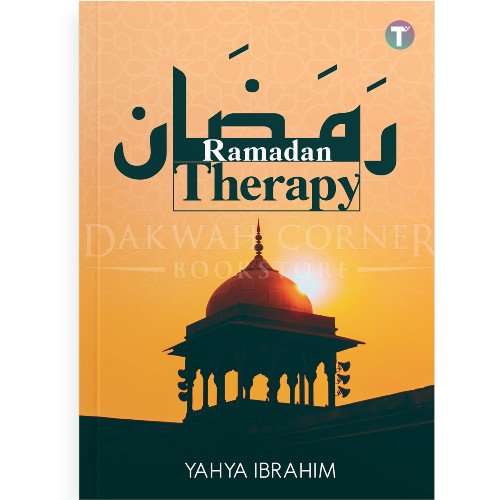
Ramadan Therapy
Highlights:
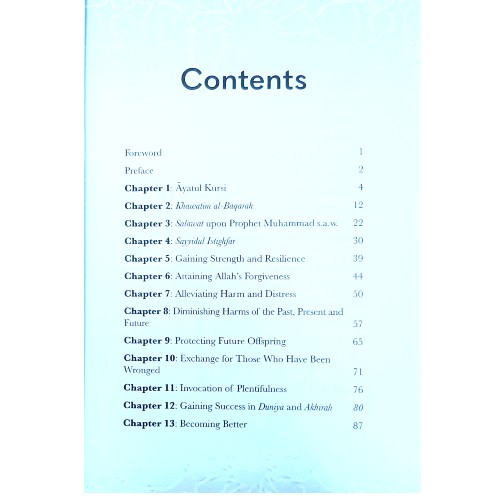
For every situation, Prophet Muhammad S.A.W. has prescribed various Du’a that can be read throughout Ramadan and even after it, as a form of therapy. It is with hope and faith that positive changes can come out of this beloved month of Ramadan to those who seek it.
RM60.00
There are no reviews yet.