



| Weight | 0.43 kg |
|---|---|
| Author | |
| Binding | Paperback |
| ISBN | 9781565643758 |
| Pages | 202 |
| Year of publication | 2018 |
| Publisher | International Institute of Islamic Thought (IIIT) |
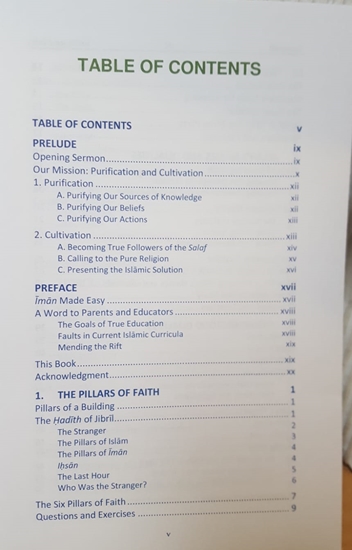
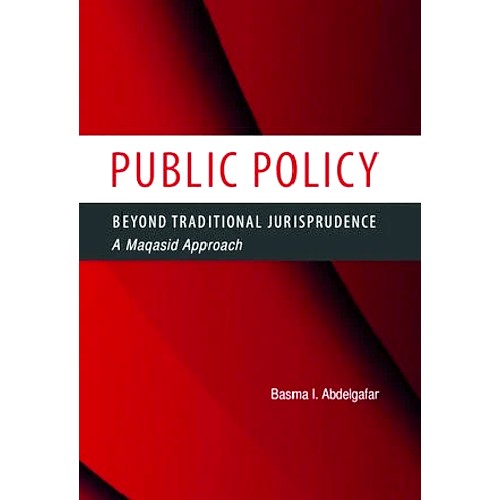
Public Policy: Beyond Traditional Jurisprudence A Maqasid Approach (IIIT)
RM100.00
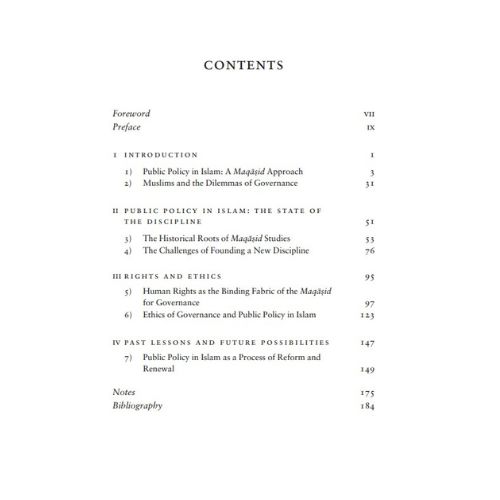
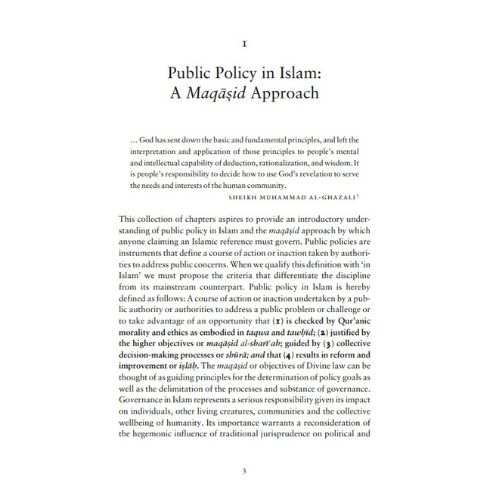
This work charts new territory in Islamic scholarship by attempting to address the field of public policy from a maqasid (higher objectives of the Shariah) perspective. Public Policy is an independent discipline from both law and politics. Thus, Public Policy in Islam is introduced here as a qualitatively different enterprise from both fiqh (Islamic jurisprudence) and siyasah shar’iyyah (Shariah-oriented politics). The book deals with a number of critical topics that include methodology, governance, human rights, ethics, political power, and reform and renewal. It highlights how the maqasid approach is indispensable to the theory and practice of public policy in Islam, how it could resolve some of the most persistent governance dilemmas throughout Muslim history, but more significantly, how it forces a re-conceptualization of the wealth of knowledge available in Islam s primary sources to introduce Public Policy in Islam to mainstream policy studies.
Frequently Bought Together
Be the first to review “Public Policy: Beyond Traditional Jurisprudence A Maqasid Approach (IIIT)” Cancel reply
You must be logged in to post a review.
Related Products
Islamic Legal Maxims & Their Application in Islamic Finance (2nd Ed.)
Islamic Legal Maxims and Their Application in Islamic Finance is one of the most comprehensive compilations of Islamic legal maxims available in English. The most important feature of this book is that it explains each maxim in a way comprehensible to both Shari’ah experts and Islamic finance practitioners. Another feature is its emphasis on the application of the maxims in the actual practice of Islamic finance.
Zakat and Poverty Alleviation (P/B)
This edited book aims to raise issues pertaining to the topic of zakat and its primary goal of poverty alleviation. It portrays the dynamism of zakat by highlighting pertinent issues on the management of zakat institutions and innovative programmes that are designed as effective distribution mechanisms. Discussions include zakat payment motives, ways to measure the efficiency of zakat disbursement, economic development initiatives, housing programme, microfinancing, and actual impact on poverty alleviation. The discussions raised put emphasis on policy-orientation with dedicated sections on policy implications and recommendations. This approach is deemed necessary since it could guide the thought process of interested parties towards the creation of new ideas to actualize zakat as a very reliable tool in addressing the massive problem of poverty among Muslim communities. This special feature also significantly adds to the much-needed reference materials in courses on zakat at the intermediate level of undergraduate studies and introductory level of postgraduate programmes.
Riba: Usury or Interest
The Noble Qur’an states: {… Fear Allah, and give up what remains of your demand for usury/interest, if you are indeed believers. If you do not do so, then take notice of war from Allah and His Messenger.} (Qur’an 2: 278-279) Despite this obvious prohibition, the practice of ribâ (usury and interest) has polluted the global economy completely. This booklet explains the awful consequences of dealing in usury and interest in a summarized but convincing manner.
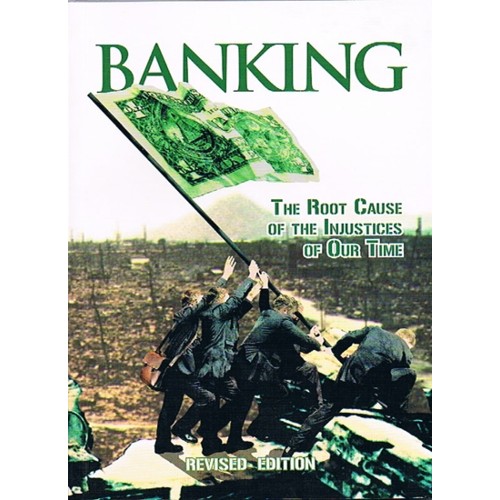
Banking: The Root Cause Of The Injustices Of Our Time (Revised Ed.)
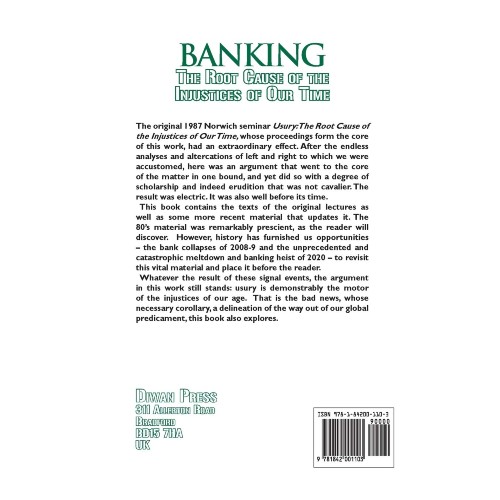
The original 1987 Norwich seminar Usury: The Root Cause of the Injustices of Our Time, whose proceedings form the core of this work, had an extraordinary effect.
After the endless analyses and altercations of left and right to which we were accustomed, here was an argument that went to the core of the matter in one bound, and yet did so with a degree of scholarship and indeed erudition that was not cavalier. The result was electric. It was also well before its time.
Economic Security In Islam
This book is an English rendering of a popular Arabic book entitled Mushkala al-Faqr wa Kaifa ‘Aljiha al-Islam by the renowned Muslim Scholar ‘Yusuf al-Qaradawi. The author depicts the basic principles of the Islamic Economic System in the light of the Holy Qur’an and the Sunnah.
Islam And The Business Mind-Set
Written by one of the top young entrepreneurs in the North of England, Ilyas Salim is MD of Salim Enterprise, a global investment company.
From this book, you will learn how to:
- Create a business mentality
- Start a moral and ethical business
- Expand your business
- Work smarter, not harder
- Attract Barakah into your business
- Achieve not just a work/life balance, but a total life balance.
All this is within the framework of the Qur’an and Hadith and examples from the life of the Prophet Muhammad SAW.
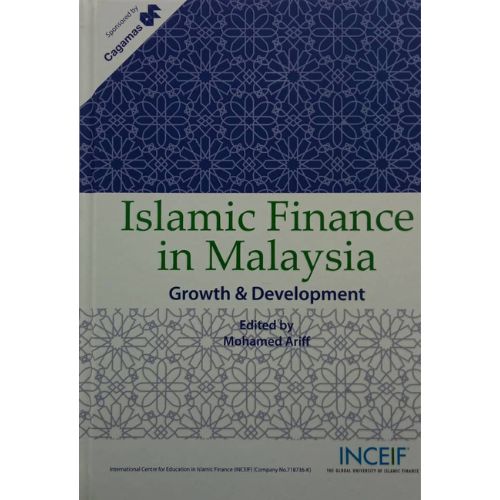
Islamic Finance in Malaysia: Growth & Development
This modern history of Islamic finance is pretty short spanning a period of roughly five decades, compared to conventional finance which goes back to more than four centuries earlier. Islamic finance has spread rapidly across the globe, reminiscent of Lao-Tzu’s famous saying “A journey of a thousand miles begins with a single step”. Malaysia, a pioneer in the development of the Islamic finance industry, has emerged as one of the major hubs for global Islamic finance.
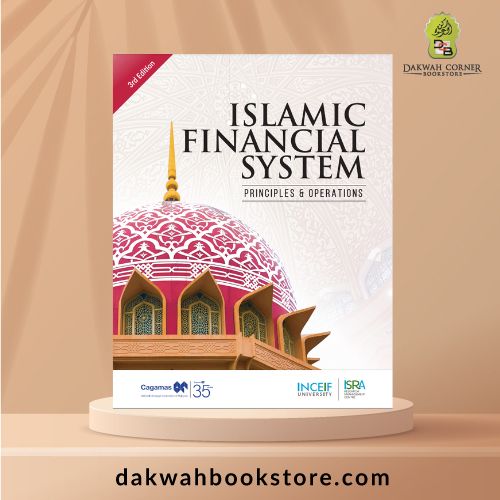
Islamic Financial System: Principles & Operations
This second edition of the book marks another milestone of a collaborative effort between prominent scholars and practitioners of the Islamic finance industry. It sheds light on the front line issues faced by the Islamic finance industry with academic rigor. Each chapter in the book is complete with figures, diagrams, tables, case studies, a set of review questions and problems and a list of references for further reading. It offers invigorating discussion on a comprehensive range of topics related to Islamic finance, combining both theoretical foundations and operational aspects.
Tajdid, Islah and Civilization Renewal in Islam
The history of Islamic thought is marked by a continuous tradition of internal revitalisation and reform embedded in the principles of islah, and tajdid. The ultimate purpose has been to bring existing realities and social change in line with the transcendent and universal standard of the Qur’an and Sunnah through a process of restoration and reform. The tradition of islah-tajdid has thus consistently challenged the Muslim status quo and prompted fresh interpretation of the Qur an and Sunnah, understood and implemented through the methodologies of interpretation and ijtihad, as well as the rejection of unwarranted accretions to the original messages of Islam. The basic theme of the paper is that civilisational renewal is an integral part of Islamic thought. The paper looks into the meaning, definition and origins of tajdid and islah and their relationship with ijtihad, and how these have been manifested in the writings and contributions of the thought leaders of Islam throughout its history. It also develops tajdid-related formulas and guidelines that should lead the efforts of contemporary Muslims in forging the objectives of inter-civilisational harmony and their cooperation for the common good.
The Future of Economics An Islamic Perpective
This profound book is a powerful yet balanced critique of mainstream economics that makes a forceful plea for taking economics out of its secular and occident-centered cocoon. It presents an innovative and formidable case to re-link economics with moral and egalitarian concerns so as to harness the discipline in the service of humanity
Manufacturing of Halal Pharmaceuticals (P/B)
This book aims to cover the fundamental aspects of pharmaceutical manufacturing from the Islamic worldview to inspire students that whatever they do including very mundane routine work such as checking pH can be an ‘ibādah – if they work within the sphere of Islamic teachings and in shā’ Allah all the time and effort will be rewarded by Allah SWT. The first chapter describes the Islamic perspectives towards the safeguarding of life vis-à-vis the use of medicines or pharmaceuticals and can be considered as an overview for the Islamic manufacturing practices. Although this book is about the manufacturing of pharmaceuticals, other industries may benefit from the discourse and examples given. As much as possible, processes and regulations are described in the book so that it covers the syllabus of industrial pharmacy for undergraduate use and still can be referred for postgraduate studies.
Recently Viewed
[ALA] Altaliqat Almufidah Fi Al Arabiyyah Sharh Qatar Alnadi / التعليقة المفيدة في العربية شرح قطر الندي
كتاب “التعليقة المفيدة في العربية شرح قطر الندى“ هو عمل لغوي ونحوي مهم يعود للعالم معمر بن يحيى بن محمد المكي (توفي 897 هـ)، وهو عبارة عن شرح وافٍ ومفصل لمتن النحو الشهير “قطر الندى وبل الصدى” لمؤلفه ابن هشام الأنصاري. [1]
[AR] Al-Arabiyyah Baynah Yadayk Book 4 Part 2
Al-’Arabiyyah bayna yadayk Means Arabic in Your Hands.
The great thing about these books is, that it covers a lot of vocabulary through pictures, Images and using Arabic Only, introduces the students to grammar later and gradually rather than pushing them at the deep end before they can swim.
Much like Arabic Course for English Speaking Students 3 Volumes Set, UKIA, it is more Islamic inclined and fulfils the desire for the student of knowledge to learn the language of the Qur’an.
Students who had completed all three books wanted something else to reach higher competency, which has given rise to volume 4 which is available in 2 Parts.
Al-’Arabiyyah bayna yadayk series comes in 3 Basic Student Books and a further study Book 4 Parts 1 & Book 4 Part 2


There are no reviews yet.