


| Weight | 0.35 kg |
|---|---|
| Dimensions | 21 × 15 × 0.8 cm |
| Author | |
| Binding | Paperback |
| ISBN | 9789777171953 |
| Pages | 149 |
| Publisher | Dar Al Salam |
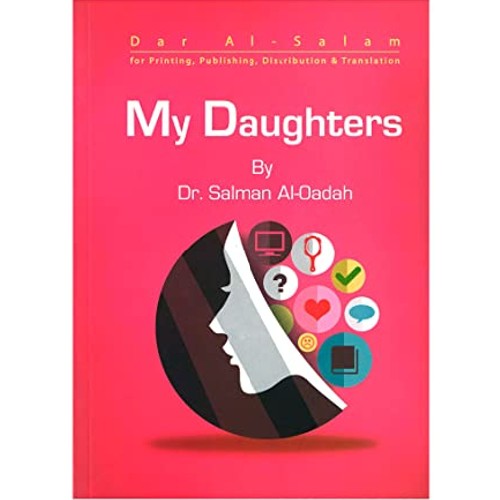
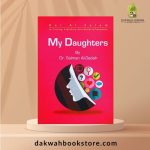
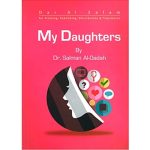
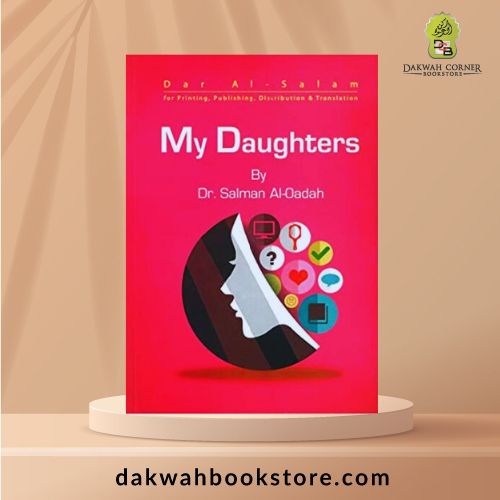
My Daughters (Dar al Salam)
RM30.00
Hurry up, Only 2 left.
Highlights:
somdn_product_page
Compare
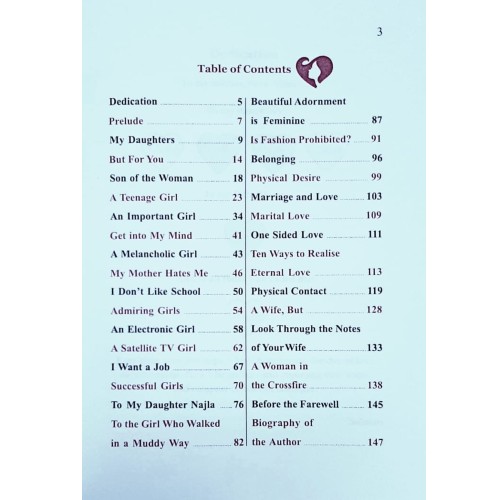
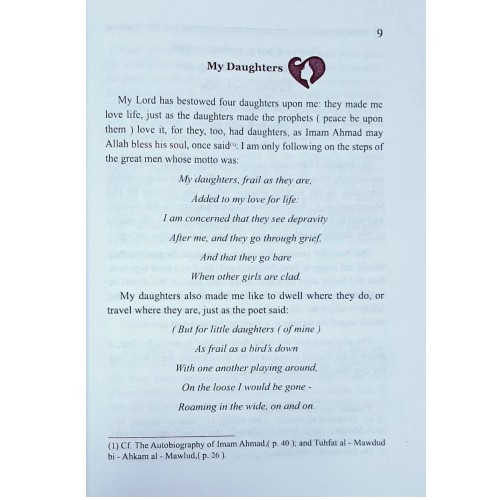
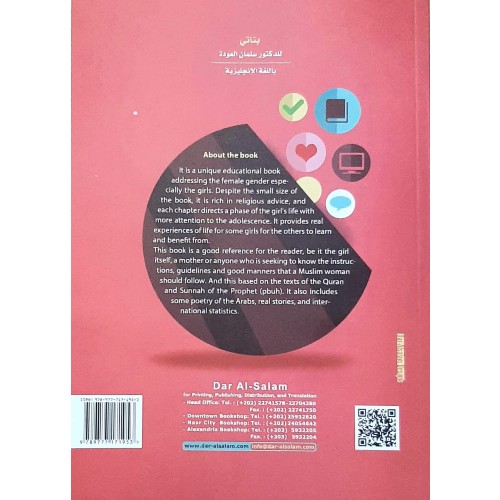
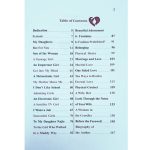
It is a unique educational book addressing the female gender espe cially the girls. Despite the small size of the book, it is rich in religious advice, and each chapter directs a phase of the girl’s life with more attention to the adolescence. It provides real experiences of life for some girls for the others to learn and benefit from.
This book is a good reference for the reader, be it the girl itself, a mother or anyone who is seeking to know the instructions, guidelines and good manners that a Muslim woman should follow. And this based on the texts of the Quran and Sunnah of the Prophet (pbuh). It also includes some poetry of the Arabs, real stories, and international statistics.
Frequently Bought Together
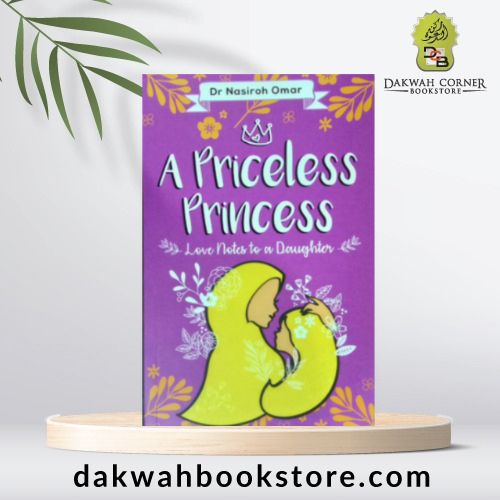
A Priceless Princess - Love Notes to a Daughter
5 ★
5 ★
1 Rating
5 ★
1
4 ★
0
3 ★
0
2 ★
0
1 ★
0
1 Item
RM30.00
2 Add-Ons
RM32.00
Total
RM62.00
Additional information
Reviews (0)
Be the first to review “My Daughters (Dar al Salam)” Cancel reply
You must be logged in to post a review.
You may also like…

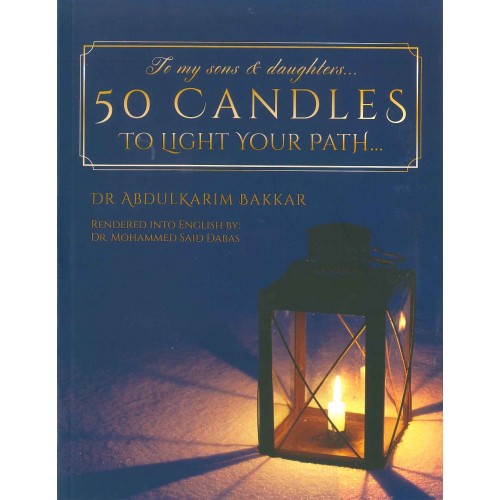
50 Candles To Light Your Path (P/B)
5 ★
5 ★
2 Ratings
5 ★
2
4 ★
0
3 ★
0
2 ★
0
1 ★
0
Highlights:
One goal brings them together : how to improve the well-being of our sons and daughters, how to aid them towards threading the path of guidance to engender their excelling in their academic, work and other facets of life.
RM36.00
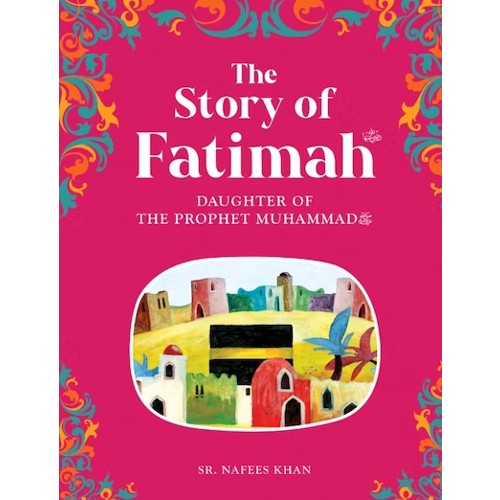
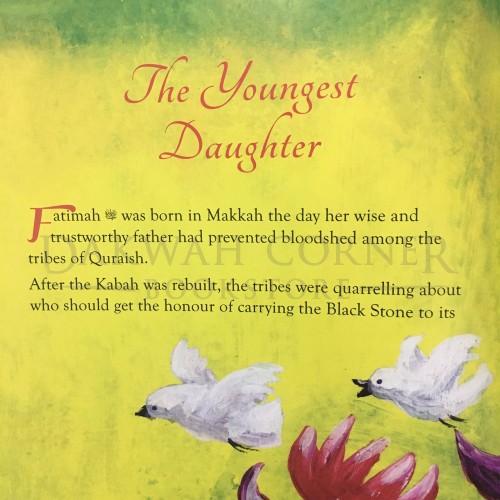
The Story Of Fatimah: Daughter of the Prophet Muhammad SAW
Highlights:
“The manners, speech, accent, the way of sitting and standing and walking of Fatimah were exactly like that of the Prophet…”
RM15.00
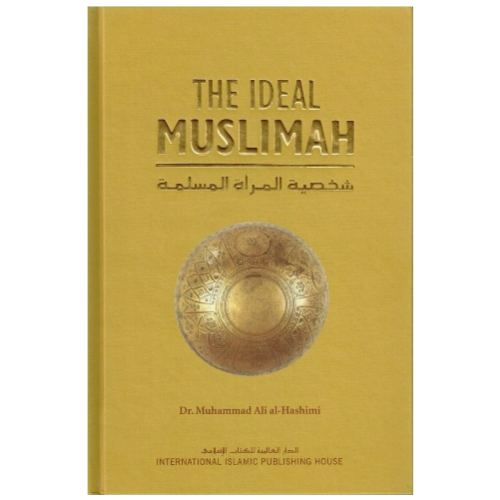
The Ideal Muslimah (IIPH)
5 ★
5 ★
1 Rating
5 ★
1
4 ★
0
3 ★
0
2 ★
0
1 ★
0
Highlights:
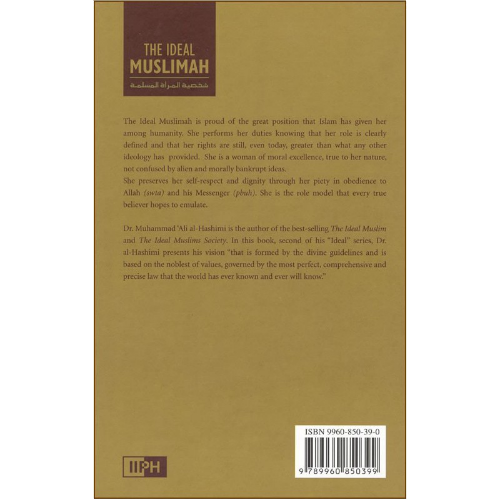
The Ideal Muslimah is proud of the great position that Islam has given her among humanity. She performs her duties knowing that her role is clearly defined and that her rights are still, even today, greater than what any other ideology has provided. She is a woman of moral excellence, true to her nature, not confused by alien and morally bankrupt ideas. She preserves her self-respect and dignity through her piety in obedience to Allah (swta) and his Messenger (pbuh). She is the role model that every true believer hopes to emulate.
RM90.00

Show Up: A Motivational Message for Muslim Women
Highlights:
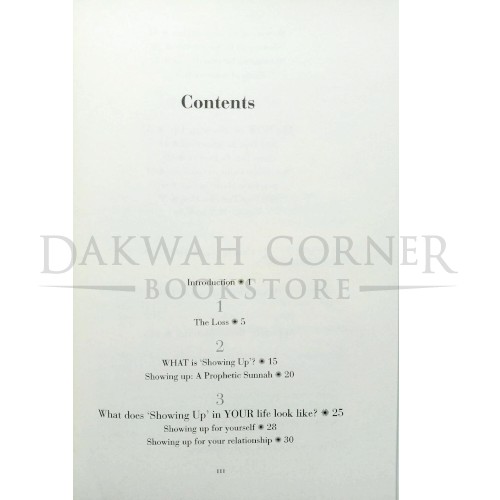
Nai’ma shares the story of how she came to understand the meaning of ‘Showing Up’ through tragic circumstances and enormous life changes.
So many of us sleepwalk through life: frustrated, unhappy and lacking confidence in our abilities and accomplishments, destined never to reach our full potential. We allow our limiting beliefs to hold us back. We allow our challenges to define us. We allow other people’s expectations to imprison us.
‘Show Up: A Motivational Message for Muslim Women’ is based on the lessons Na’ima learnt on her journey, inviting the reader to show up, authentically and sincerely, in their lives, casting aside the role of victim and instead, living as the hero of their own life story.
The book is replete with personal stories, quotes from Qur’an, hadith and contemporary thinkers, as well as action points and space for the reader to reflect and apply the principles.
RM65.00
60 Great Women Enshrined in Islamic History
5 ★
5 ★
2 Ratings
5 ★
2
4 ★
0
3 ★
0
2 ★
0
1 ★
0
Highlights:
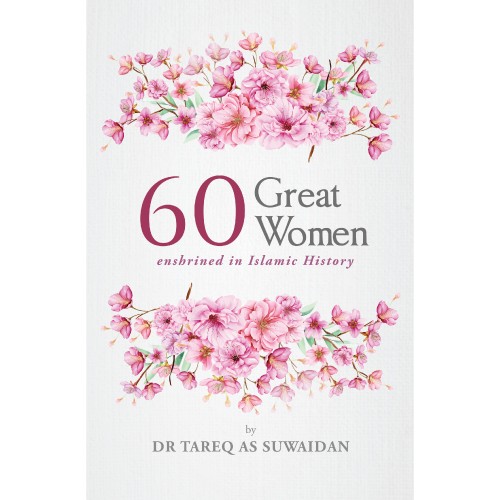
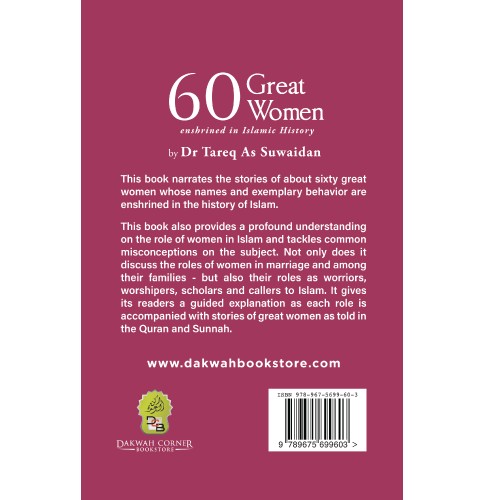
This book provides a profound understanding on the role of women in Islam and tackles common misconceptions on the subject. Not only does it discuss the roles of women in marriage and among their families – but also their families – but also their roles as warriors, worshipers, scholars and callers to Islam. It gives its readers a guided explanation as each role is accompanied with stories of great women as told in the Quran and Sunnah.
This book narrates the stories of about sixty great women whose names and exemplary behavior are enshrined in the history of Islam.
RM35.00
Related Products
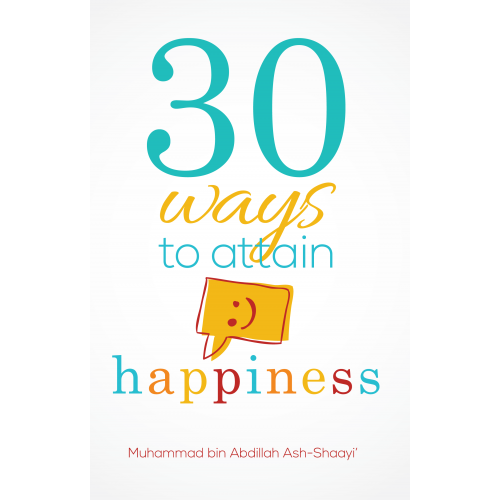
30 Ways To Attain Happiness (3rd Edition)
5 ★
5 ★
1 Rating
5 ★
1
4 ★
0
3 ★
0
2 ★
0
1 ★
0
Highlights:
This great book is guidance for all especially the Muslims society in our daily life as it present the ways of dealing with the daily life cycle, accepting the pasts and bracing for tomorrows based on the teaching of the Qur’an and Sunnah
RM15.00
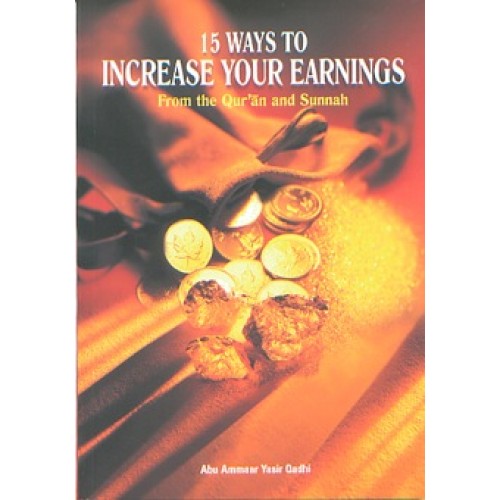
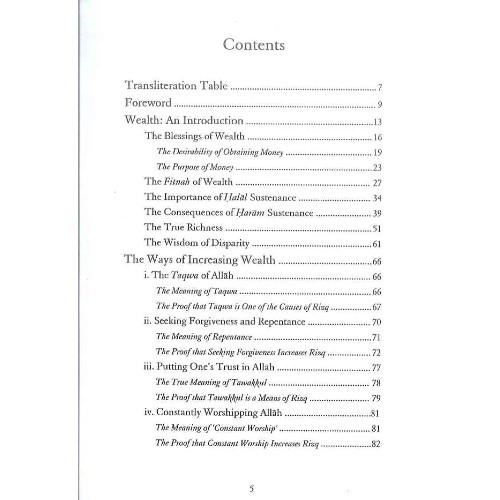
15 Ways to Increase Your Earnings from the Quran and Sunnah (P/B)
5 ★
5 ★
1 Rating
5 ★
1
4 ★
0
3 ★
0
2 ★
0
1 ★
0
Highlights:
One of the blessings that Allah has given His servants is that of a convenient means of financial exchange, i.e. money. Money has since grown to become one of the most’ prized possessions of mankind, and like so many elements of the dunya, serves to test the obedience of Allah’s servants by challenging their system of priorities… Therefore, due to the fact that the Muslims of today are preoccupied with the seeking of money to an extent almost unparalleled in Islamic history, I felt the need to compile a short treatise explaining the manner in which Allah and His Messenger described how Muslims could increase their money. The focus of this book is upon encouraging Muslims to procure money through halal means, and to abstain from haram gains. Abu Ammaar Yasir Qadhi was born in Houston, TX, but completed his primary and secondary education in Jeddah, Saudi Arabia. He graduated with a B.Sc. in Chemical Engineering from the University of Houston, after which he was accepted as a student at the Islamic University of Madinah. After completing a diploma in Arabic, he graduated with a B.A. from the College of Hadith and Islamic Sciences. He is presently doing an M.A. in Islamic Theology (‘aqidah) from the College of Da’wah at the University. Of his published works are: Riyaa: Hidden Shirk; An Introduction to the Sciences of the Qur’an; An Explanation of the Four Principles of Shirk;Du’a: The Weapon of the Believer; and others.
RM47.00
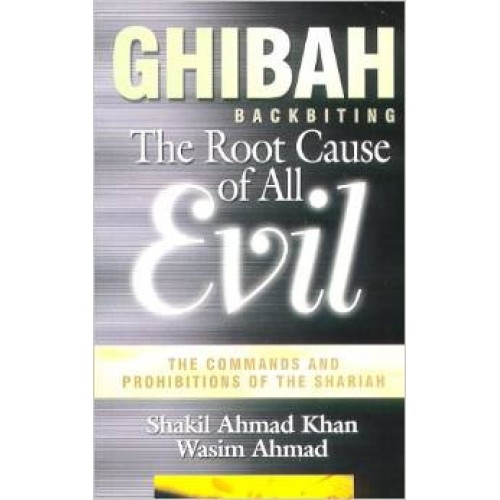
Ghibah (Backbiting) : The Root Cause of All Evil : The Commands and Prohibitions of the Shariah
Highlights:
Islam is a religion of peace, love, and compassion. Lies, suspicion, backbiting, slander, vain talk — all these are anathema to Islam. Indeed, such negative activity sows the seeds of enmity among the people and ultimately brings about the downfall of society. Backbiting (ghibah) in particular, according to the Qur’an, is not just a common social evil, but rather an abhorrent act, a major sin — the equivalent of eating one’s brother’s flesh.
Numerous ahadith of the Prophet Muhammed (pbuh) also underscore the complete futility, extreme loathsomeness and grave consequences of the deliberate misrepresentation of others. Backbiting, by the unanimous rulings of religious scholars (ijma) is forbidden, so that anyone who indulges in it is guilty of serious wrongdoing. Yet people have no qualms about engaging in this practice, flouting all prohibitions and strict commands.
Drawing upon important source material on the subjects of backbiting, false accusation (bhutan), and related issues, this book highlights the need to keep our society free of his ignoble malaise. To this end, it elucidates the relevant commands and prohibitions of the Shari’ah, so as to create in the minds of its readers a deep awareness of the sinfulness and ill effects of calumny.
By Shakil Ahmad Khan and Wasim Ahmad
RM16.00


33 Ways of Developing Al-Khushoo`: Humility and Devotion in Prayer
5 ★
5 ★
1 Rating
5 ★
1
4 ★
0
3 ★
0
2 ★
0
1 ★
0
Highlights:
Shaykh Muhammad Salih al-Munajjid’s little book is perhaps one of the most widely-circulated among Muslims today. This is because the topic touches worshippers where it hurts—we know that we often lapse into an automatic sort of prayer when we lose concentration. The Shaykh points out that this loss of concentration really stems from a lack of humility and devotion—in Arabic, khushoo‘. His aim in writing this book is to help us to get back that khushoo‘. His step-by-step approach makes it simple. He gives practical advice and uses the excellent example of the prayer of the Messenger of Allah (blessings and peace be upon him) to guide us, so that as worshippers, we can truly return to a state of humility and devotion before the Lord.
RM15.00
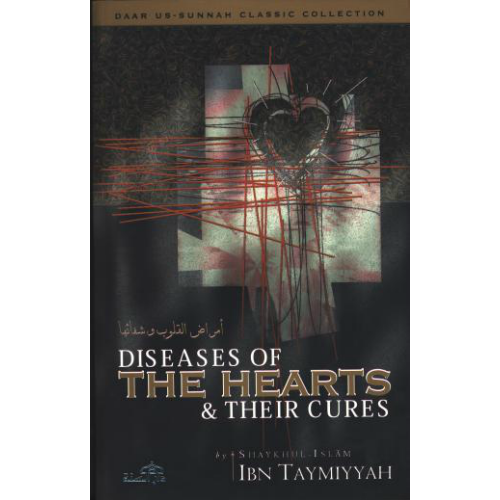
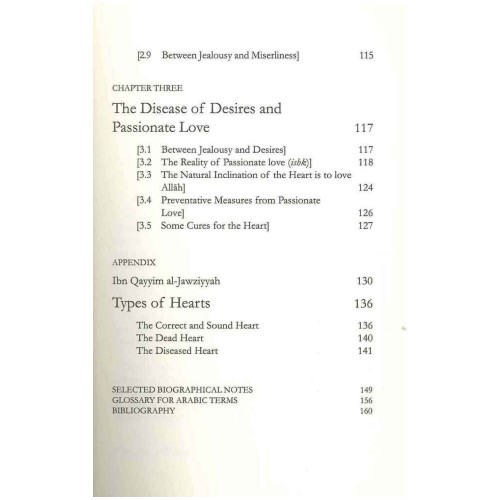
Diseases Of The Hearts & Their Cures (Dar as Sunnah)
4 ★
4 ★
1 Rating
5 ★
0
4 ★
1
3 ★
0
2 ★
0
1 ★
0
Highlights:
Translated by Abu Rumaysah “Know O beloved reader that it is most important to spend one’s time and energy in treating the heart, and hastening to correct and purify it from sickness and all sins. This is due to the heart occupying a great and lofty position in Islaam, for it is the place to which the Lord looks and the storehouse for tawheed, faith, and sincerity. Actions are distinguished, one from the other, with respect to their excellence in the Sight of Allah in accordance with the condition of the heart, not by their number or form, but rather due to the strength of the caller, his or her truthfulness, his or her sincerity and the extent to which he or she prefers Allah over himself or herself … Al-Haafidh ibn Hajr al-Asqalaanee, may Allah have mercy upon him and provide us with his knowledge, said: “The heart has been singled out for this because it is the leader of the body, and through the purification of the leader the subjects become purified, and with his corruption they become corrupted. So if you, O servant of Allah, with to cure your heart then it is upon you to be truthful with regards to seeking refuge with Allah and putting your trust in Him, to pray a great deal of superogatory prayers, to perform the actions of obedience to Allah frequently, to pray the night prayer while the people are sleeping, and to treat your heart by making it continuously stick to the remembrances and by befriending only the righteous … and to frequently recite the Qur’an. And Allah will indeed allow all of this to be preserved by him.”
RM54.00
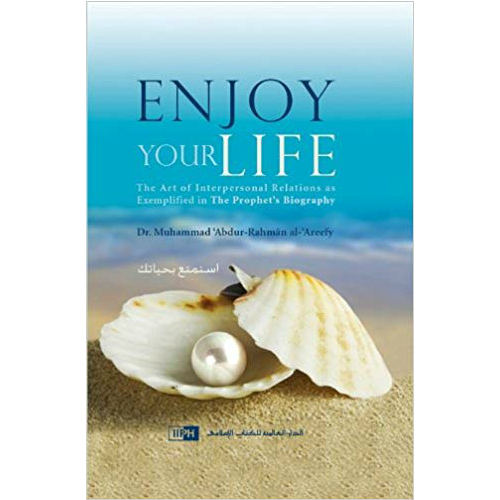
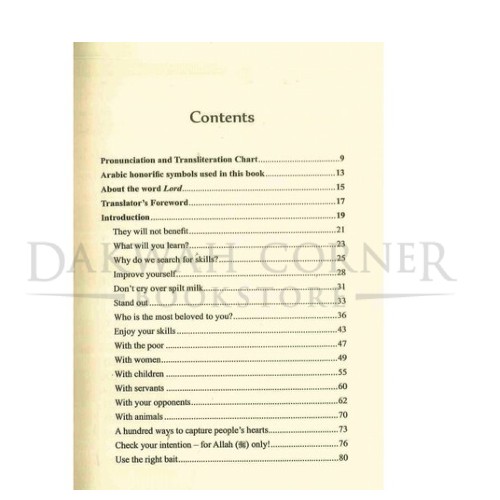
Enjoy Your Life (B/W) – IIPH
5 ★
5 ★
1 Rating
5 ★
1
4 ★
0
3 ★
0
2 ★
0
1 ★
0
Highlights:
Enjoy Your Life! Enjoy Your Life: The Art of Interpersonal Relations as Exemplified in The Prophet’s Biography is a comprehensive guide towards improving interpersonal skills and hence, enjoying life. The author, Dr. Muhammad ‘Abdur-Rahmân al-‘Areefy, writes: An enjoyable life entails learning and practicing multiple skills; the few who truly apply them savour the success that comes with it. Of course, atop the list of the successful is the chief of humanity, Muhammad (blessings and peace be upon him). His entire life was an ocean of pearls that I have scattered throughout the pages of this book.
Enjoy Your Life! is not the product of an effort of a month or a year. Rather, it has resulted from the research that I devoted myself to for twenty years. I inscribed it with my tears, pouring my soul and squeezing my memories into it. I penned down various incidents involving the joy of our eyes – our first teacher, Muhammad (blessings and peace be upon him). I highlighted his exceptional talents; his skills in dealing with people and enjoying his life. Enjoy Your Life! contains personal memories, real-life experiences, and incidents that I have publicised for the first time – praying that Allah, the Exalted, makes them a source of benefit for you.
Enjoy Your Life! contains words that are straight from my heart, hoping to find a place in yours. It is the dearest and most beloved of my books. I ask Allah, the Exalted, to benefit others with it, make this effort solely for His sake, and amply reward all those who have contributed to spread it.
RM85.00
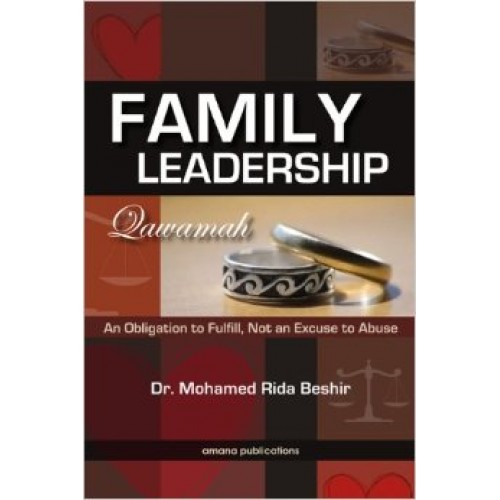
Family Leadership – Qawamah
5 ★
5 ★
2 Ratings
5 ★
2
4 ★
0
3 ★
0
2 ★
0
1 ★
0
Highlights:
This book discusses in details family leadership (Qawamah) in Islam and the many misconceptions that arise around this concept. It provides a detailed analysis on the subject from a variety of available literature and emphasizes that it is primarily an obligation to be fulfilled on part of the husband toward his family. It also provides many practical examples on the appropriate use of Qawamah as well as its inappropriate use.
“….an extremely valuable springboard for further discussion and consideration of a most timely topic that affects every Muslim family in North America. As a Muslim with a doctorate in clinical psychology, it is my professional recommendation that every mosque and Islamic center in North America should use Dr. Beshir’s new book to lead in-depth study and discussion sessions about the role of family leadership within Islam.” – Jerald F. Dirks, M.Div., Psy.D.
RM75.00
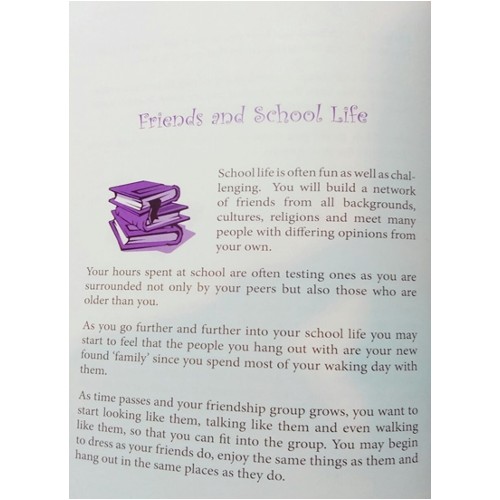
A Muslim Girl’s Guide To Life’s Big Changes (Ta-Ha)
4 ★
4 ★
1 Rating
5 ★
0
4 ★
1
3 ★
0
2 ★
0
1 ★
0
Highlights:
Motivational & Manners
RM35.00
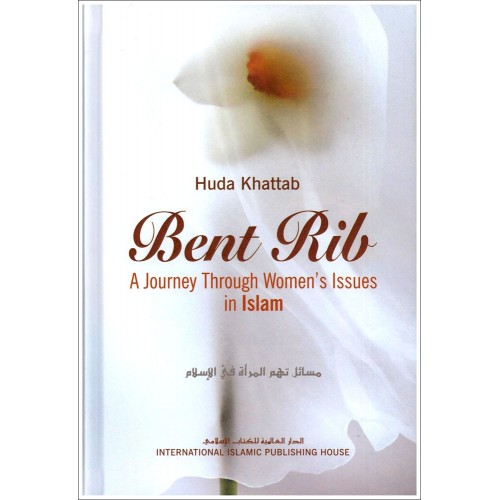
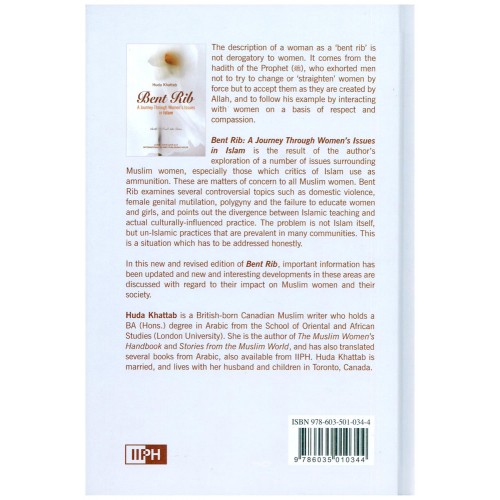
Bent Rib: A Journey Through Women’s Issues in Islam (H/B)
5 ★
5 ★
1 Rating
5 ★
1
4 ★
0
3 ★
0
2 ★
0
1 ★
0
Highlights:
This book examines the role of women in Islam, their education and marriage, and several controversial topics such as domestic violence, female genital mutilation and polygyny. It addresses honestly the divergence between Islamic teaching and actual culturally-influenced practices.
RM40.00
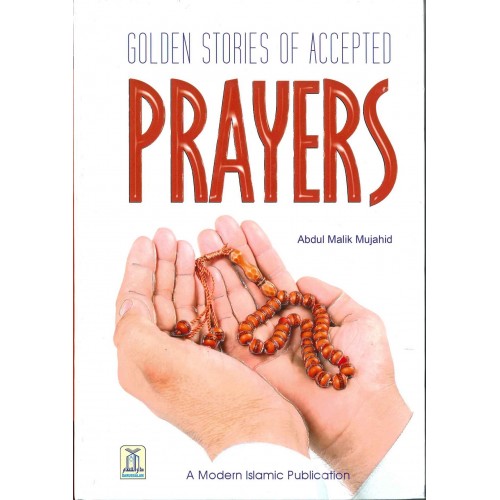
Golden Stories of Accepted Prayers
5 ★
5 ★
1 Rating
5 ★
1
4 ★
0
3 ★
0
2 ★
0
1 ★
0
Highlights:
What are invocations? In a real sense these are requests which come from the bottom of our hearts to Allah Almighty. Allah is always ready and happy to receive prayers from anyone at any time.
If you’re facing any difficulties or trouble you should immediately turn to Allah for help. The best invocations are those narrated by the Prophet (S). If you don’t speak Arabic, you can pray in your mother tongue.
When we pray we should feel assured that Allah will accept our requests. We should do so with complete sincerity and devotion.
Prayers can be made at any time, but there is a greater possibility our prayers will be accepted if we do so at specific times.
RM68.50
One Hundred Pieces of Advice
3 ★
3 ★
1 Rating
5 ★
0
4 ★
0
3 ★
1
2 ★
0
1 ★
0
Highlights:
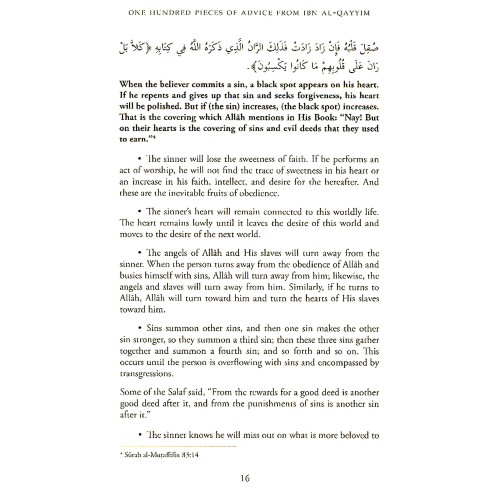
One hundred treasured advices extracted from the writings of the illustrious scholar, Imām Ibn al-Qayyim (may Allāh have mercy upon him): Ten ways to acquire Allāh’s love Ten ways to be patient and avoid sins Ten ways to be patient during a calamity Ten benefits to lowering your gaze Ten ways sins are expiated Ten barriers between the slave and his Lord Ten reasons knowledge is not put into action Ten ways to open your heart Ten ways to protect against envy Ten ways to protect against the plots of the Shayṭān
RM48.00
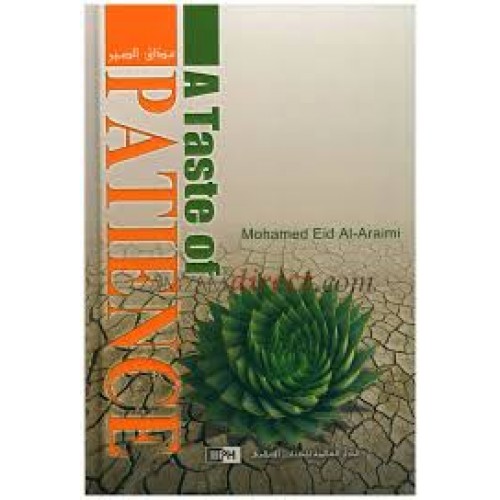
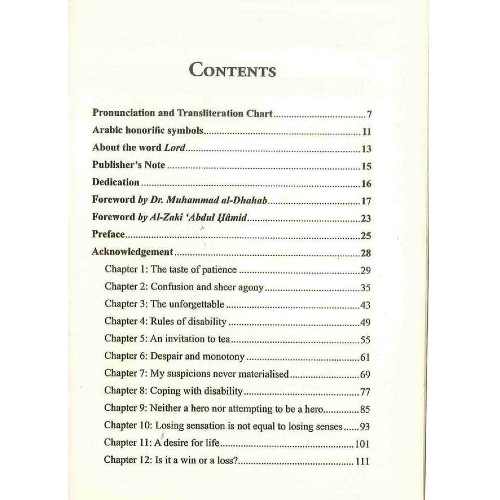
A Taste of Patience
3 ★
3 ★
1 Rating
5 ★
0
4 ★
0
3 ★
1
2 ★
0
1 ★
0
Highlights:
The writer is a survivor of an accident that altered his life. He is a man who managed to overcome adversity and transform bitterness into personal success, as his literary gains outweighed his physical restrictions. Where his physical condition limited his movements, his creative writing opened up a new horizon that enabled him to freely interact with his readers.
This is a real-life account of how a human being can overcome obstacles, giving effect to the epithet: ‘What does not kill me makes me stronger.’ The autobiography defines patience in two ways: first, as a bitter experience and then second, as the ability to tolerate and turn one’s misfortune into investment. The accident that the writer suffered has paralysed his body, but at the same time it has unleashed his writing talents. (Yousef el-Sharoni, Egypt)
RM38.00
Recently Viewed
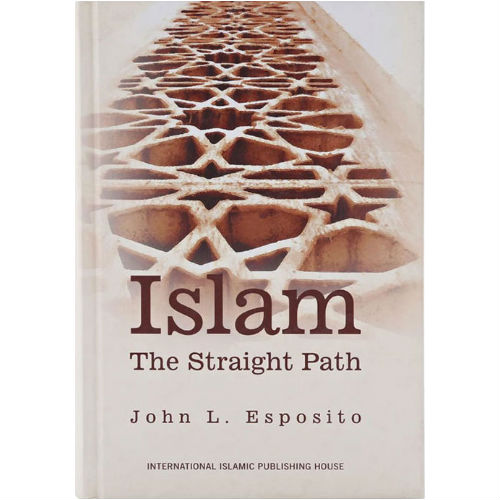
Islam The Straight Path
Highlights:
This updated version of Islam: The Straight Path includes a new Epilogue by John Esposito in which he addresses the impact 9/11 and its aftermath have had on both the Muslim and non-Muslim world, discussing Islam’s relationship to democracy and modernity and focusing more sharply on the origins and growth of extremism and terrorism in the name of Islam. This exceptionally successful survey text introduces the faith, belief, and practice of Islam from its earliest origins up to its contemporary resurgence. Esposito, an internationally renowned expert on Islam, traces the development of this dynamic faith and its impact on world history and politics, discussing the formation of Islamic belief and practice and chronicling the struggle of Muslims to define and adhere to their Islamic way of life. Lucidly written and expansive in scope, Islam: The Straight Path provides keen insight into one of the world’s least understood religions and is ideally suited for use in courses on Islam, comparative religions, and Middle Eastern history and culture.
RM91.00
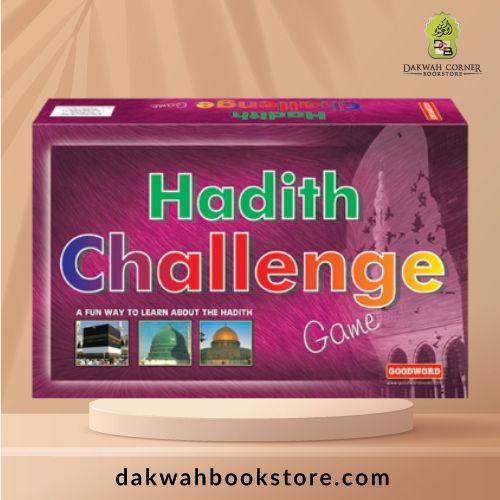
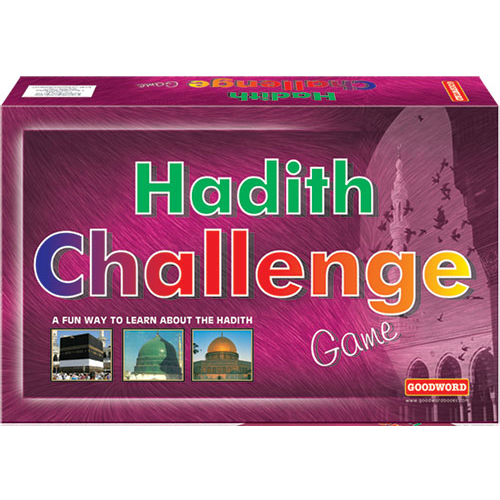
Hadith Challenge Game
Highlights:
The Hadith Challenge Game is a unique game based on sayings of the Prophet Muhammad. The idea behind this game is to provide the children with both fun and education. All questions are based on the authentic sayings of the Prophet Muhammad. They have been creatively worked into this game and children will enjoy answering them. This game can be played at school or at home with all the family members. Begin your journey and find out what fun it is to learn from the Hadith.
RM55.00
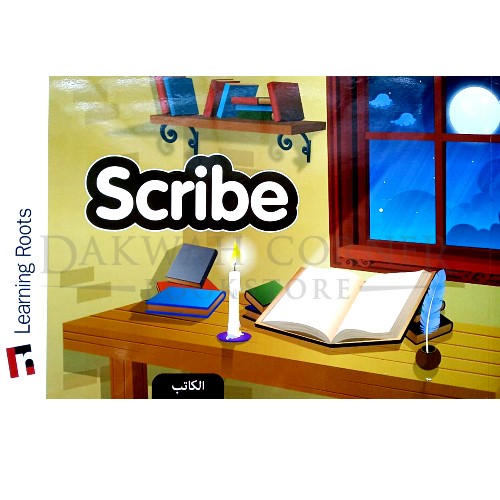
Scribe
Highlights:
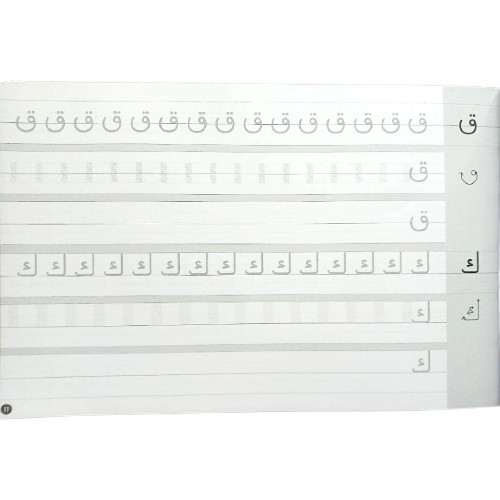
Scribe allows you to achieve beautiful Arabic handwriting with precision guidance, leaving you to practice your skills to perfection. The secret of the Scribe approach is simple: it’s everything an outstanding handwriting practice course should be. In particular, Scribe has been designed with an exclusively tailored typeface that combines the beauty of Arabic calligraphic proportion with the ease of a single-width stroke. There are precision guidelines to help scaffold letters as well as a gradual reduction in the size of the typeface for a smoother transition to more advanced stages. There is plenty of room for practice, and a comprehensive foundational approach means that all aspects of handwriting are covered in a natural progression.
RM30.00
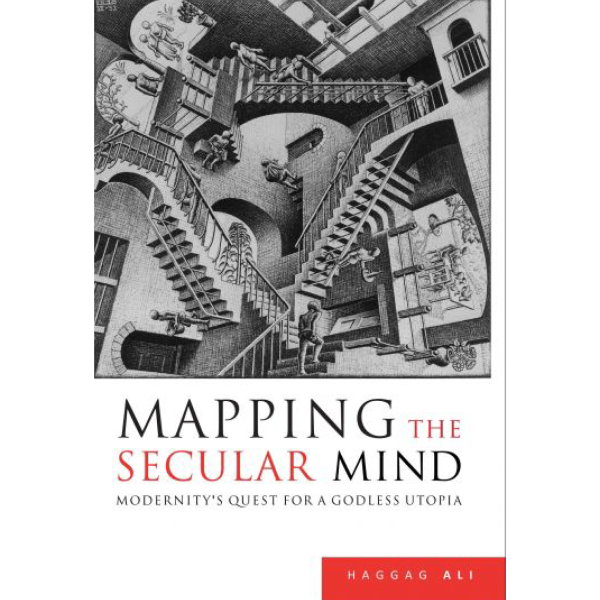
Mapping The Secular Mind (IIIT)
Highlights:
The secular mind had a grand plan, to establish an earthly paradise, a utopia of the here and now, a modern civilization governed by human reason, rationality, and the triumph of progress. Whilst ideals are one thing, the means to realize them is something else. Away from the hype, emancipating humanity from the shackles of God and religion has proved no easy matter. Mapping the Secular Mind critically examines issues of reason, rationality, and secular materialism, to explore how these mental perceptions, or ways of mapping the world, have affected human interaction and sociological development. It does this by comparing and contrasting the ideas of Abdelwahab M. Elmessiri (1938 2008) a leading Arab intellectual, and Zygmunt Bauman (1925), one of the world s foremost sociologists. In the last few decades, an emergent Western critique of modernity has inspired Muslim intellectuals to develop new ideas, images, terms and concepts that state their positions towards the tendencies of secular modernity, its transformations and consequences, and how it manipulates perceptions of reality. The book challenges foundations of secular ideology to argue that its aspirations have deeply transformed human consciousness and man s sense of self, leaving him a creature of purposeless consumption, wearied by the search for fulfillment, and controlled by materialistic laws governing physical phenomena. It also offers a more darker thesis, that Fascist Germany and the Eugenics movement were a form of Social Darwinism taken to its logical course. These were not an aberration from the principles of modernity, Ali argues, but a consistent outcome of the modern worldview, with the seeds of self-destruction being woven into the very fabric of the philosophy.
RM86.00
RM50.00 – RM65.00Price range: RM50.00 through RM65.00
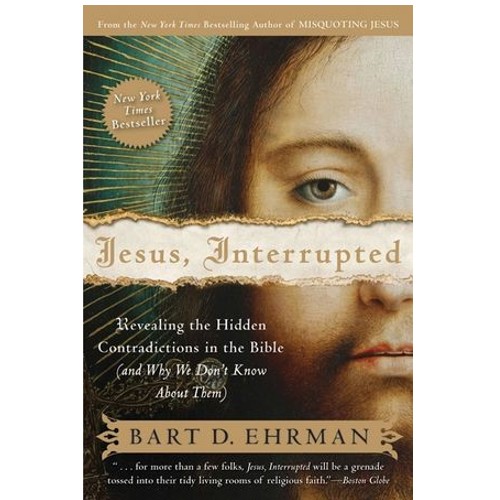
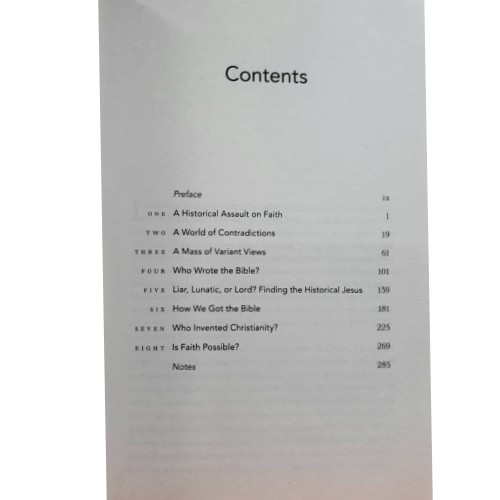
Jesus, Interrupted: Revealing the Hidden Contradictions in the Bible (And Why We Don’t Know About Them)
Highlights:
The Human Story Behind the Divine Book
In this New York Times bestseller, leading Bible expert Bart Ehrman skillfully demonstrates that the New Testament is riddled with contradictory views about who Jesus was and the significance of his life. Ehrman reveals that many of the books were written in the names of the apostles by Christians living decades later, and that central Christian doctrines were the inventions of still later theologians. Although this has been the standard and widespread view of scholars for two centuries, most people have never learned of it.
Jesus, Interrupted is a clear and compelling account of the central challenges we have when attempting to reconstruct the life and meaning of Jesus.
RM105.00
There are no reviews yet.