| Weight | 0.575 kg |
|---|---|
| Product Type | Book |
| Author | |
| Publisher | OXFORD University Press |
| Pages | 320 |
| ISBN | 9780190226831 |
The Middle Path of Moderration in Islam (H/B)
RM189.00
In The Middle Path of Moderation in Islam, leading Islamic law expert Mohammad Hashim Kamali examines the concept of wasatiyyah, or moderation, arguing that scholars, religious communities, and policy circles alike must have access to this governing principle that drives the silent majority of Muslims, rather than focusing on the extremist fringe. Kamari explores wasatiyyah in both historical/conceptual terms and in contemporary/practical terms. Tracing the definition and scope of the concept from the foundational sources of Islam, the Qu’ran and Hadith, he demonstrates that wasatiyyah has a long and well-developed history in Islamic law and applies the concept to contemporary issues of global policy, such as justice, women’s rights, environmental and financial balance, and globalization.
Framing his work as an open dialogue against a now-decades long formulation of the arguably destructive Huntingtonian “clash of civilizations” thesis as well as the public rhetoric of fear of Muslim extremism since the attacks of September 11, 2001, Kamali connects historical conceptions of wasatiyyah to the themes of state and international law, governance, and cultural maladies in the Muslim world and beyond. Both a descriptive and prescriptive meditation on a key but often neglected principle of Islam, The Middle Path of Moderation in Islam provides insight into an idea that is in the strategic interest of the West both to show and practice for themselves and to recognize in Muslim countries.
Be the first to review “The Middle Path of Moderration in Islam (H/B)” Cancel reply
You must be logged in to post a review.
Related Products

Islamic Rulings on Menstruation and Postpartum Condition
The birth of human being is a most amazing phenomenon. The physical cycles that the body of woman must endure in order to maintain this act of creation should be respected to the highest degree. Allah mentions that our mothers have born us with difficulty and struggle and because of this are due the highest respect. one among many of the difficulties that women must brave, are the doubts that these conditions present to the correct obervance of her religion. How is her fassting affected, how are her prayers affected, how is her ability to pursue her studies, and how are her conjugal relations affected by her ever changing physical condition in relation to her as the sole vessel of the birth of man. A really valuable publication by Darussalam for all Muslim woman to study
Funerals Regulations and Exhortations (H/B)
Our soul inevitably follows a route starting from birth, passing through death, and ending with our resurrection in the next life. The inevitable journey discusses over a sequence of titles: sickness, inheritance, funerals, Life in Barzakh and so on…
Preservation of Health in Islamic Law (P/B)
Preservation of health (hifz al-sihhah) is the most important branch of Islamic medicine since it is primarily concerned with the prevention of illness rather than cure. This book represents one of the few attempts to introduce the role of Islamic medicine, although Chapter One provides information about a historical background of the preservation of helath in Islam, its aim is to provide fresh ant timely overview of the major aspects of legal, ritual and spiritual structures of teh Islamic law (shariah). These include the laws related to Ibadah, Islamic family laws, foods and drinks as well as environmental laws, for maintaning and preserving human health. Findings indicated that prevention of any diseases from Islamic medical law presentive cannot attain any real success unless it emanates from an Islamic fundamental teaching, namely: the pillars of Islam. Iman and observance of the Islamic rituals such as Salah, zakah, Sawm and Hajj, have played an important role in shaping the attitude, behavior and model personality of the Muslim, in boosting the spiritual motivation or attitude change, and in disseminating the message of prevention. This indicates that bodily and spiritual health goes hand in hand and that pyscho-spritual balance and health is a primary consideration whereas physical health is a secondary one.
Common Mistakes Regarding Prayer – IIPH
Formal prayer (salat) is the second pillar of Islam, and the most important of a Muslim’s acts of worship. Prophet Muhammad (PBUH) said: “The first of one’s actions for which a slave of Allah will be held accountable on the Day of Judgment will be one’s prayers. If they are correct and accounted for, then he (or she) will have succeeded (gained paradise); and if they are lacking, then he (or she) will have failed (lost paradise). If there is something defective in his (or her) obligatory prayers, the Lord will say: ‘See if my slave has any supererogatory prayers with which that which was defective in his (or her) obligatory prayers may be completed. Then the rest of his (or her) deeds will be judged in like manner.” (At-Tirmidhi and others) Shaykh Mashhur Hasan Salman has compiled a list of the most common errors that we make when we pray, discussing and explaining each one. This book is a valuable aid to Muslims hoping to perfect their prayers, so that their prayers may be free of defects and acceptable to Allah. This new and revised edition of the English translation of his work presents the text in a fluent, highly readable style.
Should A Muslim Follow A Particular Madhhab?
In this book, the author has widely described the main principle of Taqleed. He says that Allah and Prophet Mohammed (SAW) has not ordered us to follow any opinions and interpretations. So there’s a possibility of being correct or incorrect in the opinions because there are many issues on which the Imams had different views and they explain them according to their own reasons and speculations, but the real and true Islam is based on the book (Quran) and Prophet’s Sunnah.
Allah says: “But no, by your Lord, they can have no Faith until they make you judge in all disputed matters between them, and find in themselves no resistance against your decision, and accept them with full submission.” And the prophet said: “I leave you with two things as long as you hold them tightly, you never go astray: they are the book of Allah and my Sunnah.” In this sense, the author has described the difference between different Madhahib (madhabs/mazhabs), and their views and urged to follow only the Quran and Sunnah.
Worship In Islam: An In-depth Study of Ibadah, Salah and Sawm (P/B)
Worship in Islam is in-depth study of the nature and significance of Islamic spirituality by Abul A‘la Mawdudi (1903–79), one of the leading Muslim intellectuals of the twentieth century, with special reference to the concepts of God’s Oneness (tawhid), the finality of Prophethood (risalah) and the Islamic system of worship (‘ibadah) with a focus upon prayer (salah) and fasting (sawm) and their role in the development of the Islamic personality and Islam’s social order. The distinguishing feature of Mawdudi’s approach is his elaboration of the social dimension of worship, which extends the traditional approach found in Islamic jurisprudence, with its focus upon ritual and self-purification, to consider worship’s transformative role in social life. Presenting a holistic view of the Islamic system, Mawdudi highlights Islam’s social, economic and political dimensions, which he argues has the capacity to resolve emergent issues and problems that humankind faces.
This historic text should be of wider interest to both students and specialists in contemporary Islamic thought, and includes an introduction by Professor Anis Ahmad.
Edited and translated into accessible English by Ahmad Imam Shafaq Hashemi, this book is an authoritative compilation by a leading Islamic twentieth-century revivalist on the central matter of worship’s role in Islam.
Zakah According to the Quran & Sunnah (Darussalam)
Zakah, the third Pillar of Islam, is probably the first Pillar of its economic system. It represents the first and most important mechanism to implement economic justice and to provide sustenance to the economically unfortunate, two issues for which Islam is especially sensitive. These two issues are the essence of this book. This book consists of all the main issues of Zakat (i-e, Zakah on Gold, Silver, Paper Money, Livestock, Fruits, Grains, Rented Land, Buried treasures, Minerals, Trade, Shares, Stocks, and Exploited Assets etc). The main objective of this work is to serve an easy and authentic reference to the reader.
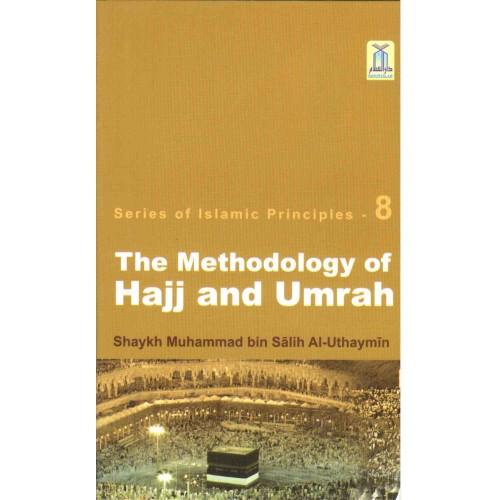
Hajj & Umrah And Visitors (H/B)
Rites and Selected Etiquettes for those intending to Perfom Hajj & Umrah and Visitors In this book the author calls attention to the most important things that those who intend to perform Hajj, Umrah or Visiting the Prophets Mosque in Medinah must have as provisions. The author has made his work brief and arranged its topics according to their priorities. the author mentions a considerable number of sayings of the people of knowledge and calling the attention of the reader to some important matters.
Remembrance & Prayer: The way of Prophet Muhammad s.a.w
Remembrance and Prayer: The Way of Prophet Muhammad, was one of the first works of Shaykh al Ghazali’s to be translated into English. The book describes in vivid prose how the Prophet, upon him be peace, used to remember Allah and pray to Him. Not only are the exquisitely beautiful, deeply moving and penetrating words of the Prophet given in the English translation, but in the original Arabic as well, thus allowing those desirous of memorizing Arabic access to the original texts. The intimate relationship with Allah, which was the hallmark of the Prophet’s life, becomes clear and vivid. The book’s contents are immensely relevant. to the life and concerns of modern man, whose life has been made barren by the present secularist machinery.
Shatibi’s Philosophy of Islamic Law (P/B)
Abu Ishaq al-Shatibi, who died in 1888, had sought an answer to the challenge posed by modernisation and change to Islamic law, by introducing maslahah, which forms the basis of his philosophy of Islamic law. In a fascinating way, the author leads us step by step to what he considers the true import of Shatibi’s views concerning jurisprudence.
Al-Jumu’ah: The Day of Congregation
In our busy lives, Friday comes around once a week. It often comes and goes without our being really aware of it. For many Muslim men, it may be punctuated by the congregational prayer that they make special efforts to attend. For many Muslim women, it may go by just like any other day. This ought not to be the case. In this unique book, Dr. Gowher Yusuf gives us reason to stop and think about how special Friday (al-Jumu‘ah) really is, and what we should be doing to achieve the many bounteous blessings it holds for those who observe it. Drawing constantly from the Qur`an and the Sunnah and the great works of the scholars of Islam, Dr. Gowher Yusuf explores this topic in depth and presents it to the reader in simple language for them to understand and ponder over. This book travels through the various issues pertaining to the Friday prayer and its Khutbah, or sermon. These issues are explained within the Islamic framework, thus abolishing any myths and misunderstandings and clarifying the topic for the reader. Dr. Yusuf writes: The day of the week known as al-Jumu‘ah, or simply Jumu‘ah, is Friday, and it is special. Compared to the other days of the week, Friday has been accorded the largest amount of merit, so much so that the father of all humankind, Prophet Âdam (peace be upon him), was created on this day and a particular prayer was ordered for this day. It was from the guidance given to Prophet Muhammad (blessings and peace of Allah be upon him) to magnify this day, honour it, and designate it for acts of worship. …On a Friday, we all will be gathered and will stand congregated in front of Allah, the Exalted, on the Day of Resurrection, also called the Day of Accountability or the Day of Judgement.
Smoking Intoxicants & Narcotics (P/B)
This book deals with the epidemic of smoking, which enslaves many of today’s Muslims, and which is aggravated by that most victims belittle its dangers and deny its prohibition.
This book includes a discussions of intoxicants, establishing the prohibition of various practices associated with them, as well as penalties (in both lives) for those who partake in them.
This book also includes a discussion of narcotics, with an overview of marijuana and qaat (or khat). Based on their established effects and harms, we conclude that narcotics are strongly prohibited, except in very limited medical settings.
This book, we hope, will provide many Muslims with guidance toward a healthier, cleaner and worthies Islamic personality. My Allah grant us guidance and facilitation.
Recently Viewed
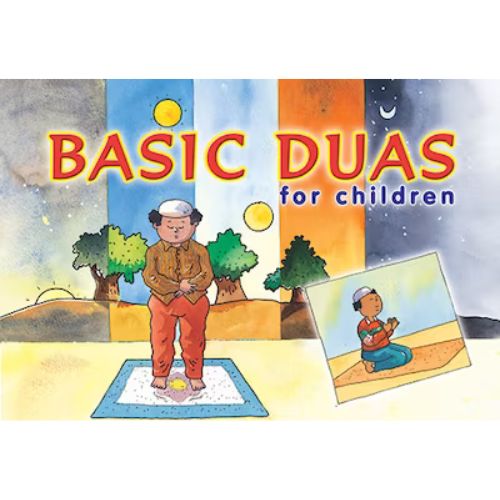
Basic Duas for Childrens
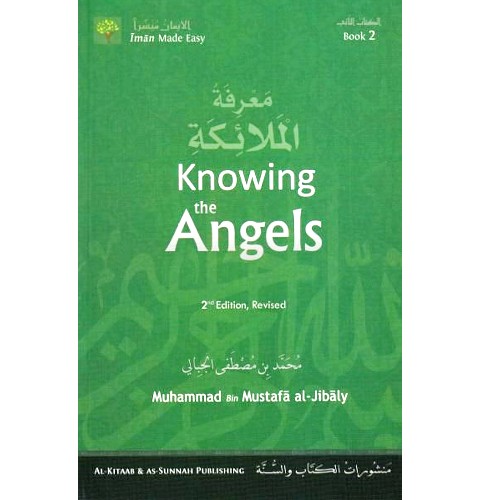
Knowing The Angles: Revised 2nd Edition (P/B) (Eeman Made Easy Series)
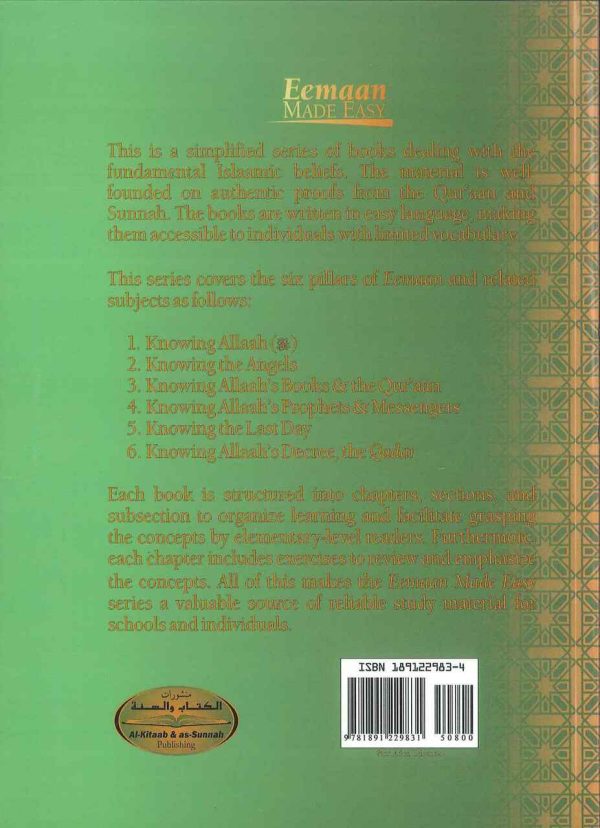
This is book regarding the Angels – Al-Malaika and is part of a simplified series of books dealing with the fundamental Islaamic beliefs – Iman. The material is well-founded on authentic proofs from the Qur’aan and Sunnah. The books are written in easy language, making them accessible to individuals with limited vocabulary.
This series covers the six pillars Imaan and related subjects in 6 books as follows:
- Knowing Allah
- Knowing the Angels
- Knowing Allah’s Books & the Qur’an
- Knowing Allah’s Prophets & Messengers
- Knowing the Last Day
- Believing in Allah’s Decree, Qadar
Each book is structured into chapters, sections, and subsection to organize learning and facilitate grasping the concepts by elementary-level readers. Furthermore each chapter includes exercises review and emphasizes the concepts. All this makes the Emaan Made Easy series a valuable source of reliable study material for schools and individuals.
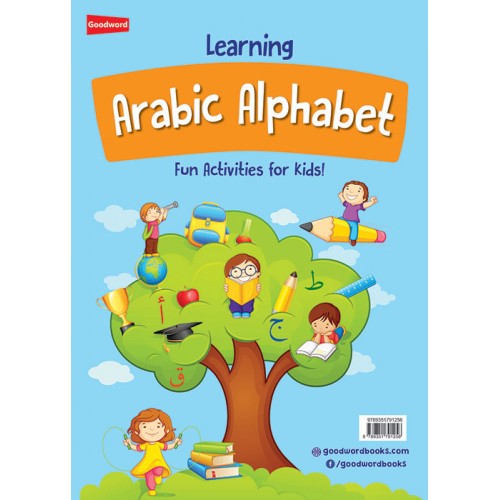
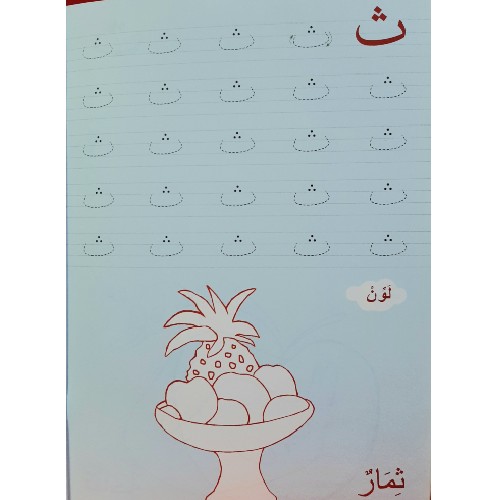
Learning Arabic Alphabet
Fun activities for kids to learn the Arabic alphabet!
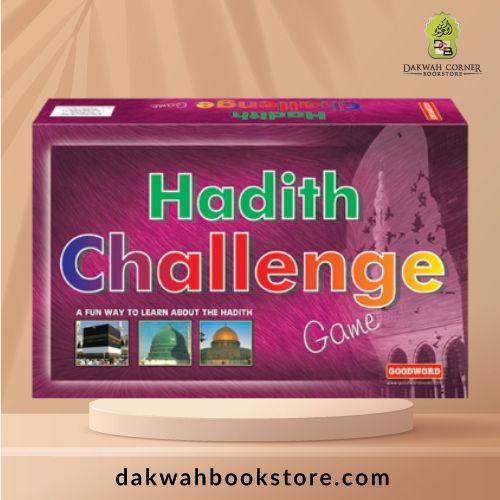
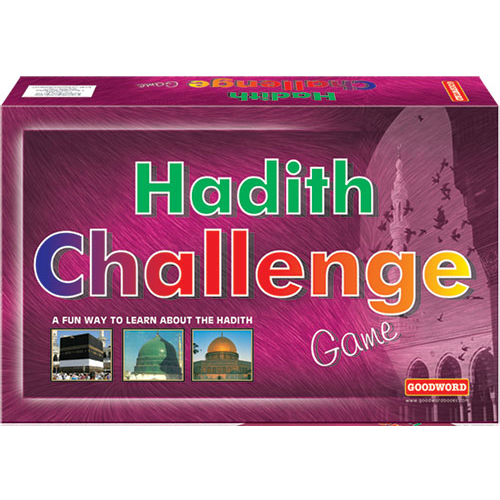
Hadith Challenge Game
The Hadith Challenge Game is a unique game based on sayings of the Prophet Muhammad. The idea behind this game is to provide the children with both fun and education. All questions are based on the authentic sayings of the Prophet Muhammad. They have been creatively worked into this game and children will enjoy answering them. This game can be played at school or at home with all the family members. Begin your journey and find out what fun it is to learn from the Hadith.
The Middle Path of Moderration in Islam (H/B)
In The Middle Path of Moderation in Islam, leading Islamic law expert Mohammad Hashim Kamali examines the concept of wasatiyyah, or moderation, arguing that scholars, religious communities, and policy circles alike must have access to this governing principle that drives the silent majority of Muslims, rather than focusing on the extremist fringe. Kamari explores wasatiyyah in both historical/conceptual terms and in contemporary/practical terms. Tracing the definition and scope of the concept from the foundational sources of Islam, the Qu’ran and Hadith, he demonstrates that wasatiyyah has a long and well-developed history in Islamic law and applies the concept to contemporary issues of global policy, such as justice, women’s rights, environmental and financial balance, and globalization.
Framing his work as an open dialogue against a now-decades long formulation of the arguably destructive Huntingtonian “clash of civilizations” thesis as well as the public rhetoric of fear of Muslim extremism since the attacks of September 11, 2001, Kamali connects historical conceptions of wasatiyyah to the themes of state and international law, governance, and cultural maladies in the Muslim world and beyond. Both a descriptive and prescriptive meditation on a key but often neglected principle of Islam, The Middle Path of Moderation in Islam provides insight into an idea that is in the strategic interest of the West both to show and practice for themselves and to recognize in Muslim countries.
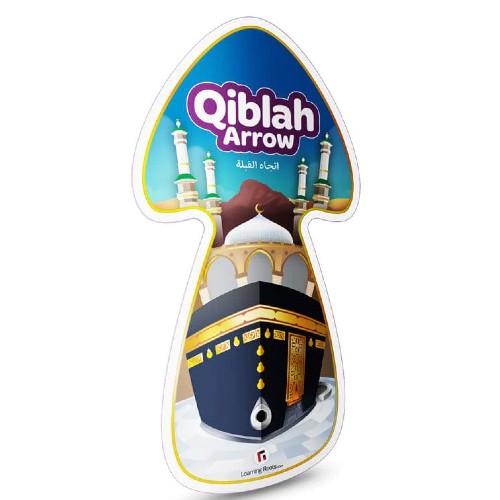
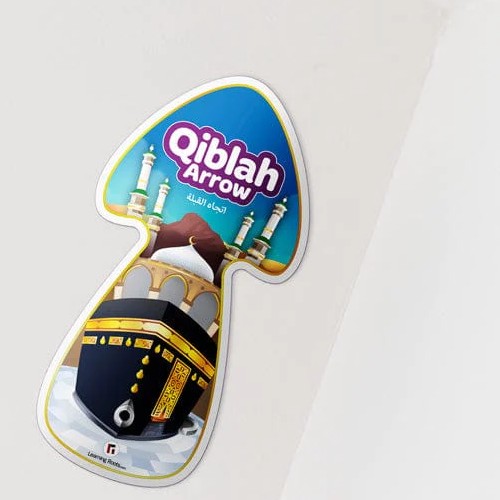
Qiblah Arrow by Learning Roots
Give Your Life a Sense of Direction
Have you walked into a room and spent ages trying to figure out what direction of the Qibla must be?
Surely, someone must have figured it out before. If only they were able to show you the direction, even if they aren’t around. Well, now they can.
With the Qibla Arrow, you can show the direction of the Kabah to others in any room. Here’s how:
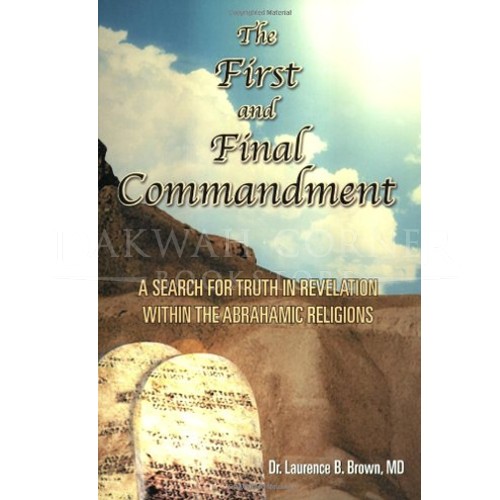
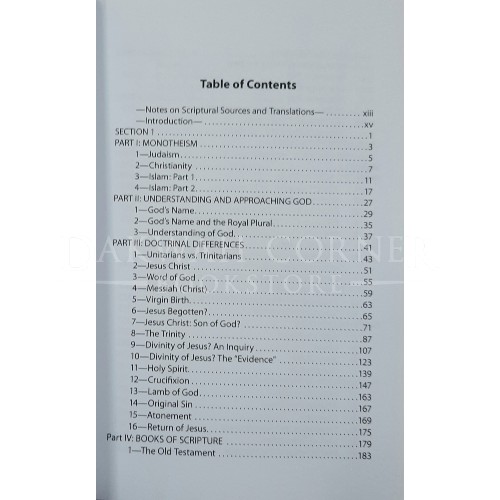
The First and Final Commandment (2nd Edition)
“A search for truth in revelation within the Abrahamic religions.”
Divine Speech
The Quran, the sacred scripture of Islam, is revered as the spoken word of God by approximately one-fifth of the world’s population. Since its inception, the power of the Quran has derived not only from its message, but also from the inimitable literary style and rhetorical impact that the Arabic scripture has on its audiences. Divine Speech: Exploring the Quran as Literature attempts to make some of the most recent Arabic and European-language scholarship on its literary features accessible to a wider, English-speaking audience. These features include its language and word choice, its use of figures of speech and other rhetorical devices, its manner of narrating parables and stories, and the structure, coherence, and the order of its “chapters”-aspects that typically remain mysterious to readers of English translations of the text. Divine Speech furnishes its readers with a better appreciation of the Quran from a literary perspective, and in the process stimulates interest in, and provides tools and resources for, further study of the scripture.


There are no reviews yet.