| Weight | 0.575 kg |
|---|---|
| Product Type | Book |
| Author | |
| Publisher | OXFORD University Press |
| Pages | 320 |
| ISBN | 9780190226831 |
The Middle Path of Moderration in Islam (H/B)
RM189.00
In The Middle Path of Moderation in Islam, leading Islamic law expert Mohammad Hashim Kamali examines the concept of wasatiyyah, or moderation, arguing that scholars, religious communities, and policy circles alike must have access to this governing principle that drives the silent majority of Muslims, rather than focusing on the extremist fringe. Kamari explores wasatiyyah in both historical/conceptual terms and in contemporary/practical terms. Tracing the definition and scope of the concept from the foundational sources of Islam, the Qu’ran and Hadith, he demonstrates that wasatiyyah has a long and well-developed history in Islamic law and applies the concept to contemporary issues of global policy, such as justice, women’s rights, environmental and financial balance, and globalization.
Framing his work as an open dialogue against a now-decades long formulation of the arguably destructive Huntingtonian “clash of civilizations” thesis as well as the public rhetoric of fear of Muslim extremism since the attacks of September 11, 2001, Kamali connects historical conceptions of wasatiyyah to the themes of state and international law, governance, and cultural maladies in the Muslim world and beyond. Both a descriptive and prescriptive meditation on a key but often neglected principle of Islam, The Middle Path of Moderation in Islam provides insight into an idea that is in the strategic interest of the West both to show and practice for themselves and to recognize in Muslim countries.
Be the first to review “The Middle Path of Moderration in Islam (H/B)” Cancel reply
You must be logged in to post a review.
Related Products

Hajj & Umrah (Pocket Guide) – English Version
A useful pocket guide that includes the rites of Umrah,Hajj, and visiting Madinah.
Should A Muslim Follow A Particular Madhhab?
In this book, the author has widely described the main principle of Taqleed. He says that Allah and Prophet Mohammed (SAW) has not ordered us to follow any opinions and interpretations. So there’s a possibility of being correct or incorrect in the opinions because there are many issues on which the Imams had different views and they explain them according to their own reasons and speculations, but the real and true Islam is based on the book (Quran) and Prophet’s Sunnah.
Allah says: “But no, by your Lord, they can have no Faith until they make you judge in all disputed matters between them, and find in themselves no resistance against your decision, and accept them with full submission.” And the prophet said: “I leave you with two things as long as you hold them tightly, you never go astray: they are the book of Allah and my Sunnah.” In this sense, the author has described the difference between different Madhahib (madhabs/mazhabs), and their views and urged to follow only the Quran and Sunnah.
Ibn Ashur Treatise on Maqasid al-Shariah (P/B)
Ibn Khaldun, the fourteenth century Arab historiographer and historian, is viewed as a founder of modern historiography, sociology and economics. He lived during a turbulent part of history, and out of his experiences, he ?conceived and created a philosophy of history that was undoubtedly the greatest work ever created by a man of intelligence…?. This work tells of the period of unrest in Ibn Khaldun?s life marked by political rivalries. It is during this turbulent period which provided him with the opportunity to write the Muqaddimah (or Prolegomena), earning him an immortal place among historians, sociologists and philosophe
Shatibi’s Philosophy of Islamic Law (P/B)
Abu Ishaq al-Shatibi, who died in 1888, had sought an answer to the challenge posed by modernisation and change to Islamic law, by introducing maslahah, which forms the basis of his philosophy of Islamic law. In a fascinating way, the author leads us step by step to what he considers the true import of Shatibi’s views concerning jurisprudence.
Funeral Rites In Islam (H/B)
The purpose of this book is to provide English speaking Muslims a concise and authentic compilation of the instructions regarding funeral rites in Islam.
Preservation of Health in Islamic Law (P/B)
Preservation of health (hifz al-sihhah) is the most important branch of Islamic medicine since it is primarily concerned with the prevention of illness rather than cure. This book represents one of the few attempts to introduce the role of Islamic medicine, although Chapter One provides information about a historical background of the preservation of helath in Islam, its aim is to provide fresh ant timely overview of the major aspects of legal, ritual and spiritual structures of teh Islamic law (shariah). These include the laws related to Ibadah, Islamic family laws, foods and drinks as well as environmental laws, for maintaning and preserving human health. Findings indicated that prevention of any diseases from Islamic medical law presentive cannot attain any real success unless it emanates from an Islamic fundamental teaching, namely: the pillars of Islam. Iman and observance of the Islamic rituals such as Salah, zakah, Sawm and Hajj, have played an important role in shaping the attitude, behavior and model personality of the Muslim, in boosting the spiritual motivation or attitude change, and in disseminating the message of prevention. This indicates that bodily and spiritual health goes hand in hand and that pyscho-spritual balance and health is a primary consideration whereas physical health is a secondary one.
Having Fun The Halal Way Entertainment In Islam
With the advent of technology, the entertainment industry has flourished and become immensely popular. Combine this with the exponential advances in technology, and the result is an increasing number of ways to amuse ourselves. As a result of such advances, Muslim react in a variety of manners towards entertainment. Some label entertainment as completely forbidden. This sometimes includes parents who say no to almost everything that their young ones deem to be ‘fun’, without providing them with suitable alternatives. Others, who do not want to take this extreme approach, fall into the trap of excessive use of – and even addiction to – various sources of entertainment, without any limits.
In Having Fun the Halal Way, Ismail Kamdar explores the teachings of Islam regarding entertainment. Drawing upon the Quran, the Sunnah and the understanding of the righteous scholars of Islam, he provides a detailed and balanced analysis of the topic. He not only explains the detriments of the current entertainment industry, but also suggests alternative means to have a good time with friends and family members.
Hajj & Umrah And Visitors (H/B)
Rites and Selected Etiquettes for those intending to Perfom Hajj & Umrah and Visitors In this book the author calls attention to the most important things that those who intend to perform Hajj, Umrah or Visiting the Prophets Mosque in Medinah must have as provisions. The author has made his work brief and arranged its topics according to their priorities. the author mentions a considerable number of sayings of the people of knowledge and calling the attention of the reader to some important matters.
Forensic Psychiatry In Islamic Jurisprudence (P/B) (IBT)
This is the first book in Forensic Psychiatry that focuses on the application of psychiatry to legal issues connected to Islamic jurisprudence. It gives contemporary psychiatry in any Islamic country a broad spectrum of tools to work with, enabling the utilization of options specific to particular societal and cultural norms. This book will appeal to both the general as well as the academic reader.
The Pillars of Islam Made Easy – II Salah & Its Essential Conditions (H/B)
Salah is one of the five pillars on which the edifice of Islam rests. Most of us feel that we already know all there is about salah – the formal prayers of a Muslim. However, very few individuals actually do justice to it or derive any worldly or spiritual benefits from it.
Salah & Its Essential Conditions is an effort to detail the essential prerequiires of salah. Moreever, it takes a detailed look at its importance along with the different types of obligatory and voluntary prayers. It alsa presents an illustrated guide to help those who wish to learn or correct the performance of their prayers.
Inshallah, all those who wish to improve their salah will find plenty of help in this book whether they are looking for information on cleanliness and purify, locating the direction of qibla, improving their congregation during salah, making up for the missed salah, or joining acongregation when the imam has already sarted the salah, or joining a congregation when the imam has already started the salah. All in all, it is a relevant handbook on what the Prophet (saw) has described as the coolness of his eyes.
Islamic Rulings on Menstruation and Postpartum Condition
The birth of human being is a most amazing phenomenon. The physical cycles that the body of woman must endure in order to maintain this act of creation should be respected to the highest degree. Allah mentions that our mothers have born us with difficulty and struggle and because of this are due the highest respect. one among many of the difficulties that women must brave, are the doubts that these conditions present to the correct obervance of her religion. How is her fassting affected, how are her prayers affected, how is her ability to pursue her studies, and how are her conjugal relations affected by her ever changing physical condition in relation to her as the sole vessel of the birth of man. A really valuable publication by Darussalam for all Muslim woman to study
The Ultimate Guide to Umrah by Darussalam
Recently Viewed
The Middle Path of Moderration in Islam (H/B)
In The Middle Path of Moderation in Islam, leading Islamic law expert Mohammad Hashim Kamali examines the concept of wasatiyyah, or moderation, arguing that scholars, religious communities, and policy circles alike must have access to this governing principle that drives the silent majority of Muslims, rather than focusing on the extremist fringe. Kamari explores wasatiyyah in both historical/conceptual terms and in contemporary/practical terms. Tracing the definition and scope of the concept from the foundational sources of Islam, the Qu’ran and Hadith, he demonstrates that wasatiyyah has a long and well-developed history in Islamic law and applies the concept to contemporary issues of global policy, such as justice, women’s rights, environmental and financial balance, and globalization.
Framing his work as an open dialogue against a now-decades long formulation of the arguably destructive Huntingtonian “clash of civilizations” thesis as well as the public rhetoric of fear of Muslim extremism since the attacks of September 11, 2001, Kamali connects historical conceptions of wasatiyyah to the themes of state and international law, governance, and cultural maladies in the Muslim world and beyond. Both a descriptive and prescriptive meditation on a key but often neglected principle of Islam, The Middle Path of Moderation in Islam provides insight into an idea that is in the strategic interest of the West both to show and practice for themselves and to recognize in Muslim countries.
33 Ways of Developing Al-Khushoo`: Humility and Devotion in Prayer
Shaykh Muhammad Salih al-Munajjid’s little book is perhaps one of the most widely-circulated among Muslims today. This is because the topic touches worshippers where it hurts—we know that we often lapse into an automatic sort of prayer when we lose concentration. The Shaykh points out that this loss of concentration really stems from a lack of humility and devotion—in Arabic, khushoo‘. His aim in writing this book is to help us to get back that khushoo‘. His step-by-step approach makes it simple. He gives practical advice and uses the excellent example of the prayer of the Messenger of Allah (blessings and peace be upon him) to guide us, so that as worshippers, we can truly return to a state of humility and devotion before the Lord.
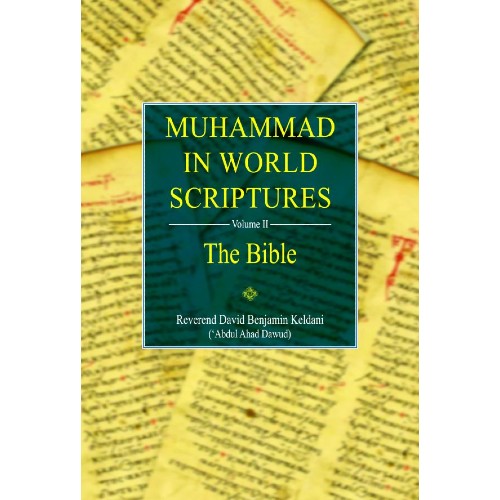
Muhammad In World Scriptures: Volume II (IBT)
This is the second volume of the series on the Prophet Muhammad as found in world scriptures. While the first volume explores the Parsi, Hindu and Buddhist scriptures, this volume explores what the Bible says about the Holy Prophet of Islam. Written some hundred years ago by a Christian priest who converted to Islam, this book helps readers understand the absolute unity of God and the ultimate source of all revealed Scriptures.
Eliyas Explains: Miracles
The second in a lively middle-grade series by prize-winning author, Zanib Mian. This children’s Islamic book is fantastic for those children reading for themselves.
Hell-Fire Its Torments and Denizens
In all the divine revelations there is a constant warning that wrongdoers may end up in Hell-fire, though Allah’s kindness and mercy are extended to many people. Reading about the Hell-fire enables one to know it, fear it, and try utmost to keep oneself away from it through correct beliefs and good deeds. The more one knows about Hell-fire, the more he or she strives to be saved from its reach. Relying on statements from the Holy Qur’an and the Hadith, this book enables the reader to have a realistic picture of Hell-fire’s torments. It may be enough to know that it is a raging fire, but detailed knowledge of it, as displayed in this book, will strengthen a person’s belief and eventually, Allah willing, make him or her seek for and remain steadfast on the path to salvation. This is an indispensable book for believers and non-believers alike. Hell-fire: Its Torments and Denizens is an abridged, summarized version of Siddiq Hasan Khan’s book about the Hell-fire.
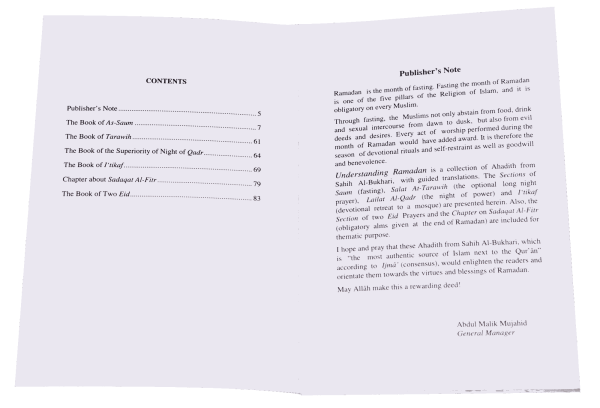
Understanding Ramadan
This book covers important aspects regarding Ramadan. The book is a collection of Ahadith from Sahih Al-Bukhari, with guided translations. The topics which are covered are Fasting, Salat at-Tarawih, Lailat Al-Qadr and Itikaf. Also, the section of two Eid Prayers and the chapter on Sadaqat Al-Fitr are included for the thematic purpose. This book is a must-read for all.
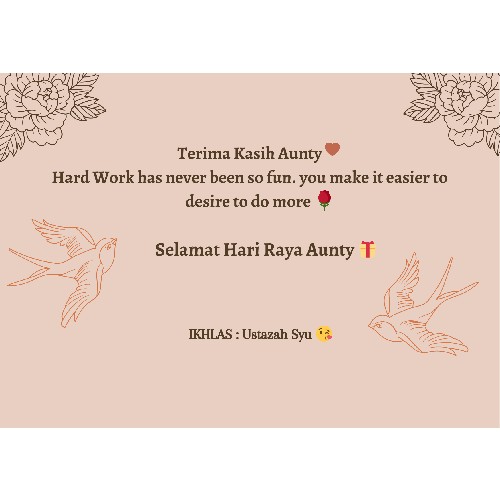
Wish Notes Service (Printed), Simply type your wish note into the MESSAGE!
This is additional services provided by Dakwah Corner Bookstore for the customer who wish to buy DCB products as a gift for their loved one.
▪️ Wish Notes is a your own note printed on piece of paper with nice design attached with your parcel.
▪️ Gift Wrapping mean the products will be wrapped in a gift wrapper before the products packed onto parcel type. And it will include the Wish Notes as well.
How to insert note? Simply type your wish note into the MESSAGE before you Place Order.
for wrap service, please DM seller.
We specialize in sending gifts to your loved
Wrap paper is randomly pick by seller – Buy GIFT WRAPPING SERVICES ( PM before add to cart )
Each present is uniquely wrapped to fit the items you’ve purchased
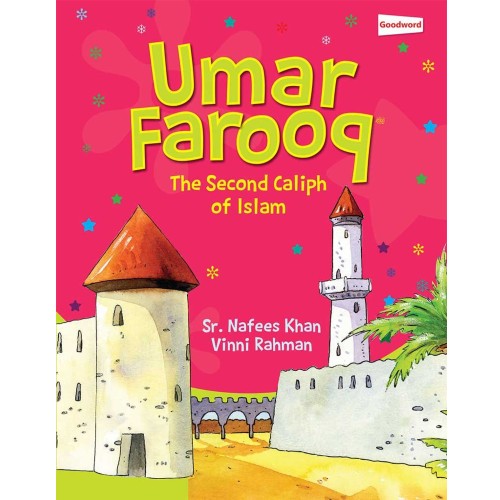
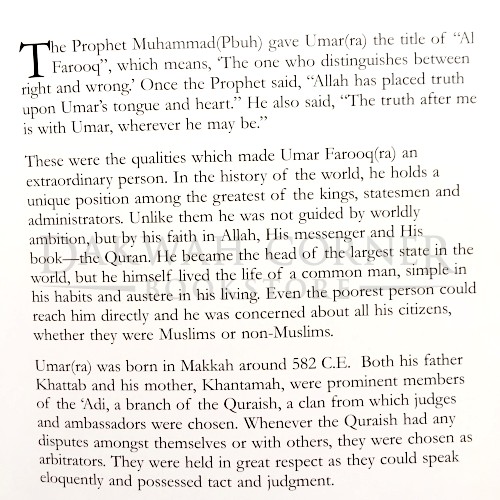
Umar Farooq: The Second Caliph of Islam
This book is about the life and teachings of Umar Farooq (may Allah be pleased with Him), The Second Caliph of Islam.
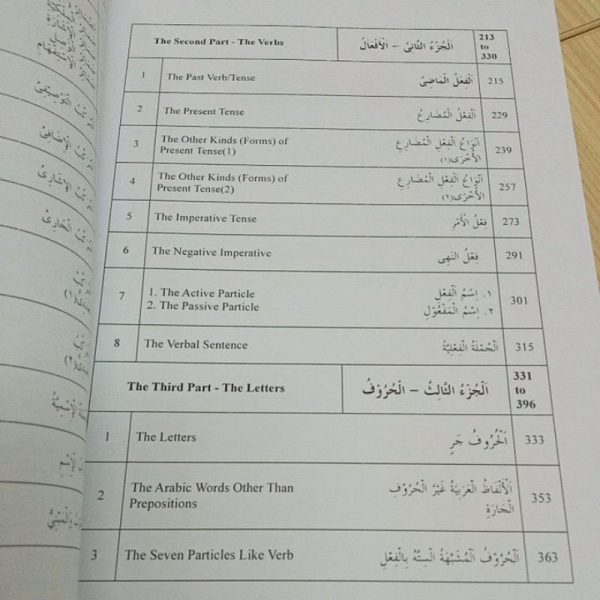
Quranic Arabic With Basic Grammar
This book, which is a compilation of the author’s lectures in seminars during his post-doctoral research at the Centre for Islamic Development Management Studies, Universiti Sains Malaysia, dwells on Arabic language with a focus on Quranic grammar. It comprises of three parts, each part contains various units. The first part contains 15 unit which look into the nouns, pronouns, different types of compounds, the nominal sentence and punctuation. The second part consists of seven units which discuss the various types of tenses, sentences, the imperatives and the particles. The last part featuring five units covers prepositions and different types of words in Arabic.


There are no reviews yet.