| Weight | 0.575 kg |
|---|---|
| Product Type | Book |
| Author | |
| Publisher | OXFORD University Press |
| Pages | 320 |
| ISBN | 9780190226831 |
The Middle Path of Moderration in Islam (H/B)
RM189.00
In The Middle Path of Moderation in Islam, leading Islamic law expert Mohammad Hashim Kamali examines the concept of wasatiyyah, or moderation, arguing that scholars, religious communities, and policy circles alike must have access to this governing principle that drives the silent majority of Muslims, rather than focusing on the extremist fringe. Kamari explores wasatiyyah in both historical/conceptual terms and in contemporary/practical terms. Tracing the definition and scope of the concept from the foundational sources of Islam, the Qu’ran and Hadith, he demonstrates that wasatiyyah has a long and well-developed history in Islamic law and applies the concept to contemporary issues of global policy, such as justice, women’s rights, environmental and financial balance, and globalization.
Framing his work as an open dialogue against a now-decades long formulation of the arguably destructive Huntingtonian “clash of civilizations” thesis as well as the public rhetoric of fear of Muslim extremism since the attacks of September 11, 2001, Kamali connects historical conceptions of wasatiyyah to the themes of state and international law, governance, and cultural maladies in the Muslim world and beyond. Both a descriptive and prescriptive meditation on a key but often neglected principle of Islam, The Middle Path of Moderation in Islam provides insight into an idea that is in the strategic interest of the West both to show and practice for themselves and to recognize in Muslim countries.
Be the first to review “The Middle Path of Moderration in Islam (H/B)” Cancel reply
You must be logged in to post a review.
Related Products

Should A Muslim Follow A Particular Madhhab?
In this book, the author has widely described the main principle of Taqleed. He says that Allah and Prophet Mohammed (SAW) has not ordered us to follow any opinions and interpretations. So there’s a possibility of being correct or incorrect in the opinions because there are many issues on which the Imams had different views and they explain them according to their own reasons and speculations, but the real and true Islam is based on the book (Quran) and Prophet’s Sunnah.
Allah says: “But no, by your Lord, they can have no Faith until they make you judge in all disputed matters between them, and find in themselves no resistance against your decision, and accept them with full submission.” And the prophet said: “I leave you with two things as long as you hold them tightly, you never go astray: they are the book of Allah and my Sunnah.” In this sense, the author has described the difference between different Madhahib (madhabs/mazhabs), and their views and urged to follow only the Quran and Sunnah.
Fiqh Course: Tahaarah, Salaah & Janaa’iz
This course was compiled for English-speaking Muslims and is especially beneficial for new Muslims. It covers tahârah (purification), salâh (prayer) and janâ‘iz (funerals). It is set out in an easy-to-understand manner, citing evidence from the Qur’an and authentic hadiths. The aim of this book is to provide the reader with a correct, yet uncomplicated guide to the performance of the aforementioned acts of worship. Allah willing, it is the first in a series which will cover all aspects of worship and Islamic jurisprudence.
Fast According to the Quran & Sunnah
Saum (Fast) is a third Pillar of Islam. Allah’s Messenger said, Allah says: “Every deed of the son of Adam is for him, except Saum (fasting). It is for Me and I shall reward for it.”
As the status of this act of worship is so high it is essential to learn the pilings pertaining to this month of fasting so that Muslims will know what is obligatory in order to do it, what is forbidden to avoid it, and what is permissible so that they do not unnecessarily subject themselves to any hardship by depriving themselves from it.
This book consists of all the main issues of Fast. The main objective of this work is to serve an easy and authentic reference to the reader.
Shatibi’s Philosophy of Islamic Law (P/B)
Abu Ishaq al-Shatibi, who died in 1888, had sought an answer to the challenge posed by modernisation and change to Islamic law, by introducing maslahah, which forms the basis of his philosophy of Islamic law. In a fascinating way, the author leads us step by step to what he considers the true import of Shatibi’s views concerning jurisprudence.
Islamic Fatawa Regarding Women (H/B)
Women face a lot of special problems regarding their menses, postpartum bleeding, istihada, hijab, mixing with men, rights & duties with respect to their husband, husband’s household, children, inheritance, marriage, divorce, etc
More than 350 of such problems & issues have been answered in this book by Grand Mufti of Saudi Arabia Sheikh Ibn Baz, and the eminent scholars like Sheikh Ibn Uthaimin, Sheikh Ibn Jibreen and others.
.
The Concise Presentation of the Fiqh of the Sunnah and the Noble Book
Written by Dr. Abdul-Azeem Badawi and translated by Jamal al-Din M. Zarabozo, The Concise Presentation of the Fiqh of the Sunnah and the Noble Book covers the fiqh of diverse topics like purity, prayer, fasting, zakah, pilgrimage, marriage, business transactions, foods, inheritance, criminal offenses, and jihad. Dr. Badawi relies only on the Quran and the Sunnah, making it an authentic Islamic book on fiqh and a collection of sound hadiths.
Funerals Regulations and Exhortations (H/B)
Our soul inevitably follows a route starting from birth, passing through death, and ending with our resurrection in the next life. The inevitable journey discusses over a sequence of titles: sickness, inheritance, funerals, Life in Barzakh and so on…
Worship In Islam: An In-depth Study of Ibadah, Salah and Sawm (P/B)
Worship in Islam is in-depth study of the nature and significance of Islamic spirituality by Abul A‘la Mawdudi (1903–79), one of the leading Muslim intellectuals of the twentieth century, with special reference to the concepts of God’s Oneness (tawhid), the finality of Prophethood (risalah) and the Islamic system of worship (‘ibadah) with a focus upon prayer (salah) and fasting (sawm) and their role in the development of the Islamic personality and Islam’s social order. The distinguishing feature of Mawdudi’s approach is his elaboration of the social dimension of worship, which extends the traditional approach found in Islamic jurisprudence, with its focus upon ritual and self-purification, to consider worship’s transformative role in social life. Presenting a holistic view of the Islamic system, Mawdudi highlights Islam’s social, economic and political dimensions, which he argues has the capacity to resolve emergent issues and problems that humankind faces.
This historic text should be of wider interest to both students and specialists in contemporary Islamic thought, and includes an introduction by Professor Anis Ahmad.
Edited and translated into accessible English by Ahmad Imam Shafaq Hashemi, this book is an authoritative compilation by a leading Islamic twentieth-century revivalist on the central matter of worship’s role in Islam.
Fiqh According To The Quran & Sunnah (2 vol)
The complete set, ‘Al-Lubab Fee Fiqh As-Sunnah Wal-Kitab,’ contains all of the books of Islamic Fiqh and its chapters, accompanied by evidence and is presented in a clear and simple manner, in order that they may be understood by the young and the old, without blindly following any of the schools of Jurisprudence, but rather being subject to authentic proofs and following the most authoritative opinions, without fanatical adherence to any particular group. Rather the author agrees with each group when the truth is with them and contradicts them when they veer from that which is correct.
Fiqh is to achieve access to knowledge of that which is unclear through knowledge of that which is proven, so it is more specific than mere knowledge or learning. And fiqh is knowledge of the juristic law. It is said Faquha -A man has acquired understanding and so he has become a Faqeeh (A scholar of Islamic Jurisprudence); and it is said Faqiha – He has understood it, i.e he has attained understanding of it, and it is said Tafaqqaha – he has devoted himself to the acquisition of (Islamic) Knowledge and specialized in it. Fiqh has been a subject of contention among the scholars as well as layman throughout the history of Islam.
Istihsan (P/B)
This work constitutes a critical analysis of classical and modern aspects of the concept of istihsan (juristic preference), an important principle in Islamic legal legislation throughout history. Although there has been many research works on the subject, it still requires further investigation on the role and nature of istihsan with regard to a combination of classical and modern approaches. Consisting of four chapters, the author begins by introducing some general principles of Islamic law, before discussing the history of istihsan during the time of the Prophet and his Companions. He also analyses the validity of istihsan as a source of law and discusses the differences among scholars on its method of implementation.
Forensic Psychiatry In Islamic Jurisprudence (P/B) (IBT)
This is the first book in Forensic Psychiatry that focuses on the application of psychiatry to legal issues connected to Islamic jurisprudence. It gives contemporary psychiatry in any Islamic country a broad spectrum of tools to work with, enabling the utilization of options specific to particular societal and cultural norms. This book will appeal to both the general as well as the academic reader.
Smoking Intoxicants & Narcotics (P/B)
This book deals with the epidemic of smoking, which enslaves many of today’s Muslims, and which is aggravated by that most victims belittle its dangers and deny its prohibition.
This book includes a discussions of intoxicants, establishing the prohibition of various practices associated with them, as well as penalties (in both lives) for those who partake in them.
This book also includes a discussion of narcotics, with an overview of marijuana and qaat (or khat). Based on their established effects and harms, we conclude that narcotics are strongly prohibited, except in very limited medical settings.
This book, we hope, will provide many Muslims with guidance toward a healthier, cleaner and worthies Islamic personality. My Allah grant us guidance and facilitation.
Recently Viewed
FATHER
Father The perfect gift to give a loved one or indeed to educate oneself as to the significance Islam places on this important relationship through relevant Qur’anic Ayah, Hadith, and Islamic Poetry.
Example Quotes from GiftBook: .
And your Lord has decreed that you worship none but Him. And that you be dutiful to your parents. And if one of them or both of them attain old age in your life, say not to them a word of disrespect, nor shout at them, but address them in terms of honour. And, lower to them (out of kindness), the wing of submission through mercy, and say, My Lord! Bestow on them Your Mercy, as they cherished me and brought me up when I was small.
[Q17:23-24]
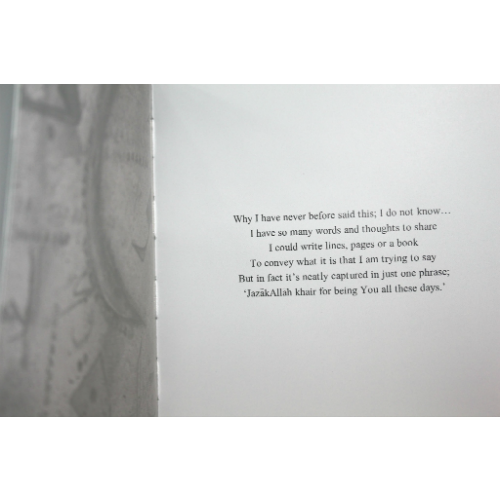
Protecting me from all the dangers that be That was your fatherly duty, But the time you invested in advising me Is more than anyone afforded me. Your strength was not in brawn but in diplomacy, I always felt safe in your company. You were the glue that kept everyone together, InshaAllah in Paradise we’ll live happily forever.
Ideal gifts to convey what we sometimes find difficult to say through relevant Qur’anic Ayah, Hadith, and Islamic Poetry.
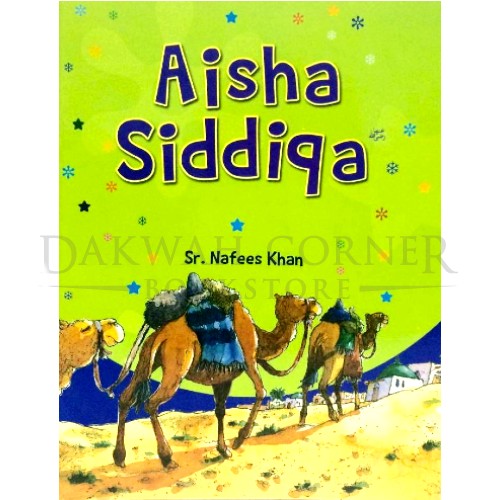
Aisha Siddiqa
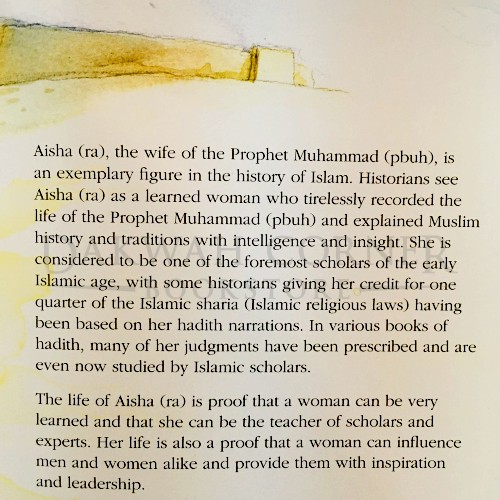
“The life of Aisha (ra) is proof that a woman can be very learned and that she can be the teacher of scholars and experts…”
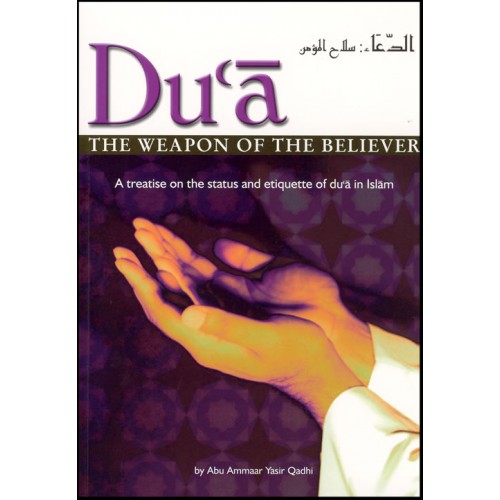
Du’a The Weapon of The Believer
The recommended etiquette of performing dua
The timings and situations in which the dua is more likely to be answered
The various factors that aid or prevent a dua from being accepted
The relationship of dua with the Divine Decree (qadr)
The wisdom behind a delayed response
This is a highly informative and essential book for every Muslim household. In this work, the author elaborates on the status, importance, and etiquette of du’a or prayer and supplications in Islam. In the most comprehensive work yet written in English on this topic, the author discusses, amongst other matters:
- The excellence and benefits of the dua
- The types of dua
- The pre-conditions that are needed in order for a dua to be accepted
- The recommended etiquette of performing dua
- The timings and situations in which the dua is more likely to be answered
- The various factors that aid or prevent a dua from being accepted
- The relationship of dua with the Divine Decree (qadr)
- The wisdom behind a delayed response
This is a highly informative and essential book for every Muslim household.
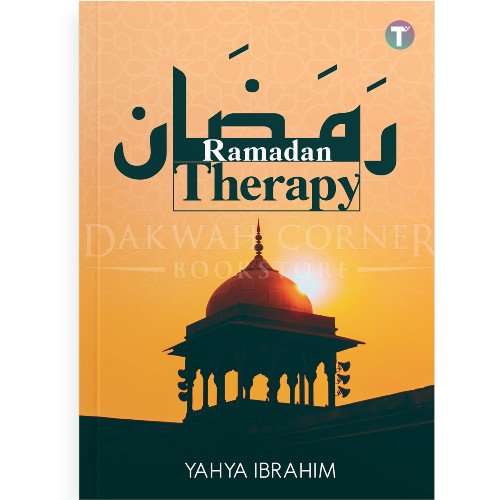
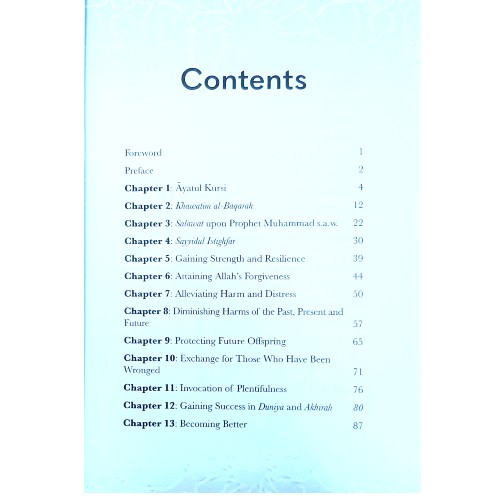
Ramadan Therapy
For every situation, Prophet Muhammad S.A.W. has prescribed various Du’a that can be read throughout Ramadan and even after it, as a form of therapy. It is with hope and faith that positive changes can come out of this beloved month of Ramadan to those who seek it.


There are no reviews yet.