| Weight | 0.385 kg |
|---|---|
| Product Type | Book |
| Author | |
| Publisher | IIUM |
| Pages | 238 |
| ISBN | 9789674183165 |
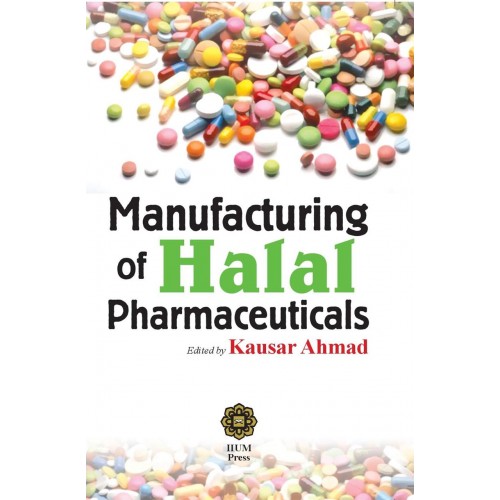
Manufacturing of Halal Pharmaceuticals (P/B)
RM70.00
This book aims to cover the fundamental aspects of pharmaceutical manufacturing from the Islamic worldview to inspire students that whatever they do including very mundane routine work such as checking pH can be an ‘ibādah – if they work within the sphere of Islamic teachings and in shā’ Allah all the time and effort will be rewarded by Allah SWT. The first chapter describes the Islamic perspectives towards the safeguarding of life vis-à-vis the use of medicines or pharmaceuticals and can be considered as an overview for the Islamic manufacturing practices. Although this book is about the manufacturing of pharmaceuticals, other industries may benefit from the discourse and examples given. As much as possible, processes and regulations are described in the book so that it covers the syllabus of industrial pharmacy for undergraduate use and still can be referred for postgraduate studies.
Be the first to review “Manufacturing of Halal Pharmaceuticals (P/B)” Cancel reply
You must be logged in to post a review.
Related Products
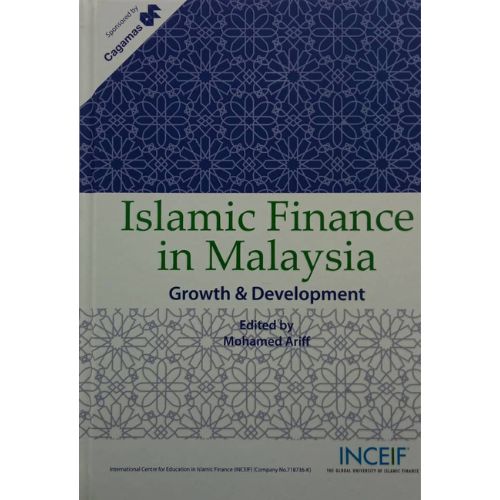
Islamic Finance in Malaysia: Growth & Development
This modern history of Islamic finance is pretty short spanning a period of roughly five decades, compared to conventional finance which goes back to more than four centuries earlier. Islamic finance has spread rapidly across the globe, reminiscent of Lao-Tzu’s famous saying “A journey of a thousand miles begins with a single step”. Malaysia, a pioneer in the development of the Islamic finance industry, has emerged as one of the major hubs for global Islamic finance.
The Higher Objectives of Humanity
A video summary of this book can be found here: https://www.youtube.com/watch?v=YdNQxv_ODdc&t=26s This book discusses the why, what and how of Rahmatan lil-Alamin as the higher objective of humanity. It presents a practical understanding of the purpose of creation and humanity to improve the individual and collective well-being of Muslims and society. The intention is to re-introduce and re-emphasize the correct Islamic perspective of humanity. The first five chapters revisits the common understanding among Muslims as to why mankind is created. We show that the prevalent view that we are created to worship Allah (SWT) is incomplete. There is a higher and more noble purpose; Rahmatan lil-Alamin (mercy to the worlds). We next describe the what of Rahmatan lil-Alamin. The best role model of Rahmatan lil-Alamin is undoubtedly Prophet Muhammad (SAW), the last and final prophet and messenger, whom Allah (SWT) sent with a very clear purpose, “And We have not sent you but as a mercy to the worlds.” [21:107]. We present many examples from the history of Prophet Muhammad (SAW) and a collection of his (SAW) sayings and advice on being the best. The final chapters of the book deal with the how of Rahmatan lil-Alamin. We describe in detail how the Muslim can apply Rahmatan lil-Alamin daily in his or her life. We propose a practical model of Rahmatan lil-Alamin that we induced from the Quran. We also addressed how to apply Rahmatan lil-Alamin to a broader society by proposing a decision-making tool that can guide us as persons and as communities to make decisions that conform to the foundations and priorities of Rahmatan lil-Alamin. We present case studies from the history of the Companions using this decision-making model. This book seeks to establish a connection between Islam and civilization within a civilizational and ethical framework. We believe that a more proper and complete understanding of the Islamic view about humanity may present to us new perspectives of Islam and how Muslims should engage with fellow Muslims and people of other faiths. In fact, the implication of this new reinterpretation framework goes even further in that: any human civilization built on this framework is the most prosperous for the whole and also for the individuals in it.
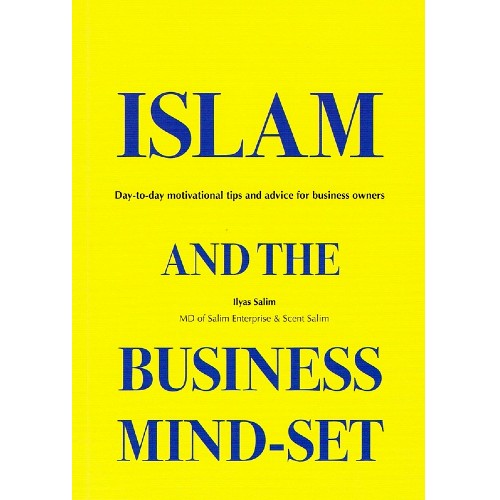
Islam And The Business Mind-Set
Written by one of the top young entrepreneurs in the North of England, Ilyas Salim is MD of Salim Enterprise, a global investment company.
From this book, you will learn how to:
- Create a business mentality
- Start a moral and ethical business
- Expand your business
- Work smarter, not harder
- Attract Barakah into your business
- Achieve not just a work/life balance, but a total life balance.
All this is within the framework of the Qur’an and Hadith and examples from the life of the Prophet Muhammad SAW.
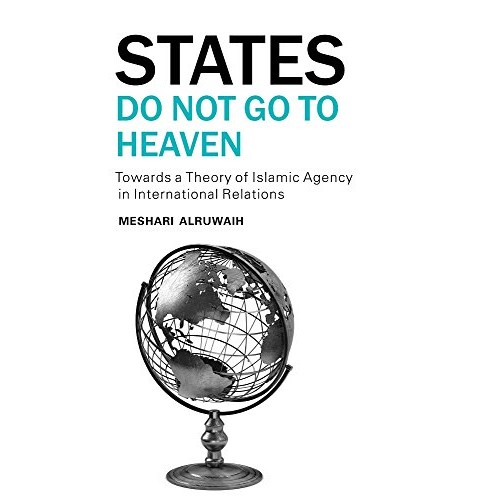
States Do Not Go to Heaven: Towards a Theory of Islamic Agency in International Relations
This book compares and contrasts Islamic world views and Western theoretical perspectives on international relations to suggest that a combination of the two could lead to a mutually beneficial redefinition of contemporary international relations utilizing Western theoretical tools and incorporating an Islamic perspective. Particular focus is given to the Islamic concept of istikhlaf as an ontological and normative foundation. The reasoning being that all man-made social arrangements on “earth”, as well as international society, should be considered a realm of istikhlaf. This allows for return to an eternal and critical first principle, linking all social roles to this principle, which is that man as designated by the Qur’an, is God’s khalifah or Vicegerent on earth. It’s a statement of great magnitude.
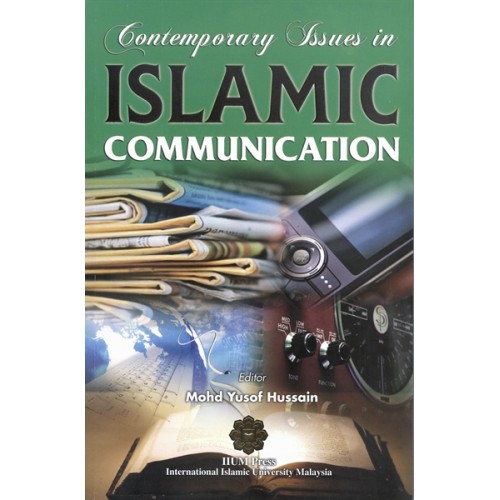
Contemporary Issues In Islamic Communication
The book contains a collection of essays on issues that are of concern to Muslim media and scholars and practitioners. The issues are those that are constantly highlighted in the mass media in the Muslim world. All the issues are discussed from the Islamic perspective. The main purpose of the book is to give readers a clear understanding of how Muslims view contemporary issues that are reported and discussed in present day mass media. The book is written for students majoring in communication at the International Islamic University Malaysia. It is also useful for students taking courses on communication issues in other universities.
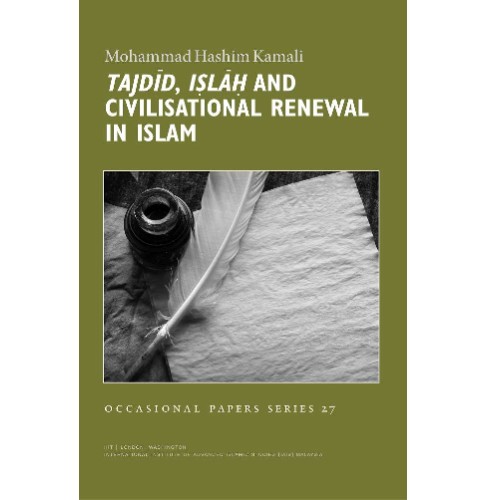
Tajdid, Islah and Civilization Renewal in Islam
The history of Islamic thought is marked by a continuous tradition of internal revitalisation and reform embedded in the principles of islah, and tajdid. The ultimate purpose has been to bring existing realities and social change in line with the transcendent and universal standard of the Qur’an and Sunnah through a process of restoration and reform. The tradition of islah-tajdid has thus consistently challenged the Muslim status quo and prompted fresh interpretation of the Qur an and Sunnah, understood and implemented through the methodologies of interpretation and ijtihad, as well as the rejection of unwarranted accretions to the original messages of Islam. The basic theme of the paper is that civilisational renewal is an integral part of Islamic thought. The paper looks into the meaning, definition and origins of tajdid and islah and their relationship with ijtihad, and how these have been manifested in the writings and contributions of the thought leaders of Islam throughout its history. It also develops tajdid-related formulas and guidelines that should lead the efforts of contemporary Muslims in forging the objectives of inter-civilisational harmony and their cooperation for the common good.
Islamic Economics : Principles & Analysis (P/B)
Economics is a social science that studies the behaviour and interactions of economic agents and analyses how economies work at the macro- and micro-levels. It studies production, distribution and consumption of goods and services, identifies economic problems and phenomena, and addresses economic questions from a positive perspective (what is) as well as a normative (how it should be) perspective. Islamic economics examines the same areas as its conventional counterpart. However, it involves the application of Sharīʿah to the different economic functions and issues. It is postulated that Islam offers a better approach compared to conventional economics in managing economic activities and solving economic and social issues.
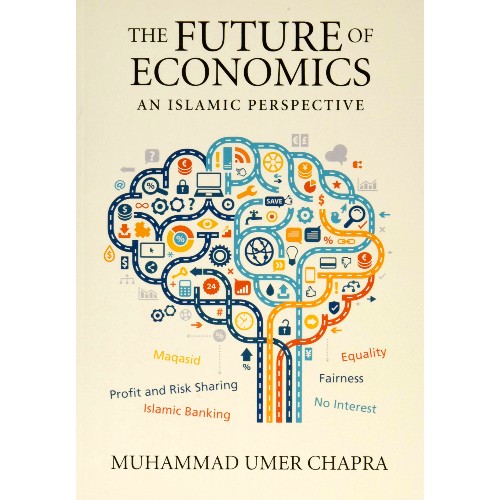
The Future of Economics An Islamic Perpective
This profound book is a powerful yet balanced critique of mainstream economics that makes a forceful plea for taking economics out of its secular and occident-centered cocoon. It presents an innovative and formidable case to re-link economics with moral and egalitarian concerns so as to harness the discipline in the service of humanity
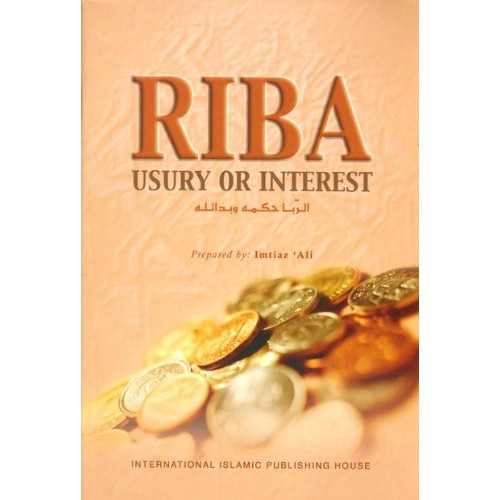
Riba: Usury or Interest
The Noble Qur’an states: {… Fear Allah, and give up what remains of your demand for usury/interest, if you are indeed believers. If you do not do so, then take notice of war from Allah and His Messenger.} (Qur’an 2: 278-279) Despite this obvious prohibition, the practice of ribâ (usury and interest) has polluted the global economy completely. This booklet explains the awful consequences of dealing in usury and interest in a summarized but convincing manner.
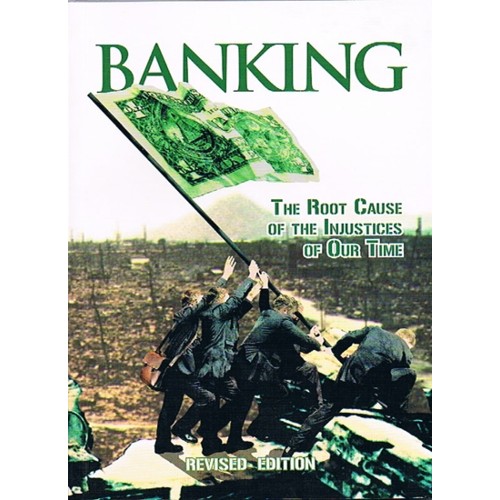
Banking: The Root Cause Of The Injustices Of Our Time (Revised Ed.)
The original 1987 Norwich seminar Usury: The Root Cause of the Injustices of Our Time, whose proceedings form the core of this work, had an extraordinary effect.
After the endless analyses and altercations of left and right to which we were accustomed, here was an argument that went to the core of the matter in one bound, and yet did so with a degree of scholarship and indeed erudition that was not cavalier. The result was electric. It was also well before its time.
Recently Viewed
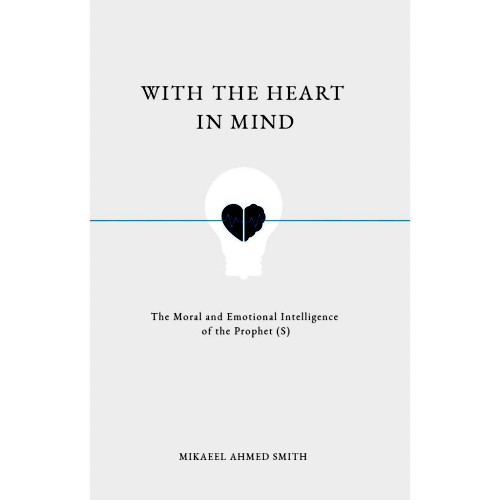
With the Heart in Mind (TERTIB)
The Moral and Emotional Intelligence of the Prophet s.a.w.
This work is an inquiry into the nature of the intellect and how classical Islamic theologians understood the nature and function of the intellect.
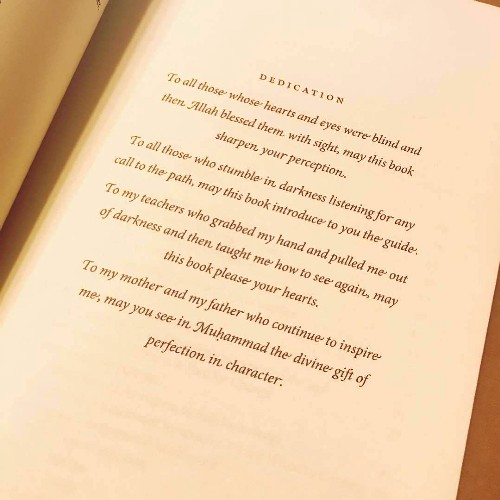
With the Heart in Mind asks readers to consider an alternative understanding of intelligence in which the primary function of the intellect is to know God and lead others to Him as well. The author suggests that by studying the Emotional Intelligence of the Prophet Muhammad (S), we improve the quality of our relationships with the people around us and we, like the Prophet (S), can become catalysts for change around us. Emotional Intelligence within the author’s model of intelligence is a tool by which the message of God is transferred to humanity. With the Heart in Mind reminds us that “To be loved by people is half of intelligence.”
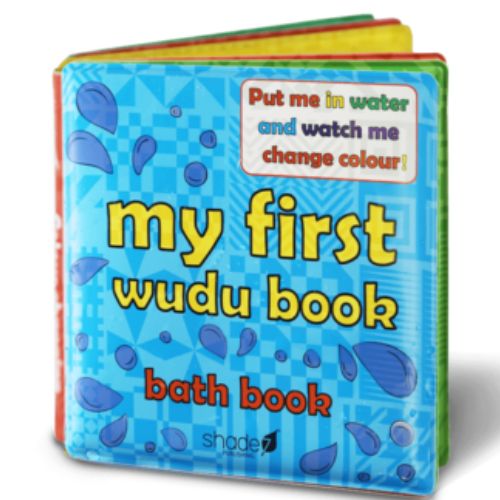
My First Wudu Book: Bath Book
‘My First Wudu Book’ is a colour-changing bath book, which aims to truly captivate and educate young hearts on the order of washing the basic body parts for wudu — the ritual washing performed by Muslims in preparation for their daily prayers.
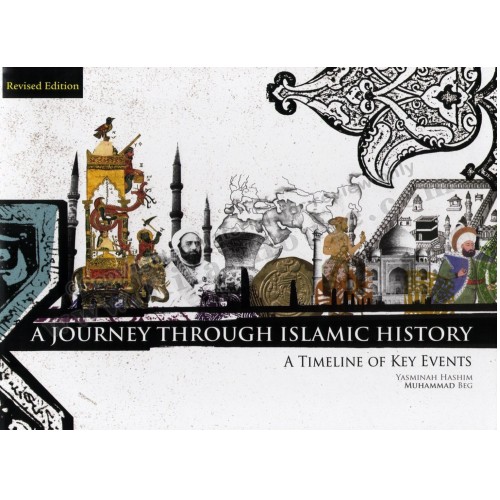
A Journey Through Islamic History (H/B)
A Journey Through Islamic History tells you all you ever wanted to know about the history of the Muslim world from the Prophet Muhammad to the Arab Spring in a short, accessible and lavishly-illustrated format. Suitable for students of all ages. Includes eight chronological essays covering 1500 years of history, with over 175 photographs and illustrations. A comprehensive timeline with over 500 entries, text boxes featuring important personalities, key events and major ideas, as well as several maps.


There are no reviews yet.