


| Weight | 0.08 kg |
|---|---|
| Product Type | Book |
| Author | |
| Pages | 57 |
| ISBN | 9960672204 |
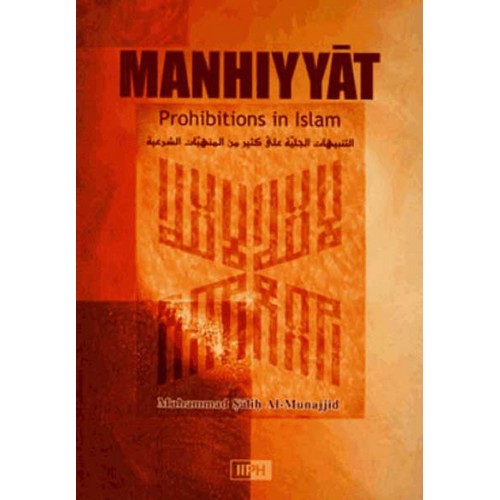
Manhiyyat Prohibitions in Islam (P/B) (IIPH)
RM11.00
Out of Stock
Highlights:
somdn_product_page
Compare
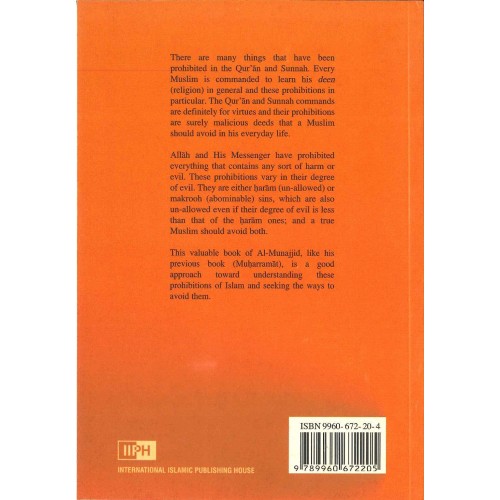
Whatever has been prohibited in the Qur’an and the Sunnah is for a good reason. Every Muslim is commanded to learn his or her religion, and being aware of these prohibitions is part of that essential knowledge. The Qur’an and the Sunnah enjoin virtuous behaviour, and any actions they prohibit are destructive deeds that a Muslim should avoid. In Prohibitions in Islam, Shaykh Muhammad Sâlih al-Munajjid explains that Allah Almighty and His Messenger (blessings and peace be upon him) have prohibited everything that contains any sort of harm or evil. These prohibitions vary in their degree of evil: they are either forbidden or detestable, and a practicing Muslim should avoid both kinds.
SKU: SJ81
Category: Special Offer
Additional information
Reviews (0)
Be the first to review “Manhiyyat Prohibitions in Islam (P/B) (IIPH)” Cancel reply
You must be logged in to post a review.
Related Products
Bayt al-Hikmah The House of Scientific Wisdom (IIPH)
Highlights:
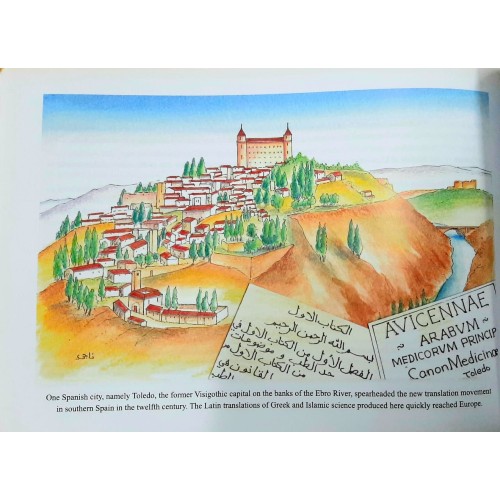
This book, authored by Luqman Nagy, is an introduction to the history and legacy of the great translation movement that began at the Bayt al-Hikmah in ninth century Abbasid Baghdad and culminated centuries later in Spain, with teams of Muslim, Christian and Jewish scholars translating works of Greek and Islamic science from Arabic into Latin. These translations became the first scientific textbooks to be used at many European universities. This wealth of knowledge that was made available in Latin helped initiate the Renaissance, or ‘rebirth’ of learning in the West.
RM54.00


Muharramat: Forbidden Matters Some People Take Lightly
5 ★
5 ★
1 Rating
5 ★
1
4 ★
0
3 ★
0
2 ★
0
1 ★
0
Highlights:
Some Muslims who are either ignorant or of weak faith still commit many acts which Allah never allowed. Ignorance is not an excuse for doing something wrong or illegal, hence it is important to make an effort to learn what these muharramât or forbidden acts are, in order to avoid ever committing them. The author, Shaykh Muhammad Sâlih al-Munajjid, explains many of the forbidden acts that have to do with calling on human beings and things other than Allah, worshipping the dead and circumambulating their graves, invoking prophets and the dead, magic, fortune-telling, believing in the power of astrologists and planets and other acts that go against the Islamic creed of monotheism (tawheed). As such, this book of prohibitions regarding beliefs and acts of worship is a helpful resource for Muslims, if they are really practicing Islam and want to avoid committing great sins.
RM11.00 – RM27.00Price range: RM11.00 through RM27.00
HardcoverPaperback
Clear
Muslim-Christian Interactions: Past, Present & Future (H/B)
Highlights:
In light of the past, with hope for the future,Muslim-Christian Interactions: Past, Present, and Future addresses a subject that is vital to the 21st century. It provides an in-depth study of Islam and Christianity, taking an analytical approach to their respective edicts while comparing and contrasting them. It offers an investigation of religious concepts with respect to logic and scientific knowledge, and considers the true role and mission of religious figures of both faiths. With a past full of oppression from leaders of both faiths, against their respective doctrines and principles, Muslim-Christian Interactions sorts out the truth of what these religions really stand for. It looks at the manner in which Muslims and Christians have interacted in the past and present, in order to draw lessons for the future.
Now more than ever, it is crucial for Muslims and Christians to seek a path of mutual understanding, allowing compassion for fellow human beings to prevail over divisive politics and views. In the wake of false propaganda against Islam, the author seeks to correct the misconceptions that abound regarding Islam and Muslims.
RM43.00
Fatawa-fatawa Tentang Wanita (H/B)
4 ★
4 ★
1 Rating
5 ★
0
4 ★
1
3 ★
0
2 ★
0
1 ★
0
Highlights:
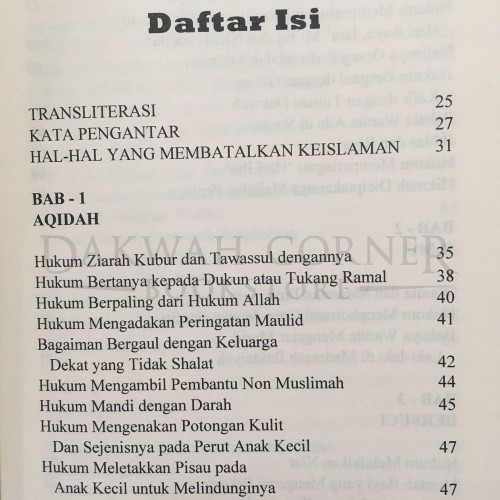
Buku ini merupakan kumpulan fatwa-fatwa pilihan yang berkaitan dengan masalah wanita, yang dihimpun dari fatwa-fatwa Syaikh Abdul Aziz bin Baz, Syaikh Muhammad al-Utsaimin, Syaikh Abdullah al-Jabrain, dan fatwa-fatwa Lajnah Da’imah lil-Ifta’. Buku ini penting dimiliki setiap muslimah, karena di dalam buku ini terdapat jawaban-jawaban atas persoalan-persoalan yang dihadapi atau dialami oleh wanita muslimah dalam kehidupannya, di mana banyak dari persoalan-persoalan tersebut yang tidak didapatkan jawabannya dalam buku-buku klasik.
This is the Indonesian translation of Fatawa: Rulings for Muslim Woman. Acquiring knowledge of Islam is incumbent upon every Muslim – male and female – in order to live one’s life according to the commands and recommendations of the Qur’an and the Sunnah of Allah’s Messenger (blessings and peace of Allah be upon him). Naturally, women have some specific issues that concern them and that are different than those that concern all Muslims or only men. In this book, these rulings, or fatâwa, have been compiled from the religious verdicts of well-known and respected Islamic scholars, both past and present — Shaykh ‘Abdul-‘Aziz ibn Baz, Shaykh Muhammad ibn ‘Uthaymeen, Shaykh Ibn Jibreen, and the Standing Committee for Scholarly Research and Issuing Fatwas (Saudi Arabia). The rulings are derived from the Qur’an and the Sunnah. The rulings were compiled in this book by Muhammad al-Musnid and translated into Indonesian/Malay by Uril Bahruddin. This book is a compendium of such rulings in a question-and-answer format, catering to the special needs of the Muslim woman. It is a concise and readily accessible reference, and an invaluable addition to the Muslim woman’s personal library.
RM45.00

Problems and Solutions (IIPH)
Highlights:
What should I do if I miss the fajr prayer? What are the consequences of excessive laughter? How should I deal with insinuating thoughts from Satan? How can I control my bad temper? What is so bad about staying up late night after night? Drawing on the great guidance of the Qur’an and the Sunnah, Shaykh Muhammad Sâlih al-Munajjid answers these questions and more, giving informative explanations and practical solutions to help you improve in your worship and in your performance of everyday activities.
The Purity of Muslim (P/B)
Highlights:
According to a well-known hadith, cleanliness and purity are half of the faith. It is obligatory for a Muslim to be clean and in a state of purity in order to offer formal prayer and recite the Quran by way of ablution, a ritual shower, or dry ablution. Purity and cleanliness encompass both physical and spiritual aspects. Physical impurities can be removed by clean, pure water or dry, clean earth or stone, and this is a beginning step for spiritual cleanliness. In the Purity of the Muslim, Saeed al-Qahtani explains in a clear and comprehensive manner the types of various impurities and the ways to attain purity and cleanliness according to the teachings of the Quran and of the final prophet, Muhammad (blessings and peace of Allah be upon him).
RM15.00
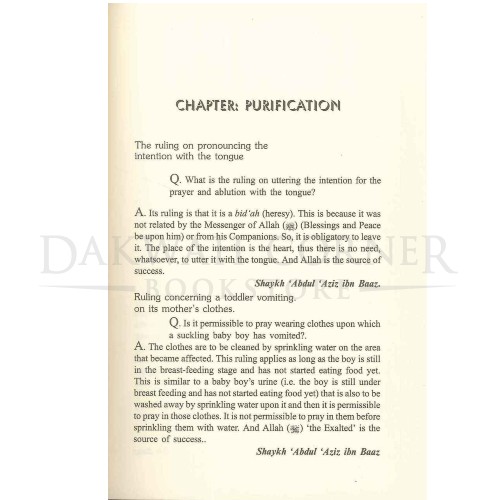
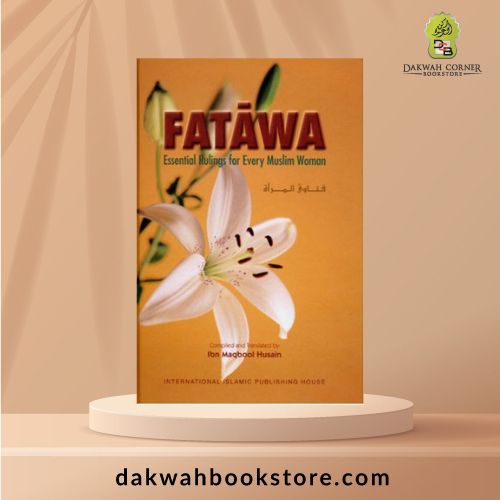
Fatawa Essential Rulings For Every Muslim Woman (P/B)
Highlights:
This book is an obligation to every Muslim, both male and female, to attain the knowledge of Islam that is necessary for them in their daily lives. There are many books available on various aspects of Islam in English language, but most of them deal with aspects of general nature.
There are many rulings in Islam that are concerned with Muslim women only. It is the job of every Muslim woman to obtain adequate knowledge of what is addressed to her with respect to her religion.
All these specific issues relating to Muslim women, have been compiled in the book which is in-between your hands, in the form of questions and answers. Each of the questions presented in it, was addressed to world renowned scholars, both of our time and those who have passed away. In turn, the scholars answered them in simple language and concise manner, so that Muslims women may increase their knowledge of Islam and, eventually, become close to their Creator.
RM38.00
Man & The Universe An Islamic Perspective – Awakening
Highlights:
The author presents a penetrating diagnosis of the illnesses of humanity today, together with a fascinating overview of the Islamic metaphysics, unearthing its spiritual and moral values and its timeless relevance and applicability. Man and universe is a compelling and urgently needed piece of writing about what we human beings are, where we stand, and what we can do about it.
RM65.00
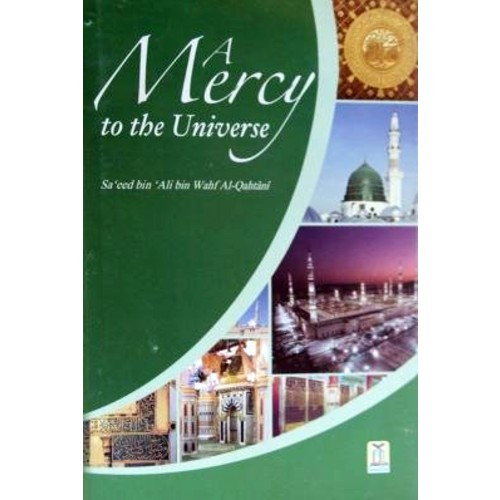
A Mercy to the Universe
Highlights:
Mercy is clemency and forbearance; mercy is the disposition to forgive or show compassion; mercy means a favor or a blessing; mercy further denotes the qualities of kindness, sympathy, generosity, and beneficence. Suffice is to say that all of these qualities were present in abundance in the character of the Prophet Muhammad (May Allah have his peace and blessings on him).
He was a mercy not just to believers, but to disbelievers as well, for he would invite them to come out of darkness and into the light of true guidance. He is a favor and blessing for mankind, not just the Arabs, the people among whom he was sent, but for people of all races and colors. His staunchest enemies became his closest followers when the cloud of blind prejudice was removed from their sight and when they were able, for the very first time, to see with clarity the true nature of the Prophet’s character.
This book deals with many of the qualities that the Prophet possessed that made him the mercy to everyone. It starts with His perfect lineage, His noble upbringing, and his fully dedicated worship. This book then gives many of the qualities of the Prophet including his generosity, humbleness, bravery, patience, and leadership to name a few. Each chapter includes examples from the life of the Prophet on how he was the perfect living example of that quality. The book ends with the perfection of life of the Prophet with his farewell sermon and even his noble death where he demonstrated some of those qualities as well.
RM46.00
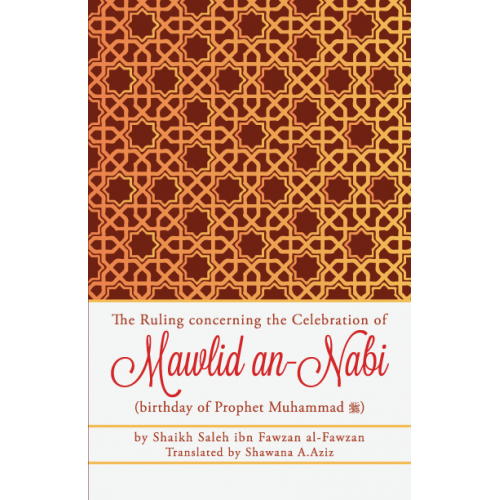
The Ruling Concerning the Celebration of Mawlid an-Nabi (2nd edition)
Highlights:
In this book, is an explicit CLARIFICATION of the MAJOR DOUBTS raised by the proponents of Mawlid an-Nabi, including:
- Mawlid an-Nabi is honoring the Prophet.
- Mawlid an-Nabi is celebrated by a large number of the people in many towns and cities.
- Commemorating Mawlid an-Nabi renews the memories of the Prophet.
- Celebration of Mawlid an-Nabi is cut of love for the Prophet and an expression of ones love, which is permissible.
- Mawlid an-Nabi is a Bidah Husna (good innovation) because it is a means of showing gratitude towards Allah for sending the Prophet.
- The sayings of Umar, ‘What a good Bidah is this?’
Additional quotes by Shaikh Muhammad ibn Ibraheem Aal-Shaikh have been added to further clarify these issues. The booklet also as 2 valuable appendixes:
Appendix 1: Explanation of the Hadeeth,”He, who established/initiates a Sunnah Husna in Islam.” in the word o Shaikh Saleh al-Fawzan and Shaikh Muhammad ibn al-Uthaimeen (rahimahullah)
Appendix 2: A Dialogue between Shaikh al-Albani (rahimahullah) and a proponent of Mawlid.
RM5.00 RM7.00
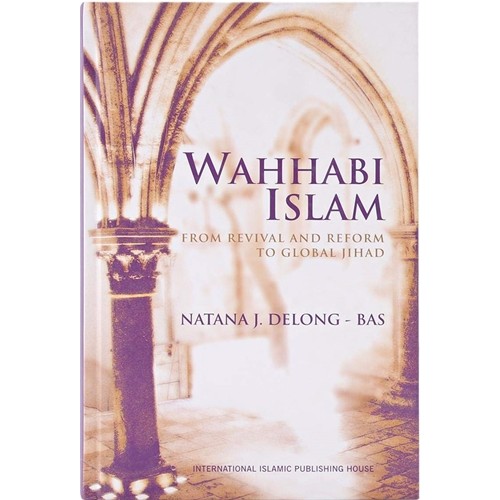
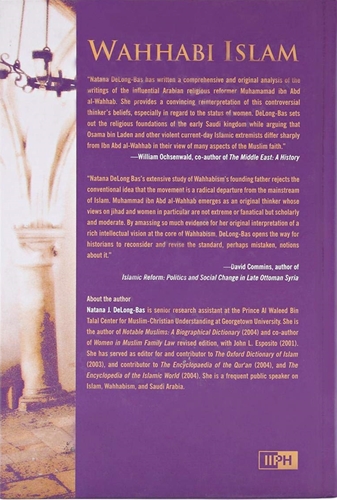
Wahhabi Islam From Revival And Reform To Global Jihad
Highlights:
Until September 11, 2001 few Westerners had ever heard of “Wahhabism.” Now most of us recognize the word as describing an austere and puritanical type of Islam, mentioned frequently in connection with Osama bin Laden and Saudi Arabia and often named as the inspiration behind the 9/11 terror attacks. The word “Wahhabi” stems from the name of the founder of this system of thought, Muhammad Ibn Abd al-Wahhab (1702-1791), companion and religious adviser to Muhammad Ibn Saud, founder of the House of Saud. In this book Natana DeLong-Bas offers an in-depth study of the written works of al-Wahhab. She focuses on four areas: theology, legal theory, proselytizing through education and jihad, and law on women. Through a close reading of al-Wahhab’s texts she demonstrates that many aspects of 20th- and 21st-century Wahhabi extremism do not have their origins in his writings. Examples of this extremism include the emphasis on jihad, martyrdom and militancy, and misogyny. The strict division of the world into dar al-Islam and dar al-kufr, according to which only Wahhabi adherents are considered to be true Muslims and all others are non-Muslims who must be fought, is entirely absent from al-Wahhab’s work. Instead, argues DeLong-Bas, all of these themes were only added to Wahhabi teachings in the 19th century following armed engagement with the Ottoman Empire. DeLong-Bas’s study fills an enormous gap in the literature about Wahhabism by returning to the original writings of the founder of the movement. She debunks the common journalistic portrayal of Muhammad Ibn Abd al-Wahhab as an illiterate, rural bumpkin with no scholarly formation. Her revisionist reading of al-Wahhab’s thought will be controversial but impossible to ignore. The book will be essential reading for students and scholars of Islam as well as for those interested in the background of this dangerous modern ideology.
RM91.00
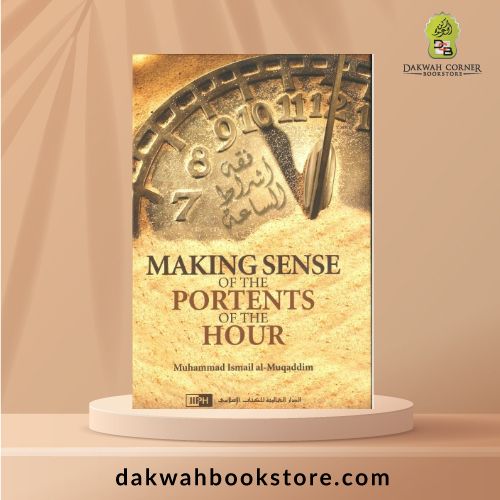
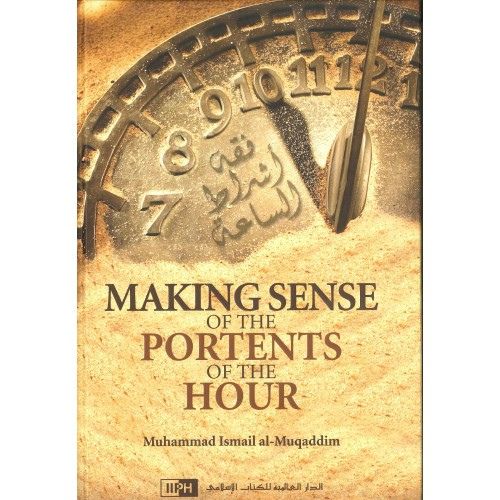
Making Sense of the Portents of the Hour (H/B) – IIPH
Highlights:
Are things inevitably getting worse and worse, year after year, century after century, with no way to alter the course of events? Is the Muslim Ummah doomed to experience failure and humiliation until the Mahdi arrives? Will he restore its former glory and bring victory over all its enemies? Are all our efforts to support Islam destined to end in failure? Instead of taking action, should we simply wait for the return of Jesus (peace be upon him) towards the end of time? Is the Dajjâl (Antichrist) alive today? Does he have secret connections with some prominent world figures? Is the hour very close? Could it come upon us at any moment, on any day? If so, what is the point of striving to improve our situation?
Using evidence from the Qur’an and the Sunnah, the author explains the true Islamic teachings on the portents of the hour, clearing up some of the misconceptions about them and giving advice on how Muslims should respond to them. The book is an interesting and informative read that will leave the reader empowered with knowledge.
RM40.00 RM62.00
Recently Viewed

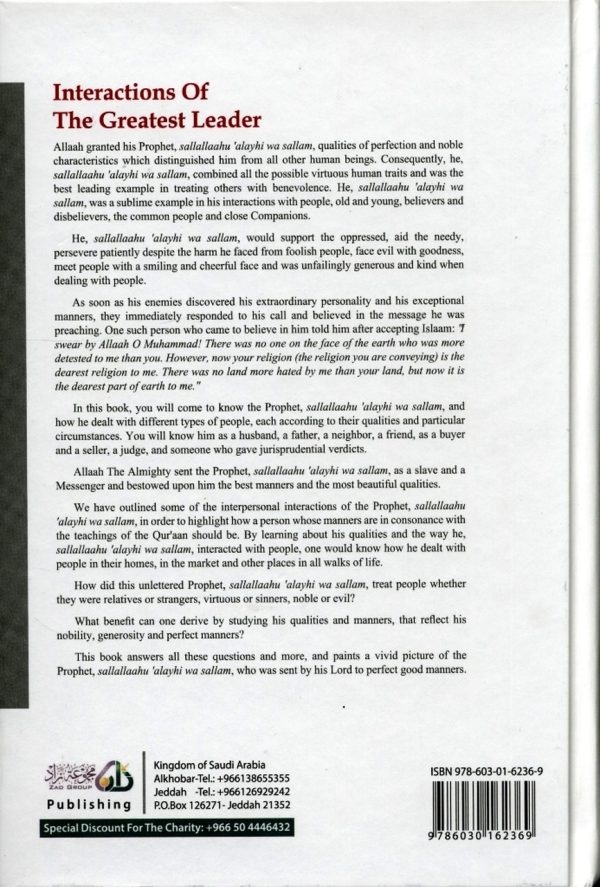
Interactions Of The Greatest Leader (H/B)
Highlights:
Allaah granted his Prophet, sallallaahu ‘alayhi wa sallam, qualities of perfection and noble characteristics which distinguished him from all other human beings. Consequently, he, sallallaahu ‘alayhi wa sallam, combined all the possible virtuous human traits and was the best leading example in treating others with benevolence. He, sallallaahu ‘alayhi wa sallam, was a sublime example in his interactions with people, old and young, believers and disbelievers, the common people and close Companions. He, sallallaahu ‘alayhi wa sallam, would support the oppressed, aid the needy, persevere patiently despite the harm he faced from foolish people, face evil with goodness, meet people with a smiling and cheerful face and was unfailingly generous and kind when dealing with people.
As soon as his enemies discovered his extraordinary personality and his exceptional manners, they immediately responded to his call and believed in the message he was preaching. One such person who came to believe in him told him after accepting Islaam: ” I swear by Allaah O Muhammad! There was no one on the face of the earth who was more detested to me than you. However, now your religion (the religion you are conveying) is the dearest religion to me. There was no land more hated by me than your land, but now it is the dearest part of earth to me.” In this book, you will come to know the Prophet, sallallaahu ‘alayhi wa sallam, and how he dealt with different types of people, each according to their qualities and particular circumstances. You will know him as a husband, a father, a neighbor, a friend, as a buyer and a seller, a judge, and someone who gave jurisprudential verdicts. Allaah The Almighty sent the Prophet, sallallaahu ‘alayhi wa sallam, as a slave and a Messenger and bestowed upon him the best manners and the most beautiful qualities. We have outlined some of the interpersonal interactions of the Prophet, sallallaahu ‘alayhi wa sallam, in order to highlight how a person whose manners are in consonance with the teachings of the Qur’aan should be.
By learning about his qualities and the way he, sallallaahu ‘alayhi wa sallam, interacted with people, one would know how he dealt with people in their homes, in the market and other places in all walks of life. How did this unlettered Prophet, sallallaahu ‘alayhi wa sallam, treat people whether they were relatives or strangers, virtuous or sinners, noble or evil? What benefit can one derive by studying his qualities and manners, that reflect his nobility, generosity and perfect manners? This book answers all these questions and more, and paints a vivid picture of the Prophet, sallallaahu ‘alayhi wa sallam, who was sent by his Lord to perfect good manners.
RM95.00
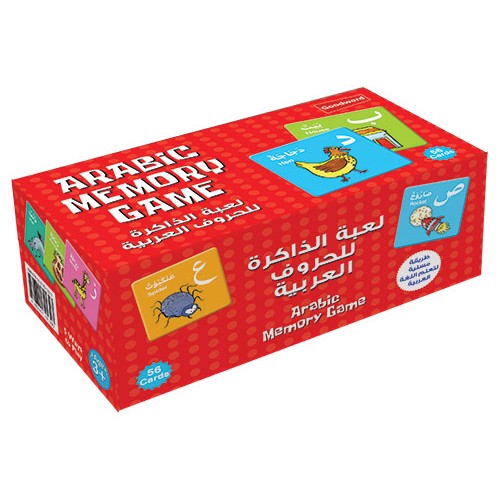
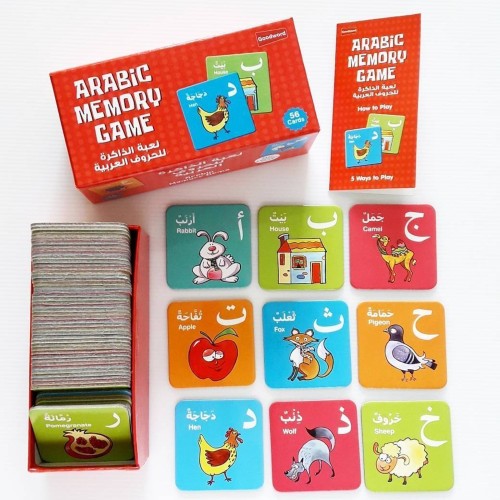
[GM] Arabic Memory Game (لعبة الذاكرة الحروف العربية)
Highlights:
Enjoy the Arabic letters. Enhance the skills of recognizing letters, and Images
- 56 Flash Cards
- 5 Ways to Play
- A Fun Way to Learn
- 3-5 Years
RM40.00
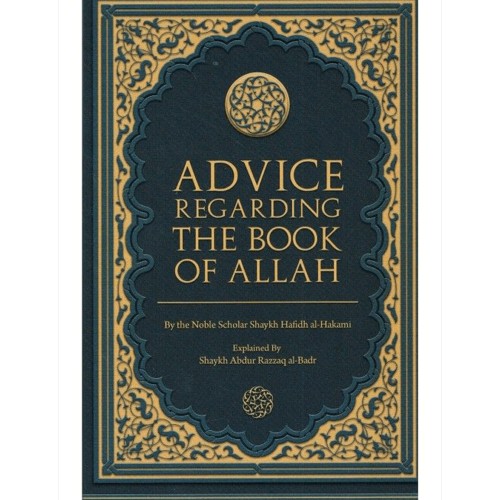
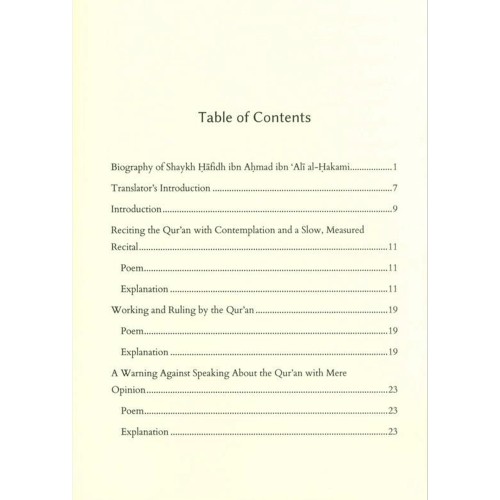
Advice Regarding The Book of Allah (Authentic Statements)
5 ★
5 ★
1 Rating
5 ★
1
4 ★
0
3 ★
0
2 ★
0
1 ★
0
Highlights:
Various important topics are covered in this book; such as the miracle of the Qur’an, unclear verses in the Qur’an, healing from the Qur’an, contemplation of the Qur’an, the jinn who heard the Qur’an, the failure of those who tried to emulate the Qur’an, and many more. Hasan al-Basri said, “A person will say: ‘By Allah, I have recited the entire Qur’an and I have not neglected a single letter’; while in reality he has neglected the entire Qur’an. The Qur’an cannot be seen in his manners or his actions.”
RM60.00
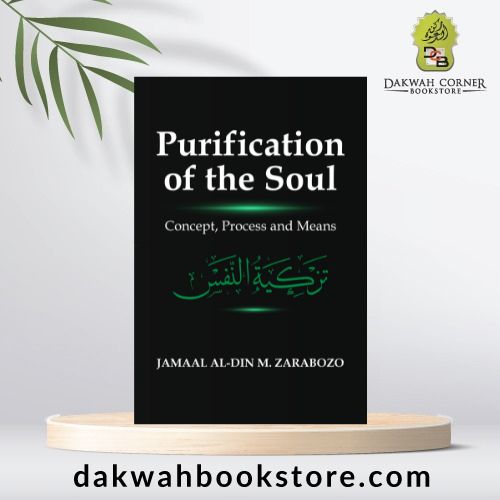
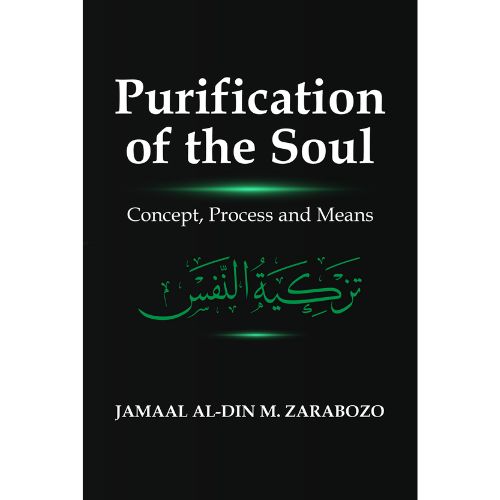
Purification of the Soul – DCB
Highlights:
For a number of reasons, this is a very important time to be writing a book of this nature. First, the concept of purification of the soul as a whole is and always will be central to the message of Islam and to the welfare of humans, both in this life and the Hereafter. Indeed, it was a main mission of the messengers and prophets themselves.
RM80.00


A Guide to Salah (Prayer) (P/B)
5 ★
5 ★
1 Rating
5 ★
1
4 ★
0
3 ★
0
2 ★
0
1 ★
0
Highlights:
This book is the result of direct research into the Sunnah of Prophet Muhammad saw and makes numerous references to the original sources. It contains all the essential details of salah without being too bulky or complicated, thus making it an ideal reference book either at home or while travelling.
A clear and concise explanation on how to pray. Also gives a detailed description of the preliminaries to salah, and different types of salah, with easy-to-follow illustrations.
RM16.00
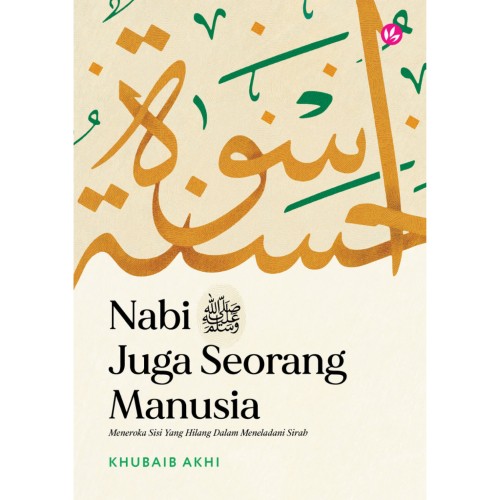

Nabi ﷺ Juga Seorang Manusia
Highlights:
Meneroka Sisi Yang Hilang Dalam Meneladani Sirah
Sisi manusiawi Nabi SAW yang selalunya tersembunyi; bagaimana jika kita berkenalan semula dengan Baginda SAW—sebagai seorang manusia?
Baginda SAW insan maksum, namun turut memiliki fitrah semula jadi seperti kita.
RM35.00
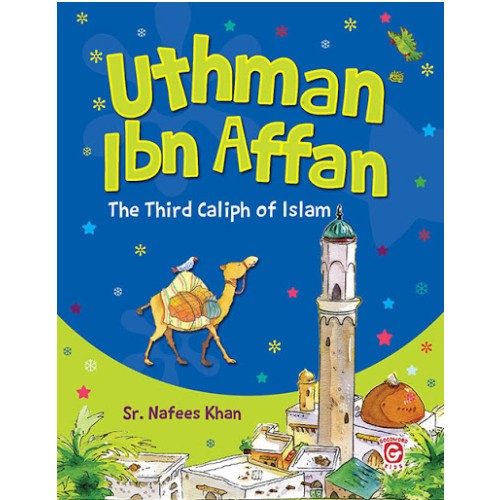
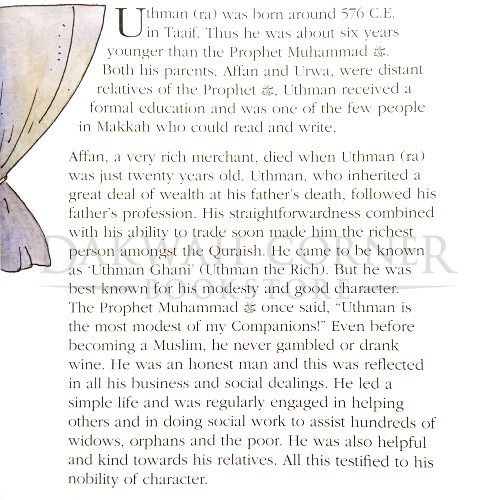
Uthman Ibn Affan: The Third Caliph of Islam
Highlights:
This book is about the life and teachings of Uthman Ibn Affan (may Allah be pleased with Him), TheThird Caliph of Islam.
RM15.00
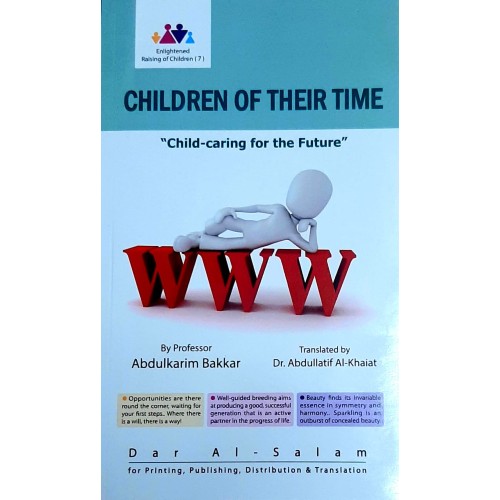
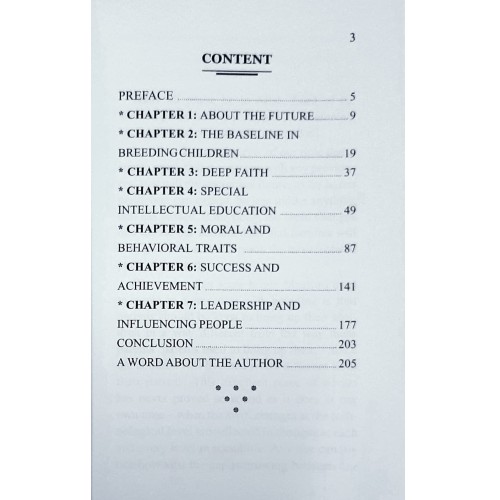
Children Of Their Time
Highlights:
Our time contrasts with any previous era, as changes go faster and faster; and the future will be more unlike anything that has passed. Our children will live in a world essentially different from ours! The swift changes at the technological level are reflected in changes at each level in life.
The work-market is likewise witnessing such unexpected changes that any young person will need to receive innovative and creative ways to just find a suitable foothold in it. And this is what I try to provide in this book, for helping any educator or interested person.
RM30.00
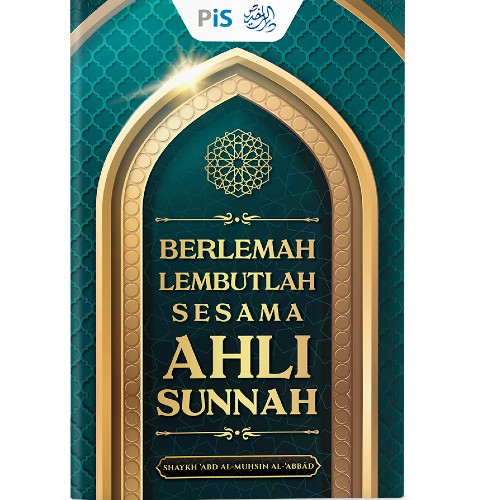
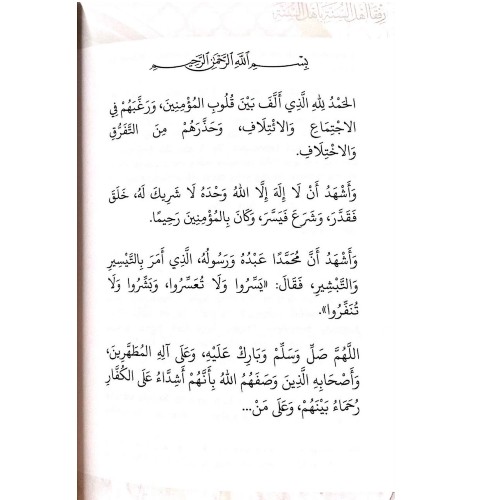
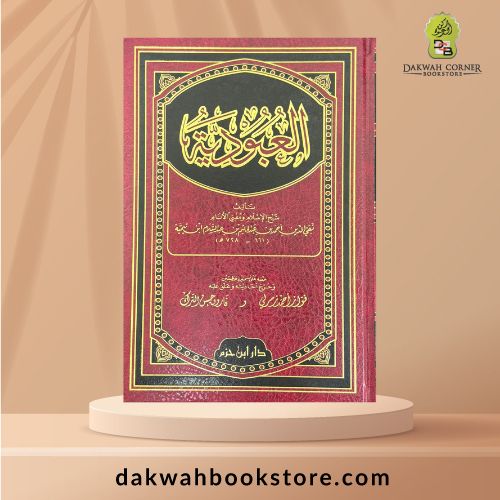
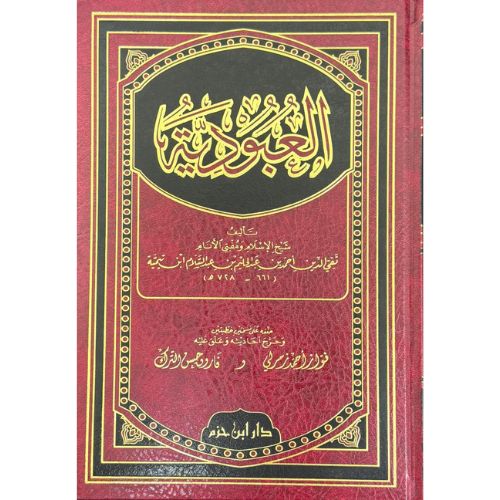
[AAC] Al ‘Ubudiah / العبودية
Highlights:
بذة عن الكتاب
يُعد كتاب العبودية من الكتب العقدية والروحية المهمة في التراث الإسلامي. يوضح فيه ابن تيمية معنى العبودية الحقيقية لله، ويبيّن أن العبادة ليست مقتصرة على الشعائر الظاهرة مثل الصلاة والصيام فقط، بل تشمل كل ما يحبه الله ويرضاه من الأقوال والأعمال الظاهرة والباطنة.
أ
RM55.00
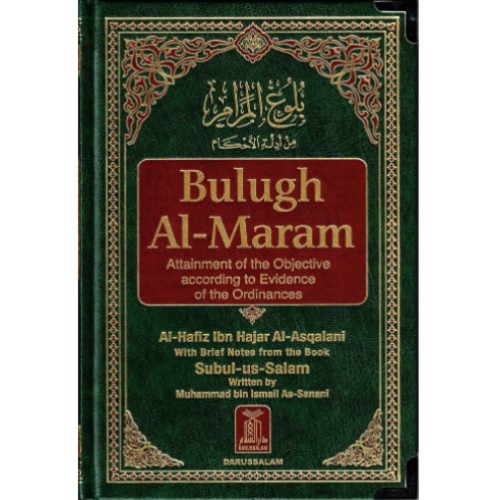
Bulugh Al-Maram (Attainment of the Objective)
Highlights:
Bulugh Al-Maram is based upon the Ahadith of our Prophet which have been the sources of Islamic Jurisprudence. Al-Hafiz Ibn Hajar Al-Asqalani (Hijrah 777-853) has recorded the true significance of the Ahadith and their origins & also made a comparison of the versions, if the sources are more than one
RM80.00
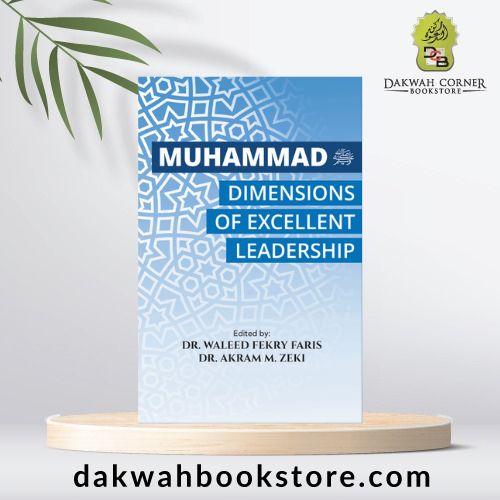
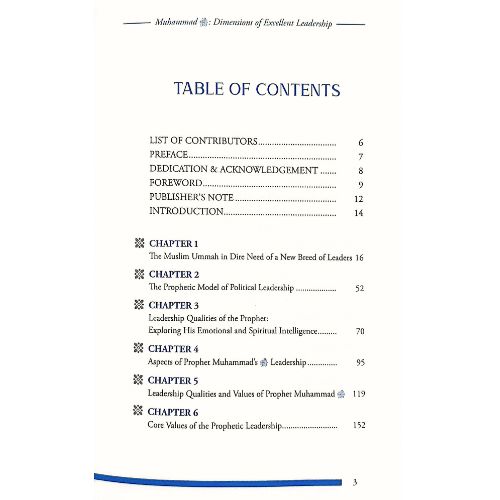
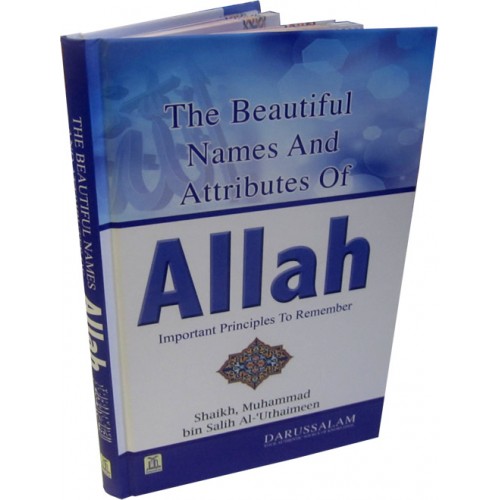
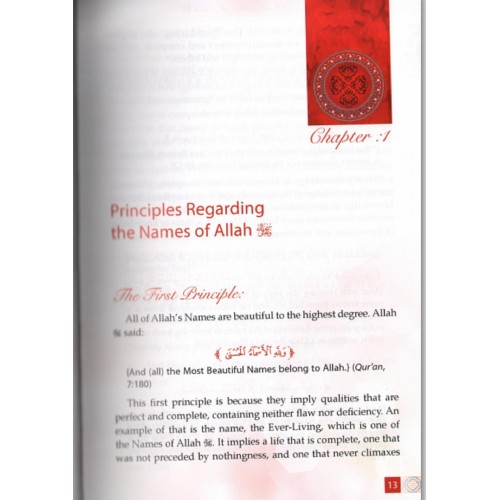
The Beautiful Names and Attributes of Allah- Important Principles To Remember
Highlights:
The pristine beliefs of the early Muslims are preserved in this vitally important masterpiece written by one of the most outstanding scholars of our time, Shaykh Muhammad Ibn Saalih al Uthaymeen. This new revised edition by Dar-us-Salam has been printed in full color with hardback bounding for an excellent presentation.
Seven clear principles and their evidences from the Book and the Sunnah guide the reader through the confusion and false claims of the ignorant to the clarity of belief in Allah’s Names accomplished by the righteous early scholars of Islam. Principle 6 contains the shaikh’s compilation of the ninety-nine (99) names of Allah. The names have been compiled into 2 categories: first from the Book of Allah & second from the Sunnah of the Prophet (S). All the names have been printed in Arabic with transliteration and English translation. Each name is printed beautifully in a square box with 6 boxes on a page.
Seven more principles and their evidences follow, giving the reader firm understanding of the correct beliefs about Allah’s Attributes. Four more principles outline the correct approach in studying the related proofs and evidences.
All of this leads the reader into an enthralling series of refutations of the false notions of the Ash’aree sect, a text-by-text breakdown of how and why they went wrong in a careful and precise study of fifteen texts from the Book and the Sunnah. The beliefs of the Ash’aree sect are destroyed and the origins of their deviation are exposed for all to see.
‘A magnificent book a clarification of the creed of the righteous Salaf concerning the Names and Attributes great principles and collective benefits concerning the topic’ – Shaykh Ibn Baaz
RM50.00
There are no reviews yet.