

| Weight | 0.5 kg |
|---|---|
| Dimensions | 26 × 18 × 2 cm |
| Product Type | Book |
| Author | |
| Publisher | Al Hidaayah UK |
| ISBN | 9781898649786 |
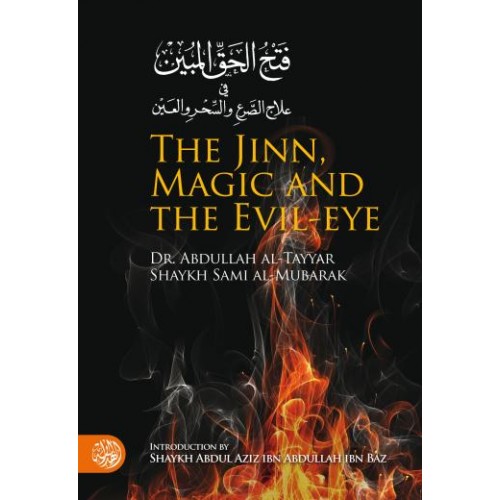
The Jinn, Magic and the Evil eye (Al-Hidaayah)
RM69.00
Hurry up, Only 1 left.
Additional information
Reviews (0)
Be the first to review “The Jinn, Magic and the Evil eye (Al-Hidaayah)” Cancel reply
You must be logged in to post a review.
Related Products

Lawful Wives or Unlawful Girlfriends
Highlights:
In the Name of Allah, the Most Beneficent, the Most Merciful
Allah (SWT) says: (If you fear that you will not be able to deal justly with the orphans, marry women of your choice, two or three or four; but if you fear that you shall not be able to deal justly (with them), then only one or (the captives or the slaves) that your right hands possess. That will be more suitable to prevent you from doing injustice) (An-Nisa’: 3).
Praise be to Allah (SWT) who has prescribed for His Servants a religion (Islam) that is beneficial to them in this world and the Hereafter, and Peace and Blessing be upon His Messengers and Prophets who were guided by His Guidance and conveyed His Religion. The last and seal of His Messengers was Muhammad Ibn Abdillah (SAW). He (SAW) was the best to advise his Ummah and convey the True Message, by words, deeds and his character. He (SAW) was the best model and example for the believers.
RM42.00



Essential Lessons for Every Muslim
Highlights:
This work is a translation of Shaikh Abdul Aziz bin Baz’s book ‘Ad-Duroos Al-Muhimmah li-Ammatil-Ummah.’ It contains concise lessons that explain the fundamental teachings of Islam. This book covers a wide range of basic information such as the meaning of Tawhid (Islamic monotheism), the categories and implications of Shirk (polytheism), the regulations of prayer, and Islamic morals and manners. As the title implies, these are truly essential lessons for everyone who is concerned with the correctness of his Islamic beliefs and acts of worship.
RM15.00

Ibn Taymeeyah’s Essay on the Jinn (P/B) ASN
Highlights:
Dr. Abu Ameenah Bilal Philips has rendered Ibn Taymiyah’s treatise, Eedaah-ud-Dalaalah fee ‘Umoom-ir-Risaalah, from volume 19 of Majmoo‘-ul-Fataawa into very readable English. This abridged and annotated translation is significant in that it is perhaps the first book available in English exclusively on the topic of spirit-possession and exorcism in Islam.
Ahmad ibn ‘Abdul-Haleem ibn Taymeeyah was bron in the town of Harran [near Edessa, in what was once Northern Iraq, but is now called Orfa and is a part of Turkey.], in the year 1263 CE. His father was a leading scholar of the Hanbalite school of Islamic law and so was his grandfather, who authored Muntaqaa al-Akhbaar, the text of ash-Shawkaanee’s Hadeeth classic Nayl al-Awtaar.
Ibn Taymeeyah mastered the various disciplines of Islamic study at an early age and read extensively the books of the various sects and religions in existence at that time. Much of his time and effort was spend defending the orthodox Islamic position against a tidal wave of deviation which had swept over the Muslim nation. Consequently, he faced many difficulties from both the prominent sectarian scholars of his time and from the authorities who supported them. His clashes with them led to his imprisonment on numerous occasions. Ibn Taymeeyah also fought, not only against internal enemies of Islaam, but also against its external enemies by both his Fatwaas (Islamic legal rulings) and his physical participation in battles. His ruling allowing the taking up arms against groups which recognized the Shahaadataan (declaration of faith) but refused to uphold some aspects of the fundamental principles of Islaam, greatly affected the resistance movement against the Tartars who had declared their acceptance of Islaam but did not rule according to divine law.
During these struggles he wrote countless books and treatises demonstrating his extensive reading and knowledge, not only of the positions of the early scholars, but also those of the legal and theological schools which had subsequently evolved. Ibn Taymeeyah also had a major effect on the open-minded schoars of his day, most of whom were from the Shaafi’ite school of law. Among the most famous of his students were IBN KATHEER, ADH-DHAHABEE and IBN AL-QAYYIM. The author died in 1328 while in prison in Damascus for his Fatwaa against undertaking journeys to visit the graves of saints [Ibn Taymeeyah’s ruling was based on the authentic statement reported by Abu Hurayrah wherein the Prophet Muhammad (sallallaahu alayhi wasallam) said, “Do not undertake a journey except to three masjids; this masjid of mine, Masjid al-Haraam (Makkah) and Masjid al-Aqsaa (Bayt al-Maqdis).” Collected by Al-Bukhaaree and Muslim]. His Fatwaa had been distorted by his enemies to say that he forbade visiting the Prophet Muhammad’s (sallallaahu alayhi wasallam) grave.
RM33.00

Philanthropy and Social Justice in Islam (P/B)
Highlights:
This book analyses the principles and practices of philanthropy and distributive justice in Islam. It argues, with analyses and examples, that the accomplishment of purposive philanthropy, as commanded by the fundamental tenets of Islam, through the professionalization and rationalization of zakat management, modernization of awaqaf, etc. has the potential of optimizing justice in Muslim societies. The work draws on the Quran, Hadithe, other authentic literature, and also on official documents and publications of management agencies dealing with philanthropy in different Muslim countries/societies. The analyses are documented enough to be used as a text for the study of philanthropy in Islam in tertiary institutions nonetheless are simple enough to draw general readership and to be used by non-profit and international organizations worldwide in order to order to understand the principles and issues of philanthropy and distributive justice in Muslim societies.
RM40.00

Prophet Muhammad: A Blessing for Mankind
Highlights:
Prophet Muhammad (blessings and peace of Allah be upon him) and the lessons he taught us from the continued hardships he underwent in every stage of his life are a real blessing for humankind. Being an orphan child made him compassionate to widows and orphans as well as to the poor. His multiple marriages strengthened the ties of kinship amongst the different tribes, dissolving long-standing enmity. His message and prophethood were challenged by the polytheistic society in Makkah, forcing him and his few followers to emigrate to Madinah. Despite his illiteracy and the struggles he faced, he conveyed Allah’s Book, the Noble Qur’an, to all humanity, teaching them the values and principles that are presently adopted by billions of Muslims throughout the world. In the Qur’an, Allah, the Almighty addresses the Prophet (blessings and peace of Allah be upon him), saying: {We have sent you only as a mercy to the worlds.} (Qur’an 21: 107)
RM8.00 RM9.00

Dream Interpretation According to the Qur’an and Sunnah (P/B)
Highlights:
Separates the authentic Islamic teachings on dream interpretation from the myths, superstitions and fabrications being circulated on the subject. It also provides a guide for dream interpretation according to references found in the Quran and authentic hadeeths.
Since the English publication of Muhammad Al-Akili’s 508 page work entitled, Ibn Seerin’s Dictionary of Dreams: According to Islamic Inner Traditions in 1992, followed shortly thereafter by Dreams and Interpretations by Ibn Seereen, there has been an explosion of dream interpretation and interpreters among English-speaking Muslim communities in the West. On the other hand, dream interpretation has been a long established tradition in the Muslim East. However, it has become so mixed up with superstition, myths and fortunetelling, that most educated Muslims shun this area. The fact of the matter is that dream interpretation is mentioned in the Quran and was regularly practised by the Prophet (pbuh), himself. Consequently, there is a real need to understand this subject, especially, considering that humans spend about a third of their lives sleeping.
RM16.50

In Search of God (P/B)
Highlights:
Some thinkers has said, ‘A smattering of knowledge turns people away from God. Grater knowledge brings them back to Him’. The author concludes in this book by examining various theories that the choice humanity have is not between the universe with God and the universe with God and the universe without God. The real option is between the universe with God and no universe at all. Therefore humanity is compelled to opt for the proposition the universe with God. Hence it is logical to say I exist, therefore, God exists.
RM11.00


A Guide to Salah (Prayer) (P/B)
5 ★
5 ★
1 Rating
5 ★
1
4 ★
0
3 ★
0
2 ★
0
1 ★
0
Highlights:
This book is the result of direct research into the Sunnah of Prophet Muhammad saw and makes numerous references to the original sources. It contains all the essential details of salah without being too bulky or complicated, thus making it an ideal reference book either at home or while travelling.
A clear and concise explanation on how to pray. Also gives a detailed description of the preliminaries to salah, and different types of salah, with easy-to-follow illustrations.
RM16.00

Guarding The Tongue (P/B)
Highlights:
How many people have earned the wrath of Allah as a result of misuse of their tongues? How many injuries that may never heal have been inflicted throughtt the careless slips of the tongue? The Messenger of Allah said:
“Indeed, the servant will speak words that are pleasing to Allah, due to which he will he given a condition in which Allah will raise him many levels. And indeed, the servant will speak words that are displeasing to Allah, due to which he will not he given a good condition, but (instead) be thrown into the Hellfire.”(Bukhari)
This book highlights those sins that seem so light on the tongue yet so grave on the scale and offers practical advice on how to keep the tongue in check.
RM21.00


Weakness of Faith (IIPH)
5 ★
5 ★
1 Rating
5 ★
1
4 ★
0
3 ★
0
2 ★
0
1 ★
0
Highlights:
The phenomenon of weak faith has become very widespread among Muslims, and many people complain about the hardness of their hearts. So often we hear the words, “I feel hardness in my heart,” “I do not find any joy in worship,” “I feel that my faith has hit rock bottom,” “Reading Qur’aan does not move me,” “I fall into sin so easily.” The effects of this affliction can be seen in many people, and this problem is the cause of every disaster and adversity.
One of the most important principles which must be understood in order to treat the problem of weak faith is that faith increases and decreases, or waxes and wanes. This is one of the basic principles of the ‘aqeedah of Ahl al-Sunnah wa’l-Jamaa’ah, who say that faith is something to be spoken in words, to be believed in in the heart, and to be put into action. Faith increases with obedience and decreases with disobedience.
‘… that they may grow more in Faith along with their (present) Faith…’ [al-Fath 48:4]
‘… Which of you has had his faith increased by it? …'[al-Tawbah 9:124]. aari, Fath, 1/51).
RM13.00 – RM30.00Price range: RM13.00 through RM30.00
HardcoverPaperback
Clear

When Wings Expand (P/B)
Highlights:
Writing on the pages of her journal, Nur, a teenage girl in Canada, charts the onset and advance of her mother’s cancer. Nur watches her mother’s body begin to shrink and her mood begin to darken. And when family and friends begin to encroach, Nur must face the prospect of her mother’s looming death.
RM40.00
Recently Viewed
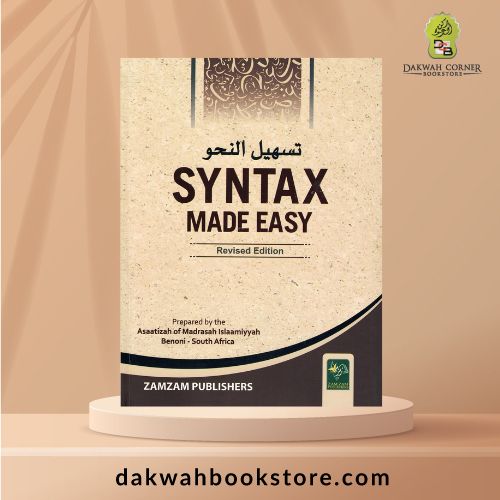
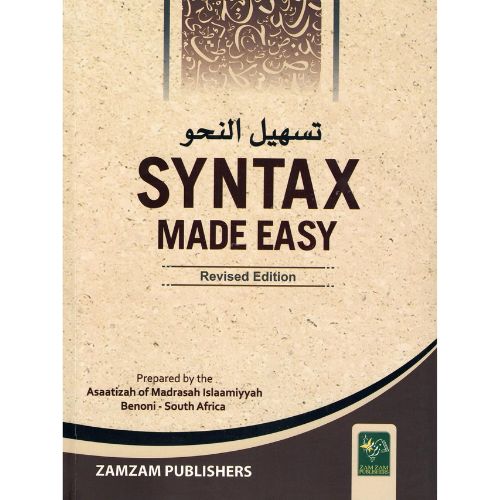
[AR] Syntax Made Easy
Highlights:
An Arabic Grammar primer based on Ilm-un-Nahw. Syntax Made Easy is an expanded English translation of the Arabic Grammar work, ‘Ilm al-Nahw – a standard textbook.
RM25.00
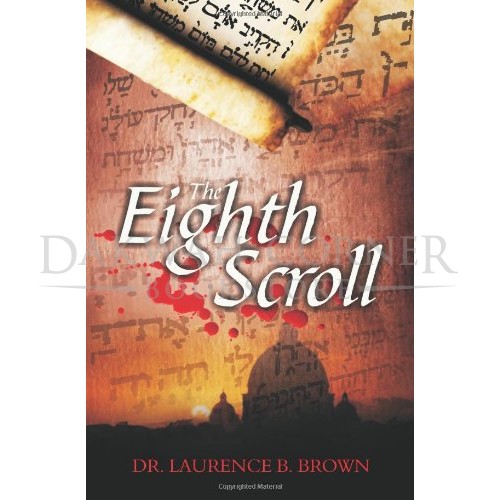
The Eighth Scroll
Highlights:
Stirring the flames of age-old controversies, The Eighth Scroll by Laurence B. Brown draws on the three Abrahamic faiths of Judaism, Christianity, and Islam to create an unbelievably dynamic and powerful story.
RM75.00

Treatment of Magic, Evil Eye & Satan’s Touch (P/B)
Highlights:
A detailed treatise on the authentic treatments for afflictions of magic, evil eye and possession based on the Islamic teachings of the Qur’an and Sunnah of Muhammad.
RM65.00
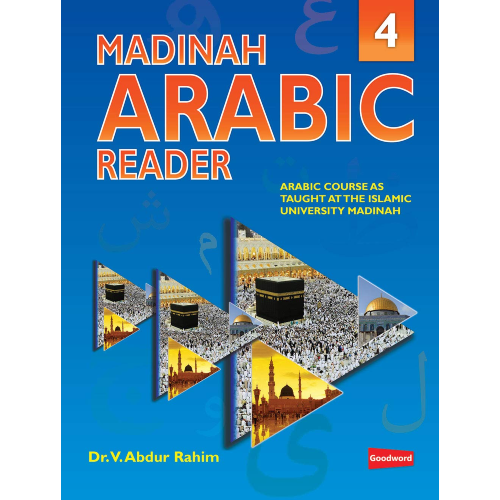
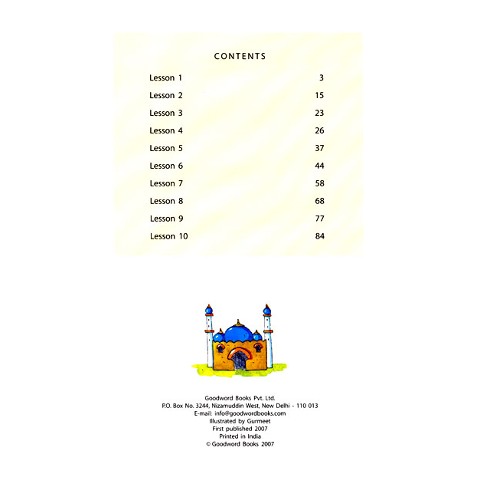
Madinah Arabic Reader (Book 4)
Highlights:
Professor Abdur Rahim, Director of the Translation Centre of the King Fahd Quran Printing Complex and former Professor of Arabic at the Islamic University of Madinah, Saudi Arabia, has authored texts designed to impart a knowledge of classical Arabic through applied grammar. Each lesson, based on a conversation, illustrates distinctive language patterns. These patterns are elucidated by a variety of helpful exercises. The vocabulary ranges from classical and Quranic Arabic to modern Arabic. This series of books is currently being utilized at various schools to prepare students for the University of London (UK) GCE O-Level and A-Level examinations.
RM30.00
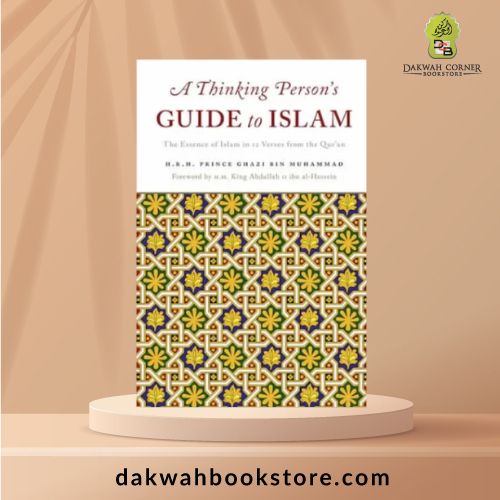
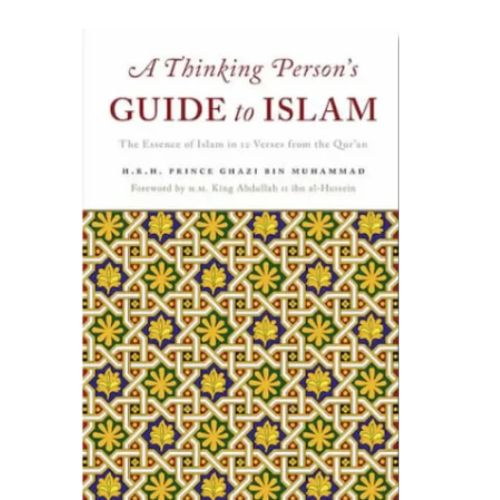
A Thinking Person’s Guide to Islam
Highlights:
The world is at a crossroads today. A tiny minority of Muslims seems to be bent on hijacking the religion of Islam and bringing it into perpetual conflict with the rest of the world. Because of their actions, very few non-Muslims understand the real difference between Islam as it has always been, and the distorted perversions of Islam today. This book is an attempt to positively say what Islam actually is—and always was—as well as what it is not.
RM80.00
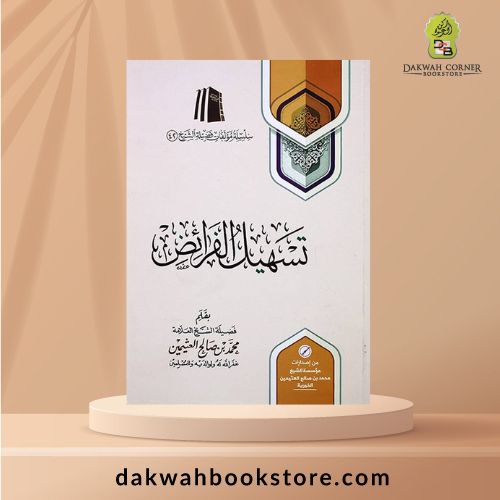
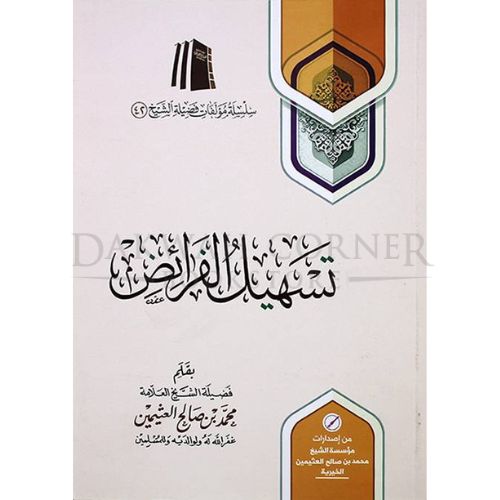
[SJ] Tashil Al Faraid / تسهيل الفرائض
Highlights:
حرره الشيخ رحمه الله بخط يده، وهو شرح لمهمات الفرائض، مما ورد في آيات المواريث التي نص الله تعالى عليها؛ في إرث الأصول والفروع والزوجين وأولاد الأم وإرث الإخوة لغير أم، بالإضافة إلى ما ورد في إلحاق الفرائض بأهلها، فبدأ بالكلام عن علم الفرائض وما يتعل
RM20.00
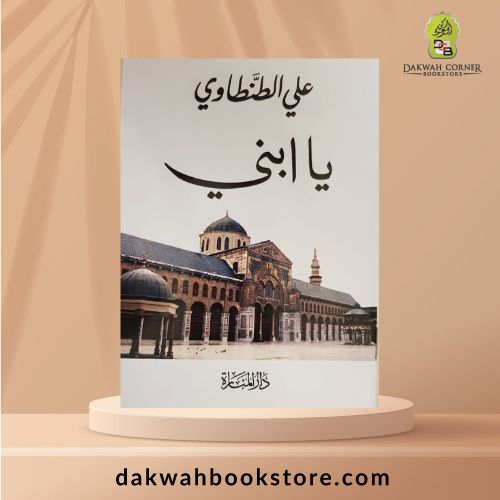
[SB] Ya Ibni (Pocket Size)/يا ابني
Highlights:
كتيب به مقالة موجهة للشباب المسلم.. ينصح بها الشيخ علي الطنطاوي أبناء دينه الصاعد نصايح أبوية
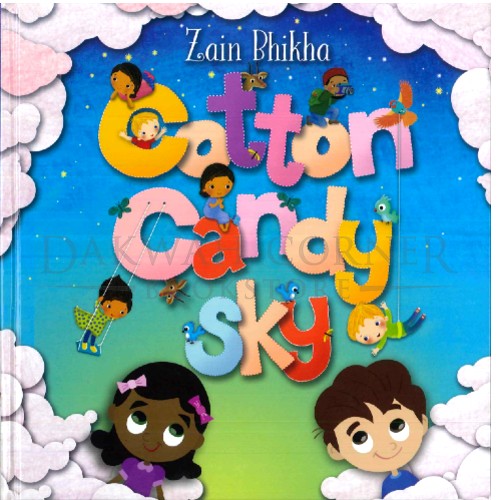
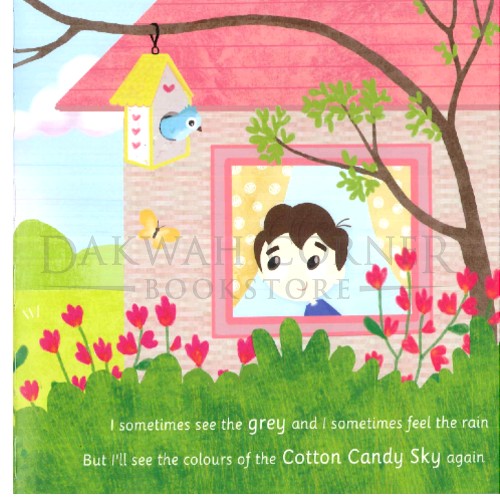
Cotton Candy Sky
Highlights:
Cotton Candy Sky takes us on an enchantingly descriptive journey through nature and colour, and highlights the importance of trust and gratitude in life.
As much as we try, we will never be in control of everything. Lows are followed by highs. Sadness is followed by smiles. Just as clouds come with rain, soon they will be blown away to reveal the cotton candy sky again.
Recommended for ages 5+
RM36.00
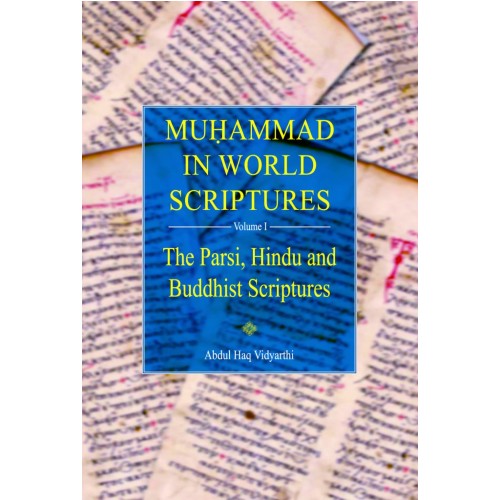
Muhammad in World Scriptures: Volume I (IBT)
Highlights:
This is the first volume of the series on the Prophet Muhammad as found in world scriptures. The author, a scholar of the Vedas and comparative religion, argues that numerous prophecies of the coming of the Holy Prophet are found in the Parsi (Zoroastrian), Hindu and Buddhist scriptures. He attempts to illuminate these prophecies and explains the rationale of his conclusions.
RM34.00
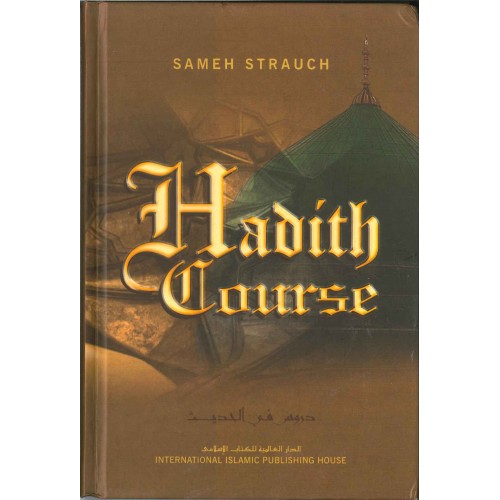
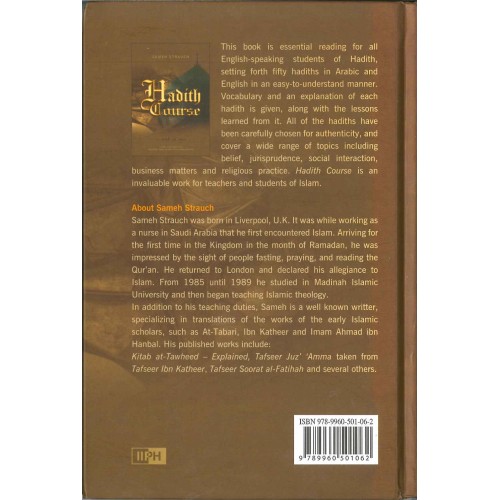
Hadith Course
Highlights:
Hadith Course is essential reading for all English speaking students of Hadith, presenting fifty hadiths in Arabic and English in an easy-to-understand manner. Vocabulary and an explanation of each hadith are given, along with the lessons learned from it. All of the hadiths have been carefully chosen for authenticity and cover a wide range of topics, including belief, jurisprudence, social matters, business and much more. This book is an invaluable handbook for schools and self-learners.
RM27.00
There are no reviews yet.