

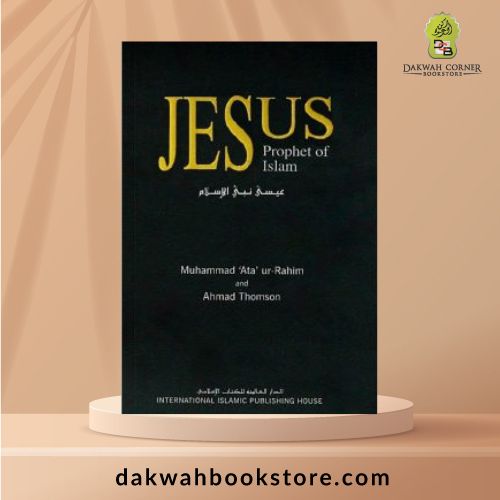
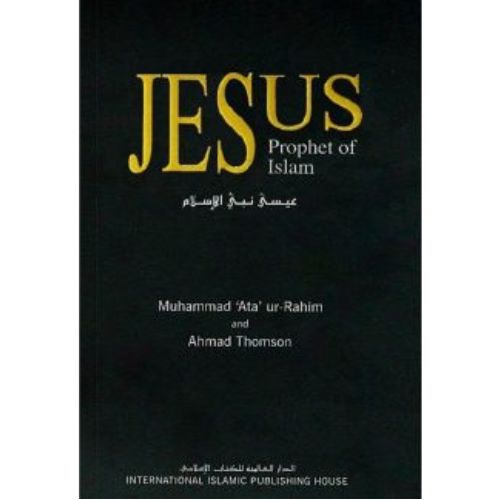
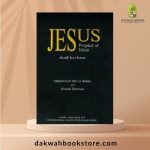
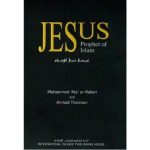
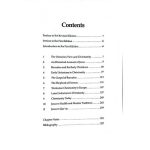
Some believe he was a man, others that he was God, and others simply consider it a myth, but who really was Jesus (peace be upon him)? This book is a study of the life of Jesus according to Christian and Islamic sources. It is also a study of the origin of Christianity, examining the evidence with thoroughness and care, for the sole purpose of distinguishing the reality from the myths about the person and mission of Jesus. It is hope that this revised English edition of Jesus, Prophet of Islam will be not only more fascinating but also more accessible than the first edition.
Jesus Prophet of Islam (H/B) – IIPH
RM46.00
Hurry up, Only 2 left.

Highlights:
somdn_product_page
Compare
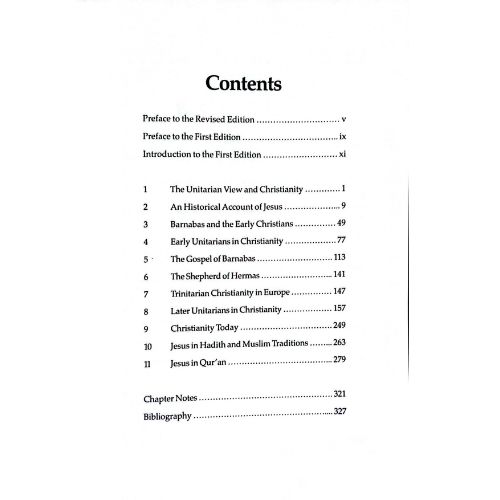
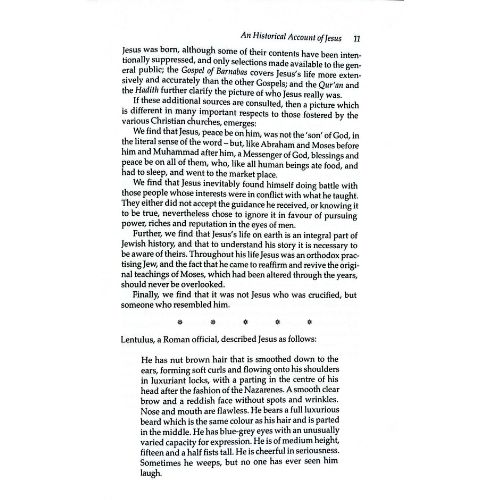
1996 expanded and revised edition. This book examines Jesus as a prophet teaching the Unity of God, and the historical collapse of Christianity as it abandoned his teaching. The author sketches the dramatic picture of the original followers of Jesus who affirmed Unity. What emerges is that “Christianity” is the fiction that replaced their truth. A work that covers the Gospel of Barnabas, the Gospel of Hermes, the Shephard, early and later Unitarian Christians, Jesus in the Gospels and in the Qur’an and Hadith. The author clearly shows the idea of Jesus as part of a Trinity was a Greek Pagan idea adopted by early Christian mission-aries to gain converts among the Greek, and did not become a widely accepted Christian doctrine until after the Council of Nicea in 325 A.D.
Frequently Bought Together
1 Item
RM46.00
2 Add-Ons
RM196.00
Total
RM242.00
Additional information
| Weight | 0.530 kg |
|---|---|
| Dimensions | 22 × 14.7 × 2 cm |
| Product Type | Book |
| Author | |
| Pages | 334 |
| ISBN | CR99 |
| Publisher | IIPH |
Reviews (0)
Be the first to review “Jesus Prophet of Islam (H/B) – IIPH” Cancel reply
You must be logged in to post a review.
Related Products

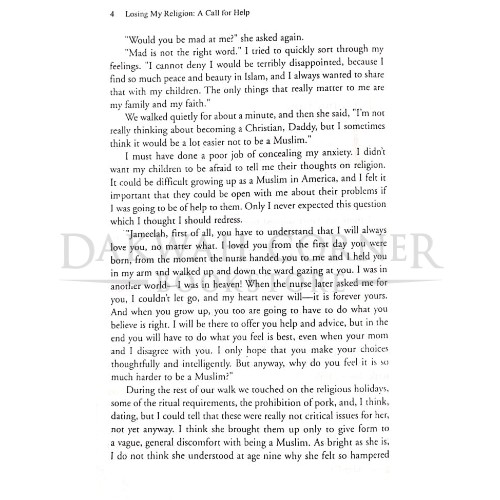
Losing My Religion: A Call For Help (P/B)
Highlights:
“Crucial to the vitality of any religious community is its ability to attract and engage descendants and converts. By this measure, notwithstanding the proliferation of mosques and Islamic organizations, the Muslim community in America is not doing at all well.” This rather sober assessment motivates Dr. Lang to address, in this book, the alienation from the Mosque of the great majority of America’s homegrown Muslims. In Losing My Religion: A Call For Help, the author comes to terms with many of the queries put to him by Americans of Muslim parentage and converts to Islam since the publication of his book Even Angels Ask in 1977. Lang asserts that to effectively respond to the general malaise of American-born Muslims, the Islamic establishment in America needs to be willing to listen to the doubts and complaints of the disaffected. This entails engaging in open discussions on issues with which many in the Muslim community will be uncomfortable, but Lang avers that such open dialogue will be of more benefit to young American Muslims struggling with their faiths than the covert and uniformed discussions that often take place or no discussion at all. For this reason, Lang feels it is important and beneficial “to be candid and objective and not evade controversy, for to inadequately state the case for or against a specific position, especially when it challenges convention, only serves to further alienate the sceptical.” In addition to examining questions of theodicy, hadith authenticity, and moot practices within the American Muslim community, the author includes many testimonials and inquiries that make this book informative. Dr. Lang is Professor of Mathematics at The University of Kansas, Lawrence, Kansas. He is the author of two best selling works: Struggling to Surrender and Even Angels Ask: A Journey to Islam in America. Both books have been translated into other languages.
RM115.00
We and The Other
Highlights:
This book is a highly relevant piece of research for our turbulently chaotic world today. The heavy baggage of mutual distrust and detestation from the days of ethnic cleansing of Muslims in Spain through to the Crusades and Colonialism has left behind a fuzzy and muddled image of Islam and Muslims in the eyes of others; Muslims too, have been seeing the West as the primary cause of all their woes and vilification.
RM49.00
Beyond Mere Christianity (H/B)
Highlights:
The book is called Beyond Mere Christianity for two reasons. First, in response to C.S. Lewis’ influential 1952 work, Mere Christianity, which stands as a masterpiece of Christian apologetics. The second reason, perhaps less obvious, is that a case can be made, based on current, responsible Gospel scholarship, that Jesus was calling his people to the Salvation that lies beyond the worship of the merely created, the Salvation that relies instead on the direct worship of the Creator. I believe emphatically that the authentic words of Jesus invite us to move beyond what is conventionally understood as Christianity for this Salvation.
RM23.00

Have You Discovered Its Real Beauty
5 ★
5 ★
1 Rating
5 ★
1
4 ★
0
3 ★
0
2 ★
0
1 ★
0
Highlights:
PhD in Applied Linguistics (Michigan State University, USA)
Dr. Arfaj spent more than 20 years researching comparative religion. This book came about as a result of his extensive research and experience.
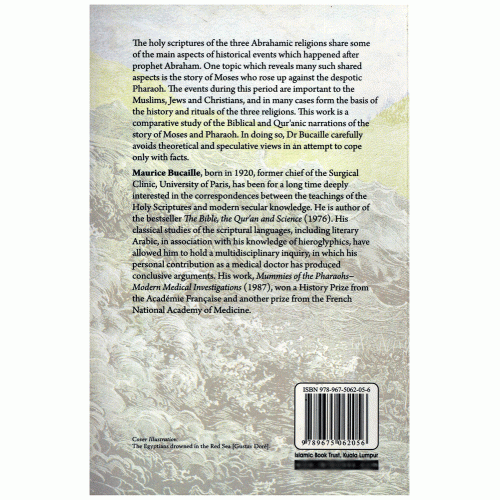
Izhar ul Haq (The Truth Revealed)
Highlights:
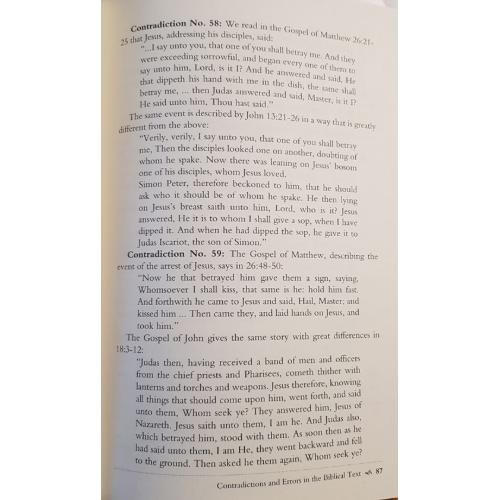
This is the thoroughly researched response to the Christian offensive against Islam in India. This book lucidly reviews the authenticity of the Bible and succinctly summarises the main errors, distortions, and contradictions in and between the Old and New Testaments of the King James Version. Furthermore, the doctrine of the Trinity is refuted; a doctrine that Isa (AS) never taught.
This book, internationally recognized as one of the most authoritative and objective studies of the Bible, was originally written in Arabic under the title Izhar-ul-Haq (Truth Revealed) by the distinguished 19th-century Indian scholar, Rahmatullah Kairanvi, and appeared in 1864. The book was subsequently translated into Urdu, and then from Urdu into English by Mohammad Wali Raazi.
This Book Contains among four Parts as Following:
Part 1
The Book of The Bible
Part 2
Contradictions and Errors in The Biblical Text
Part 3
Distortion and Abrogation in The Bible
The Trinity Refuted
Part 4
Proof of The Divine Origin of The Qur’an and The Authenticity of The Hadiths
Arabic Version of This Book is also available
Maulana Rahmatullah Kiranvi was born in India in 1818 CE. He was a great Sunni Hanafi scholar. He learned Arabic and Persian. Later he moved to Delhi where he studied different disciplines including mathematics and medicine. Working as a Mufti and Sharia teacher, he founded a religious school in Kariana.
In 1837 the Church Mission Society appointed Karl Gottlieb Pfander, described by Eugene Stock as “perhaps the greatest of all missionaries to Mohammedans”, to Agra in Northern India, where in 1854 he engaged in a famous public debate with leading Islamic scholars.
Maulana Kairanvi’s intention in his book (Izharul Haq) was first of all to show that the Bible cannot in any way be considered as a directly revealed book. He does this very effectively by means of his voluminous and authoritative knowledge of the Jewish and Christian scriptures. He demonstrates beyond doubt that the Books of the Old and New Testaments have been altered, almost beyond recognition, from their original forms. The work is even more notable in the light of subsequent Jewish and Christian scholarship and the various discoveries that have since been made in this field which all bear out the truth of Kairanvi’s thesis.
In the wake of the manifest inauthenticity of the Bible, Maulana Rahmatullah goes on to demonstrate by contrast the indisputable and absolute authenticity of the Qur’an and the Prophethood of Muhammad ibn ‘Abdullah, may peace and blessing of Allah be upon him.
RM85.00

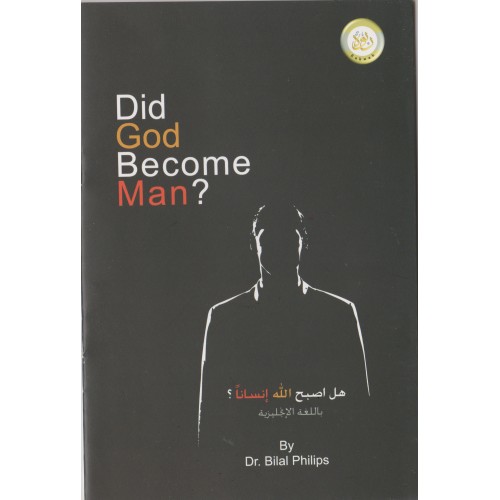
Did God Become Man? (P/B)
Highlights:
Table of Contens:
- Foreword
- Belief in God
- Man is Gods
- God Becomes His Creatures
- God Becomes One Man
- Men Becom God
- Why?
- Did God Become Man?
- Can Man Become God?
- Did God Have a Son?
- Bibliography
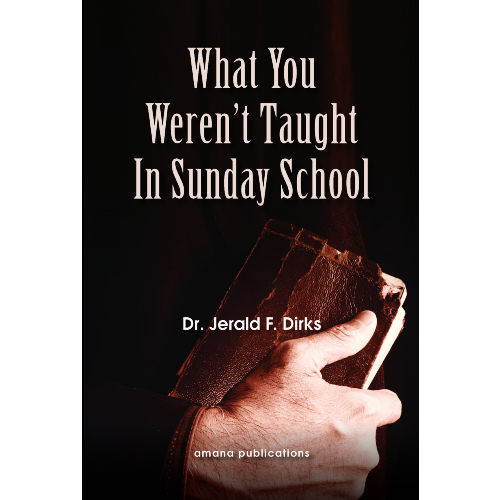
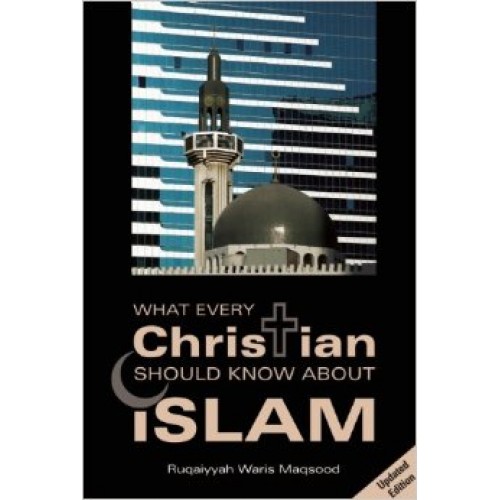
What Every Christian Should Know About Islam (P/B)
Highlights:
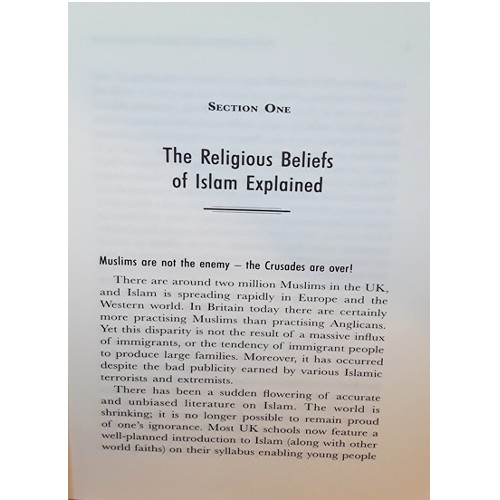
Of the many books explaining Islam, few specifically address the concerns and questions of those from a Christian background. Moreover, the commonalities between the Abrahamic faiths—Judaism, Christianity, and Islam—are too often ignored. Set out in an easy and informative question-and-answer format, the book addresses the specific theological points of agreement and difference between Christianity and Islam, explains the core religious beliefs and practices of Islam, and answers today’s most common questions of Islam and Muslims in an age when there is much conflict and misunderstanding. Islam is best judged not by the limitations and transgressions of its most extreme, ignorant, and outlandish followers, but by the example of its moderate majority, and Ruqaiyyah Waris Maqsood presents this introduction to the theology and practice of Islam in an attempt to explore some of the false impressions that surround it.
Table of Contents:
Section 1: The Religious Beliefs of Islam Explained
Section 2: the Religious Duties of Islam Explained
Section 3: Miscellaneous Questions
Section 4: Christianity and Islam
Ruqaiyyah Waris Maqsood gained an honors degree in Christian Theology from the University of Hull in 1963 and then taught religious studies at various state schools until her retirement in 1996. She converted to Islam in 1986 and now lectures and writes on Islam.
RM26.00
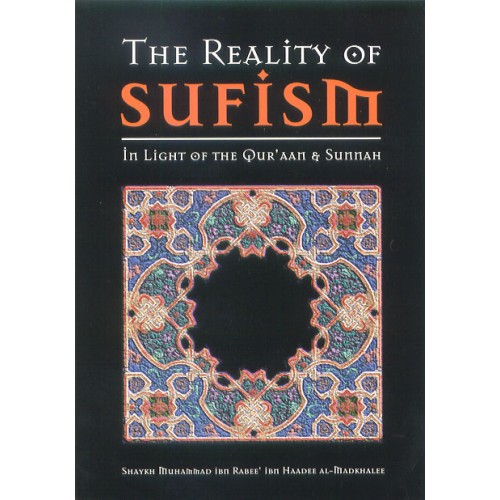
The Reality of Sufism In Light of the Quraan and Sunnah (P/B)
Highlights:
In this book, the author discusses the beliefs and origins of Sufism. It has been written in a clear and uncomplicated style which makes it accessible for readers of all levels. The history of Sufism is traced as well as how sufism developed into what we have today. The author touches upon the beliefs of Sufism, and gives examples from personalities that are regarded highly by those who ascribe to Sufism. A scholarly criticism in light of the Qur’an and Sunnah.
From the Back Cover
You must be aware that there are a number of destructive calls which have been established amongst the ranks of the Muslims and which have shaken and damaged the belief held in there hearts. They have polluted the pure Islamic ‘aqeedah, and have grown by stages to reach such a dangerous level that they led to the splitting of the Muslims into sects and the parties, about which the Prophet (peace be upon him) said: “Indeed those who were before you, from the people of the book, split into seventy-two sects, and this religion will split seventy-three. Seventy-two in the fire and one in the paradise and it is the Jammaa’ah.”
Then there is no doubt that each one of these sects claims for itself that it is the saved sect, and that it is correct, and that it alone follows the Messenger. But the way of truth is a single way and it is the one which leads to salvation, and any other way is one of the ways of miss guidance which leads to destruction.
So the way of truth is to cling to the book of Allaah and the Sunnah of Allaah’s Messenger (S) as occurs in the hadeeth: I have left amongst you two things whith which you will not go astray: The Book of Allah and my Sunnah, and they will not be separated till they come to me at the Pond.
- A scholarly criticism of Sufism in the light of the Qur’an and Sunnah
- Written in an uncomplicated style, ideal for the layman
RM24.00
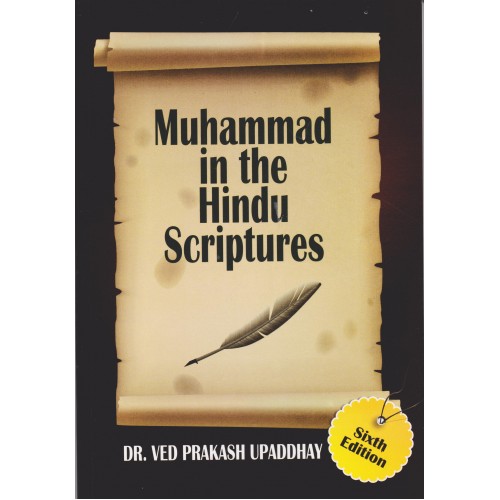
Muhammad in the Hindu Scriptures (P/B)
Highlights:
God is One. Human nature is one. Human destiny is one. And God�s message to humanity vis-a-vis that destiny is one. However, the rebellious element in man�s nature has led him to disobey God on the one hand, and on the other, he has pushed on to distort the very message of God. But the message is never fully lost. It would be ludicrous and indeed heretical to think that the situation could have gone out of God’s control.
With every distortion, therefore, He has renewed the message to salvage humanity from self-ruin. More interesting than that is the fact
that He has inserted in every message a Pointer to the Final Guide and the message he would be entrusted with; a Pointer which shows the true
seeker where the uncorrupted message could be found – the message that no one would be able to distort any more. While the main body of the message has been corrupted, the Pointer contained within has not been destroyed. Muhammad in the Hindu Scriptures brings out the truth of this phenomenon.
In addition to the Vedas and the Puranas, the book has unearthed this Pointer in the Buddhist, Christian, Jewish and other Hindu scriptures. Each of these scriptures uses its own unique Pointer relevant to its own theological scheme and the religious mentality of its own people. Separately and jointly these Pointers lit up the road to Muhammad (blessings and peace be upon him) exclusively, without any iota of doubt.
By all accounts the Final Guru has been sent and the Last Testament is in our laps. Additionally, the existence of these Pointers in the earlier
scriptures is yet another dimension of God’s mechanism to guide mankind to the infallible Truth. Upon reading the book, the theist, the atheist and the agnostic will find a lot to think about.
RM20.00
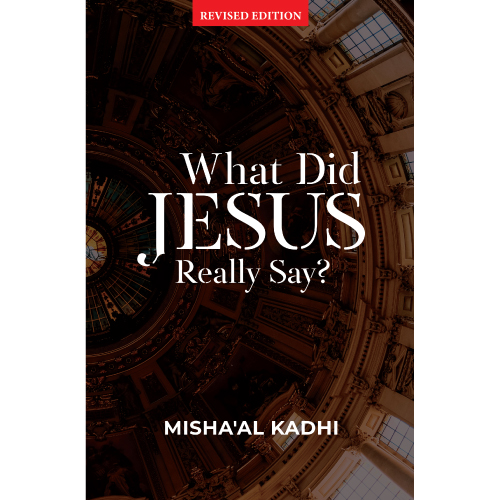
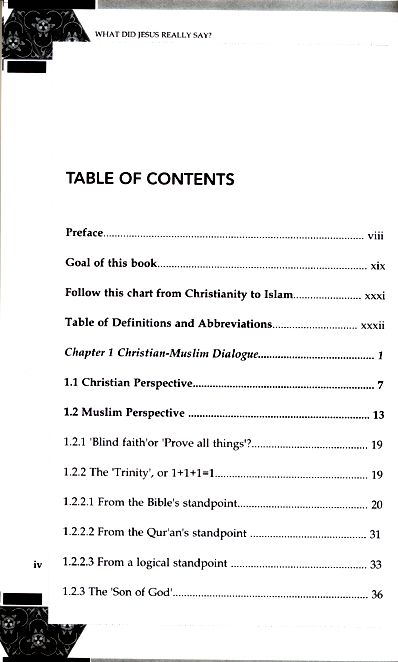
What Did Jesus Really Say?
4.5 ★
4.5 ★
2 Ratings
5 ★
1
4 ★
1
3 ★
0
2 ★
0
1 ★
0
Highlights:
The book contains detailed information and descriptions that show how the Bible was changed and tampered with over the past two millennia. The account and the discussions presented are based on, and collected from, the writings of Christian authors, the Church and the Bible.
RM45.00
Recently Viewed
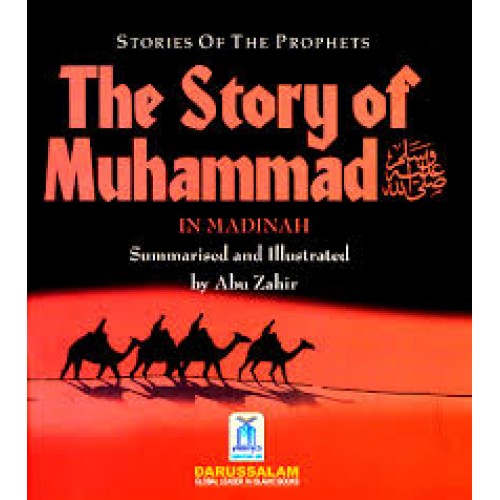
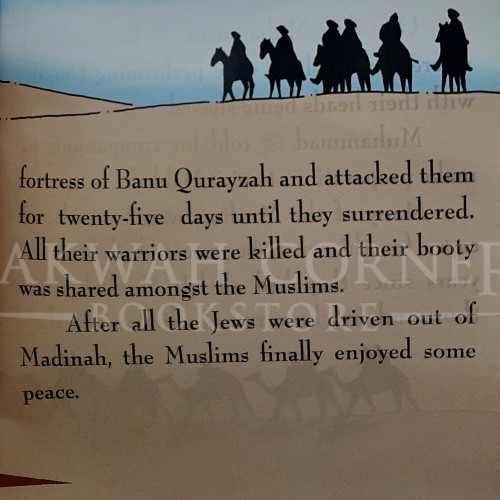
The Story of Muhammad S.A.W in Madinah
Highlights:
The Story of Muhammad (SAW) in Madina By Abu Zahir (Stories Of The Prophets) A new amazing serious of childrens illustrated books, the book is easy to read and follow with pictures for little children to enjoy and learn about they beloved prophet.
RM11.00

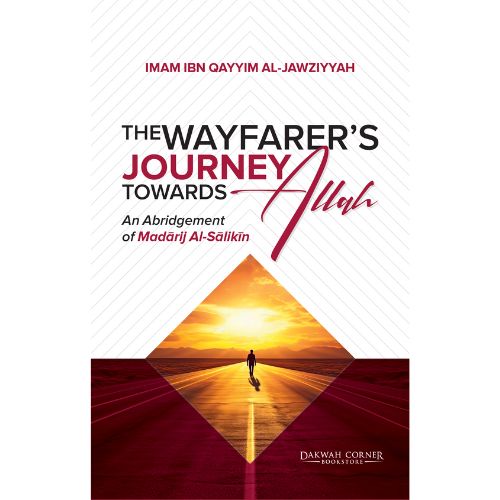
The Wayfarer’s Journey Towards Allah (DCB)
5 ★
5 ★
1 Rating
5 ★
1
4 ★
0
3 ★
0
2 ★
0
1 ★
0
RM65.00
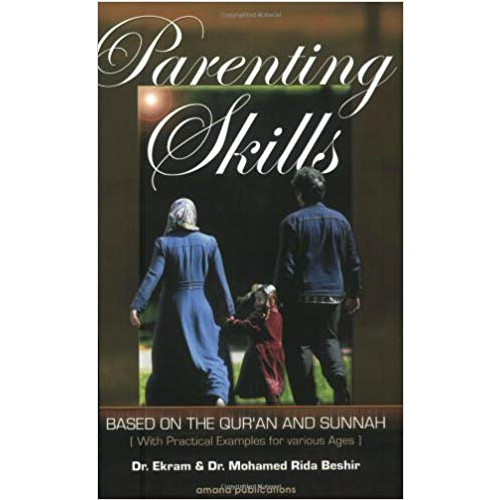
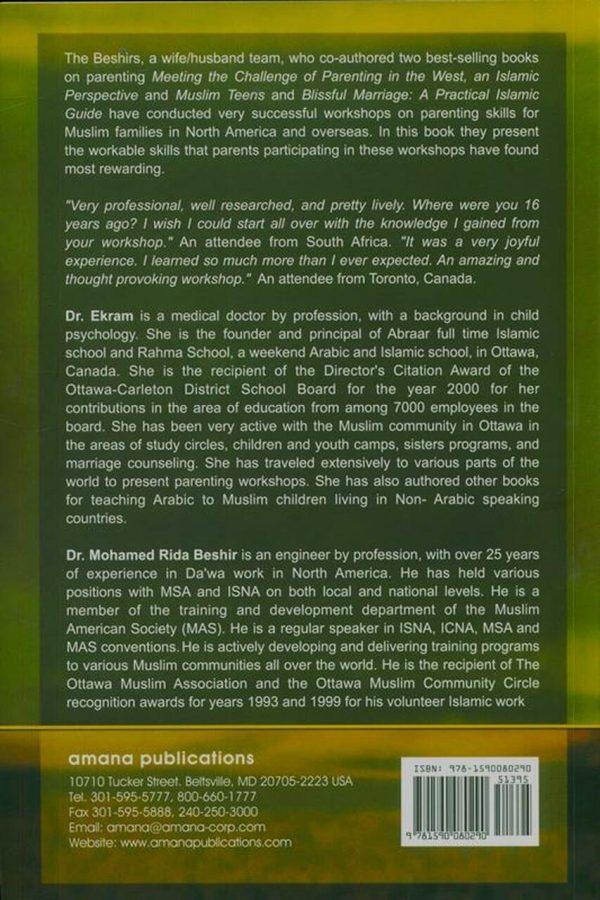
Parenting Skills Based On The Qur’an And Sunnah
Highlights:
Motivational & Manners
RM71.00
The Reality of Sufism In Light of the Quraan and Sunnah (P/B)
Highlights:
In this book, the author discusses the beliefs and origins of Sufism. It has been written in a clear and uncomplicated style which makes it accessible for readers of all levels. The history of Sufism is traced as well as how sufism developed into what we have today. The author touches upon the beliefs of Sufism, and gives examples from personalities that are regarded highly by those who ascribe to Sufism. A scholarly criticism in light of the Qur’an and Sunnah.
From the Back Cover
You must be aware that there are a number of destructive calls which have been established amongst the ranks of the Muslims and which have shaken and damaged the belief held in there hearts. They have polluted the pure Islamic ‘aqeedah, and have grown by stages to reach such a dangerous level that they led to the splitting of the Muslims into sects and the parties, about which the Prophet (peace be upon him) said: “Indeed those who were before you, from the people of the book, split into seventy-two sects, and this religion will split seventy-three. Seventy-two in the fire and one in the paradise and it is the Jammaa’ah.”
Then there is no doubt that each one of these sects claims for itself that it is the saved sect, and that it is correct, and that it alone follows the Messenger. But the way of truth is a single way and it is the one which leads to salvation, and any other way is one of the ways of miss guidance which leads to destruction.
So the way of truth is to cling to the book of Allaah and the Sunnah of Allaah’s Messenger (S) as occurs in the hadeeth: I have left amongst you two things whith which you will not go astray: The Book of Allah and my Sunnah, and they will not be separated till they come to me at the Pond.
- A scholarly criticism of Sufism in the light of the Qur’an and Sunnah
- Written in an uncomplicated style, ideal for the layman
RM24.00
On Remembering Death by Ibn Rajab Al-Hanbali
Highlights:
“Abdullah Ali’s faithful transaltion of a section concerning the meditation of death from Ibn Rajab’s famous work on yearly devotions is much needed in our culture of forgetfulness.
RM45.00
Children’s Problems (Successful Family Upbringing Series-05)
Highlights:
The 10 most common challenges of children and how to resolve them.
RM15.00
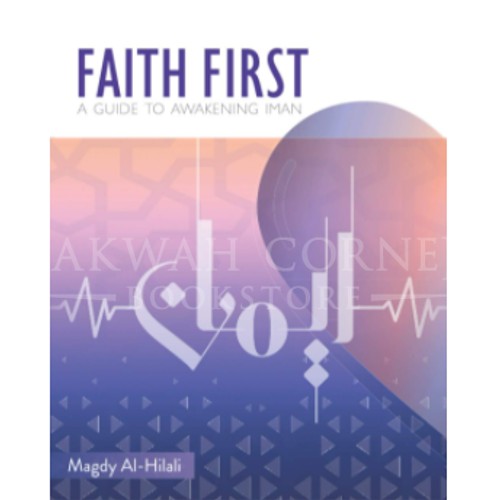

Faith First: A Guide To Awakening Iman
Highlights:
“Fait first is based on a simple premise: Begin with faith, and the rest will follow.”
RM110.00
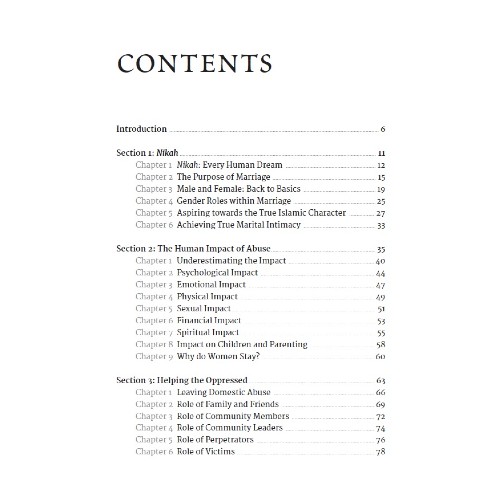
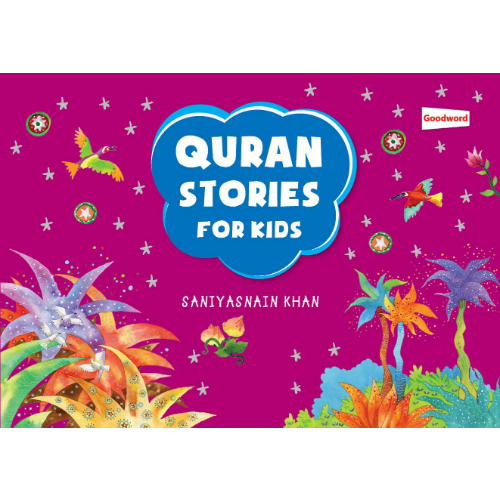
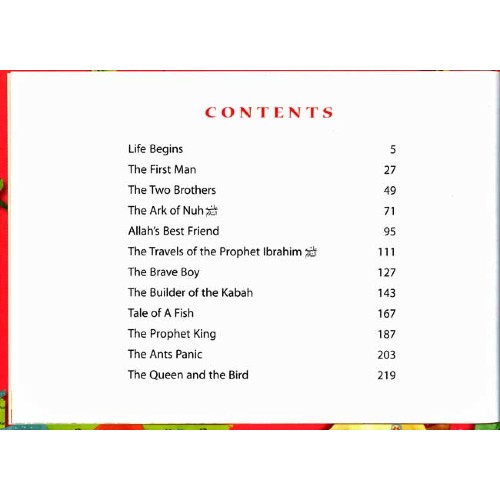
Quran Stories for Kids
Highlights:
These are some of the best-loved tales from the Quran. Especially chosen for the very young, they provide a foundation on which to build a growing knowledge of the scriptures. This is story telling at its best, with the meaning and message expressed in the simplest of words. As well as being easy to understand, these stories are also fun to read and share with others. Colorful, child-friendly illustrations complement the text and bring the stories vividly to life.
RM45.00
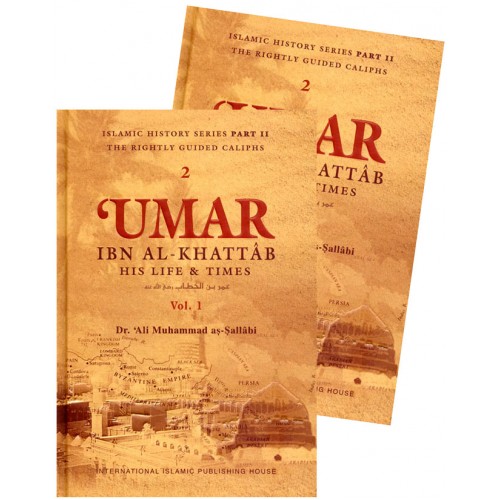
Umar ibn al-Khattâb: His Life and Times (2 Vols.) -IIPH
5 ★
5 ★
1 Rating
5 ★
1
4 ★
0
3 ★
0
2 ★
0
1 ★
0
Highlights:
The second caliph of Islam, ‘Umar ibn al-Khattâb faced more struggles than any other Muslim leader in the early onset of Islam. His life began in a time of ignorance and ended during the Golden Age of Islam. Under his leadership, the Muslim world was witnessing some of its most notable conquests in the history of Islam. The strength and resilience of Islam’s leaders were being tested, and ‘Umar ibn al-Khattâb’s true commitment to Allah shone to reveal an Islamic spirit unlike that found in any other Muslim leader. The standards by which he lived can teach us a lot about determination, hardship, and success. The two books which compose ‘Umar ibn al-Khattâb: His Life and Times are sold together as a set. They belong in Part II of the Islamic History Series, as the second set of The Rightly Guided Caliphs. The Table of Contents for Volume 1 of ‘Umar ibn al-Khattâb: His Life and Times may be viewed via the ‘View Table of Contents’ link located above. This book was translated into English by Nasiruddin al-Khattab. From the Translator: For those who would be leaders, this book offers the model of an ideal Muslim leader, one who felt responsible before Allah for the well being of all those under his rule, including his troops, women, infants, non-Muslim subjects and even animals. ‘Umar was a ‘hands on’ leader who kept himself informed and consulted scholars and experts before every major decision. For the rest of us, this book offers a window into an exciting and important period of Islamic history, and it also reminds of an important lesson, that our strength comes not from wealth or money or status, but from our submission to Allah and our commitment to the path of Islam.
RM175.00
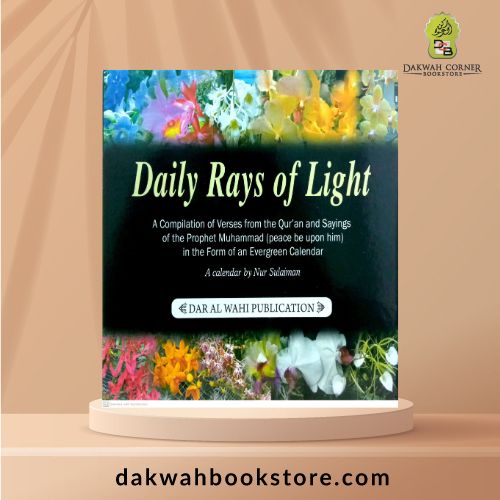
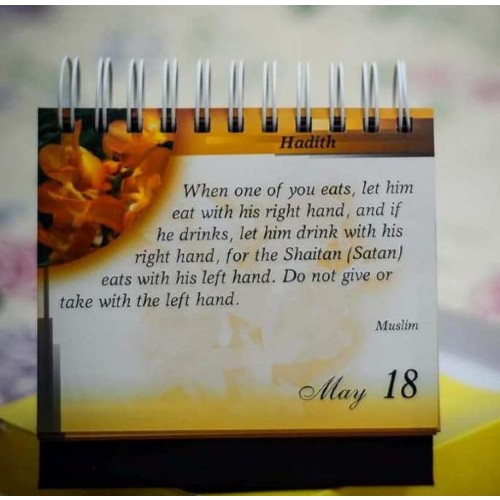
Daily Rays of Light Calendar
Highlights:
A Compilation of Verses from the Qur’an and Sayings of the Prophet Muhammad (pbuh) in the Form of an Evergreen Calendar
An evergreen calendar compiled by Nur Sulaiman
RM55.00
There are no reviews yet.