

![[QQ] Alamtani Ayah / علمتني آية](https://shop.dakwahbookstore.com/wp-content/uploads/2024/10/TARIQ-11.jpg)
![[AR] Jawāhir al-Adab - جواهر الأدب 1/2](https://shop.dakwahbookstore.com/wp-content/uploads/2024/10/TARIQ-12.jpg)
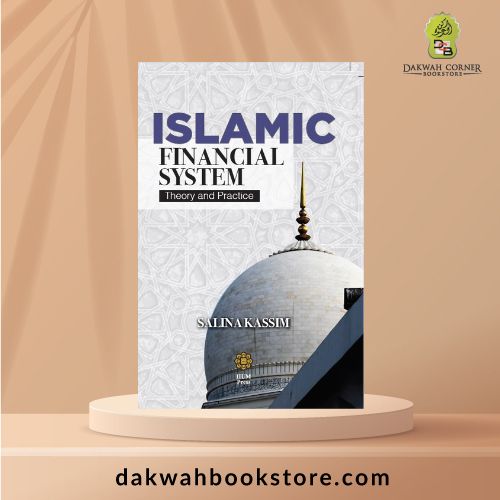
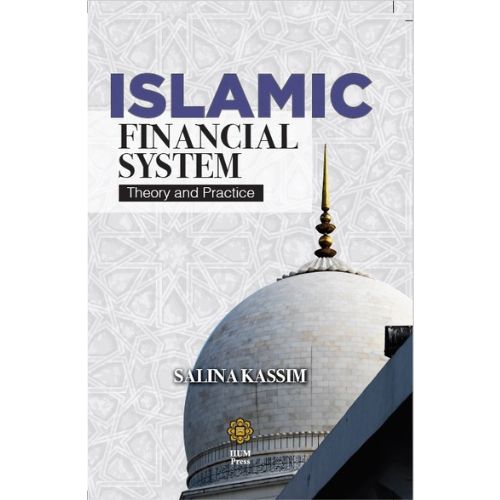
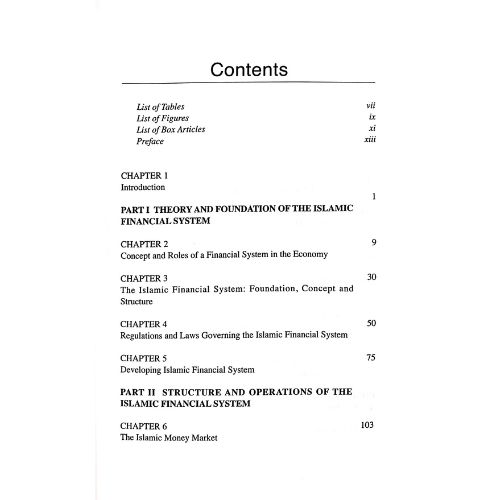
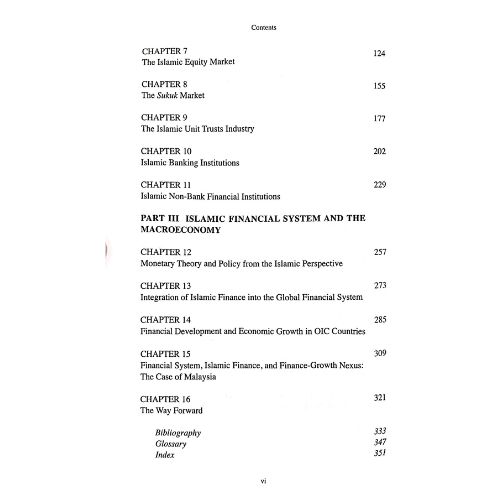
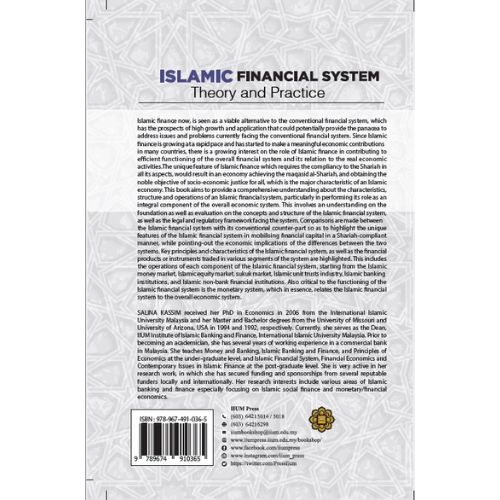
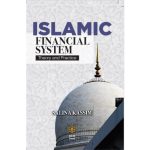
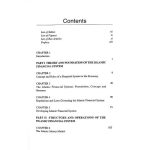
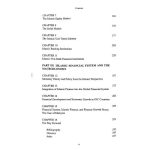
Islamic finance now, is seen as a viable alternative to the conventional financial system, which has the prospect of high growth and application that could potentially provide the panacea to address issues and problems currently facing the conventional financial system. Since Islamic finance is growing at a rapid pace and has started to melee meaningful economic contributions in many countries, there is a growing interest on the role of Islamic finance in contributing to efficient functioning of the overall financial system and its relation to the real economic activities. The unique feature of Islamic finance which requires the cormpliancy to the Shariah in all its aspects, would result in an economy achieving the maqasid al-Shariah and obtaining the noble objective of socio-economic justice for all which is the major characteristic of an Islamic economy. This book aims to provide a comprehensive understanding about the characteristics, structure and operations of an Islamic financial system, particularly in performing its role as an integral component of the overall economic system. This involves an understanding on the foundation as well as evaluation on the concepts and stricture of the Islamic financial system, as well as the legal and regulatory framework facing the system. Comparisons are made between the Islamic financial system with its conventional counter-part so as to highlight the unique features of the Islamic financial system in mobilising financial capital in a Shariah-compliant manner, while pointing-out the economic implications of the difference between the two systems. Key principles and characteristics of the lslamic financial system, as well as the financial product or instruments traded in various segments of the system are highlighted. This includes the operations of each component of the Islamic financial system, starting from the Islamic money market, Islamic equity market, sukuk market, Islamic unit trusts industry, Islamic banking institutions, and Islamic non-bank financial institutions. Also critical to the functioning of the Islamic financial system is the monetary system, which in essence, relate the Islamic financial system to the overall economic system.
Islamic Financial System: Theory and Practice
RM100.00
Frequently Bought Together
| Weight | 0.85 kg |
|---|---|
| Dimensions | 23 × 15.5 × 2.3 cm |
| Author | |
| Binding | Paperback |
| Pages | 363 |
| ISBN | 9789674910365 |
| Publisher | IIUM Press |
Be the first to review “Islamic Financial System: Theory and Practice” Cancel reply
You must be logged in to post a review.
You may also like…
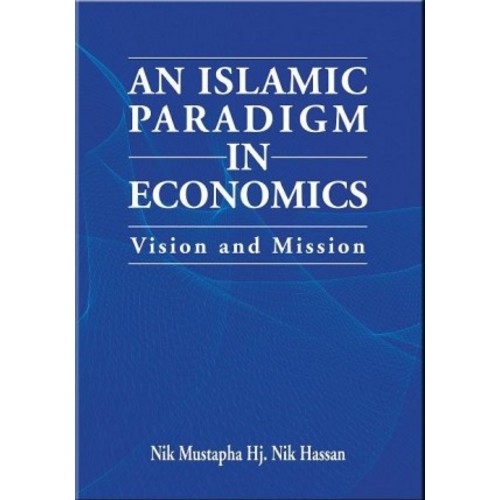
An Islamic Paradigm In Economics Vision And Mission
This book emphasises not only thoughts and theoretical concepts, but also discusses their application.
in the real world. Hence, it suggests that a holistic approach to economic development, which harmonises between material and spiritual well-being is not entirely idealistic but is, in fact, pragmatic and applicable.
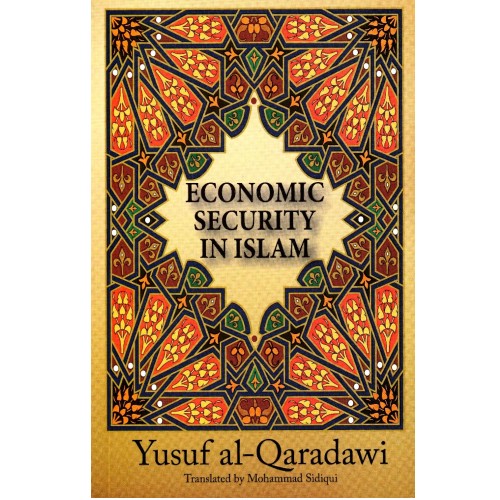
Economic Security In Islam
This book is an English rendering of a popular Arabic book entitled Mushkala al-Faqr wa Kaifa ‘Aljiha al-Islam by the renowned Muslim Scholar ‘Yusuf al-Qaradawi. The author depicts the basic principles of the Islamic Economic System in the light of the Holy Qur’an and the Sunnah.
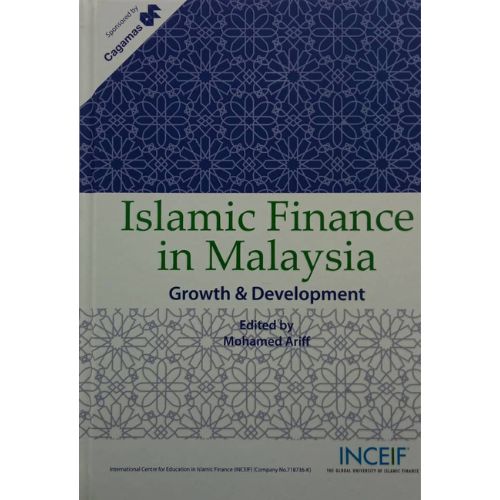
Islamic Finance in Malaysia: Growth & Development
This modern history of Islamic finance is pretty short spanning a period of roughly five decades, compared to conventional finance which goes back to more than four centuries earlier. Islamic finance has spread rapidly across the globe, reminiscent of Lao-Tzu’s famous saying “A journey of a thousand miles begins with a single step”. Malaysia, a pioneer in the development of the Islamic finance industry, has emerged as one of the major hubs for global Islamic finance.
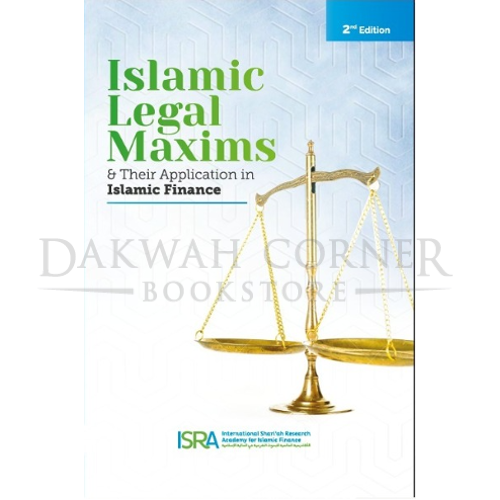

Islamic Legal Maxims & Their Application in Islamic Finance (2nd Ed.)
Islamic Legal Maxims and Their Application in Islamic Finance is one of the most comprehensive compilations of Islamic legal maxims available in English. The most important feature of this book is that it explains each maxim in a way comprehensible to both Shari’ah experts and Islamic finance practitioners. Another feature is its emphasis on the application of the maxims in the actual practice of Islamic finance.
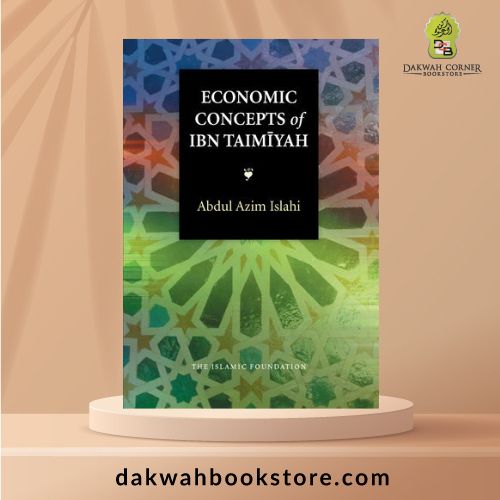
Economic concepts of Ibn Taimiyah
This valuable work presents Ibn Taimiyah’s thoughts on the concept of Islamic economics, the state in the economy, on public finance, money, interest, prices, partnership, and profit-sharing, and offers a comparison of his ideas with those of some medieval scholars in Europe, along with a study of his influence on Islamic thinkers in later periods.
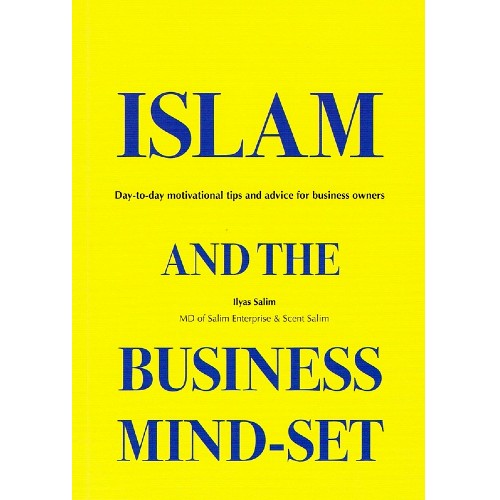
Islam And The Business Mind-Set
Written by one of the top young entrepreneurs in the North of England, Ilyas Salim is MD of Salim Enterprise, a global investment company.
From this book, you will learn how to:
- Create a business mentality
- Start a moral and ethical business
- Expand your business
- Work smarter, not harder
- Attract Barakah into your business
- Achieve not just a work/life balance, but a total life balance.
All this is within the framework of the Qur’an and Hadith and examples from the life of the Prophet Muhammad SAW.
Related Products
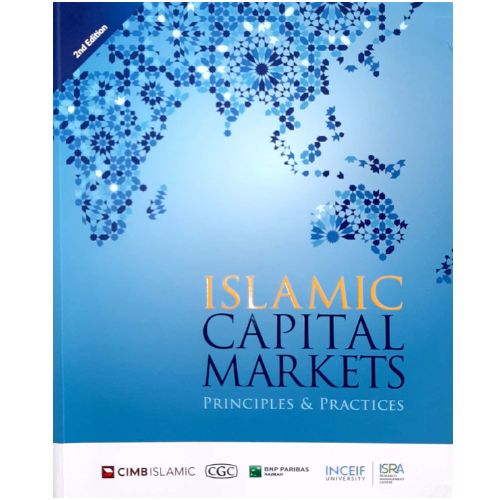
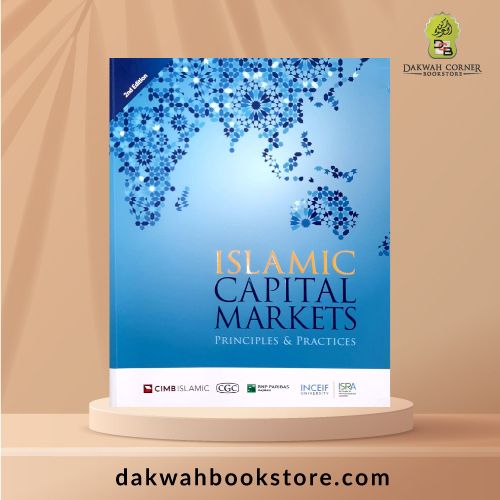
Islamic Capital Markets: Principles and Practices (P/B)
KEY FEATURES OF THE BOOK
* It elucidates the principles and practices of the Islamic capital market with academic rigours.
* It sheds light on the cutting-edge practical issues faced by the industry.
* Every chapter contains relevant case studies and supportive illustrations.
* Multiple Choice Questions (MCQs) and discussion questions are provided at the end each chapter.
KEY SUBJECTS
Shari’ah framework, Regulatory framework, Corporate and Shari’ah governance, Risk management, Accounting and taxation, Sukuk Islamic equity market, Islamic unit trust, REITs and ETFs, Islamic private equity and venture capital, Islamic derivatives and hedging and Islamic structured investment products.
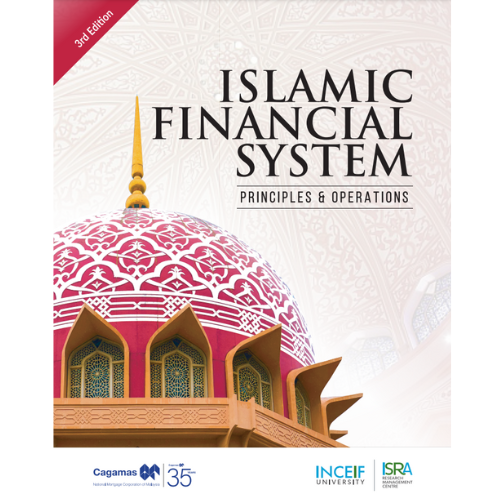
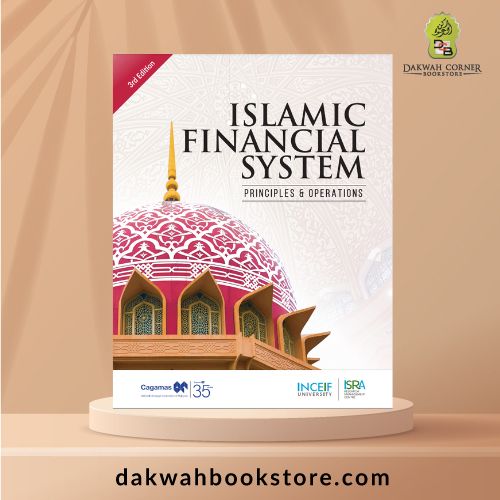
Islamic Financial System: Principles & Operations
This second edition of the book marks another milestone of a collaborative effort between prominent scholars and practitioners of the Islamic finance industry. It sheds light on the front line issues faced by the Islamic finance industry with academic rigor. Each chapter in the book is complete with figures, diagrams, tables, case studies, a set of review questions and problems and a list of references for further reading. It offers invigorating discussion on a comprehensive range of topics related to Islamic finance, combining both theoretical foundations and operational aspects.
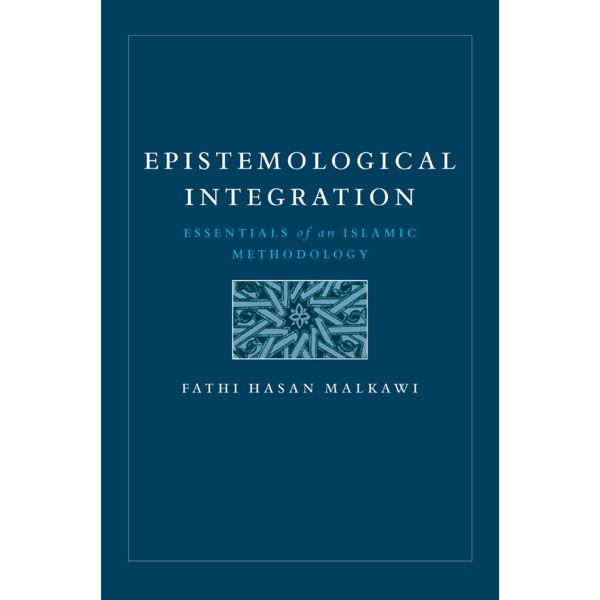
Epistemological Integration Essentials of an Islamic Methodology
Epistemological Integration: Essentials of an Islamic Methodology is a program which seeks to construct an intellectual framework for Islamic methodology with a view to realizing practical training in the thoughtful investigation of issues related to knowledge in various fields. The book’s title affirms the distinctive types of integration that characterize Islamic methodology, including integration of sources, means, and schools of thought, as well as existing realities with desired ideals etc. This is fully consistent with human nature, as variety is fundamental to the functions people perform and skills they master. The work essentially makes the case that fundamental to any Muslim recovery is laying the foundations of sound thinking and values that integrate the two main sources of knowledge: Revelation and Reality (that is the created worlds both physical, societal and psychological) under the umbrella of Tawhid. Islamic methodology adopts that and extends human hopes to integrate efforts so that humanity can realistically achieve prosperity on earth and earn eternal happiness in the afterlife.
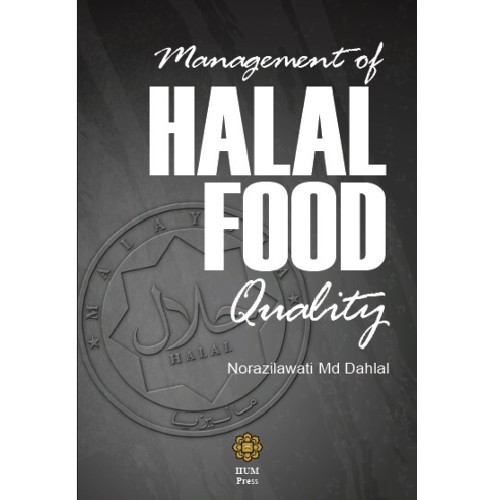
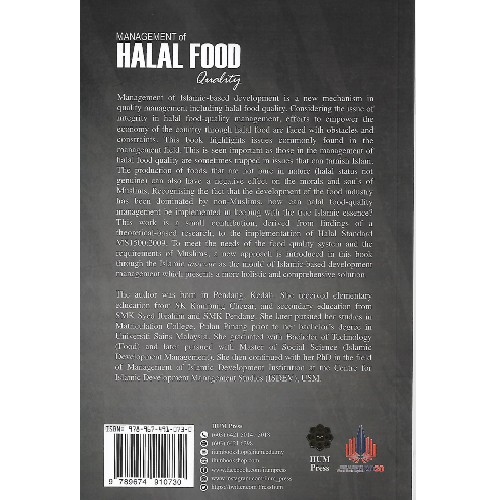
Management of Halal Food Quality
Management of Islamic-based development is a new mechanism in quality management including halal food quality. Considering the issue of integrity in halal food-quality management, efforts to empower the economy of the country through halal food are faced with obstacles and constraints. This book highlights issues commonly found in the management field. This is seen important as those in the management of halal food quality are sometimes trapped in issues that can tarnish Islam. The production of foods that are not pure in nature (halal status not genuine) can also have a negative effect on the morals and souls of Muslims.
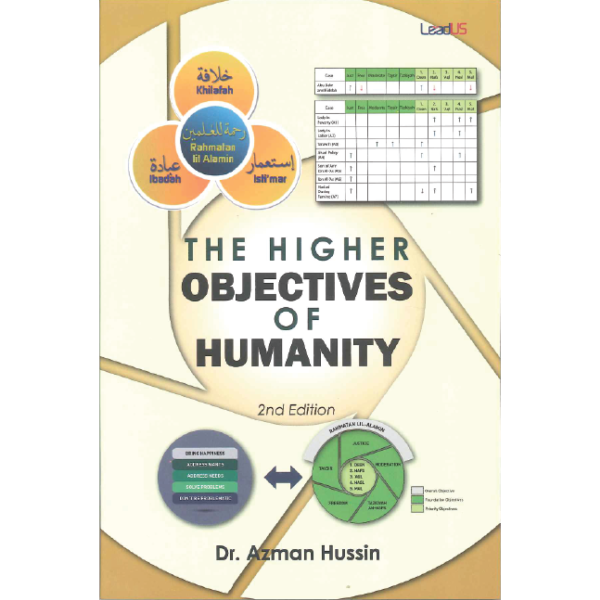
The Higher Objectives of Humanity
A video summary of this book can be found here: https://www.youtube.com/watch?v=YdNQxv_ODdc&t=26s This book discusses the why, what and how of Rahmatan lil-Alamin as the higher objective of humanity. It presents a practical understanding of the purpose of creation and humanity to improve the individual and collective well-being of Muslims and society. The intention is to re-introduce and re-emphasize the correct Islamic perspective of humanity. The first five chapters revisits the common understanding among Muslims as to why mankind is created. We show that the prevalent view that we are created to worship Allah (SWT) is incomplete. There is a higher and more noble purpose; Rahmatan lil-Alamin (mercy to the worlds). We next describe the what of Rahmatan lil-Alamin. The best role model of Rahmatan lil-Alamin is undoubtedly Prophet Muhammad (SAW), the last and final prophet and messenger, whom Allah (SWT) sent with a very clear purpose, “And We have not sent you but as a mercy to the worlds.” [21:107]. We present many examples from the history of Prophet Muhammad (SAW) and a collection of his (SAW) sayings and advice on being the best. The final chapters of the book deal with the how of Rahmatan lil-Alamin. We describe in detail how the Muslim can apply Rahmatan lil-Alamin daily in his or her life. We propose a practical model of Rahmatan lil-Alamin that we induced from the Quran. We also addressed how to apply Rahmatan lil-Alamin to a broader society by proposing a decision-making tool that can guide us as persons and as communities to make decisions that conform to the foundations and priorities of Rahmatan lil-Alamin. We present case studies from the history of the Companions using this decision-making model. This book seeks to establish a connection between Islam and civilization within a civilizational and ethical framework. We believe that a more proper and complete understanding of the Islamic view about humanity may present to us new perspectives of Islam and how Muslims should engage with fellow Muslims and people of other faiths. In fact, the implication of this new reinterpretation framework goes even further in that: any human civilization built on this framework is the most prosperous for the whole and also for the individuals in it.
The Corruption of Riba : Its Evil Essence, Forms, and Harms
In a time when many disregard the commands and prohibitions of Allah – the Most High, it is crucial to remind people of their obligations to Him and His Messenger, peace and blessings be upon him. The need for such reminders becomes urgent when acts prohibited by Allah, such as ribaa (usury), are treated as permissible, reflecting a grave defiance. Ribaa, one of the most despised sins in the sight of the Most Merciful, carries the severe consequence of a divine declaration of war against those who engage in it.
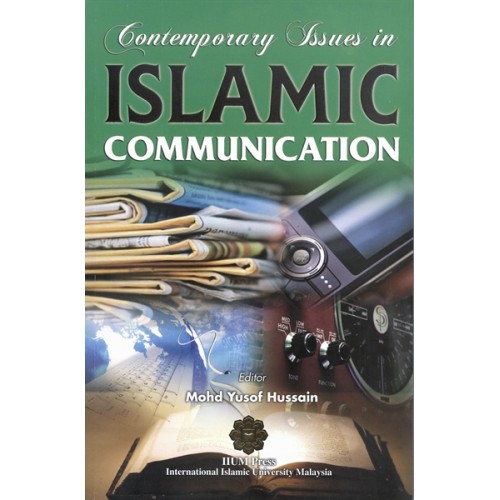
Contemporary Issues In Islamic Communication
The book contains a collection of essays on issues that are of concern to Muslim media and scholars and practitioners. The issues are those that are constantly highlighted in the mass media in the Muslim world. All the issues are discussed from the Islamic perspective. The main purpose of the book is to give readers a clear understanding of how Muslims view contemporary issues that are reported and discussed in present day mass media. The book is written for students majoring in communication at the International Islamic University Malaysia. It is also useful for students taking courses on communication issues in other universities.
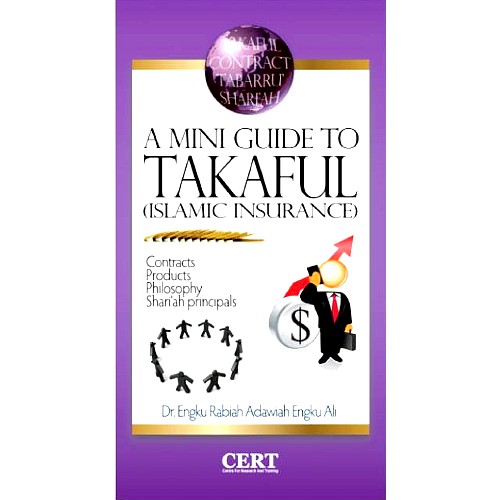
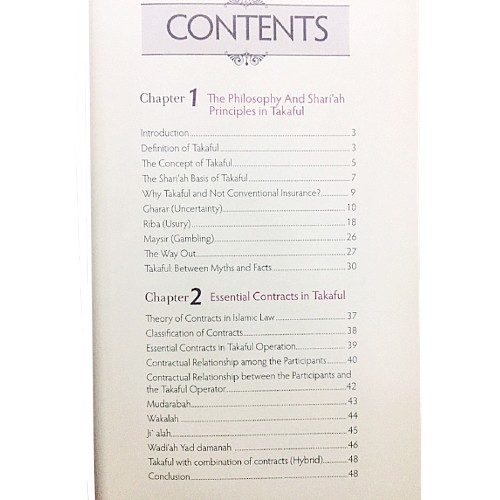
A Mini Guide to Takaful (Islamic Insurance)
This Mini Guide will prove useful and constructive to readers who want a better understanding of the takaful industry in contemporary Islamic finance.
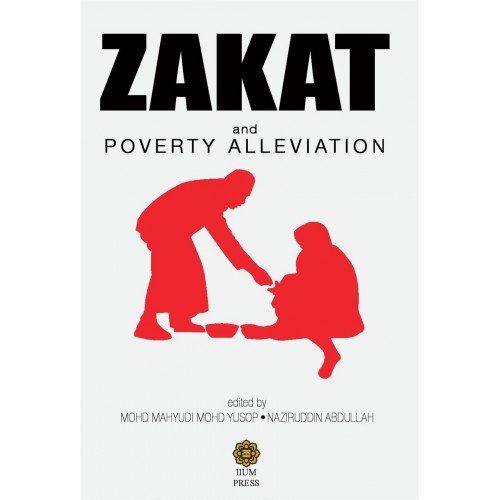
Zakat and Poverty Alleviation (P/B)
This edited book aims to raise issues pertaining to the topic of zakat and its primary goal of poverty alleviation. It portrays the dynamism of zakat by highlighting pertinent issues on the management of zakat institutions and innovative programmes that are designed as effective distribution mechanisms. Discussions include zakat payment motives, ways to measure the efficiency of zakat disbursement, economic development initiatives, housing programme, microfinancing, and actual impact on poverty alleviation. The discussions raised put emphasis on policy-orientation with dedicated sections on policy implications and recommendations. This approach is deemed necessary since it could guide the thought process of interested parties towards the creation of new ideas to actualize zakat as a very reliable tool in addressing the massive problem of poverty among Muslim communities. This special feature also significantly adds to the much-needed reference materials in courses on zakat at the intermediate level of undergraduate studies and introductory level of postgraduate programmes.
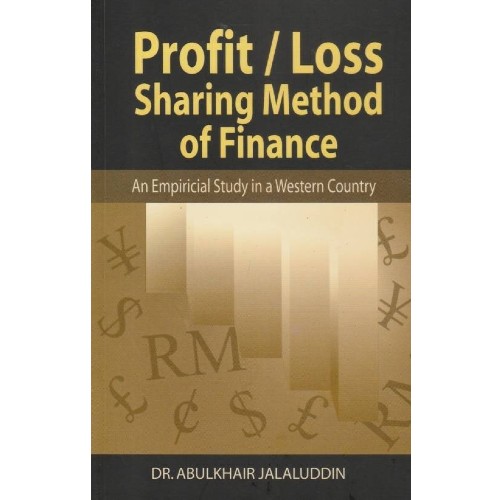
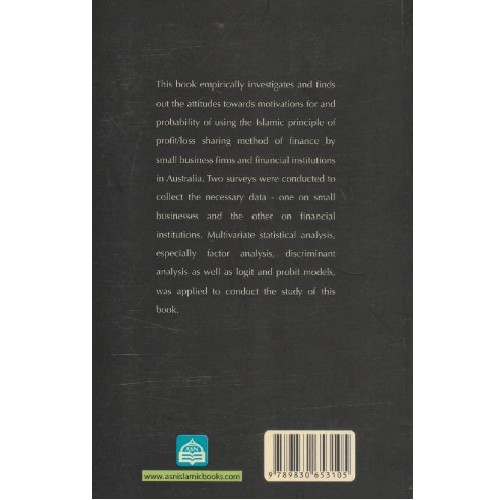
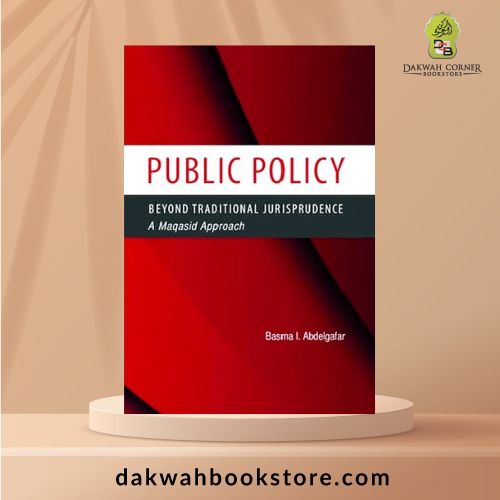
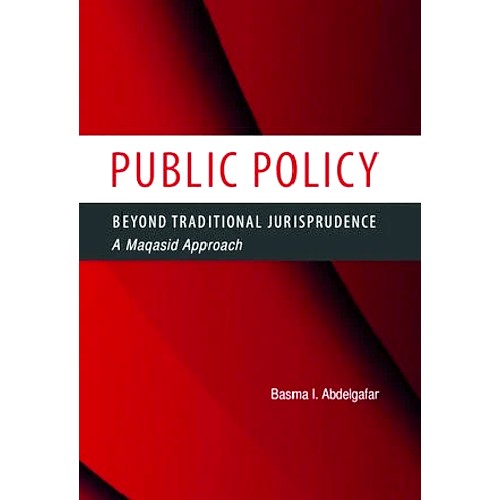
Public Policy: Beyond Traditional Jurisprudence A Maqasid Approach (IIIT)
This work charts new territory in Islamic scholarship by attempting to address the field of public policy from a maqasid (higher objectives of the Shariah) perspective. Public Policy is an independent discipline from both law and politics. Thus, Public Policy in Islam is introduced here as a qualitatively different enterprise from both fiqh (Islamic jurisprudence) and siyasah shar’iyyah (Shariah-oriented politics). The book deals with a number of critical topics that include methodology, governance, human rights, ethics, political power, and reform and renewal. It highlights how the maqasid approach is indispensable to the theory and practice of public policy in Islam, how it could resolve some of the most persistent governance dilemmas throughout Muslim history, but more significantly, how it forces a re-conceptualization of the wealth of knowledge available in Islam s primary sources to introduce Public Policy in Islam to mainstream policy studies.
Recently Viewed

Abraham – The Friend Of God
Abraham, as a prophet and patriarch, is called “the friend of God” in Jewish, Christian, and Islamic scriptures, and has a place of eminence in the shared scriptures and histories of each of these three monotheistic, prophetic, and Middle Eastern religions.
In Abraham: The Friend of God, Dr. Dirks provides Jewish, Christian, and Muslim readers with a unique and original presentation of the life of Abraham. In constructing a chronological biography of Abraham, the author integrated and synthesized information from a wide range of Judaeo-Christian and Islamic traditions, including the Bible, the Pseudeigrapha (I.e. Jubilees and the Genesis Apocryphon), the Qur’an, the authenticated sayings (Sahih Ahadith) of Prophet Muhammad, and the classic books of ancient history authored by Josephus and Al-Tabari. This integrated biographical sketch is embedded in a framework drawn from the various historical and geographical contexts dealing with different aspects of Abraham’s life.
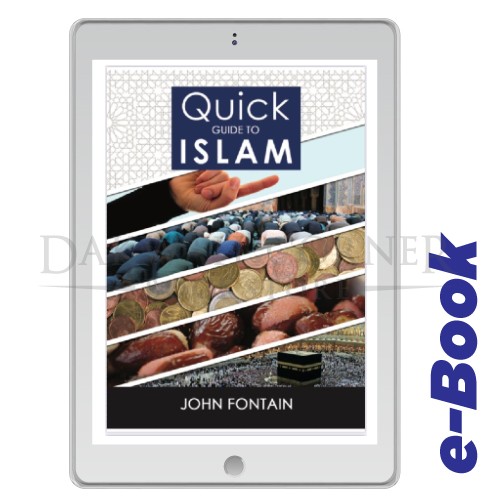
(FREE-eBook) Quick Guide To Islam
(E-book FREE)
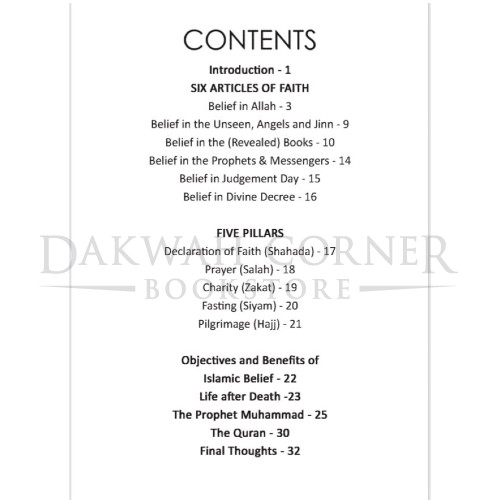
John Fountain was raised as a Christian but always believed in the concept of One God. In 2006 he started looking into Islam after coming into contact with Muslims in West Africa. After studying the religion, he finally embraced Islam in 2008, in Cairo Egypt. Since then he has been actively involved in Da’wah work (inviting people to Islam). John also runs his own charity organisation “Volunteer Sierra Leone” which helps support over 65 Muslim schools throughout Sierra Leone. Quick Guide to Islam is a brief introduction to some some of the key aspects of Islam that aims to reach out to Non-Muslims unfamiliar with the religion.


A Brief Illustrated Guide to Understanding Islam (P/B)
Discusses some evidence for the truth of Islam, the scientific miracles in the Holy Qur’an, and the great challenge to produce a single chapter like the chapters of the Holy Qur’an.
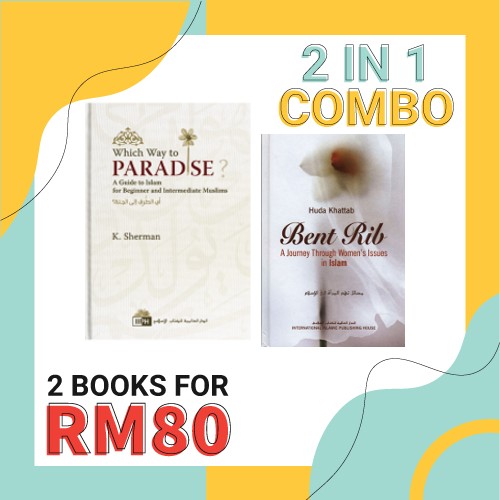
2IN1 Combo P04
1. Bent Rib: A Journey Through Women’s Issues In Islam (176 pages)
2. Which Way to Paradise? (256 pages)
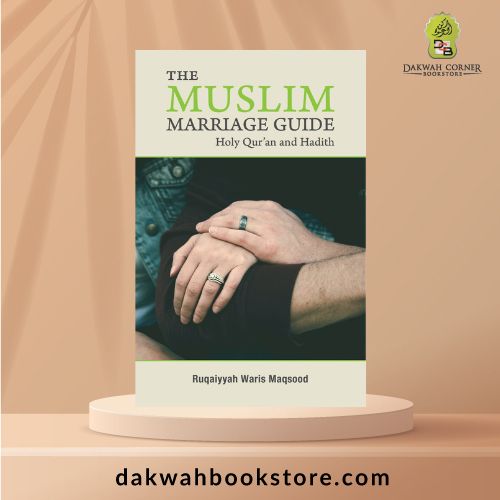
The Muslim Marriage Guide (P/B)
A much needed manual, this marvelous book that draws from Islamic sources to provide practical advice for a Muslim couple. Far from the sociological analysis or list of rules that fill other books about Islamic marriage, this book draws from the wisdom of the Sunnah to show how to love your partner in this life and prepare each other for the next. Written with plenty of real life experience (and even humor) from Muslims living in the West, the author balances the issues of male-female differences, respect for each others rights and needs and raising God-conscious children. A must read for anyone interested in marriage.
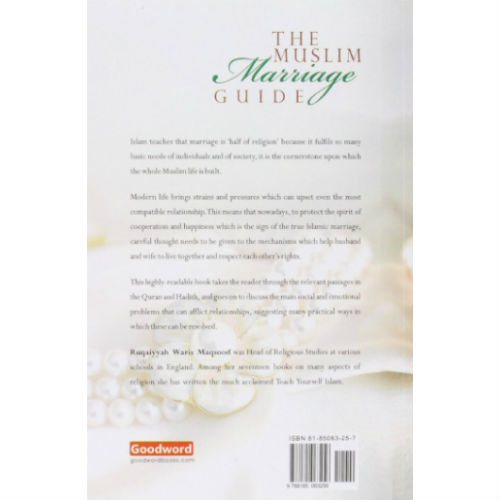
Modern life brings strains and pressures which can upset even the most compatible relationship. This means that nowadays, to protect the spirit of cooperation and happiness which is the sign of the true Islamic marriage, careful thought needs to be given to the mechanisms which help husband and wife to live together and respect each others rights.
This highly readable book takes the reader through the relevant passages in the Quran and Hadith (Islamic sources), and goes on to discuss the main social and economic problems that can afflict relationships, suggesting many practical ways in which these can be resolved.
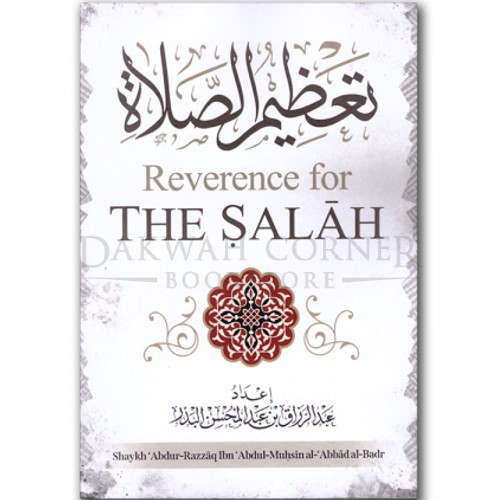
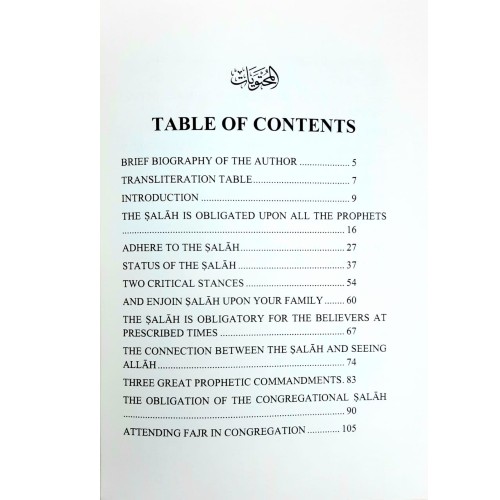
Reverence for The Salah (Maktabatulirshad Publication)
The Salah is the most crucial affair in a Muslim’s life. To preserve one’s religion, one has to observe it consistently; otherwise, one would be negligent of the Salah, let alone other acts of worship. It is the pillar of Islam, as it is soundly reported from the Prophet (May Allah elevate his rank & grant him peace). At the same time, the remaining deeds serve as the axis of support. Similarly, a tent without a pillar is useless. The Salah is the criterion for accepting all other deeds; if it is rejected [by Allah], all other deeds will be rejected. It is the first obligation ever in Islam and the last act of worship to wither. So, if one is negligent to the first and the last thing in Islam, then one will lose everything in-between.
Inadequate observance of the Salah that lacks adherence to its prescribed form in the manner performed by the Messenger of Allah (May Allah elevate his rank & grant him peace) will derail one’s religion. It will invalidate all deeds, cause misconduct in one’s religious and worldly affairs.
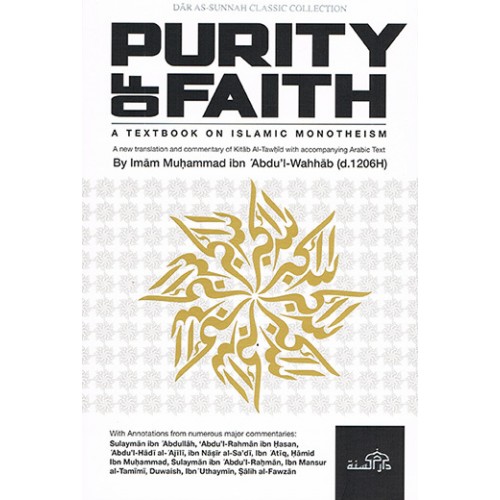
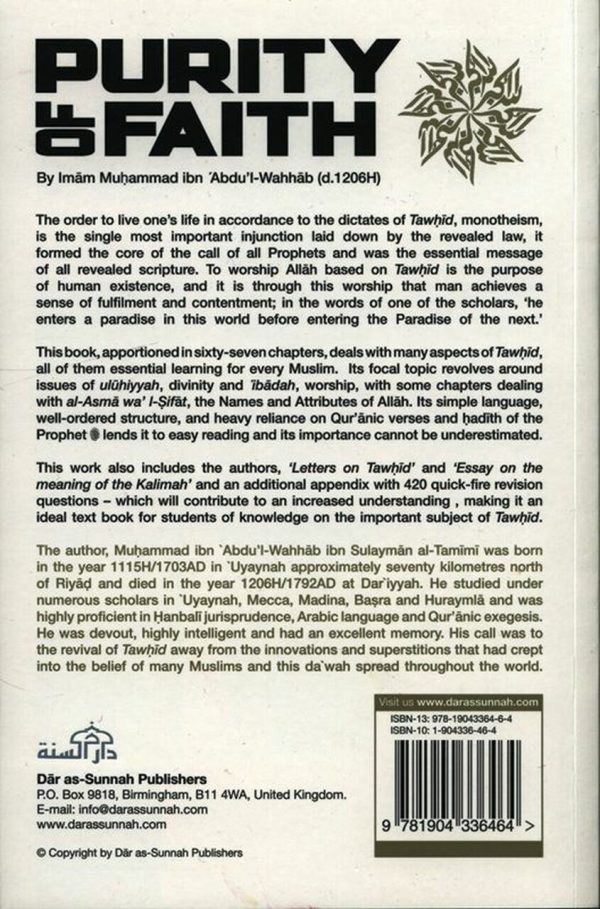
Purity of Faith (P/B)
The order to live one’s life in accordance to the dictates of Tawhid, monotheism, is the single most important injunction laid down by the revealed law, it formed the core of the call of all Prophets and was the essential message of all revealed scripture. To worship Allah based on Tawhid is the purpose of human existence, and it is through this worship that man achieves a sense of fulfilment and contentment; in the words of one of the scholars, ‘he enters a paradise in this world before entering the Paradise of the next.’
This book, apportioned in sixty-seven chapters, deals with many aspects of Tawhid, all of them essential learning for any Muslim. Its focal topic revolves around issues of ulùhiyyah, divinity and `ibadah, worship, with some chapters dealing with al-Asmm wa’l-Sifat, the Names and Attributes of Allah. Its simple language, well-ordered structure, and heavy reliance on Qur’anic verses and Hadith of the Prophet (saw) lends it to easy reading and its importance cannot be underestimated.
Kitab al-Tawhid is a landmark work analysing orthodox Islamic monotheism. Since it was authored it has received a great deal of attention, a large number of commentaries and has been translated into over twenty languages. Relevant as it was then, it remains relevant today and Muslims are in dire need of reading it, studying it and teaching it.
Unfortunately, despite previous laudable efforts, a translation does not yet exist in English that truly reflects the importance of this work. It gives Dar us-Sunnah great pleasure to present this work to the reader in the hope that it fills this gap
• An accurate translation in easy to read modern English
• Annotations taken from 15 major commentaries
• All major criticisms against the book by its antagonists addressed
• All Hadiths and narrations critically analysed and referenced
• This work also includes the authors ‘Letters on Tawhid and Eassay on the meaning of the Kalimah’
• Overview of the style and structure of the book
• Biography of the author analysing his life, creed and works
• The Arabic text of the whole book included
• 420 Revision Questions
• Indexes of verses, Hadiths and narrations
• This is an ideal text book for every Muslim on this very important topic
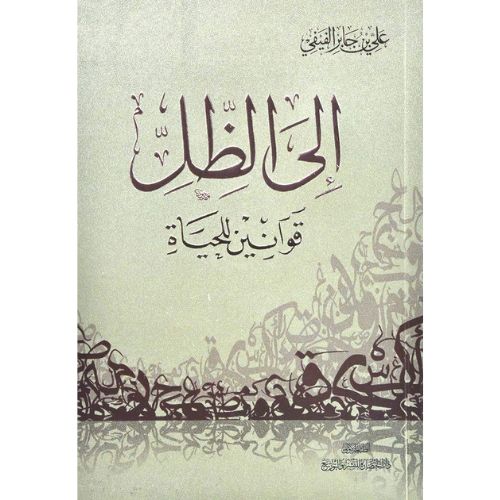
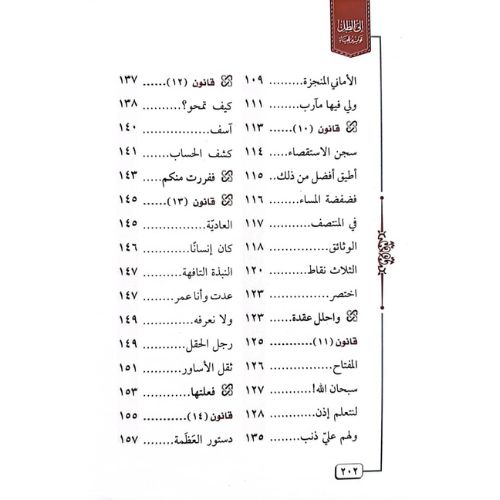
[MM] Ila Alzili (إلى الظل)
هذا الاقتباس يختصر القانون الثالث من هذا الكتاب، قانون: تولى إلى الظل ، فالكتاب يحتوي على 17 قانون من قوانين الحياة جميعها مستنبطة من قصة نبي الله موسى عليه السلام عندما قتل رجلاً من بني اسرائيل ففر خوفاً من فرعون إلى مَدين ، ثم باقي تفاصيل القصة حتى عاد إلى فرعون وسحرته في يوم الزينة.
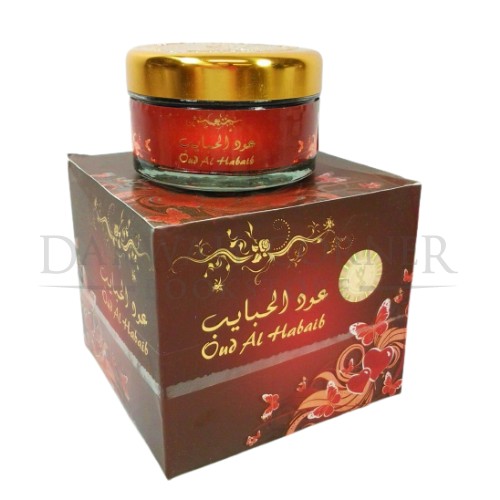

Oud Al Habaib
High-quality bukhoor burn Incense gives a fresh scent for your HOME, SHOP, or OFFICE.

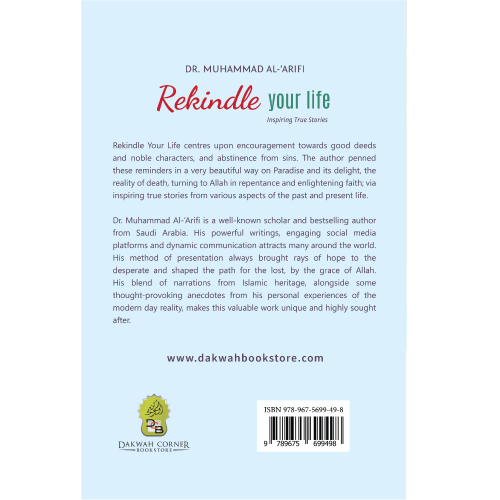
(E-Book) Rekindle Your Life (Revised)
Rekindle Your Life centres upon encouragement towards good deeds and noble characters, abstinence from sins by giving reminders in a very beautiful way about Paradise and its delight, the reality of death, turning to Allah in repentance and enlightening faith through inspired, true and wonderful stories from various aspects of life past and present.


Let’s go to Makkah!
A high contrast book that is best for your baby. Babies positively respond to high contrasting colors and it improves brain growth and visual development.
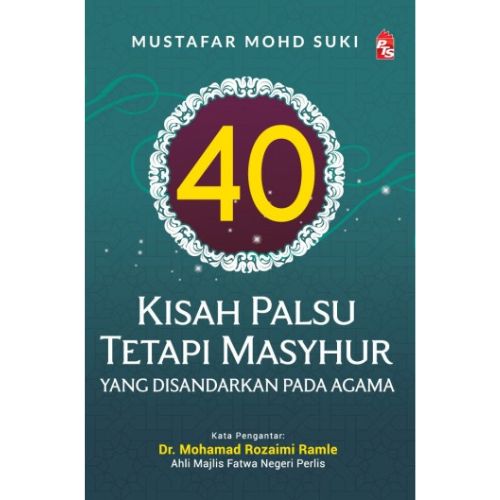
40 Kisah Palsu Tetapi Masyhur
Kisah ini bukan sekadar penyedap bicara. Jikalau benarnya tiada, maka dongeng nilainya lantas hilang hikmahnya. Jikalau kebetulan betulpun dianggap salah, apatah lagi yang tidak benar terutama berkaitan manusia.
Buku ini wajib dibaca oleh pendakwah, motivator, penceramah, pendidik, ibubapa, mahupun sesiapa sahaja supaya dapat kita betulkan yang biasa dan biasakan yang betul.
(Ustaz Ahmad Husni bin Abdul Rahman)
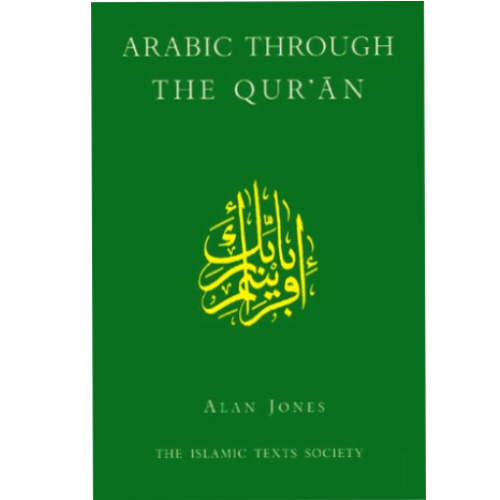
Arabic Through The Qur’an
Whether used as a means of self-instruction or as part of higher learning coursework, this language primer is ideally suited for those wishing to learn classical Arabic and for Muslims who wish to learn Arabic exclusively for use in their religious and spiritual practice. Designed to enhance the understanding of the Qur’an and its vocabulary that has infiltrated the whole of Arabic and Islamic literature, this workbook provides 40 easy-to-follow lessons for learning Qur’anic rather than modern Arabic. Beginning with a section on the Arabic alphabet, the text moves on to individual lessons that address one or more grammatical topics, ranging from the basics of nouns, adjectives, and prepositions to the more complex concepts of the imperative, the passive, and conditional sentence, introducing new vocabulary in the process. Accompanying translation exercises, a glossary of technical terms, and an index supplement the main text.
There are no reviews yet.