





| Weight | 0.45 kg |
|---|---|
| Dimensions | 22.5 × 16.5 × 1 cm |
| Product Type | Book |
| Author | |
| Publisher | Darussalam |
| Pages | 152 |
| ISBN | 9786035003230 |
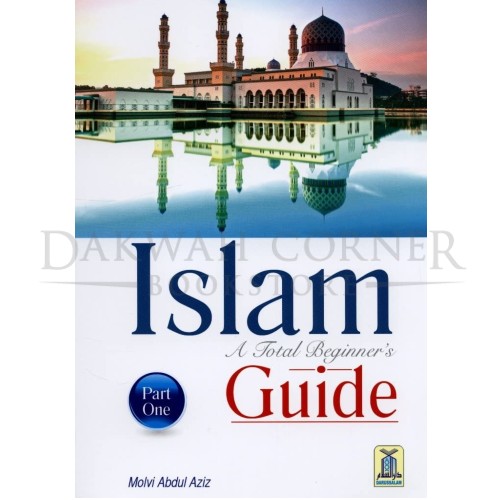
Islam A Total Beginners Guide – Part Three (P/B)
RM45.00
Hurry up, Only 1 left.

Highlights:
somdn_product_page
Compare
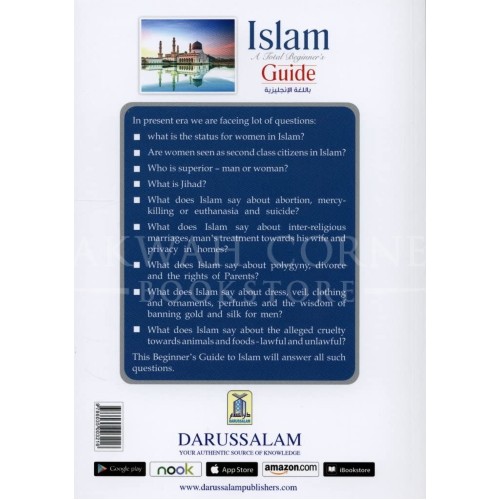
In present era we are facing lot of questions:
• What is status of women in Islam?
• Who is superior – man or women?
• What does Islam say about inter-religious marriages, man’s treatment towards his wife and privacy in homes?
• What does Islam say about dress, veil, clothing and ornaments, perfumes and the wisdom of banning gold and silk for men?
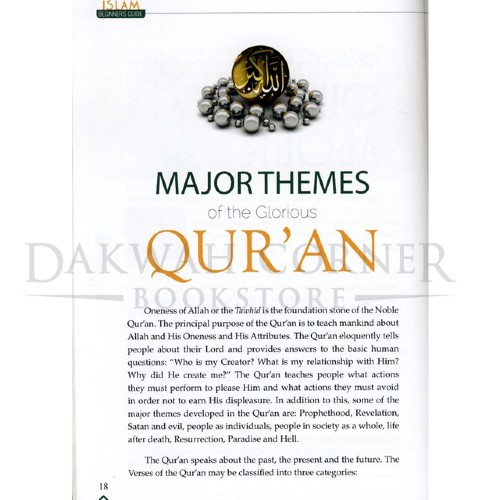
This beginner’s guide to Islam answers all such questions.
Frequently Bought Together
1 Item
RM45.00
2 Add-Ons
RM70.00
Total
RM115.00
Additional information
Reviews (0)
Be the first to review “Islam A Total Beginners Guide – Part Three (P/B)” Cancel reply
You must be logged in to post a review.
You may also like…


A Guide to Salah (Prayer) (P/B)
5 ★
5 ★
1 Rating
5 ★
1
4 ★
0
3 ★
0
2 ★
0
1 ★
0
Highlights:
This book is the result of direct research into the Sunnah of Prophet Muhammad saw and makes numerous references to the original sources. It contains all the essential details of salah without being too bulky or complicated, thus making it an ideal reference book either at home or while travelling.
A clear and concise explanation on how to pray. Also gives a detailed description of the preliminaries to salah, and different types of salah, with easy-to-follow illustrations.
RM16.00
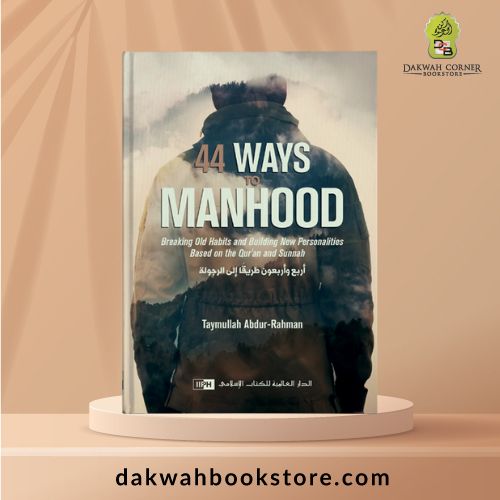
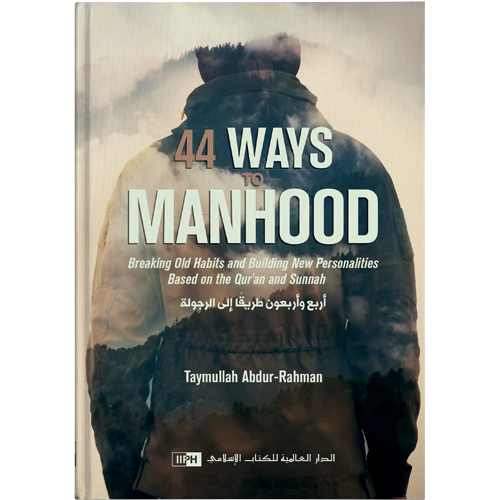
44 Ways to Manhood (H/B)
5 ★
5 ★
1 Rating
5 ★
1
4 ★
0
3 ★
0
2 ★
0
1 ★
0
Highlights:
What does it mean for a Muslim man to have a personality that is in accordance with the Islamic guidelines? In this informative and enlightening book, based on the teachings of the Qur’an and Sunnah, Taymullah Abdur-Rahman presents 44 principles that Muslim men need to implement in their lives. This book will be a useful resource for Muslim men of all ages, as well as in study circles and family discussions.
RM50.00
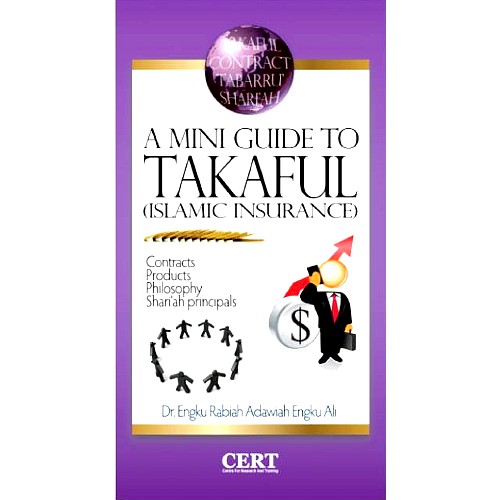
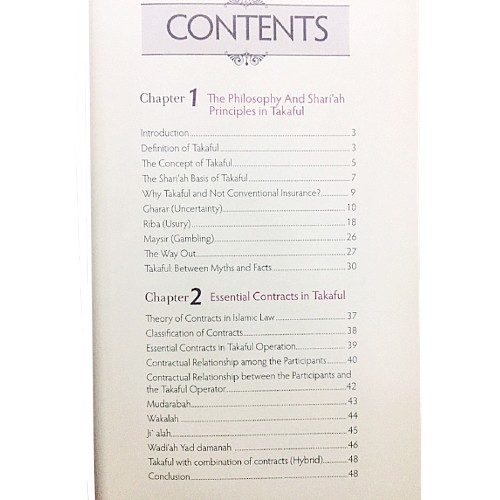
A Mini Guide to Takaful (Islamic Insurance)
Highlights:
This Mini Guide will prove useful and constructive to readers who want a better understanding of the takaful industry in contemporary Islamic finance.
RM45.00

Islam A Total Beginners Guide – Part Two (P/B)
Highlights:
In present era we are facing lot of questions:
• What is status of women in Islam?
• Who is superior – man or women?
• What does Islam say about inter-religious marriages, man’s treatment towards his wife and privacy in homes?
• What does Islam say about dress, veil, clothing and ornaments, perfumes and the wisdom of banning gold and silk for men?
This beginner’s guide to Islam answers all such questions.
RM35.00
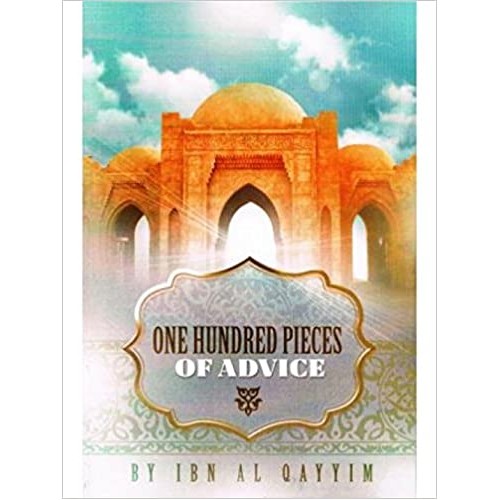
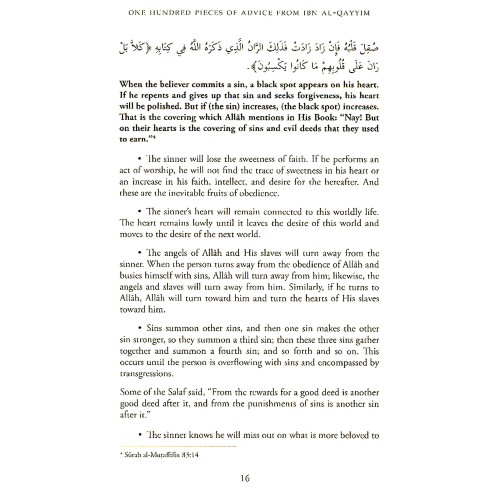
One Hundred Pieces of Advice
3 ★
3 ★
1 Rating
5 ★
0
4 ★
0
3 ★
1
2 ★
0
1 ★
0
Highlights:
One hundred treasured advices extracted from the writings of the illustrious scholar, Imām Ibn al-Qayyim (may Allāh have mercy upon him): Ten ways to acquire Allāh’s love Ten ways to be patient and avoid sins Ten ways to be patient during a calamity Ten benefits to lowering your gaze Ten ways sins are expiated Ten barriers between the slave and his Lord Ten reasons knowledge is not put into action Ten ways to open your heart Ten ways to protect against envy Ten ways to protect against the plots of the Shayṭān
RM48.00
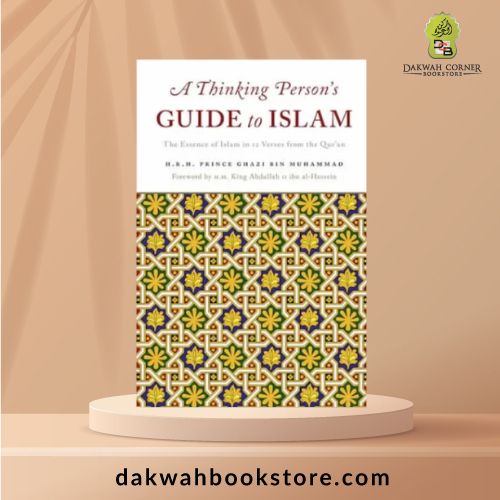
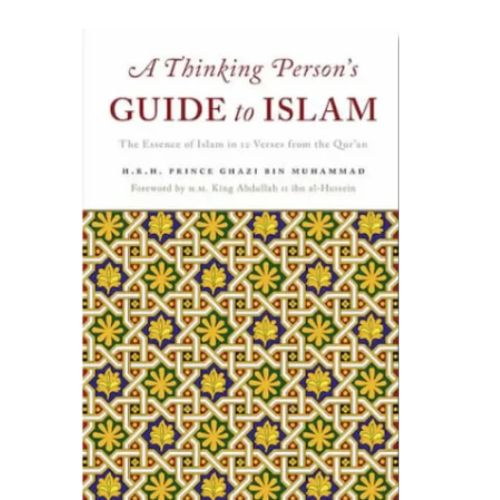
A Thinking Person’s Guide to Islam
Highlights:
The world is at a crossroads today. A tiny minority of Muslims seems to be bent on hijacking the religion of Islam and bringing it into perpetual conflict with the rest of the world. Because of their actions, very few non-Muslims understand the real difference between Islam as it has always been, and the distorted perversions of Islam today. This book is an attempt to positively say what Islam actually is—and always was—as well as what it is not.
RM80.00
Related Products

Ibn Taymeeyah’s Essay on the Jinn (P/B) ASN
Highlights:
Dr. Abu Ameenah Bilal Philips has rendered Ibn Taymiyah’s treatise, Eedaah-ud-Dalaalah fee ‘Umoom-ir-Risaalah, from volume 19 of Majmoo‘-ul-Fataawa into very readable English. This abridged and annotated translation is significant in that it is perhaps the first book available in English exclusively on the topic of spirit-possession and exorcism in Islam.
Ahmad ibn ‘Abdul-Haleem ibn Taymeeyah was bron in the town of Harran [near Edessa, in what was once Northern Iraq, but is now called Orfa and is a part of Turkey.], in the year 1263 CE. His father was a leading scholar of the Hanbalite school of Islamic law and so was his grandfather, who authored Muntaqaa al-Akhbaar, the text of ash-Shawkaanee’s Hadeeth classic Nayl al-Awtaar.
Ibn Taymeeyah mastered the various disciplines of Islamic study at an early age and read extensively the books of the various sects and religions in existence at that time. Much of his time and effort was spend defending the orthodox Islamic position against a tidal wave of deviation which had swept over the Muslim nation. Consequently, he faced many difficulties from both the prominent sectarian scholars of his time and from the authorities who supported them. His clashes with them led to his imprisonment on numerous occasions. Ibn Taymeeyah also fought, not only against internal enemies of Islaam, but also against its external enemies by both his Fatwaas (Islamic legal rulings) and his physical participation in battles. His ruling allowing the taking up arms against groups which recognized the Shahaadataan (declaration of faith) but refused to uphold some aspects of the fundamental principles of Islaam, greatly affected the resistance movement against the Tartars who had declared their acceptance of Islaam but did not rule according to divine law.
During these struggles he wrote countless books and treatises demonstrating his extensive reading and knowledge, not only of the positions of the early scholars, but also those of the legal and theological schools which had subsequently evolved. Ibn Taymeeyah also had a major effect on the open-minded schoars of his day, most of whom were from the Shaafi’ite school of law. Among the most famous of his students were IBN KATHEER, ADH-DHAHABEE and IBN AL-QAYYIM. The author died in 1328 while in prison in Damascus for his Fatwaa against undertaking journeys to visit the graves of saints [Ibn Taymeeyah’s ruling was based on the authentic statement reported by Abu Hurayrah wherein the Prophet Muhammad (sallallaahu alayhi wasallam) said, “Do not undertake a journey except to three masjids; this masjid of mine, Masjid al-Haraam (Makkah) and Masjid al-Aqsaa (Bayt al-Maqdis).” Collected by Al-Bukhaaree and Muslim]. His Fatwaa had been distorted by his enemies to say that he forbade visiting the Prophet Muhammad’s (sallallaahu alayhi wasallam) grave.
RM33.00


Hell-Fire Its Torments and Denizens
Highlights:
In all the divine revelations there is a constant warning that wrongdoers may end up in Hell-fire, though Allah’s kindness and mercy are extended to many people. Reading about the Hell-fire enables one to know it, fear it, and try utmost to keep oneself away from it through correct beliefs and good deeds. The more one knows about Hell-fire, the more he or she strives to be saved from its reach. Relying on statements from the Holy Qur’an and the Hadith, this book enables the reader to have a realistic picture of Hell-fire’s torments. It may be enough to know that it is a raging fire, but detailed knowledge of it, as displayed in this book, will strengthen a person’s belief and eventually, Allah willing, make him or her seek for and remain steadfast on the path to salvation. This is an indispensable book for believers and non-believers alike. Hell-fire: Its Torments and Denizens is an abridged, summarized version of Siddiq Hasan Khan’s book about the Hell-fire.
RM12.00

In Search of God (P/B)
Highlights:
Some thinkers has said, ‘A smattering of knowledge turns people away from God. Grater knowledge brings them back to Him’. The author concludes in this book by examining various theories that the choice humanity have is not between the universe with God and the universe with God and the universe without God. The real option is between the universe with God and no universe at all. Therefore humanity is compelled to opt for the proposition the universe with God. Hence it is logical to say I exist, therefore, God exists.
RM11.00

Dream Interpretation According to the Qur’an and Sunnah (P/B)
Highlights:
Separates the authentic Islamic teachings on dream interpretation from the myths, superstitions and fabrications being circulated on the subject. It also provides a guide for dream interpretation according to references found in the Quran and authentic hadeeths.
Since the English publication of Muhammad Al-Akili’s 508 page work entitled, Ibn Seerin’s Dictionary of Dreams: According to Islamic Inner Traditions in 1992, followed shortly thereafter by Dreams and Interpretations by Ibn Seereen, there has been an explosion of dream interpretation and interpreters among English-speaking Muslim communities in the West. On the other hand, dream interpretation has been a long established tradition in the Muslim East. However, it has become so mixed up with superstition, myths and fortunetelling, that most educated Muslims shun this area. The fact of the matter is that dream interpretation is mentioned in the Quran and was regularly practised by the Prophet (pbuh), himself. Consequently, there is a real need to understand this subject, especially, considering that humans spend about a third of their lives sleeping.
RM16.50

Philanthropy and Social Justice in Islam (P/B)
Highlights:
This book analyses the principles and practices of philanthropy and distributive justice in Islam. It argues, with analyses and examples, that the accomplishment of purposive philanthropy, as commanded by the fundamental tenets of Islam, through the professionalization and rationalization of zakat management, modernization of awaqaf, etc. has the potential of optimizing justice in Muslim societies. The work draws on the Quran, Hadithe, other authentic literature, and also on official documents and publications of management agencies dealing with philanthropy in different Muslim countries/societies. The analyses are documented enough to be used as a text for the study of philanthropy in Islam in tertiary institutions nonetheless are simple enough to draw general readership and to be used by non-profit and international organizations worldwide in order to order to understand the principles and issues of philanthropy and distributive justice in Muslim societies.
RM40.00




Why Islam?
Highlights:
Often, the first thing someone is asked when they discover the truth and embrace Islam is the question: Why Islam? Here, an American revert-to-Islam answers that question. The author, K. Sherman, writes: The beauty of Islam is probably the best-kept secret in modern times; it is about time it was revealed. This is the sentiment of a majority of people who are discovering the truth about Islam every day. My first exposure to the religion was through a perusal of a fifty-page booklet titled Towards Understanding Islam (written in 1932). It explained to me everything that twenty years of life and fifteen years of education could not. After the initial sense of relief, I suddenly felt cheated. I was consumed with rage. Why? I could not fathom how people could know about this phenomenal way of life and not speak out and inform others. This book is my personal take on the beauty of Islam, backed up by relevant and authentic references. I am convinced that humanity direly needs it and it is my duty to speak out.
RM22.00

Let Us Be Muslims (P/B)
Highlights:
LET US BE MUSLIMS is a new edited English version of Sayyid Mawdudi’s Urdu Khutubat. It is no ordinary book, says Khurram Murad in his long Introduction, for it has stirred more hearts and impelled more lives to change their course than any of his more erudite works. In these Friday congregational addresses, Sayyid Mawdudi expounds such familiar themes as Iman, Islam, the Prayer, Fasting, Almsgiving, Pilgrimage and Jihad. But, in an unusually beautiful, powerfully reasoned, eloquent and passionate, and yet simple and lucid style,
“Sayyid Abul A’la Al-Mawdudui (1903-1979), one of the chief architects of contemporary Islamic resurgence, was the an outstanding Islamic thinker and writer of his time. He devoted his life to expound the meaning and message of Islam and to organise a collective movement to establish the Islamic Order. In this struggle, he had to pass through all kinds of sufferings.
Between 1948-67, he spent a total of five years in different prisons of Pakistan. In 1953, he was also sentenced to death by a Martial Law court for writing a ‘seditious’ pamphlet, this sentence being later commuted to life imprisonment. In 1941, he founded Jama’at-I Islami, of which he remained Amir, until 1972 and which is one of the most prominent Islamic movements of our day. He authored more than one hundred works on Islam, both scholarly and popular, and his writings have been translated into forty languages.”
RM70.00


Provisions of the Afterlife Which Lie Within Prophetic Guidance (H/B – DKI
Highlights:
Written originally by Ibn Qayyim Al-Jauziyyah is one of the important resources of knowledge for those who seek to know the Seerah of their Prophet (P.B.U.H) as well as the Fiqh learned from it. This is a book that is unique in that it explains the Sunnah through the Seerah and the Seerah through the Sunnah. It is a profound classic work containing thousands of pages written by Imam ibn al-Qayyam while on the Hajj journey, Pilgrimage, from Damascus to Makkah. Despite its being written from memory, the several thousand incidents, Hadiths, Ayat (verses of the Quran), Fiqh benefits, as well as names of the companions associated with them, were remarkably close to the truth with marginal errors.
However, those who know the status, level of knowledge ad Ta’hqiq that Imam ibn al-Qayyim had will not be surprised to know this fact. Still, it is amazing how Ibn Al-Qayyim was able to write this vast volume while traveling to Hajj (Pilgrimage), especially since he was away from the resources of knowledge and was enduring the hardships of travel. It is a blessing from Allah (S.A.T) that it was possible for him to do so. Note: As with Many English Translations this work appears to be slightly abridged but it seems to cover most of the subjects Note : With the Lack of English works covering Hanbali Fiqh , This Books would be the nearest alternative. Although not a Specifically Fiqh Book, Ibn Qayyim’s views which are based on Hanbali Fiqh are quoted throughout.
RM130.00

Wholeness and Holiness in Education An Islamic Perspective (P/B)
Highlights:
It was initially an adaptation of Shah ‘Abdul Qadir Muhaddith Dehlawi’s translation and commentary known as Mudih al-Qur’an which according to many great ‘ulama’ is devinely inspired and accepted by all Muslims.
RM62.00

Prophet Muhammad: A Blessing for Mankind
Highlights:
Prophet Muhammad (blessings and peace of Allah be upon him) and the lessons he taught us from the continued hardships he underwent in every stage of his life are a real blessing for humankind. Being an orphan child made him compassionate to widows and orphans as well as to the poor. His multiple marriages strengthened the ties of kinship amongst the different tribes, dissolving long-standing enmity. His message and prophethood were challenged by the polytheistic society in Makkah, forcing him and his few followers to emigrate to Madinah. Despite his illiteracy and the struggles he faced, he conveyed Allah’s Book, the Noble Qur’an, to all humanity, teaching them the values and principles that are presently adopted by billions of Muslims throughout the world. In the Qur’an, Allah, the Almighty addresses the Prophet (blessings and peace of Allah be upon him), saying: {We have sent you only as a mercy to the worlds.} (Qur’an 21: 107)
RM8.00 RM9.00

Dreams of the Prophets and the Righteous
Highlights:
Originally written in Arabic by Abdul Mun’im al Hashmi. It is like an encyclopedia of dreams. It tells us how we should behave on seeing a dream and how they may be interpreted. There are dreams of the Prophets and the Righteous men, and the dreams of the Prophet and his Sahabah. Some dreams of non-Muslims also find place in this book. The author also informs as to what various things like animals, birds and certain chapters of the Qur’an would mean if seen in a dream.
RM35.00
Recently Viewed
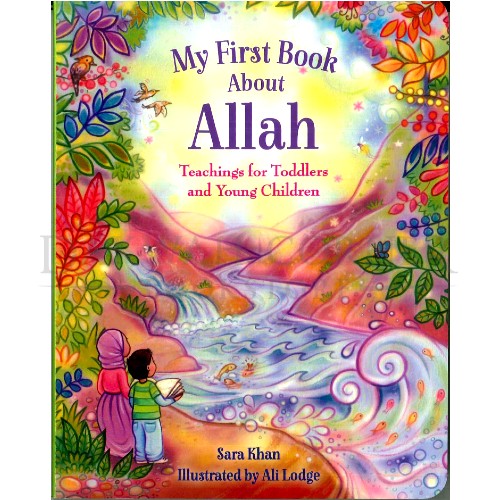
My First Book About Allah (H/B)
Highlights:
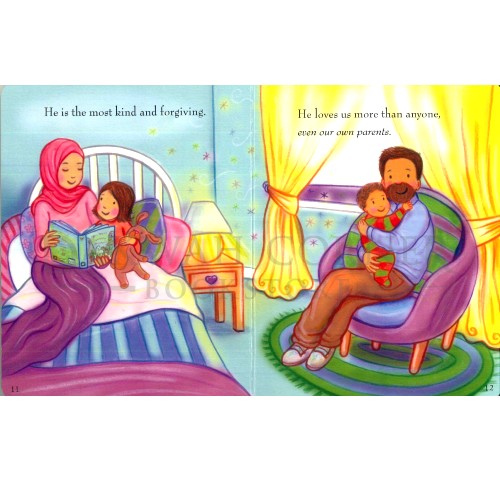
This simple but beautiful book helps children understand who Allah is. It introduces some of His divine attributes: His Oneness, His infinite Power, Love and Mercy, and it ends with the promise He has made to those who believe in Him and make Him happy.
It is a book to be treasured by children, with large, colourful illustrations and carefully written text that children will understand and enjoy.
RM50.00
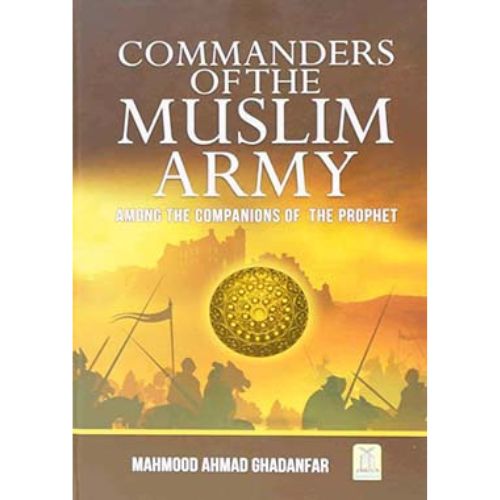
Commanders of the Muslim Army (H/B)
Highlights:
This book is about the lives of those Noble Companions and Commanders who led the Islamic forces in the violent and strife-torn arenas of conflict against the kuffar. They struck terror in the hearts of the enemy, and the strong forts and palaces of Caesar and Chosroes trembled before their might. In this compilation there are not only stories of the battlefields but also the stories of bravery and courage, valour and piety, austerity and simplicity.
RM60.00
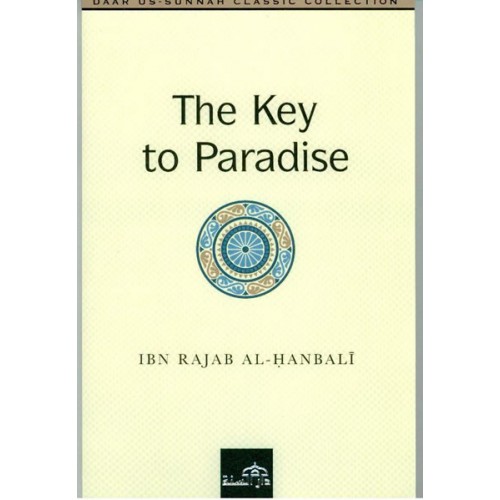
The Key To Paradise (P/B)
Highlights:
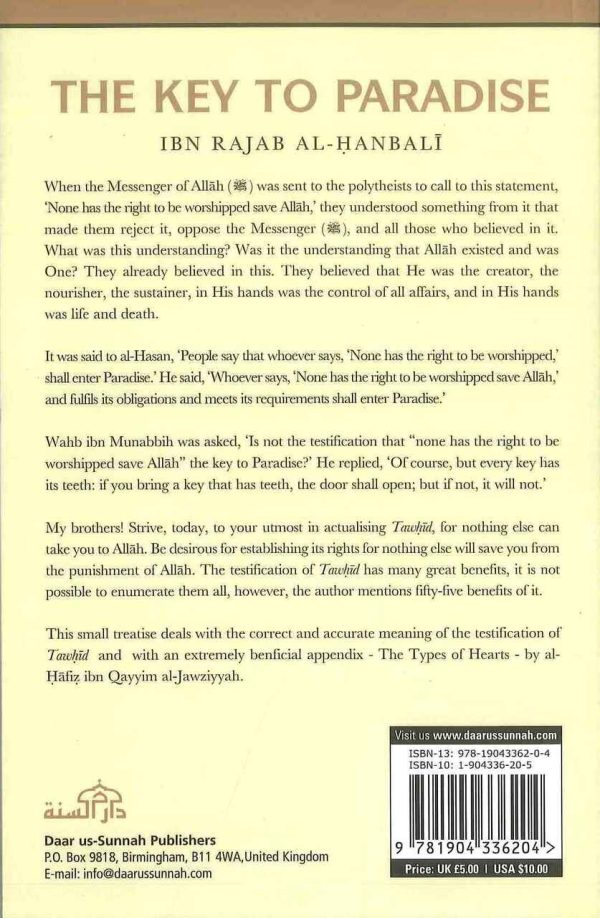
It was said to al-Hasan, ‘People say that whoever says, ‘None has the right to be worshipped,’ shall enter Paradise.’ He said, ‘Whoever says, ‘None has the right to be worshipped save Allah,’ and fulfils its obligations and meets its requirements, shall enter Paradise.’
Wahb ibn Munabbih was asked, ‘Is not the testification that ‘none has the right to be worshipped save Allah’ the key to Paradise?’ He replied, ‘Of course, but every key has its teeth; if you bring a key that has teeth, the door shall open; but if not, it will not.’
The Key to Paradise is the testification of Tawhid. This book highlights the importance of correct belief, a true love for Allah and the state of the heart.
Chapters Include:
The Manner of Entering Paradise
The Meaning of the Testification
Loving Allah
The Sound Heart
Also included is an extremely beneficial appendix – The Types of Hearts by al-Hafiz ibn Qayyim al-Jawziyyah.
RM36.75 RM49.00
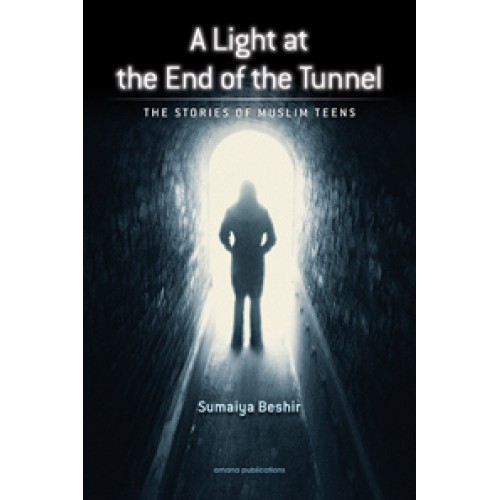
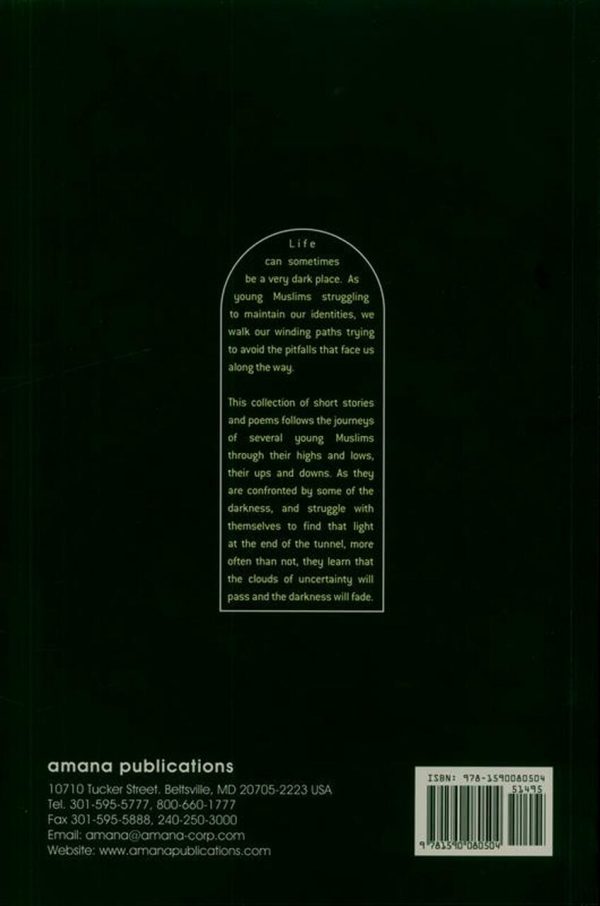
A Light at the End of the Tunnel (P/B)
Highlights:
The book features a collection of short stories written by Muslim teens. Through their stories they share the struggles and experiences they have faced on issues such as dating, friendship, hijab, respecting parents, clarifying misconceptions about Islam and defining one’s identity.
RM47.00
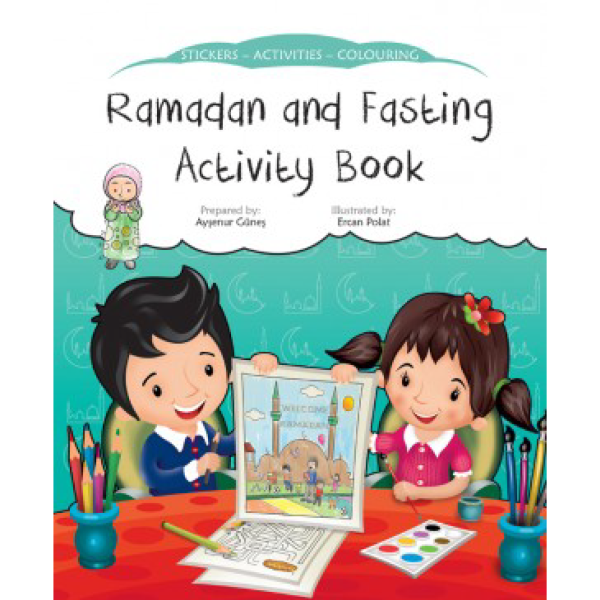
Ramadan and Fasting Activity Book
Highlights:
Discover what makes Ramadan such a special time of year for Muslims with this fun sticker activity book. Features dot-to-dot drawings, colouring fun, puzzles to solve and over 60 stickers to stick.
Introduces children to the basics of fasting, including who doesn’t have to, when you do and do not eat, and the importance of family and friends in Ramadan.
RM25.00
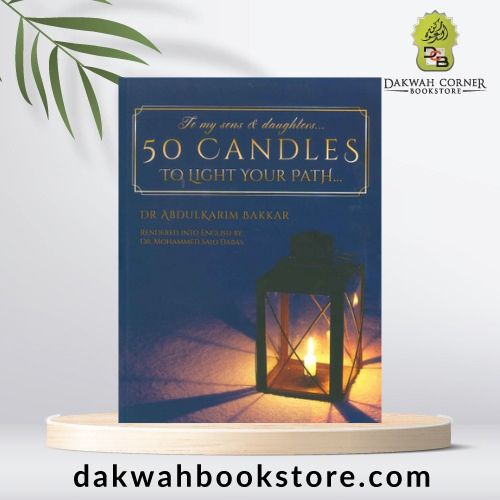
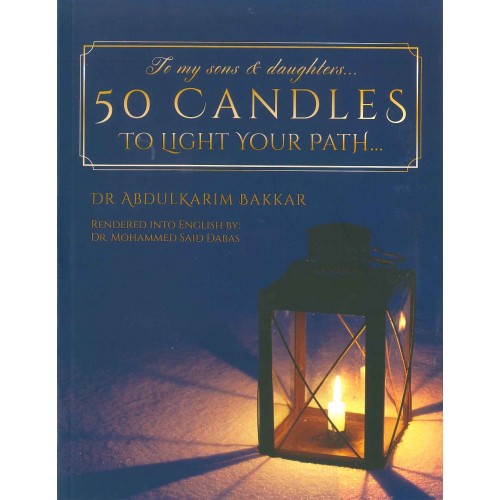
50 Candles To Light Your Path (P/B)
5 ★
5 ★
2 Ratings
5 ★
2
4 ★
0
3 ★
0
2 ★
0
1 ★
0
Highlights:
One goal brings them together : how to improve the well-being of our sons and daughters, how to aid them towards threading the path of guidance to engender their excelling in their academic, work and other facets of life.
RM36.00
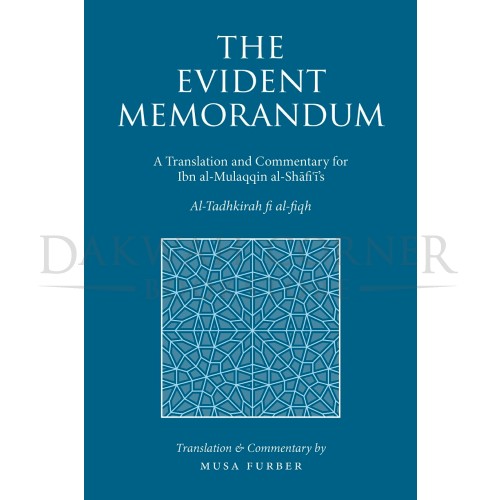
The Evident Memorandum
Highlights:
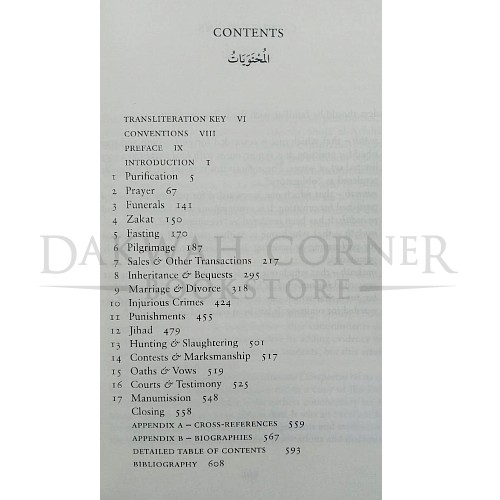
The Evident Memorandum: A Translation and Commentary for Ibn al-Mulaqqin al-Shāfiʿī’s Al-Tadhkirah fi al-fiqh
This volume contains an original commentary for Al-Tadhkirah (The Memorandum), a legal primer for Islamic Law according to the later scholars of the Shāfiʿī school by Ibn al-Mulaqqin, an Egyptian scholar who died in 804 AH/1401 CE. The commentary introduces essential evidence for the core issues of Islamic Law from its primary sources (the Quran, Sunnah, legal analogy, and scholarly consensus).
The Arabic text of Al-Tadhkirah is approximately 8,500 words in length. It is two hundred words longer than Abū Shujāʿ al-Aṣfahānī (b. 433AH/1042CE)’s Matn al-ghāyat wa-l-taqrīb (published as The Ultimate Conspectus). Although the two are roughly the same size, Ibn Mulaqqin’s style is more economical than Abū Shujāʿ’s, allowing him to cover more within the same word count. And while Ibn Mulaqqin discusses more issues, he does occasionally skip a few details that Abū Shujāʿ includes.
The primary sources for comments in this book are Ibn Mulaqqin’s books of fiqh, including Sharḥ Mukhtasar al-Tabrīzī, ʿUjālat al-muḥtāj, and Khulāṣat al-fatāwī. The bulk of the commentary comes from Sharḥ Mukhtaṣar al-Tabrīzī. Comments and hadith in the commentary can be sourced back to either one of Ibn Mulaqqin’s fiqh texts or a Shāfiʿī fiqh text through an appendix that cross-references each chapter and section in this book against its sources. Each hadith mentioned in the book is traced back to its primary sources, along with a reference to one or more of Ibn Mulaqqin’s hadith works. In the few instances where a hadith is not included in one of Ibn Mulaqqin’s works, it is referenced it to a Shāfiʿī text that does. Through this, readers can be assured that the hadiths cited here are ones that Shāfiʿīs themselves use.
Readers will find the book most beneficial after reading The Accessible Conspectus and Sharh al-Waraqat.
RM125.00
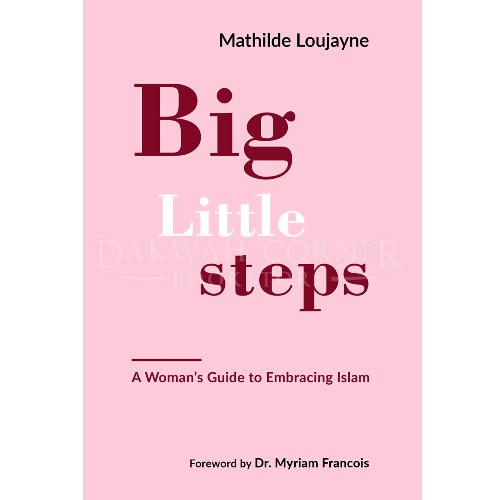
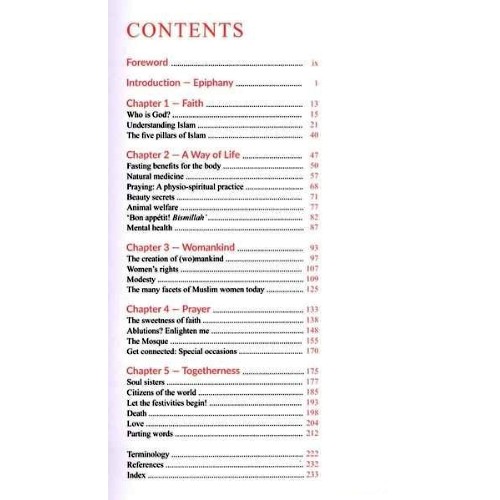
Big Little Steps
5 ★
5 ★
1 Rating
5 ★
1
4 ★
0
3 ★
0
2 ★
0
1 ★
0
Highlights:
“A ‘self-help’ book for Muslims, which seeks both to inspire Muslim women, but also to educate those outside the faith” – Dr. Myriam Francois. Since her conversion to…
RM115.00
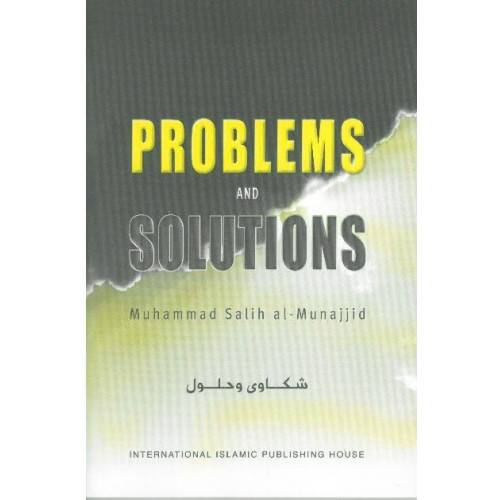

Problems and Solutions (IIPH)
Highlights:
What should I do if I miss the fajr prayer? What are the consequences of excessive laughter? How should I deal with insinuating thoughts from Satan? How can I control my bad temper? What is so bad about staying up late night after night? Drawing on the great guidance of the Qur’an and the Sunnah, Shaykh Muhammad Sâlih al-Munajjid answers these questions and more, giving informative explanations and practical solutions to help you improve in your worship and in your performance of everyday activities.
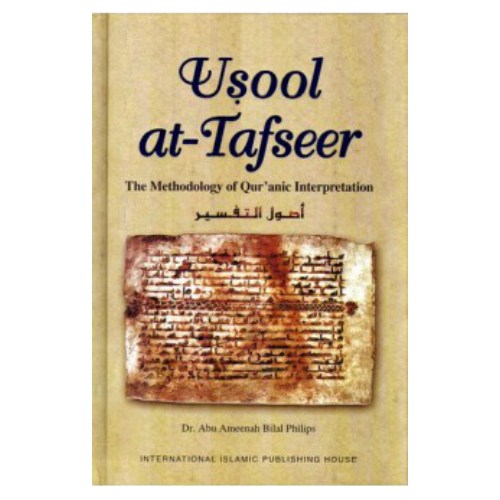
Usool at-Tafseer (H/B)
Highlights:
Usool at-Tafseer, essentially refers to the branches of knowledge necessary for providing an accurate interpretation of the Quranic texts, such as Arabic grammar and syntax, Arabic literature and Quranic sciences (Uloom al-Quran). Familiarity with modern fields of learning, like the pure sciences and social sciences is also necessary for a commentator in this era to make the Quraanic explanations relevant to human society. This book addresses the actual step-by-step methodology of interpreting Quran to ensure that interpretations are not merely the result of human whims and fancies.
RM60.00

Scholars of Hadith (P/B)
Highlights:
This book presents an extensive, in-depth analysis of great Muhaddithun (scholars of the science of Hadith). Each chapter presents detailed biographies of Malik b. Anas, Ibn Hanbal, al-Bukhari, Muslim, al-Tirmidhi, Abu Dawud, an-Nasai, Ibn Majah, ad-Darimi and al-Bayhaqi along with the methods they used in Hadith collection and classification. This work is especially important in today’s world where many Muslims have a dire need to connect with the great corpus of work that was produced by the scholars or traditional Islam. A work such as Scholars of Hadith has been long overdue in the English language and it will certainly make for productive reading for all interested in deepening their knowledge of Islam.
RM24.00
There are no reviews yet.