
| Weight | 0.120 kg |
|---|---|
| Dimensions | 19 × 12.5 × 0.6 cm |
| Author | |
| Binding | Paperback |
| ISBN | 9781842001646 |
| Pages | 62 |
| Publisher | Taha |
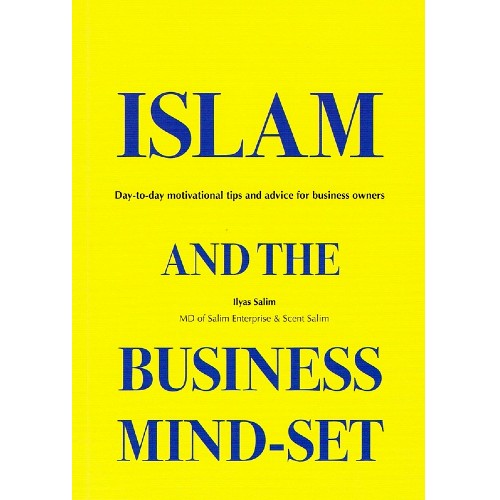
Islam And The Business Mind-Set
RM25.00
Written by one of the top young entrepreneurs in the North of England, Ilyas Salim is MD of Salim Enterprise, a global investment company.
From this book, you will learn how to:
- Create a business mentality
- Start a moral and ethical business
- Expand your business
- Work smarter, not harder
- Attract Barakah into your business
- Achieve not just a work/life balance, but a total life balance.
All this is within the framework of the Qur’an and Hadith and examples from the life of the Prophet Muhammad SAW.
Be the first to review “Islam And The Business Mind-Set” Cancel reply
You must be logged in to post a review.
Related Products
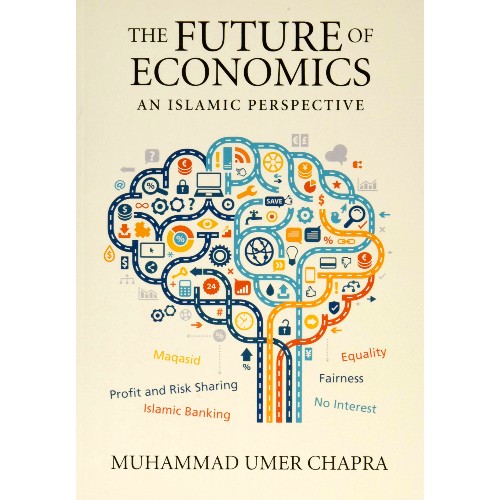
The Future of Economics An Islamic Perpective
This profound book is a powerful yet balanced critique of mainstream economics that makes a forceful plea for taking economics out of its secular and occident-centered cocoon. It presents an innovative and formidable case to re-link economics with moral and egalitarian concerns so as to harness the discipline in the service of humanity
Islamic Capital Markets: Principles and Practices (P/B)
KEY FEATURES OF THE BOOK
* It elucidates the principles and practices of the Islamic capital market with academic rigours.
* It sheds light on the cutting-edge practical issues faced by the industry.
* Every chapter contains relevant case studies and supportive illustrations.
* Multiple Choice Questions (MCQs) and discussion questions are provided at the end each chapter.
KEY SUBJECTS
Shari’ah framework, Regulatory framework, Corporate and Shari’ah governance, Risk management, Accounting and taxation, Sukuk Islamic equity market, Islamic unit trust, REITs and ETFs, Islamic private equity and venture capital, Islamic derivatives and hedging and Islamic structured investment products.
Tajdid, Islah and Civilization Renewal in Islam
The history of Islamic thought is marked by a continuous tradition of internal revitalisation and reform embedded in the principles of islah, and tajdid. The ultimate purpose has been to bring existing realities and social change in line with the transcendent and universal standard of the Qur’an and Sunnah through a process of restoration and reform. The tradition of islah-tajdid has thus consistently challenged the Muslim status quo and prompted fresh interpretation of the Qur an and Sunnah, understood and implemented through the methodologies of interpretation and ijtihad, as well as the rejection of unwarranted accretions to the original messages of Islam. The basic theme of the paper is that civilisational renewal is an integral part of Islamic thought. The paper looks into the meaning, definition and origins of tajdid and islah and their relationship with ijtihad, and how these have been manifested in the writings and contributions of the thought leaders of Islam throughout its history. It also develops tajdid-related formulas and guidelines that should lead the efforts of contemporary Muslims in forging the objectives of inter-civilisational harmony and their cooperation for the common good.
Islamic Economics : Principles & Analysis (P/B)
Economics is a social science that studies the behaviour and interactions of economic agents and analyses how economies work at the macro- and micro-levels. It studies production, distribution and consumption of goods and services, identifies economic problems and phenomena, and addresses economic questions from a positive perspective (what is) as well as a normative (how it should be) perspective. Islamic economics examines the same areas as its conventional counterpart. However, it involves the application of Sharīʿah to the different economic functions and issues. It is postulated that Islam offers a better approach compared to conventional economics in managing economic activities and solving economic and social issues.
Islamic Financial System: Principles & Operations
This second edition of the book marks another milestone of a collaborative effort between prominent scholars and practitioners of the Islamic finance industry. It sheds light on the front line issues faced by the Islamic finance industry with academic rigor. Each chapter in the book is complete with figures, diagrams, tables, case studies, a set of review questions and problems and a list of references for further reading. It offers invigorating discussion on a comprehensive range of topics related to Islamic finance, combining both theoretical foundations and operational aspects.
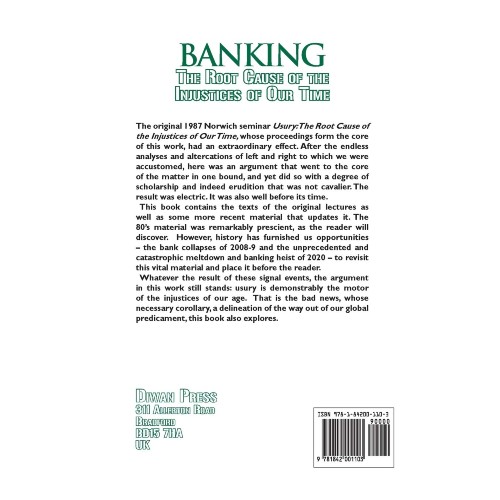
Banking: The Root Cause Of The Injustices Of Our Time (Revised Ed.)
The original 1987 Norwich seminar Usury: The Root Cause of the Injustices of Our Time, whose proceedings form the core of this work, had an extraordinary effect.
After the endless analyses and altercations of left and right to which we were accustomed, here was an argument that went to the core of the matter in one bound, and yet did so with a degree of scholarship and indeed erudition that was not cavalier. The result was electric. It was also well before its time.
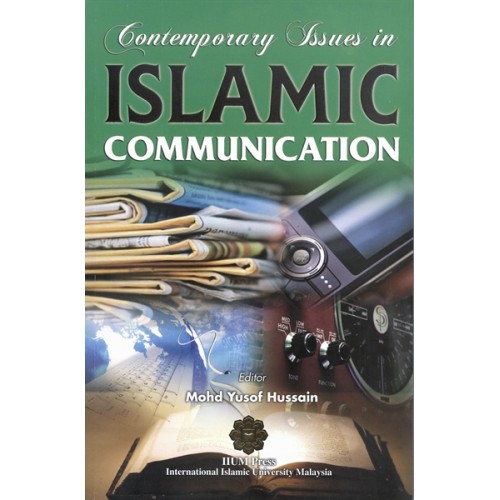
Contemporary Issues In Islamic Communication
The book contains a collection of essays on issues that are of concern to Muslim media and scholars and practitioners. The issues are those that are constantly highlighted in the mass media in the Muslim world. All the issues are discussed from the Islamic perspective. The main purpose of the book is to give readers a clear understanding of how Muslims view contemporary issues that are reported and discussed in present day mass media. The book is written for students majoring in communication at the International Islamic University Malaysia. It is also useful for students taking courses on communication issues in other universities.
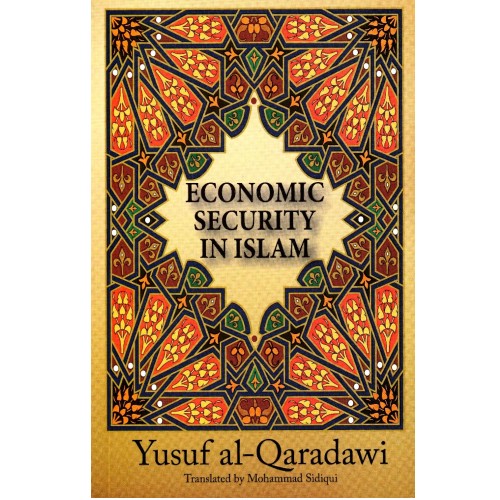
Economic Security In Islam
This book is an English rendering of a popular Arabic book entitled Mushkala al-Faqr wa Kaifa ‘Aljiha al-Islam by the renowned Muslim Scholar ‘Yusuf al-Qaradawi. The author depicts the basic principles of the Islamic Economic System in the light of the Holy Qur’an and the Sunnah.
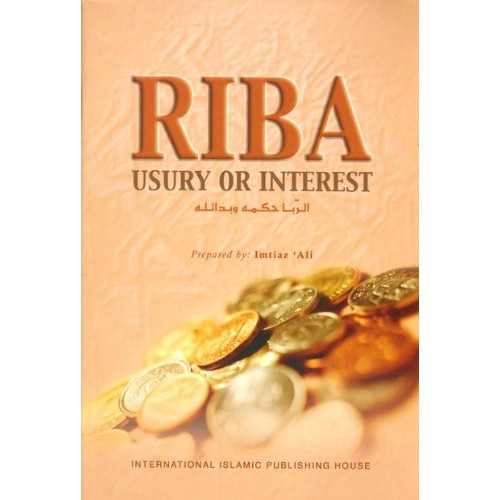
Riba: Usury or Interest
The Noble Qur’an states: {… Fear Allah, and give up what remains of your demand for usury/interest, if you are indeed believers. If you do not do so, then take notice of war from Allah and His Messenger.} (Qur’an 2: 278-279) Despite this obvious prohibition, the practice of ribâ (usury and interest) has polluted the global economy completely. This booklet explains the awful consequences of dealing in usury and interest in a summarized but convincing manner.
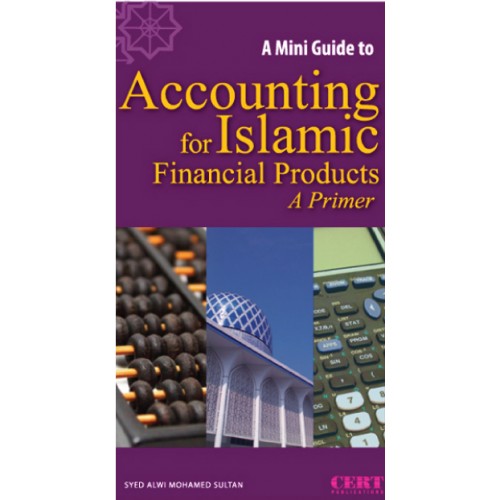
A Mini Guide to Accounting for Islamic Financial Products – A Primer (Pocket size) (P/B)
This “A Mini Guide to Accounting for Islamic Financial Products” starts with the development of Islamic finance as well as accounting standards and development of AAOIFI which aims to develop standards on accounting, auditing, ethics and governance and disseminate them on the target market.
The guide also highlights selected accounting issues addressed by AAOIFI : substance over form, prudence, mudarabah investment accounts and asset valuation. This is followed by how information of financial statement of an Islamic bank helps its major users, like equity holders, holders of investment accounts, regulatory agencies and others.
The guide also points out the main differences in the presentation of financial statements of Islamic Financial Institutions. Among them are: how assets are defined and inclusion of equity of unrestricted investment account holders. The differences arise as a result of utilizing a Shari’ah compliant contract to bring into effect a particular product.
The last section discusses some of the more popular contracts such as murabahah, istisna’, ijarah, mudarabah and musharakah. A few case studies are also incorporated for different contracts to give more understanding on the topic to the readers.
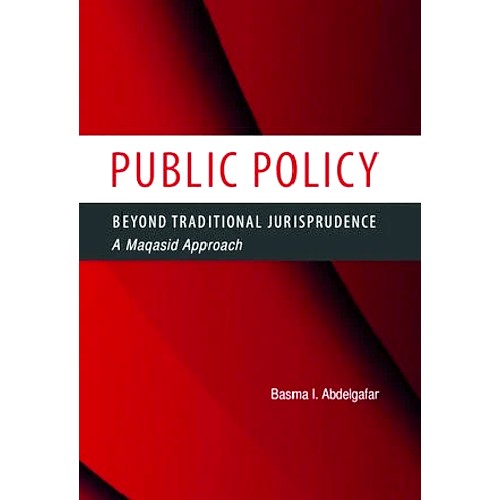
Public Policy: Beyond Traditional Jurisprudence A Maqasid Approach (IIIT)
This work charts new territory in Islamic scholarship by attempting to address the field of public policy from a maqasid (higher objectives of the Shariah) perspective. Public Policy is an independent discipline from both law and politics. Thus, Public Policy in Islam is introduced here as a qualitatively different enterprise from both fiqh (Islamic jurisprudence) and siyasah shar’iyyah (Shariah-oriented politics). The book deals with a number of critical topics that include methodology, governance, human rights, ethics, political power, and reform and renewal. It highlights how the maqasid approach is indispensable to the theory and practice of public policy in Islam, how it could resolve some of the most persistent governance dilemmas throughout Muslim history, but more significantly, how it forces a re-conceptualization of the wealth of knowledge available in Islam s primary sources to introduce Public Policy in Islam to mainstream policy studies.
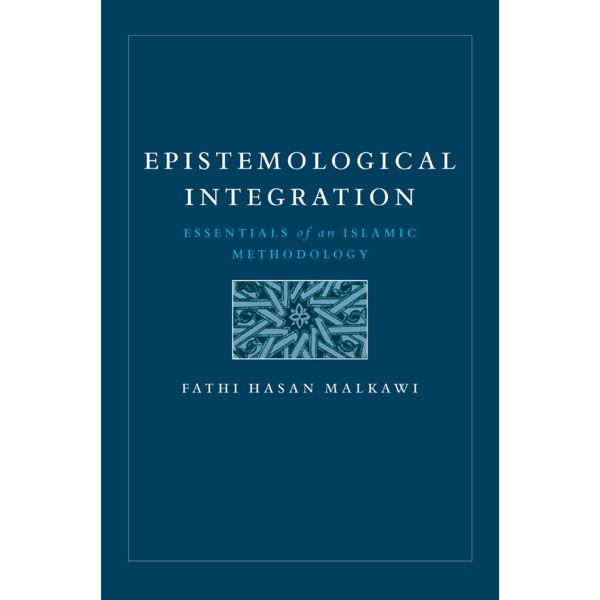
Epistemological Integration Essentials of an Islamic Methodology
Epistemological Integration: Essentials of an Islamic Methodology is a program which seeks to construct an intellectual framework for Islamic methodology with a view to realizing practical training in the thoughtful investigation of issues related to knowledge in various fields. The book’s title affirms the distinctive types of integration that characterize Islamic methodology, including integration of sources, means, and schools of thought, as well as existing realities with desired ideals etc. This is fully consistent with human nature, as variety is fundamental to the functions people perform and skills they master. The work essentially makes the case that fundamental to any Muslim recovery is laying the foundations of sound thinking and values that integrate the two main sources of knowledge: Revelation and Reality (that is the created worlds both physical, societal and psychological) under the umbrella of Tawhid. Islamic methodology adopts that and extends human hopes to integrate efforts so that humanity can realistically achieve prosperity on earth and earn eternal happiness in the afterlife.
Recently Viewed
Let Us Remember Allah And Praise Him
Remembrance, praise and supplication – dhikr and du‘â’ – are the core of worship of the Divine. The Noble Qur’an and the last Prophet (blessings and peace of Allah be upon him) have stressed this point and taught us how to attain Allah’s pleasure through calling on Him and remembering Him in words of praise and thankfulness. This small book is a valuable collection of daily supplications from the Qur’an and the authentic hadiths. It contains the Arabic text, full transliteration and clear translation of the meaning of dozens of phrases of remembrance (dhikr) and supplication (du‘â’). This new and revised edition of Let Us Remember Allah and Praise Him is designed to be easy to use: its full-sized page format ensures that the print is large enough to read effortlessly, and yet its ultra-slim volume makes it no trouble to slip into a handbag
or backpack. It is truly a practical handbook for every Muslim desiring to seek peace in this earthly life and salvation in the hereafter.
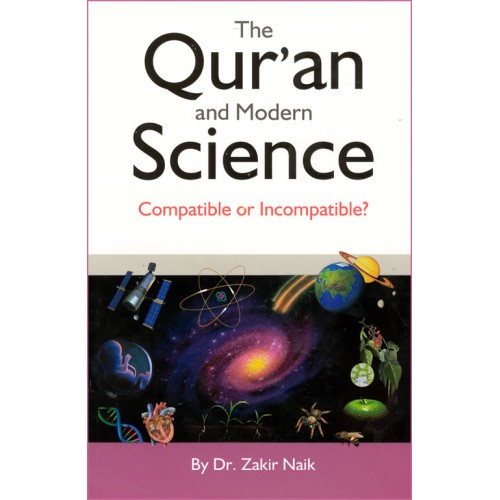
The Quran & Modern Science: Compatible or Incompatible? (P/B)
Ever since the dawn of human life on this planet, Man has always sought to understand Nature, his own place in the scheme of Creation and the purpose of Life itself. In this seek for Truth, spanning many centuries and diverse civilizations, the course of history has been determined to a large extent by organizing religion which has shaped human life. While some religions have been based on books as claimed by their adherents to be divinely inspired, others have relied only on human experience.
The main source of the Islamic faith, Al-Qur’an, is a book believed by Muslims, to be of fully Divine origin. It is also believed by Muslims that it contains Divine guidance for all humankind. As the message of Quran is believed to be for all times, it should be relevant to every age. Does the Qur’an pass this test? I intend to give an objective analysis of the Muslim belief in this booklet regarding the Divine origin of the Qur’an, in the light of established scientific discoveries.
In the history of world civilization there was a time when ‘miracles’, or what was perceived to be a miracle, took precedence over human reason and logic. But how do we define the term ‘miracle’? A miracle is anything that takes place out of the normal course of life and for which humankind has no explanation. Though, we must be careful before we accept something as a miracle. An article in `The Times of India’, Mumbai, in 1993 reported that ‘a saint’ by the name ‘Baba Pilot’ claimed to have stayed continuously submerged under water in a tank for three consecutive days and nights.
But he refused the reporters to examine the base of the tank of water where he claimed to have performed this ‘miraculous’ feat. He argued by asking as to how one could examine the womb of a mother that gives birth to a child. The `Baba’ was hiding something and it was considered to be a gimmick simply to gain publicity.
Certainly, no contemporary man with even the slightest inkling towards rational thinking would accept such a ‘miracle’. We would have to accept Mr. P.C. Sorcar, the world famous magician known for his ingenious magical tricks and illusions, as the best god-man if such false miracles are the tests of divinity.
A book, claiming Divine origin, is in effect, claiming to be a miracle. Such a claim should be easily verifiable in any age, as per the standards of that age. It is believed by the Muslims that the Quran is the last and final revelation of God, the miracle of miracles revealed as a mercy to humankind. Both Quran and science are related. Let us therefore scrutinize the veracity of this belief.
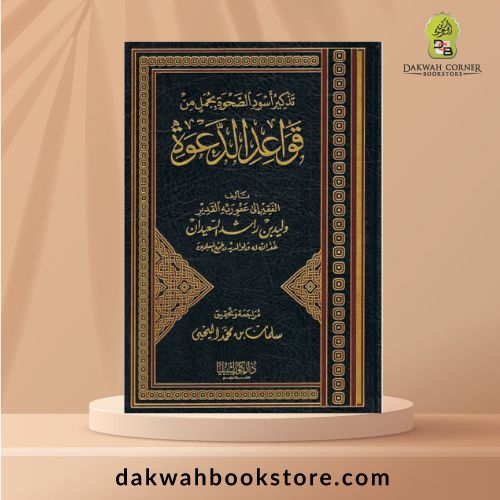
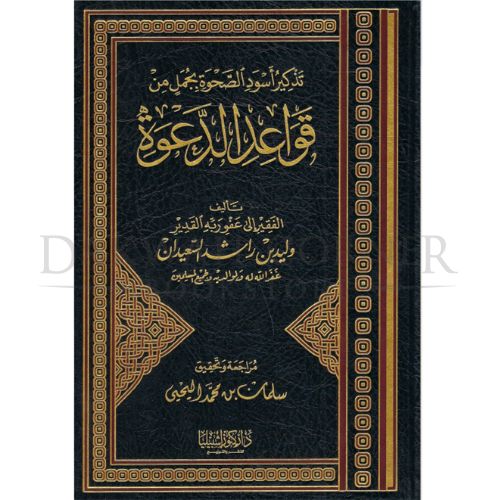
[ATE] Tadhkir Aswad al-Sahwah / تذكير أسود الصحوة بجمل من قواعد الدعوة
تَذْكِيرُ أَسْوَدِ الصَّحْوَةِ بِجُمَلٍ مِنْ قواعد الدعوة
تأليف الفَقِيرِ إِلَى عَفُورَبِّهِ القَدِيرِ وليد بن راشد السعيدان
غفر الله له ولوالدين والجميع المسلمين
مراجعة وتحقيق سلمان بن محمد اليحي
دار كنوز اشبيليا
Prophet Muhammad: A Blessing for Mankind
Prophet Muhammad (blessings and peace of Allah be upon him) and the lessons he taught us from the continued hardships he underwent in every stage of his life are a real blessing for humankind. Being an orphan child made him compassionate to widows and orphans as well as to the poor. His multiple marriages strengthened the ties of kinship amongst the different tribes, dissolving long-standing enmity. His message and prophethood were challenged by the polytheistic society in Makkah, forcing him and his few followers to emigrate to Madinah. Despite his illiteracy and the struggles he faced, he conveyed Allah’s Book, the Noble Qur’an, to all humanity, teaching them the values and principles that are presently adopted by billions of Muslims throughout the world. In the Qur’an, Allah, the Almighty addresses the Prophet (blessings and peace of Allah be upon him), saying: {We have sent you only as a mercy to the worlds.} (Qur’an 21: 107)
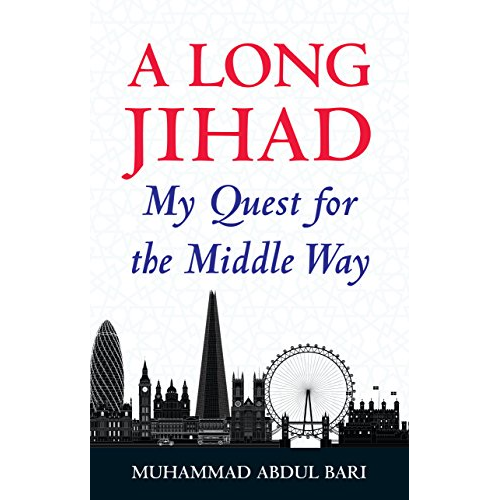
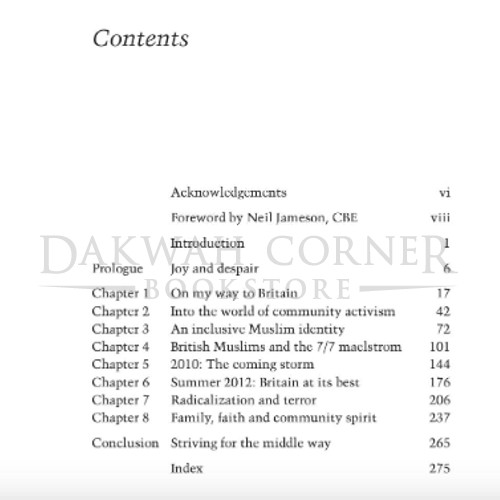
A Long Jihad : My Quest For The Middle Way
In this memoir, Dr Muhammad Abdul Bari asks us to look beyond the extremism and violence that all too often defines the Muslim community toward those, like himself, navigating a middle-way life.
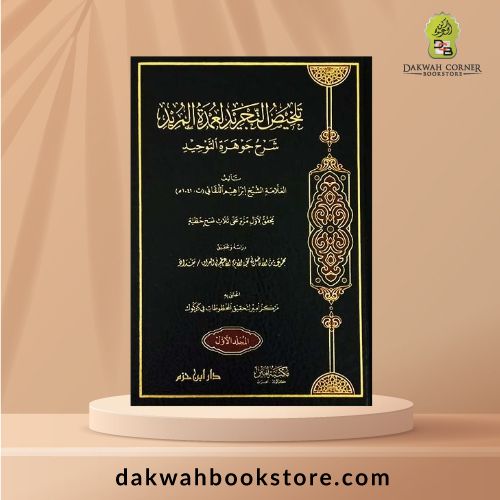
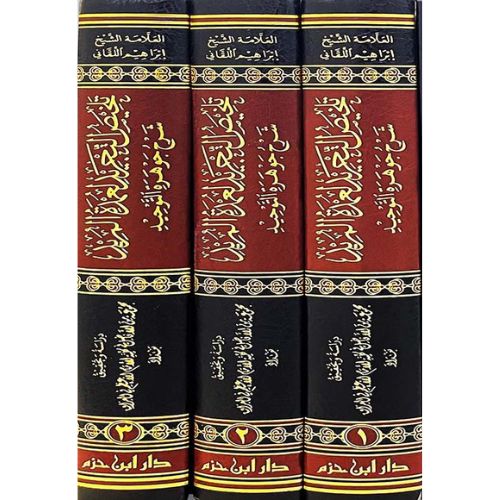
[AC] Talkhis Al Tajrid Li Umdatul Murid 3 Vol / تلخيص التجريد لعمدة المريد شرح جوهرة التوحيد 3 مجلدات
- عدد المجلدات: 3
- نوع التجليد: مجلد
- عدد الصفحات: 2064
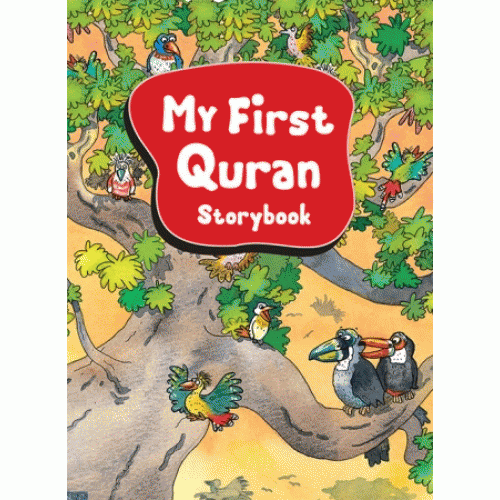
My First Quran Storybook
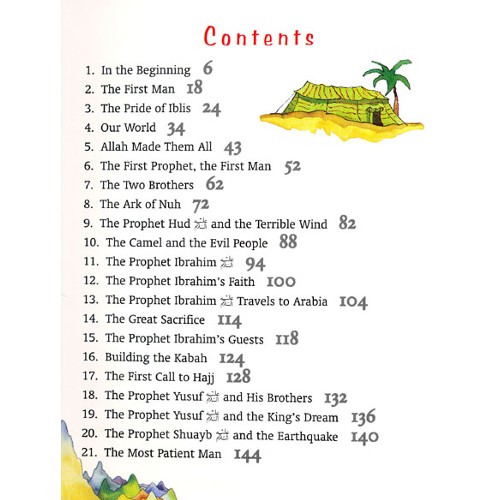
Here for young readers and listeners, are all the best treasured stories of the Quran in one beautifully illustrated volume. The stirring and dramatic stories of the great prophets, peoples and nations are unfolded as a family saga, one event leading naturally to the next.
All these features in one great book:
· 42 easy to read Quran stories.
· A moral value with each story.
· Simple language.
· Vivid and charming illustrations.
· A Quran reference for each story at the end of the book.
Ages 6+.
Designed for use at home or at school, this book makes the message of the Qur’an more meaningful for children. It’s the perfect way to begin your child’s lifetime adventure of personal Quran reading! Especially chosen for the very young, these stories act as a foundaton on which to build a growing knowledge of the Quran.
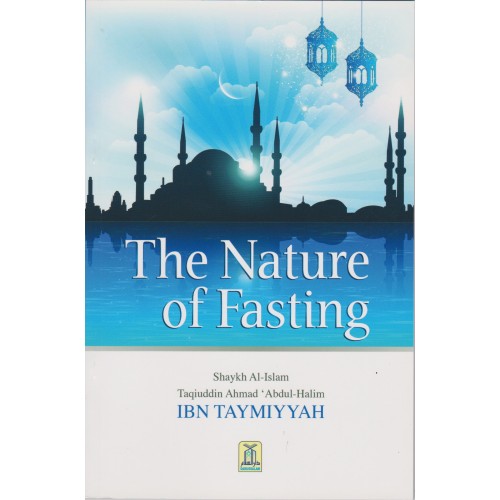
The Nature of Fasting
This book will help the reader better understand the fine points about fasting. What is the nature of the things that break the fast? What are the rules by which one can know the difference between what breaks the fast and what does not?
These question are more answered by Shaykh Al-Islam Ibn Taymiyyah in his discussion of the Nature of Fasting.
Publishers Note All praise is due to Allah, and may He grant peace and blessings upon His Last Messenger Muhammad.
This is a translation one of the smaller publications from the works of Shaykh Al-Islam Taqiuddin Ahmad bin ‘Abdul-Halim Ibn Taymiyyah. It has been published in this form a variety of times with a number of minor additions to the text under the title, “Hagigatus-Siyam,” or, “The Nature of Fasting.” We have revised our version to meet the source section of Majmu’ AI-Fatawa (25:219) from where it appears that the original booklet – with the exception of the questions, of which most appear on earlier pages – has been taken. We have inserted brackets to signify the additions, which earlier publishers probably took from other sections of his writings. We have also added brief references to the text for the Hadiths. I would like to express gratitude to brother Ebrahim Aly Ma’rouf for the original translation of this booklet, and the Darussalam staff for their editing and layout work.
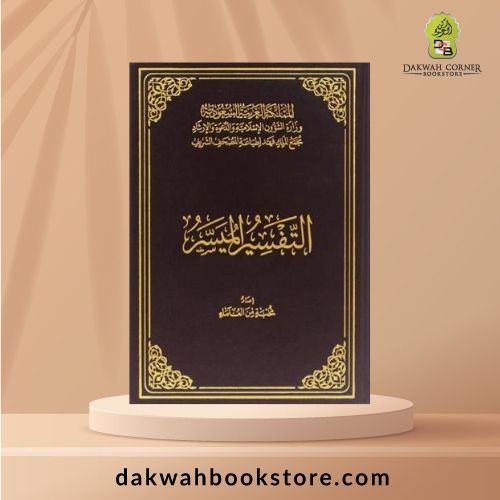
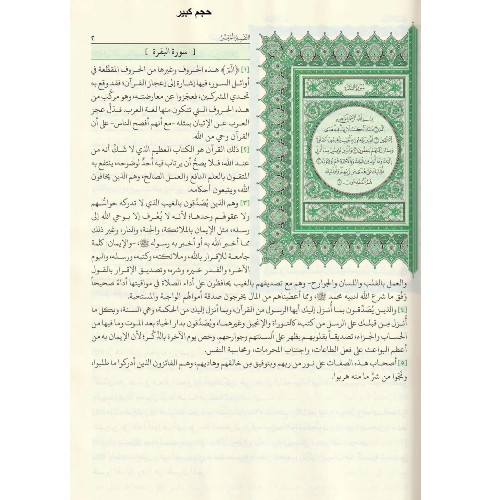
[QQ] Al-Tafseer Al-Muyassar (Small) / التفسير الميسر
إليكم تفسير جيد للغاية لخصه نخبة من العلماء. هذا التفسير الميسر مقدمة ممتازة لتفسير القرآن، سهل و مختصر


There are no reviews yet.