| Weight | 0.90 kg |
|---|---|
| Author | |
| Binding | Hardbook |
| ISBN | 9786035000376 |
| Pages | 488 |
| Publisher | Darussalam |
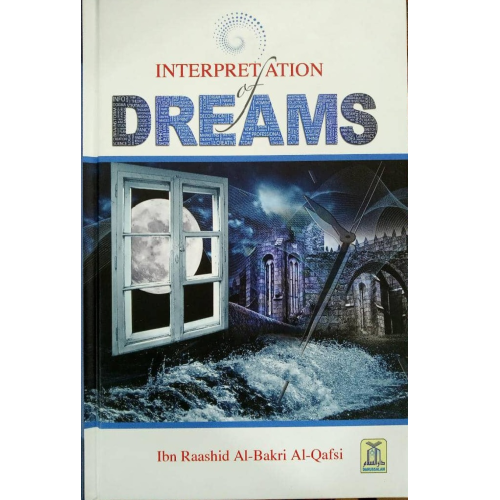
Interpretation Of Dreams
RM95.00
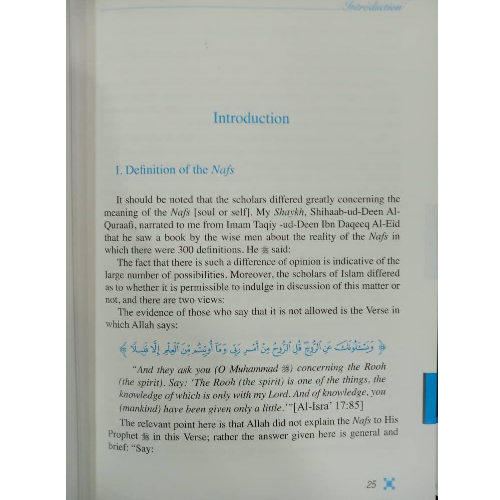
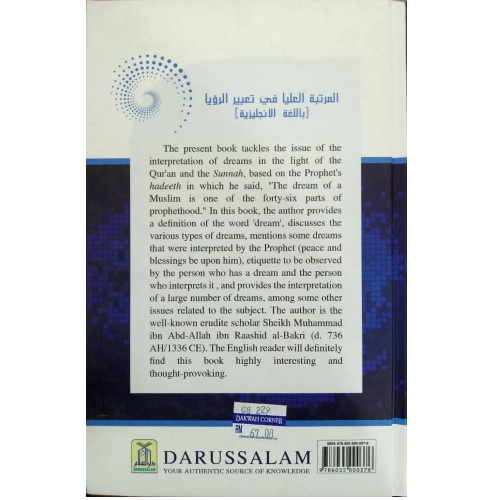
The Present book tackles the issue of the interpretation of dreams in the light of the Quran and the Sunnah, based on the Prophet’s hadeeth in which he said, “The dream of a Muslim is one of the forty-six parts of Prophet-hood. ” In this book, the author provides a definition of the word ‘dream’, discusses the various types of dreams, mention some dreams that were interpreted by the Prophet صلّی الله علیهِ وآلهِ وسلم etiquette to be observed by the person who has a dream and the person who has a dream and the person who interprets it and provides the interpretation of a large number of dreams, among some other issues related to the subject. The author is the well-known erudite scholar Sheikh Muhammad ibn Abd-Allah ibn Raashid al-Bakri (d. 736 Ah/1336 CE). The english reader will definitely find this book highly interesting and thought-provoking.
Be the first to review “Interpretation Of Dreams” Cancel reply
You must be logged in to post a review.
Related Products

Treatment of Magic, Evil Eye & Satan’s Touch (P/B)
A detailed treatise on the authentic treatments for afflictions of magic, evil eye and possession based on the Islamic teachings of the Qur’an and Sunnah of Muhammad.
When Wings Expand (P/B)
Writing on the pages of her journal, Nur, a teenage girl in Canada, charts the onset and advance of her mother’s cancer. Nur watches her mother’s body begin to shrink and her mood begin to darken. And when family and friends begin to encroach, Nur must face the prospect of her mother’s looming death.
Islam A Total Beginners Guide – Part Two (P/B)
In present era we are facing lot of questions:
• What is status of women in Islam?
• Who is superior – man or women?
• What does Islam say about inter-religious marriages, man’s treatment towards his wife and privacy in homes?
• What does Islam say about dress, veil, clothing and ornaments, perfumes and the wisdom of banning gold and silk for men?
This beginner’s guide to Islam answers all such questions.
Ibn Taymeeyah’s Essay on the Jinn (P/B) ASN
Dr. Abu Ameenah Bilal Philips has rendered Ibn Taymiyah’s treatise, Eedaah-ud-Dalaalah fee ‘Umoom-ir-Risaalah, from volume 19 of Majmoo‘-ul-Fataawa into very readable English. This abridged and annotated translation is significant in that it is perhaps the first book available in English exclusively on the topic of spirit-possession and exorcism in Islam.
Ahmad ibn ‘Abdul-Haleem ibn Taymeeyah was bron in the town of Harran [near Edessa, in what was once Northern Iraq, but is now called Orfa and is a part of Turkey.], in the year 1263 CE. His father was a leading scholar of the Hanbalite school of Islamic law and so was his grandfather, who authored Muntaqaa al-Akhbaar, the text of ash-Shawkaanee’s Hadeeth classic Nayl al-Awtaar.
Ibn Taymeeyah mastered the various disciplines of Islamic study at an early age and read extensively the books of the various sects and religions in existence at that time. Much of his time and effort was spend defending the orthodox Islamic position against a tidal wave of deviation which had swept over the Muslim nation. Consequently, he faced many difficulties from both the prominent sectarian scholars of his time and from the authorities who supported them. His clashes with them led to his imprisonment on numerous occasions. Ibn Taymeeyah also fought, not only against internal enemies of Islaam, but also against its external enemies by both his Fatwaas (Islamic legal rulings) and his physical participation in battles. His ruling allowing the taking up arms against groups which recognized the Shahaadataan (declaration of faith) but refused to uphold some aspects of the fundamental principles of Islaam, greatly affected the resistance movement against the Tartars who had declared their acceptance of Islaam but did not rule according to divine law.
During these struggles he wrote countless books and treatises demonstrating his extensive reading and knowledge, not only of the positions of the early scholars, but also those of the legal and theological schools which had subsequently evolved. Ibn Taymeeyah also had a major effect on the open-minded schoars of his day, most of whom were from the Shaafi’ite school of law. Among the most famous of his students were IBN KATHEER, ADH-DHAHABEE and IBN AL-QAYYIM. The author died in 1328 while in prison in Damascus for his Fatwaa against undertaking journeys to visit the graves of saints [Ibn Taymeeyah’s ruling was based on the authentic statement reported by Abu Hurayrah wherein the Prophet Muhammad (sallallaahu alayhi wasallam) said, “Do not undertake a journey except to three masjids; this masjid of mine, Masjid al-Haraam (Makkah) and Masjid al-Aqsaa (Bayt al-Maqdis).” Collected by Al-Bukhaaree and Muslim]. His Fatwaa had been distorted by his enemies to say that he forbade visiting the Prophet Muhammad’s (sallallaahu alayhi wasallam) grave.
Dream Interpretation According to the Qur’an and Sunnah (P/B)
Separates the authentic Islamic teachings on dream interpretation from the myths, superstitions and fabrications being circulated on the subject. It also provides a guide for dream interpretation according to references found in the Quran and authentic hadeeths.
Since the English publication of Muhammad Al-Akili’s 508 page work entitled, Ibn Seerin’s Dictionary of Dreams: According to Islamic Inner Traditions in 1992, followed shortly thereafter by Dreams and Interpretations by Ibn Seereen, there has been an explosion of dream interpretation and interpreters among English-speaking Muslim communities in the West. On the other hand, dream interpretation has been a long established tradition in the Muslim East. However, it has become so mixed up with superstition, myths and fortunetelling, that most educated Muslims shun this area. The fact of the matter is that dream interpretation is mentioned in the Quran and was regularly practised by the Prophet (pbuh), himself. Consequently, there is a real need to understand this subject, especially, considering that humans spend about a third of their lives sleeping.
Philanthropy and Social Justice in Islam (P/B)
This book analyses the principles and practices of philanthropy and distributive justice in Islam. It argues, with analyses and examples, that the accomplishment of purposive philanthropy, as commanded by the fundamental tenets of Islam, through the professionalization and rationalization of zakat management, modernization of awaqaf, etc. has the potential of optimizing justice in Muslim societies. The work draws on the Quran, Hadithe, other authentic literature, and also on official documents and publications of management agencies dealing with philanthropy in different Muslim countries/societies. The analyses are documented enough to be used as a text for the study of philanthropy in Islam in tertiary institutions nonetheless are simple enough to draw general readership and to be used by non-profit and international organizations worldwide in order to order to understand the principles and issues of philanthropy and distributive justice in Muslim societies.
Muslim Unification at Time of Crisis
This book authored by one of the great scholars of our time is an advice to the people of Ahulul ?Sunnah wal-Jamaah to unify and be merciful to each other, and cooperate upon righteousness and taqwa.
Provisions of the Afterlife Which Lie Within Prophetic Guidance (H/B – DKI
Written originally by Ibn Qayyim Al-Jauziyyah is one of the important resources of knowledge for those who seek to know the Seerah of their Prophet (P.B.U.H) as well as the Fiqh learned from it. This is a book that is unique in that it explains the Sunnah through the Seerah and the Seerah through the Sunnah. It is a profound classic work containing thousands of pages written by Imam ibn al-Qayyam while on the Hajj journey, Pilgrimage, from Damascus to Makkah. Despite its being written from memory, the several thousand incidents, Hadiths, Ayat (verses of the Quran), Fiqh benefits, as well as names of the companions associated with them, were remarkably close to the truth with marginal errors.
However, those who know the status, level of knowledge ad Ta’hqiq that Imam ibn al-Qayyim had will not be surprised to know this fact. Still, it is amazing how Ibn Al-Qayyim was able to write this vast volume while traveling to Hajj (Pilgrimage), especially since he was away from the resources of knowledge and was enduring the hardships of travel. It is a blessing from Allah (S.A.T) that it was possible for him to do so. Note: As with Many English Translations this work appears to be slightly abridged but it seems to cover most of the subjects Note : With the Lack of English works covering Hanbali Fiqh , This Books would be the nearest alternative. Although not a Specifically Fiqh Book, Ibn Qayyim’s views which are based on Hanbali Fiqh are quoted throughout.
Means of Steadfastness in Islam
Steadfastness and patient perseverance in Allah’s religion is a basic requirement that should be met by every sincere Muslim who wants to stick to the Straight Path with understanding and determination. Muslims today face many temptations and distractions. Those who consciously seek the means of steadfastness will succeed and those who are negligent will, sadly, suffer the doubts and confusion which are more severe now than ever before. Happy are those who seek the way out and join the righteous, dedicated Muslims, and who spare no effort to learn their religion and remain steadfast. This valuable book
deals with all these issues and points out the means of steadfastness that every Muslim should learn and practice. The author also discusses common worldly distractions and explains how to deal with them.

Guarding The Tongue (P/B)
How many people have earned the wrath of Allah as a result of misuse of their tongues? How many injuries that may never heal have been inflicted throughtt the careless slips of the tongue? The Messenger of Allah said:
“Indeed, the servant will speak words that are pleasing to Allah, due to which he will he given a condition in which Allah will raise him many levels. And indeed, the servant will speak words that are displeasing to Allah, due to which he will not he given a good condition, but (instead) be thrown into the Hellfire.”(Bukhari)
This book highlights those sins that seem so light on the tongue yet so grave on the scale and offers practical advice on how to keep the tongue in check.
Islam A Total Beginners Guide – Part Three (P/B)
In present era we are facing lot of questions:
• What is status of women in Islam?
• Who is superior – man or women?
• What does Islam say about inter-religious marriages, man’s treatment towards his wife and privacy in homes?
• What does Islam say about dress, veil, clothing and ornaments, perfumes and the wisdom of banning gold and silk for men?
This beginner’s guide to Islam answers all such questions.
Recently Viewed
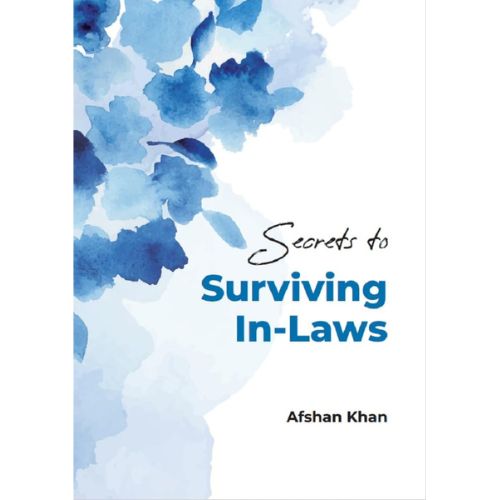
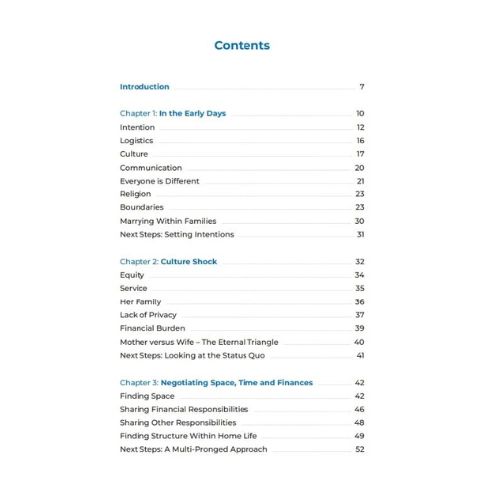
Secrets to Surviving In-Laws
Secrets to Surviving In-Laws is an invaluable guide to navigating the delicate relationship of in-laws, no matter which side of the in-law equation you are on.
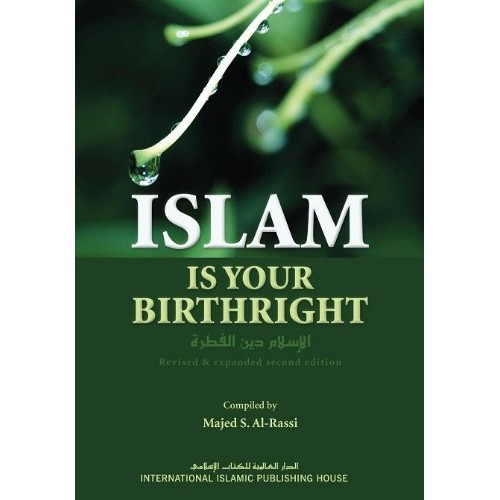
Islam is Your Birthright (IIPH)
Majed Al-Rassi’s popular booklet, compiled from the works of respected writers on the subject of comparative religion, has been revised and greatly expanded in this new edition. Islam is Your Birthright is a useful and comprehensive guide for Muslims who would like to know how to address non-Muslims on the subject of the relationship between Islam, Christianity and other religions. It is as well a helpful, easy-to-follow explanation of the basic precepts of Islam that interested non-Muslims can pick up and read, without having had any prior study of Islam. Wise men and women know that they are in existence for a purpose and a final destination, whether they know that destination or not. Also, wise people know that if they do not know where they are going, then they will never arrive. In this little book, light is focused on: Why human beings were created What is their final destination How to reach ‘safely’ to that destination
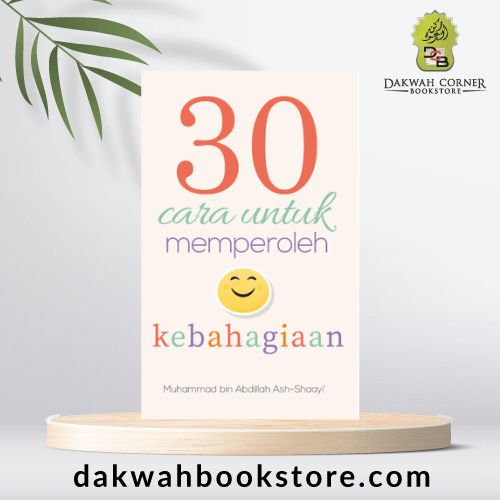
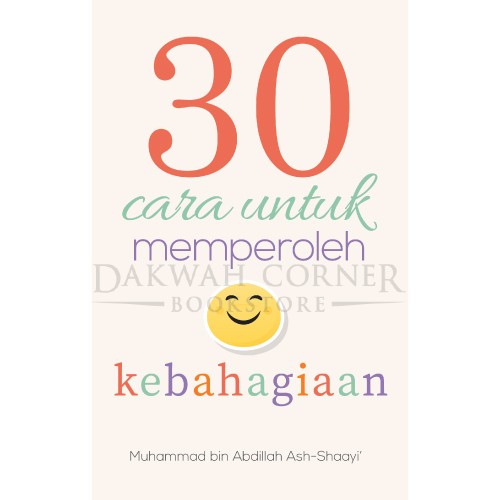
30 Cara Untuk Memperoleh Kebahagiaan
Buku yang hebat ini adalah panduan bogi semua masyarakat Islam terutamanya dalam kehidupan seharian kita kerana ia menyajikan cara-cara menghadapi kitaran hidup seharian, menerima masa lalu dan bersiap menghadapi hari esok berdasarkan pengajaran Al-Quran & Sunnah.
Abraham – The Friend Of God
Abraham, as a prophet and patriarch, is called “the friend of God” in Jewish, Christian, and Islamic scriptures, and has a place of eminence in the shared scriptures and histories of each of these three monotheistic, prophetic, and Middle Eastern religions.
In Abraham: The Friend of God, Dr. Dirks provides Jewish, Christian, and Muslim readers with a unique and original presentation of the life of Abraham. In constructing a chronological biography of Abraham, the author integrated and synthesized information from a wide range of Judaeo-Christian and Islamic traditions, including the Bible, the Pseudeigrapha (I.e. Jubilees and the Genesis Apocryphon), the Qur’an, the authenticated sayings (Sahih Ahadith) of Prophet Muhammad, and the classic books of ancient history authored by Josephus and Al-Tabari. This integrated biographical sketch is embedded in a framework drawn from the various historical and geographical contexts dealing with different aspects of Abraham’s life.
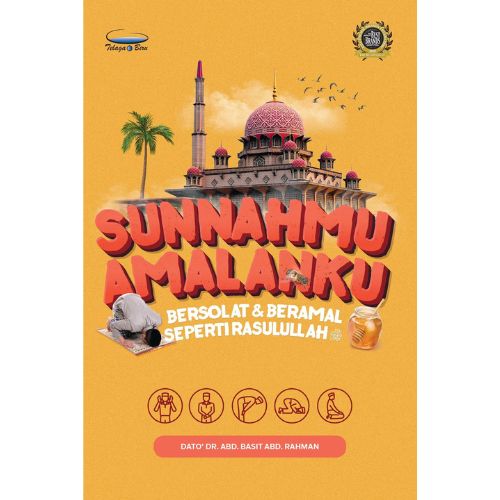
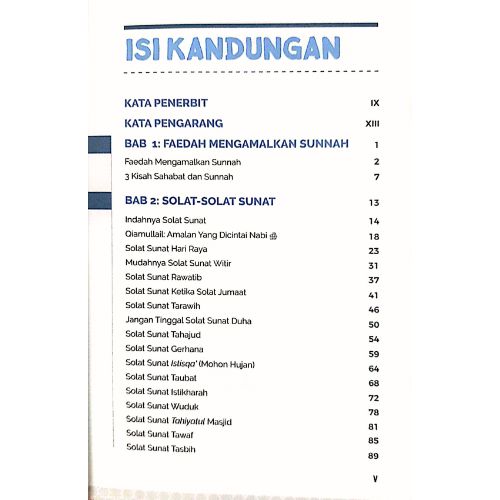
Sunnahmu Amalanku
KEISTIMEWAAN BUKU INI:
- Memahami dalam mentaati ajaran yang disampaikan oleh Rasulullah SAW secara menyeluruh.
- Mempertahankan agama Islam dari serangan musuh-musuh Islam dengan penghujahan ilmiah.
- Mencintai perkara yang disukai oleh Nabi Muhammad SAW serta membasahi lidah dengan berselawat kepadanya.
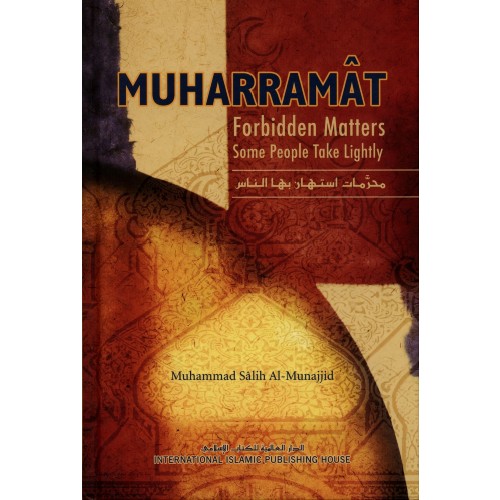
Muharramat: Forbidden Matters Some People Take Lightly
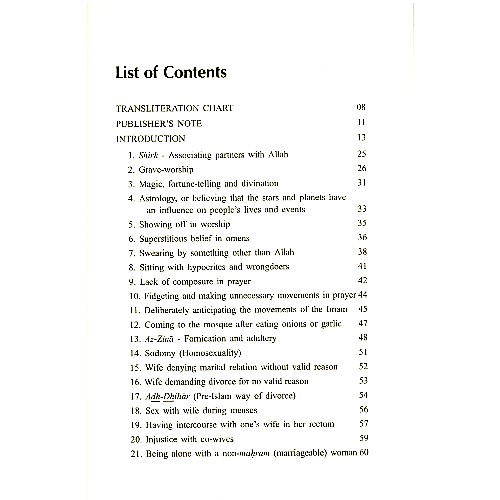
Some Muslims who are either ignorant or of weak faith still commit many acts which Allah never allowed. Ignorance is not an excuse for doing something wrong or illegal, hence it is important to make an effort to learn what these muharramât or forbidden acts are, in order to avoid ever committing them. The author, Shaykh Muhammad Sâlih al-Munajjid, explains many of the forbidden acts that have to do with calling on human beings and things other than Allah, worshipping the dead and circumambulating their graves, invoking prophets and the dead, magic, fortune-telling, believing in the power of astrologists and planets and other acts that go against the Islamic creed of monotheism (tawheed). As such, this book of prohibitions regarding beliefs and acts of worship is a helpful resource for Muslims, if they are really practicing Islam and want to avoid committing great sins.
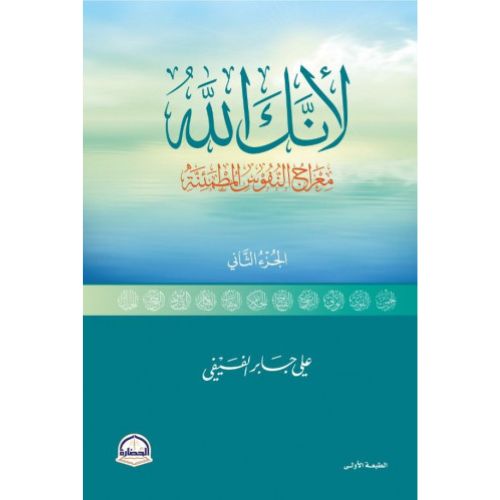
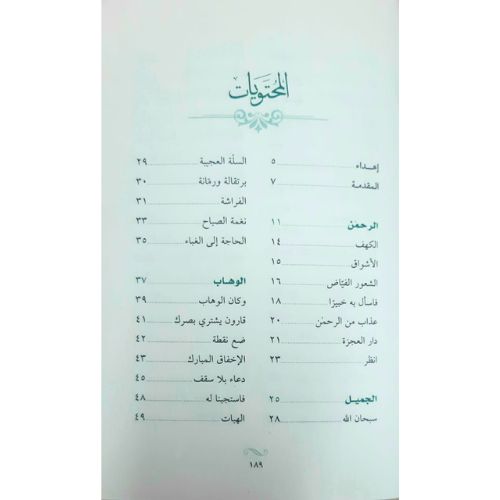
[AC] Li Annaka Allah Jilid 2 ( لأنك الله ج 2)
كتاب يتحدث عن بعض أسماء الله الحسنى وكيف نعيشها في حياتنا
حرص المؤلف أن يكون الكتاب مناسباً لمن هم متوسطي الثقافة، ويكون ناسباً للمحتاج و المريض و السليم
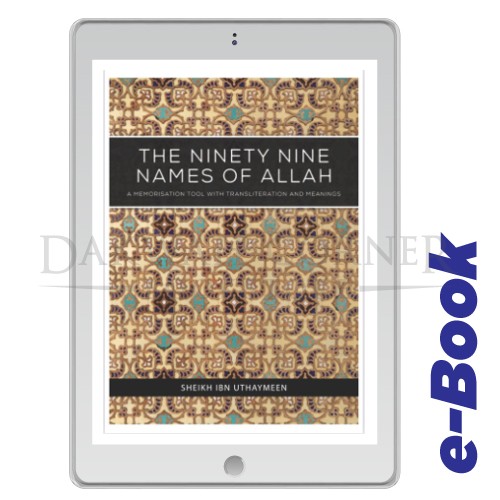
(FREE-eBook) The Ninety-Nine Names of Allah
(E-book FREE)
Sheikh ibn Uthaymeen, was a scholar, jurist, and Mufti. He was born in 1929 in Saudi Arabia. He memorised the Quran and studied other books at the age of 14 at the hands of his grandfather and other prominent scholars.
Sheikh ibn Uthaymeen is considered one of the most pre-eminent scholars of the 20th century. For more than 50 years, he worked hard for the sake of teaching, preaching, lecturing, and guiding people to worship Allah. He has authored more than 40 books in different Islamic sciences. He passed away in 2001 at the age of 74 and was buried in Mecca.
Sheikh ibn Uthaymeen was a highly significant scholar whose Islamic rulings are followed by a large number of Muslims worldwide. He played a prominent role in expanding the principals of Islamic monotheism and in explaining perplexed issues in the Islamic jurisprudence. He was a model of knowledgeable scholar, uprightness, honesty and commitment. May Allaah have Mercy upon his soul, ameen.
This booklet is a translation of a lecture by Sheikh ibn Uthaymeen on the ninety nine name of Allah. It has been produced to help the reader understand the meanings and memorise the names of Allah.
30 Ways To Attain Happiness (3rd Edition)
This great book is guidance for all especially the Muslims society in our daily life as it present the ways of dealing with the daily life cycle, accepting the pasts and bracing for tomorrows based on the teaching of the Qur’an and Sunnah
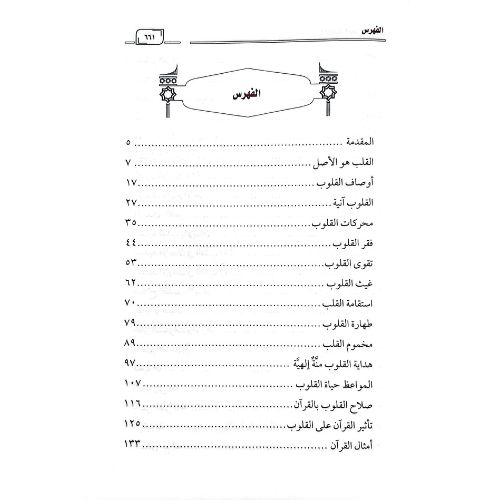
[AH] Ahadith Islah Al Qulub / أحاديث إصلاح القلوب
فإن أولى ما صرفت فيه الهمم والعزائم إصلاح القلوب وعلاجها وحفظ صحتها ودفع أسقامها وحمايتها مما يفسدها، وهو المقصود بالقصد، لعظم خطرها وشدة تأثيرها على الأبدان صلاحا أو فسادا.
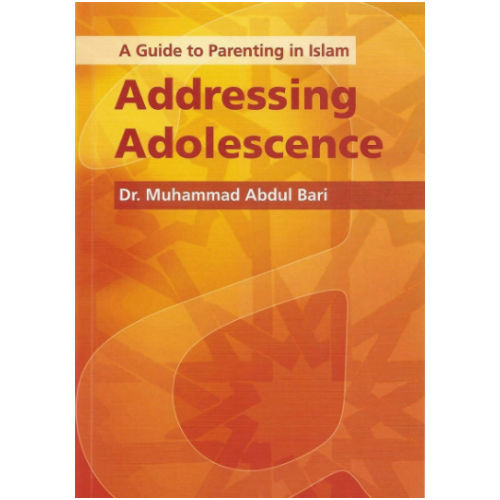
A Guide to Parenting in Islam: Addressing Adolescence
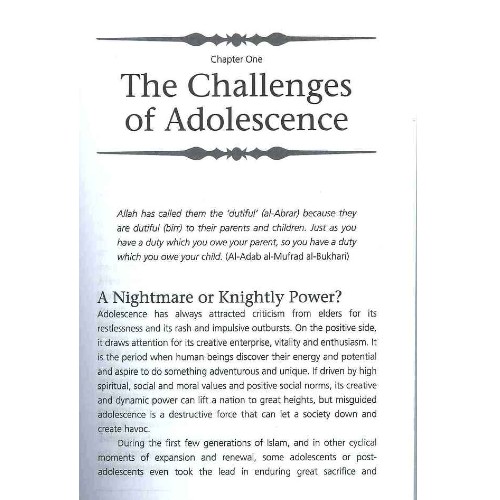
| Addressing Adolescence is a parent-to-parent handbook outlining how to tackle the challenges of parenting adolescents within an Islamic ethos in a pluralist society.
It covers: |


There are no reviews yet.