| Weight | 0.90 kg |
|---|---|
| Author | |
| Binding | Hardbook |
| ISBN | 9786035000376 |
| Pages | 488 |
| Publisher | Darussalam |
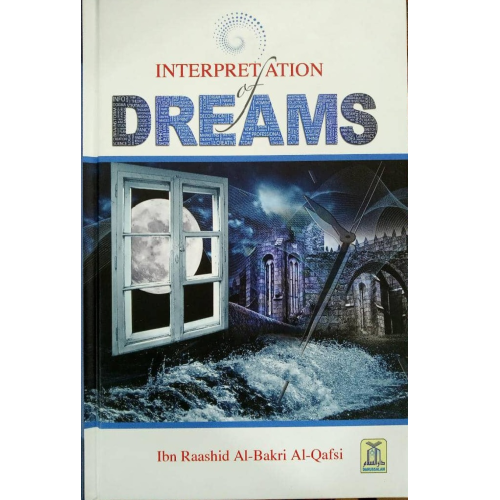
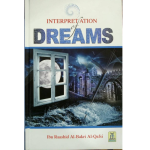
Interpretation Of Dreams
RM95.00
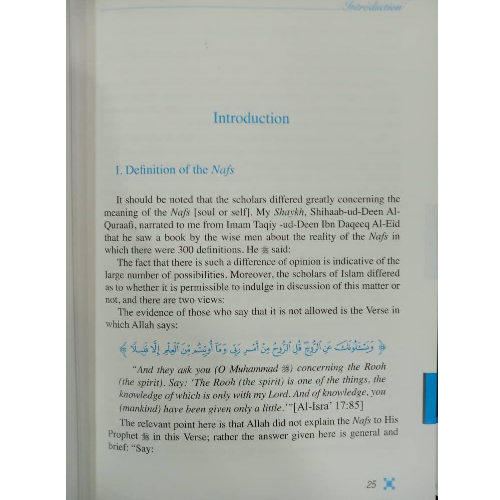
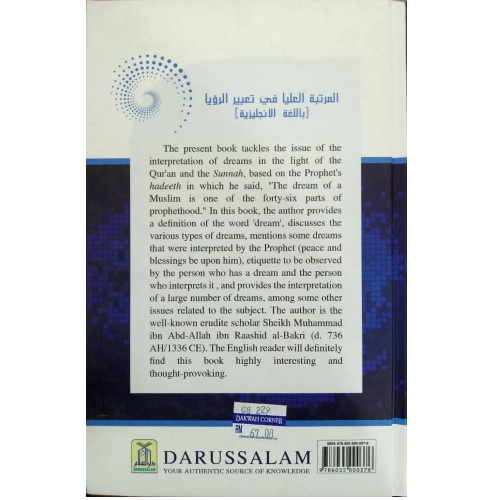
The Present book tackles the issue of the interpretation of dreams in the light of the Quran and the Sunnah, based on the Prophet’s hadeeth in which he said, “The dream of a Muslim is one of the forty-six parts of Prophet-hood. ” In this book, the author provides a definition of the word ‘dream’, discusses the various types of dreams, mention some dreams that were interpreted by the Prophet صلّی الله علیهِ وآلهِ وسلم etiquette to be observed by the person who has a dream and the person who has a dream and the person who interprets it and provides the interpretation of a large number of dreams, among some other issues related to the subject. The author is the well-known erudite scholar Sheikh Muhammad ibn Abd-Allah ibn Raashid al-Bakri (d. 736 Ah/1336 CE). The english reader will definitely find this book highly interesting and thought-provoking.
Be the first to review “Interpretation Of Dreams” Cancel reply
You must be logged in to post a review.
Related Products

A Brief Illustrated Guide to Understanding Islam (P/B)
Discusses some evidence for the truth of Islam, the scientific miracles in the Holy Qur’an, and the great challenge to produce a single chapter like the chapters of the Holy Qur’an.
Fundamentals of Islam (P/B)
Fundamentals of Islam is a revised English edition of the critically acclaimed Khutubah (original written in Urdu). It consist of Friday congregational addresses, in them he expounds familiar themes; like Iman, Islam, the Prayer, Fasting, Alms-giving, Pilgrimage and Jihad.
Philanthropy and Social Justice in Islam (P/B)
This book analyses the principles and practices of philanthropy and distributive justice in Islam. It argues, with analyses and examples, that the accomplishment of purposive philanthropy, as commanded by the fundamental tenets of Islam, through the professionalization and rationalization of zakat management, modernization of awaqaf, etc. has the potential of optimizing justice in Muslim societies. The work draws on the Quran, Hadithe, other authentic literature, and also on official documents and publications of management agencies dealing with philanthropy in different Muslim countries/societies. The analyses are documented enough to be used as a text for the study of philanthropy in Islam in tertiary institutions nonetheless are simple enough to draw general readership and to be used by non-profit and international organizations worldwide in order to order to understand the principles and issues of philanthropy and distributive justice in Muslim societies.
Ibn Taymeeyah’s Essay on the Jinn (P/B) ASN
Dr. Abu Ameenah Bilal Philips has rendered Ibn Taymiyah’s treatise, Eedaah-ud-Dalaalah fee ‘Umoom-ir-Risaalah, from volume 19 of Majmoo‘-ul-Fataawa into very readable English. This abridged and annotated translation is significant in that it is perhaps the first book available in English exclusively on the topic of spirit-possession and exorcism in Islam.
Ahmad ibn ‘Abdul-Haleem ibn Taymeeyah was bron in the town of Harran [near Edessa, in what was once Northern Iraq, but is now called Orfa and is a part of Turkey.], in the year 1263 CE. His father was a leading scholar of the Hanbalite school of Islamic law and so was his grandfather, who authored Muntaqaa al-Akhbaar, the text of ash-Shawkaanee’s Hadeeth classic Nayl al-Awtaar.
Ibn Taymeeyah mastered the various disciplines of Islamic study at an early age and read extensively the books of the various sects and religions in existence at that time. Much of his time and effort was spend defending the orthodox Islamic position against a tidal wave of deviation which had swept over the Muslim nation. Consequently, he faced many difficulties from both the prominent sectarian scholars of his time and from the authorities who supported them. His clashes with them led to his imprisonment on numerous occasions. Ibn Taymeeyah also fought, not only against internal enemies of Islaam, but also against its external enemies by both his Fatwaas (Islamic legal rulings) and his physical participation in battles. His ruling allowing the taking up arms against groups which recognized the Shahaadataan (declaration of faith) but refused to uphold some aspects of the fundamental principles of Islaam, greatly affected the resistance movement against the Tartars who had declared their acceptance of Islaam but did not rule according to divine law.
During these struggles he wrote countless books and treatises demonstrating his extensive reading and knowledge, not only of the positions of the early scholars, but also those of the legal and theological schools which had subsequently evolved. Ibn Taymeeyah also had a major effect on the open-minded schoars of his day, most of whom were from the Shaafi’ite school of law. Among the most famous of his students were IBN KATHEER, ADH-DHAHABEE and IBN AL-QAYYIM. The author died in 1328 while in prison in Damascus for his Fatwaa against undertaking journeys to visit the graves of saints [Ibn Taymeeyah’s ruling was based on the authentic statement reported by Abu Hurayrah wherein the Prophet Muhammad (sallallaahu alayhi wasallam) said, “Do not undertake a journey except to three masjids; this masjid of mine, Masjid al-Haraam (Makkah) and Masjid al-Aqsaa (Bayt al-Maqdis).” Collected by Al-Bukhaaree and Muslim]. His Fatwaa had been distorted by his enemies to say that he forbade visiting the Prophet Muhammad’s (sallallaahu alayhi wasallam) grave.
Means of Steadfastness in Islam
Steadfastness and patient perseverance in Allah’s religion is a basic requirement that should be met by every sincere Muslim who wants to stick to the Straight Path with understanding and determination. Muslims today face many temptations and distractions. Those who consciously seek the means of steadfastness will succeed and those who are negligent will, sadly, suffer the doubts and confusion which are more severe now than ever before. Happy are those who seek the way out and join the righteous, dedicated Muslims, and who spare no effort to learn their religion and remain steadfast. This valuable book
deals with all these issues and points out the means of steadfastness that every Muslim should learn and practice. The author also discusses common worldly distractions and explains how to deal with them.

Let Us Be Muslims (P/B)
LET US BE MUSLIMS is a new edited English version of Sayyid Mawdudi’s Urdu Khutubat. It is no ordinary book, says Khurram Murad in his long Introduction, for it has stirred more hearts and impelled more lives to change their course than any of his more erudite works. In these Friday congregational addresses, Sayyid Mawdudi expounds such familiar themes as Iman, Islam, the Prayer, Fasting, Almsgiving, Pilgrimage and Jihad. But, in an unusually beautiful, powerfully reasoned, eloquent and passionate, and yet simple and lucid style,
“Sayyid Abul A’la Al-Mawdudui (1903-1979), one of the chief architects of contemporary Islamic resurgence, was the an outstanding Islamic thinker and writer of his time. He devoted his life to expound the meaning and message of Islam and to organise a collective movement to establish the Islamic Order. In this struggle, he had to pass through all kinds of sufferings.
Between 1948-67, he spent a total of five years in different prisons of Pakistan. In 1953, he was also sentenced to death by a Martial Law court for writing a ‘seditious’ pamphlet, this sentence being later commuted to life imprisonment. In 1941, he founded Jama’at-I Islami, of which he remained Amir, until 1972 and which is one of the most prominent Islamic movements of our day. He authored more than one hundred works on Islam, both scholarly and popular, and his writings have been translated into forty languages.”
Muslim Unification at Time of Crisis
This book authored by one of the great scholars of our time is an advice to the people of Ahulul ?Sunnah wal-Jamaah to unify and be merciful to each other, and cooperate upon righteousness and taqwa.
Islam A Total Beginners Guide – Part Three (P/B)
In present era we are facing lot of questions:
• What is status of women in Islam?
• Who is superior – man or women?
• What does Islam say about inter-religious marriages, man’s treatment towards his wife and privacy in homes?
• What does Islam say about dress, veil, clothing and ornaments, perfumes and the wisdom of banning gold and silk for men?
This beginner’s guide to Islam answers all such questions.
In Pursuit of Allah’s Pleasure
In this book the authors outlined a complete methodology for Islamic work today. From `Aqeedah to Da’wah, Jihad to Khilafah and Taqwa to Sabr (patience), they explained how all of these parts of Islam come together for the sole objective of each and every Muslim: to seek the Pleasure of Allah ( SWT ), the Irresistible. It was written in a manner portraying the true situation of the Muslims today and, coming from imprisoned scholars: a realistic portrayal.
This book is an excellent read by itself and an even better guide if used as a syllabus in learning Islam in an organised, collective manner. It is ideal as a basis for study circles and acts as a comprehensive manual. Coupled with the supplementary reading of some other books in the English language and memorisation of the Holy Quran, it can consolidate the knowledge of anyone seeking to work for Islam in this day and age.
Contents
Preface
Introduction
Part One: Our Ultimate Goal
Part Two: Our `Aqeedah
Part Three: Our Understanding
Part Four: Our Aim
Part Five: Our Path
Part Six: Our Provisions
Part Seven: Our Walaa’ (Loyalty)
Part Eight: Our ‘Adaa’ (Animosity)
Part Nine: Our Gathering
Glossary of Arabic Trems
The Twentieth Century has witnessed one of the fiercest blows inflicted upon our Ummah by our enemy: the collapse of the Khilafah. If only their conspiracy had stopped at the demise of Khilafah. But they went on to indoctrinate Muslims with strange, foreign ideas and concepts, in order to confuse our understanding of our Deen. Once we wake up and try to return to our original Deen, we will be confronted with an intellectual perplexity, in which evil and good is mixed. Hence, the truth will be ambiguous and we will go astray, and lose the true understanding of Islam.
And hold fast, all of you together, to the Rope of Allah (this Qur’an) and be not divided among yourselves.” [Surah Ale-Imran (3), Ayah 103.]
by Dr. Naahah Ibrahim, Asim Abdul Maajid and Esaam-ud-Deen Darbaalah
A Treatise on Hijab and Compilation of Questions Pertaining to Family Matters (H/B)
No one denies that the modesty which is commanded by Islamic Law and by convention includes the decency and decorousness demanded of a woman, and the kind of behavior that will ensure that she is kept far away from situations of temptation and suspicion. Further more, there is no doubt that the greatest act of modesty that she can perform is to wear the hijab, which covers her face. It is the best thing with which she can adorn herself, because it protects her and keeps her far removed from temptation.
When Wings Expand (P/B)
Writing on the pages of her journal, Nur, a teenage girl in Canada, charts the onset and advance of her mother’s cancer. Nur watches her mother’s body begin to shrink and her mood begin to darken. And when family and friends begin to encroach, Nur must face the prospect of her mother’s looming death.
Recently Viewed
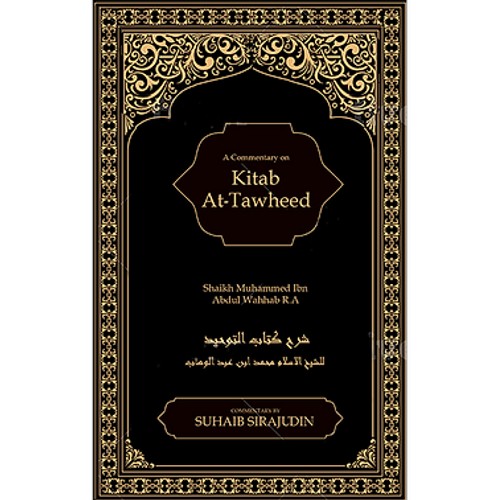
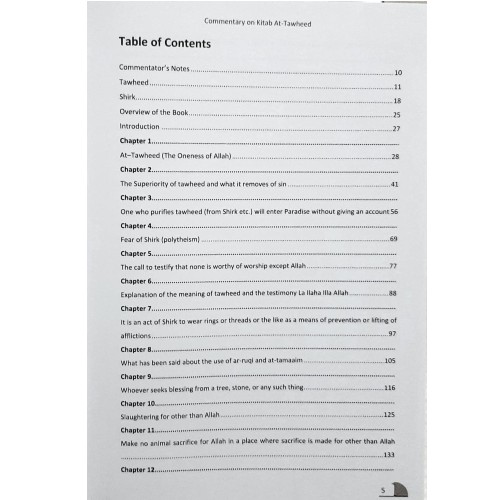
A Commentary On Kitab At-Tawheed
This is a commentary on the book of Shaikh Muhammed ibn Abdul Wahhab’s Kitab At-Tawheed (The Book of Tawheed). Kitab At-Tawheed is an excellent and comprehensive book. It illuminates to the reader the light of tawheed the Oneness of Allah tawheed, the very foundation of this deen, the single most important concept and the purpose behind our creation.
[AC] Sharh Thalathah Al Usul / شرح ثلاثة الأصول
شرح الشيخ صالح العصيمي على ثلاثة الأصول للإمام محمد بن عبد الوهاب
طبعة مع التشكيل لأغلب النصوص
Hadith Nomenclature Primers
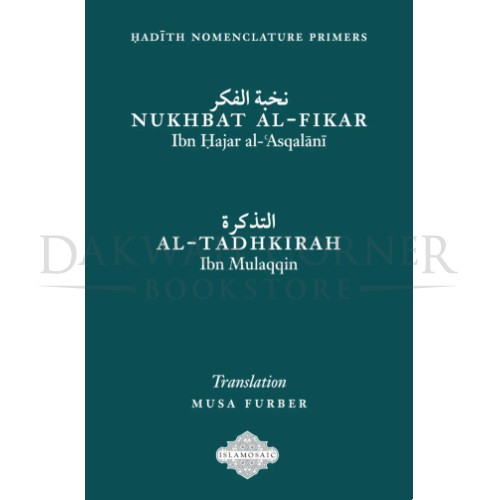
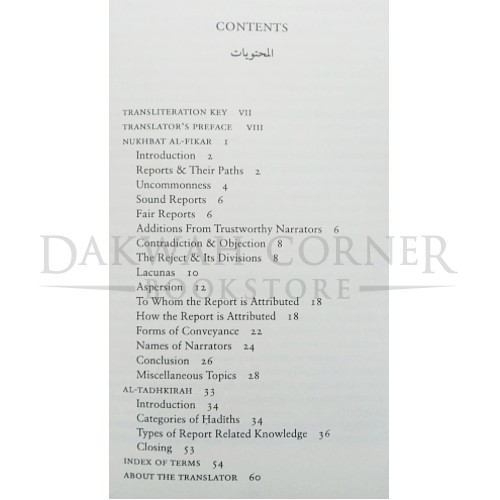
This volume presents two primers on the discipline of hadith nomenclature (mustalah al-hadith) and the authentication of transmitted reports. They are Nukhbat al-fikar (“Chosen Thoughts on the Nomenclature of Hadith Experts”) by Ibn Hajar al-‘Asqalani (773-835AH); and Al-Tadhkirah (“The Memorandum”) by Ibn al-Mulaqqin (723-804AH). These primers were written to facilitate speedy mastery of the discipline’s core material. Although the primers focus on definitions, they also include methods for addressing problems specific to the topic. Students would often commit a primer to memory while studying it with a living master who would explain its content in detail and demonstrate its application. It is through this interaction between students and instructors that Islamic education transmits both knowledge and skills across generations. In translation, these primers are ideal for English-speaking instructors looking for a primary text covering the subject’s core concepts. The translations will also benefit students looking to review their lessons or to prepare themselves for more advanced studies.
Savour the Sweetness of Salah (H/B)
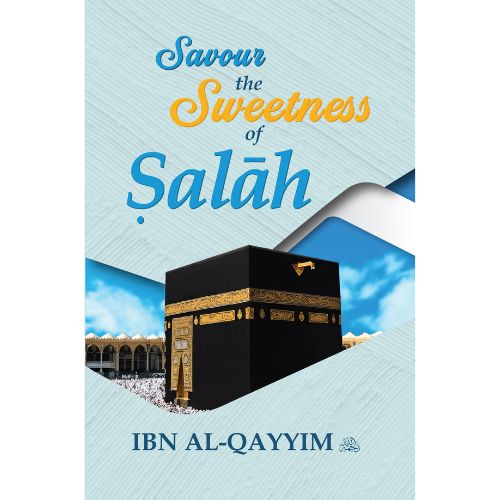
Savour the Sweetness of Ṣalāh draws on the insights of Imām Ibn al-Qayyim r, guiding readers from the outward acts of prayer toward its central purpose: spiritual presence and inner transformation. The book centers on prayer as the believer’s ultimate delight and source of true peace, emphasizing that humility, attentiveness, and devotion are its essence.
Bakhoor Araisy (35g)
Bakhoor can used during special occasions such as weddings, or simply for relaxing purposes and gives a fresh scent for your home, shop, or office.
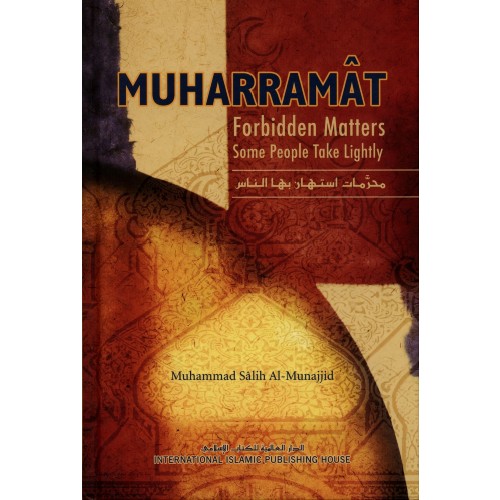
Muharramat: Forbidden Matters Some People Take Lightly
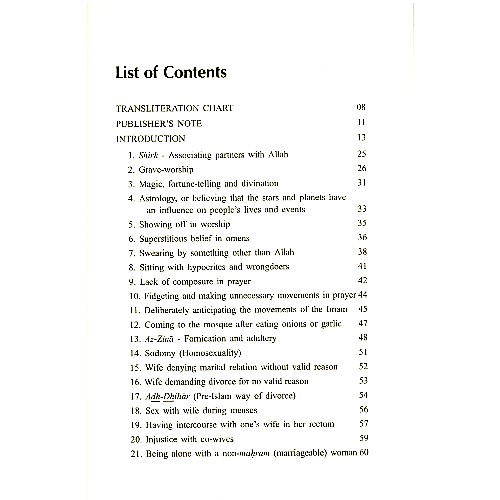
Some Muslims who are either ignorant or of weak faith still commit many acts which Allah never allowed. Ignorance is not an excuse for doing something wrong or illegal, hence it is important to make an effort to learn what these muharramât or forbidden acts are, in order to avoid ever committing them. The author, Shaykh Muhammad Sâlih al-Munajjid, explains many of the forbidden acts that have to do with calling on human beings and things other than Allah, worshipping the dead and circumambulating their graves, invoking prophets and the dead, magic, fortune-telling, believing in the power of astrologists and planets and other acts that go against the Islamic creed of monotheism (tawheed). As such, this book of prohibitions regarding beliefs and acts of worship is a helpful resource for Muslims, if they are really practicing Islam and want to avoid committing great sins.
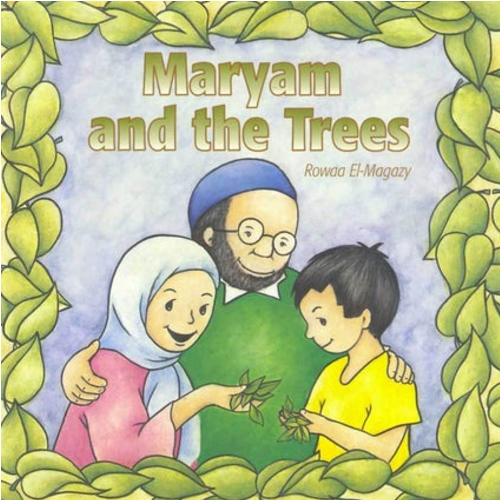
Maryam and the Trees (Hardcover)
Maryam and the Trees is the first book in the Young Muslim Nature Series, which explores the scientific and spiritual dimensions of Allah’s creation. Join Maryam and Abdullah as they discover the importance of trees in the environment and in our lives, and how they point to Allah’s greatness and glory.
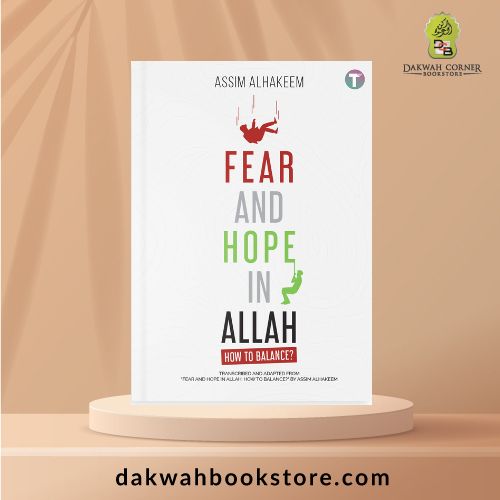
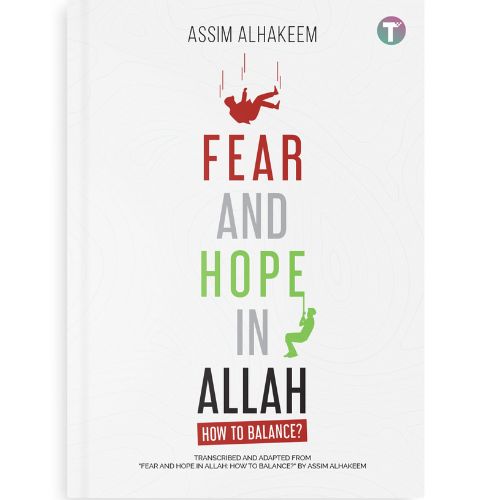
Fear and Hope in Allah (H/B)
“Indeed, they used to hasten to good deeds and supplicate Us in hope and fear, and they were to Us humbly submissive.”
(Surah al-Anbiyaʾ, 21:90)
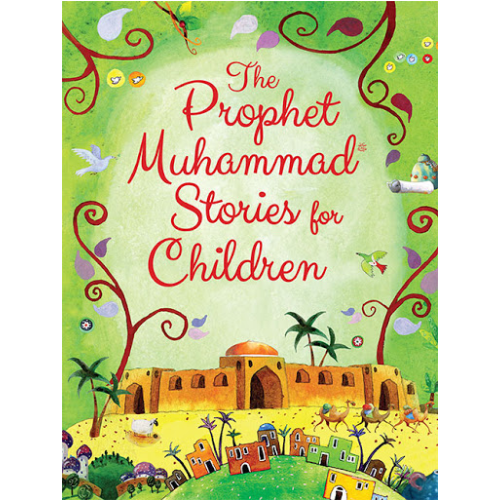
The Prophet Muhammad Stories For Children (H/B)
The Prophet Muhammad Stories for Children, meant for 7 year-olds and above, has some of the best treasured stories from the life of the Prophet Muhammad. These seerah stories, especially chosen for children, encourage young readers to discover for themselves the message of the life of the Prophet and to find their own ways of applying the Prophet’s timeless teachings to their own lives. With its colourful, child-friendly illustrations, this book is perfect for reading to your children or grandchildren, and is excellent for use at home or at school.
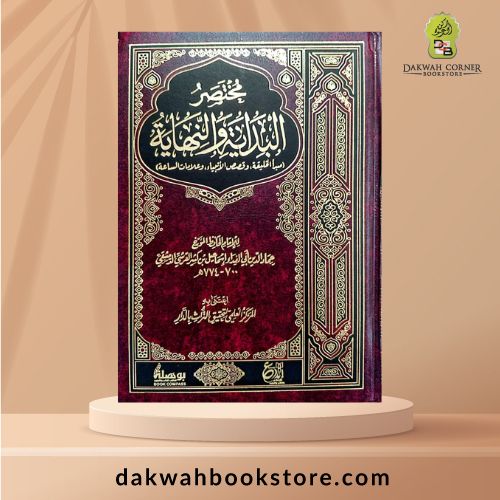
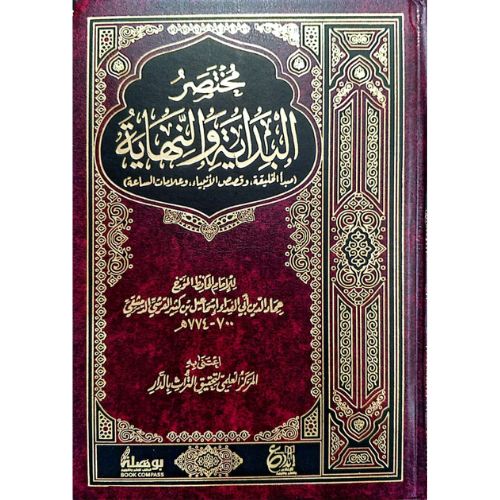
[AHS] Mukhtasar Albidayat Walnihaya / مختصر البداية والنهاية
مختصر البداية والنهاية هو نسخة موجزة ومُهذبة من كتاب “البداية والنهاية” الشهير للحافظ ابن كثير (المتوفى 774هـ)، الذي يُعد أحد أهم مراجع التاريخ الإسلامي. يهدف الاختصار إلى تقريب محتوى الكتاب الضخم وتسهيل قراءته من خلال حذف الأسانيد الطويلة وتركيز المادة التاريخية.
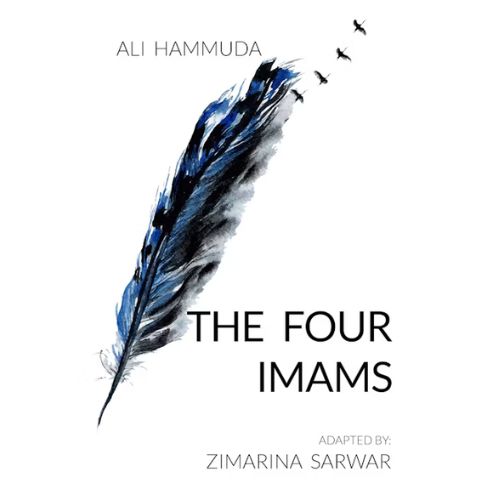
The Four Imams (P/B)
In In today’s vast world, who are the people who really influence, Limpact and strengthen us?
The scholars of Islam are people who we benefit from every day of our lives, whether we realise it or not. Of them, the Four Imams were men who led lives of learning, service and a burning desire to uplift all of humanity into a better way of living. The Four Imams are not ancient tales or historical legends, but men who lived unique and complex lives, facing challenges and realities we will all be able to relate to.
Connect with their living legacy, and its importance for the past, present and future. Join us on this beautiful journey of inspiration…
My Amazing Super Power
Conversation between a mother and a son trying to change his perspective and fantasy towards being a super hero, by acknowledging his true and amazing power which is his own EEMAN.


There are no reviews yet.