





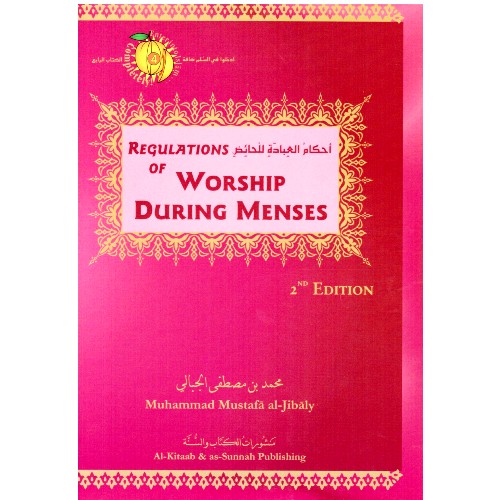
| Weight | 0.50 kg |
|---|---|
| Dimensions | 24 × 17 cm |
| Author | |
| Binding | Hardcover |
| ISBN | 9781891229794 |
| Pages | 147 |
| Publisher | Al-Kitaab & as-Sunnah Publishing |
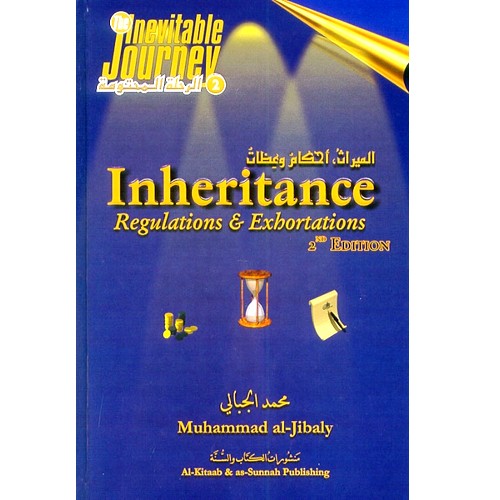
Inheritance Regulations & Exhortations
RM46.00
Hurry up, Only 1 left.
Highlights:
somdn_product_page
Compare
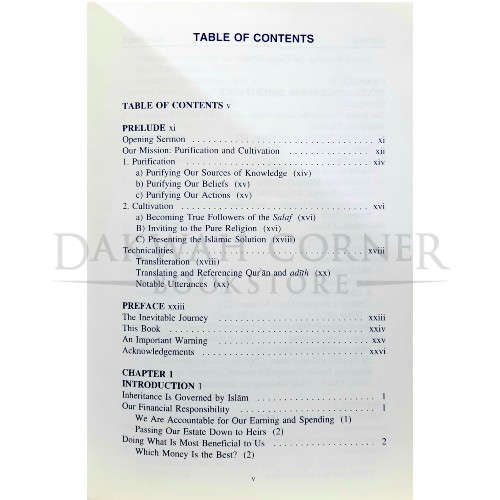
Description from the publisher: We inevitably go through the journey starting in this life, and extending into the grave, before our final abode in the hereafter. In the process, we pass through stages of sickness, death, and the intermediate life in the grave (al-Barzakh). Writing a will is a religious obligation on every capable Muslim. It protects against many problems and conflicts that could arise after a person’s death. This obligation is more emphasized in the West; Failing to write a well founded will may result in the distribution of one’s estate in discord with the Islamic law, and may lead to losses for some of the rightful inheritors
Additional information
Reviews (0)
Be the first to review “Inheritance Regulations & Exhortations” Cancel reply
You must be logged in to post a review.
Related Products


Funerals Regulations and Exhortations (H/B)
Highlights:
Our soul inevitably follows a route starting from birth, passing through death, and ending with our resurrection in the next life. The inevitable journey discusses over a sequence of titles: sickness, inheritance, funerals, Life in Barzakh and so on…
RM75.00

Worship In Islam: An In-depth Study of Ibadah, Salah and Sawm (P/B)
Highlights:
Worship in Islam is in-depth study of the nature and significance of Islamic spirituality by Abul A‘la Mawdudi (1903–79), one of the leading Muslim intellectuals of the twentieth century, with special reference to the concepts of God’s Oneness (tawhid), the finality of Prophethood (risalah) and the Islamic system of worship (‘ibadah) with a focus upon prayer (salah) and fasting (sawm) and their role in the development of the Islamic personality and Islam’s social order. The distinguishing feature of Mawdudi’s approach is his elaboration of the social dimension of worship, which extends the traditional approach found in Islamic jurisprudence, with its focus upon ritual and self-purification, to consider worship’s transformative role in social life. Presenting a holistic view of the Islamic system, Mawdudi highlights Islam’s social, economic and political dimensions, which he argues has the capacity to resolve emergent issues and problems that humankind faces.
This historic text should be of wider interest to both students and specialists in contemporary Islamic thought, and includes an introduction by Professor Anis Ahmad.
Edited and translated into accessible English by Ahmad Imam Shafaq Hashemi, this book is an authoritative compilation by a leading Islamic twentieth-century revivalist on the central matter of worship’s role in Islam.
RM84.00

The Right to Education, Work and Welfare in Islam (P/B)
Highlights:
In The Right to Education, Work and Welfare in Islam Professor M.H. Kamali develops an Islamic perspective on three connected and complementary areas of rights and liberties. He urges that education is often a necessary ingredient of professional work even more so now than in earlier times when the range and variety of specialised knowledge were relatively limited. A person who acquires education, whether generally or at advanced levels of specialisation, is more likely to stand in a better position to enter the workforce and thus to contribute to the welfare of the community.
The author commences his discussions on education, work and welfare in Islam by focusing on how each is treated in the Qur’an; and follows this by the example of the Prophet and, after him, the Pious Caliphs who gave prominence to the education and welfare needs of people at times both of scarcity and affluence. Professor Kamali then moves forward to our time and discusses the right to education, the education of children, institutionalisation of learning, academic freedom and the debate between science and religion.
The section on work elaborates on the value of work, work ethics, workers’ and employers’ rights and responsibilities, and the role and responsibility of governments.
Finally, the section on welfare focuses on the importance in Islam of caring for those who are in need and the different forms of provision that can be made available by individuals, the state and charities.
RM63.00

Forensic Psychiatry In Islamic Jurisprudence (P/B) (IBT)
Highlights:
This is the first book in Forensic Psychiatry that focuses on the application of psychiatry to legal issues connected to Islamic jurisprudence. It gives contemporary psychiatry in any Islamic country a broad spectrum of tools to work with, enabling the utilization of options specific to particular societal and cultural norms. This book will appeal to both the general as well as the academic reader.
RM40.00


Zakah According to the Quran & Sunnah (Darussalam)
Highlights:
Zakah, the third Pillar of Islam, is probably the first Pillar of its economic system. It represents the first and most important mechanism to implement economic justice and to provide sustenance to the economically unfortunate, two issues for which Islam is especially sensitive. These two issues are the essence of this book. This book consists of all the main issues of Zakat (i-e, Zakah on Gold, Silver, Paper Money, Livestock, Fruits, Grains, Rented Land, Buried treasures, Minerals, Trade, Shares, Stocks, and Exploited Assets etc). The main objective of this work is to serve an easy and authentic reference to the reader.
RM65.00

Istihsan (P/B)
Highlights:
This work constitutes a critical analysis of classical and modern aspects of the concept of istihsan (juristic preference), an important principle in Islamic legal legislation throughout history. Although there has been many research works on the subject, it still requires further investigation on the role and nature of istihsan with regard to a combination of classical and modern approaches. Consisting of four chapters, the author begins by introducing some general principles of Islamic law, before discussing the history of istihsan during the time of the Prophet and his Companions. He also analyses the validity of istihsan as a source of law and discusses the differences among scholars on its method of implementation.
RM57.00


Getting the Best Out of Hajj
Highlights:
The book provides a realistic view of Hajj as it is today, with detailed explanations of all the rites. It provides Figh related issues about Hajj, Salah and personal behaviour according to the Quran and Sunnah, to enable you to obtain the best value for your time spent in the holy cities. It also provides information and suggestions about planning for the journey, what to expect and how to survive, so you can depart with full confidence. This is a must have for all those planning to go on Hajj!
RM75.00


Principles of Islamic Jurisprudence (2nd Revised Edition)
Highlights:
This book offers a detailed presentation of the theory of Muslim law (usul al-figh). Often regarded as the most sophisticated of the traditional Islamic disciplines, Muslim jurisprudence is concerned with the way in which the rituals and laws of religion are derived from the Qur’an and the Sunna – the precedent of the Prophet. Revelation, which is given to man to restore unity and help him achieve a just and devout order in society as well as in the soul, must be interpreted so as to render it practicable in every culture, while not betraying its spirit and immutable provisions. To achieve this, additional sources of legal authority are recognized, including consensus (ijma), analogical deduction (qiyas), public interest (maslaha) and local customary precedent (urf). In employing these, the jurist guards the five principles which it is the purpose of Islamic law to uphold, namely, the right to life, sound mind, property, lineage and religion.
RM75.00


Fast According to the Quran & Sunnah
Highlights:
Saum (Fast) is a third Pillar of Islam. Allah’s Messenger said, Allah says: “Every deed of the son of Adam is for him, except Saum (fasting). It is for Me and I shall reward for it.”
As the status of this act of worship is so high it is essential to learn the pilings pertaining to this month of fasting so that Muslims will know what is obligatory in order to do it, what is forbidden to avoid it, and what is permissible so that they do not unnecessarily subject themselves to any hardship by depriving themselves from it.
This book consists of all the main issues of Fast. The main objective of this work is to serve an easy and authentic reference to the reader.
RM35.00

A Guide to Male-Female Interaction
Highlights:
Are Muslim men allowed to interact with female students, and vice versa, in a virtual classroom? Can a Muslim woman pursue a professional career that necessitates her interaction with men? Is it appropriate for a woman to serve her husband’s guests? Do mixed wedding ceremonies comply with the Sharia? Read this bilingual book to find the answers and more!
RM56.00


Fiqh Course: Tahaarah, Salaah & Janaa’iz
Highlights:
This course was compiled for English-speaking Muslims and is especially beneficial for new Muslims. It covers tahârah (purification), salâh (prayer) and janâ‘iz (funerals). It is set out in an easy-to-understand manner, citing evidence from the Qur’an and authentic hadiths. The aim of this book is to provide the reader with a correct, yet uncomplicated guide to the performance of the aforementioned acts of worship. Allah willing, it is the first in a series which will cover all aspects of worship and Islamic jurisprudence.
RM46.00

The Problems of the Illegitimate Child (P/B)
Highlights:
This book addresses the views of the Sunni scholars regarding the importance of genealogical relationship (nasab) in Islamic family law and examines the role of legitimacy on the basis of the legal maxim “al-walad li al-firash”, evidence (al-bayyinah), and doubtful intercourse (wat’ shubhah). It also elucidates the views of the Sunni schools of law on how to establish illegitimacy. For the Sunni jurists, there are several situations that determine the illegitimacy of the child. A child is considered illegitimate if its birth is the outcome of adultery (zina) or the result of legitimate union but accompanied with imprecation (li‘an). Other circumstances include the birth of the child taking place in less than six lunar months, the father of the child being categorized as one who is incapable of begetting, or the birth as a result of marital relationship considered unlawful because of consanguinity. The book also deals comprehensively with the moral, religious, legal and other aspects of the illegitimate child and the foundling in the works of the Sunni jurists. The status and rights of the illegitimate child and the foundling in the Islamic family law of Malaysia and Brunei are also discussed by referring to some provisions from Federal Territory Act 1984 (Act 303) and Brunei law.
RM49.00
Recently Viewed


A Guide to Salah (Prayer) (P/B)
5 ★
5 ★
1 Rating
5 ★
1
4 ★
0
3 ★
0
2 ★
0
1 ★
0
Highlights:
This book is the result of direct research into the Sunnah of Prophet Muhammad saw and makes numerous references to the original sources. It contains all the essential details of salah without being too bulky or complicated, thus making it an ideal reference book either at home or while travelling.
A clear and concise explanation on how to pray. Also gives a detailed description of the preliminaries to salah, and different types of salah, with easy-to-follow illustrations.
RM16.00

(E-Book) Keys to a Successful Marital Life
Highlights:
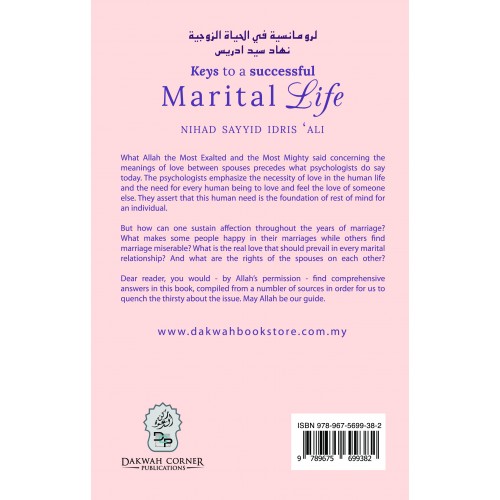
What Allah the Most Exalted and the Most Mighty said concerning the meanings of love between spouses precedes what psychologists do say today. The psychologists emphasize the necessity of love in the human life and the need for every human being to love and feel the love of someone else. They assert that this human need is the foundation of rest of mind for an individual.
But how can one sustain affection throughout the years of marriage? What makes some people happy in their marriages while others fine marriage miserable? What is the real love that should prevail in every marital relationship? And what are the rights of the spouses on each other?
By Allah’s permission – this book provides comprehensive answers to these questions, compiled from a number of sources in order for us to quench the thirst of the thirsty about the issue.
RM26.00
(E-Book ) Heart Therapy
Highlights:
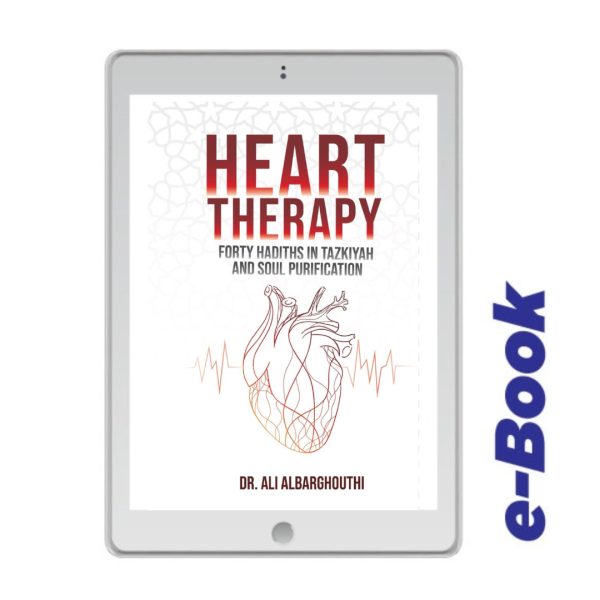
anxiety, and loneliness are common problems today. Envy, greed, and materialism invade our hearts and poison our relationships and lives. Racism, warfare, and economic deprivation—the symptoms of a greater spiritual weakness—are destroying our world. What is the solution to all of these problems? We need a spiritual awakening, a healing of the hearts that can heal the world. We need to rediscover our iman.
This book attempts to revive authentic Islamic spirituality—based on the Quran and Sunnah—by collecting and explaining forty hadiths on the diseases of the heart and the purification of the soul. It is a book of tazkiyah, a self-help book, and a project for changing your life and increasing your iman. In it, you’ll find practical advice on how to cleanse your heart and bring change into your life. If we fix our hearts, we can fix the rest of our lives.
Read this book with the goal of changing your life and the world around you. If you are going to counselling, are struggling with issues that no one knows about, or simply long for a more spiritual life, this book may help you. Believe that Allah will aid you, ask Him for help, and He surely will.
RM54.00
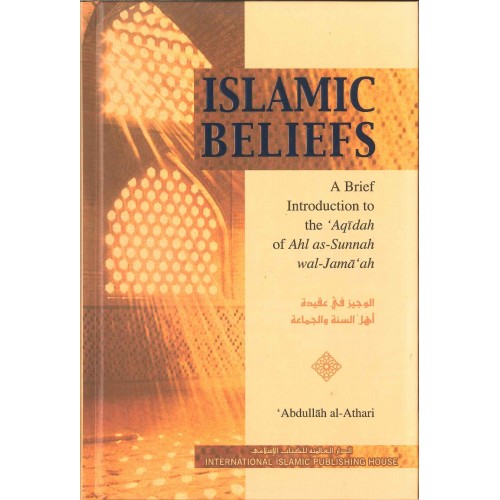
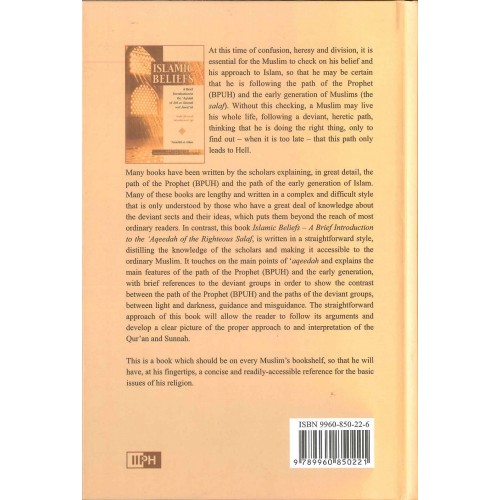
Islamic Beliefs
Highlights:
In this era of confusion, innovation, and division, it is essential for Muslims to monitor their beliefs and their approach to Islam, so that they may be certain that they are following the path of the Prophet (blessings and peace of Allah be upon him) and the early generation of pious Muslims (the salaf). Without careful attention, a Muslim may live his or her whole life following a deviant path filled with innovation, thinking that he or she is doing the right thing, only to find out – when it is too late – that this path only leads to hell. Islamic Beliefs: A Brief Introduction to the ‘Aqeedah of Ahl as-Sunnah wal-Jamâ‘ah is written in a straightforward style, distilling the knowledge of the scholars and making it accessible to the ordinary Muslim. It touches on the main points of ‘aqeedah (fundamental Islamic beliefs or creed) and explains the main features of the path of the Prophet (peace be upon him) and the early generation, with brief references to deviant groups in order to show the contrast between the path of the Prophet (peace be upon him) and the paths of the deviant groups, between light and darkness, guidance and misguidance. The straightforward approach of this book will allow the reader to follow its arguments and develop a clear picture of the proper approach to and interpretation of the Qur’an and the Sunnah. This is a book which should be on every Muslim’s bookshelf, so that they will have at their fingertips a concise and readily-accessible reference for the basic issues of their religion.
RM45.00
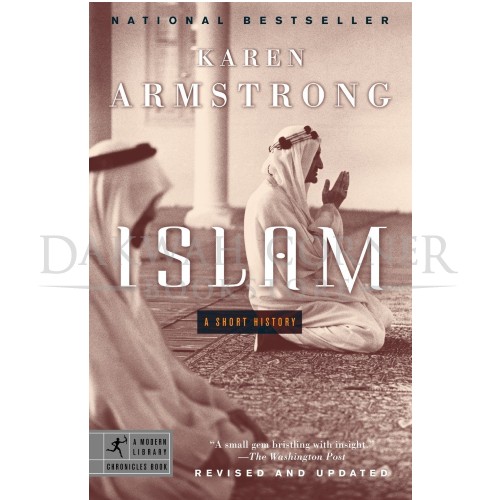
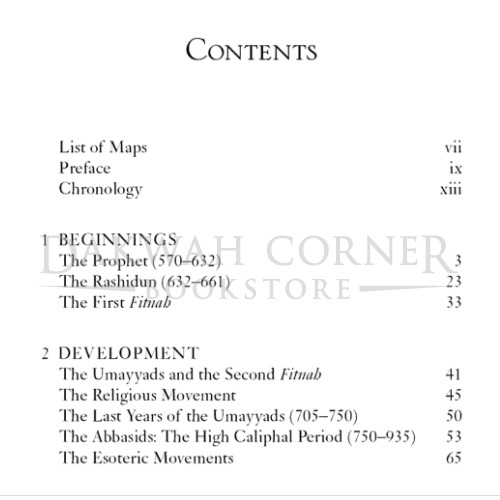
Islam: A Short History
Highlights:
With this brilliant book, Karen Armstrong issues a forceful challenge to those who hold the view that the West and Islam are civilizations set on a collision course. It is also a model of authority, elegance, and economy.
RM80.00
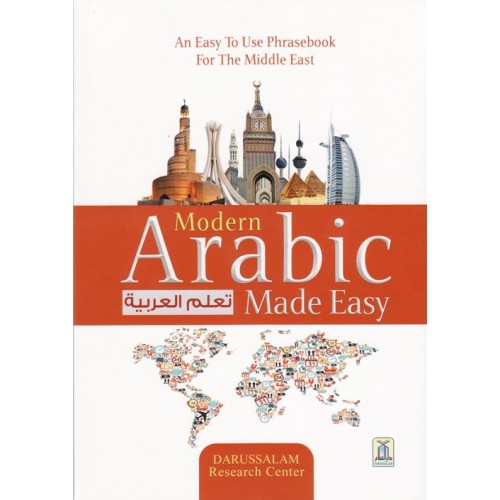
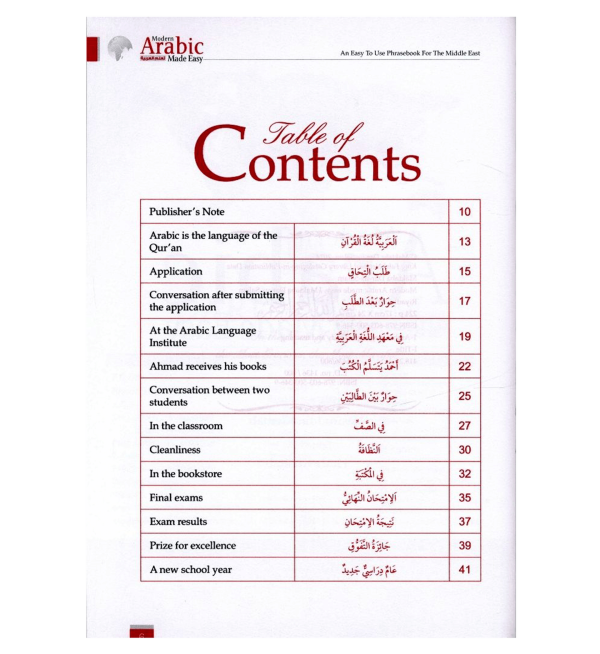
Modern Arabic Made Easy (P/B)
Highlights:
This product was added to our catalog on Thursday 30 April, 2015.
Notify me of updates to Modern Arabic Made Easy
Tell someone you know about this product.
RM60.00
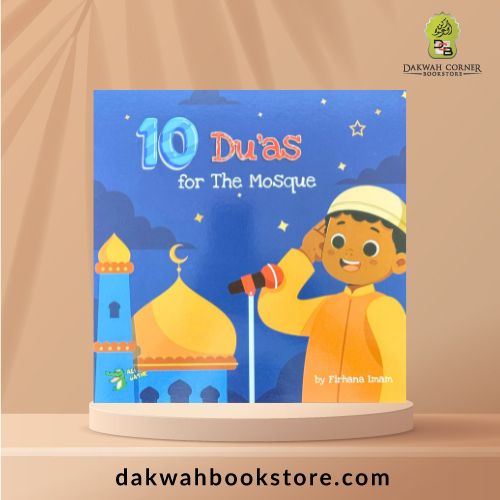
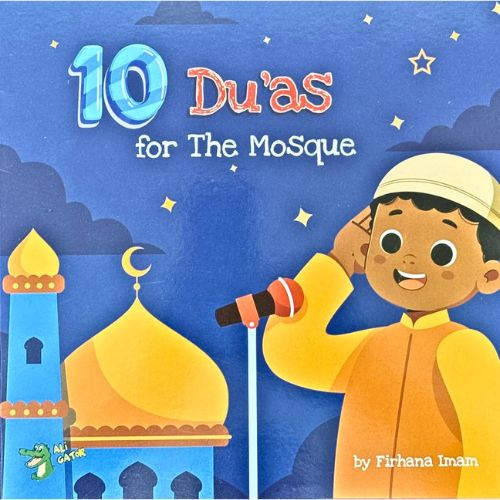
10 Du’as for the Mosque
Highlights:
Strengthen your child’s spiritual connection with this meaningful collection of 10 mosque du’as.
RM22.00
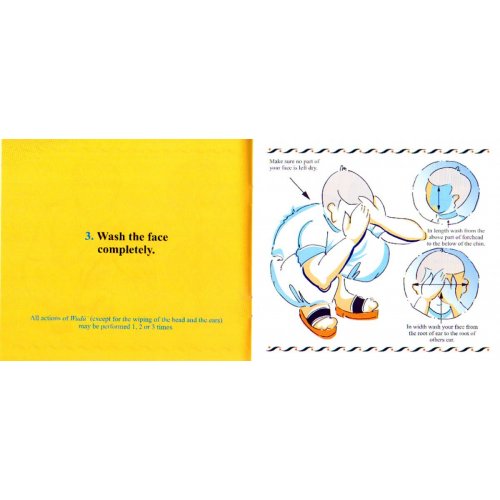
My Wudu Book
Highlights:
A step by step guide to perfecting your child’s Wudu according to the Quran and the Sunnah.
RM15.00
Riba: Usury or Interest
Highlights:
The Noble Qur’an states: {… Fear Allah, and give up what remains of your demand for usury/interest, if you are indeed believers. If you do not do so, then take notice of war from Allah and His Messenger.} (Qur’an 2: 278-279) Despite this obvious prohibition, the practice of ribâ (usury and interest) has polluted the global economy completely. This booklet explains the awful consequences of dealing in usury and interest in a summarized but convincing manner.
RM8.00 RM9.00
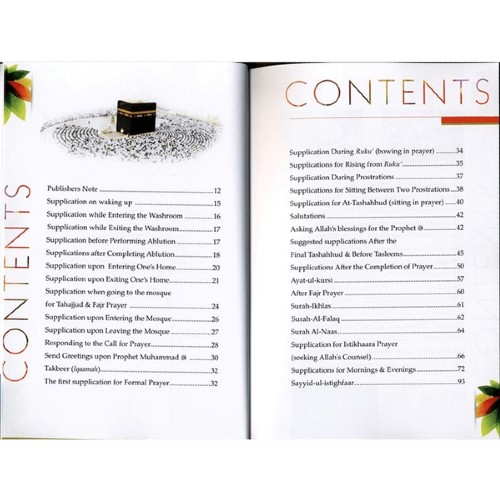
Golden Supplications (P/B)
Highlights:
For this book, ‘ Golden Supplications’ I have chosen only the most important supplications, so that our common people are able to memorize them with ease from one single book. It has been the ardent desire of the management at Darussalam for quite some time to publish this book with a beautiful design and loyout, thus making it attractive and assissting common people learning. Furthermore, I have also added some instrustions and manners related to the supplications in order to assist the readers in understanding and implementing the duas. It is important that parents also memorize these supplications themselves as it will greaty help their children in memorizing them too.
RM26.00
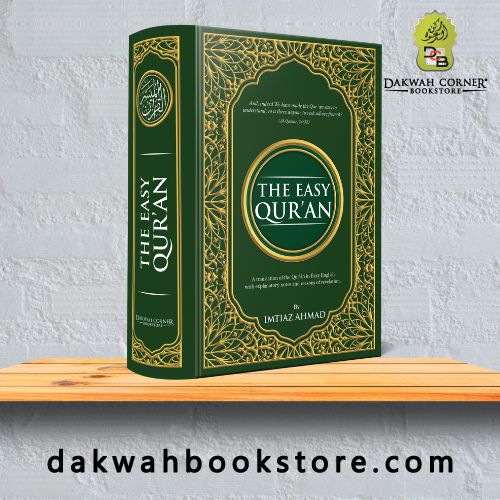
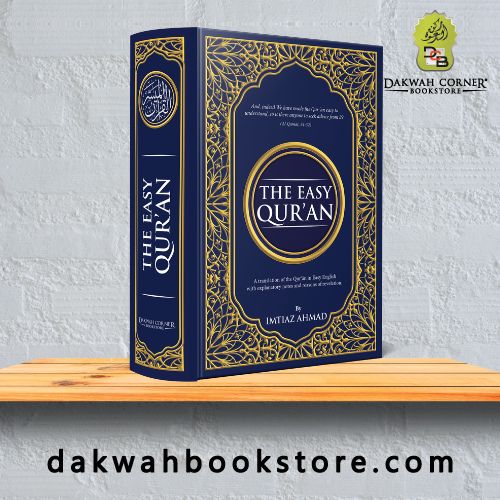
The Easy Qur’an (Revised Edition)
5 ★
5 ★
1 Rating
5 ★
1
4 ★
0
3 ★
0
2 ★
0
1 ★
0
Highlights:
The Easy Qur’an translation reviewed and approved by the Ministry of Information Saudi Arabia and Religious affairs Ministry Islamic Republic of Pakistan.
Published by Da’wah Corner Bookstore Saudi Arabia
RM75.00
There are no reviews yet.