


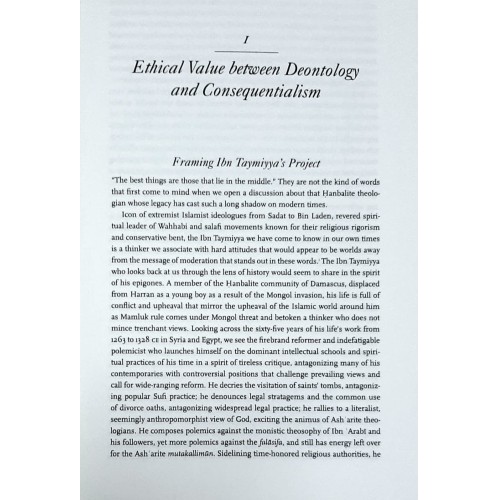
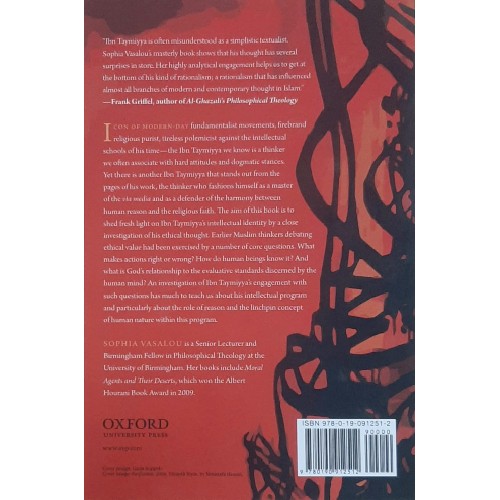
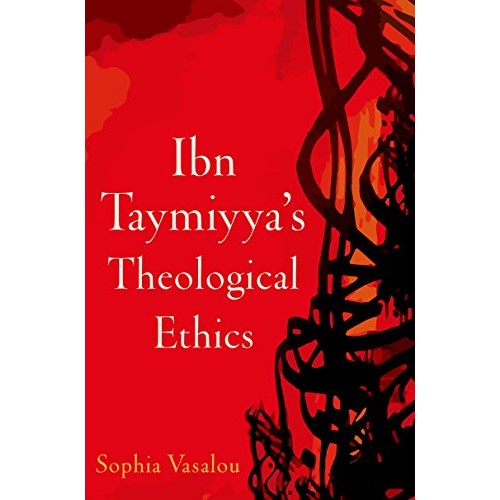
Icon of modern-day: fundamentalist movements, firebrand religious purist, tireless polemicist against the intellectual schools of his time-the Ibn Taymiyya we know is a thinker we often associate with hard attitudes and dogmatic stances. Yet there is another Ibn Taymiyya that stands out from the pages of his work, the thinker who fashions himself as a master of the via media and as a defender of the harmony between human reason and the religious faith. The aim of this book is to shed fresh light on Ibn Taymiyya’s intellectual identity by a close investigation of his ethical thought. Earlier Muslim thinkers debating ethical value had been exercised by a number of core questions. What makes actions right or wrong? How do human beings know it? And what is God’s relationship to the evaluative standards discerned by the human mind? An investigation of Ibn Taymiyya’s engagement with such questions has much to teach us about his intellectual program and particularly about the role of reason and the linchpin concept of human nature (fitra) within this program. It also has much to teach us about Ibn Taymiyya’s relationship to the intellectual landscape of his time, bringing us up against a rich tapestry of ethical discussions unfolding within theology, philosophy and legal theory in the classical period. At the same time, a close reading of Ibn Taymiyya’s ethics invites us to confront not only the content of his thought but its form, and more particularly those features of his writing that fracture our efforts to unify his thought.
Ibn Taymiyya’s Theological Ethics
RM160.00
Frequently Bought Together
Ibn Taymiyyah on The Oneness of God
| Weight | 0.75 kg |
|---|---|
| Dimensions | 23.5 × 15.5 × 2 cm |
| Author | |
| Binding | Paperback |
| ISBN | 978-0-19-091251-2 |
| Pages | 342 |
| Publisher | OXFORD University Press |
Be the first to review “Ibn Taymiyya’s Theological Ethics” Cancel reply
You must be logged in to post a review.
You may also like…

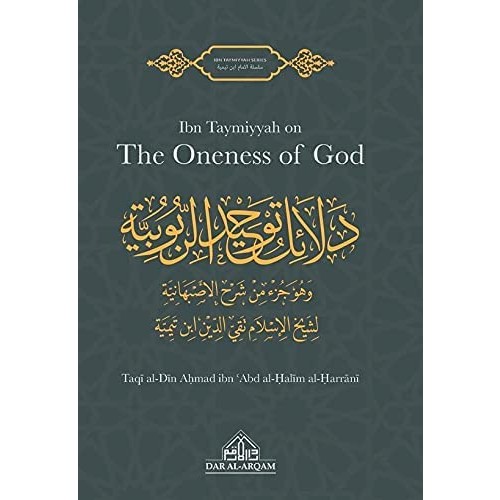
Ibn Taymiyyah on The Oneness of God
This book is the first in an envisioned series of translations from Ibn Taymiyyah’s theological works that cover a wide range of topics from the evidence of God’s perfection to the signs of Prophethood, and from the meaning of God’s creative agency to the compatibility of divine predestination with human moral agency.
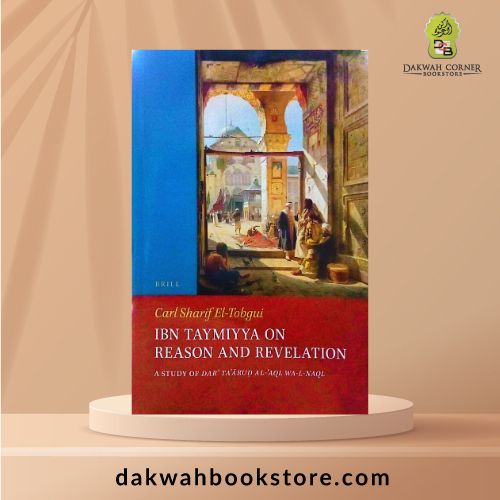
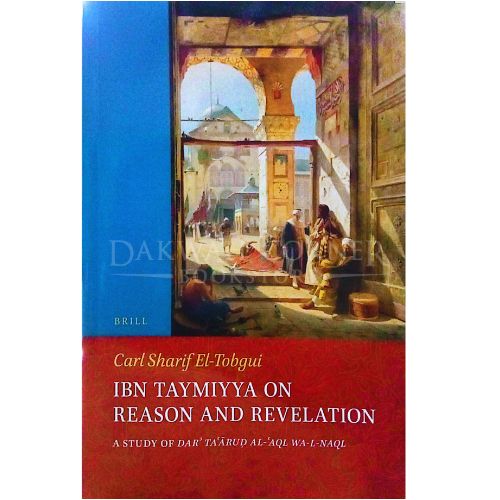
Ibn Taymiyya On Reason And Revelation: A Study of Dar’ Ta Arud Al-‘aql Wa-l-naql
In Ibn Taymiyya on Reason and Revelation, Carl Sharif El-Tobgui offers the first comprehensive study of Ibn Taymiyya’s ten-volume magnum opus, Darʾ taʿāruḍ al-ʿaql wa-l-naql (Refutation of the conflict of reason and revelation). In his colossal riposte to the Muslim philosophers and rationalist theologians, the towering Ḥanbalī polymath rejects the call to prioritize reason over revelation in cases of alleged conflict, interrogating instead the very conception of rationality that classical Muslims had inherited from the Greeks. In its place, he endeavors to articulate a reconstituted “pure reason” that is both truly universal and in full harmony with authentic revelation. Based on a line-by-line reading of the entire Darʾ taʿāruḍ, El-Tobgui’s study carefully elucidates the “philosophy of Ibn Taymiyya” as it emerges from the multifaceted ontological, epistemological, and linguistic reforms that Ibn Taymiyya carries out in this pivotal work.
Ibn Taymiyyah’s Essay on Servitude
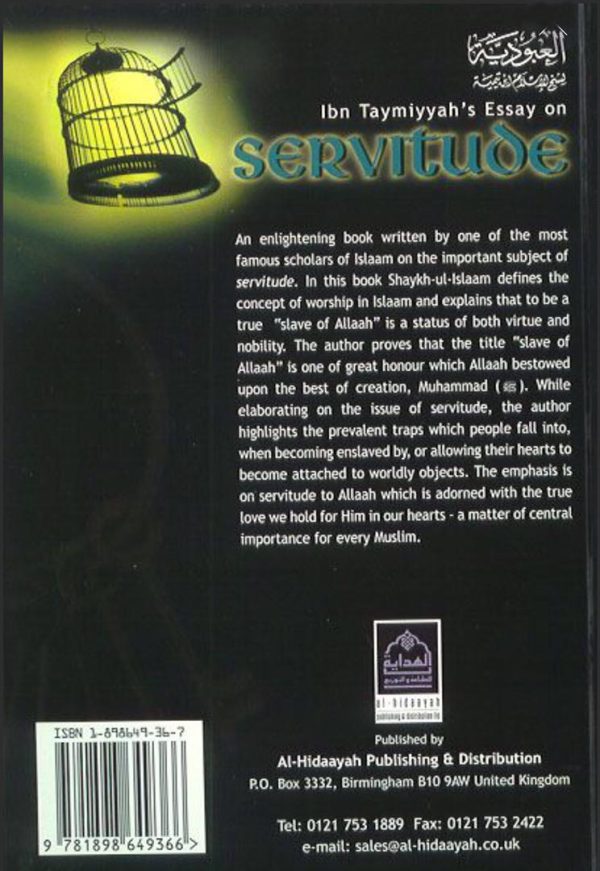
“An enlightening book written by one of the most famous scholars of Islaam on the important subject of servitude. In this book, Shaykh Ibn Taymiyyah defines the concept of worship in Islaam and explains that to be a true “slave of Allaah” is a status of both virtue and nobility. The author proves that the title “slave of Allaah” is one of great honor which Allaah bestowed upon the best of creation, Muhammad (pbuh). While elaborating on the issue of servitude, the author highlights the prevalent traps which people fall into, when becoming enslaved by, or allowing their hearts to become attached to worldly objects. The emphasis is on servitude to Allaah which is adorned with the true love we hold for Him in our hearts — a matter of central importance for every Muslim.
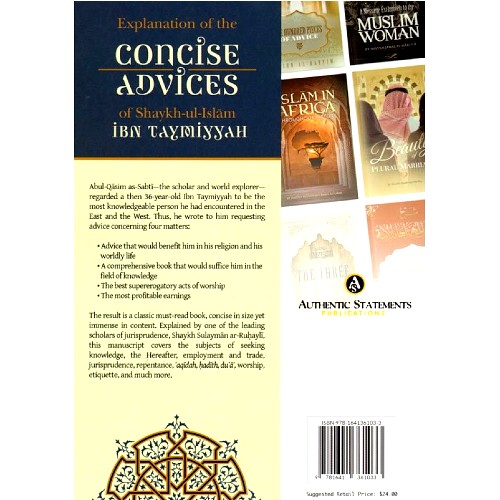
Explanation of the Concise Advices of Ibn Taymiyyah
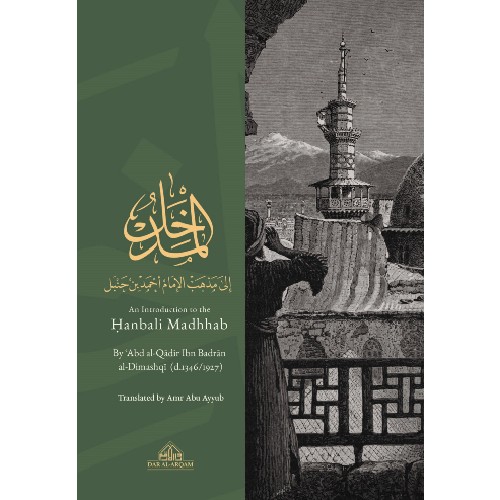
An Introduction to the Hanbali Madhhab (P/B) – Dar al-Arqam
A complete translation of Ibn Badran’s masterpiece, al-Madkhal ila Madhhab al-Imam Ahmad ibn Hanbal.
Related Products


The Ultimate Guide to Umrah by Darussalam

Islamic Rules of Order (P/B)
Organizations must have rules of order to facilitate their debate and to fill in the procedures not detailed by their constitutional documents. While most American organizations are content to operate by Robert’s Rules of Order, Muslim organizations have often wrestled with questions over whether the rules of order systemized by a Western military figure are in accord with the Qur’an and the Sunnah.
This book tackles the matter directly and takes into account the Qur’an, the sunnah, Islamic manners and the history of Islamic consultation and leadership to provide a simple, practical guide to organizational procedure that can be incorporated into the governance of Muslim organizations. The book includes advice on writing bylaws and on complying with the best practices of the U.S. Dept. of Justice in a way that is Islamically authentic, transparent, and accountable. It provides a basic starting point for any Muslim organization while allowing for flexibility so that organizations may make any variations they require within their own bylaws and constitution, so that it can accommodate differing schools of thought on Islamic law. In its discursive approach it is an essential primer for understanding the value of rules of order and the Islamic context for their application. The Islamic Rules of Order has been adopted as the rules of order of the Association of Muslims Social Scientists.


Having Fun The Halal Way Entertainment In Islam
With the advent of technology, the entertainment industry has flourished and become immensely popular. Combine this with the exponential advances in technology, and the result is an increasing number of ways to amuse ourselves. As a result of such advances, Muslim react in a variety of manners towards entertainment. Some label entertainment as completely forbidden. This sometimes includes parents who say no to almost everything that their young ones deem to be ‘fun’, without providing them with suitable alternatives. Others, who do not want to take this extreme approach, fall into the trap of excessive use of – and even addiction to – various sources of entertainment, without any limits.
In Having Fun the Halal Way, Ismail Kamdar explores the teachings of Islam regarding entertainment. Drawing upon the Quran, the Sunnah and the understanding of the righteous scholars of Islam, he provides a detailed and balanced analysis of the topic. He not only explains the detriments of the current entertainment industry, but also suggests alternative means to have a good time with friends and family members.


Should A Muslim Follow A Particular Madhhab?
In this book, the author has widely described the main principle of Taqleed. He says that Allah and Prophet Mohammed (SAW) has not ordered us to follow any opinions and interpretations. So there’s a possibility of being correct or incorrect in the opinions because there are many issues on which the Imams had different views and they explain them according to their own reasons and speculations, but the real and true Islam is based on the book (Quran) and Prophet’s Sunnah.
Allah says: “But no, by your Lord, they can have no Faith until they make you judge in all disputed matters between them, and find in themselves no resistance against your decision, and accept them with full submission.” And the prophet said: “I leave you with two things as long as you hold them tightly, you never go astray: they are the book of Allah and my Sunnah.” In this sense, the author has described the difference between different Madhahib (madhabs/mazhabs), and their views and urged to follow only the Quran and Sunnah.

The Right to Education, Work and Welfare in Islam (P/B)
In The Right to Education, Work and Welfare in Islam Professor M.H. Kamali develops an Islamic perspective on three connected and complementary areas of rights and liberties. He urges that education is often a necessary ingredient of professional work even more so now than in earlier times when the range and variety of specialised knowledge were relatively limited. A person who acquires education, whether generally or at advanced levels of specialisation, is more likely to stand in a better position to enter the workforce and thus to contribute to the welfare of the community.
The author commences his discussions on education, work and welfare in Islam by focusing on how each is treated in the Qur’an; and follows this by the example of the Prophet and, after him, the Pious Caliphs who gave prominence to the education and welfare needs of people at times both of scarcity and affluence. Professor Kamali then moves forward to our time and discusses the right to education, the education of children, institutionalisation of learning, academic freedom and the debate between science and religion.
The section on work elaborates on the value of work, work ethics, workers’ and employers’ rights and responsibilities, and the role and responsibility of governments.
Finally, the section on welfare focuses on the importance in Islam of caring for those who are in need and the different forms of provision that can be made available by individuals, the state and charities.


Islamic Rulings on Menstruation and Postpartum Condition
The birth of human being is a most amazing phenomenon. The physical cycles that the body of woman must endure in order to maintain this act of creation should be respected to the highest degree. Allah mentions that our mothers have born us with difficulty and struggle and because of this are due the highest respect. one among many of the difficulties that women must brave, are the doubts that these conditions present to the correct obervance of her religion. How is her fassting affected, how are her prayers affected, how is her ability to pursue her studies, and how are her conjugal relations affected by her ever changing physical condition in relation to her as the sole vessel of the birth of man. A really valuable publication by Darussalam for all Muslim woman to study

A Guide to Male-Female Interaction
Are Muslim men allowed to interact with female students, and vice versa, in a virtual classroom? Can a Muslim woman pursue a professional career that necessitates her interaction with men? Is it appropriate for a woman to serve her husband’s guests? Do mixed wedding ceremonies comply with the Sharia? Read this bilingual book to find the answers and more!


The Concise Presentation of the Fiqh of the Sunnah and the Noble Book
Written by Dr. Abdul-Azeem Badawi and translated by Jamal al-Din M. Zarabozo, The Concise Presentation of the Fiqh of the Sunnah and the Noble Book covers the fiqh of diverse topics like purity, prayer, fasting, zakah, pilgrimage, marriage, business transactions, foods, inheritance, criminal offenses, and jihad. Dr. Badawi relies only on the Quran and the Sunnah, making it an authentic Islamic book on fiqh and a collection of sound hadiths.


Zakah According to the Quran & Sunnah (Darussalam)
Zakah, the third Pillar of Islam, is probably the first Pillar of its economic system. It represents the first and most important mechanism to implement economic justice and to provide sustenance to the economically unfortunate, two issues for which Islam is especially sensitive. These two issues are the essence of this book. This book consists of all the main issues of Zakat (i-e, Zakah on Gold, Silver, Paper Money, Livestock, Fruits, Grains, Rented Land, Buried treasures, Minerals, Trade, Shares, Stocks, and Exploited Assets etc). The main objective of this work is to serve an easy and authentic reference to the reader.


Fast According to the Quran & Sunnah
Saum (Fast) is a third Pillar of Islam. Allah’s Messenger said, Allah says: “Every deed of the son of Adam is for him, except Saum (fasting). It is for Me and I shall reward for it.”
As the status of this act of worship is so high it is essential to learn the pilings pertaining to this month of fasting so that Muslims will know what is obligatory in order to do it, what is forbidden to avoid it, and what is permissible so that they do not unnecessarily subject themselves to any hardship by depriving themselves from it.
This book consists of all the main issues of Fast. The main objective of this work is to serve an easy and authentic reference to the reader.

The Pillars of Islam Made Easy – II Salah & Its Essential Conditions (H/B)
Salah is one of the five pillars on which the edifice of Islam rests. Most of us feel that we already know all there is about salah – the formal prayers of a Muslim. However, very few individuals actually do justice to it or derive any worldly or spiritual benefits from it.
Salah & Its Essential Conditions is an effort to detail the essential prerequiires of salah. Moreever, it takes a detailed look at its importance along with the different types of obligatory and voluntary prayers. It alsa presents an illustrated guide to help those who wish to learn or correct the performance of their prayers.
Inshallah, all those who wish to improve their salah will find plenty of help in this book whether they are looking for information on cleanliness and purify, locating the direction of qibla, improving their congregation during salah, making up for the missed salah, or joining acongregation when the imam has already sarted the salah, or joining a congregation when the imam has already started the salah. All in all, it is a relevant handbook on what the Prophet (saw) has described as the coolness of his eyes.


Common Mistakes Regarding Prayer – IIPH
Formal prayer (salat) is the second pillar of Islam, and the most important of a Muslim’s acts of worship. Prophet Muhammad (PBUH) said: “The first of one’s actions for which a slave of Allah will be held accountable on the Day of Judgment will be one’s prayers. If they are correct and accounted for, then he (or she) will have succeeded (gained paradise); and if they are lacking, then he (or she) will have failed (lost paradise). If there is something defective in his (or her) obligatory prayers, the Lord will say: ‘See if my slave has any supererogatory prayers with which that which was defective in his (or her) obligatory prayers may be completed. Then the rest of his (or her) deeds will be judged in like manner.” (At-Tirmidhi and others) Shaykh Mashhur Hasan Salman has compiled a list of the most common errors that we make when we pray, discussing and explaining each one. This book is a valuable aid to Muslims hoping to perfect their prayers, so that their prayers may be free of defects and acceptable to Allah. This new and revised edition of the English translation of his work presents the text in a fluent, highly readable style.
Recently Viewed
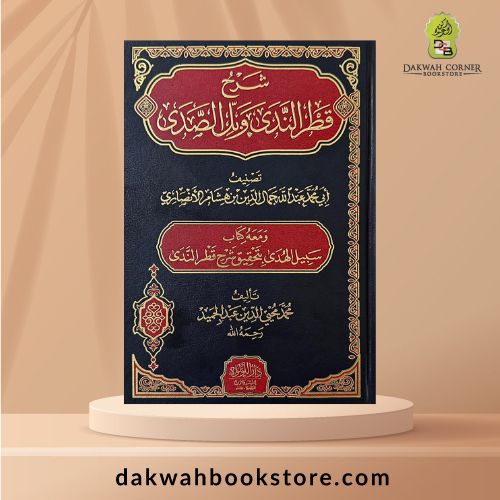
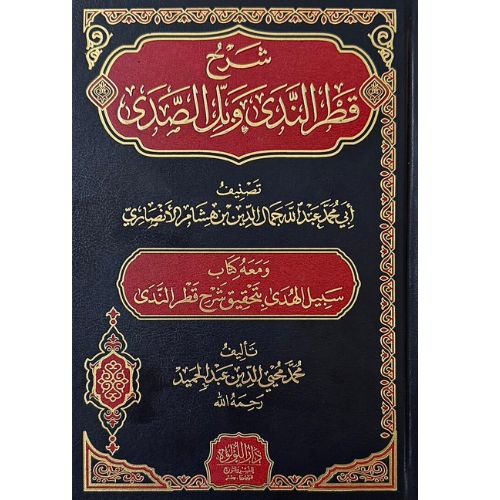
[ALA] Sharḥ Qaṭr al-Nadā wa Bal al-Ṣadā / شرح قطر الندى وبل الصدى
The severe – something that is not specific to a book from the books of our ancestors, and it is not unique to a trace of their precious traces, but you do not fall – except in the rare little – on the book of their books, the publisher of which has taken out on your face if you look at it, and God is sufficient for us and the best deputy!
Therefore, I did not find a beginning to do this book: by adjusting its examples and testones from the Holy Qur’an, the Prophet’s hadith and Arabic poetry, and then by explaining its verses as a middle explanation between the brief and the boring simple, with the expression of the verses in full expression, and I did all this with an easy phrase and a close style.
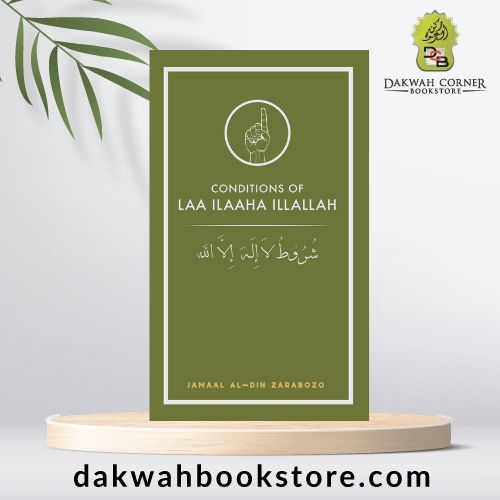
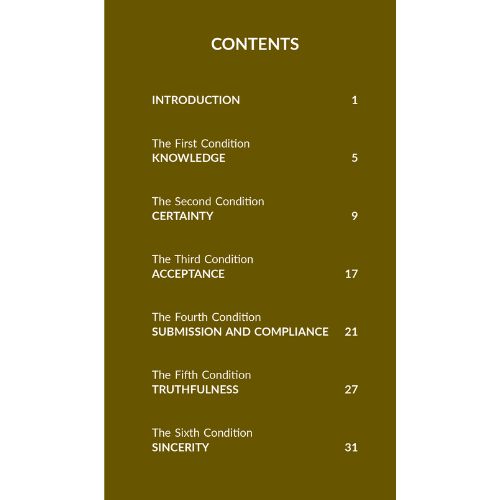
Conditions of LAA ILAAHA ILLALLAH (Revised Edition)
The famous Taabi’i Wahb ibn Munabbih was once asked,
“Isn’t the statement of laa ilaaha ill-Allah the key to Paradise?” He answered, “Yes, but every key has ridges, the door will open for you. Yet if you do not have the right ridges the door will not open for you.”
That is, it is saying {while meeting} certain conditions. These conditions are what will differentiate the person who will benefit from his making of that statement from the one who will not benefit from that statement.
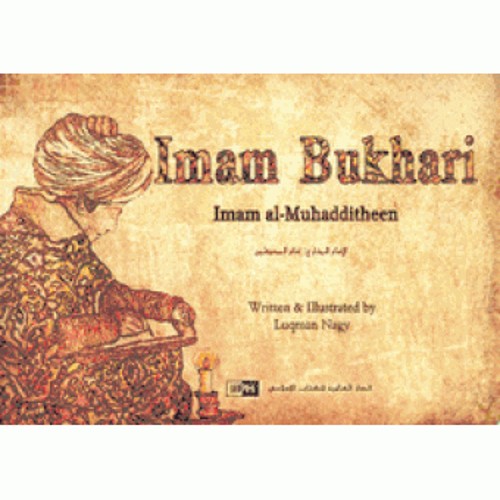
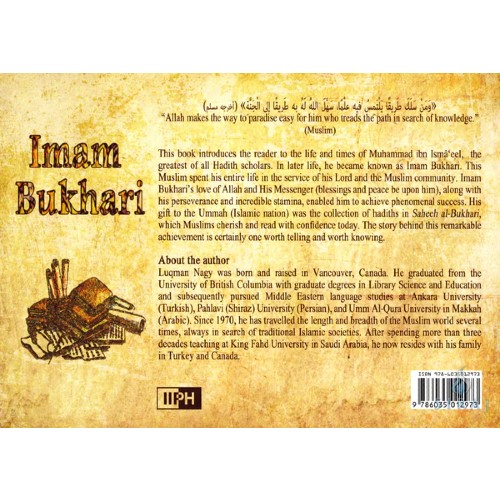
Imam Bukhari – Imam Al-Muhadditheen (IIPH)
This book, authored by Luqman Nagy, introduces the reader to the life and times of Muhammad ibn Ismâ‘eel, the greatest of all Hadith scholars. In later life, he became known as Imam Bukhari. This Muslim spent his entire life in the service of his Lord and the Muslim community. His gift to the Ummah (nation) was the collection of hadiths in Saheeh al-Bukhâri, which Muslims cherish and read with confidence today. The story behind this remarkable achievement is certainly one worth telling and worth knowing.
There are no reviews yet.