


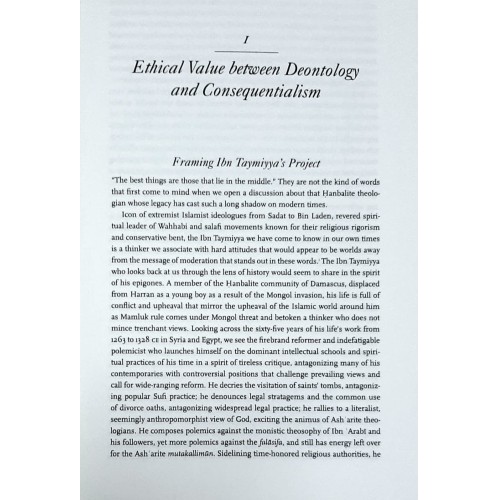
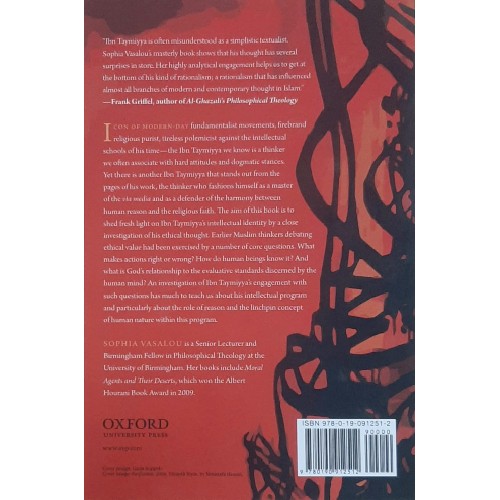

Icon of modern-day: fundamentalist movements, firebrand religious purist, tireless polemicist against the intellectual schools of his time-the Ibn Taymiyya we know is a thinker we often associate with hard attitudes and dogmatic stances. Yet there is another Ibn Taymiyya that stands out from the pages of his work, the thinker who fashions himself as a master of the via media and as a defender of the harmony between human reason and the religious faith. The aim of this book is to shed fresh light on Ibn Taymiyya’s intellectual identity by a close investigation of his ethical thought. Earlier Muslim thinkers debating ethical value had been exercised by a number of core questions. What makes actions right or wrong? How do human beings know it? And what is God’s relationship to the evaluative standards discerned by the human mind? An investigation of Ibn Taymiyya’s engagement with such questions has much to teach us about his intellectual program and particularly about the role of reason and the linchpin concept of human nature (fitra) within this program. It also has much to teach us about Ibn Taymiyya’s relationship to the intellectual landscape of his time, bringing us up against a rich tapestry of ethical discussions unfolding within theology, philosophy and legal theory in the classical period. At the same time, a close reading of Ibn Taymiyya’s ethics invites us to confront not only the content of his thought but its form, and more particularly those features of his writing that fracture our efforts to unify his thought.
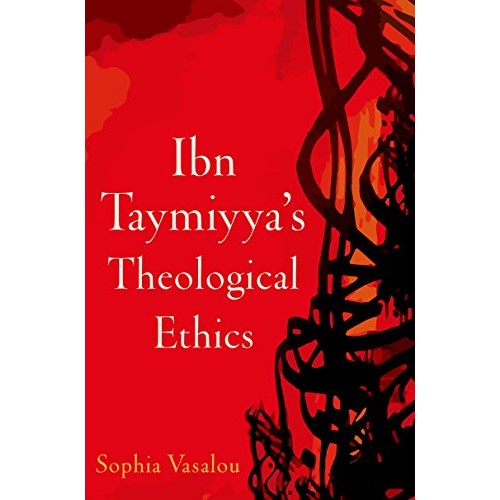
Ibn Taymiyya’s Theological Ethics
RM160.00
Frequently Bought Together
Ibn Taymiyyah on The Oneness of God
| Weight | 0.75 kg |
|---|---|
| Dimensions | 23.5 × 15.5 × 2 cm |
| Author | |
| Binding | Paperback |
| ISBN | 978-0-19-091251-2 |
| Pages | 342 |
| Publisher | OXFORD University Press |
Be the first to review “Ibn Taymiyya’s Theological Ethics” Cancel reply
You must be logged in to post a review.
You may also like…

Ibn Taymiyyah on The Oneness of God
This book is the first in an envisioned series of translations from Ibn Taymiyyah’s theological works that cover a wide range of topics from the evidence of God’s perfection to the signs of Prophethood, and from the meaning of God’s creative agency to the compatibility of divine predestination with human moral agency.
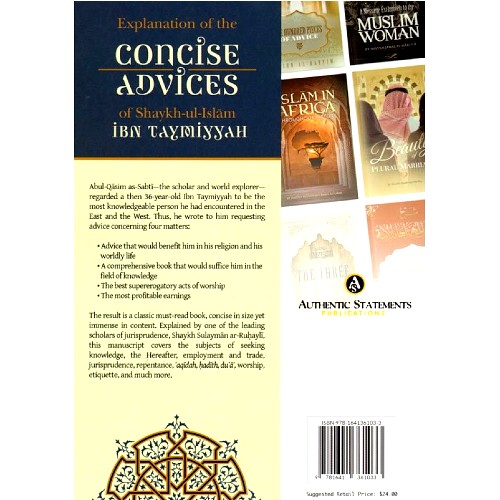
Explanation of the Concise Advices of Ibn Taymiyyah
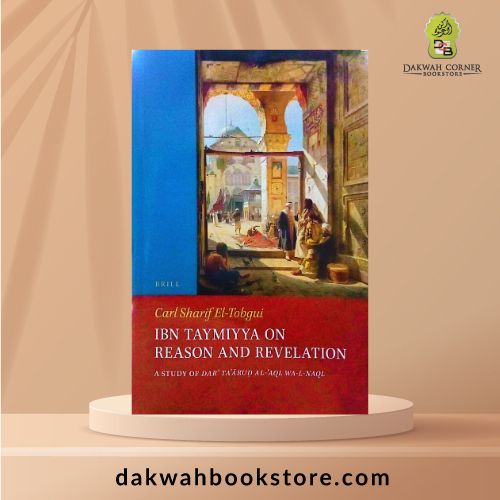
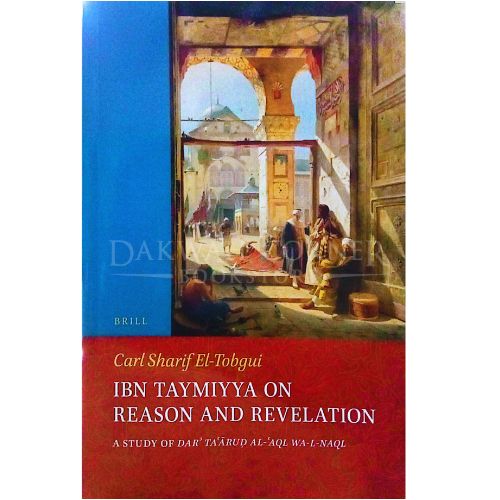
Ibn Taymiyya On Reason And Revelation: A Study of Dar’ Ta Arud Al-‘aql Wa-l-naql
In Ibn Taymiyya on Reason and Revelation, Carl Sharif El-Tobgui offers the first comprehensive study of Ibn Taymiyya’s ten-volume magnum opus, Darʾ taʿāruḍ al-ʿaql wa-l-naql (Refutation of the conflict of reason and revelation). In his colossal riposte to the Muslim philosophers and rationalist theologians, the towering Ḥanbalī polymath rejects the call to prioritize reason over revelation in cases of alleged conflict, interrogating instead the very conception of rationality that classical Muslims had inherited from the Greeks. In its place, he endeavors to articulate a reconstituted “pure reason” that is both truly universal and in full harmony with authentic revelation. Based on a line-by-line reading of the entire Darʾ taʿāruḍ, El-Tobgui’s study carefully elucidates the “philosophy of Ibn Taymiyya” as it emerges from the multifaceted ontological, epistemological, and linguistic reforms that Ibn Taymiyya carries out in this pivotal work.
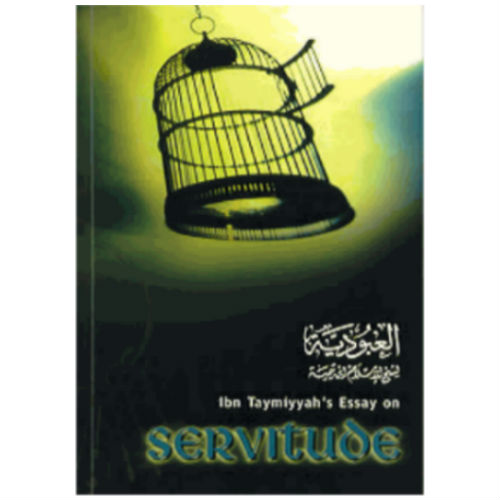
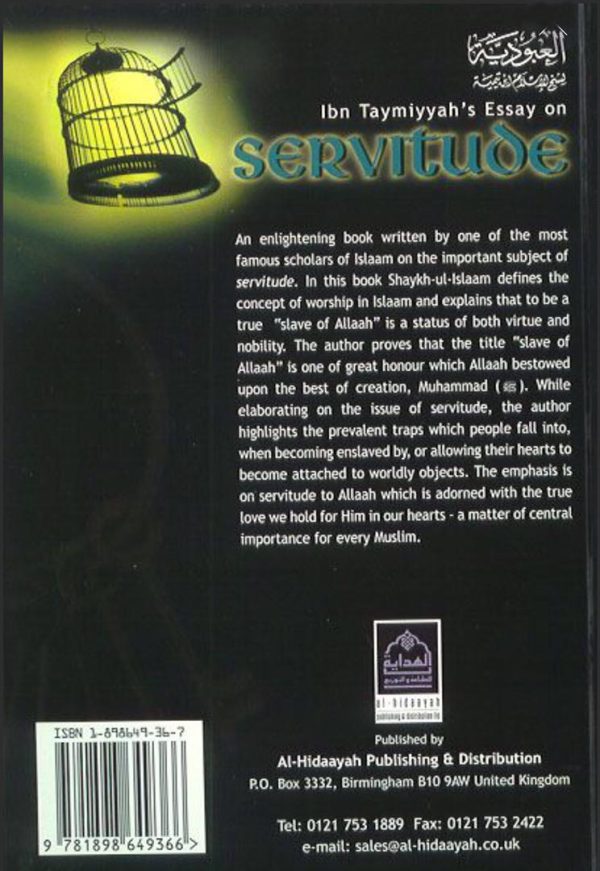
Ibn Taymiyyah’s Essay on Servitude
“An enlightening book written by one of the most famous scholars of Islaam on the important subject of servitude. In this book, Shaykh Ibn Taymiyyah defines the concept of worship in Islaam and explains that to be a true “slave of Allaah” is a status of both virtue and nobility. The author proves that the title “slave of Allaah” is one of great honor which Allaah bestowed upon the best of creation, Muhammad (pbuh). While elaborating on the issue of servitude, the author highlights the prevalent traps which people fall into, when becoming enslaved by, or allowing their hearts to become attached to worldly objects. The emphasis is on servitude to Allaah which is adorned with the true love we hold for Him in our hearts — a matter of central importance for every Muslim.
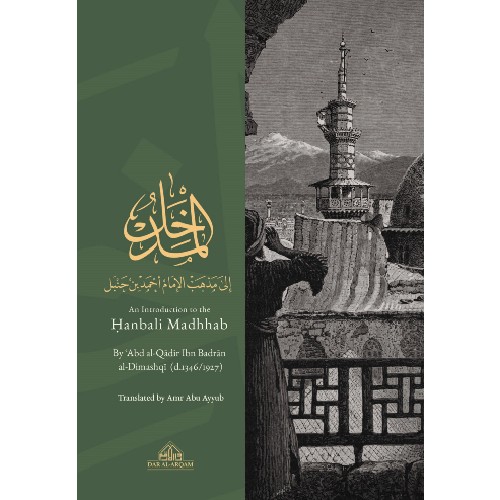
An Introduction to the Hanbali Madhhab (P/B) – Dar al-Arqam
A complete translation of Ibn Badran’s masterpiece, al-Madkhal ila Madhhab al-Imam Ahmad ibn Hanbal.
Related Products

A Guide to Male-Female Interaction
Are Muslim men allowed to interact with female students, and vice versa, in a virtual classroom? Can a Muslim woman pursue a professional career that necessitates her interaction with men? Is it appropriate for a woman to serve her husband’s guests? Do mixed wedding ceremonies comply with the Sharia? Read this bilingual book to find the answers and more!

War and Peace in Islam : The Uses and Abuses of Jihad (P/B)
Written by a number of Islamic religious authorities and Muslim scholars, this work presents the views and teachings of mainstream Sunni and Shi’i Islam on the subject of jihad. It authoritatively presents jihad as it is understood by the majority of the world’s 1.7 billion Muslims in the world today, and supports this understanding with extensive detail and scholarship. No word in English evokes more fear and misunderstanding than “jihad.” To date the books that have appeared on the subject in English by Western scholars have been either openly partisan and polemical or subtly traumatized by so many acts and images of terrorism in the name of jihad and by the historical memory of nearly 1,400 years of confrontation between Islam and Christianity. Though jihad is the central concern of War and Peace in Islam: The Uses and Abuses of Jihad, the range of the essays is not confined exclusively to the study of jihad. The work is divided into three parts: War and Its Practice, Peace and Its Practice, and Beyond Peace: The Practice of Forbearance, Mercy, Compassion and Love. The book aims to reveal the real meaning of jihad and to rectify many of the misunderstandings that surround both it and Islam’s relation with the “Other.”
Reviews:
“A dynamic myth-busting clarification of the real position of mainstream orthodox Islam on the whole question of violence and jihad.” —T. J. Winter, University of Cambridge
“This is the best book on the subject in English. It will be of inestimable value.” —Shaykh Mustafa Ceric, Grand Mufti Emeritus of Bosnia

The Problems of the Illegitimate Child (P/B)
This book addresses the views of the Sunni scholars regarding the importance of genealogical relationship (nasab) in Islamic family law and examines the role of legitimacy on the basis of the legal maxim “al-walad li al-firash”, evidence (al-bayyinah), and doubtful intercourse (wat’ shubhah). It also elucidates the views of the Sunni schools of law on how to establish illegitimacy. For the Sunni jurists, there are several situations that determine the illegitimacy of the child. A child is considered illegitimate if its birth is the outcome of adultery (zina) or the result of legitimate union but accompanied with imprecation (li‘an). Other circumstances include the birth of the child taking place in less than six lunar months, the father of the child being categorized as one who is incapable of begetting, or the birth as a result of marital relationship considered unlawful because of consanguinity. The book also deals comprehensively with the moral, religious, legal and other aspects of the illegitimate child and the foundling in the works of the Sunni jurists. The status and rights of the illegitimate child and the foundling in the Islamic family law of Malaysia and Brunei are also discussed by referring to some provisions from Federal Territory Act 1984 (Act 303) and Brunei law.


Fiqh According To The Quran & Sunnah (2 vol)
The complete set, ‘Al-Lubab Fee Fiqh As-Sunnah Wal-Kitab,’ contains all of the books of Islamic Fiqh and its chapters, accompanied by evidence and is presented in a clear and simple manner, in order that they may be understood by the young and the old, without blindly following any of the schools of Jurisprudence, but rather being subject to authentic proofs and following the most authoritative opinions, without fanatical adherence to any particular group. Rather the author agrees with each group when the truth is with them and contradicts them when they veer from that which is correct.
Fiqh is to achieve access to knowledge of that which is unclear through knowledge of that which is proven, so it is more specific than mere knowledge or learning. And fiqh is knowledge of the juristic law. It is said Faquha -A man has acquired understanding and so he has become a Faqeeh (A scholar of Islamic Jurisprudence); and it is said Faqiha – He has understood it, i.e he has attained understanding of it, and it is said Tafaqqaha – he has devoted himself to the acquisition of (Islamic) Knowledge and specialized in it. Fiqh has been a subject of contention among the scholars as well as layman throughout the history of Islam.

Islamic Rules of Order (P/B)
Organizations must have rules of order to facilitate their debate and to fill in the procedures not detailed by their constitutional documents. While most American organizations are content to operate by Robert’s Rules of Order, Muslim organizations have often wrestled with questions over whether the rules of order systemized by a Western military figure are in accord with the Qur’an and the Sunnah.
This book tackles the matter directly and takes into account the Qur’an, the sunnah, Islamic manners and the history of Islamic consultation and leadership to provide a simple, practical guide to organizational procedure that can be incorporated into the governance of Muslim organizations. The book includes advice on writing bylaws and on complying with the best practices of the U.S. Dept. of Justice in a way that is Islamically authentic, transparent, and accountable. It provides a basic starting point for any Muslim organization while allowing for flexibility so that organizations may make any variations they require within their own bylaws and constitution, so that it can accommodate differing schools of thought on Islamic law. In its discursive approach it is an essential primer for understanding the value of rules of order and the Islamic context for their application. The Islamic Rules of Order has been adopted as the rules of order of the Association of Muslims Social Scientists.


The Concise Presentation of the Fiqh of the Sunnah and the Noble Book
Written by Dr. Abdul-Azeem Badawi and translated by Jamal al-Din M. Zarabozo, The Concise Presentation of the Fiqh of the Sunnah and the Noble Book covers the fiqh of diverse topics like purity, prayer, fasting, zakah, pilgrimage, marriage, business transactions, foods, inheritance, criminal offenses, and jihad. Dr. Badawi relies only on the Quran and the Sunnah, making it an authentic Islamic book on fiqh and a collection of sound hadiths.


Getting the Best Out of Hajj
The book provides a realistic view of Hajj as it is today, with detailed explanations of all the rites. It provides Figh related issues about Hajj, Salah and personal behaviour according to the Quran and Sunnah, to enable you to obtain the best value for your time spent in the holy cities. It also provides information and suggestions about planning for the journey, what to expect and how to survive, so you can depart with full confidence. This is a must have for all those planning to go on Hajj!

Islamic Fatawa Regarding Women (H/B)
Women face a lot of special problems regarding their menses, postpartum bleeding, istihada, hijab, mixing with men, rights & duties with respect to their husband, husband’s household, children, inheritance, marriage, divorce, etc
More than 350 of such problems & issues have been answered in this book by Grand Mufti of Saudi Arabia Sheikh Ibn Baz, and the eminent scholars like Sheikh Ibn Uthaimin, Sheikh Ibn Jibreen and others.
.


Funerals Regulations and Exhortations (H/B)
Our soul inevitably follows a route starting from birth, passing through death, and ending with our resurrection in the next life. The inevitable journey discusses over a sequence of titles: sickness, inheritance, funerals, Life in Barzakh and so on…


Common Mistakes Regarding Prayer – IIPH
Formal prayer (salat) is the second pillar of Islam, and the most important of a Muslim’s acts of worship. Prophet Muhammad (PBUH) said: “The first of one’s actions for which a slave of Allah will be held accountable on the Day of Judgment will be one’s prayers. If they are correct and accounted for, then he (or she) will have succeeded (gained paradise); and if they are lacking, then he (or she) will have failed (lost paradise). If there is something defective in his (or her) obligatory prayers, the Lord will say: ‘See if my slave has any supererogatory prayers with which that which was defective in his (or her) obligatory prayers may be completed. Then the rest of his (or her) deeds will be judged in like manner.” (At-Tirmidhi and others) Shaykh Mashhur Hasan Salman has compiled a list of the most common errors that we make when we pray, discussing and explaining each one. This book is a valuable aid to Muslims hoping to perfect their prayers, so that their prayers may be free of defects and acceptable to Allah. This new and revised edition of the English translation of his work presents the text in a fluent, highly readable style.

Forensic Psychiatry In Islamic Jurisprudence (P/B) (IBT)
This is the first book in Forensic Psychiatry that focuses on the application of psychiatry to legal issues connected to Islamic jurisprudence. It gives contemporary psychiatry in any Islamic country a broad spectrum of tools to work with, enabling the utilization of options specific to particular societal and cultural norms. This book will appeal to both the general as well as the academic reader.

Worship In Islam: An In-depth Study of Ibadah, Salah and Sawm (P/B)
Worship in Islam is in-depth study of the nature and significance of Islamic spirituality by Abul A‘la Mawdudi (1903–79), one of the leading Muslim intellectuals of the twentieth century, with special reference to the concepts of God’s Oneness (tawhid), the finality of Prophethood (risalah) and the Islamic system of worship (‘ibadah) with a focus upon prayer (salah) and fasting (sawm) and their role in the development of the Islamic personality and Islam’s social order. The distinguishing feature of Mawdudi’s approach is his elaboration of the social dimension of worship, which extends the traditional approach found in Islamic jurisprudence, with its focus upon ritual and self-purification, to consider worship’s transformative role in social life. Presenting a holistic view of the Islamic system, Mawdudi highlights Islam’s social, economic and political dimensions, which he argues has the capacity to resolve emergent issues and problems that humankind faces.
This historic text should be of wider interest to both students and specialists in contemporary Islamic thought, and includes an introduction by Professor Anis Ahmad.
Edited and translated into accessible English by Ahmad Imam Shafaq Hashemi, this book is an authoritative compilation by a leading Islamic twentieth-century revivalist on the central matter of worship’s role in Islam.
Recently Viewed


The Sources of the Qur’an
“Who is the author of the Qur’an?” On this subject scholars have flagrantly contradicted each other. This work attempts to make a critical review of the major ‘authorship’ theories by pressing into service logical arguments, historical evidence, textual analysis and scientific data. Probably, the only point of agreement about the Qur’an is that it was uttered for the first time by a man who was born in Makkah (Mecca), a city of Arabia, in the sixth century—a man by the name of Muhammad (blessings and peace be upon him). As to the source of the Qur’an, scholars are divided into three main groups: those who believe that Muhammad (blessings and peace be upon him) himself was the author; those who believe that he was not the author himself but learned it from another human author or authors; and those who believe that the Qur’an has no human author but is rather a word-for-word revelation from God. Hamza Njozi examines the three theories and comes to a firm and logical conclusion.
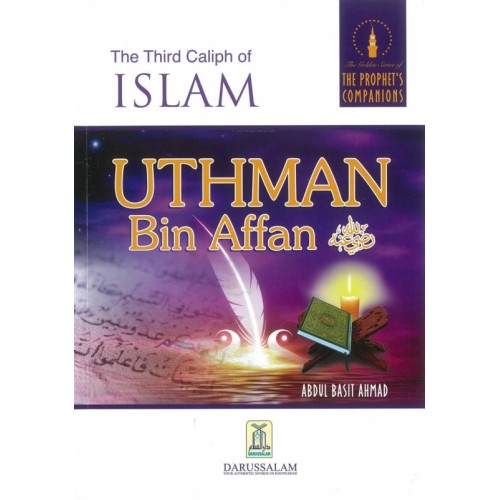
The Third Caliph of Islam: Uthman bin Affan (P/B)
Uthman bin Affan (R) was one of the early men who accepted Islam in Makkah. From the first moment he became a Muslim, he put all his wealth under the service of Islam. He spent most of his resources to satisfy the needs of poor Muslims. Recognizing his generosity and devotion to Islam, the Prophet (S) told him that his place would be in Paradise on the Hereafter. He married Ruqayah (R),the Prophet’s daughter. After she died, he married her sister Um Kulthum ;for that, the people at that time called him Dhun Nurain, “The Man with the Two Lights.”
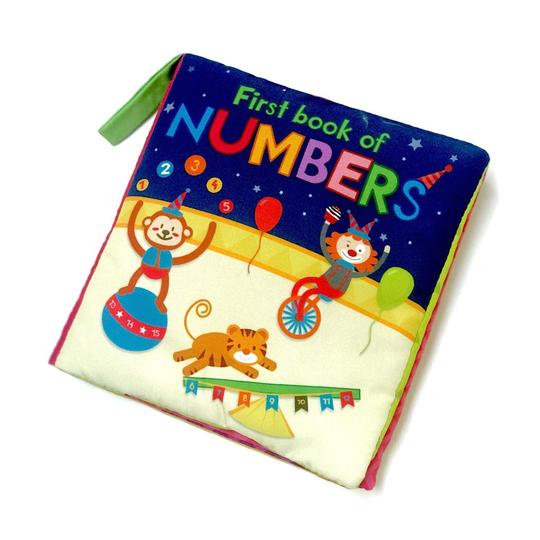
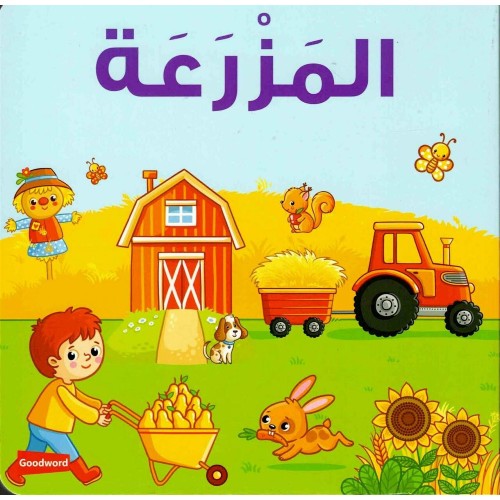
SOFT BOOK – First Book of NUMBERS
Numbers from 1 to 20
Complete with pictures to count
Colorful illustrations


Zakah According to the Quran & Sunnah (Darussalam)
Zakah, the third Pillar of Islam, is probably the first Pillar of its economic system. It represents the first and most important mechanism to implement economic justice and to provide sustenance to the economically unfortunate, two issues for which Islam is especially sensitive. These two issues are the essence of this book. This book consists of all the main issues of Zakat (i-e, Zakah on Gold, Silver, Paper Money, Livestock, Fruits, Grains, Rented Land, Buried treasures, Minerals, Trade, Shares, Stocks, and Exploited Assets etc). The main objective of this work is to serve an easy and authentic reference to the reader.



The Middle Path of Moderration in Islam (H/B)
In The Middle Path of Moderation in Islam, leading Islamic law expert Mohammad Hashim Kamali examines the concept of wasatiyyah, or moderation, arguing that scholars, religious communities, and policy circles alike must have access to this governing principle that drives the silent majority of Muslims, rather than focusing on the extremist fringe. Kamari explores wasatiyyah in both historical/conceptual terms and in contemporary/practical terms. Tracing the definition and scope of the concept from the foundational sources of Islam, the Qu’ran and Hadith, he demonstrates that wasatiyyah has a long and well-developed history in Islamic law and applies the concept to contemporary issues of global policy, such as justice, women’s rights, environmental and financial balance, and globalization.
Framing his work as an open dialogue against a now-decades long formulation of the arguably destructive Huntingtonian “clash of civilizations” thesis as well as the public rhetoric of fear of Muslim extremism since the attacks of September 11, 2001, Kamali connects historical conceptions of wasatiyyah to the themes of state and international law, governance, and cultural maladies in the Muslim world and beyond. Both a descriptive and prescriptive meditation on a key but often neglected principle of Islam, The Middle Path of Moderation in Islam provides insight into an idea that is in the strategic interest of the West both to show and practice for themselves and to recognize in Muslim countries.
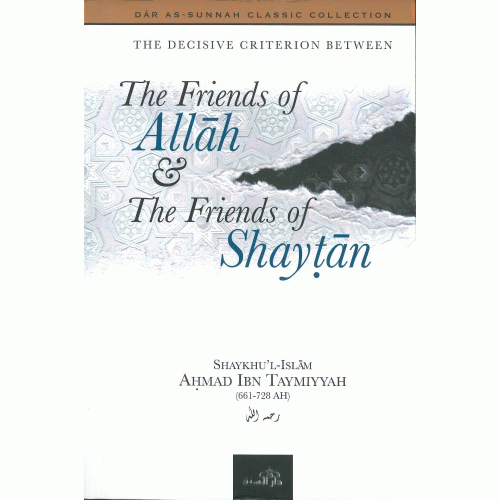
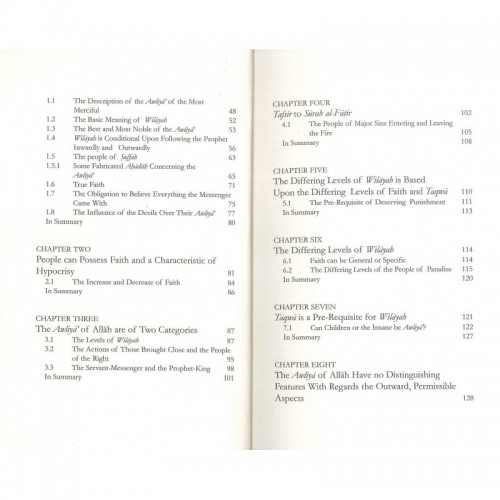
The Decisive Criterion Between The Friends of Allah & The Friends of Shaytan (P/B)
The Decisive Criterion between the Awliyaa of The Most Merciful and the Awliyaa of Shaytaan Indeed the enmity between man and Shaytaan is old, commencing from the time that Adam (alayhi as-salaam) was created � from the time he was ordered to prostrate to him. Shaytaan refused, become arrogant and hence disobeyed his Lord. His arrogance and pride let him to commit a whole host of sins, it made him expend every effort in misleading the children of Adam and made him beautify and embellish sins such that they accepted them and eagerly committed them. Books sent the Messenger and enjoined His servants to various injunctions and admonitions in order to secure them from the evil of Shaytaan.
In the light of His advice, profound injunctions and admonitions in order to secure them from the evil of Shaytaan. In the light of His advice, profound injunctions and sever warnings, mankind becomes separated into two groups: a group who were guided and a group who deserved to be misguided. The groups who were guided are the inhabitants of Paradise and the groups who were misguided are the denizens of the Fire. The inhabitants of Paradise are the Awliyaa of the Most Merciful and the denizens of the Fire are the Awliyaa of Shaytaan
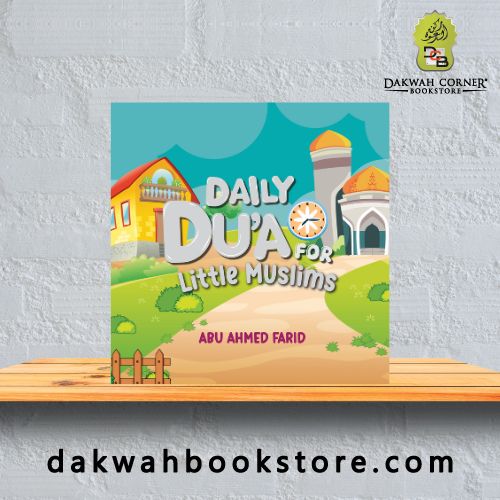
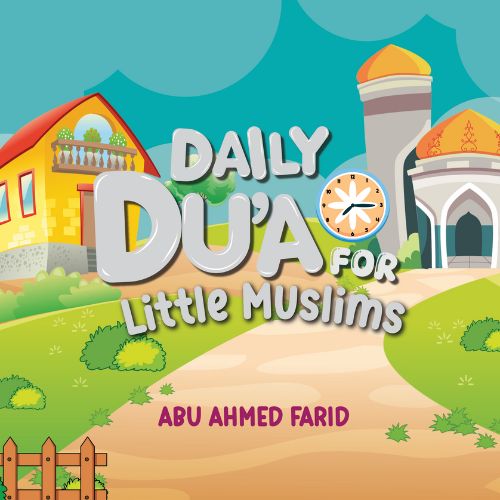
Daily Dua’s for Little Muslims
Supplications made easy for young hearts!
Join us on a joyful journey to remember Allah every day. Discover simple adhkar and du’as taught by our beloved Prophet Muhammad ﷺ, filling our lives with love, protection, and endless rewards. Let us grow in faith together and keep Allah close in everything we do.
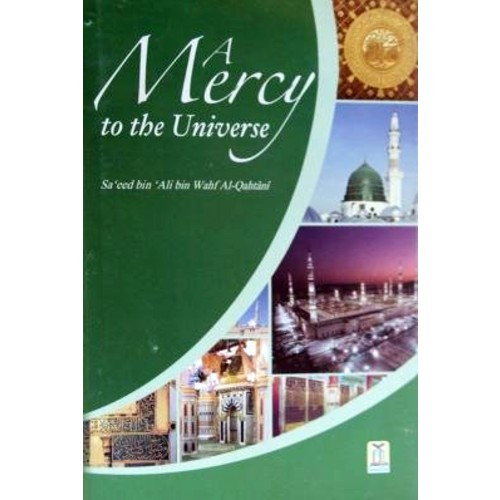
A Mercy to the Universe
Mercy is clemency and forbearance; mercy is the disposition to forgive or show compassion; mercy means a favor or a blessing; mercy further denotes the qualities of kindness, sympathy, generosity, and beneficence. Suffice is to say that all of these qualities were present in abundance in the character of the Prophet Muhammad (May Allah have his peace and blessings on him).
He was a mercy not just to believers, but to disbelievers as well, for he would invite them to come out of darkness and into the light of true guidance. He is a favor and blessing for mankind, not just the Arabs, the people among whom he was sent, but for people of all races and colors. His staunchest enemies became his closest followers when the cloud of blind prejudice was removed from their sight and when they were able, for the very first time, to see with clarity the true nature of the Prophet’s character.
This book deals with many of the qualities that the Prophet possessed that made him the mercy to everyone. It starts with His perfect lineage, His noble upbringing, and his fully dedicated worship. This book then gives many of the qualities of the Prophet including his generosity, humbleness, bravery, patience, and leadership to name a few. Each chapter includes examples from the life of the Prophet on how he was the perfect living example of that quality. The book ends with the perfection of life of the Prophet with his farewell sermon and even his noble death where he demonstrated some of those qualities as well.
Meraih Cinta & Kasih Sayang (Jibaly Rumah Tangga Siri)
Melalui ketiga-tiga buku dalam siri ini, kami berusaha membincangkan perkahwinan menurut Sunnah yang sahih.
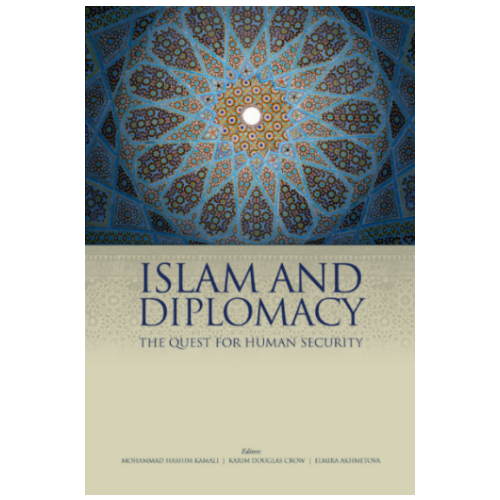
Islam and Diplomacy: The Quest for Human Security
ISLAM AND DIPLOMACY provides a wide-ranging discourse on the relevance of Islam to global well-being and human security from legal, spiritual, moral and historical perspectives. As prevailing realities in the Middle East and many other parts of the world amply demonstrate, the tools of modern secular diplomacy are not always adequate to address violent sectarian or religious clashes and social tensions, nor to suggest long-term workable solutions for them. This book expounds the largely untapped potential of a faith-based diplomacy and suggest integrating religious norms as an added impetus to conventional diplomacy for the benefit of global peace and harmony. it is also demonstrates that Islam possesses a rich tradition of legal, spiritual and ethical values prioritizing peace and human security. Islamic heritage is also sufficiently nuanced to offer flexible paradigms for addressing problems of coomunal identity that may well be beyond the reach of traditional diplomacy, such as ethnic conflict, tribal warfare, and religious hostilities.
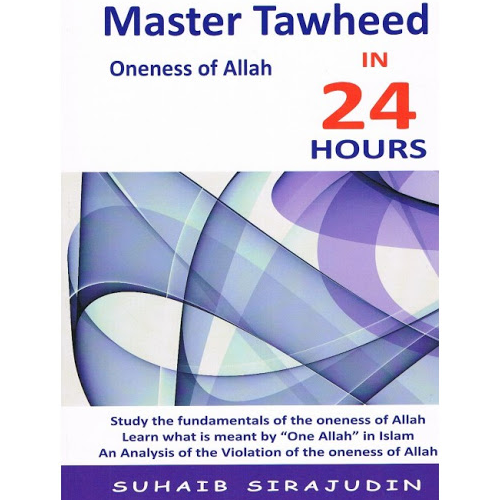
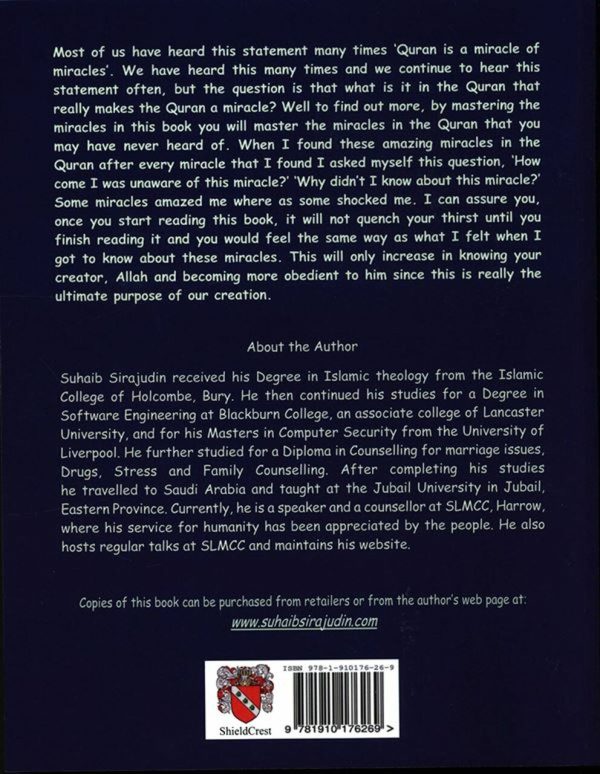
Master Tawheed in 24 Hours
The first question we will be asked in our grave will be about our Lord. This in itself is sufficient to show you the importance of this book. The book that you are holding is nothing more than a summary of the principles of what is truly meant when we declare the oneness of God! If you master these principles, you will be protected from many doubts that may arise due to either cultural interference or ignorance. It is a manual explaining how to protect your most valuable gift The Faith.

There are no reviews yet.