


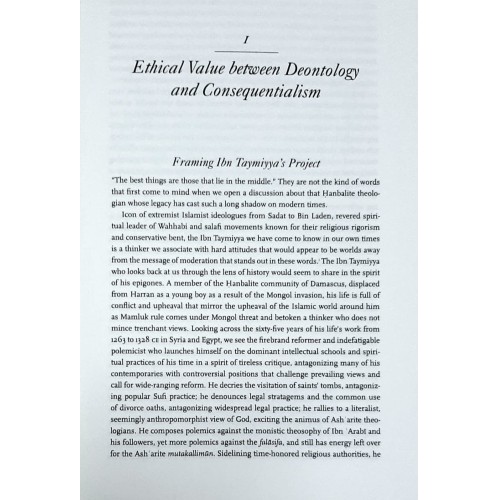
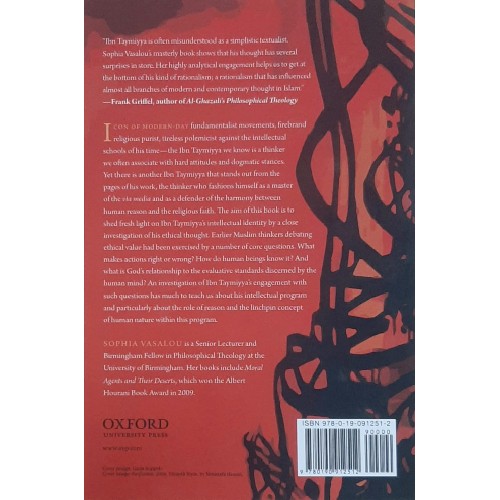
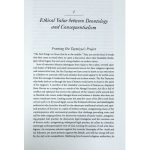
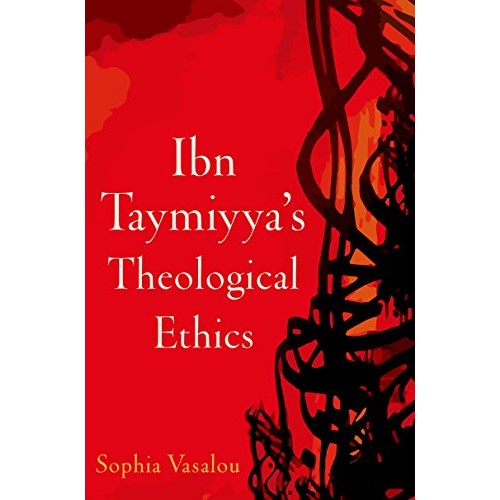
Icon of modern-day: fundamentalist movements, firebrand religious purist, tireless polemicist against the intellectual schools of his time-the Ibn Taymiyya we know is a thinker we often associate with hard attitudes and dogmatic stances. Yet there is another Ibn Taymiyya that stands out from the pages of his work, the thinker who fashions himself as a master of the via media and as a defender of the harmony between human reason and the religious faith. The aim of this book is to shed fresh light on Ibn Taymiyya’s intellectual identity by a close investigation of his ethical thought. Earlier Muslim thinkers debating ethical value had been exercised by a number of core questions. What makes actions right or wrong? How do human beings know it? And what is God’s relationship to the evaluative standards discerned by the human mind? An investigation of Ibn Taymiyya’s engagement with such questions has much to teach us about his intellectual program and particularly about the role of reason and the linchpin concept of human nature (fitra) within this program. It also has much to teach us about Ibn Taymiyya’s relationship to the intellectual landscape of his time, bringing us up against a rich tapestry of ethical discussions unfolding within theology, philosophy and legal theory in the classical period. At the same time, a close reading of Ibn Taymiyya’s ethics invites us to confront not only the content of his thought but its form, and more particularly those features of his writing that fracture our efforts to unify his thought.
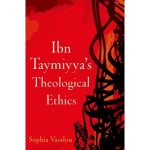
Ibn Taymiyya’s Theological Ethics
RM160.00
Frequently Bought Together
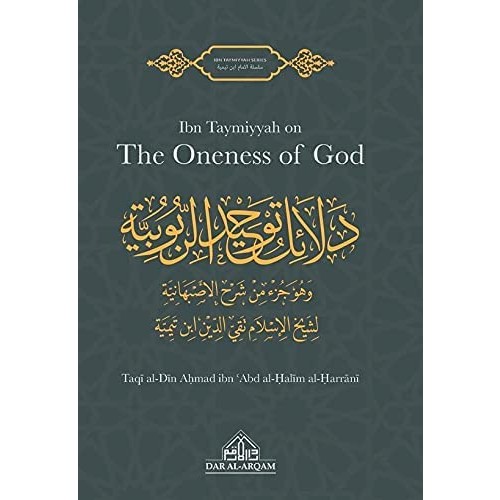
Ibn Taymiyyah on The Oneness of God
| Weight | 0.75 kg |
|---|---|
| Dimensions | 23.5 × 15.5 × 2 cm |
| Author | |
| Binding | Paperback |
| ISBN | 978-0-19-091251-2 |
| Pages | 342 |
| Publisher | OXFORD University Press |
Be the first to review “Ibn Taymiyya’s Theological Ethics” Cancel reply
You must be logged in to post a review.
You may also like…
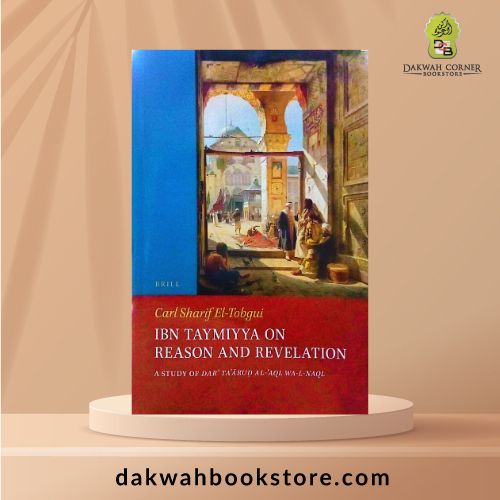
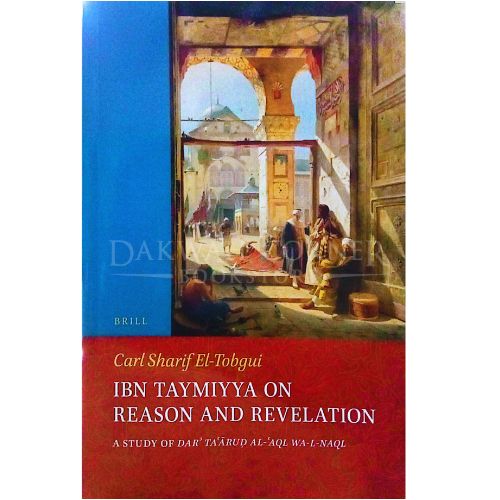
Ibn Taymiyya On Reason And Revelation: A Study of Dar’ Ta Arud Al-‘aql Wa-l-naql
In Ibn Taymiyya on Reason and Revelation, Carl Sharif El-Tobgui offers the first comprehensive study of Ibn Taymiyya’s ten-volume magnum opus, Darʾ taʿāruḍ al-ʿaql wa-l-naql (Refutation of the conflict of reason and revelation). In his colossal riposte to the Muslim philosophers and rationalist theologians, the towering Ḥanbalī polymath rejects the call to prioritize reason over revelation in cases of alleged conflict, interrogating instead the very conception of rationality that classical Muslims had inherited from the Greeks. In its place, he endeavors to articulate a reconstituted “pure reason” that is both truly universal and in full harmony with authentic revelation. Based on a line-by-line reading of the entire Darʾ taʿāruḍ, El-Tobgui’s study carefully elucidates the “philosophy of Ibn Taymiyya” as it emerges from the multifaceted ontological, epistemological, and linguistic reforms that Ibn Taymiyya carries out in this pivotal work.
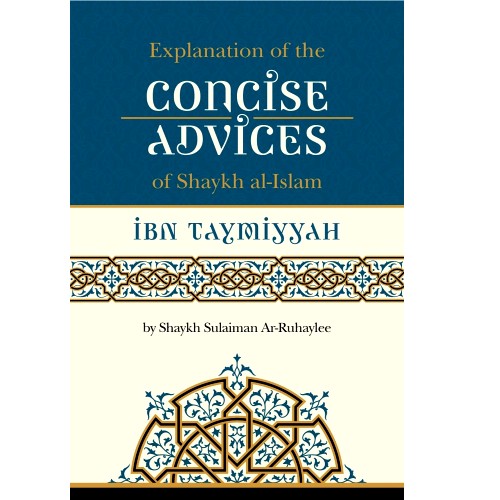
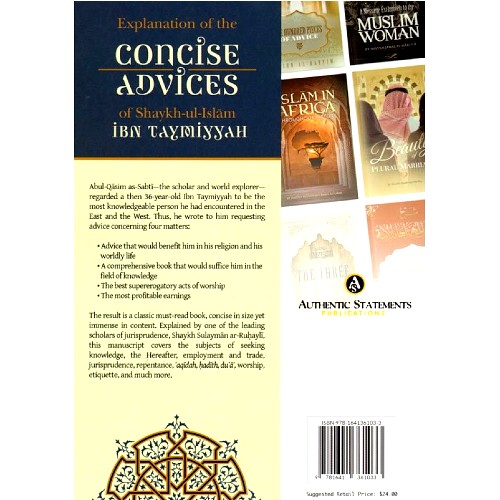
Explanation of the Concise Advices of Ibn Taymiyyah
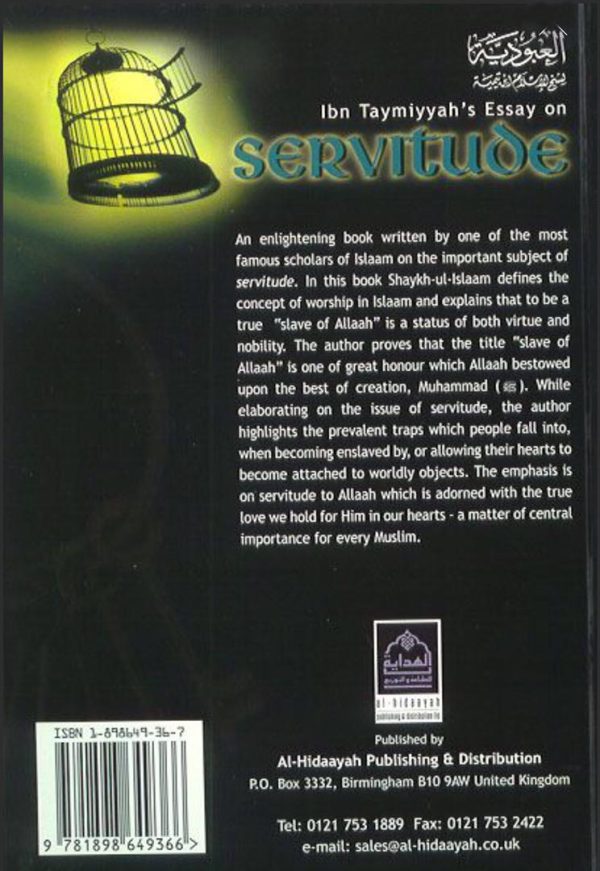
Ibn Taymiyyah’s Essay on Servitude
“An enlightening book written by one of the most famous scholars of Islaam on the important subject of servitude. In this book, Shaykh Ibn Taymiyyah defines the concept of worship in Islaam and explains that to be a true “slave of Allaah” is a status of both virtue and nobility. The author proves that the title “slave of Allaah” is one of great honor which Allaah bestowed upon the best of creation, Muhammad (pbuh). While elaborating on the issue of servitude, the author highlights the prevalent traps which people fall into, when becoming enslaved by, or allowing their hearts to become attached to worldly objects. The emphasis is on servitude to Allaah which is adorned with the true love we hold for Him in our hearts — a matter of central importance for every Muslim.
An Introduction to the Hanbali Madhhab (P/B) – Dar al-Arqam
A complete translation of Ibn Badran’s masterpiece, al-Madkhal ila Madhhab al-Imam Ahmad ibn Hanbal.

Ibn Taymiyyah on The Oneness of God
This book is the first in an envisioned series of translations from Ibn Taymiyyah’s theological works that cover a wide range of topics from the evidence of God’s perfection to the signs of Prophethood, and from the meaning of God’s creative agency to the compatibility of divine predestination with human moral agency.
Related Products

Preservation of Health in Islamic Law (P/B)
Preservation of health (hifz al-sihhah) is the most important branch of Islamic medicine since it is primarily concerned with the prevention of illness rather than cure. This book represents one of the few attempts to introduce the role of Islamic medicine, although Chapter One provides information about a historical background of the preservation of helath in Islam, its aim is to provide fresh ant timely overview of the major aspects of legal, ritual and spiritual structures of teh Islamic law (shariah). These include the laws related to Ibadah, Islamic family laws, foods and drinks as well as environmental laws, for maintaning and preserving human health. Findings indicated that prevention of any diseases from Islamic medical law presentive cannot attain any real success unless it emanates from an Islamic fundamental teaching, namely: the pillars of Islam. Iman and observance of the Islamic rituals such as Salah, zakah, Sawm and Hajj, have played an important role in shaping the attitude, behavior and model personality of the Muslim, in boosting the spiritual motivation or attitude change, and in disseminating the message of prevention. This indicates that bodily and spiritual health goes hand in hand and that pyscho-spritual balance and health is a primary consideration whereas physical health is a secondary one.


Fast According to the Quran & Sunnah
Saum (Fast) is a third Pillar of Islam. Allah’s Messenger said, Allah says: “Every deed of the son of Adam is for him, except Saum (fasting). It is for Me and I shall reward for it.”
As the status of this act of worship is so high it is essential to learn the pilings pertaining to this month of fasting so that Muslims will know what is obligatory in order to do it, what is forbidden to avoid it, and what is permissible so that they do not unnecessarily subject themselves to any hardship by depriving themselves from it.
This book consists of all the main issues of Fast. The main objective of this work is to serve an easy and authentic reference to the reader.


Common Mistakes Regarding Prayer – IIPH
Formal prayer (salat) is the second pillar of Islam, and the most important of a Muslim’s acts of worship. Prophet Muhammad (PBUH) said: “The first of one’s actions for which a slave of Allah will be held accountable on the Day of Judgment will be one’s prayers. If they are correct and accounted for, then he (or she) will have succeeded (gained paradise); and if they are lacking, then he (or she) will have failed (lost paradise). If there is something defective in his (or her) obligatory prayers, the Lord will say: ‘See if my slave has any supererogatory prayers with which that which was defective in his (or her) obligatory prayers may be completed. Then the rest of his (or her) deeds will be judged in like manner.” (At-Tirmidhi and others) Shaykh Mashhur Hasan Salman has compiled a list of the most common errors that we make when we pray, discussing and explaining each one. This book is a valuable aid to Muslims hoping to perfect their prayers, so that their prayers may be free of defects and acceptable to Allah. This new and revised edition of the English translation of his work presents the text in a fluent, highly readable style.

Shatibi’s Philosophy of Islamic Law (P/B)
Abu Ishaq al-Shatibi, who died in 1888, had sought an answer to the challenge posed by modernisation and change to Islamic law, by introducing maslahah, which forms the basis of his philosophy of Islamic law. In a fascinating way, the author leads us step by step to what he considers the true import of Shatibi’s views concerning jurisprudence.


Should A Muslim Follow A Particular Madhhab?
In this book, the author has widely described the main principle of Taqleed. He says that Allah and Prophet Mohammed (SAW) has not ordered us to follow any opinions and interpretations. So there’s a possibility of being correct or incorrect in the opinions because there are many issues on which the Imams had different views and they explain them according to their own reasons and speculations, but the real and true Islam is based on the book (Quran) and Prophet’s Sunnah.
Allah says: “But no, by your Lord, they can have no Faith until they make you judge in all disputed matters between them, and find in themselves no resistance against your decision, and accept them with full submission.” And the prophet said: “I leave you with two things as long as you hold them tightly, you never go astray: they are the book of Allah and my Sunnah.” In this sense, the author has described the difference between different Madhahib (madhabs/mazhabs), and their views and urged to follow only the Quran and Sunnah.


Fiqh According To The Quran & Sunnah (2 vol)
The complete set, ‘Al-Lubab Fee Fiqh As-Sunnah Wal-Kitab,’ contains all of the books of Islamic Fiqh and its chapters, accompanied by evidence and is presented in a clear and simple manner, in order that they may be understood by the young and the old, without blindly following any of the schools of Jurisprudence, but rather being subject to authentic proofs and following the most authoritative opinions, without fanatical adherence to any particular group. Rather the author agrees with each group when the truth is with them and contradicts them when they veer from that which is correct.
Fiqh is to achieve access to knowledge of that which is unclear through knowledge of that which is proven, so it is more specific than mere knowledge or learning. And fiqh is knowledge of the juristic law. It is said Faquha -A man has acquired understanding and so he has become a Faqeeh (A scholar of Islamic Jurisprudence); and it is said Faqiha – He has understood it, i.e he has attained understanding of it, and it is said Tafaqqaha – he has devoted himself to the acquisition of (Islamic) Knowledge and specialized in it. Fiqh has been a subject of contention among the scholars as well as layman throughout the history of Islam.

The Problems of the Illegitimate Child (P/B)
This book addresses the views of the Sunni scholars regarding the importance of genealogical relationship (nasab) in Islamic family law and examines the role of legitimacy on the basis of the legal maxim “al-walad li al-firash”, evidence (al-bayyinah), and doubtful intercourse (wat’ shubhah). It also elucidates the views of the Sunni schools of law on how to establish illegitimacy. For the Sunni jurists, there are several situations that determine the illegitimacy of the child. A child is considered illegitimate if its birth is the outcome of adultery (zina) or the result of legitimate union but accompanied with imprecation (li‘an). Other circumstances include the birth of the child taking place in less than six lunar months, the father of the child being categorized as one who is incapable of begetting, or the birth as a result of marital relationship considered unlawful because of consanguinity. The book also deals comprehensively with the moral, religious, legal and other aspects of the illegitimate child and the foundling in the works of the Sunni jurists. The status and rights of the illegitimate child and the foundling in the Islamic family law of Malaysia and Brunei are also discussed by referring to some provisions from Federal Territory Act 1984 (Act 303) and Brunei law.


The Ultimate Guide to Umrah by Darussalam

Worship In Islam: An In-depth Study of Ibadah, Salah and Sawm (P/B)
Worship in Islam is in-depth study of the nature and significance of Islamic spirituality by Abul A‘la Mawdudi (1903–79), one of the leading Muslim intellectuals of the twentieth century, with special reference to the concepts of God’s Oneness (tawhid), the finality of Prophethood (risalah) and the Islamic system of worship (‘ibadah) with a focus upon prayer (salah) and fasting (sawm) and their role in the development of the Islamic personality and Islam’s social order. The distinguishing feature of Mawdudi’s approach is his elaboration of the social dimension of worship, which extends the traditional approach found in Islamic jurisprudence, with its focus upon ritual and self-purification, to consider worship’s transformative role in social life. Presenting a holistic view of the Islamic system, Mawdudi highlights Islam’s social, economic and political dimensions, which he argues has the capacity to resolve emergent issues and problems that humankind faces.
This historic text should be of wider interest to both students and specialists in contemporary Islamic thought, and includes an introduction by Professor Anis Ahmad.
Edited and translated into accessible English by Ahmad Imam Shafaq Hashemi, this book is an authoritative compilation by a leading Islamic twentieth-century revivalist on the central matter of worship’s role in Islam.


Ibn Ashur Treatise on Maqasid al-Shariah (P/B)
Ibn Khaldun, the fourteenth century Arab historiographer and historian, is viewed as a founder of modern historiography, sociology and economics. He lived during a turbulent part of history, and out of his experiences, he ?conceived and created a philosophy of history that was undoubtedly the greatest work ever created by a man of intelligence…?. This work tells of the period of unrest in Ibn Khaldun?s life marked by political rivalries. It is during this turbulent period which provided him with the opportunity to write the Muqaddimah (or Prolegomena), earning him an immortal place among historians, sociologists and philosophe

The Right to Education, Work and Welfare in Islam (P/B)
In The Right to Education, Work and Welfare in Islam Professor M.H. Kamali develops an Islamic perspective on three connected and complementary areas of rights and liberties. He urges that education is often a necessary ingredient of professional work even more so now than in earlier times when the range and variety of specialised knowledge were relatively limited. A person who acquires education, whether generally or at advanced levels of specialisation, is more likely to stand in a better position to enter the workforce and thus to contribute to the welfare of the community.
The author commences his discussions on education, work and welfare in Islam by focusing on how each is treated in the Qur’an; and follows this by the example of the Prophet and, after him, the Pious Caliphs who gave prominence to the education and welfare needs of people at times both of scarcity and affluence. Professor Kamali then moves forward to our time and discusses the right to education, the education of children, institutionalisation of learning, academic freedom and the debate between science and religion.
The section on work elaborates on the value of work, work ethics, workers’ and employers’ rights and responsibilities, and the role and responsibility of governments.
Finally, the section on welfare focuses on the importance in Islam of caring for those who are in need and the different forms of provision that can be made available by individuals, the state and charities.


Principles of Islamic Jurisprudence (2nd Revised Edition)
This book offers a detailed presentation of the theory of Muslim law (usul al-figh). Often regarded as the most sophisticated of the traditional Islamic disciplines, Muslim jurisprudence is concerned with the way in which the rituals and laws of religion are derived from the Qur’an and the Sunna – the precedent of the Prophet. Revelation, which is given to man to restore unity and help him achieve a just and devout order in society as well as in the soul, must be interpreted so as to render it practicable in every culture, while not betraying its spirit and immutable provisions. To achieve this, additional sources of legal authority are recognized, including consensus (ijma), analogical deduction (qiyas), public interest (maslaha) and local customary precedent (urf). In employing these, the jurist guards the five principles which it is the purpose of Islamic law to uphold, namely, the right to life, sound mind, property, lineage and religion.
Recently Viewed
Learn How To Speak Arabic: Beginner – Intermediate (Small Book)
An educational series for modern languages designed for beginners and those planning to travel to new countries.
Covers language fundamentals—including key phrases and expressions—as well as pronunciation, vocabulary, basic grammar, and everyday conversation.
[AR] Al-Arabiyyah Baynah Yadayk Book 4 Part 2
Al-’Arabiyyah bayna yadayk Means Arabic in Your Hands.
The great thing about these books is, that it covers a lot of vocabulary through pictures, Images and using Arabic Only, introduces the students to grammar later and gradually rather than pushing them at the deep end before they can swim.
Much like Arabic Course for English Speaking Students 3 Volumes Set, UKIA, it is more Islamic inclined and fulfils the desire for the student of knowledge to learn the language of the Qur’an.
Students who had completed all three books wanted something else to reach higher competency, which has given rise to volume 4 which is available in 2 Parts.
Al-’Arabiyyah bayna yadayk series comes in 3 Basic Student Books and a further study Book 4 Parts 1 & Book 4 Part 2
The Problems of the Illegitimate Child (P/B)
This book addresses the views of the Sunni scholars regarding the importance of genealogical relationship (nasab) in Islamic family law and examines the role of legitimacy on the basis of the legal maxim “al-walad li al-firash”, evidence (al-bayyinah), and doubtful intercourse (wat’ shubhah). It also elucidates the views of the Sunni schools of law on how to establish illegitimacy. For the Sunni jurists, there are several situations that determine the illegitimacy of the child. A child is considered illegitimate if its birth is the outcome of adultery (zina) or the result of legitimate union but accompanied with imprecation (li‘an). Other circumstances include the birth of the child taking place in less than six lunar months, the father of the child being categorized as one who is incapable of begetting, or the birth as a result of marital relationship considered unlawful because of consanguinity. The book also deals comprehensively with the moral, religious, legal and other aspects of the illegitimate child and the foundling in the works of the Sunni jurists. The status and rights of the illegitimate child and the foundling in the Islamic family law of Malaysia and Brunei are also discussed by referring to some provisions from Federal Territory Act 1984 (Act 303) and Brunei law.
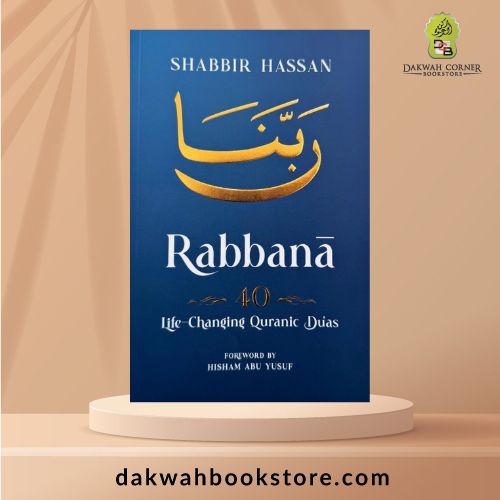
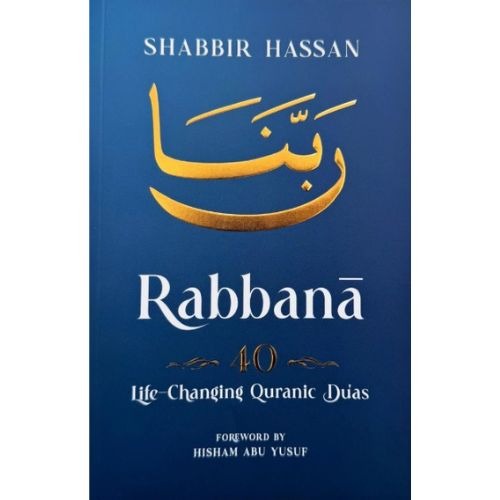
40 Life-Changing Quranic Du’as (P/B)
This book brings together forty powerful supplications from the Qur’an — prayers spoken by prophets, believers, and seekers across generations. Each du’a is explored in depth, helping readers not only recite the words, but understand the story, context, and spiritual wisdom behind them.
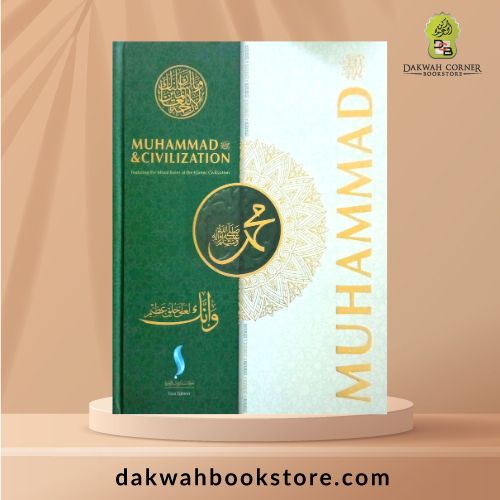
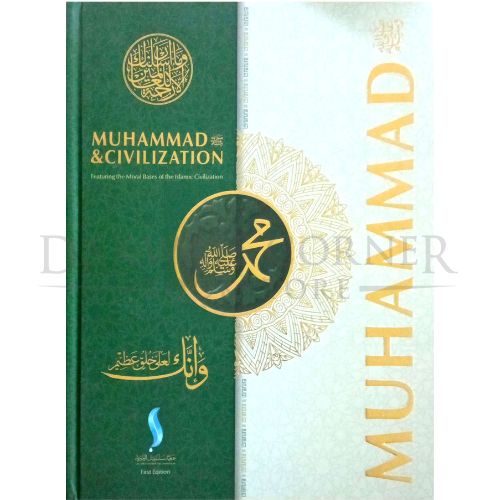
Muhammad & Civilization (H/B)
“My choice of Muhammad to lead the list of the world’s most influential persons may surprise some readers and may be questioned by others, but he was the only man in history who was supremely successful on both the religious and secular levels.”
– Michael H. Hart
Author of “The 100: A Ranking of the Most Influential Persons in History”
“If the grandeur of the aim, the smallness of the means, the immensity of the result are the three measures of a man’s genius, who would dare humanly compare a great man of modern history with Muhammad?”
– Alphonse de Lamartine
A French poet, writer and politician.
Author of “Histoire de la Turquie”
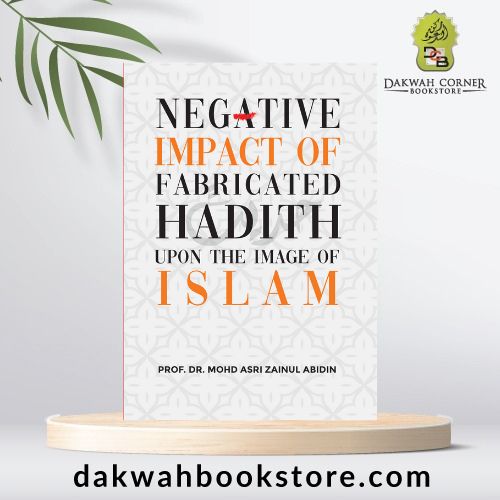
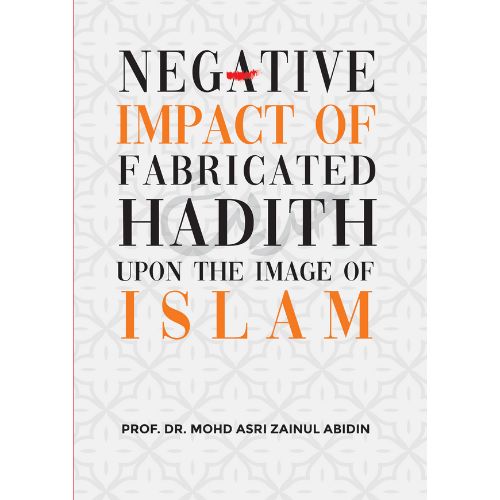
Negative Impact Of Fabricated Hadith – Dr MAZA
Uncover the dangers of fabricated hadiths in this insightful discussion. Prof. Dr. Mohd Asri Zainul Abidin present clear logical and legal (shar’i) arguments against their creation and dissemination. Explore how these false narratives tarnish the image of Islam, backed by compelling examples. Here, the main objective is to raise awareness and encourage critical evaluation of hadiths before sharing them, ensuring the integrity of the Islamic Faith remains intact.
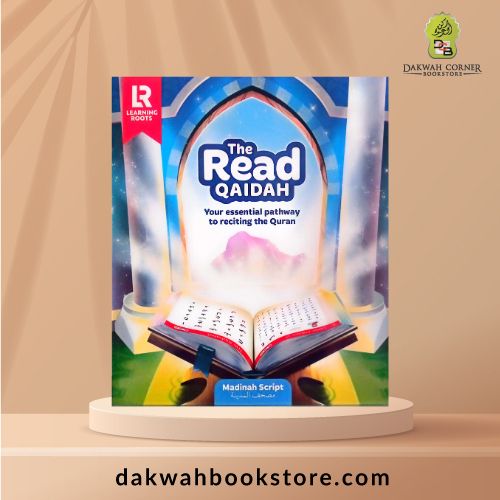
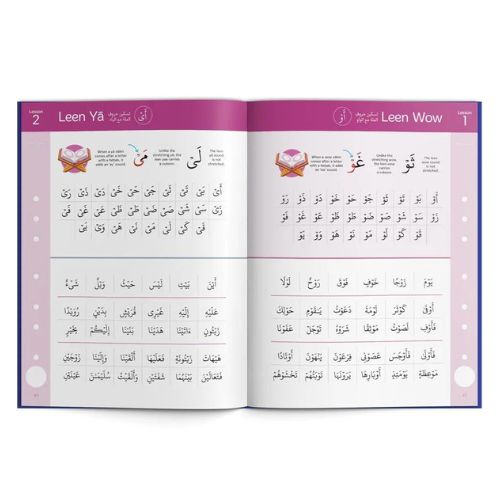
Read Qaidah (Madinah Script)
Easy progress through bitesize lessons
Read takes children step by step through letters, vowels, words and more until they’re ready for the Quran. Each line forms an easy, manageable lesson so children build momentum and progress.
- Motivational stickers
-
NOT Kiitab Compatible
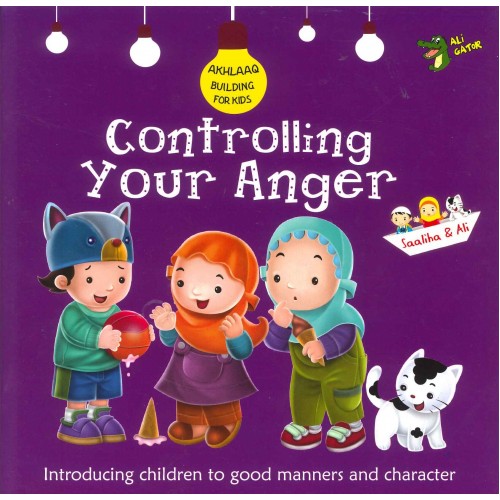
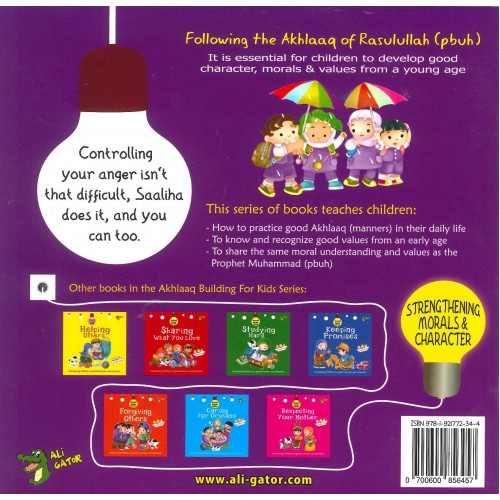
Controlling Your Anger (Akhlaaq Building Series)
In “Controlling Your Anger” Saaliha lends her friend her favorite pencil, but she accidentally looses it. How will Saaliha react? will she get angry?, will she yell at her friend? No, Saaliha shows us the best way to act when something like this happens.
Having a younger brother like Ali, there are always going to be situations that could make you angry. Saaliha learns that “Controlling Your Anger” isn’t that difficult, and you can too.
The “Akhlaaq Building Series”, which aims to teach children to follow the example of our Prophet Muhammad (peace be upon him) and to be nice to all people.
There are 8 books in this highly successful series.
Full Color


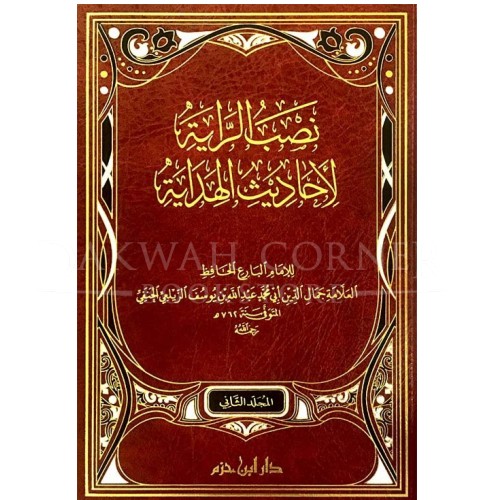
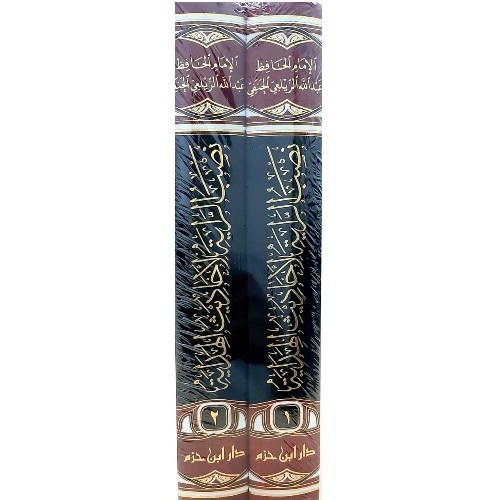
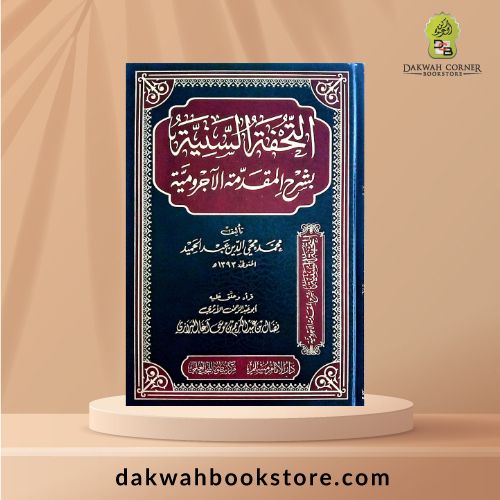
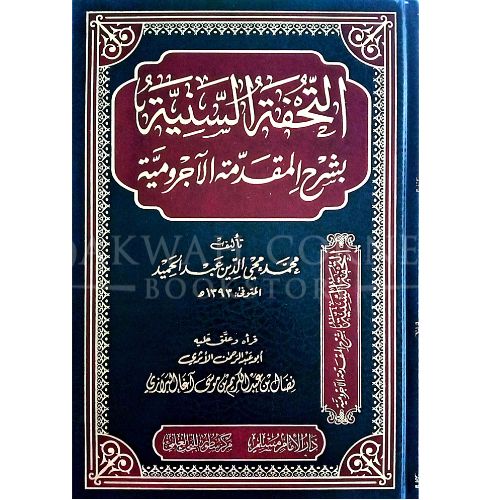
[AH] Nasab Alrayah Liahadith Alhidayah (2 Vol) ( نصب الراية لأحاديث الهداية)
نصب الراية لأحاديث الهداية للشيخ الإمام المحدث جمال الدين الزيلعي.
خرج فيه الإمام الزيلعي الأحاديث التي وردت في كتاب الهداية،
وكتاب الهداية كتاب في الفقه الحنفي ألفه العلامة برهان الدين علي بن أبي بكر المرغيناني الحنفي المتوفى سنة 593 هـ،
ولم يقتصر الزيلعي على تخريج أحاديث الهداية، بل زانه بإيضاح أدلة المخالفين.
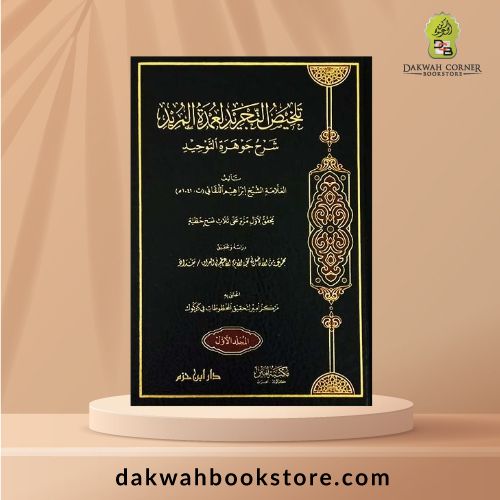
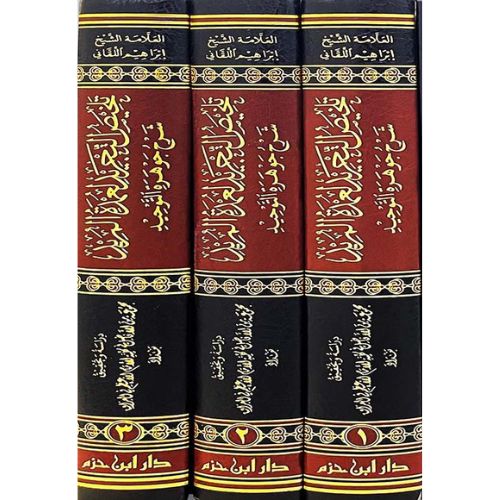
[AC] Talkhis Al Tajrid Li Umdatul Murid 3 Vol / تلخيص التجريد لعمدة المريد شرح جوهرة التوحيد 3 مجلدات
- عدد المجلدات: 3
- نوع التجليد: مجلد
- عدد الصفحات: 2064
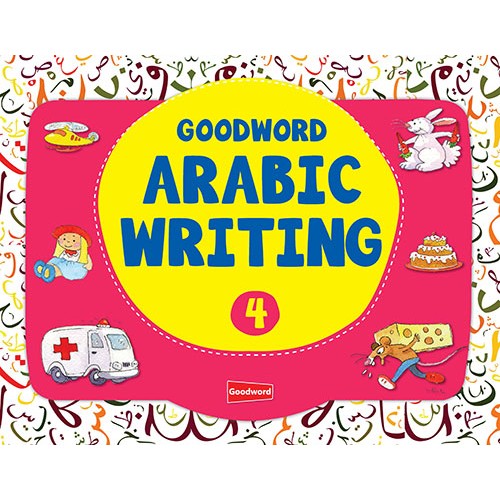
Arabic Writing Book 4
This series is perfect for your children to practice their Arabic writing skills. These books will bring out the latent calligraphers in them.
There are no reviews yet.