

| Weight | 0.42 kg |
|---|---|
| Product Type | Book |
| Author | |
| Publisher | Darussalam |
| ISBN | 9786035000970 |
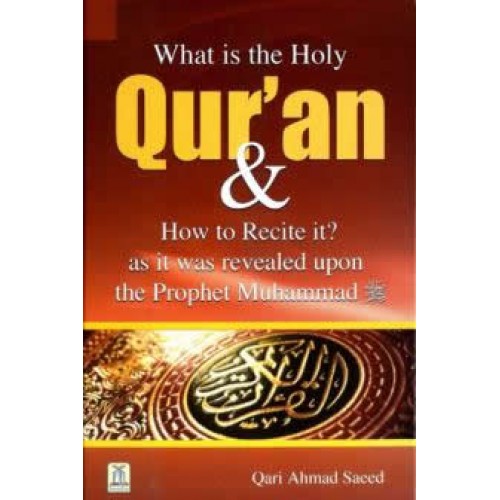
What is the Holy Quran & How to Recite it? (H/B)
RM46.00
Hurry up, Only 3 left.
Highlights:
somdn_product_page
Compare
This book guides readers to pronunciate the Arabic alphabet from their correct point of articulations. It also guides them to recite the Holy Qur’an according to the laws and principles of the art of recitation and intonation.
The correct pronunciation of the Arabic words and alphabet was difficult to some extent for the people living in the West as compared to those of East. So they need some more efforts to solve this problem and to make it easy for them.
By the grace of Allah, this book will do the job successfully and in a very convenient way.
SKU: QQ26
Categories: Holy Quran and Quranic Sciences, Quranic Science/ Related
Additional information
Reviews (0)
Be the first to review “What is the Holy Quran & How to Recite it? (H/B)” Cancel reply
You must be logged in to post a review.
Related Products
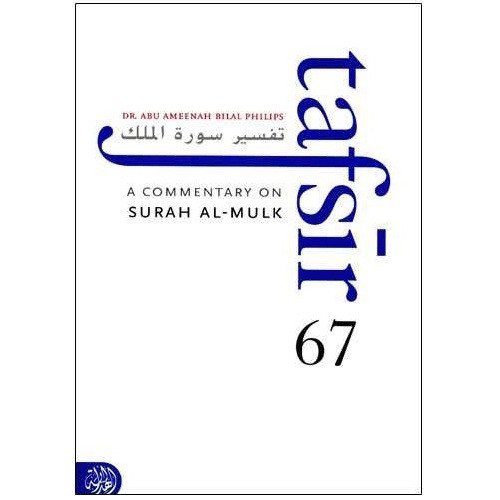
Tafsir 67 : A Commentary on Surah al Mulk (P/B)
Highlights:
The beauty of the Qur’an is such that its miracles cannot truly be understood until one contemplates every verse of every surah; this alone makes tafsir one of the most amazing sciences of Islam. Surah Al-Mulk is a chapter of the Quran which would be recited every night by the Prophet (peace be upon him), in its midst are deep meanings which highlight the purpose of our creation, as well as entailing the message of Islam. In this book, the author takes the reader on a wonderful journey through the gardens of the first surah in the 29th Juzz of the Qur’an.
About the Author: Dr. Philips was born in 1947 in Jamaica, but grew up in Canada, where he converted to Islam in 1972. He completed a diploma in Arabic language and a B.A. degree in 1979 from the College of Islamic Disciplines at the Islamic University of Madinah, an Islamic university in Saudi Arabia. At the University of Riyadh College of Education he completed his M.A. in Islamic Theology in 1985, and in 1994 he completed his Ph.D in Islamic Theology in the department of Islamic studies at the University of Wales. He later taught Islamic education and Arabic language in private schools in Riyadh for over ten years. Because of his opposition to Saudi Arabia’s position in the Gulf War, he had to leave the country and for three years he lectured M.Ed. students in the Islamic Studies department of Shariff Kabunsuan College (SKC) in Cotabato City, Mindanao, the Philippines. Islamic Information Center Since 1994, he has founded and directed the Islamic Information Center (which is now known as Discover Islam) in Dubai, United Arab Emirates, and is known as a prolific speaker and author on topics relating to Islam, including audio lectures and books. Presently, he is a lecturer of Arabic language and Islamic Studies at the American University in Dubai and ‘Ajman University in Ajman, United Arab Emirates. He frequently appears at the Islamic Research Foundation in Mumbai, India, on lecture tours. He has also founded the Distance Learning Program called Islamic Online University, which offers a four year degree in Islamic Studies plus a variety of short courses. Dr. Philips is something of a pioneer as a person of Western origin achieving the status of a scholar of Islam inside the tradition.
RM63.00
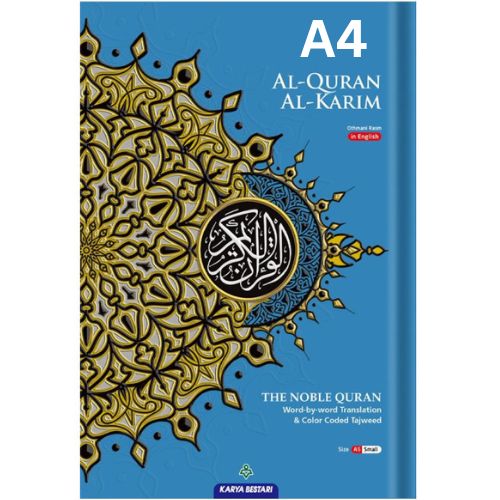
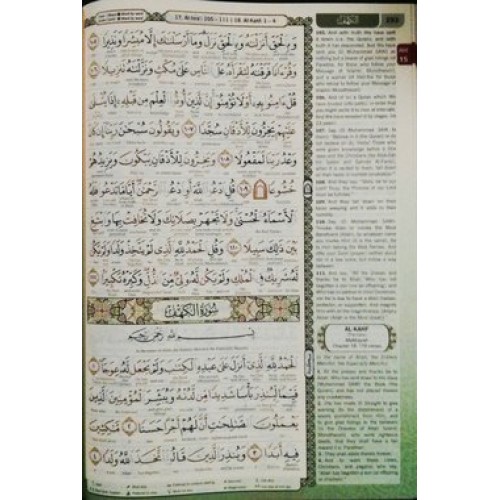
The Noble Quran Word-By-Word Translation & Color Coded Tajweed A4 (Arabic-English) – RANDOM COLOR
5 ★
5 ★
1 Rating
5 ★
1
4 ★
0
3 ★
0
2 ★
0
1 ★
0
Highlights:
The Noble Quran (Al-Quran Al-Kareem Maqdis) is a translation learning method of word-by-word Al-Quran with every word and sentence is colored differently, in Arabic and English.
Every word in the Quran was translated literally so that the reader could understand the meaning of every single word. It needs to be remembered that not all literal translation represents the exact meaning of the word since the Quran uses varied Arabic language style and sometimes metaphor.
Accordingly, to understand the full or intended meaning of the word or the verse, Muhsin Khan’s the Holy Quran Translation had been included in this edition. However, to comprehend more of the meaning of the Quran, reading the commentary of the Quran from trusted scholars would be necessary.
Approved by the Department of Islamic Development of Malaysia (JAKIM) and Malaysian Ministry of Home Affairs (KDN).
Features:
● Rasm Uthmani script in English
● Word-by-word translation Arabic-English
● Color coded tajweed
● Asbab al-Nuzul
● Authentic Hadiths
● Riyad-us-Saliheen
● Al-Quran Language Dictionary (Mu’jam)
Size A4 Large
SPECIFIC COLOR PLEASE DM US.
RM85.00
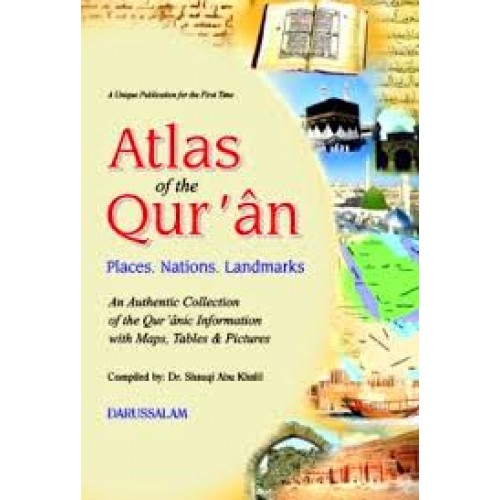
Atlas of the Qur’an (Darussalam)
Highlights:
This Atlas is new in its subject, a subject that has not been touched before. It helps whoever recites the Qur’an or studies it to specify the locations mentioned by the Noble Verses, and to mark those places of ancient people mentioned in the Qur’Gn. This is besides locating areas where the incidents of the prophetic Seerah occurred.
Eventually the diligent reader will easily recognize those places, learn about them, and take heed of them while reciting.
Eventually the diligent reader will easily recognize those places, learn about them, and take heed of them while reciting. The Atlas has also revealed obscure places we used to pass through inattentively, like the site where Nuh’s Ark settled, the site of the curved Sand-hills {Al Ahqah}, the cave of the young faithful men, the houses of median, the site of Sodom and other places determined by the Atlas depending on reliable sources.
Thus the Atlas eliminates all the guessing and the fantasies we used to encounter when reciting the Noble Quran, and takes us to the specific place.
RM80.00
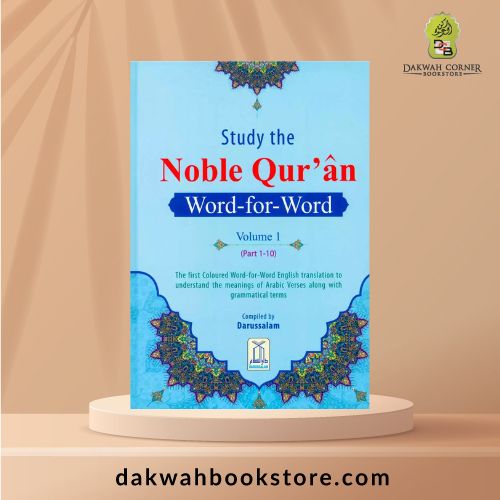
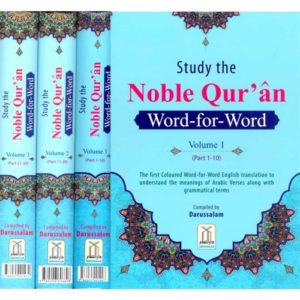
Study The Noble Qur’an Word for Word (3 volumes) – Colour
Highlights:
Available NOW only for online shopping.
Complete Qur’an in 3 volumes Colour Version (10 Parts per book). Individual volumes are available from the related items section. The first coloured Word-for-Word English translation to understand the meanings of the Arabic verses along with grammatical terms. Read more below…
RM350.00
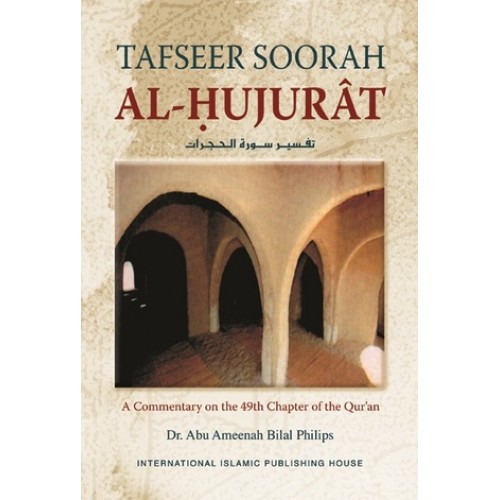
Tafseer Soorah Al-Hujurat (H/B)
Highlights:
Tafseer Soorah al-Hujurât: A Commentary on the 49th Chapter of the Qur’an is a treasury of divine advice, commandments, and prohibitions regarding common problems in social relations, including gossip, spying, arguing, and bigotry. To make the best use of this chapter, the believer needs a detailed explanation of the meanings of the verses.
Dr. Bilal Philips has based his tafseer (exegesis) on the methodology used in the classical works of tafseer. He has relied first of all on the explanations found within the Qur’an itself, then on explanations found in the Sunnah and related incidents which occurred at the time of the revelation of the verses in question. Beyond these primary sources, Dr. Philips has relied on the interpretations made by the Prophet’s Companions (may Allah be pleased with them) who were noted for their ability to interpret and comment on the Qur’an. ‘Abdullâh ibn ‘Abbâs, for example, was called ‘The interpreter of the Qur’an’ by Prophet Muhammad (blessings and peace of Allah be upon him). Finally, the author has made use of the grammatical explanations given in the classical tafseer works. Wherever possible, Dr. Philips has tried to apply the derived meanings of the verses to the problems of contemporary society.
RM40.50 RM60.00
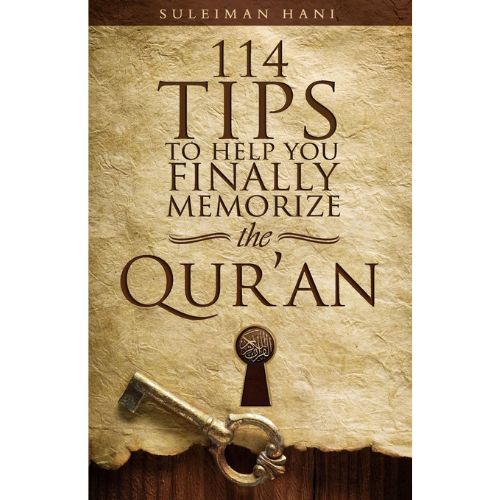
114 Tips to Help You Finally Memorize The Qur’an (P/B)
5 ★
5 ★
1 Rating
5 ★
1
4 ★
0
3 ★
0
2 ★
0
1 ★
0
Highlights:
“114 Tips to Help You Finally Memorize the Qur’an is a concise book that aims to equip readers of all backgrounds with the information and techniques necessary in order to begin, continue with, and complete the memorization of the Qur’an, eliminating thereby the common excuse and reasons for not memorizing.”
RM80.00


An Introduction to The Sciences of The Qur’an (H/B) Al-Hidaayah UK
Highlights:
An introduction to the Sciences of the Qur’aan presents a detailed and thorough explanation of the sciences related to the history, understanding and implementation of the Qur’aan. The book provides the English reader with a detailed analysis of classic Muslim scholarship regarding: the process on Inspiration (Wahy); the various means of classifying verses of the Qur’aan; the history of the compilation of the Qur’aan; the meaning of the seven ahruf and the ten qira’aat of the Qur’aan; the miraculous nature of the Qur’aan; the concept of abrogation in the Qur’aan; the procedure and methodology of tafseer; and many other topics. The work has a number of sections dedicated to explaining the traditional Muslim refutations of certain belief of the Ash’arees with regards to the Qur’aan.
This book also includes detailed discussions on modern Western scholarship of the Qur’aan. After presenting a history of the English translation of the Qur’aan, along with a critical review of some translations, the author discusses and refutes common Orientalist polemic literature on the Qur’aan.
The work is unique in that it presents classical material in a simple and modern style, while maintaning a hight academic level. It is the most advanced work of its kind in the English language, and a necessary reference for all serious students of Islamic knowledge.
RM149.00


Divine Speech
5 ★
5 ★
3 Ratings
5 ★
3
4 ★
0
3 ★
0
2 ★
0
1 ★
0
Highlights:
The Quran, the sacred scripture of Islam, is revered as the spoken word of God by approximately one-fifth of the world’s population. Since its inception, the power of the Quran has derived not only from its message, but also from the inimitable literary style and rhetorical impact that the Arabic scripture has on its audiences. Divine Speech: Exploring the Quran as Literature attempts to make some of the most recent Arabic and European-language scholarship on its literary features accessible to a wider, English-speaking audience. These features include its language and word choice, its use of figures of speech and other rhetorical devices, its manner of narrating parables and stories, and the structure, coherence, and the order of its “chapters”-aspects that typically remain mysterious to readers of English translations of the text. Divine Speech furnishes its readers with a better appreciation of the Quran from a literary perspective, and in the process stimulates interest in, and provides tools and resources for, further study of the scripture.
RM100.00


The Noble Quran (Tall Version English Text Only) (RANDOM COLOR)
Highlights:
Interpretion of the meanings of The Noble Quran in the English Language.
RM60.00


The Spiritual Cure An Explanation to Surah al-Fatihah (P/B)
Highlights:
Surah al Fatiha is the greatest chapter of the Qur’an, its like is not found in the rest of the Book or in the previous scriptures. It is a
Light that was granted to Prophet Muhammad (S) which had not been granted to any other Prophet or Messenger before him; indeed
some of the Salaf stated that when this chapter was revealed, Shaytãn l let out a great cry of lament.
It holds a central position in the daily Prayer hence the daily life of the Muslim.
The underlying theme, of al-Fatiha is one of contemplation and serenity; pondering the Names and Attributes of Allah, pondering the creation , and acknowledging that He Alone deserves praise and Worship, that He Alone should be asked for help, that He Alone Should be feared and hoped in, that He Alone should be invoked, that there is indeed a Day of Judgment, and that guidance has come to us and we are required to follow it.
It calls us to carefully scrutinise our relationship with our Lord: are we living according to the dictates of ‘none has the right to be worshipped save of Allah’ or not? This opening chapter, despite its brevity, calls man to fulfil the rights of Tawhid, the right that Allah has over us to worship Him Alone without any partner
A Summary of numerous Classical Commentaries of the Qur’an
at-Tabari, al-Baghawi, Az-Zamakhshari, ibn Atityyah, Ibn Jawzi, Al-Qurtubi, Ibn Qayyim, Ibn Kathir, as-Suyuti, Alusi, ash-Shawkani, as-Sa’di, ash-Shaqiti and many Others
RM73.00

Usool at-Tafseer (H/B)
Highlights:
Usool at-Tafseer, essentially refers to the branches of knowledge necessary for providing an accurate interpretation of the Quranic texts, such as Arabic grammar and syntax, Arabic literature and Quranic sciences (Uloom al-Quran). Familiarity with modern fields of learning, like the pure sciences and social sciences is also necessary for a commentator in this era to make the Quraanic explanations relevant to human society. This book addresses the actual step-by-step methodology of interpreting Quran to ensure that interpretations are not merely the result of human whims and fancies.
RM60.00
Recently Viewed
Divine Speech
5 ★
5 ★
3 Ratings
5 ★
3
4 ★
0
3 ★
0
2 ★
0
1 ★
0
Highlights:
The Quran, the sacred scripture of Islam, is revered as the spoken word of God by approximately one-fifth of the world’s population. Since its inception, the power of the Quran has derived not only from its message, but also from the inimitable literary style and rhetorical impact that the Arabic scripture has on its audiences. Divine Speech: Exploring the Quran as Literature attempts to make some of the most recent Arabic and European-language scholarship on its literary features accessible to a wider, English-speaking audience. These features include its language and word choice, its use of figures of speech and other rhetorical devices, its manner of narrating parables and stories, and the structure, coherence, and the order of its “chapters”-aspects that typically remain mysterious to readers of English translations of the text. Divine Speech furnishes its readers with a better appreciation of the Quran from a literary perspective, and in the process stimulates interest in, and provides tools and resources for, further study of the scripture.
RM100.00
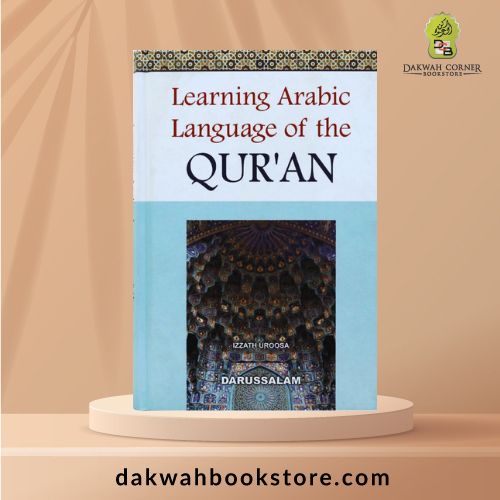
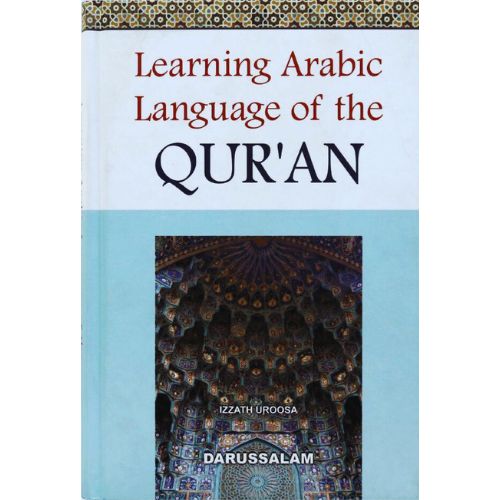
Learning Arabic Language Of The Qur’an
Highlights:
Other components that make this book attractive and useful are the simplicity of the language used, and its clarity and effectiveness of expression in achieving its objective. This book can be used by students of different ages whose intention is to learn Arabic with an eye toward proper understanding of the Qur’an.
The author has profound knowledge of both the Arabic and English languages. She also possesses a deep insight into Qur’anic expressions. She studied Arabic in Saudi Arabia and in India. This comprehensive book is the result of her diligence and commitment to learning and teaching the Qur’anic Arabic.
May Allah reward her for this valuable service to the understanding of the Qur’an and make it popular among the students and the academic world at large.
Prof. Mohsin Usmani Nadwi, Professor of Arabic and Dean at English and Foreign languages University (formerly CIEFL) Hyderabad, India.
RM90.00
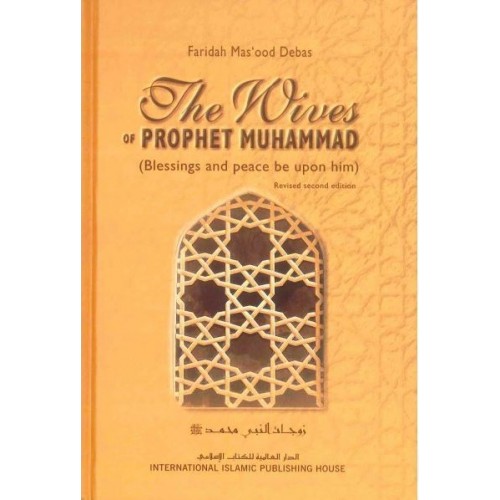

The Wives of the Prophet Muhammad (H/B)
Highlights:
Within this book, The Wives of Prophet Muhammad, is a wealth of captivating information about the distinguished wives of the Prophet (may Allah be pleased with them). Their lives are represented through vivid stories encompassing their lineage, history, and marriages to the Prophet (blessings and peace be upon him). From their hardships to their triumphs, their lives were filled with honesty, sincerity, and devotion to Allah. Their lives exemplify an ideal for which Muslims may strive. Each wife is honoured as an individual, with her life and her love of the Prophet (blessings and peace be upon him) directing her story. The author has compiled the statements of several scholars on this topic and added to this her own impassioned arguments, with which she dispels criticism by orientalists of the Prophet’s practice of polygyny. From a historical perspective, his life, along with those of his wives, authenticates his mission. His practice of polygyny, when investigated, reveals a deep wisdom behind his marriages that supported his efforts of teaching and spreading Islam. This edition is new and completely revised. It has been reorganized to make it easy to read while drawing out the most inspiring aspects of the lives of the honourable wives of the Prophet Muhammad.
RM65.00
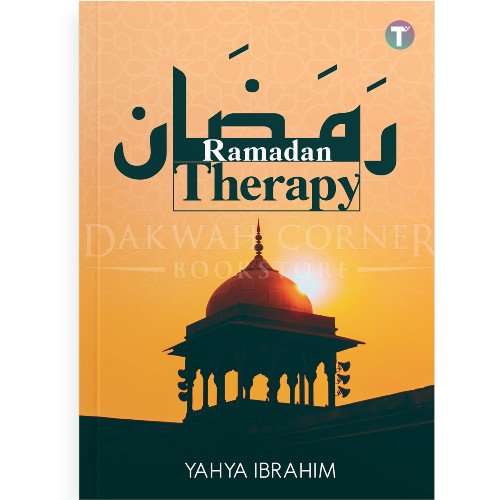
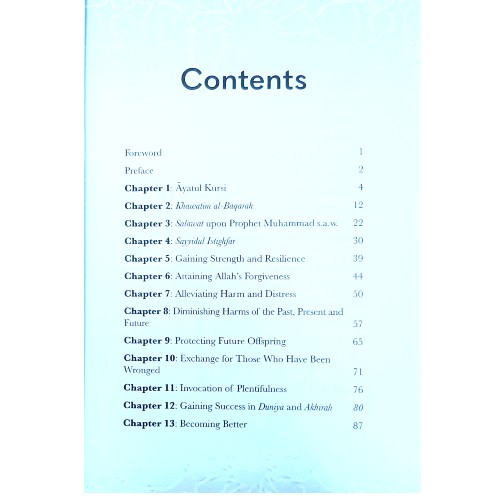
Ramadan Therapy
Highlights:
For every situation, Prophet Muhammad S.A.W. has prescribed various Du’a that can be read throughout Ramadan and even after it, as a form of therapy. It is with hope and faith that positive changes can come out of this beloved month of Ramadan to those who seek it.
RM60.00
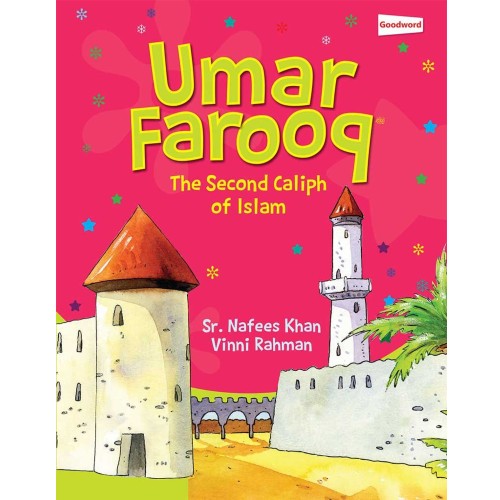
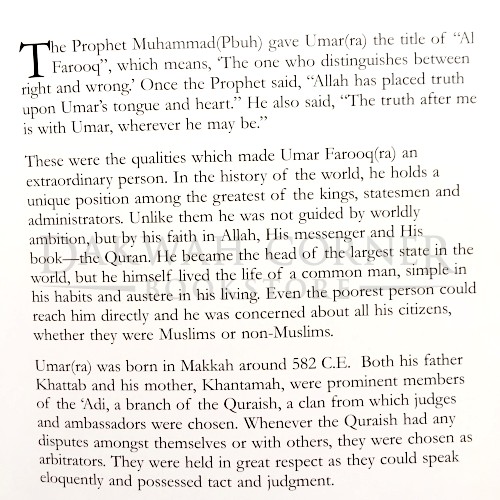
Umar Farooq: The Second Caliph of Islam
Highlights:
This book is about the life and teachings of Umar Farooq (may Allah be pleased with Him), The Second Caliph of Islam.
RM15.00
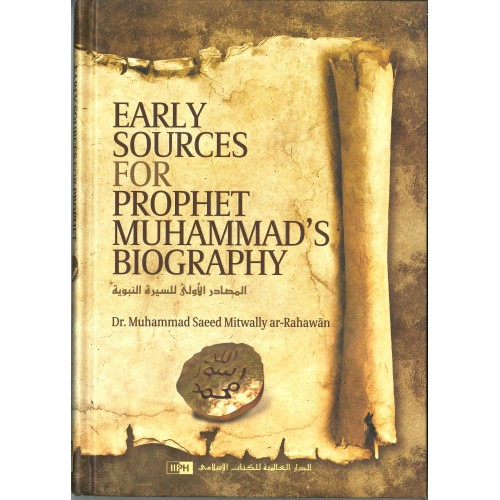
Early Sources For Prophet Muhammad’s Biography (H/B)
Highlights:
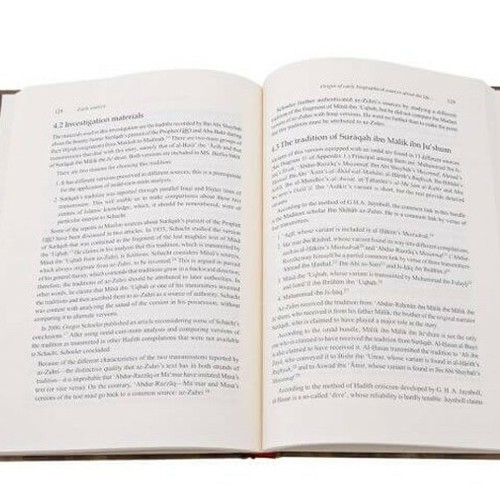
In ‘Early Sources for Prophet Muhammad’s Biography’, Dr. Muhammad Saeed Mitwally aims to prove that applying Western methods of critical analysis to the available Muslim sources can take us back to early, reliable information about the Prophet (sa).
Early Western biographies of the Prophet of Islam (sa) were largely based upon the Qur’an, as well as upon the late Muslim sources dating from the sixteenth century. After the publication of Goldziher’s Muhammedanische Studien in 1890, the reliability of Muslim sources became controversial. This stance was intensified by the publication of Schacht’s The Origins of Muhammadan Jurisprudence, in which he claimed that none of the Hadith literature is authentic. In this book, Dr. Muhammad Saeed Mitwally successfully challenges some of the problems raised by the pessimistic attitude.
Students of Hadith will find this study thought-provoking and informative.
RM54.00
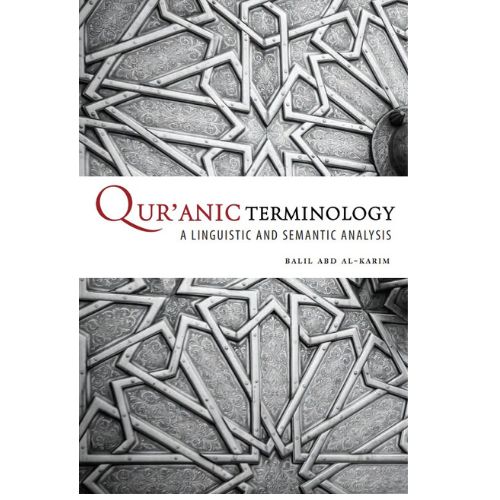
Qur’anic Terminology a Linguistic and Semantic Analysis (IIIT)
Highlights:
There is no way to understand the Qur’an properly, or to elucidate as accurately as possible the meaning of its verses, without studying Qur’anic terminology and concepts. Taken together these sum up the universal truth of the Faith (the great moral code), not only animating the text and giving it incredible life, precision, and flexibility, but also enriching the communication of the Qur’anic message through their beautiful and comprehensive nature.
RM67.00

The Purpose of Creation (P/B)
Highlights:
Mankind must know about the purpose of their existence, their responsibility towards their Creator, and what they must do in preparation for the Day in which they shall return to Him – this work addresses these issues aptly in the authors usual readable style.
RM15.00
Umar ibn Abdul-Azeez The Just Caliph (IIPH)
Highlights:
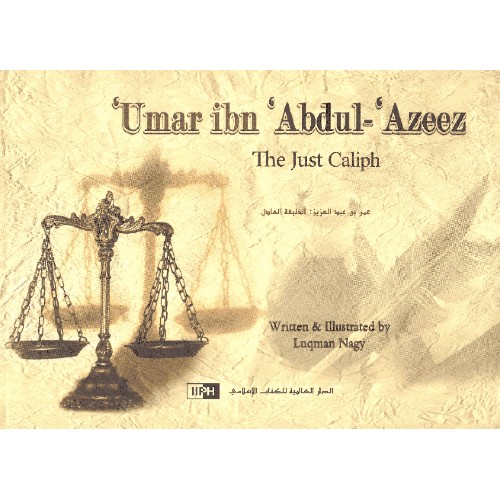
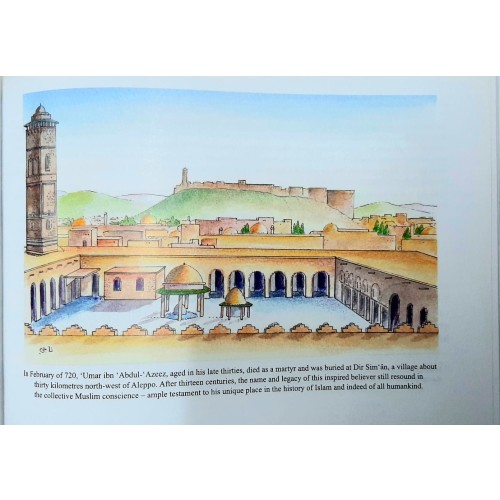
This book, written by Luqman Nagy, highlights the life and times of ‘Umar ibn ‘Abdul-‘Azeez, a truly exceptional Muslim ruler who, during his twenty-nine months in office, governed the Ummah totally in accordance with the Qur’an and the Sunnah. His sincere devotion to the religion of Islam enabled ‘Umar ibn ‘Abdul-‘Azeez to bring prosperity and contentment not only to the Ummah but to all those residing within the Umayyad state.
RM54.00
Allah Made Everything (P/B)
Highlights:
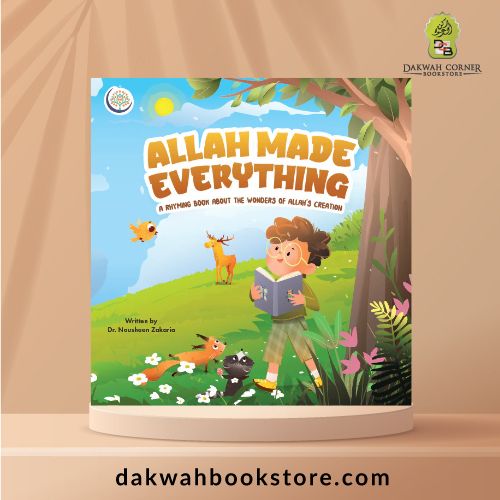
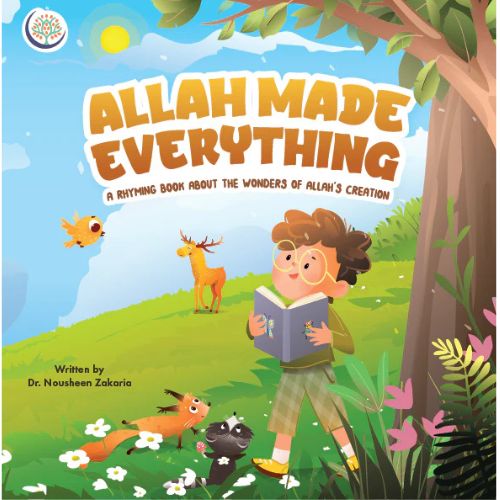
Allah Made Everything is a heartwarming rhyming journey that invites children to reflect on the wonders of creation—birds that soar, oceans that flow, mountains that rise, and families filled with love.
RM25.00 RM35.00

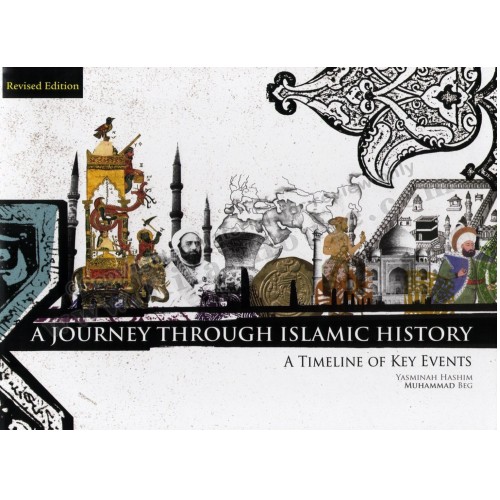
A Journey Through Islamic History (H/B)
Highlights:
A Journey Through Islamic History tells you all you ever wanted to know about the history of the Muslim world from the Prophet Muhammad to the Arab Spring in a short, accessible and lavishly-illustrated format. Suitable for students of all ages. Includes eight chronological essays covering 1500 years of history, with over 175 photographs and illustrations. A comprehensive timeline with over 500 entries, text boxes featuring important personalities, key events and major ideas, as well as several maps.
RM160.00
There are no reviews yet.