

![[QQ] Mualimu Suari (معالم السور)](https://shop.dakwahbookstore.com/wp-content/uploads/2021/08/QQ62-F1-x500.jpg)
| Weight | 0.190 kg |
|---|---|
| Dimensions | 24 × 17 cm |
| Binding | Paperback |
| ISBN | 9789960740492 |
| Pages | 64 |
| Publisher | Darussalam |
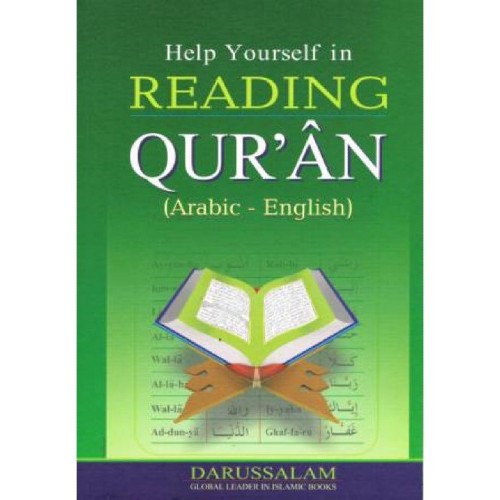
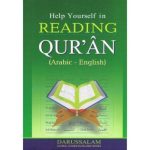
Help Yourself In Reading Qur’an
RM25.00
Hurry up, Only 2 left.

Highlights:
somdn_product_page
Compare
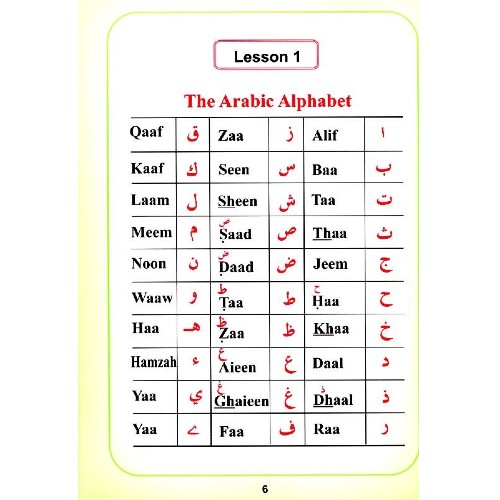
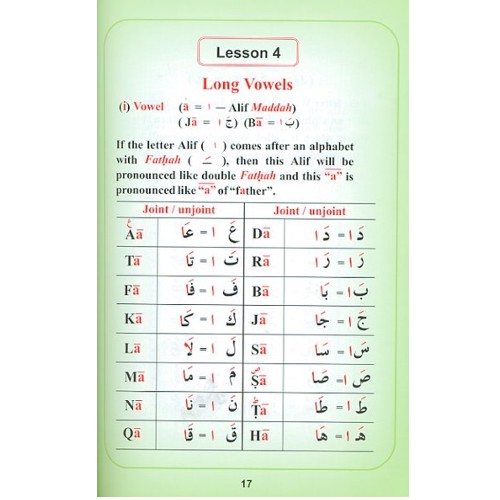
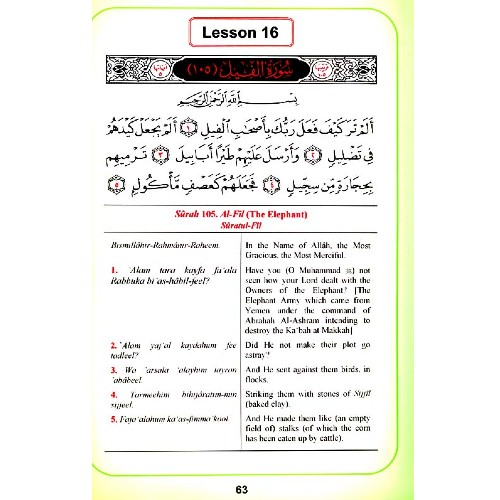
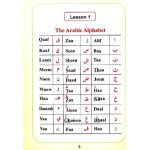
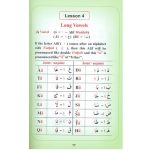
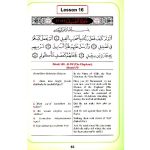
It is a guide for learning to read the Arabic of the Qur’an in a simple way through transliteration without a teacher. After mastering this guide , one will be able to read Qur’an without any difficulty. Insha-Allah.
Additional information
Reviews (0)
Be the first to review “Help Yourself In Reading Qur’an” Cancel reply
You must be logged in to post a review.
Related Products
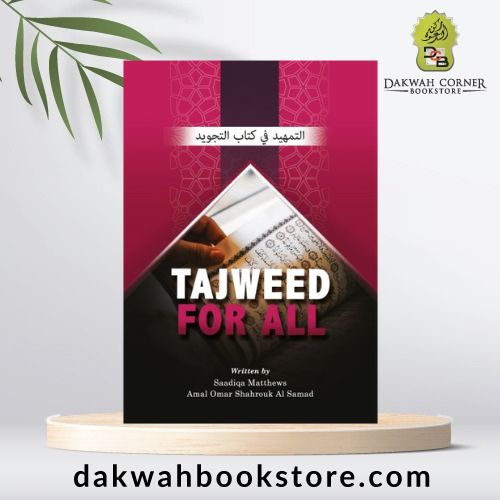
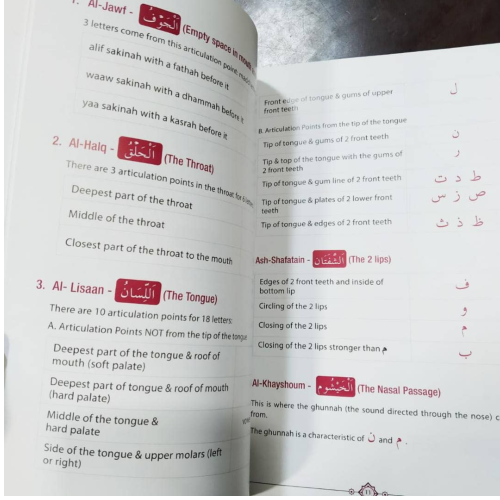
Tajweed For All (Revised Edition)
5 ★
5 ★
1 Rating
5 ★
1
4 ★
0
3 ★
0
2 ★
0
1 ★
0
Highlights:
Note: Revised Version – thicker than previous version (Art Paper)
RM23.00
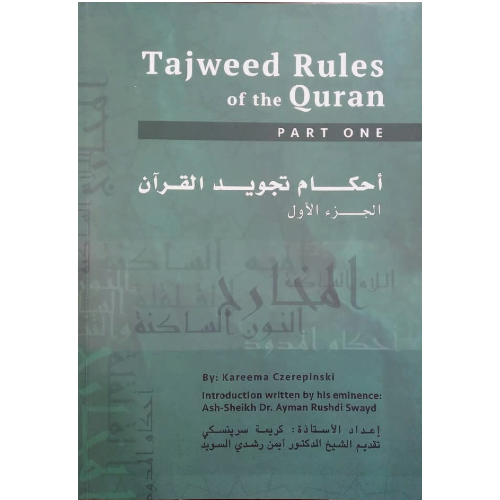
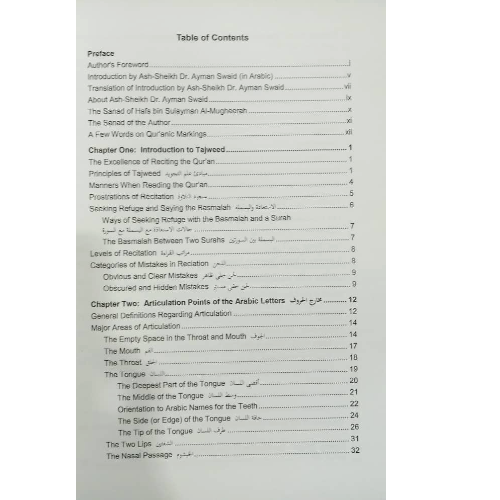
Tajweed Rules of the Quran (Part One)
Highlights:
This is a guide for studying tajweed. The student who uses this book is expected to have a basic grasp of Arabic before starting this course. The student should know all the Arabic letters and vowels and be able to read at an elementary level.
This book is either for an English-speaking student studying the Qur’an in an Arabic environment, but needing explanation of the Arabic terms in English, or a student studying the explanations of tajweed in English, but learning the basic concepts in Arabic so they may integrate into the Arabic terms and definitions throughout the book, since the science of tajweed is an Arabic science. This book explains the articulation points of the Arabic letters, the rules of noon saakinah, meem saakinah, and lam saakinah. It explains all of the different lengths (mudood), and how voweled, and non-voweled letters are formed. The qalaqah mechanism is explained in the last chapter. Terms are introduced in Arabic, and the translated into English. Explanations are done in English, but with integration of Arabic terms, as they are learned.
A student of the Qur’an cannot expert to learn tajweed simply by studying this book. The learning of proper Qur’anic recitation can only be done by listening to a qualified Qur’an teacher recite, then reciting to them and receiving corrections from the teacher.
RM30.00
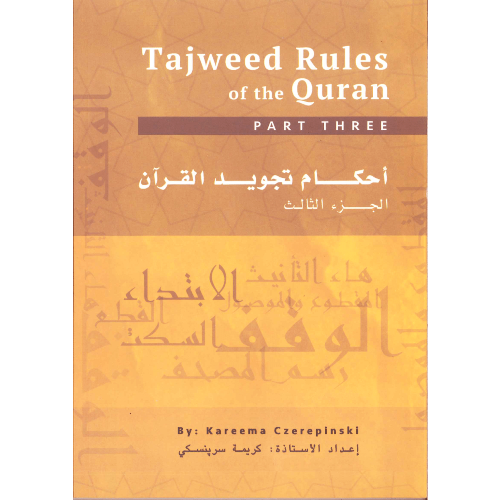
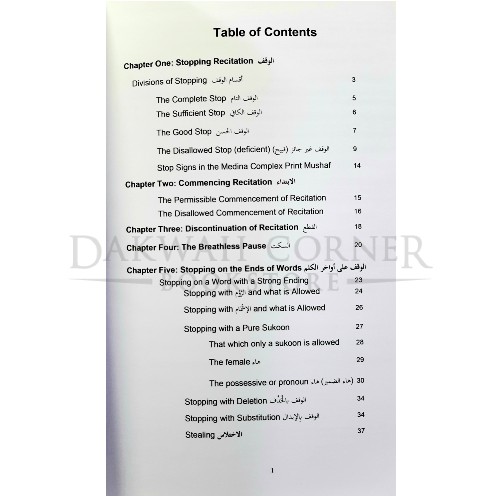
Tajweed Rules of the Quran (Part Three)
Highlights:
This is the third and final part of a three part series in English on the rules of tajweed the Qur’an for the recitation of Hafs from ‘Aasim by the way of Ash-Shaatibiyyah. These books are meant as a guide for non-Arabs with a good grasp of English for studying tajweed of the Glorious Qur’an. This final book explains the stop and start when reading the Glorious Qur’an, and gives details as to what kind of stop is allowed, what kind is preferred, and what kind of stop is forbidden. Stopping on the ends of words with strong endings (consonants) and rules for what is allowed on the last letter of the word is described, including ar-room (الروم) and al-ishmaam (الإشمام). Stopping on the ends of words with weak endings (words ending in the alif, ya’ or wow) and different rules and explanations for these type of words is clarified. One important aspect of Qur’an recitation is knowing and understanding which word combinations are written together and which separately in different parts of the Qur’an as well as in which places of the Qur’an are some words are written the female haa (هاء), and in which places they are written with the taa (تاء). This part lays out the different places in the Qur’an these occurrences take place, so the reader knows how he/she can stop on these words. The words that are read in a special way, or have two allowed ways for the reading of Hafs from ‘Aasim by the way of Ash-Shaatibiyyah are detailed in this book. The history of the writing of the Glorious Qur’an (رسم) and the general rules for the writing of the Qur’an are laid out in the last chapter of this part. This last part of the three parts on tajweed is for students who have studied and mastered the other two parts, or have studied everything covered in the first two parts. The explanations of the different subjects are in English, and the Arabic terms are translated. The goal is always to assist the students in understanding and to encourage them to learn the Arabic terms and definitions. The three parts of this series on tajweed rules of the Glorious Qur’an should facilitate non-Arabic speaking students of the Qur’an whether they are in a classroom with an Arabic medium for teaching or English. With this third part completed, insha’ Allah the non-Arab English speaking student of the Qur’an will find a complete curriculum and explanation of the tajweed rules for the recitation of Hafs ‘an ‘Aasim from the way of Ash-Shatibiyyah in any classroom or study situation that he/she may find themselves in. These three parts are only guidance; the real goal is reciting and applying all the different rules correction which can only be done by reciting to and being corrected by a qualified teacher of the Qur’an.
RM30.00

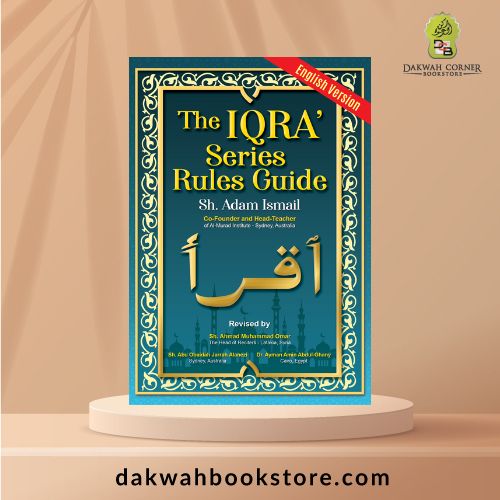
The Iqra’ Series Rules Guide
Highlights:
- This guide is a must for anyone studying or teaching from the IQRA’ Series! Aimed at children and adults to be used by schools, mosques and learning centres.
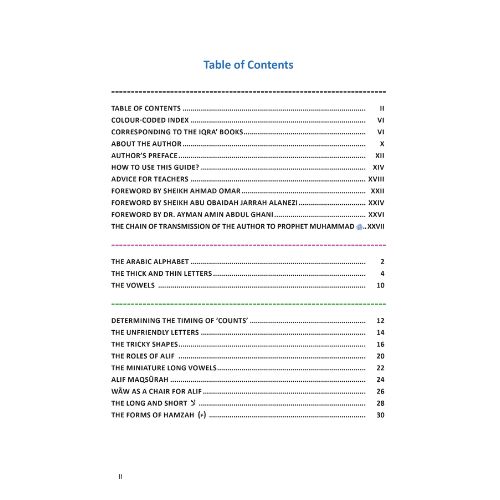
- This guide contains all the Tajwīd rules needed throughout the IQRA’ series. It introduces each rule based on the same structure and patterns of the IQRA’ Series.
- This guide has been designed to make it as easy as possible to achieve a beautiful and elegant recitation, whilst also having a firm grasp of all the required theory.
RM30.00
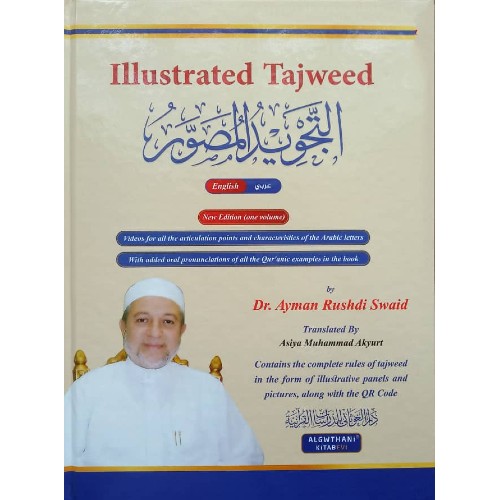
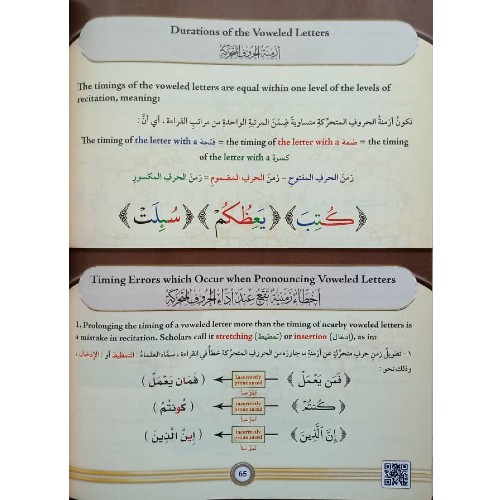
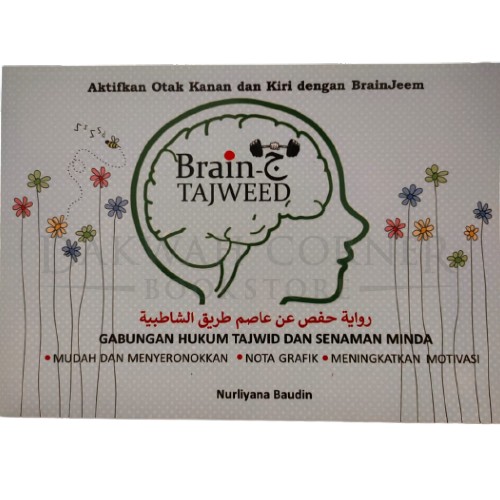
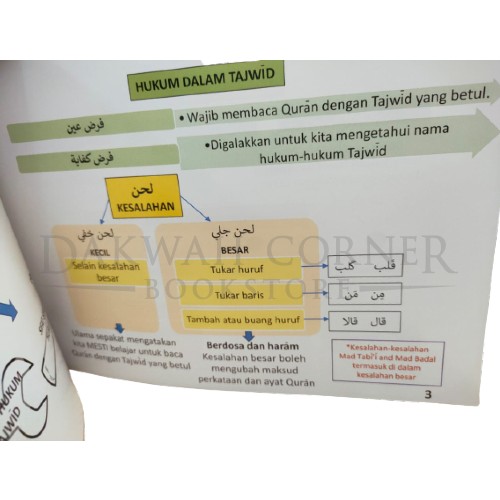
BrainJeem Tajweed – Gabungan Hukum Tajwid dan Senaman Minda
Highlights:
BrainJeem Tajwid merupakan pembelajaran kreatif dalam mengenalpasti hukum-hukum Tajwid dengan mudah dan menyeronokkan. Gabungan bunyi dan brain-gym akan mengaktifkan otak kiri dan kanan anda dan membantu anda kekal fokus dan bertenaga. Inovasi BrainJeem Tajweed berfungsi sebagai pembakar semangat supaya kita cintakan ilmu Tajwid dan seronok mendalami Quran.
RM30.00
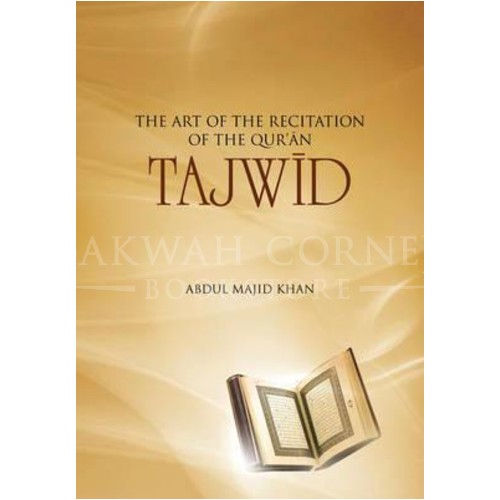
Tajwid : The Art of the Recitation of the Qur’an
Highlights:
This book on the art of the recitation of the Holy Qur’an is easy to follow with its simple yet detailed presentation of subjects. It is accessible for beginners who have had little exposure to Tajwid. It does not require any knowledge of Arabic grammar or understanding of the Arabic language. It provides both the young and adult English speaking Muslims with the best organization and presentation of the art of Tajwid. The Art of the Recitation of the Qur’an can be used for self-study or with the guidance of a teacher at Islamic schools and colleges as well as theology faculties. This book is primarily intended for the English speaking audience. The explanations in this work are augmented by figures, charts, tables, and examples for full and easy comprehension by English speaking Muslims. Readers will also find a Glossary of Arabic and Phonetic terms extremely helpful in learning the rules of Tajwid.
RM65.00
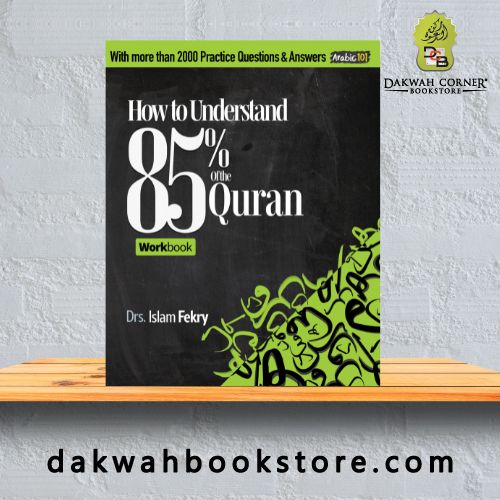
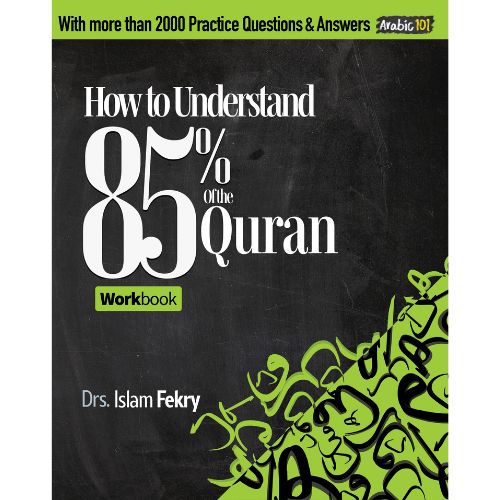
[Workbook] How to understand 85% of the Quran (Arabic 101 Series)
Highlights:
How to Understand 85% of the Quran – Workbook is a carefully designed companion to the main coursebook, made for learners who wish to understand the Quran in Arabic. It is ideal for independent study but even more beneficial under the guidance of a qualified Qur’an teacher.
RM50.00
Recently Viewed
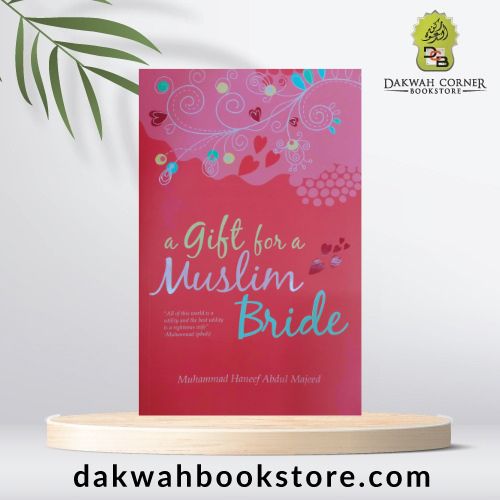
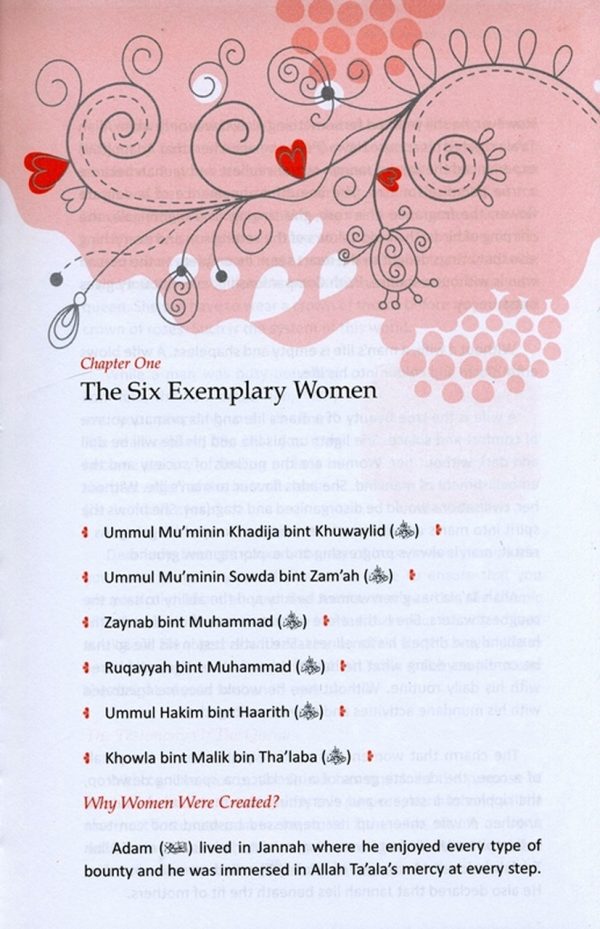
A Gift For Muslim Bride (P/B)
4.5 ★
4.5 ★
2 Ratings
5 ★
1
4 ★
1
3 ★
0
2 ★
0
1 ★
0
Highlights:
This book, truthfully, is an ideal gift to Muslim sisters (brides) and women in general, as it mainly deals with the concerned affairs of the marital life according to the Qur’an and Sunnah; touching upon topics like the excellence of a righteous wife, her attributes and duties to her husband.
RM45.00
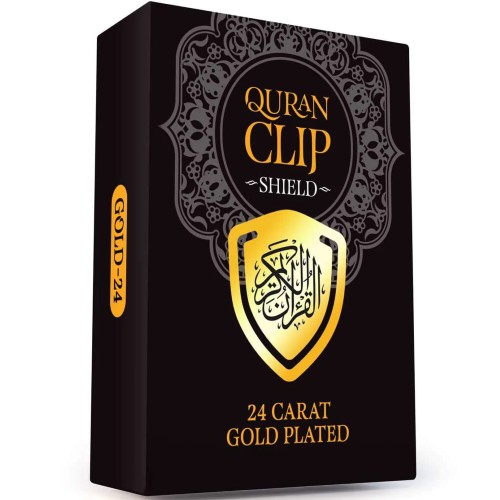
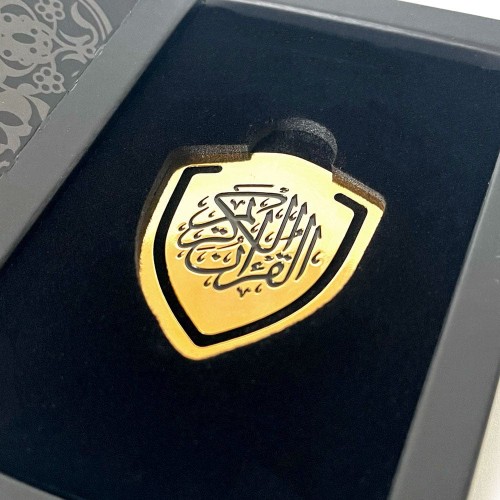
Quran Clip (Shield) by Learning Roots
Highlights:
Gifting Something Amazing
When you’re looking to gift a group of people something valuable, yet meaningful, it can be really difficult to find something that works, especially if you’re wanting your present to have an Islamic touch.
RM27.00 – RM55.00Price range: RM27.00 through RM55.00
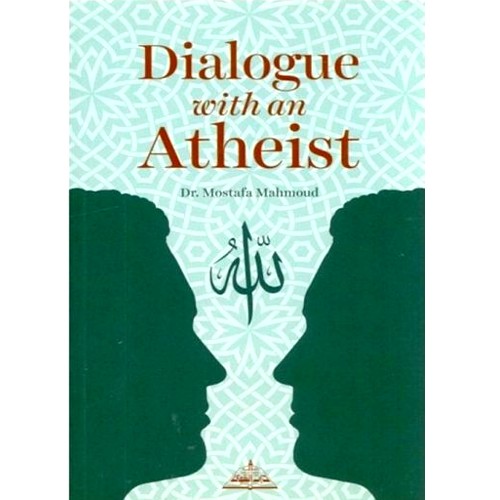
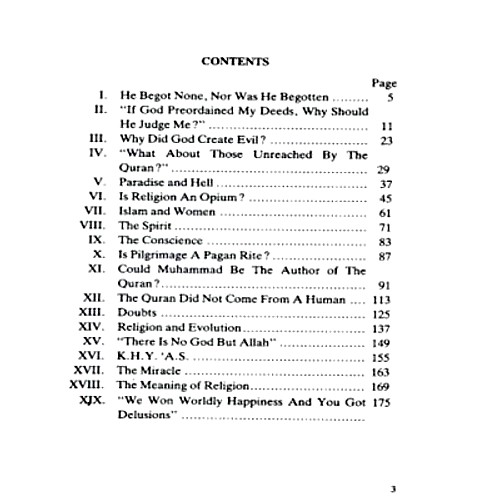
Dialogue with an Atheist
Highlights:
Problems such as the proof of the existence of God, why God created evil, Paradise and Hell, and could the Prophet Muhammad be the author of the Qur’an are tackled both clearly and logically.
RM42.00
Amazing Jannah
Highlights:
In a place that is bigger than all the earth and all the skies.
Allah has created Jannah.
Invisible for us to see.
Oh what a beautiful place, Jannah must be.
This book stimulates children to think about Jannah (Heaven). How beautiful it must be, how incredible it must be, how amazing it must be.
RM22.00
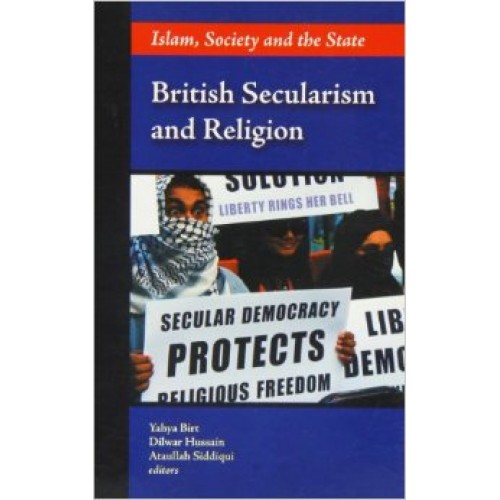
British Secularism and Religion (P/B)
Highlights:
This interesting, topical and sometimes heated, conversation among theologians, social scientists and policy experts on British secularism helps to shed vital light on the challenges of accommodating religious minorities and majorities within modern societies. The contributors question a number of received assumptions about the public role of religion, and also challenge traditional Muslim suspicions of secularism, thus succeeding in moving the debate on Islam in Britain, and secular polities in general, to new and very promising ground. This is a vital contribution to ongoing topical debates on secularism, pluralism, inclusion and the direction modern societies should take. Dr. Abdelwahab El-Affendi, University of Westminster Religious voices in favour of secularism are often absent from the debate on religion and politics. But as a political attitude that will guarantee freedom of belief for all, secularism is relevant to all. This volume – though non-religious secularists may find much to challenge within it – is a welcome contribution to this most important of modern debates. Andrew Copson Chief Executive, British Humanist Association –Commissioned
This volume on the role of Muslims in British society very helpfully addresses two concepts about which there is currently much confusion, namely secularism and secularity. The fact that it does this in conversation with some of the other interested parties, namely Jews and Christians, and that it seeks to combine specifically religious, or theological, and political, or social-scientific, approaches, means that it will be of interest to both theoreticians in the academy and practitioners in different areas of society, and it therefore deserves a wide readership. Professor Hugh Goddard, Director of the HRH Prince Alwaleed bin Talal Centre for the Study of Islam in the Contemporary World, University of Edinburgh –Commissioned
The question of the relationship between politics and religion tends to generate more heat than light, especially when the focus is on Islam. This book, with its careful analysis and respect for facts, helps dispel the smoke. It is an invaluable contribution to the public debate, especially in the British context, and will assist people of good will – of all faiths and none – to clarify their own thoughts about ‘the secular state’. Dr. Brian Klug Senior Research Fellow & Tutor in Philosophy, St. Benet’s Hall, Oxford –Commissioned
RM51.00
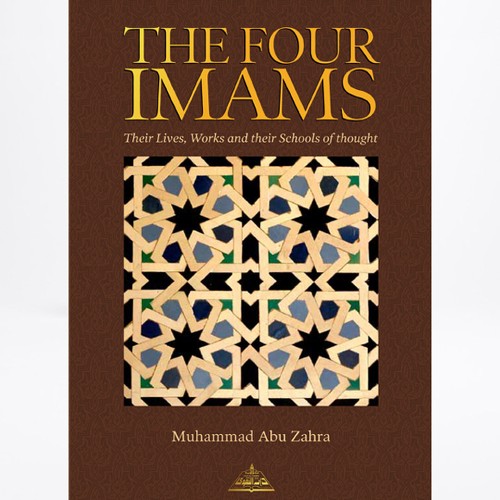
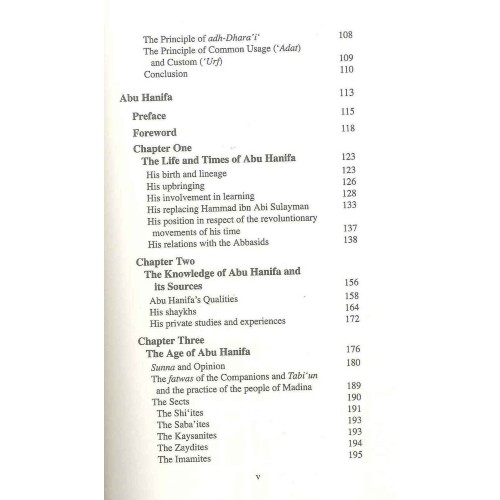
The Four Imams
Highlights:
The Four Imams – Their Lives, Works And Their Schools Of Thought.
This book is a compilation of four books which deal with the lives and works of the four imams who founded the four great canonical schools of thought of Islamic fiqh; Imam Abu Hanifah, Imam al-Shafi’i, Imam Malik Ibn Anas & Imam Ahmad Ibn Hanbal. The book was originally written in Arabic by the great Egyptian scholar and theologian Muhammad Abu Zahra and is presented in English for the first time.
RM200.00
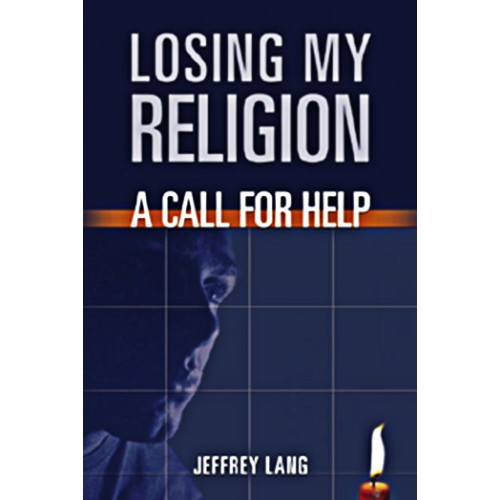
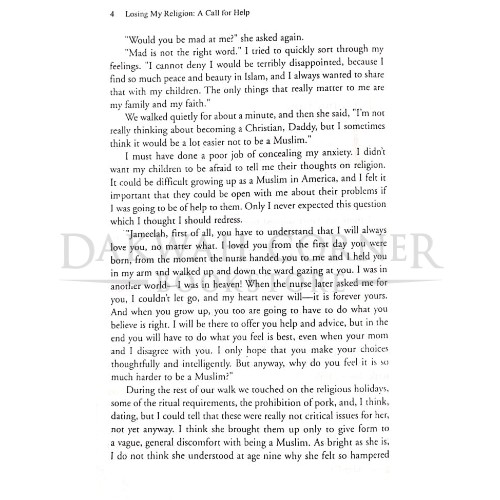
Losing My Religion: A Call For Help (P/B)
Highlights:
“Crucial to the vitality of any religious community is its ability to attract and engage descendants and converts. By this measure, notwithstanding the proliferation of mosques and Islamic organizations, the Muslim community in America is not doing at all well.” This rather sober assessment motivates Dr. Lang to address, in this book, the alienation from the Mosque of the great majority of America’s homegrown Muslims. In Losing My Religion: A Call For Help, the author comes to terms with many of the queries put to him by Americans of Muslim parentage and converts to Islam since the publication of his book Even Angels Ask in 1977. Lang asserts that to effectively respond to the general malaise of American-born Muslims, the Islamic establishment in America needs to be willing to listen to the doubts and complaints of the disaffected. This entails engaging in open discussions on issues with which many in the Muslim community will be uncomfortable, but Lang avers that such open dialogue will be of more benefit to young American Muslims struggling with their faiths than the covert and uniformed discussions that often take place or no discussion at all. For this reason, Lang feels it is important and beneficial “to be candid and objective and not evade controversy, for to inadequately state the case for or against a specific position, especially when it challenges convention, only serves to further alienate the sceptical.” In addition to examining questions of theodicy, hadith authenticity, and moot practices within the American Muslim community, the author includes many testimonials and inquiries that make this book informative. Dr. Lang is Professor of Mathematics at The University of Kansas, Lawrence, Kansas. He is the author of two best selling works: Struggling to Surrender and Even Angels Ask: A Journey to Islam in America. Both books have been translated into other languages.
RM115.00
Prophetic Healing P/B
Highlights:
This book offers a practical and engaging resource to improve holistic health using the best of Prophet Muhammad’s (s) guidance and modern medicine. Prophet Muhammad’s (s) guidance on healing was unique because it conferred spiritual, mental, and physical benefits. The author beautifully advocates the necessity of implementing this legacy by practicing “integrative healing” to achieve the best of both the modern and the traditional.
RM105.00
The Qur’an and Its Study
Highlights:
A contemporary exploration of Qur’anic studies, analysing the various approaches to the Qur’an taken by leading scholars through the centuries.
RM150.00
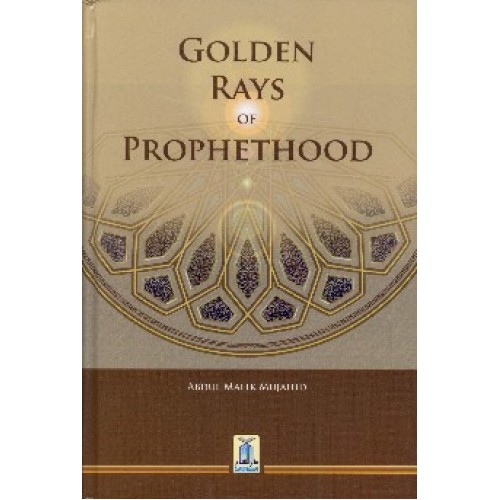
Golden Rays of Prophethood (H/B)
Highlights:
Knowledge of the Prophetic Seerah is incumbent upon every Muslim, whether young or old, male or female. This current book adds to those that have already been published on this great subject. It lays out the Prophetic biography in a clear and concise manner, relying on well-documented and authentic sources. The author paints a narrative of the important events during the lifetime of Prophet Muhammad, the patience demonstrated by the Prophet and his Companions through difficult times, without losing their faith in their Lord. These events touch the heart of the reader and draws them in.
RM48.00
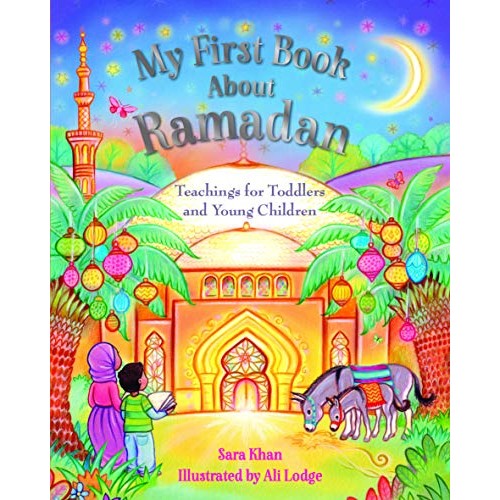
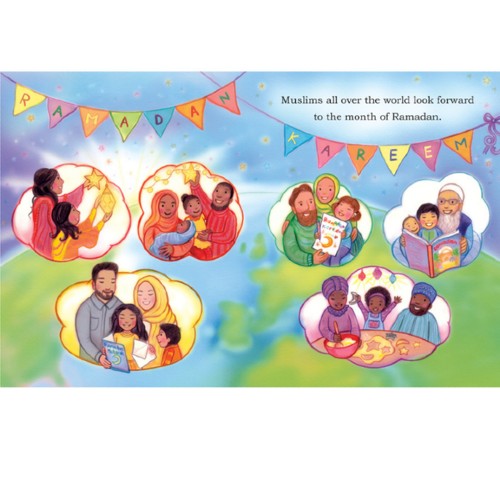
My First Book About Ramadhan
Highlights:
“The perfect book to introduce children to the month of Ramadan” This simple but beautiful board book presents children with some of the blessings of the month of Ramadan. It introduces the concept of fasting as one of the five pillars of Islam and explains how Muslims can make the most of this special month.
RM45.00
Islamic Economics : Principles & Analysis (P/B)
Highlights:
Economics is a social science that studies the behaviour and interactions of economic agents and analyses how economies work at the macro- and micro-levels. It studies production, distribution and consumption of goods and services, identifies economic problems and phenomena, and addresses economic questions from a positive perspective (what is) as well as a normative (how it should be) perspective. Islamic economics examines the same areas as its conventional counterpart. However, it involves the application of Sharīʿah to the different economic functions and issues. It is postulated that Islam offers a better approach compared to conventional economics in managing economic activities and solving economic and social issues.
RM180.00
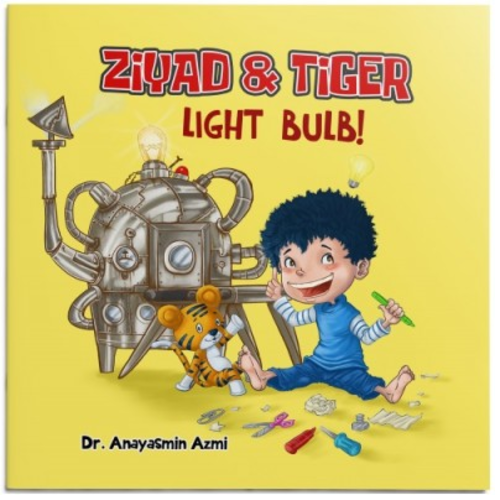
Ziyad & Tiger Light Bulb!
Highlights:
Ziyad and Tiger were amazed with the power of their brains.
They then realized that the Creator of the brains, Allah SWT is more powerful.
RM15.00
There are no reviews yet.